Support

Savuti

About

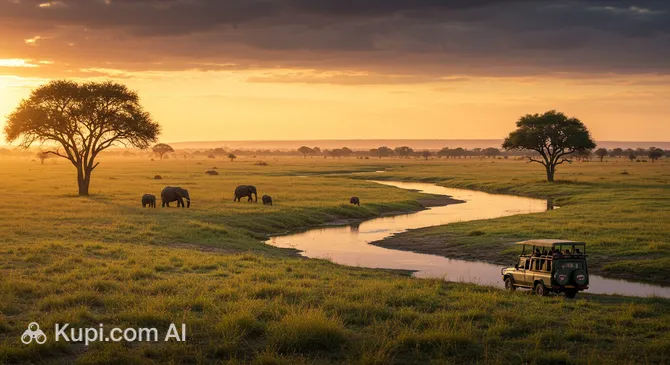
Savuti is not just a point on the map; it is a true epicenter of adventure for wildlife enthusiasts. This unique region is located in the heart of Chobe National Park in the north of the country. Here, you won't find the usual city streets or bustling squares: Savuti is a protected territory where the main residents are elephants, lions, and antelopes, and Botswana reveals itself to travelers in all its pristine beauty.

Savuti. Illustration.
Source: Kupi.com AI

Geographically, Savuti is famous for its picturesque savannas and rare landscapes that create an atmosphere of complete harmony with nature. One of the region's main mysteries is the famous Savuti Channel, which intermittently fills with water and then dries up for decades, drastically changing the surrounding landscape. This geological feature and the fickle climate shape the unique history of Savuti, turning every visit into a unique experience of observing the ecosystem.

There is no permanent human population here, as it is a strictly protected zone. All infrastructure is represented by cozy safari camps harmoniously integrated into the environment. Tourists come here to meet the "Big Five," as the concentration of predators, especially lions and leopards, in this area is incredibly high. Morning mists and majestic sunsets over the savanna provide ideal conditions for photographers and seekers of inspiration.

A trip to Savuti is a chance to see the real Africa without filters. Whether you are an ornithologist dreaming of seeing rare birds or an adventurer yearning for a thrilling safari, this corner of the wild will give you vivid emotions and memories to last a lifetime.

Weather Overview

The climate of this secluded corner of Botswana dictates the rhythm of life for the entire ecosystem and determines the conditions for safari. When planning a trip, it should be noted that the year here is clearly divided into dry and wet periods. In general, expect a hot summer with frequent rainfall and a comfortable, absolutely dry winter with cool nights.

The dry season, which lasts from May to September, is ideal for wildlife viewing. During these months, there is practically no rain: from May to August, statistics show 0 rainy days. Daytime temperatures during this time are quite pleasant — from +18°C to +22°C, but it becomes significantly cooler at night. In June and July, the minimum temperature can drop to +10.5°C, so warm clothing is essential for morning drives.

With the arrival of October, the transition to the hot season begins: this is the sweltering month, when the air warms up to +35.5°C. From November to March, the "Green Season" arrives. The current weather in Savuti during this period is characterized by high humidity and warmth. January is considered the "wettest" month, with up to 20 days of precipitation, although the average temperature remains high, around +25°C.

Average monthly temperature

Average monthly precipitation

Interesting Facts

In addition to its main natural attractions, Savuti holds many fascinating secrets that give this place a special mystical aura. This wild corner is known not only for its landscapes but also for phenomena that have puzzled scientists and fascinated travelers for decades.

  • The Mystery of the "Ghost" Channel. The Savuti Channel is famous for its unpredictable behavior: it can suddenly fill with water or completely dry up for decades without visible climatic reasons. Sometimes the water returns after a long drought, cardinally changing the ecosystem and reviving desert lands, which remains one of the region's main geographical mysteries.

  • Unique Predator Behaviors. This region became a sensation among zoologists thanks to the local lions. In Savuti, you can witness rare scenes: prides have learned to hunt adult elephants in an organized manner. Such epic battles of giants are practically never found in other parts of Africa and demonstrate the incredible strength and adaptation of local predators.

  • Cinematic Fame. The landscapes of Savuti are familiar to many indirectly: it is a popular location for filming wildlife documentaries. Projects by giants such as the BBC and National Geographic were often created here, capturing unique moments from the life of African fauna that subsequently stunned viewers worldwide.

  • Mystique of the Evening Campfires. The atmosphere of Savuti is steeped in legend. By the evening fires, local guides share tales of ancient hunters and mysterious spirits of the savanna. These oral stories, passed down through generations, allow tourists to touch the deep cultural heritage and mythology of the people of Botswana.

How to Get There

Savuti is a secluded and wild region located deep within a national park, so there is no direct regular connection to major metropolises. The journey here is already the start of the safari. Logistics are usually built through the nearest towns, from where tourists continue their journey by light aircraft or specially prepared off-road vehicles. You can find out more about how to get to Savuti by exploring all available routes and logistical nuances.

There is no large civilian airport in the Savuti region itself capable of receiving regular international flights. The nearest key hub is Maun Airport (IATA: MUB), located in the town of Maun. This is the main "tourist gate" to the Okavango Delta and Chobe Park. The airport is approximately 169 km from Savuti. Traveling by land from here can take about 4.5 hours; however, it should be noted that the route passes through difficult terrain, and travel time may vary.

Another popular option is Kasane Airport (IATA: BBK), located in the town of Kasane, about 142 km from Savuti. This is a convenient entry point for those combining a visit to Victoria Falls with a safari in Botswana. A ground transfer from here will take approximately 4 hours. Many travelers also choose to fly into the international Victoria Falls Airport (IATA: VFA) in neighboring Zimbabwe (Victoria Falls town). The distance is about 195 km, and the journey, including border crossing and the road, will take just over 5 hours.

For clarity, here is summary information on the main airports used to reach the region:

AirportPassenger trafficDistance
Mpacha30 000104 km
Kasane Airport104 891142 km
Maun Airport280 000169 km
Victoria Falls Airport505 426194 km
Livingstone Airport251 136203 km

There is no rail service to Savuti. This region of Botswana lacks a developed railway network suitable for tourist travel directly to safari sites. The main method of ground transportation remains high-clearance 4x4 vehicles, as the roads in the Savuti area are often deep sand or dirt tracks requiring off-road driving skills.

Main Attractions

The attractions of Savuti are not man-made monuments, but grandiose natural sites that create a unique stage for the drama of wildlife. In this remote corner of Botswana, the landscape varies from dry sand dunes to full-water oases, and every spot here deserves a traveler's special attention.

Savuti Channel
This waterway is rightfully considered the main "circulatory system" of the region and its greatest mystery. The channel is known for its unpredictability: it can suddenly dry up and disappear for decades, and then just as unexpectedly fill with water, turning the arid savanna into a blooming paradise. Tourists flock here to see how huge herds of elephants and prides of lions gather along the banks (or the dry riverbed) waiting for prey.

Savuti Marsh
The vast area into which the channel flows (or once flowed) is known as the Savuti Marsh. Even when there is no water here, these endless open plains covered with golden grass are reminiscent of the famous landscapes of East Africa. It is an ideal place for observing cheetahs, who need space for high-speed hunting, as well as the migration of zebras and wildebeests, which attract many predators.

Gubatsa Hills
Amidst the flat sandy landscape, the ancient dolomite Gubatsa Hills rise unexpectedly. These rocky formations create a sharp and picturesque contrast with the surrounding plain. The hills are interesting not only as an observation point but also as a historical monument: ancient rock paintings by the San people have been preserved in their caves and niches. Images of giraffes, elephants, and antelopes, made with ochre thousands of years ago, allow you to touch the deep past of these lands.

Local Cuisine

Since Savuti is a wild protected territory in the heart of a national park, you won't find the usual city restaurants, street cafes, or noisy markets here. The gastronomic life of the region is entirely concentrated in safari lodges and campsites, where chefs work true wonders in the wild. Dining here is part of the adventure: from early breakfasts before heading into the savanna to dinners under the starlit sky.

The menu is often a combination of European cuisine and traditional dishes characteristic of Botswana. A major culinary hit that is definitely worth trying is seswaa. This is meat (usually beef or goat) that is slow-cooked in cast-iron pots until it becomes incredibly tender, after which it is shredded into fibers. It is typically served with a thick corn porridge called "pap" or sorghum.

Meat lovers will also appreciate the tradition of braai — the African barbecue. In Savuti lodges, steaks, boerewors sausages, and even game meat, such as kudu or impala (if seasonal rules permit), are often cooked over an open fire. For breakfast or tea, you might be offered vetkoek — deep-fried yeast dough donuts eaten with minced meat or jam.

The drink culture in Savuti is inextricably linked to the ritual of "sundowners" — toasted at sunset. During this time, it is customary to enjoy a gin and tonic or a glass of South African wine while watching the sun dip below the horizon. Of the local alcohol, the St. Louis lager is worth noting, a light beer perfectly suited for the hot climate. Those who prefer non-alcoholic drinks will definitely be offered refreshing homemade ginger lemonade or rooibos tea, which is drunk here at any time of day.

The special magic of a meal in Savuti lies in the atmosphere. Dinners often take place in a "boma" — a traditional fenced open-air courtyard with a campfire in the middle. Guests gather around the fire, sharing stories of animals seen during the day while staff serve buffet-style dishes. This is not just a meal, but a moment of connection where the taste of the food is enhanced by the sounds of the night savanna and the roar of lions in the distance.

Travel Tips

Savuti is a territory where nature dictates its own harsh but fair laws. A trip to this remote and wild corner of Botswana requires careful preparation. To ensure your safari is a safe adventure and leaves only pleasant memories, we have gathered key practical tips.

  1. Clothing and Equipment. Follow the principle of layering: morning drives in open vehicles can be frosty, but by midday, it becomes hot. Choose clothes in neutral colors (khaki, sand, olive) to blend in with the landscape. Categorically avoid black and dark blue colors — it is proven that they attract biting tsetse flies. Don't forget a wide-brimmed hat, sunglasses, and comfortable closed shoes for evenings by the fire.

  2. Transport and Movement. There are no paved roads in Savuti, only deep sand and tracks. If you are traveling independently (self-drive), you vitally need a reliable 4x4 vehicle with high clearance and a full tank of fuel, as there are no gas stations here. Always carry a large supply of drinking water and a satellite phone for emergencies.

  3. Finance. ATMs are non-existent in this wilderness (the nearest are in the towns of Maun or Kasane). Stock up on cash in advance: although the national currency is the pula, US dollars are also widely accepted in the tourism sector. Cash, preferably in small denominations, will be needed for tipping rangers and lodge staff, which is an important part of the local culture.

  4. Safety in Camp. Most lodges and campsites in Savuti are unfenced, so wild animals move freely through the territory. Never walk through the camp alone after dark — always ask a staff member with a flashlight to escort you to your tent. Also, remember that this is a malaria zone: use repellents and consult a doctor about prophylaxis.

  5. Connectivity and Navigation. Be prepared for a total "digital detox." Mobile service in the region is practically non-existent, and Wi-Fi in lodges is often slow and only available in common areas. Download all necessary maps, guides, and books to your devices in advance.

  6. Safari Etiquette. Maintain silence while observing animals. It is strictly forbidden to stand up in an open jeep without the guide's command: to predators, the vehicle is a single object that they ignore, but a standing person is perceived as a threat or prey. Follow the ranger's instructions without question.

  7. Food and Smells. Never feed animals, even birds or squirrels — it is dangerous for both you and them. If you are staying in a campsite, do not store food or fruit (especially citrus) in your tent. Elephants and hyenas have a phenomenal sense of smell and may try to reach the treats, damaging your equipment.

  8. Equipment Protection. Savuti is famous for its dry climate and fine, pervasive dust. Be sure to bring dry bags or thick plastic bags for cameras and binoculars to protect expensive optics during trips along sandy roads.

A trip to Savuti is a step out of your comfort zone for a meeting with pristine nature. By following these simple rules and showing respect for the local ecosystem, you can focus on the main thing — the majestic beauty of the African savanna and its inhabitants.

Entertainment & Nightlife

Nightlife in Savuti is fundamentally different from the usual urban rhythm. You won't find noisy nightclubs, karaoke bars, neon signs, or 24-hour markets here. After sunset, this region of Botswana plunges into a deep, primeval darkness, and all social activity moves to the safe territory of safari lodges and campsites. The main concept of local relaxation is silence, "digital detox," and elite rest among like-minded people to the sounds of the wild savanna.

The centers of evening activity are the bars and lounge areas at the hotels. The atmosphere here is intimate and exclusive, yet relaxed: there is no strict dress code (comfortable fleece clothing or "safari chic" style will do), and instead of loud music, the crackle of logs and the distant roar of lions serve as the background. Most guests gather in the bars of places like Savuti Safari Lodge or Camp Savuti. In these establishments, terraces are often designed with a view of a floodlit waterhole. This allows you to combine enjoying a glass of South African wine with observing elephants or hyenas that come to drink right by the veranda.

A key element of the evening program is the traditional "boma" — an open-air dinner around a large campfire, which is jokingly referred to here as "Bush TV." This is a time for socialization: tourists share stories about the leopards they encountered, and guides tell local legends. Another popular night activity is stargazing. Thanks to the complete absence of light pollution, the Milky Way in Savuti is visible with incredible clarity and brightness, unavailable to residents of megacities.

Practical Tips and Safety:

  • Safety: This is the most important aspect of nightlife in Savuti. At night, the territory between cabins and tents actually belongs to predators. It is strictly forbidden to go outside after dark without being accompanied by an armed ranger or security staff (askari).
  • Opening Hours: Life in safari camps winds down early. Dinner and drinks at the bar usually end by 21:30–22:00, as the wake-up call for the morning safari is at dawn (around 5:00–5:30 AM).
  • Transport: Night public transport or taxis do not exist here. Moving between lodges at night is impossible and dangerous. All entertainment is concentrated exclusively where you are staying.

Daytime entertainment in Savuti is also inextricably linked to the environment, as the usual theaters, museums, and amusement parks are absent. The main leisure activities are morning and evening game drives (jeep trips) in search of the "Big Five," as well as professional photo safaris. The only cultural and historical equivalent of a museum can be considered a trip to the Gubatsa Hills, where ancient rock paintings have been preserved, allowing you to touch the art of the land's first inhabitants.

Parks & Museums

Savuti is a unique place where the concept of an "urban environment" dissolves into pristine wilderness. You won't find the usual manicured squares with benches or classic museum halls with exhibits under glass here. The entire region is a vast open-air biosphere reserve, while the role of cultural galleries is played by ancient rocks that hold the memory of millennia.

Chobe National Park (Savuti Sector)
Savuti is part of the famous Chobe National Park, which can be called one of the most impressive natural "parks" on the planet. This territory is not just a green zone but an arena for the lives of massive populations of elephants and predators. The landscape here is dramatic and diverse, ranging from dense mopane forests to open savannas. For a tourist, it is an opportunity to be inside a nature documentary, where the scenery changes from season to season and the main "exhibits" roam freely around your jeep.

Savuti Marsh
This area can be compared to a grandiose natural amphitheater. Once a vast inland lake splashed here, but today it is an extensive grassy plain dotted with the skeletons of dead trees, creating a surreal, almost alien landscape. During the rainy season, the "park" comes alive, attracting thousands of zebras and migratory birds, while in the dry season, it becomes the site of epic hunts by lion prides. It is the best place for those seeking space and wishing to see wild Africa in its rawest form.

Open-Air Gallery: Gubatsa Hills
In the absence of traditional local history museums, the Gubatsa Hills serve as the region's cultural center. These are the only rocky heights in the flat sandy landscape, and they serve as a repository of history. In the niches and on the steep walls, rock paintings of the San people (Bushmen) have been preserved. These images, done in ochre, date back thousands of years and depict hunting scenes and sacred animals such as the eland and the elephant. Visiting this site replaces a tour of a historical museum, allowing you to touch the spiritual world of the first inhabitants of Botswana.

Geological "Museum": Ancient Dunes
The landscape of Savuti itself can be viewed as a geological museum beneath your feet. The long sandy ridges crossing the region are the remains of the shorelines of the ancient super-lake Makgadikgadi, which dried up thousands of years ago. Traveling over these undulating sands, you are essentially driving across the floor of a prehistoric body of water. Guides often point out these features, telling the story of the continent's climate changes recorded in the layers of soil and sand.

Insider Tip: Be sure to ask your guide to stop at one of the giant baobabs growing in the region. These colossal trees, which can be over 2,000 years old, are living monuments of history. Locals call them "trees growing roots up," and many legends are associated with them. Touching the rough bark of such a giant means feeling a living connection to time that no museum display can convey.

Getting Around

In Savuti, which is a wild protected territory within a national park, the usual urban system of public transport is completely absent. It is important for tourists to understand that there is no metro, scheduled buses, trolleybuses, or trams here. The region's infrastructure does not provide for paved roads or stops, and logistics are built exclusively around safari tourism and wildlife conservation.

The role of local transport here is performed by powerful off-road vehicles (safari jeeps) belonging to lodges and tour companies. These are specially equipped vehicles with high clearance and an open top for better viewing. They do not run on routes or schedules like city minibuses but are used for organized transfers and wildlife viewing trips. It is impossible to "catch" such a vehicle on the road or call it like a taxi.

A peculiar analogue to intercity communication is light aircraft, often referred to as "air taxis." They connect the Savuti dirt airstrip with major transport hubs and other camps. This is the main method of arrival in the region for those not traveling in their own vehicle. The payment system here is fundamentally different from the city: there are no transit cards, tickets, tokens, or mobile apps for fare payment.

All transport costs, including light aircraft flights and ground transfers in jeeps, are paid in advance and are typically included in the price of accommodation or the tour. The tourist does not need to worry about buying tickets on the spot or finding change for the driver. Fare validation happens automatically based on passenger lists held by the pilot or the guide meeting you at the aircraft steps.

The only alternative to organized transport is renting your own 4x4 expedition vehicle (self-drive). This is a popular way to travel around Botswana for experienced travelers. However, you cannot rent a car (car sharing) directly in Savuti — this must be done in major cities before entering the park. Regular taxi services, bike rentals, and services like Uber do not operate in this area due to the lack of connectivity and off-road conditions.

The main tip for planning your trip: all logistics must be thought out and booked long before arrival. Moving on foot between sites in Savuti is strictly forbidden by park rules due to the high concentration of predators. Therefore, your freedom of movement will be limited to either a rented vehicle or your hotel's transport.

Accommodation

Accommodation in Savuti is a choice between full immersion in the wild and exclusive high-end comfort. Since the region is deep within a national park, there are absolutely no budget hostels, city apartments for rent, or common mid-range chain hotels. Tourist accommodation here is strictly divided into two main categories: equipped campsites for independent travelers and luxury safari lodges operating on an "all-inclusive" basis.

Areas and Location
There is no division into urban districts in Savuti. All accommodation facilities are strategically located along the bed of the famous Savuti Channel or on the edge of the marshes. This is not accidental: proximity to water ensures that even without leaving their camp, tourists can observe elephants coming to drink or hyenas patrolling the area. Locations are chosen to ensure maximum privacy and the best views of the savanna.

Types of Accommodation

  • Campsites. This is the choice for adventurers traveling in their own 4x4 vehicles. Campsites in Savuti (for example, those managed by the operator SKL) provide basic amenities: a fire pit and a shared sanitary block with a shower and toilet. It is important to remember that campsite territories are not fenced. This means that wild animals can freely pass between tents, requiring tourists to strictly follow safety rules.

  • Luxury Lodges. These are small, intimate complexes, usually consisting of 5–12 standalone chalets or tents on wooden platforms. The level of comfort here is comparable to five-star hotels: they feature full bathrooms, comfortable beds, and sometimes even air conditioning. The price usually includes three meals a day, drinks, and the services of professional guides for safari drives.

Price Range
A holiday in Savuti cannot be called budget-friendly. Even a spot in a campsite to pitch your own tent will cost significantly more than in regular campsites outside the parks of Botswana. Prices for lodges range from high to premium (luxury), often amounting to hundreds or thousands of dollars per night per person. However, this price is justified by the uniqueness of the experience, the remote location, and the complexity of delivering resources to this wild region.

Booking Tips
The main rule for a trip to Savuti is to plan well in advance. The region's popularity and limited space (especially in campsites) mean that you need to book accommodation 10–12 months before the intended travel date, especially if you plan to visit during the dry season (from May to October). For booking campsites, it is better to use the official websites of the park operators, while lodges are more conveniently reserved through specialized tour operators who can help coordinate light aircraft transfers.

Nearby Cities

For those who wish to explore the surrounding area, Savuti serves as an excellent starting point for trips to several interesting locations. Given the remoteness of the region and the difficulty of the roads within the national park, the term "nearby" is quite relative here; however, several key settlements deserve attention as centers of civilization and culture in Botswana.

CityPopulationDistance
Khwai River Lodge70 km
Katima Mulilo28 699120 km
Sesheke20 149124 km
Kasane9 250144 km
Maun57 067172 km

These destinations provide an insight into the diverse culture and landscapes of the region beyond the protected zone.

Maun
Located about 170 km from Savuti, this town is the tourist capital of the country and the main gateway to the Okavango Delta. It is a colorful place where modern life intertwines with traditional ways. Here, you can visit local craft markets to buy handmade baskets or stop by cozy cafes. The town often serves as a logistics hub, but its relaxed atmosphere and view of the Thamalakane River make it a pleasant spot for a short visit before or after a safari.

Kasane
Although Kasane is not listed in the table of the nearest major cities, it is only 140 km to the north and is the administrative center of the Chobe district. This is a unique place where the borders of four countries meet: Botswana, Namibia, Zambia, and Zimbabwe. Kasane is ideal for a day trip for a cruise on the Chobe River, offering incredible views of elephants and hippos in the water, as well as for visiting a giant baobab tree that once served as a prison.

Serowe
Located much further away, this town is interesting for its historical significance as one of the largest traditional villages in Africa and the birthplace of the country's first president. The place is suitable for those interested in deep history and wishing to see the Khama III Memorial. A trip here will require separate planning due to the distance but will allow for a better understanding of the region's cultural heritage.

Shopping & Souvenirs

Shopping in Savuti has its own unique characteristics, dictated entirely by the region's remoteness from civilization. Since this is a protected area deep inside a national park, you won't find the usual shopping districts, famous brand boutiques, or supermarkets. All "shopping" here is more of a souvenir and practical nature, limited to small Curio Shops at safari lodges and campsites. This is a place where people buy not out of necessity, but for a memory of wild Africa.

Main Retail Points
There are no streets in Savuti in the traditional sense, so there are no shopping promenades either. All commercial activity is concentrated exclusively on the territory of the hotels (lodges). Practically every "comfort" level camp or higher has a small souvenir shop or boutique in the reception area. The assortment in them is carefully selected: from essentials for the savanna (sunscreen, batteries, hats) to exclusive handmade interior items.

Shopping Centers
There are no large malls or even small shopping centers in the Savuti region. This is a wilderness territory where the construction of such facilities is prohibited. If you need serious shopping, to restock provisions, or to buy specialized equipment, this should be done in advance in the "gateway cities" — Maun or Kasane — before entering the park. In Savuti itself, buying food or clothing (except for souvenir T-shirts) is virtually impossible.

Markets
The usual bustling African markets with vegetables and spices are absent in this part of Chobe Park. There is no permanent local population here to create demand for such places. However, sometimes lodges organize improvised mini-exhibitions where artisans from remote villages are invited to demonstrate and sell their products. This is a rare opportunity to purchase authentic items directly from the craftsmen without intermediaries.

Souvenirs: What to Bring Back
Despite the limited choice of shopping locations, the quality of souvenirs in Botswana is very high. In the shops at Savuti lodges, it is worth paying attention to the following goods:

  • Woven Baskets. Botswana is famous for its basket-weaving art, considered some of the best in Africa. They feature complex geometric patterns and are handmade from palm fibers and natural dyes.
  • Ostrich Eggshell Products. These can be either whole painted eggs or delicate jewelry — beads and bracelets carved from the shell.
  • Wood Carving. Animal figurines, masks, and bowls carved from local wood species will serve as an excellent reminder of the safari.
  • Safari Clothing. High-quality shirts, fleece jackets, and hats from local brands that not only look stylish but are also perfectly suited for the climate.

Opening Hours and Payment
Lodge shops usually adjust to the guests' schedules. They are open during the breaks between morning and evening safaris, as well as in the evening before dinner. There is often no rigid schedule — just ask the receptionist to open the shop. Botswanan Pula, US Dollars, and Euros are accepted for payment. Bank cards (Visa, MasterCard) are accepted in most lodges, but transactions may be delayed or fail due to unstable satellite connections. Having small amounts of cash is always welcomed.

Tax Free
Botswana operates a Value Added Tax (VAT) refund system for foreign tourists. The tax rate is 14%. To take advantage of this opportunity, you must make a purchase of a certain minimum amount on a single receipt and obtain a special Tax Invoice. The refund is processed at departure points, such as the airports in Maun, Kasane, or Gaborone, upon presentation of the goods and the receipt. Keep in mind that in the small shops of Savuti, issuing such documents may be difficult, so check this with the seller in advance.
Have you reached the end of the page?

So the route has been studied inside and out