Support

Camocim

About

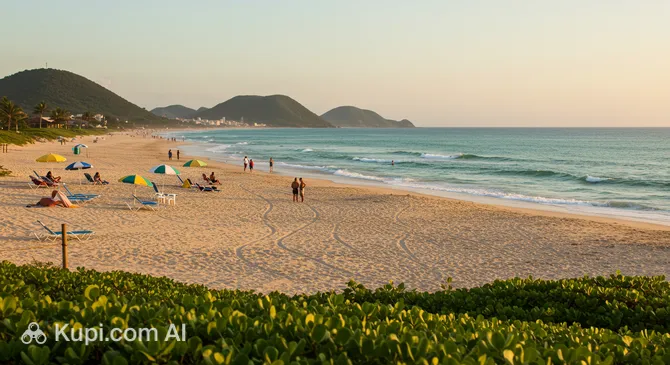
Camocim is a picturesque gem in the state of Ceará, located on the sunny northeastern coast. This city, where the majestic Coreaú River meets the waters of the Atlantic Ocean, attracts travelers with its calm atmosphere, authenticity, and stunning natural landscapes. If you want to see the real, non-touristy side of a country like Brazil, away from the noise of crowded metropolises, then this place is an ideal choice for your vacation.

Geographically, the city occupies a favorable position among dunes and mangroves. With a population of about 60,000 people, Camocim maintains the coziness and friendliness of a small settlement, yet possesses sufficient infrastructure for a comfortable stay. The local climate is hot and tropical, which guarantees excellent weather for a beach holiday practically any time of the year, while constant ocean breezes bring a pleasant freshness.
Camocim. Illustration.
Source: Kupi.com AI

The city has a special charm that has been shaped over centuries. The fascinating history of Camocim as an important port of the past has left its mark on the architecture of the historical center and cultural traditions, but today it is better known as the gateway to the unique natural wonders of the region.

Among the main attractions that bring tourists here, Love Island (Ilha do Amor), located directly opposite the city's waterfront, stands out. Its white dunes and beaches can be reached in just a few minutes by boat. The region is also famous for its ideal conditions for water sports such as kitesurfing and windsurfing, thanks to stable winds and the calm waters of the estuary.

Camocim invites you to slow down the pace of life, stroll along the colorful waterfront, and enjoy magnificent sunsets. This welcoming corner promises to provide bright emotions and a sense of complete unity with nature for every traveler.
Weather Overview

The climate of Camocim is typical of the tropical coast of Ceará state: eternal summer reigns here with high temperatures and plenty of sun. The average air temperature throughout the year remains remarkably stable, ranging from +26.8°C to +29.1°C. Even on the "coldest" nights, the thermometer rarely drops below +24.6°C, and during the day, the air often warms up to +30...+32°C.

Precipitation is distributed unevenly, clearly dividing the year into two seasons. The first half of the year, from January to May, is considered the wet period: the peak falls in March, when up to 30 rainy days are recorded. The second half of the year, especially from August to November, is characterized by dry weather, when rains are almost completely absent (0–1 rainy day per month). Expect hot weather year-round with frequent precipitation in the first half of the year and dry, sunny days in the second.

When planning a trip, it is important to consider these features to choose the ideal time for a beach holiday or sports. You can find out what the weather in Camocim is like now and get a detailed forecast for the coming days just before your flight, but the overall climate pattern remains predictable from year to year.

Average monthly temperature

Average monthly precipitation

Interesting Facts

Beyond the main attractions, Camocim holds many fascinating secrets and historical details that are revealed only to the most curious travelers. Here are a few facts that will allow you to look at this Brazilian city from a new perspective:
  • Home of an Aviation Pioneer. Camocim is the hometown of Euclides Pinto Martins, a famous pilot after whom the international airport in Fortaleza is named. In 1922, he completed a historic flight from New York to Rio de Janeiro, covering more than 5,000 kilometers over jungles and the ocean, which was a true feat for aviation at that time.

  • Railway Heritage. In the 19th century, the city was the terminus for one of the region's first railroads — the "Estrada de Ferro de Sobral." The tracks were laid directly to the water to facilitate the export of goods. Today, Camocim Pier serves as a reminder of this era, being a historical site where trains and sea vessels once met.

  • The Legend of the Buried Village. In the municipality of Camocim lies the settlement of Tatajuba, which underwent an amazing transformation. The old village was completely swallowed by moving sand dunes, and residents had to rebuild their homes at a safe distance. Locals say that in windy weather, the sands sometimes reveal the roofs of the old buildings.

  • The Island That Isn't an Island. The famous "Love Island" (Ilha do Amor), located opposite the city's waterfront, is technically a peninsula. It is connected to the mainland by a narrow sand spit, but due to the landscape, reaching it on foot is extremely difficult, so the boat crossing remains the main and most colorful way to reach its white beaches.

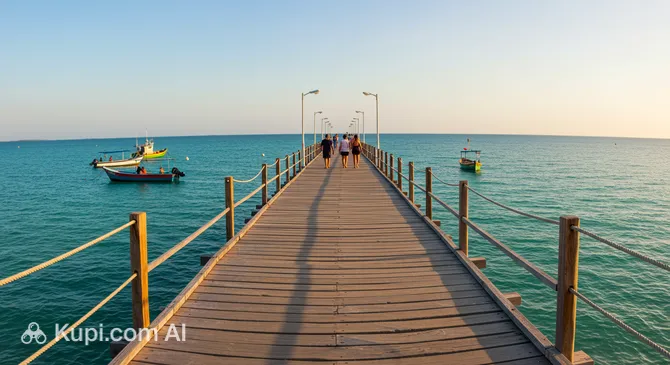
Camocim Pier. Illustration.
Source: Kupi.com AI

Traveler photos:

How to Get There

When planning a trip to the picturesque coast of Ceará, it's important to think through the logistics in advance. Since there are no direct flights to the city itself, travelers will have to take a combined route. You can find out more about how to get to Camocim by studying the available flight and ground transportation options.

There is no airport in the city of Camocim itself, so travelers usually fly to neighboring transportation hubs. The nearest airport is Jericoacoara (IATA: JJD). This regional airport is located in the village of Jericoacoara (municipality of Cruz), just 54 km from Camocim. This is the most convenient option for those who want to save time on the road: the journey by taxi or transfer will take approximately 1–1.5 hours. The airport receives flights from major Brazilian cities and is popular with tourists following the "Route of Emotions."

The region's main international hub is Pinto Martins Airport (IATA: FOR), located in the state capital, Fortaleza. It is significantly further away — approximately 274 km from Camocim. Despite the distance, this option is often chosen due to the large number of direct flights, including international ones. The journey from Fortaleza to Camocim by intercity bus or rental car will take about 4–5 hours. This is a great opportunity to see the changing landscapes of northeastern Brazil on the way to the ocean.

For clarity, here is a summary of the main airports used to reach the resort:

AirportPassenger trafficDistance
Jericoacoara312 35354 km
Santos Dumont26 61699 km
Sao Benedito (Walfrido Salmito de Almeida)1 644126 km
Barreirinhas30 000219 km
Pinto Martins Airport5.6 mln274 km

Rail service in this part of Brazil is not developed for passenger transport, so it is impossible to reach Camocim by train. The main transport arteries are the roads. After arriving at one of the airports, tourists most often use comfortable intercity buses that run regularly along the coast or book a private transfer. Another popular option is renting an SUV or buggy, which allows you to turn the journey into an exciting adventure through dunes and beaches.

Main Attractions

The main attractions of Camocim are inextricably linked to its unique landscape, where the river meets the ocean, and the city's history is woven into the everyday life of the coast. There are no pompous palaces here, but there are places that allow you to feel the true soul of this Brazilian region.

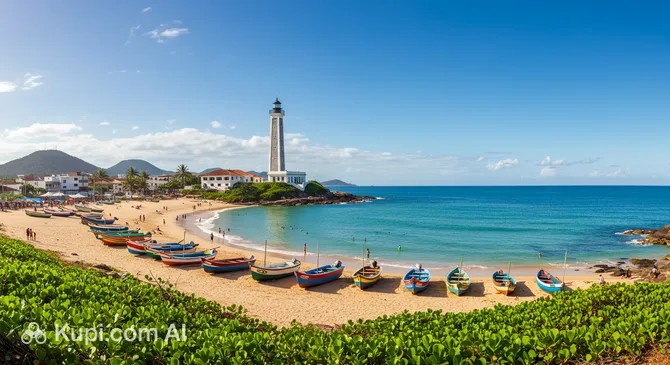
One of the most impressive spots is Barreiras Beach, located about 3 kilometers from the city center. This place is famous for its fantastic scenery: a wide strip of sand is framed by high reddish cliffs and dunes, creating an incredible contrast with the azure water and green coconut groves. Tourists come here for a peaceful holiday, warm natural pools that form at low tide, and the chance to enjoy fresh seafood in local beach huts.

Barreiras Beach. Illustration.
Source: Kupi.com AI

Traveler photos:

The heart of city life can easily be called Camocim Pier. This historical waterfront is the perfect place for evening walks when the heat subsides and a refreshing breeze blows from the ocean. The pier serves not only as a dock for boats heading to Love Island but also as a popular photo zone. A special atmosphere reigns here: locals come to fish or discuss the news, and travelers gather to watch the sun set directly into the waters of the Coreaú River.

To take in all the beauty of the region, it's worth visiting the place known as the Camocim Viewpoint. From this point, a breathtaking panorama opens up over the city, the winding riverbed, endless dunes, and the ocean horizon. This is the best location for panoramic photos and for understanding the local geography, allowing you to appreciate the scale and natural wealth of this corner of Ceará state.

Local Cuisine

Camocim's gastronomy is a vibrant reflection of the soul of Ceará, where fishing traditions intertwine with the richness of tropical nature. The foundation of local cuisine is, undoubtedly, the bounty of the sea. The city is famous for its fresh seafood, which reaches the table literally hours after being caught. A signature dish of the region is "peixada cearense" — a thick and aromatic fish stew with vegetables, hard-boiled eggs, and coconut milk, served with fluffy rice and pirão (a porridge made from cassava flour and fish broth).

You cannot leave Camocim without trying the famous local crabs (caranguejo) and lobsters. Since the city is one of the centers for lobster harvesting, they are prepared masterfully here and sold at prices significantly more pleasant than in major metropolises. As a side dish for seafood, "baião de dois" is often offered — a hearty dish of rice and beans mixed with local "coalho" cheese and clarified butter, which perfectly complements the light taste of the fish.

As for drinks, the absolute hit among non-alcoholic options is cajuína. This is a sweet, amber-colored drink made from cashew juice, considered a cultural heritage of northeastern Brazil. For cocktail lovers, it's worth ordering a caipirinha, but not the classic one with lime; try it with the region's exotic fruits: siriguela, graviola, or cajá. These fruits give the drink a unique aroma and a refreshing tartness that saves you from the heat.

The food culture in Camocim is relaxed and casual. People here are in no hurry, and the best "restaurants" are often simple beach huts called barracas. For example, while relaxing at Barreiras Beach, you can enjoy lunch with your feet literally buried in the sand while looking at the ocean. It is in such places that the food seems most delicious and the atmosphere most authentic.

If you want to see where all this gastronomic splendor comes from, take a morning walk to the area where Camocim Pier is located. This is where fishermen bring their catch, and you can find small snack bars offering simple but incredibly fresh dishes. In the evening, the city center comes alive, and tourists move to cozy cafes on the waterfront to enjoy dinner under the open sky to the sound of live music.

Travel Tips

Welcome to the sunny coast of the state of Ceará! To ensure your holiday in this cozy corner of Brazil is as comfortable and worry-free as possible, we have prepared a list of useful recommendations to help you easily adapt to the local rhythm of life and avoid minor troubles.

  1. Clothing and Climate. Eternal summer reigns in Camocim, so bring light clothing made from natural fabrics (cotton, linen). Be sure to pack a head covering that fits snugly (strong winds are frequent here) and sunglasses. For walking around the city and beaches, comfortable sandals or flip-flops are best; heels will be inappropriate and uncomfortable here.
  2. Transport Nuances. For short distances, the fastest and cheapest option is the mototáxi — drivers in vests can be found on every corner. If you are planning a trip to distant beaches, it is best to rent a buggy with a driver. Regular passenger cars can get stuck in the sand, so do not risk driving them near the water.
  3. Finance and Cash. The official currency is the Brazilian Real. Although supermarkets and hotels accept cards, you will definitely need cash to pay at markets, in beach huts (barracas), and for boat services. ATMs are available in the city center, but it's better to have a supply of small bills, as change may not be available.
  4. Health and Safety. Camocim is a peaceful city, but basic precautions are wise: do not leave belongings unattended on the beach. The main danger here is the active sun. Use a high SPF cream (50+) and drink only bottled water, avoiding tap water. Pharmacies in the center work well, but it's better to bring specific medications with you.
  5. Communication and Language. Few people here know English; the main language of communication is Portuguese. We recommend downloading an offline translator and learning a few basic phrases, such as "Obrigado" (thank you). Wi-Fi is available in most hotels and cafes, but for stable connection, it's better to buy a local SIM card (Vivo, Claro, or Tim) at mobile shops or pharmacies.
  6. Local Etiquette. People from the Northeast are very friendly and tactile. A greeting is often accompanied by a "thumbs up" gesture (joinha). Don't forget to greet shopkeepers and staff ("Bom dia" — good morning, "Boa tarde" — good afternoon). It's not common to rush here, so be patient if service in a restaurant takes a little longer than you're used to.
  7. What to Avoid. It is strictly discouraged to walk through the dunes alone without local knowledge — it's easy to get lost in the sand labyrinth. Also, avoid swimming in river mouths during strong low or high tides without consulting locals, as currents can be unpredictable.
  8. Consider the Siesta. Remember that Camocim lives in the relaxed rhythm of the province. Many shops and institutions close for a long lunch break from 12:00 to 14:00. Plan your shopping and important business for the morning hours or after lunch.

Following these simple tips will allow you to relax and fully immerse yourself in the hospitable atmosphere of Camocim. May your journey be filled with bright sunny days, gastronomic discoveries, and only pleasant impressions!

Entertainment & Nightlife

Nightlife in Camocim is fundamentally different from bustling metropolises like Rio de Janeiro or São Paulo. Here, you won't find huge nightclubs with laser shows, but you can immerse yourself in the authentic, relaxed, and incredibly friendly atmosphere of provincial Brazil. Evenings here are made for long conversations to the sound of the ocean, live music, and enjoying local drinks in the fresh air.

The epicenter of evening activity is the city's waterfront — Avenida Beira-Mar. This is where both tourists and locals flock as the sun sets. A stroll should begin at an iconic location such as Camocim Pier. In the evening, it is beautifully lit and becomes the main meeting place, where you can feel the rhythm of the city, watch the fishermen, and simply enjoy the sea breeze.

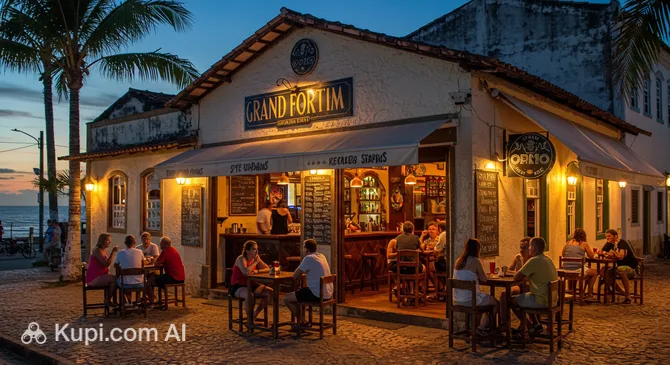
Along the waterfront and on the adjacent central streets, there are many bars and small restaurants. The format of the establishments is casual: tables are often set right on the sidewalk or the sand. One of the popular places for evening relaxation is the Grand Fortim Bar and Restaurant. This is an excellent establishment to try local snacks and cocktails in a lively setting.

Grand Fortim Bar & Restaurant. Illustration.
Source: Kupi.com AI

Traveler photos:

Music and Atmosphere. On weekends (Friday to Sunday), the nightlife comes alive thanks to live music. Bars often host local bands playing forró — an infectious genre that people dance to in pairs — as well as samba and MPB (modern Brazilian popular music). The crowd here is very diverse but always positive. There is no dress code: shorts, light dresses, and flip-flops are appropriate almost everywhere.

Practical Tips and Safety. Prices in Camocim's establishments will pleasantly surprise you with their affordability compared to major resorts. The busiest time is from 8:00 PM until midnight. The city center and the waterfront are considered safe areas for night walks, as they are always crowded and well-lit. However, wandering into dark, remote alleys is not recommended. If your hotel is far from the center, it's better to use a motorcycle taxi or call a regular taxi, which the establishment's staff can help with.

Regarding daytime entertainment of a cultural nature, Camocim does not abound with theaters or large museums. Nature serves as the main "stage" here, and the historic architecture of the center acts as the primary "exhibits." During the day, tourists usually head out on dune excursions or boat trips, leaving city entertainment for the evening.

Parks & Museums

In Camocim, you are unlikely to find huge museum complexes or classic European parks with fountains. However, this city itself is a living open-air museum, where colonial architecture sits alongside untouched natural reserves. Cultural and natural heritage are so closely intertwined here that a walk through the historical center flows seamlessly into an exploration of wild dunes and the ocean coast.

Natural Areas and Landscapes

The role of the city's main green zones is fulfilled by its unique coastal territories, protected by nature itself. One such gem is Barreiras Beach. It is not just a place for swimming, but an impressive natural park where majestic reddish cliffs (barreiras) hold back the onslaught of the ocean. A stroll here allows you to see a rare combination of ecosystems: mangroves, coconut groves, and sand dunes. Tourists come here for unity with nature and to observe the local fauna in its natural habitat.

Camocim Viewpoint. Illustration.
Source: Kupi.com AI

Traveler photos:

For those who want to appreciate the scale of local beauty from above, a visit to the Camocim Viewpoint is a must. This is a landscaped area that serves as a kind of hilltop park overlooking the city. From here, a panoramic view opens up of the winding Coreaú riverbed, mangrove forests, and the boundless ocean. It is an ideal place for meditative relaxation and photography, especially at sunset when nature is painted in golden tones.

Historical Heritage and Culture

The museum component of Camocim is concentrated in its architectural memory. The main historical monument, functioning as an open-air cultural center, is the old railway station complex. Its heart is considered to be Camocim Pier. Once the terminus of the important Sobral railway line, today this place serves as a monument to 19th-century engineering. Here, you can literally touch history, imagining how steam locomotives delivered cargo directly to the ships. The stonework and ancient structures of the pier attract history buffs and photographers alike.

Strolling through the center, pay attention to the 19th-century historical mansions, many of which are recognized as cultural heritage sites. The facades of these buildings, with their characteristic tiles and large windows, tell of the port's prosperous times better than any museum display. Special attention should be given to the old town hall building and the Church of Bom Jesus dos Navegantes, which is a spiritual symbol of the city.

Insider Tip: If you are looking for an authentic experience, head to the crossing over the Coreaú River. It is not an official museum, but it is here, watching the local boatmen and fishermen work on traditional "jangada" rafts, that you can see the living culture and way of life of the region, which has remained unchanged for decades.

Getting Around

The public transport system in Camocim differs significantly from what residents of major metropolises are used to. Due to the compact size of the city with a population of about 60,000, there are no subways, trams, or trolleybuses. The main transport burden falls on the roads, and movement is organized simply and intuitively, allowing tourists to quickly adapt to the local pace of life.

The most popular, fast, and affordable way to get around the city is the motorcycle taxi (mototáxi). This is the true "circulatory system" of Camocim. Drivers are easy to recognize by their special vests (usually yellow or orange) with an identification number. Motorcycle trips are inexpensive and allow you to reach any point in the city in a matter of minutes. For safety, always demand a helmet from the driver — this is a mandatory rule that is sometimes ignored.

Classic city buses are rare in Camocim and serve more to bring residents from outlying areas to the center. For tourists, they are not of great practical interest due to irregular schedules and the lack of clear route maps at stops. A more common alternative is small minibuses or "vans" that run between the city and neighboring settlements.

A special type of transport, without which it's impossible to imagine a holiday in this region, is the buggy. Although technically a tourist service, buggies serve as the primary transport for trips to beaches (such as Tatajuba or Maceió) that cannot be reached by a regular car due to sand and dunes. You can rent a buggy with a driver in the city center or through your hotel; it's not just a transfer, but a whole adventure.

Regarding taxis and modern apps, services like Uber or local equivalents operate in the city, but the wait time for a car may be longer than in capital cities. Regular taxis can be found at special ranks (ponto de táxi) near the bus station and major squares. It is recommended to clarify the approximate cost of the trip with the driver before boarding, as meters are not always used.

The fare payment system in Camocim is as conservative as possible: cash reigns here. You don't need to look for complex transport cards, monthly passes, or validators on buses. Payment is made directly to the driver (in taxis and mototáxis) or to the conductor. It is highly recommended to always carry small bills and coins in Brazilian Reais, as drivers may not have change for large banknotes.

Don't forget about water transport. To reach the popular Love Island (Ilha do Amor), you will have to use the services of boatmen on the waterfront. Small motorboats run constantly during daylight hours. A ticket is bought right on the spot for cash, and the crossing takes only a few minutes. This is not just a necessity, but a colorful part of the tourist experience in Camocim.

Accommodation

The choice of accommodation in Camocim will pleasantly surprise travelers with its variety and local flavor. Unlike large metropolises, here you will find not faceless chain hotels, but cozy guesthouses and colorful inns, which in Brazil are called "pousadas." Tourists can find options for every taste: from budget hostels for backpackers and kitesurfers to comfortable mid-range hotels and resort complexes with swimming pools.

Best Areas to Stay

When choosing a location, it is worth focusing on the purpose of your visit. Most tourists prefer to stay in the Center (Centro) or along the Beira-Mar waterfront. This is a strategically convenient spot: shops, restaurants, historical buildings, and the pier for boats to the beaches are all nearby. Staying here will allow you to be in the thick of things and enjoy evening walks by the river without needing to take a taxi.

If you are looking for privacy and quiet, consider accommodation options closer to the beaches, for example, in the Praia de Barreiras or Olaria areas. Here you can rent a bungalow or a room with a view of the dunes and the ocean, falling asleep to the sound of the waves. This is an ideal choice for a romantic getaway or complete relaxation in the heart of nature.

Popular Hotels

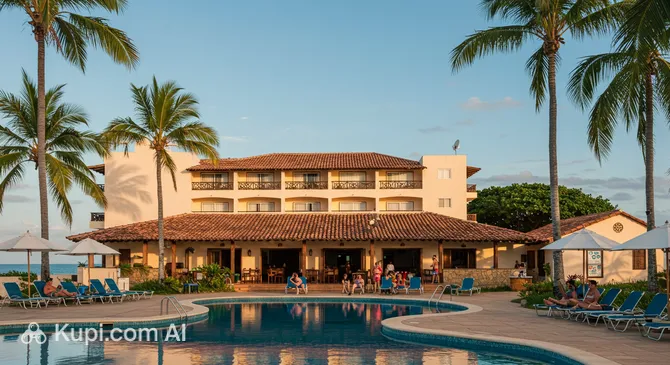
Although the city's hotel base consists mainly of small family establishments, there are also larger complexes offering a high level of service. A striking example is Sun City Rota das Emoções. This resort hotel is perfect for those who are not ready to sacrifice comfort: here, guests will find modern amenities, a well-maintained area, and a relaxing atmosphere, making it an excellent base for exploring the region.

Sun City Rota das Emoções. Illustration.
Source: Kupi.com AI

Traveler photos:

Prices and Booking

The pricing policy in Camocim is generally more affordable compared to the neighboring and highly promoted resort of Jericoacoara.

  • Budget Segment: Simple rooms in hostels or inexpensive pousadas are available at very attractive prices.
  • Middle Class and Above: The cost of staying in hotels with a pool, breakfast, and air conditioning will be higher but still remains reasonable for a popular tourist destination.

Booking Tips

Despite Camocim being a quiet city, demand for housing rises sharply during peak periods. It is highly recommended to book rooms in advance (1–2 months) if your trip falls during:

  • Brazilian public holidays and Carnival;
  • The windy season (from July to December), when kitesurfing enthusiasts from all over the world flock to the coast;
  • New Year's holidays.

Accommodation can be booked through popular international online platforms, but many small pousadas also actively take bookings via messaging apps or social networks, which is common practice in Brazil.

Nearby Cities

For those wanting to explore the surroundings, Camocim serves as an excellent starting point for day trips to several interesting nearby locations. The city's location allows for easy access to both mountainous areas with a cool climate and other gems of the coast.

One of the most popular destinations is Parnaíba. This city is known as the gateway to the famous Parnaíba Delta — the only estuary in the Americas that flows into the open sea. Travelers go there to take a boat trip through the labyrinths of rivers, see mangrove forests, and spot scarlet ibises. Additionally, the city's historical center attracts visitors with its colonial architecture.

If you want to change the scenery and enjoy mountain freshness, it's worth heading to Viçosa do Ceará. The city is located in the Serra da Ibiapaba mountain range and is famous for its pleasant climate, waterfalls, and the oldest church in the state. This is an ideal place for ecotourism and learning about the region's history. Another interesting option is Sobral, a major cultural and university center whose historic ensemble is recognized as a Brazilian national heritage site.

CityPopulationDistance
Barroquinha14 47635 km
Jericoacoara17 00238 km
Martinopole10 21439 km
Chaval12 61547 km
Uruoca12 88355 km

These nearby destinations provide an insight into the diverse culture and landscapes of the region, making your journey even more fulfilling.

Shopping & Souvenirs

Shopping in Camocim is not a chase for global brands in huge shopping centers, but rather an opportunity to touch the local culture and take home a piece of authentic Brazil. Trade here is organized simply and comfortably: it is concentrated in colorful markets, small shops, and craft workshops. Travelers should look forward to buying unique regional products, the freshest seafood, and handmade items that cannot be found in mass-market stores.

The heart of the city's commercial life is its Center (Centro). The main activity buzzes on the streets adjacent to the main square and the waterfront. Rua 24 de Maio and neighboring alleys are filled with clothing and shoe stores, pharmacies, and hardware shops. Here you can buy everything you need for a beach holiday: from flip-flops of famous Brazilian brands to swimwear and sunscreens. A walk through this area will allow you to see the everyday life of the citizens without the tourist tinsel.

There are no large malls or city-style shopping centers in Camocim. Lovers of air-conditioned galleries should look for small shopping passages in the center, which may house boutiques of local brands. However, the real "shopping center" of this city is in the open air — its busy streets and waterfront, where the evening coolness is conducive to leisurely shopping.

The most colorful place for shopping is, undoubtedly, the Mercado Público de Camocim (Public Market). This place is a must-visit even for those who don't plan on buying anything. An incredible atmosphere reigns here: stalls are overflowing with exotic fruits (cashew, acerola, graviola), vegetables, and spices. The fish department deserves special attention, where the morning catch — shrimp, crabs, and fish — is sold at very attractive prices. Near the market and the historical area where Camocim Pier is located, you can often find fishermen offering the freshest seafood directly from their boats.

Camocim Pier. Illustration.
Source: Kupi.com AI

Traveler photos:

If you are looking for a gift to bring back, head to the Centro de Artesanato (Craft Center), located on Beira-Mar Avenue. This is a treasure trove of folk art from the state of Ceará. Popular souvenirs include:

  • Lace and Embroidery: Tablecloths, napkins, and clothing created by local craftswomen are famous for their quality and elegance.
  • Carnauba Straw Crafts: Hats, bags, and baskets woven from the leaves of the "tree of life," as the carnauba palm is called here.
  • Jangada Miniatures: Small copies of traditional sailing boats, which are a symbol of the region.
  • Cajuína: The famous amber-colored non-alcoholic cashew drink — a delicious and healthy gastronomic souvenir.
  • Bottled Butter (Manteiga da terra): Liquid clarified butter that gives dishes the unique taste of northeastern cuisine.

Most shops in the city are open from 08:00 to 18:00 on weekdays, with a lunch break (usually from 12:00 to 14:00). On Saturdays, trade winds down by noon, and on Sundays, only supermarkets and on-call pharmacies are open. The market is best visited early in the morning while the goods are at their freshest.

Regarding payment, supermarkets, pharmacies, and most shops in the center accept credit and debit cards without problems. However, at the market, in souvenir shops on the waterfront, or when buying from street vendors, you will need cash Reais. The Tax-Free system (tax refund) is not common in small Brazilian towns like Camocim, so you shouldn't count on it.

Have you reached the end of the page?

So the route has been studied inside and out