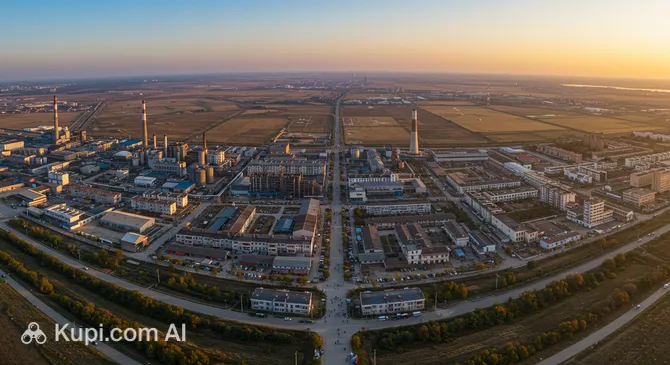
Located in the picturesque northeast of China, the city of Shuangyashan enchants travelers with its unique blend of industrial heritage and ecological present. The city's name poetically translates as "a pair of duck mountains," immediately setting the stage for an encounter with the rich nature of the Heilongjiang region. Home to over 1.4 million people, the city is surrounded by dense forests and majestic mountains, creating an atmosphere of seclusion and tranquility.
For a long time, Shuangyashan was primarily known as a major coal-mining center, but today it is undergoing a remarkable transformation. If you are interested in the heritage and development of the city, it is worth looking into the pages of the history of Shuangyashan, which detail how a working settlement evolved into a modern metropolis striving for harmony with the environment.
Shuangyashan. Illustration.
Source: Kupi.com AI
The main magnets for tourists here are pristine wetland reserves and national-level ecological zones. Visitors can enjoy the purest air in forest parks or visit religious sites, such as the majestic 33-meter statue of Buddha. Shuangyashan invites everyone seeking authentic Chinese flavor away from the beaten tourist tracks, promising a warm welcome and unforgettable landscapes.
Weather Overview
Shuangyashan is located in a continental climate zone, which implies distinct seasons. Winters here are long, dry, and freezing: average temperatures in January drop to -17°C, while nightly lows can reach -22°C. In contrast, summer is warm and quite humid, with comfortable daytime temperatures around +23°C — +27°C in July.
Precipitation is unevenly distributed—most of it falls between June and August when the region is under the influence of monsoons. For those who want to study the climate of Shuangyashan in detail before their trip, keep in mind that spring and autumn here are short but incredibly beautiful: spring delights with blooming azaleas, and autumn with the famous multicolored forests.
Travelers are recommended to bring warm, windproof clothing if the trip is planned for the shoulder seasons, and heavy winter gear for visiting the city during the period of snow-capped peaks. Summer rains are usually short-lived but can be intense, so an umbrella or raincoat will not be out of place.
Average monthly temperature
Average monthly precipitation
Interesting Facts
Shuangyashan is a place with a unique character and hidden treasures that make exploring it truly exciting. Here are some curious facts about this city:
A descriptive name: The toponym "Shuangyashan" literally means "Pair of Duck Mountains," referring to two characteristic peaks shaped like ducks.
Environmental leader: Despite its industrial past, the city has been recognized as the best in Heilongjiang Province for six consecutive years for its efficiency in environmental protection and pollution control.
Giant shrine: The statue of Bodhisattva Guanyin on Mother Buddha Mountain stands exactly 33 meters tall, making it one of the most prominent religious monuments in the region.
Coal-born: The city's modern history began in 1947 with the opening of the first coal mines, and in just a decade, the mining district grew to the status of a county-level city.
Ancient roots: The lands around Shuangyashan are the historical homeland of the Sushen people—distant ancestors of the modern Manchus.
How to Get There
Shuangyashan, located in Heilongjiang Province, is an important transport link in the country's northeast. You can get here through major regional centers using an extensive network of railways and highways. To plan your route in advance and learn about the most convenient connections, we recommend studying the detailed information on how to get to Shuangyashan.
While the city itself does not have a major international airport, travelers often use the air hubs of neighboring cities such as Jiamusi or Harbin, from where buses and trains regularly run to Shuangyashan.
Railway communication remains one of the most reliable and popular ways to travel. The city's train station receives trains from various points in the province, providing comfortable connections with the main economic centers of the northeast.
Station
Passenger traffic
Distance
Jiamusi Railway Station
6
62 km
Jixi Railway Station
3
150 km
Lazo Station
20,000
210 km
Dalnerechensk-1 Station
150,000
213 km
Ruzhino Station
250,000
218 km
Main Attractions
The city's main spiritual and architectural landmark is the majestic statue of the Buddha Bodhisattva Guanyin. Erected on Mother Buddha Mountain, this 33-meter-high figure impresses with its artistic value and peaceful appearance. Nearby is the Zhongdao Temple, which includes the Jizang and Daxiong Baodian halls. This site, surrounded by clean mountain air, is ideal for relaxation and contemplation.
For those who want to see the city from a bird's-eye view, a visit to Double Duck Mountain is a must. It is the silhouette of this mountain that gave the city its name. Climbing to the top rewards you with panoramic views of the surroundings, where urban blocks meet endless forest tracts.
The natural beauty of the region is particularly vivid in the Sifangtai area. Here lies the Ziyunling Forest Park, which becomes a place of pilgrimage for photographers in spring. In April and May, the mountain slopes are covered with a carpet of blooming wild azaleas, creating an incredibly picturesque landscape known as the "Purple Romance of the North."
Local Cuisine
A gastronomic journey to Shuangyashan is an introduction to the hearty and aromatic Northeast Chinese cuisine (Dongbei). Local culinary traditions were shaped by Manchu culture and the harsh climate, so dishes here are characterized by their nutritional value and rich flavor. The main emphasis is on stewing and using fermented products.
Among the dishes that are definitely worth trying are blood sausage and the famous sour meat with cabbage (Suancai rou). Fans of delicacies will enjoy garlic heart meat—a traditional treat with a strong aroma. The general character of the local cuisine can be described as home-style and solid, where large portions are the norm of hospitality.
For authentic flavors, locals often head to establishments like "Lao Liu Shazhucai," where cooking secrets are passed down through generations. Street food also plays an important role in the city's life: in small markets, you can find freshly prepared snacks reflecting the region's gastronomic heritage at very affordable prices.
Travel Tips
Planning a trip to Shuangyashan? These practical tips will help make your journey comfortable, safe, and truly memorable.
Clothing and gear: Given its northeastern location, pack layers. Winters here are harsh, while summers are warm but rainy. For walks in the mountains and parks, comfortable trekking shoes are essential. If you plan to visit temples, choose modest, closed clothing.
Getting around town: The main methods of transportation are buses and taxis. Install Chinese ride-hailing apps (like DiDi); this will significantly simplify communication with drivers.
Finances: The official currency is the yuan. International cards are rarely accepted, so be sure to set up AliPay or WeChat Pay linked to your card. Always keep a small supply of cash for markets and small shops.
Health: Pharmacies are common, but medication names will be in Chinese. It is recommended to carry a basic first-aid kit. You should not drink tap water—use bottled water instead.
Connectivity: Buy a local SIM card for internet access. Remember that a VPN may be required to access familiar Western services in China. Hotels usually have Wi-Fi, but its speed can vary.
Etiquette and communication: The main language is the Manchu dialect of Chinese. English is not widely spoken, so download an offline translator. Greet locals with a slight nod and be polite and patient.
What to avoid: It is best to avoid discussing sensitive political topics. Also, avoid photographing military or restricted facilities without explicit permission.
Best time to visit: It is ideal to visit the city in April-May for the azalea bloom or in September-October to catch the incredible colors of autumn in the Wuhua forests.
Shuangyashan is a city that reveals itself to those ready to step off the beaten path. Have a pleasant journey to this green heart of Northeast China!
Entertainment & Nightlife
The entertainment program in Shuangyashan is primarily aimed at outdoor enthusiasts and nature lovers. During the day, the city offers excellent opportunities for hiking, camping, and professional photography in numerous forest parks. The picturesque landscapes around the Wuhua Mountains and Heilongtan Lake serve as natural venues for outdoor recreation.
The city's cultural life is centered around its museums and theaters, where you can learn about the traditions of the Manchu people. In the evenings, locals prefer to spend time in cozy restaurants, sampling Northeast Chinese cuisine, or strolling through illuminated park areas. Nightlife in the classic sense of a major metropolis is moderately developed here, emphasizing the city's status as a center for ecological and quiet tourism.
Safety in the city is at a high level, allowing for evening walks in central districts and along the embankments without concern. For travel after dark, it is recommended to use official taxi apps, which provide comfortable and quick transfers to your hotel.
Parks & Museums
The city's natural heritage is represented by the magnificent Qingshan National Forest Park. This is an AAAA-level site where you can find true peace among ancient red pines and snow-capped peaks. Heilongtan Lake is particularly popular, reflecting the surrounding mountains in its mirror-like surface, while the slopes of Wuhua turn all shades of gold and crimson in the fall.
For ecology lovers, the Anbang River Wetland Park in Beixing village will be a real discovery. It is a unique ecosystem with rich biodiversity where you can observe rare birds, admire blooming lotuses, or spend time fishing quietly. Another green oasis is Beixiu Park, offering diverse landscapes that change beyond recognition depending on the season.
The Shuangyashan Museum will help you dive into the region's history and culture. This is a Class III national museum, housing exhibits that tell the story of the lives of ancient Manchu ancestors, the region's natural wealth, and the city's industrial transformation. Visiting the museum is a great way to understand how the identity of this amazing corner of China was formed.
Getting Around
Shuangyashan's transport system is typical of a medium-sized Chinese city and is designed for the convenience of locals and visitors. The backbone of public transport consists of bus routes covering all key areas of the city and connecting the center with adjacent villages and industrial zones. Bus fares are low, making them the most budget-friendly way to get around.
For faster and more comfortable travel, tourists often choose taxis. Both traditional services and modern mobile aggregators operate in the city. A car is easy to hail on the street in central areas or call through an app. This is a convenient option for trips to remote attractions such as national parks or temple complexes on the outskirts.
Fares are most often paid via WeChat Pay or Alipay mobile systems, which have become the standard in China. Nevertheless, it is recommended to carry a small amount of cash in yuan for payment on buses not equipped with scanners. Bicycle rentals and electric scooters are also starting to gain popularity, offering an excellent alternative for short trips through the city's park areas.
Accommodation
Shuangyashan's hotel infrastructure offers travelers a decent choice of accommodation options catering to different budgets. Mid-range hotels prevail in the city center, offering quality service and convenient access to administrative sites and shopping areas. For those who prefer a more budget-friendly stay, small guesthouses and apartments for rent are available.
In recent years, due to the development of ecological tourism, specialized holiday bases have begun to appear near nature reserves and national parks. Staying in such places allows you to fully enjoy the silence and beauty of nature without sacrificing basic comforts. The areas near Double Duck Mountain and Qingshan National Park are particularly popular.
It is recommended to book accommodation in advance, especially if your trip coincides with the azalea blooming period (April-May) or the autumn season when the city hosts many tourists. To find a suitable option, it is best to use trusted international booking systems, paying attention to reviews about Wi-Fi quality and the availability of English-speaking staff.
Nearby Cities
Shuangyashan is an excellent starting point for those who want to explore Heilongjiang Province in more detail. The proximity to several interesting towns allows for planning rich day trips, discovering the diversity of Northeast China.
Just 9 kilometers away is the cozy town of Jixian, which is worth a visit for a leisurely stroll. The much larger Jiamusi, located 66 kilometers away, offers tourists developed infrastructure, beautiful embankments along the Songhua River, and many parks. Also worth noting is Fujin, which is famous for its agricultural traditions and hospitality.
Exploring the surroundings of Shuangyashan is a great opportunity to see life in the Chinese province without the hustle and bustle of big metropolises. Each of these destinations possesses its own unique charm and allows for a better understanding of the region's cultural code.
Shopping & Souvenirs
Shopping in Shuangyashan offers tourists an interesting mix of modern retail formats and traditional markets. While the city doesn't claim to be a fashion capital, you can find unique goods here that reflect the ecological purity and cultural heritage of Northeast China.
Major shopping activities are concentrated in the central districts, where modern shopping malls are located. You can find popular clothing brands, electronics, and cosmetics there. For a more colorful experience, head to the local markets, where a lively atmosphere prevails and stalls are overflowing with fresh local produce and folk crafts.
As souvenirs from Shuangyashan, it is worth bringing back items related to Sushen culture and Manchu traditions. Regionally pure ecological products are also valued: honey, wild herb collections, and mushrooms from the local forests. Shops usually operate from morning until late evening, and it is best to use popular Chinese mobile apps for payment, although cash yuan is still widely accepted.