Support

Chiquinquira

About

Chiquinquirá is a charming city nestled in the northwest of the Boyacá department, in the heart of the Colombian Andes. The city is situated at an altitude of approximately 2,556 meters above sea level, giving it a mild mountain climate and breathtaking panoramic views of the surrounding hills and valleys. An atmosphere of peace and freshness reigns here, perfect for leisurely strolls and contemplation.

With a population of about 85,000 people, Chiquinquirá retains the spirit of an intimate colonial town, where every corner is steeped in history. This city is not only the administrative center of the municipality of the same name but also one of the main religious centers of Colombia. Its special, measured, and friendly atmosphere, filled with traditions and the hospitality of the locals, attracts many visitors.
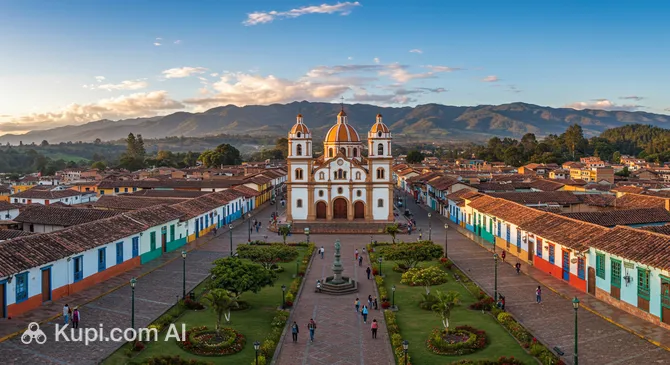
Chiquinquira. Illustration.
Source: Kupi.com AI

One of the key attractions that makes Chiquinquirá famous far beyond the region is the majestic Basilica of Our Lady of the Rosary of Chiquinquirá—a place of pilgrimage and an important spiritual symbol. In addition, the city attracts visitors with its colorful streets, ancient churches, and cozy squares, where you can feel the authentic spirit of the Latin American province. There is no hustle and bustle of megacities here, but there is an opportunity to immerse yourself in a rich culture and history.

If you are looking for a place to get to know the real, non-touristy Colombia, and want to enjoy beautiful architecture, tranquility, and hospitality, Chiquinquirá will be a pleasant discovery for you. This city will undoubtedly leave warm memories and a desire to return.

You can find more interesting facts on the history of Chiquinquirá page.

Weather Overview

The weather in Chiquinquirá is characterized by relatively stable temperatures throughout the year. The average monthly temperature ranges from 16.5°C (December) to 17.6°C (May). Maximum daytime temperatures usually stay around 20.6°C - 21.9°C, while minimum nighttime temperatures drop to 11.8°C - 13.7°C. Precipitation in Chiquinquirá occurs quite frequently throughout the year, with the highest number of rainy days and volume of rainfall typically in April, May, and October. During these months, there can be up to 30 rainy days, and rainfall reaching 9-10 mm. The least rainy months are January and February. Overall, expect mild weather with frequent but usually not heavy rain. Find out more about the climate of Chiquinquirá to better plan your trip.

Average monthly temperature

Average monthly precipitation

Interesting Facts

In addition to its famous shrines and status as a religious center, Chiquinquirá holds many fascinating secrets and little-known details that give this Colombian city a special charm. Ready to learn a few of them?

  • Not many people know that Chiquinquirá holds the proud, albeit unofficial, title of the religious capital of Colombia. It is here that one of the country's main shrines is kept—the miraculous icon of the Virgin of Chiquinquirá, revered as the patroness of all Colombia. Legends say that the image has repeatedly shown miracles of healing and salvation.

  • The majestic basilica on the central square is not just an architectural masterpiece of the colonial era. It is said that inside it reigns a very special, almost mystical atmosphere, where light penetrating through old stained-glass windows and silence create a feeling of touching centuries-old secrets associated with the miracles of the Virgin Mary.

  • Imagine this: an old railway station built in the 1920s, where the life of travelers once bustled, did not sink into oblivion but found a second birth! Today, this building has been transformed into a lively Palace of Culture, hosting exhibitions, concerts, and other cultural events, becoming a symbol of how the townspeople carefully preserve their heritage, filling it with new meaning.

  • While many cities in Colombia are famous for their festivals, the annual Fiesta of Our Lady of Chiquinquirá is something special. During these days, the city is literally transformed: the streets are drowned in flowers, colorful processions, concerts, and folk festivals take place, and you can see not just a tourist show, but the true spirit and traditions of the local residents.

How to Get There

When planning a trip to this colorful Colombian city, it is important to think about the route in advance, as there is no direct air service to it. You can find out more about how to get to Chiquinquirá by studying all available options, but the country's capital is the main transit hub for most tourists.

There is no airport in the city of Chiquinquirá itself. The most convenient and popular option is to fly into El Dorado Airport (IATA: BOG), located in Bogotá. This is the country's largest aviation hub, receiving many international flights. The distance from the airport to the center of Chiquinquirá is about 107 km. The journey by taxi or bus through scenic mountainous terrain will take approximately 3 hours.

Alternatively, you could consider arriving in other major cities, although the journey from them will be significantly longer. For example, José María Córdova International Airport (IATA: MDE) is located in Medellín, at a distance of about 188 km from Chiquinquirá (approximately 5 hours away). Also available is Palonegro International Airport (IATA: BGA) in Bucaramanga, 181 km away. Given Colombia's mountainous terrain, a trip by land from these airports will take more time than from the capital.

For clarity, here is a summary of the main airports through which you can reach the region:

AirportPassenger trafficDistance
El Dorado International Airport45.8 mln107 km
San Gil (Los Pozos)132 km
La Vanguardia Airport471 134162 km
El Yopal Airport448 700162 km
Palonegro International Airport2.2 mln181 km

Regarding rail transport, there is currently no passenger service to Chiquinquirá, and it is impossible to get here by train. The main method of travel between cities in this region remains the road. The most common option after arriving in Colombia is to use an intercity bus. Comfortable buses regularly depart from Bogotá (from the Salitre or Terminal del Norte terminals), taking you directly to the center of Chiquinquirá.

Main Attractions

Chiquinquirá, an important religious and cultural center of Colombia, attracts pilgrims and tourists with its unique sights. The heart of the city is undoubtedly the Basilica of Our Lady of the Rosary of Chiquinquirá (Basílica de Nuestra Señora del Rosario de Chiquinquirá). This majestic structure not only impresses with its architecture but also houses the country's main shrine—the miraculous image of the Virgin of Chiquinquirá, the patroness of Colombia. Every year, thousands of believers come here to see the relic and pray.

Not far from the basilica lies Julio Flórez Park (Parque Julio Flórez), named after the famous Colombian poet. This green oasis in the city center is a popular spot for relaxation for both locals and tourists. Here you can walk along shady alleys, rest on a bench while watching the slow pace of city life, and admire the surrounding colonial buildings.

For lovers of art and history, the Rómulo Rozo Palace of Culture (Palacio de la Cultura Rómulo Rozo) will be of interest. This building often serves as a venue for various exhibitions, displays, and cultural events, introducing visitors to the work of Colombian masters and the history of the region. The building itself is also of architectural interest.

Another iconic place shrouded in legends is the Well of the Old Woman (Pozo de la Vieja). According to legend, it was here that the miraculous renewal of the icon of the Virgin of Chiquinquirá took place. Today, this site is part of the pilgrimage route and attracts those who want to touch the history of the origin of the main shrine of the city and the country.

Local Cuisine

The gastronomy of Chiquinquirá is a fascinating journey into the culinary traditions of the Boyacá region, where indigenous recipes are harmoniously intertwined with Spanish heritage. The city will delight you with authentic flavors and hearty dishes prepared with soul. Here you can truly feel the flavor of Colombian cuisine.

Be sure to try the famous arepas—corn cakes that are a hallmark of the region. In Chiquinquirá, they are often cooked over an open fire and generously stuffed with fresh local cheese. This is an ideal option for breakfast or a hearty snack. Another iconic dish is ajiaco, a thick and aromatic soup with several types of potatoes, corn, chicken, and herbs. It warms and satisfies perfectly, especially in cool weather.

Among the drinks, aguapanela stands out—a traditional sweet drink made from panela (unrefined cane sugar). It is drunk both hot and cold, often with lime or cheese added for a special flavor. In local markets, you will also find an abundance of fresh fruits, from which refreshing juices are prepared. Locals prefer to eat in small family cafes serving home-cooked meals, as well as in markets where you can taste the freshest products. During city holidays and festivals, the streets are filled with the aromas of street food, offering even more opportunities for gastronomic discoveries.

Travel Tips

Welcome to Chiquinquirá! To make your journey to this important spiritual center of Colombia as comfortable and memorable as possible, we have prepared some practical tips. They will help you better navigate and enjoy your stay in this unique city.

  1. Clothing and Essentials:

    Chiquinquirá is located in the mountainous Boyacá region, so the climate here is temperate, with cool evenings and nights. We recommend bringing clothing that can be layered: T-shirts, sweaters, and a light jacket or windbreaker. Be sure to pack comfortable shoes for walking around the city and visiting sights. Don't forget sunscreen, a hat, and sunglasses, as the mountain sun can be strong. Since Chiquinquirá is an important pilgrimage center, please observe a dress code when visiting the Basilica and other religious sites: clothing should cover shoulders and knees. For electrical appliances, you may need an adapter (Colombia uses type A and B sockets, 110V voltage).

  2. City Transport:

    Getting around Chiquinquirá is most convenient on foot, especially if you are staying in the city center, as the main attractions are within walking distance. Public transport consists mainly of buses and shared taxis ("busetas" or "colectivos") that run along the main streets. Taxis are also available; it is recommended to agree on a price for the trip in advance or ensure the driver turns on the taximeter (if there is one). Taxi apps may have limited coverage in small towns. A car rental is unlikely to be necessary for moving within the city itself but could be an option if you plan to explore the surrounding Boyacá region.

  3. Finance:

    The local currency is the Colombian peso (COP). You can exchange money at banks or exchange offices ("casas de cambio"), although the best rates are usually offered in large cities. In Chiquinquirá, credit and debit cards (Visa, Mastercard) are accepted in hotels, some restaurants, and large stores, but always have cash with you for small purchases, public transport, and markets. ATMs are available, but check your bank's potential fees. An approximate daily budget can range from 100,000 to 200,000 COP (about 25-50 USD) per person, excluding accommodation, depending on your preferences. Tips in restaurants are usually 10% and are sometimes already included in the bill as "propina voluntaria" (voluntary tip).

  4. Health and Safety:

    Pharmacies ("droguerías") are easy to find in the city. Some may work 24 hours, but it's better to check in advance. Before your trip, it is recommended to get travel medical insurance. Chiquinquirá is generally considered a safe city, especially given its status as a religious center. Nevertheless, follow standard precautions: watch your belongings, especially in crowded places, and avoid walking in poorly lit areas after dark. Keep in mind that the city is at an altitude of about 2,550 meters above sea level—give yourself time to acclimate, drink more water, and don't overexert yourself in the first few days.

  5. Communication:

    The official language is Spanish. The level of English proficiency among the local population may not be high, so knowing basic phrases in Spanish will significantly ease your communication. For example: "Hola" (Hello), "Gracias" (Thank you), "Por favor" (Please), "¿Cuánto cuesta?" (How much does it cost?). A local SIM card can be purchased at the offices of mobile operators (Claro, Movistar, Tigo). Wi-Fi is available in most hotels and some cafes. Offline maps and a translator on your smartphone can be very useful.

  6. Local Etiquette:

    Colombians are generally very polite and friendly. It is customary to greet people ("Buenos días"—good morning, "Buenas tardes"—good afternoon/evening, "Buenas noches"—good night) and say goodbye. Using the formal "You" ("Usted") for strangers and elders is the norm. Be patient and smile—it is always appreciated. When visiting churches, especially the Basilica of Our Lady of the Rosary of Chiquinquirá, behave respectfully, do not talk loudly, and follow the established rules.

  7. What to Avoid:

    Try not to take photos of people without their permission, especially in a religious context. Also, given the deep religiosity of the region, avoid disrespectful remarks or behavior near shrines and during religious ceremonies. This could be taken as an insult.

  8. Special Advice:

    Chiquinquirá is the heart of religious tourism in Colombia. Try to soak up this atmosphere: attend masses in the Basilica if it aligns with your interests, or simply observe the life of the city, which is closely tied to faith. It is also worth trying local culinary specialties from the Boyacá region, such as "arepas boyacenses" (corn cakes with cheese) and "almojábanas" (cheese buns).

We hope these tips help you plan an unforgettable trip to Chiquinquirá. This city, with its rich history and spiritual atmosphere, is sure to leave you with warm memories!

Entertainment & Nightlife

Chiquinquirá, a well-known spiritual center of Colombia, offers its guests not only pilgrimage routes but also opportunities for pleasant evening leisure. Although the city cannot boast of the wild 24-hour parties found in large metropolises, you can find cozy places here to relax after a busy day and feel the authentic local flavor.

The main evening activity in Chiquinquirá is concentrated in the central part of the city, especially around the main square (Plaza de Bolívar) and its adjacent streets. Here you will find traditional Colombian bars where lively local music often plays—from vallenato and cumbia to salsa. While we cannot provide a list of specific venues with links at this time due to lack of data in our system, we recommend looking for "Bar" or "Restaurante" signs mentioning live music ("música en vivo"). Small restaurants offering regional Boyacá cuisine are also popular. The atmosphere in most establishments is relaxed and friendly, encouraging conversation. The dress code is generally casual.

For those looking to dance, there are small nightclubs ("discotecas") in Chiquinquirá that come alive closer to the weekend, especially on Friday and Saturday nights. Local youth usually gather in these places to have fun to popular Latin American and international hits. There are few specialized large concert venues in the city; live music is most often part of the atmosphere in bars and restaurants. Night markets are not a typical feature of Chiquinquirá; evening leisure here is more about visiting establishments or taking leisurely walks through the illuminated center. Many bars and restaurants stay open until late evening, allowing you to enjoy dinner or drinks without rushing. Prices for food and drinks in Chiquinquirá are usually very affordable.

The best time to experience the city's evening life is certainly Friday and Saturday. For getting around Chiquinquirá after dark, it is strongly recommended to use official taxi services. You can usually order a taxi by phone or through hotel or restaurant staff. Although Chiquinquirá is considered a relatively quiet city, it is always worth following standard precautions: avoid poorly lit and deserted streets, especially if you are alone, and keep a close eye on your personal belongings.

To find the most interesting places for evening relaxation, we suggest walking around the city center or simply asking locals for advice—they will be happy to tell you where to have a good time. Look for places where music and laughter can be heard—this is a sure sign of a popular spot.

During the day, Chiquinquirá offers completely different types of leisure. The city's main attraction is the majestic Basilica of Our Lady of the Rosary of Chiquinquirá, which attracts pilgrims from all over the country. You can spend time pleasantly walking through well-kept city parks or exploring colorful local markets where you can find fresh produce and souvenirs. You are unlikely to find large repertoire theaters in Chiquinquirá, but cultural events or small performances may take place in local cultural centers or during city holidays. As for amusement parks, there are no large complexes in the city; family leisure is more about walks and visiting local fairs if they are being held.

Parks & Museums

Chiquinquirá, a well-known religious center of Colombia, offers its guests not only pilgrimage routes but also opportunities for quiet relaxation in nature and getting to know the local culture. The city boasts cozy green corners and places that preserve its rich history.

In Chiquinquirá, there are several pleasant places for outdoor recreation. The central public space is Plaza de Bolívar, located in the heart of the city. It is not just an open area, but the center of social life, surrounded by important buildings, where you can rest on a bench while watching the daily hustle and bustle. Another significant green corner is Julio Flórez Park (Parque Julio Flórez). Named after the famous Colombian poet, this park serves as a popular place for walks, residents' relaxation, and cultural events, offering visitors the shade of trees and well-kept alleys. The city's surroundings in the Boyacá department also offer picturesque landscapes for nature lovers, although this requires traveling outside Chiquinquirá.

The main cultural and historical site attracting thousands of visitors is, of course, the Basilica of Our Lady of the Rosary of Chiquinquirá (Basílica de Nuestra Señora del Rosario de Chiquinquirá). It is not just a church, but a national shrine and an important architectural monument. Inside the basilica and in its adjacent buildings, you can often find displays telling the history of the icon and the city itself. The Rómulo Rozo Palace of Culture (Palacio de la Cultura Rómulo Rozo) also plays an important role in the cultural life of Chiquinquirá. This institution is a center for various exhibitions, concerts, and other cultural events that introduce visitors to local and national art, as well as contributing to the preservation of the region's cultural heritage. There may also be small private museums or galleries in the city dedicated to local arts and crafts.

In addition to the Basilica, Chiquinquirá's architectural appearance is shaped by other colonial buildings located around the central square and on adjacent streets. A walk through the historic center will allow you to appreciate the preserved architecture and feel the atmosphere of the past. Pay attention to the old houses with carved balconies and cozy courtyards.

For a more authentic experience, try visiting the local market, where you can not only buy fresh produce and souvenirs but also observe the life of the townspeople. Also, feel free to look into small chapels or churches besides the main Basilica—they may hide interesting details and a peaceful atmosphere far from the main tourist flows.

Getting Around

Getting around Chiquinquirá is quite simple, thanks to several main types of public transport. Although the city does not have an extensive metro system like large metropolises, its transport network allows tourists to comfortably reach the main points of interest.

The main form of public transport in Chiquinquirá is buses, often represented by small buses known as "busetas" or "colectivos." They run on established routes, connecting the city center with various districts and neighborhoods. Routes and terminuses are usually indicated on the windshield or the side of the bus. This is the most affordable and popular way to get around for both locals and budget travelers.

Taxis are also widely available in Chiquinquirá. They can be hailed on the street, found at special stands, or ordered by phone through local services. Before a trip, it is recommended to clarify the approximate cost or ensure the driver uses a taximeter, if available, although in small towns, a negotiated price for known routes is more common. For short trips or traveling with luggage, a taxi is a convenient alternative to buses.

The payment system for public transport in Chiquinquirá is quite simple. In buses, payment is usually made in cash directly to the driver or conductor upon entry. It is recommended to carry small bills and coins of the local currency, as the driver may not always have change for large banknotes. Specialized travel cards or mobile apps for public transport payment in the city are generally not used.

Tourists planning to use public transport in Chiquinquirá should keep a few things in mind. Buses usually start running early in the morning and end in the evening; exact schedules can vary depending on the route and day of the week. Don't hesitate to confirm the bus's direction with the driver or locals if you're unsure. Be mindful of your belongings, especially during peak hours.

In addition to buses and taxis, walking is excellent for moving around the central part of Chiquinquirá and seeing nearby attractions, as many interesting places are compactly located. Bicycle rentals or car-sharing may not be as developed in the city as in large tourist centers, so the main alternatives to public transport remain taxis and your own feet, allowing you to enjoy the city's atmosphere at your own pace.

Accommodation

In Chiquinquirá, tourists have access to a diverse range of accommodation options capable of satisfying various preferences and budgets. You can find everything from inexpensive guesthouses and hostels to more comfortable mid-range hotels. Apartment rentals are also common, which can be a convenient option for families or long-term stays.

Most housing options are concentrated in the central part of the city, near the main attractions, such as the famous Basilica of Our Lady of the Rosary of Chiquinquirá. Staying in these areas provides easy access to religious shrines, shops, and restaurants. You can also find quieter options in residential neighborhoods if you prefer a peaceful setting.

While specific hotels are not always widely known outside the region, Chiquinquirá features local hotels offering a decent level of service. Generally, the price range varies from budget to mid-range options. For searching and booking accommodation, it is convenient to use popular online platforms or contact the chosen hotel directly.

To guarantee the best choice and prices, especially if your trip coincides with major religious holidays or the peak tourist season, it is recommended to book your accommodation in advance. This will allow you to choose the most suitable option and avoid unnecessary hassle upon arrival.

Nearby Cities

For those who want to explore the surrounding area, Chiquinquirá serves as an excellent starting point for day trips to several interesting nearby places.

Among them, Villa de Leyva stands out—a charming colonial town known for its enormous paved Plaza Mayor, paleontological finds, and perfectly preserved architecture. No less attractive is Tunja, the historical capital of the Boyacá department, where you can immerse yourself in the atmosphere of the past by visiting ancient churches and houses. It is also worth considering a trip to Ubaté, which is famous as the "dairy capital" of Colombia and offers a chance to learn about local cheesemaking traditions and taste fresh dairy products.

CityPopulationDistance
Saboya12 3729 km
Simijaca13 07713 km
Susa12 30218 km
Raquira13 58822 km
Guacheta11 38529 km

These nearby destinations provide a more complete picture of the diverse culture, history, and picturesque landscapes of the Boyacá region, complementing the experience of visiting Colombia.

Shopping & Souvenirs

Shopping in Chiquinquirá offers tourists the chance to purchase unique souvenirs related to the city's religious significance, as well as products from local artisans. Although Chiquinquirá is not a major fashion center, you can find interesting authentic goods here and feel the flavor of Colombian trade.

The main shopping spots are concentrated in the city center, especially on the streets adjacent to the Basilica of Our Lady of the Rosary of Chiquinquirá and the main square, Plaza de Bolívar. Here you will find many small shops and stalls offering religious items, candles, icons, and everyday goods. Walking through these streets is an interesting experience in itself, allowing you to immerse yourself in the local atmosphere.

There are few large modern shopping centers in Chiquinquirá; the emphasis is on more traditional forms of trade. However, you may encounter small local "centros comerciales" where several shops are combined under one roof, offering clothing, shoes, and other goods. The main focus for tourists remains street trade and specialized souvenir shops.

While there may not be large organized markets in Chiquinquirá as in major cities, street vendors are often encountered, especially on religious holidays or weekends. They offer fresh local produce, sweets, and handmade items. Look for small market squares or clusters of vendors near central streets.

From Chiquinquirá, it is worth bringing back souvenirs that reflect its spiritual significance and the culture of the Boyacá region. First and foremost are religious items: rosaries, medallions, figurines, and images of Our Lady of Chiquinquirá. Also popular are wool products, such as traditional Colombian "ruana" ponchos, ceramics, and wood and leather goods. Don't forget local sweets, such as "bocadillo" (guava jelly) or "arequipe" (milk caramel).

Shops in Chiquinquirá are usually open from the morning, around 9:00-10:00, and stay open until evening, around 18:00-19:00, often with a lunch break (siesta), especially in smaller establishments. In tourist areas and during holidays, working hours may be extended. Regarding payment, in small shops and markets, it is preferable to have cash in Colombian pesos. Large stores and some souvenir shops may accept credit cards.

The possibility of a tax refund (Tax Free) for tourists exists in Colombia, but it usually applies to certain categories of goods and when making purchases for significant amounts in participating stores. In the small shops of Chiquinquirá, such a service is unlikely to be widely available. It is recommended to clarify this issue directly at the point of purchase if you plan on making large acquisitions.

Have you reached the end of the page?

So the route has been studied inside and out