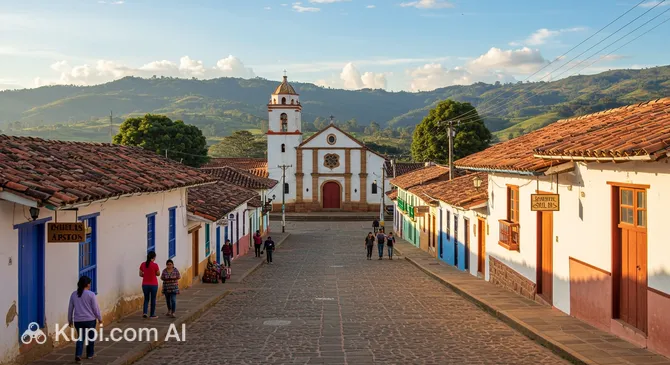
Timbío is a charming and cozy town situated on the picturesque slopes of the Central Cordillera in Colombia. Located at an altitude of about 1,790 meters above sea level, this municipality in the Cauca Department attracts travelers with its authentic atmosphere and rich heritage dating back to the colonial era. Despite its proximity to the bustling city of Popayán, Timbío maintains a quiet, steady pace of life characteristic of the region's traditional agricultural communities.
Timbio. Illustration.
Source: Kupi.com AI
The town's geographical position has largely shaped its development: it sprawls primarily on the left bank of the Timbío River, in a fertile valley surrounded by majestic mountains. You can dive into the deep history of the city's foundation, which was established by Spanish conquistadors as early as 1535. The settlement's name carries an ancient meaning derived from the Quechua and Pubenense languages, poetically translated as "confluence of rivers."
For tourists, Timbío is primarily interesting as a starting point for ecotourism and a place to witness real rural life in Colombia. It is home to a hardworking population whose economy is based on coffee cultivation and trade, and the level of hospitality makes every guest feel at home. We invite you to visit this quiet corner of Cauca to enjoy the mountain scenery and touch the living heritage of the past.
Weather Overview
The climate in Timbío is characterized as subtropical highland, due to its location at an altitude of 1,790 meters. Thanks to this position, pleasant, moderately warm weather persists in the town year-round. Average daytime highs usually stay around +21°C... +22°C, while nighttime temperatures drop to a comfortable +13°C... +14°C. You can study the detailed city's climate to better plan your wardrobe for the trip.
Precipitation in this region occurs quite often, sustaining the lush tropical greenery. The wettest periods are traditionally considered April, May, and November, when rains can be prolonged. However, even in dry months, short downpours typical of the Andean region of Colombia are to be expected. High air humidity combined with mountain freshness creates unique conditions that make visiting Timbío comfortable almost any time of year.
Average monthly temperature
Average monthly precipitation
Interesting Facts
Ancient Name: The city's name has a unique etymological origin—it is formed from the words of the Quechua ("tim" — union) and Pubenense ("bio" — river) languages, which together mean "confluence of rivers."
Venerable Age: Timbío was officially founded on November 1, 1535, making it one of the oldest settlements in this part of Colombia, established almost immediately after the conquest of the region.
High-Altitude Status: The town is located at a significant altitude—about 1,790 meters above sea level, providing it with a mild but humid climate and stunning views of the mountain ranges.
Educational Center: The municipality demonstrates an impressive literacy rate of over 90%, highlighting the importance of education for local residents even in an agricultural region.
Strategic Hub: The famous Pan-American Highway (National Route 25) passes through the town, connecting Timbío with key economic centers in South America.
How to Get There
The transport accessibility of Timbío is largely due to its strategic position on the country's main road artery. The primary way to reach the town is by using National Route 25 (Ruta Nacional 25), which connects it with the department's administrative center, Popayán. The distance between them is only about 10 kilometers, allowing for quick travel by bus or taxi. You can find more detailed information on routes on the page dedicated to how to get to the city.
For those who prefer air travel, the nearest hub is Guillermo León Valencia Airport in Popayán. From there, Timbío can be reached in 15–20 minutes by rental car or by using regular intercity buses that stop in the town center. Travel from more distant metropolises like Cali or Bogotá usually involves a transfer in Popayán, from where transport toward Timbío runs very frequently.
Railway communication in this region is currently not a major form of passenger transport, so travelers should rely on the developed network of roads and bus services. Comfortable long-distance buses are an excellent option for those wanting to enjoy Colombia's mountain scenery on the way to this cozy municipality.
Main Attractions
The main attractions of Timbío are inextricably linked to its historical status as one of the region's oldest settlements. A special place in the heart of the city is held by the site where, according to legend, the first solemn mass in honor of All Saints' Day was held in 1535. This event marked the beginning of the region's colonial history and remains a source of pride for local residents, recalling the times of conquistadors Juan de Ampudia and Pedro de Añasco.
The city's natural surroundings serve as a magnificent attraction in their own right. The Timbío River, which gave the municipality its name, flows through picturesque valleys and creates ideal conditions for hiking. Travelers often head to the riverbanks and the surrounding hills of the Central Cordillera to enjoy panoramic views and take unique photos of authentic rural landscapes.
Thanks to its strategic location on the national highway, Timbío preserves its traditional mestizo culture. While there aren't a vast number of museums, the architecture of the central streets and the spirit of old Colombia make a simple walk through the town a fascinating journey back in time. The peace, quiet, and absence of tourist crowds allow visitors to fully experience the authentic character of the Cauca Department.
Local Cuisine
The gastronomy of Timbío is the quintessence of the traditions of the Cauca Department, where products grown on the fertile lands of the Central Cordillera play the main role. Local cuisine is based on corn, legumes, and fresh vegetables. You must try the traditional empanadas de pipián—small pastries with a unique filling of potatoes, meat, and local spices, which have become a hallmark of this region.
In addition to these pastries, the city's culinary scene offers hearty soups and dishes made from fried plantains (plátanos), which are served with almost every meal. In Timbío, home cooking is highly valued, so the best flavor experiences can be found in small family establishments or local markets where food is prepared according to old recipes using wood-fired ovens.
It is impossible to imagine a visit to this region without a coffee tasting. Timbío is located in an active coffee-producing zone, so the aroma of freshly roasted beans accompanies tourists everywhere. Natural fruit juices made from exotic fruits like lulo or guanabana are also popular. The local food culture is very simple and authentic: the naturalness of ingredients and generous portions are highly prized here.
Travel Tips
A visit to Timbío will give you unforgettable impressions of the Colombian hinterland if you prepare for the region's specifics in advance. Use our tips to make your trip comfortable and safe.
Clothing and Essentials: Due to the mountain climate and altitude, weather can be changeable. Bring light clothing for daytime walks and a warm sweater for cool evenings. Be sure to wear comfortable shoes with good grip if you plan to walk in the hills or along the river.
Transport: The best way to travel between towns is by bus along Route 25. Inside Timbío, it is convenient to use moto-taxis, but always confirm the price before getting on.
Finance: The main currency is the Colombian peso. Cards are accepted very rarely, so always have a sufficient supply of cash on hand. It's better to look for ATMs in Popayán.
Health and Safety: Timbío is a quiet agricultural town, but follow standard precautions. Drink only bottled water and use repellents when walking near the water.
Communication: The primary language is Spanish. English is almost non-existent here, so learn basic phrases or use an offline translator. Wi-Fi is available in some cafes in the center, but for stable communication, buy a local SIM card.
Local Etiquette: Residents of Timbío are very friendly. When entering a shop or cafe, always politely greet them (Buenos días / Buenas tardes). Respect private property when walking through farmland.
What to Avoid: You shouldn't display expensive gadgets or large amounts of money in crowded places. Avoid walking on remote rural roads after dark without a local guide.
Extra Tip: Try to be in town on a market day to see the full variety of local fruits and products—it's the best way to feel the flavor of Cauca.
May your journey to Timbío be filled only with pleasant discoveries and warm encounters with the locals!
Entertainment & Nightlife
Leisure in Timbío is primarily oriented toward lovers of peace, solitude, and natural beauty. Unlike large metropolises, nightlife is practically non-existent here, giving way to quiet evenings with family or leisurely strolls along the central streets. Most activity in the town is concentrated during the day when locals gather at markets or in small cafes to discuss the latest news.
For those seeking active entertainment, the best option is walking through the surrounding hills and valleys. Ecotourism and observing the local flora and fauna along the Timbío River are the main pastimes for visitors. During holidays, the streets can come alive with folk festivities and traditional festivals that reflect the region's rich mestizo culture and agricultural traditions.
If you're looking for a more dynamic night program with bars and clubs, most tourists prefer to head to neighboring Popayán, located just 10 kilometers away. Timbío remains an ideal place for those who want to recharge after a long journey and enjoy the safe, friendly atmosphere of the Colombian province.
Parks & Museums
In Timbío, you won't find massive museum complexes or classic urban galleries, as the role of the main museum is played by nature itself and the preserved colonial environment. The entire town and its surroundings are a living exhibition of the Cauca Department's history. Instead of halls with exhibits, tourists explore the banks of the Timbío River and the hillsides, which hold the memory of centuries of agricultural labor and the daily life of local communities.
The surrounding valleys of the Central Cordillera serve as natural parks, perfect for picnics and long walks. Lush vegetation and clean mountain air make this place attractive for those who want to escape the hustle and bustle. Locals often use open spaces by the river for festivities, turning natural areas into centers for cultural exchange.
For those who still wish to visit traditional museums, an excellent solution is a trip to neighboring Popayán, which is only a 10–15 minute drive away. Popayán houses rich collections of religious art, archaeological finds, and historical archives. Timbío, on the other hand, remains a place for contemplating landscapes and enjoying authentic nature, which is a priceless cultural asset in its own right.
Getting Around
The transport system in Timbío is simple and focused on connecting with the region's nearest major hubs. The core of public transport consists of buses and minibuses that regularly run along National Route 25. This is the most reliable and budget-friendly way to get to Popayán or other neighboring municipalities. Buses stop right in the city center, and tickets are usually purchased from the driver or at small ticket windows.
Within Timbío itself and for trips to nearby rural areas, taxis and moto-taxis are popular. The latter are a very common and fast way to move through narrow streets and hilly terrain. It's best to agree on the price of a moto-taxi ride in advance, as they typically do not use meters. For tourists, this is also a great opportunity to quickly reach scenic spots on the riverbank.
Renting a car will only be useful if you plan an extensive exploration of the Cauca Department and want to be independent of bus schedules. In the town itself, parking usually doesn't cause problems, but roads in rural areas can be challenging. There are few specialized ride-hailing apps here, so it's best to look for local taxi stands near the main square or ask locals for advice.
Accommodation
The choice of accommodation options directly in Timbío is quite limited and primarily represented by small guesthouses and family-run hotels. This is an ideal choice for those who want to fully immerse themselves in local life and feel genuine Colombian hospitality. Such establishments usually offer basic amenities, a cozy home atmosphere, and the chance to try breakfasts made from farm-fresh products.
Given its proximity to Popayán, many tourists choose to stay in the administrative center, where the selection of housing is significantly broader—from budget hostels to colonial boutique hotels. Nevertheless, staying in Timbío itself offers peace and quiet that is hard to find in larger cities. This is an excellent option for ecotourists and those planning to explore the natural attractions of the Cauca Department.
We recommend booking accommodation in advance, especially if your trip coincides with local holidays or the coffee harvest season. Most bookings are made through popular international platforms; however, small local guesthouses may require direct contact via messaging apps or social media. Prices in the region remain quite affordable for travelers with any budget.
Nearby Cities
Thanks to its convenient location on the Pan-American Highway, Timbío serves as an excellent starting point for exploring the picturesque surroundings of the Cauca Department. Travelers can easily plan several exciting day trips to experience the diversity of this southern region of Colombia.
The most popular destination is Popayán, located just 13 kilometers away. This famous "White City" impresses with its colonial architecture, numerous churches, and status as a UNESCO City of Gastronomy. It's also worth visiting neighboring Rosas or heading to El Tambo, where you can enjoy even more authentic rural landscapes and the hospitality of local residents.
Each of these destinations offers a unique look at life in the Colombian Cordilleras. Whether it's historical walks through the museums of Popayán or exploring natural trails in Paispamba, the surroundings of Timbío will not leave adventure and culture lovers indifferent. We recommend not limiting yourself to the town itself and taking the time to explore this multifaceted region.
Shopping & Souvenirs
Shopping in Timbío is primarily about discovering local agricultural products and traditional crafts. The town lacks large shopping and entertainment centers, but their absence is more than compensated for by colorful street markets. Here you can buy the freshest coffee grown on the surrounding plantations, which makes an excellent gift or souvenir from a trip through Cauca.
Local stalls often feature handmade items: woven baskets, textiles, and ceramics reflecting the culture of the mestizo and indigenous peoples of the region. These goods are not mass-produced, making every purchase unique. Trade in Timbío is concentrated in the central part of the town, where small shops offer everything needed for daily life and agriculture.
Shops usually operate from early morning until sunset, often closing for a traditional siesta in the middle of the day. Cash (Colombian peso) remains the main method of payment, as bank cards are accepted in only a few establishments. Visiting the local market is not only an opportunity to buy souvenirs but also a chance to feel the real rhythm of life in Timbío and chat with local farmers.