Support

Palmar Sur

Interesting places

About

Palmar Sur is a small but strategically important town located in the Puntarenas province. It serves as a gateway to the southern part of the country and often becomes a starting point for travelers eager to explore the wilderness of the Osa Peninsula. The town is situated in the delta of the Rio Grande de Terraba, which provides it with a humid tropical climate and lush surrounding vegetation.

When planning a trip to Costa Rica, many tourists choose Palmar Sur as a convenient transit hub, as it houses an important regional airport. The population of the town and its surrounding areas is about 29,000 people, allowing it to maintain a calm and measured atmosphere typical of provincial settlements.
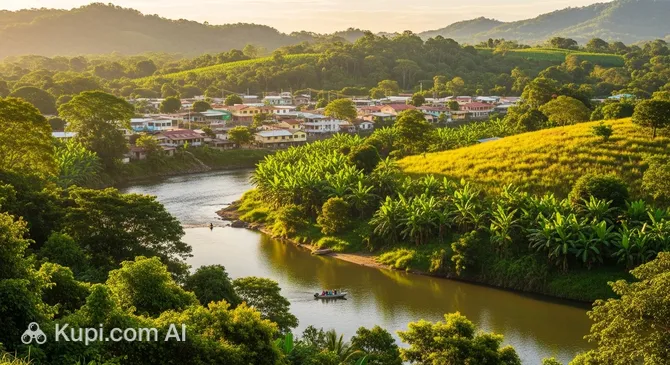
Palmar Sur. Illustration.
Source: Kupi.com AI

One of the region's main mysteries is its archaeological heritage. The fascinating history of Palmar Sur is inextricably linked with the Diquis culture and the famous pre-Columbian stone spheres. These perfectly round stones, some of which reach enormous sizes, can be seen in local parks and squares, and they are rightfully considered a UNESCO World Heritage site.

Nature lovers are drawn to the town by its proximity to the Térraba-Sierpe National Wetlands. This is the largest mangrove forest in the country, where you can take a boat tour to observe crocodiles, monkeys, and many exotic birds in their natural habitat.

Palmar Sur is an excellent place to stop, touch ancient mysteries, and enjoy the authentic rhythm of local life before heading deeper into the jungle.

Weather Overview

The climate in Palmar Sur is typical for the southern Pacific coast: eternal summer with high humidity reigns here. Travelers should expect consistently warm weather year-round, as the average air temperature fluctuates in a comfortable range from 23.5°C to 25.1°C. Even on the coolest nights (usually in January and December), the thermometer rarely drops below 20°C.

The hottest and driest season occurs at the beginning of the year. In March, daytime temperatures often reach peak levels of around 29.1°C. This is the best time for a trip, as February and March record the lowest amount of precipitation (2–3 mm) and a decrease in the frequency of rain. From May to November, the weather character changes: rainfall increases, peaking in October (27 mm), and rain can occur almost daily.

When planning your trip, keep in mind that short-term precipitation is possible even in the "dry" season. To choose the ideal dates for excursions to mangrove forests and archaeological parks, we recommend checking what weather in Palmar Sur is forecast for the time of your visit.

Average monthly temperature

Average monthly precipitation

Interesting Facts

In addition to its main attractions, Palmar Sur holds many fascinating secrets and historical layers that reveal themselves only to the most curious travelers. This town is a true mosaic of ancient mysteries and an industrial past.

  • Center of a Mysterious Civilization. Palmar Sur is considered the heart of the ancient Diquis culture. It is here, at the Finca 6 archaeological site, that you can see the famous stone spheres in their original placement. This is one of the few places in Costa Rica where these perfectly round monoliths have not been moved, allowing scientists to study their astronomical and social significance.

  • A Town Built by a "Fruit Empire." The modern appearance of the town was largely shaped in the 1930s due to the activities of the famous United Fruit Company. The street layout and the architecture of old wooden houses on stilts resemble the style of American settlements of that time, creating a unique colonial ambiance in the middle of the tropics.

  • The Locomotive as a Symbol of an Era. An old locomotive is installed in one of the town's central squares, once used for transporting bananas from plantations to the port. This "iron giant" has become an unofficial symbol of the town and a popular photo spot, reminding of the "banana fever" days.

  • Stone Spheres Festival. Every year, a unique cultural event is held in the region—the International Stone Spheres Festival. During this time, Palmar Sur comes alive with exhibitions, concerts, educational lectures, and tours dedicated to preserving the region's pre-Columbian heritage.

How to Get There

When planning a trip to the south of the country, it is important to think through the logistics in advance, as this region is far from the capital. You can find out more about how to get to Palmar Sur by studying all available routes, including land and air transport. The main flow of tourists arrives here using a combination of domestic flights and trips by car or bus.

There is no major international air hub in the town of Palmar Sur itself, but you can fly into Enrique Malek International Airport (DAV), located in David, Panama. This is a fairly large transport hub located about 129 km from Palmar Sur. A trip from there by taxi or rental car will take about 3.5 hours, which can be a convenient option if you are coming from the Panamanian side.

Another popular option is to use domestic airlines and land in the town of Quepos. Quepos Airport (XQP) handles many tourist flights and is 91 km from your destination. The drive along the scenic highway will take approximately 2.5 hours. It is also worth considering Golfito Airport (GLF) in the town of Golfito, located just 45 km away (about 1.5 hours' drive), making it one of the closest regional options.

For clarity, here is a summary of the main airports convenient for reaching the region:

AirportPassenger trafficDistance
Drake Bay19 00032 km
Golfito Airport18 00046 km
Puerto Jimenez35 00050 km
Quepos Airport35 75291 km
Limon International Airport15 000121 km

Railway communication in this region of Costa Rica is not developed for passenger transport, so it is impossible to get to Palmar Sur by train. The main alternative to planes are intercity buses running from San Jose along the Pan-American Highway (Costanera Sur). This is a budget-friendly and scenic way to get to the town, allowing you to enjoy views of the Pacific coast along the way.

Main Attractions

Despite its modest size, Palmar Sur offers tourists a unique blend of ancient history and natural beauty. The main points of interest here are connected to the mysterious legacy of pre-Columbian civilizations and the region's rich ecosystem.

Finca 6 Archaeological Site. This is perhaps the most important cultural site in the region and one of the key UNESCO World Heritage sites in Costa Rica. The uniqueness of the complex lies in the fact that it is one of the few places where the famous stone spheres of the Diquis culture can be seen "in situ"—exactly where they were placed by ancient inhabitants many centuries ago. There is a museum on-site that tells the story of the lives and beliefs of the creators of these monuments. This is a must-visit for anyone who wants to touch the secrets of the past.

Térraba-Sierpe National Wetlands. Located in close proximity to the town, this reserve is the largest mangrove system in the country. Tourists come here for exciting boat excursions through the labyrinths of water channels. It is an ideal spot for ecotourism: here you can observe caimans, capuchin monkeys, and many rare birds in their natural habitat. A journey by water gives a sense of complete harmony with the wild tropical nature.

Palmar Sur Park. The town's central square is not just a place for relaxation, but a real open-air museum. Several well-preserved stone spheres are on display here, available for viewing free of charge. The park is interesting because it allows you to see these ancient artifacts in the context of modern city life: against the backdrop of historical buildings from the "banana company" era and the daily hustle and bustle of locals. An old locomotive is also installed nearby, serving as a reminder of the region's industrial past.

Local Cuisine

The gastronomic scene of Palmar Sur is a journey into the world of authentic Costa Rican flavors, unspoiled by mass tourism. Here you won't find pretentious fine-dining restaurants, but you can enjoy honest and hearty food made from the freshest local products. Proximity to the river and ocean, as well as the region's rich agricultural past, leaves its mark on every dish.

The staple of the local diet is the traditional "casado". This is a set meal that is perfect for lunch: on one plate, you will be served rice, black beans, fried plantains, salad, and a main protein—chicken, pork, or fresh fish. Given the region's history as a center of the "banana empire," plantain dishes are prepared masterfully here. Be sure to try patacones—crispy fried green plantain cakes often served with mashed beans and cheese or as a side dish for ceviche.

Seafood lovers should look out for the local ceviche. In Palmar Sur, it is often prepared from fish caught in the Térraba River delta or the nearby ocean. The fish is marinated in lime juice with cilantro, onion, and sweet pepper. This refreshing dish is a great escape from the tropical heat and is sold in both cafes and small stalls.

Among beverages, the kings of the table are "frescos naturales"—freshly squeezed juices diluted with water or milk. Thanks to the tropical climate, the choice of fruit is enormous: from classic pineapple and mango to the exotic cas (a sour fruit similar to guava) and guanabana. If you want to try something alcoholic, order a shot of "Guaro"—the national sugar cane liquor, which is often mixed with juice, or a local beer, which pairs perfectly with fried snacks.

Food culture in the town is centered around so-called "sodas". These are small family-run diners where Costa Ricans themselves eat. The atmosphere here is always friendly and relaxed, and the prices are very democratic. Visiting a "soda" is the best way to immerse yourself in local life: there is no ten-page menu, but there is a dish of the day and sincere hospitality that makes the food taste even better.

Travel Tips

A trip to Palmar Sur promises to be an exciting immersion into history and nature, but like any trip to the tropics, it requires proper preparation. To ensure your visit to this unique corner goes smoothly, we've gathered the most important practical recommendations to help you feel confident.

  1. Clothing and Gear. Given the humid tropical climate, prioritize clothing made of light, breathable fabrics (cotton, linen) that dry quickly. Be sure to bring a high-quality raincoat or poncho—tropical showers can start suddenly here, especially in the afternoon. For visiting archaeological sites and mangrove forests, comfortable closed-toe shoes with non-slip soles are essential.

  2. Transport Nuances. Palmar Sur is a small town, and you can get around the center on foot. However, for trips to attractions, it's better to use official red taxis. If you plan to explore the surroundings independently, renting a car is recommended, preferably an SUV (4x4), as roads off the main highway can be washed out. Apps like Uber are unstable here.

  3. Finances and Cash. In Costa Rica, the official currency is the colon. While US dollars may be accepted in tourist offices, the exchange rate will be unfavorable. In local cafes ("sodas") and small shops in Palmar Sur, often only cash colones are accepted. There are ATMs in the town, but they are few, so it's better to withdraw money in advance in larger cities or at the airport.

  4. Protection from Nature. Since the town is near extensive wetlands, having a powerful insect repellent is vital. Mosquitoes are active here year-round. We also strongly recommend drinking only bottled water and always carrying sunscreen with a high SPF, even if the sky is overcast.

  5. Language Barrier and Communication. The main language of communication is Spanish. In tourist centers (e.g., at the Finca 6 museum), the staff speaks English, but in regular shops and taxis, they may not understand you. Download an offline translator on your smartphone. For mobile internet, it's best to buy a SIM card from the operator Kölbi—they have the best coverage in the rural areas of Puntarenas province.

  6. Local Etiquette. Costa Ricans are very polite and friendly. A universal phrase for greeting, saying goodbye, or expressing gratitude is "Pura Vida" (pure life). Using this expression will instantly win over the locals. When entering a shop or a bus, it's customary to say hello ("Buenos días" or "Buenas tardes").

  7. Strict Prohibitions. While on the territory of archaeological sites or in the city park, it is strictly forbidden to climb on the stone spheres, sit on them, or try to chip off pieces "for a souvenir." These are World Heritage sites and are treated with immense respect. Also, avoid feeding wild animals during river excursions—this disrupts the ecosystem and can be dangerous.

  8. Daily Routine. Life in Palmar Sur begins very early, at sunrise (around 5:00 AM – 5:30 AM). This is the best time for activity before the midday heat sets in. Many shops and institutions may close quite early, so plan your shopping and dinner before 7:00 PM – 8:00 PM.

By following these simple tips, you can avoid everyday troubles and focus entirely on the main thing—unraveling the mysteries of the ancient spheres and enjoying the wild beauty of the southern part of the country. We wish you a safe and fulfilling journey!

Entertainment & Nightlife

Nightlife in Palmar Sur has its own unique, calm rhythm, which is very different from the noisy parties at popular beach resorts. This is not the place where you will find large nightclubs with neon signs or glamorous cocktail bars. Evening entertainment here is permeated with the authentic atmosphere of provincial Costa Rica, where the focus is on heartfelt conversation, simple music, and tasty food.

Main activity after sunset is concentrated in the so-called "cantinas" and small bar-restaurants. These are traditional establishments where locals gather to discuss the day's news, watch football, and drink ice-cold "Imperial" beer. The atmosphere in such places is very democratic and relaxed: there is no strict dress code; shorts and a T-shirt are perfectly appropriate. The musical background usually consists of Latin American rhythms—cumbia, bachata, or salsa—playing from jukeboxes or speakers.

The center of evening life can be called the area around the Central Park and the streets leading to the main road. This is where the main dining establishments that stay open late are located. If you are looking for more variety, experienced travelers suggest crossing the bridge over the Térraba River and heading to the neighboring town of Palmar Norte. It is a larger commercial hub, and the choice of bars, karaoke, and restaurants there is significantly wider than in quiet, residential Palmar Sur.

When planning your evening, keep a few practical points in mind:

  • Opening hours: Most establishments close quite early, around 10:00 PM – 11:00 PM. On Friday and Saturday, the fun can last until midnight.
  • Prices: The cost of leisure here is very pleasant. A bottle of local beer and a traditional "bocas" snack will be inexpensive. Be sure to have cash colones with you, as cards are not accepted everywhere.
  • Safety: Palmar Sur is a quiet place, but the streets are poorly lit at night. For moving around after dark, especially if you decide to go to Palmar Norte, it is highly recommended to call an official taxi (red cars). Do not walk alone in remote, unlit alleys.

Regarding daytime entertainment, the town's cultural life is inextricably linked to its history. The main "theater" of action here is nature and archaeology. During the day, you can visit the open-air museum at the Finca 6 complex, where tours are held explaining the daily life of ancient civilizations. Walks through the old quarters built by the United Fruit Company, which are themselves living monuments of mid-20th-century architecture, are also popular.

Parks & Museums

The cultural and natural landscape of Palmar Sur is unique because the boundaries between museum and park are practically blurred. The town and its surroundings represent a living exposition where ancient archaeological mysteries coexist with lush tropical vegetation, and colonial heritage is woven into the daily lives of local residents.

The main green area within the town is Palmar Sur Central Park. This is not just a place for walks in the shade of trees, but a real open-air exhibition. Tourists come here to see the famous pre-Columbian stone spheres, which are located right on the lawns. The park is ideal for a quiet rest: here you can sit on a bench, observing the steady pace of city life, and examine the ancient artifacts without museum glass or fences.

For wildlife lovers, the key location is the Térraba-Sierpe National Wetlands, located in the immediate vicinity of the town. Although technically a reserve, it functions as a vast natural park. This is the kingdom of mangrove forests, where instead of paths, there are water channels. Visiting this place allows you to see rare birds, reptiles, and monkeys in their natural habitat, making it a must-visit for ecotourists traveling through Costa Rica.

The centerpiece of the cultural program is the Finca 6 Archaeological Site and Museum. This is one of the most important museums in the region dedicated to the Diquis culture. The uniqueness of the complex is that it combines a traditional exhibition hall and an open-air archaeological zone. In the museum building (Visitor Center), there are information boards explaining the creation and significance of the stone spheres, and outside, you can see these mysterious monoliths exactly where ancient inhabitants placed them centuries ago.

From a historical and architectural perspective, the town is interesting for its "banana" past. Special attention is drawn to the old locomotive installed near the central square. This black "iron giant" serves as a monument to the era when the region was the center of United Fruit Company activity. Furthermore, while walking the streets, it's worth noticing the wooden houses on stilts in the old quarters—a classic example of mid-20th-century American settlement architecture, preserving the spirit of that time.

If you want a non-standard experience, head for a walk to the old railway bridge over the Térraba River at sunset. It offers a stunning view of the river and the surrounding mountains, and the bridge structure itself is an impressive example of last century's engineering, which is rarely mentioned in standard guidebooks.

Getting Around

The public transport system in Palmar Sur is quite simple and matches the measured pace of life of a small provincial town. You won't find a metro, trams, or trolleybuses here. All transport logistics rely on bus services and taxi companies, which is quite sufficient for serving the local population and tourists arriving in this region.

Buses are the most budget-friendly way to get around. It's important to understand that Palmar Sur is closely linked to the neighboring town of Palmar Norte, located on the other side of the Térraba River. The main transport hub where intercity buses (such as the Tracopa company) following the Pan-American Highway stop is located in Palmar Norte. Local buses run between the two towns and surrounding villages. A popular route for tourists is toward Sierpe, from where boats depart for the Osa Peninsula.

The payment system here is conservative and based exclusively on cash. Local buses do not have validators, turnstiles, or the ability to pay by bank card or mobile app. Payment is made directly to the driver upon boarding. Fares within the town and its surroundings are low, usually a small amount in local currency. It is highly recommended to have small bills and coins (colones) with you, as the driver may not have change for large banknotes.

The most convenient and reliable form of transport for a tourist remains official taxis. They are easily recognized by their red color and yellow triangle on the doors. Unlike in the capital, you shouldn't rely on popular international ride-sharing apps (like Uber) here, as there may be no cars nearby or wait times will be very long. It's best to find a taxi at special ranks near the park or ask your hotel or restaurant to call one for you.

If you plan active trips around the region, the best alternative to public transport is renting a car. This will give you freedom of movement to archaeological sites and nature parks where buses run infrequently. Given the state of rural roads, it is preferable to choose a four-wheel-drive (4x4) vehicle. Rental agencies can be found both in the town itself and near the local airport.

Palmar Sur itself is quite compact, and its historical center with the park and spheres can be easily explored on foot. This is a pleasant way to get to know the town; however, consider the tropical heat and plan your walks for the morning or evening hours. Bicycle rental is not a widespread phenomenon here, so don't count on a bike as your primary means of transport unless your hotel provides such a service.

Accommodation

Accommodation options in Palmar Sur fully reflect the character of the town itself: they are simple, functional, and authentic. Here you won't find high-rise five-star hotels or luxury all-inclusive chain resorts. The hotel sector is primarily oriented towards transit travelers, archaeologists, and ecotourism enthusiasts, so small family hotels, guesthouses, and traditional Costa Rican "cabinas" prevail.

Most of the room inventory belongs to the budget and mid-range segment. Typical accommodation here is a clean room with a fan or air conditioning, a private bathroom, and a minimal set of furniture. Many accommodation options offer access to a shared kitchen or have a small cafe on the premises, which is very convenient for early breakfasts before excursions.

In terms of neighborhoods, your choice of location depends on your goals.

  • Town Center (around the park): The most convenient option for those traveling without a car. From here, you can walk to bus stops, shops, and main attractions, including the stone spheres.
  • Airport Area: Suitable for those with a planned early departure or late arrival. It's quiet here, but infrastructure is limited.
  • Palmar Norte: Experienced tourists often consider staying in the neighboring town of Palmar Norte, located just across the bridge over the Térraba River. There, the choice of hotels, motels, and commercial services is significantly wider, and Palmar Sur can be reached in a couple of minutes by taxi.

Booking Tips: Although Palmar Sur is rarely as overcrowded with tourists as beach resorts, demand for accommodation spikes during the "dry season" (December to April) and during the Stone Spheres Festival. During these periods, it is highly recommended to book rooms in advance.

As for prices and booking methods, the region remains very affordable. The cost of a night usually ranges from budget rates for a simple room to moderate prices for more comfortable air-conditioned apartments. It's worth noting that not all local "cabinas" are represented on major international booking platforms. Often, the best options can be found simply by arriving on the spot or by booking them directly through messaging apps or by phone. In small hotels, payment in cash colones is preferred.

Nearby Cities

For those who want to explore the surroundings, Palmar Sur serves as an excellent starting point for day trips to several interesting nearby locations:

Just 28 km from the town is Buenos Aires. This destination is particularly interesting for fans of ethnotourism and history. The area is known as the home to several indigenous peoples of Costa Rica, where you can learn about their unique traditions, crafts, and cultural heritage against the backdrop of picturesque landscapes.

If you want to swap the humid heat of the coast for fresh mountain air, head to San Isidro de El General. This is the largest city in the southern part of the country, located 54 km away. It serves as the gateway to the famous Chirripó National Park and offers excellent opportunities for gastronomic tourism thanks to its renowned farmers' market.

Coffee lovers and agrotourism enthusiasts should visit the canton of Coto Brus (57 km). This area is famous for its high-altitude coffee plantations and the unique history of Italian immigration, which gives the region a special flavor. Additionally, it is home to the Wilson Botanical Garden—a paradise for birdwatchers and tropical flora lovers.

CityPopulationDistance
Puerto Cortés7 9697 km
Buenos Aires29 45428 km
Drake Bay1 00035 km
Puerto Jimenez12 83650 km
San Isidro de El General45 32754 km

These nearby destinations provide a glimpse into the diverse culture and landscapes of the region.

Shopping & Souvenirs

Shopping in the town of Palmar Sur is more practical and utilitarian in nature rather than recreational. Tourists should not expect large shopping malls, famous brand boutiques, or luxury outlets here. This small settlement is geared toward meeting the daily needs of locals and the basic requirements of travelers heading deeper into the region. The range of stores is mostly limited to food, household goods, and simple clothing necessary for life in a tropical climate.

The town's commercial life is primarily concentrated in the area of Central Park and adjacent blocks. Here you can find several general stores ("pulperías"), pharmacies, and small shops. However, for more extensive shopping, locals and experienced tourists head to the neighboring town of Palmar Norte, located on the other side of the Térraba River. Crossing the bridge takes you to a busier commercial zone with supermarkets, electronics, and clothing stores, where the choice of goods is significantly wider.

There are no large shopping centers in the conventional sense in Palmar Sur. The retail infrastructure consists of small commercial plazas and standalone shops. If you need to purchase specialized gear for jungle trekking or quality hiking boots, it's better to take care of this in advance in larger Costa Rican cities like San Jose or David (Panama), as the local selection may be limited.

Markets in the town are represented mainly by small fruit and vegetable stalls scattered along the roads. You can always buy the freshest tropical fruits here: bananas, papayas, pineapples, mangoes, and rambutans at very affordable prices. Visiting such spots is a great opportunity not only to stock up on vitamins but also to chat with local farmers, feeling the true flavor of provincial life.

As for souvenirs, Palmar Sur offers unique items related to the region's history. The main symbol of the town are the mysterious stone spheres, so in local souvenir shops (especially at the Finca 6 museum), you can find miniature copies made of stone or wood. It is also worth paying attention to handmade items by indigenous peoples living in the southern part of the country, such as colorful textile bags or carved masks in the Boruca style. A bag of local Costa Rican coffee would also make an excellent gift.

Most shops in Palmar Sur open early, around 7:00 AM – 8:00 AM, and finish work by 6:00 PM – 7:00 PM. On Sundays, many shops may be closed or work on a reduced schedule. The main method of payment remains cash colones. While some large supermarkets in Palmar Norte accept bank cards, small shops and souvenir stalls in Palmar Sur may not have terminals, so always keep a supply of cash on hand.

The tax-free system is usually not practiced in the small towns of the region. Processing such procedures is mainly available at major international airports and specialized stores in the capital, so you should not count on a VAT refund when making purchases in Palmar Sur.

Have you reached the end of the page?

So the route has been studied inside and out