Support

Tortuguero

About

Tortuguero is not just a point on the map, but a true lost world where dense jungles meet the waters of the Caribbean Sea. Often called the "Costa Rican Amazon," this unique village in the Limón province is completely devoid of roads, and life here flows along an extensive network of river canals. This place attracts travelers with its pristine nature, silence, and the opportunity to see wild animals in their natural habitat, literally without leaving your boat.

Geographically, the settlement is isolated from the rest of Costa Rica, which has allowed it to maintain the authentic atmosphere of a small village with a population of only about 1,500 people. The climate here is humid and tropical, so rains are frequent guests, supporting the riot of evergreen vegetation. You can only get here by water or a small plane, which in itself becomes the beginning of an exciting adventure.
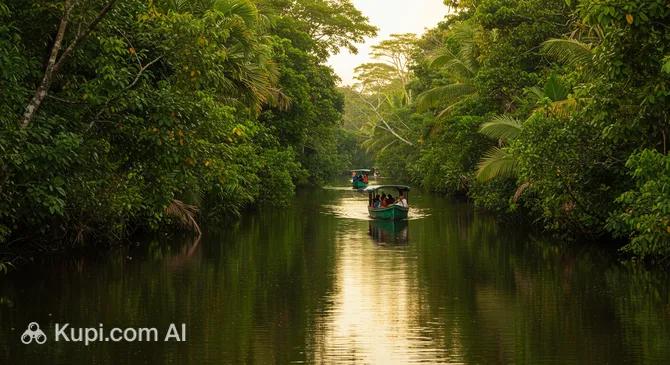
Tortuguero. Illustration.
Source: Kupi.com AI

The main point of attraction is Tortuguero National Park, famous for its incredible biodiversity. Here you can spend hours gliding in a canoe through quiet backwaters, watching monkeys, caimans, and hundreds of bird species. However, it was the sea turtles that brought world fame to this place, as they arrive on local beaches every year to lay their eggs. Surprisingly, the history of Tortuguero has followed a difficult path from a logging and turtle hunting center to a benchmark for ecotourism and nature conservation.

Tortuguero is an ideal destination for those who want to escape the hustle and bustle of the city and immerse themselves in the "Pura Vida" rhythm. Walking along the narrow paths of the village, the sounds of the night jungle, and the absence of cars create a unique atmosphere of tranquility. If you dream of true communion with nature, this Caribbean corner must definitely be part of your journey.
Weather Overview

Tortuguero's climate is a classic example of the humid tropics, where summer reigns year-round. The temperature regime is remarkably stable: average figures fluctuate within a narrow range from +24.4°C in January to +26.7°C in May. During the day, the air usually warms up to +27°C...+29°C, while nights remain warm and comfortable with temperatures around +22°C...+24°C.

When planning a trip, it is important to consider the high probability of precipitation. According to statistics, the number of rainy days varies from 23 to 31 per month, making a raincoat an essential item in your luggage. Detailed weather in Tortuguero will help you choose the best days for excursions, but you should always be prepared for humidity. Expect consistently warm weather throughout the year with frequent but refreshing tropical rains that sustain the life of the local jungle.

Average monthly temperature

Average monthly precipitation

Interesting Facts

Beyond its world fame as a "turtle beach," Tortuguero holds many fascinating secrets hidden in the depths of the tropical forest. This unique corner of Costa Rica surprises not only with its biodiversity but also with its unusual history that shaped its current appearance.

  • The Canals' Engineering Past. The famous network of waterways, compared today to the Amazon, has a partly man-made origin. Initially, the canal system was expanded and connected in the 1940s not for tourists, but for transporting valuable timber to the coast. Ironically, the infrastructure created for logging now serves as the main artery for its protection and ecotourism.

  • The Volcanic Sentinel. Although the region itself is a low-lying swampy plain, the 119-meter-high Cerro Tortuguero hill rises above it. This is not just a mountain, but the remains of an ancient volcano that was active about 1.8 million years ago. It was this volcano that formed the geological basis of the area long before the appearance of sand deposits.

  • The Secret Inhabitant of the Waters. While the turtle is considered the symbol of the town, the local lagoons are home to another amazing but extremely secretive creature—the West Indian manatee. These "sea cows" are very difficult to spot as they hide in thick thickets of aquatic plants, and encountering them is considered a real rarity and great luck among guides.

  • The Country's Second Wettest Spot. Tortuguero is among the rainiest places in Costa Rica and all of Central America. Up to 6,000 mm of precipitation falls here annually. Locals joke that there are two seasons here: "rainy" and "very rainy," which ensures the incredible lushness of the evergreen jungle.

How to Get There

Tortuguero is a unique corner of Costa Rica that cannot be reached by a standard car right up to the hotel due to the lack of roads. The journey here is already part of the adventure, usually involving a flight, a bus or taxi ride, and finally, a boat crossing. You can find out all the ways to get to the city and plan your route in advance.

Most travelers arrive in the country via the region's main aviation hub. There is no large international airport in Tortuguero itself, so it is most convenient to fly into Juan Santamaría International Airport (IATA: SJO). It is located in the city of Alajuela, about 98 km from Tortuguero. This is the country's largest airport with high passenger traffic, receiving flights from all over the world. The journey from here by taxi or transfer to the boat station (usually La Pavona) will take about 2 hours 50 minutes. From there, the journey continues by boat through the scenic canals.

Another option for those already traveling through Costa Rica is to use regional airports. For example, La Fortuna Airport (IATA: FON) is located in the popular tourist town of La Fortuna, 118 km from Tortuguero. A car trip to the crossing will take approximately 3 hours 20 minutes. You can also consider Quepos Airport (IATA: XQP) in the city of Quepos (140 km), from where the land journey will take about 3 hours 50 minutes.

For clarity, here is a summary of the main airports:

AirportPassenger trafficDistance
Limon International Airport15 00083 km
Juan Santamaria International Airport5.7 mln98 km
Fortuna Airport13 000118 km
Quepos Airport35 752140 km
Tambor Airport25 000188 km

Main Attractions

The crowning jewel of Tortuguero is undoubtedly Tortuguero National Park—one of the most biologically diverse places in Costa Rica. It is often called the "Costa Rican Amazon" for its complex network of freshwater canals, lagoons, and dense tropical forests. The best way to explore the park is to take a boat or kayak through its waterways, where you can get an up-close look at howler monkeys, sloths, caimans, and hundreds of exotic bird species. It is a true immersion into the wild that leaves an unforgettable impression.

Tortuguero is world-famous as one of the most important nesting sites for sea turtles. From July to October, its beaches become the stage for an amazing natural spectacle—the mass egg-laying of green sea turtles. To gain a deeper understanding of these creatures' life cycle and learn about conservation efforts, be sure to visit the Sea Turtle Conservancy Visitor Center. Here you can get valuable information before heading out on a night turtle-watching tour.

For those who want to see the region from a bird's-eye view, a climb up Cerro Tortuguero is a must. This is an extinct volcano and the highest point on the entire Caribbean coast of Costa Rica. The climb along a maintained path with steps is rewarded with a breathtaking panoramic view of the endless jungle, winding canals, the village, and the Caribbean Sea. It is an excellent opportunity to take stunning photos and appreciate the full scale of the local ecosystem.

The village of Tortuguero itself is also a kind of attraction. There are no roads or cars here, and life flows at a measured and calm pace. Stroll along its pedestrian paths to feel the authentic Afro-Caribbean culture. To get a taste of the local cuisine, stop by cozy restaurants like El Patio or Mi Niño Restaurant. Here you can try fresh seafood and traditional dishes in a relaxed atmosphere to the sounds of the jungle.

Local Cuisine

Tortuguero's gastronomic scene is a vibrant and spicy reflection of the Afro-Caribbean culture that dominates this coast. Unlike the rest of the country, where the cuisine is more reserved, coconut milk, spicy "panameño" peppers, thyme, and ginger rule the roost here. The food in this isolated village is simple, hearty, and incredibly aromatic, perfect for regaining strength after long walks through the jungle.

The undisputed king of the local table is Rondón. The name comes from the English "run down," meaning "whatever could be found." This is a thick soup of fish or seafood stewed in coconut milk with the addition of plantains, yucca, yams, and dumplings. Another must-try dish is Caribbean "Rice and Beans." Do not confuse it with traditional Costa Rican "gallo pinto": here, the rice and beans are cooked specifically in coconut milk, acquiring a sweetish aftertaste and delicate texture, and are usually served with chicken in Caribbean sauce.

Since Tortuguero is surrounded by water, fish holds an important place on the menu. It is worth trying fresh river bass (robalo) or sea fish, grilled or in garlic sauce. Fans of the exotic will enjoy patacones—double-fried green banana cakes served as a side dish or a standalone snack with mashed beans and cheese.

As for drinks, the best way to escape the tropical heat is a "pipa fría"—a chilled coconut that will be opened with a machete right in front of you. "Frescos" are also popular—natural juices from fresh fruits: mango, pineapple, guava, or the sourish cas. For alcohol, locals and tourists prefer the national beer Imperial or cocktails based on "Guaro"—a local cane liquor, often mixed with lime.

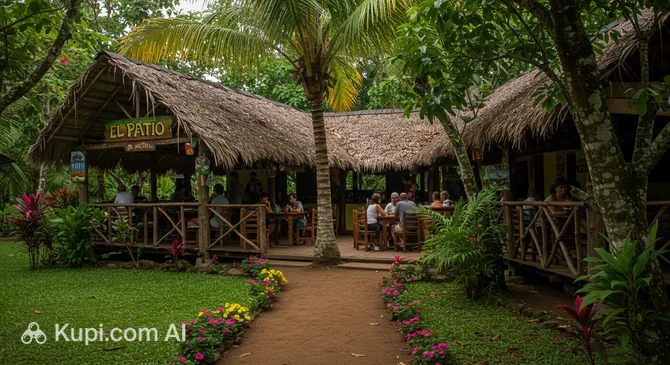
The food culture in Tortuguero is very casual. There are no pretentious establishments; most places are cozy family cafes called "sodas," or open-air restaurants with water views. One such atmospheric place is El Patio, where you can enjoy Caribbean flavors while watching the boats on the canal. Street food is also popular: empanadas and sweet pastries are often sold at the pier and along the main path, which are convenient to eat on the go.

Travel Tips

A trip to Tortuguero is a true expedition into the heart of the wild, requiring slightly more careful preparation than a trip to an ordinary resort. To ensure your vacation in this secluded corner is as comfortable as possible and surprise-free, I've gathered a list of the most important practical recommendations.

  1. Clothing and Gear. The climate here is hot and extremely humid. Forget about jeans—they take a long time to dry and become heavy. Bring light, breathable synthetic clothing that dries quickly. A mandatory attribute is a quality raincoat or a heavy poncho, as downpours can start suddenly. For footwear, closed sandals or light sneakers for the trails, as well as flip-flops for the hotel, will do.

  2. Transport Specifics. Unlike the rest of Costa Rica, there are absolutely no cars in Tortuguero. You will get around either on foot along the village's narrow paths or by water taxi along the canals. If you need to get to a remote lodge or beach, agree on the price with the boatman in advance, before boarding.

  3. Finance and Cash. This is a critically important point: be sure to bring cash with you (preferably in the local currency—colones, or small US dollars). There is only one ATM in the village, and it is often out of order or empty. Cards are accepted at major hotels and some restaurants, but you won't be able to pay with them in small shops or for water taxis.

  4. Health and Safety. After dark, the streets are practically unlit, so a powerful flashlight should always be in your backpack. There is a pharmacy in town, but it has a basic set of medicines, so bring specific medications with you. Tap water is considered clean, but tourists are recommended to drink bottled water to avoid acclimatization issues.

  5. Connectivity and Communication. The main language is Spanish, but thanks to Caribbean influence, many locals speak excellent English. Wi-Fi is available in most hotels and cafes, but the speed often drops during rain. I recommend downloading offline maps of the area in advance, as mobile internet may disappear deep in the canals.

  6. Local Etiquette. Life here flows at the rhythm of "Pura Vida" (pure life). This is not just a phrase, but a philosophy: no one is in a hurry. Don't get frustrated if service in a restaurant takes longer than you're used to. Greet locals with this phrase—it's the best way to show respect and friendliness.

  7. What to Strictly Avoid. Never swim in the sea in Tortuguero! It is dangerous due to powerful rip currents and the presence of sharks (they sometimes come close to river mouths). For swimming, use hotel pools. It is also strictly forbidden to photograph turtles with a flash—this disorients the animals and may scare them away.

  8. Tip for "Early Birds". The most interesting things in the jungle happen at dawn. Try to get up around 5:00–5:30 AM. At this time, the air is still fresh, the canals are shrouded in mystical fog, and birds and monkeys are most active. This is the best time for a solo kayak or walking tour.

Tortuguero is a place where nature dictates its own rules, and if you accept them, you will have an incredible experience of communion with the world around you. Follow these tips, respect local traditions, and your Caribbean adventure will become one of the most vivid memories of your life!

Entertainment & Nightlife

Nightlife in Tortuguero is fundamentally different from the usual sense of the word in major tourist centers. You won't find noisy nightclubs with neon signs or glamorous discos open until dawn here. Evening leisure in this Caribbean village is permeated with a relaxed atmosphere and dictated by the rhythms of nature. Most activity quietens down quite early, usually by 9:00 PM or 10:00 PM, giving way to the sounds of the jungle and the roar of the surf.

The center of evening attraction is the village's main pedestrian path. This is where social life is concentrated after sunset. The rhythms of reggae, calypso, and Latin American music drift from small bars and open terraces, creating a unique local flavor. The dress code here is as casual as it gets: shorts, T-shirts, and sandals are the most appropriate attire. The crowd is a colorful mix of locals, guides, and tourists who gather to discuss what they saw during the day.

One of the popular places to spend a pleasant evening is El Patio. This establishment, located in a picturesque spot overlooking the river, is perfect for watching the sunset with a cocktail in hand. It has a laid-back atmosphere, and the menu offers a great selection of drinks and snacks. In the evening, this place becomes a great platform for socializing and watching the dusk settle over the water of the canals.

El Patio. Illustration.
Source: Kupi.com AI

Traveler photos:

In addition to bars, "nightlife" in Tortuguero often refers to wildlife excursions. During the nesting season (July to October), the main evening event is observing sea turtles on the beach. This is a strictly regulated activity that can only be accessed with a certified guide. At other times of the year, night walks into the jungle are popular, where you can see a completely different side of the local fauna: frogs, snakes, nocturnal birds, and insects.

When planning an evening out, keep a few practical points in mind. Since there is no street lighting in the village outside the central path, be sure to bring a flashlight—it will come in handy for getting back to your hotel safely. Movement is exclusively on foot. In terms of safety, the center of the village is calm, but it is strictly recommended not to walk on the beach alone after dark. The average check in bars is quite affordable: a beer or a cocktail will cost $3–$6 USD. Most places accept cash only.

Daytime entertainment in Tortuguero is inextricably linked with outdoor activities and ecotourism. If you want to vary your program beyond boat tours, you can rent a kayak to explore the canals on your own or walk the trails of the National Park. The cultural program is complemented by visits to small souvenir shops of local artisans or a visit to the information center dedicated to nature conservation.

Parks & Museums

In Costa Rica, and especially in a secluded place like Tortuguero, the lines between museum halls and the wild are blurred. Here, the main exhibits are ancient trees and rare animals, and instead of quiet galleries, travelers are met with the sounds of the jungle. Nevertheless, there are several important educational and natural areas in and around the village that help to better understand the uniqueness of this ecosystem.

Tortuguero National Park is undoubtedly the region's main natural attraction, covering a vast area of land and sea. This is not just a park, but a complex system of 11 ecological zones: from mangrove forests and swamps to tropical rainforests. Special routes are laid out for hiking, the most famous of which is the El Jaguar trail. Walking along it allows you to see the forest from the inside, not just from the water, and appreciate the giant dimensions of the local flora.

Another significant natural area is Cerro Tortuguero—a small protected area around an extinct volcano. This is the highest point in this flat region. The climb here passes through dense forest, where you can encounter poison dart frogs, and the summit offers a breathtaking view of the intertwining canals and the sea. This place serves as an excellent example of how geology shapes biological diversity.

As for cultural and educational facilities, the town's most important "museum" is the Sea Turtle Conservancy Visitor Center. This small but informative institution is dedicated to the history of sea turtle protection, which began right here in the 1950s. Inside, you will find exhibits detailing the life cycle of these ancient reptiles, the threats they face, and the work of volunteers. There is also a video room and a small shop, with proceeds going toward conservation projects.

A second interesting format is "living museums"—butterfly gardens and frog terrariums, which are often created at large eco-lodges but are open to tourists. They function as open-air educational platforms. Here, in controlled conditions, you can see the famous red-eyed tree frogs or the birth process of a morpho butterfly, which is not easy to notice in the wild due to animal camouflage.

Insider Tip: If you are interested in history, look out for the small information signs near old logging equipment that is occasionally found along the canals or trails. These "rusty monuments" silently tell the story of the times when Tortuguero was a logging center before becoming a world-renowned example of ecotourism.

Getting Around

Tortuguero's transport system is unique and entirely dictated by the geography of this isolated corner. There are absolutely no roads here, which means you won't encounter buses, shuttles, or conventional cars. Winding water canals serve as streets, while paths and the water surface replace asphalt.

The main and almost only type of mechanized transport is water taxis (lanchas). They ply between the main pier in the center of the village, remote lodges, and various tourist sites along the river. These are motorboats that can function as private taxis or as group transfers organized by hotels. No transport is required to get around the settlement itself: the entire village is a compact pedestrian zone that can be leisurely explored on foot in 15–20 minutes.

Fares are paid exclusively in cash. There are no transport cards, passes, or mobile apps for payment in Tortuguero. You must pay the boat captain (boatman) personally. Both local colones and US dollars are accepted. Since there are no terminals on the boats, and changing large bills can be a problem, it is highly recommended to always carry small change.

When planning movement, tourists should consider several important nuances. The operating schedule of water transport is strictly tied to daylight hours: boats actively run from dawn to sunset (approximately 5:30–6:00 PM). Finding a boat after dark is difficult, and such a trip will cost significantly more. It is better to agree on the price for a private crossing in advance, before boarding. Additionally, always wear the offered life jacket—it is a mandatory safety requirement.

As an alternative for exploring the surroundings independently, kayak and canoe rentals are popular. This is an eco-friendly and quiet way to navigate the narrow canals where motorboats cannot go, making it ideal for nature observation. Bicycles are used very rarely in the village due to sandy paths and limited space, and car-sharing or car rental services do not exist here for natural reasons.

Accommodation

Accommodation in Tortuguero is an integral part of the wilderness immersion. You won't find the usual high-rise chain hotels made of glass and concrete here. All housing is harmoniously integrated into the surrounding landscape and ranges from simple guest houses ("cabinas") for backpackers to luxurious all-inclusive eco-lodges.

Geographically, lodging options are divided into two main zones, each offering a completely different experience:

  • The Village Center. Budget hostels and small family-run hotels are concentrated here, along the main pedestrian street and closer to the beach. This is an ideal choice for independent travelers looking to save money and be in the heart of local life, near cafes, shops, and the entrance to the National Park.

  • Along the Canals. More expensive and comfortable eco-lodges are located on the riverbanks, away from the village itself. They can only be reached by boat. Staying here guarantees privacy, the sounds of the jungle outside your window, and a high level of service. Often, the price of staying in such places already includes three meals a day, as there are no other restaurants nearby.

The price range in Tortuguero is quite wide. Budget rooms in the village can cost from $20–$30 per night, while staying in a quality lodge with full board and a swimming pool will cost $100–$300 or more. Many remote hotels sell their services as "packages" that include transfer from San José (bus + boat), meals, and canal tours. This is the most convenient way to plan a trip without extra logistical hassles.

Booking Tip: If your trip falls during the peak turtle-watching season (July to October) or winter holidays, you need to book accommodation 2–3 months in advance. The number of spots in quality lodges is limited, and they fill up very quickly. You can use popular online platforms for booking, but for package deals, it is often more profitable to contact hotels directly or through local tour operators.

Nearby Cities

For those who want to explore the surrounding area, Tortuguero serves as an excellent starting point for day trips to several interesting nearby locations:

Puerto Limón is the cultural capital of the country's Caribbean coast. The city offers a vibrant contrast to the quiet jungles of Tortuguero thanks to its lively atmosphere, colonial architecture, and open markets. Here you can stroll through Vargas Park, which is home to sloths, and dive deep into the Afro-Caribbean culture and history of the region.

Sarapiquí is a well-known center for ecotourism and adventure. This area attracts outdoor enthusiasts with opportunities for white-water rafting and kayaking. Additionally, Sarapiquí is famous for its educational tours of cocoa plantations, where you can learn all about the chocolate-making process, and bird-watching reserves.

Guápiles is often the first stop for travelers leaving the canals. Located at the foot of the mountains, this town serves as a gateway to Braulio Carrillo National Park. It's a great place to get a taste of everyday Costa Rican life and enjoy views of the cloud forests and waterfalls in the vicinity.

CityPopulationDistance
Cariari34 17627 km
Barra del Colorado27 km
Rio Jimenez8 74234 km
Roxana16 79036 km
Guácimo41 26642 km

These nearby destinations provide insight into the diverse culture and landscapes of the region.

Shopping & Souvenirs

General Overview: Shopping in Tortuguero is a modest but soulful addition to eco-tourism, harmoniously fitting into the relaxed atmosphere of the Caribbean village. You won't find fashion boutiques, outlets, or electronics stores here. Local trade is focused on supporting artisans and providing tourists with the basics. Small family shops sell unique handmade items, beach supplies, and basic food products. The value of purchases here is measured not by brand recognition, but by their authenticity and history.

Main Shopping Areas/Streets: All commercial activity is concentrated along Main Street—the only pedestrian artery passing through the village parallel to the canal. A walk along this paved path actually replaces a trip to the shops. On both sides of the path are souvenir stalls, "pulperías" (grocery stores), and artists' workshops. Thanks to the compactness of the village, you can visit all the interesting points in one leisurely stroll.

Shopping Centers: There are absolutely no shopping centers, department stores, or large chain markets in Tortuguero. Since this is a protected natural area without car traffic, the construction of large commercial facilities is impossible here. For large-scale shopping, tourists will have to go to the region's larger cities or the capital.

Markets: Although there is no classic indoor market here, the cluster of open stalls at the main pier and along the path creates the atmosphere of a lively craft bazaar. Locals often display their wares right on the street or under awnings. This is the best place to talk to artisans, where you can learn the story behind an item or even watch the craftsmen at work live.

Souvenirs: The main symbol of the region is the sea turtle, so its image adorns magnets, T-shirts, caps, and paintings. Wood carvings, jewelry made from coconut, seeds, and shells, as well as bright hammocks, are popular. For a tasty gift, tourists often choose local cocoa or coffee, for which Costa Rica is so famous. Important: strictly avoid buying items made from turtle shells, coral, or wild animal parts—this is illegal and supports poaching.

Opening Hours and Payment: Shops usually open around 8:00–9:00 AM and work until sunset (about 6:00 PM), although some souvenir stalls may stay open for evening passers-by. The main rule of payment is cash. Both local colones and small-denomination US dollars are accepted. ATMs in the village often don't work or are non-existent, and card terminals are not available everywhere, so a cash reserve is essential.

Tax Free: The VAT refund system (Tax Free) operating in major authorized shops in the country is not applicable in Tortuguero. Trade here is informal, and issuing special receipts for tax refunds is not practiced. Purchases in local shops should be seen as a direct contribution to the community economy, rather than a tax deduction item.

Have you reached the end of the page?

So the route has been studied inside and out