Support

Rovinj

About

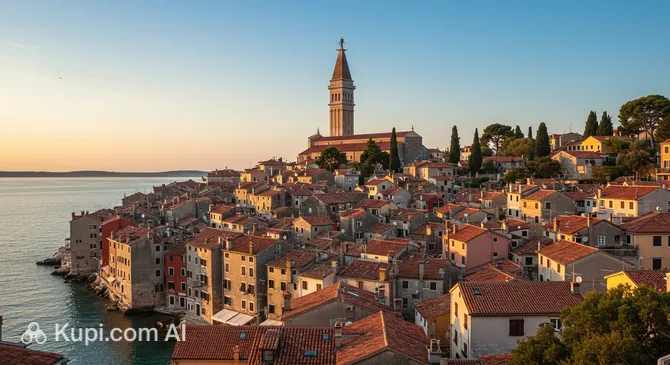
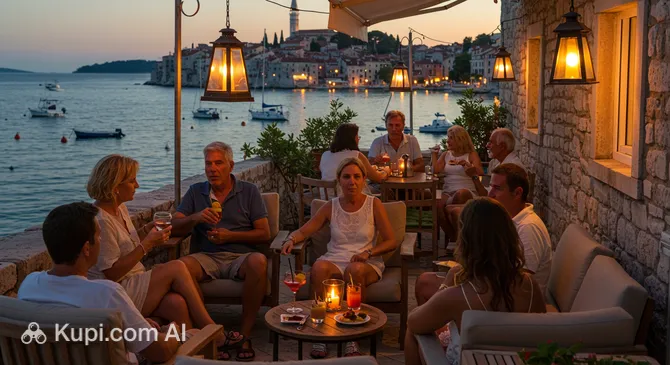
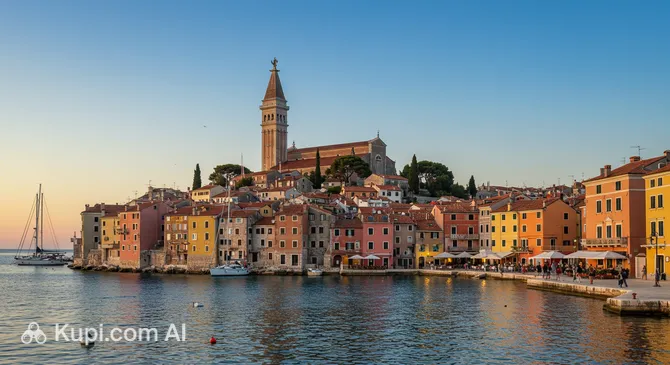
Rovinj is one of the most charming and photogenic cities on the Adriatic coast, a true gem of Istria. This former fishing port, located on a picturesque peninsula on the west coast of Croatia, attracts visitors with its unique atmosphere, narrow cobbled streets, and ancient houses huddled closely together.

Rovinj. Illustration.
Source: Kupi.com AI

The city is situated on the west coast of the Istrian peninsula, washed by the waters of the Adriatic Sea. The climate here is typically Mediterranean, with warm, sunny summers and mild winters. Rovinj has a population of about 14,000 people, giving it the cozy feel of a small town while maintaining a vibrant tourist infrastructure.

The main landmark of Rovinj is the majestic Church of Saint Euphemia, whose spire is visible from almost any point in the city and from the sea. After climbing up to it, you will be rewarded with stunning panoramic views of the Rovinj archipelago and the endless sea. The heart of the city is its Old Town, a labyrinth of winding streets where art galleries, cozy cafes, and souvenir shops are found at every turn. No less attractive are the numerous beaches and bays around Rovinj, offering crystal-clear water for swimming and relaxation.

Rovinj is a place where history intertwines harmoniously with modernity, creating ideal conditions for an unforgettable holiday. Come to experience its unique charm and enjoy the beauty of the Croatian Adriatic!

You can find more interesting facts on the history of Rovinj page.

Weather Overview

The climate in Rovinj is typically Mediterranean, making it attractive to visit in different seasons. Expect warm, mostly dry summers and mild, wetter winters here. The average temperature in the summer months, such as July and August, stays at 22-25°C, while maximum values can reach 27-28°C. During this period, rainfall is minimal; for example, in July, only about 1 mm falls. In winter, from December to February, the average temperature is a comfortable 7-9°C, but the number of rainy days increases, peaking in November (around 13 days).

To get more detailed information about weather conditions in Rovinj by month, including data on minimum and maximum temperatures, precipitation, and the number of sunny days, you can visit the Rovinj Climate page.

Average monthly temperature

Average monthly precipitation

Interesting Facts

Beyond its famous narrow streets and picturesque harbor, Rovinj hides many curious details and stories that make it even more attractive to the observant traveler. Here are just a few interesting facts about this Croatian treasure:

  • Island Past: You might be surprised to learn that until 1763, Rovinj was an island! The channel separating it from the mainland was filled in, creating the picturesque peninsula we see today.

  • City Symbol – the "batana" boat: An integral part of Rovinj's maritime soul is the traditional wooden flat-bottomed fishing boat known as a "batana." These unique vessels, perfectly suited for shallow waters, even have a dedicated Batana Eco-Museum where you can learn about their history and significance to the city.

  • Legend of Saint Euphemia: The city's main church, the Church of Saint Euphemia, houses the relics of Rovinj's patron saint. According to ancient tradition, a marble sarcophagus with the holy remains miraculously floated to the city's shores by sea in the year 800, guided, as legend says, by two children.

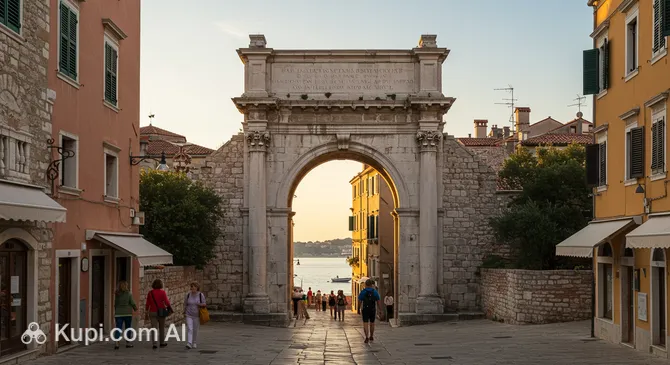
  • Venetian Lion on Guard: For over five centuries (from 1283 to 1797), Rovinj was under the rule of the Republic of Venice, which left an indelible mark on its architecture. One of the clearest evidences of this period is the Balbi Arch, the main entrance to the Old Town, decorated with the winged lion of Saint Mark — the symbol of Venice.

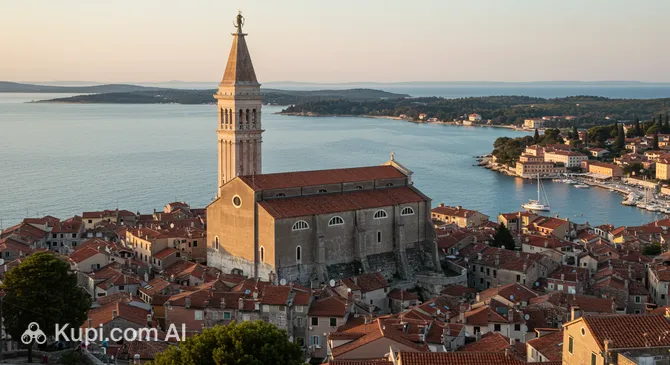
Church of St. Euphemia. Illustration.
Source: Kupi.com AI

Traveler photos:

How to Get There

There are various ways to reach this picturesque city on the Istrian peninsula, but most often tourists choose a flight followed by a transfer or a car journey. Since there is no airport or railway station in the city itself, the route usually goes through neighboring major transport hubs. You can find more details on how to get to Rovinj on a separate page, and below we will look at the main options.

The nearest and most convenient for travelers is Pula Airport (PUY). It is located not in Rovinj itself but in the neighboring city of Pula, about 30 km from your destination's center. This is a small but important regional hub that hosts many seasonal flights. A trip from there by taxi or bus takes about 45–60 minutes. If you are flying on an international flight, Venice Marco Polo Airport (VCE) can be an excellent option. It is located in Italy, in the city of Venice, at a distance of about 112 km in a straight line (the road path will be longer as it goes around the bay). This is a major international airport with a huge passenger flow, from where Rovinj can be reached by ferry or rented car in about 3–4 hours.

For clarity, here is summary information on the main airports:

AirportPassenger trafficDistance
Pula Airport509 39731 km
Portoroz29 00044 km
Rijeka Airport134 00075 km
Trieste Airport1.3 mln83 km
Venice Marco Polo Airport11.6 mln112 km

Regarding railway communication, it is important to know: there is no railway station in the city of Rovinj itself. The nearest major hubs are in Italy or Slovenia, as well as in neighboring Pula (regional service). A convenient transit option is the Trieste Centrale station in the Italian city of Trieste, located about 65 km from Rovinj (direct line). Buses regularly run from there to Croatia. Another popular hub is the Venice-Mestre Railway Station in Venice (about 119 km direct line). This is a very large transport hub where trains arrive from all over Europe; from here you can continue your journey by bus or ferry.

Below is a table with the nearest railway stations:

StationPassenger trafficDistance
Pula railway station728 km
Koper railway station851 km
Hrpelje-Kozina railway station563 km
Trieste Centrale Station65 km

Main Attractions

Rovinj is a city where every corner breathes history and beauty, offering travelers many amazing discoveries. Here are some key attractions that are definitely worth including in your itinerary:

The heart of Rovinj is its Old Town, magically situated on a picturesque peninsula. A walk through its narrow, cobbled streets, which whimsically twist and climb up toward the main church, is a true immersion into the past. You will be enchanted by ancient houses with bright shutters, tiny squares, numerous art galleries, and cozy cafes hidden in the most unexpected places. It is the perfect place to wander slowly, enjoying the unique Mediterranean atmosphere and finding countless subjects for photographs.

Rovinj Old Town

Majestically dominating the entire city, the Church of Saint Euphemia is not only the main architectural symbol of Rovinj but also its spiritual center. This impressive Baroque temple, built in the 18th century, houses the relics of the city's patron saint. Do not miss the opportunity to climb the 60-meter bell tower — from there, truly breathtaking panoramic views open up over the labyrinth of red-tiled roofs of the Old Town, the sparkling Adriatic Sea, and the scattering of nearby islands.

Church of St. Euphemia. Illustration.
Source: Kupi.com AI

Traveler photos:

Your acquaintance with the Old Town will most likely begin with the Balbi Arch. These former main city gates, dating back to the 17th century, were erected on the site of an older gate. The arch is richly decorated with reliefs, among which the famous winged lion of Saint Mark stands out — an undeniable symbol of the long period of Venetian rule in Rovinj. Passing through the arch, you will immediately plunge into the unique atmosphere of the city's historic center.

Balbi's Arch. Illustration.
Source: Kupi.com AI

Traveler photos:

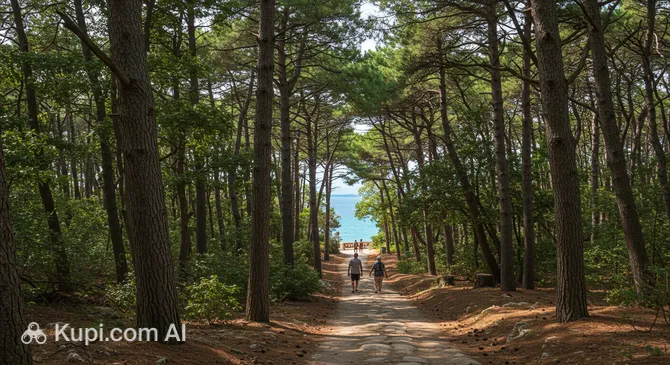
If you are looking for tranquility and wish to enjoy nature, Golden Cape Forest Park (also known as Zlatni Rt or Punta Corrente) will be a real discovery for you. This extensive and magnificently maintained forest park, stretching south of Rovinj's center, offers visitors shaded alleys among centuries-old pines, slender cypresses, and mighty cedars. Numerous paths are laid out here, ideal for leisurely walking and cycling. Along the park's coast, you will find secluded rocky beaches and picturesque coves inviting you to swim in crystal-clear water. It is a true oasis of silence and fresh sea air, perfect for a break from the city bustle.

Zlatni Rt Forest Park. Illustration.
Source: Kupi.com AI

Traveler photos:

Local Cuisine

The gastronomy of Rovinj is a vivid reflection of its Mediterranean location and the rich history of Istria. The local cuisine is famous for the freshness of its ingredients, especially seafood, and the skillful combination of traditional Croatian recipes with a noticeable Italian influence. A trip to Rovinj would not be complete without exploring its culinary delights.

The foundation of the local cuisine is, of course, the bounty of the Adriatic Sea: fresh fish, squid, mussels, and other seafood delicacies. Istria is also famous for its high-quality olive oil, fragrant truffles (especially white ones), and homemade pasta, such as fuži and pljukanci. Not to be forgotten are the excellent Istrian pršut (dry-cured ham) and local cheeses, which are often served as appetizers.

Among the dishes you should definitely try in Rovinj are seafood risotto (especially "crni rižot" – black risotto with cuttlefish ink), grilled fish (riba sa žara), and various types of pasta with truffles or seafood. Also popular is brodet – a thick fish stew, and mussels "na buzaru" – stewed in a wine and garlic sauce with herbs. Meat lovers will enjoy lamb or beef dishes, often prepared "pod pekom" (under a bell-shaped lid covered with coals).

Local drinks will perfectly complement your meal. Be sure to try the white Malvazija Istarska – a fresh, aromatic wine that pairs perfectly with seafood, and the rich red Teran, which goes excellently with meat dishes and pršut. As a digestive or aperitif, rakija – a strong alcoholic drink based on fruit or herbs – is popular. For non-alcoholic options, look for freshly squeezed juices and homemade lemonades.

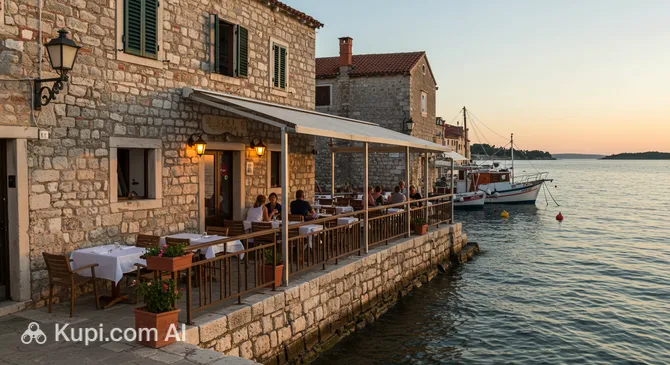
The food culture in Rovinj is very diverse. You will find elegant restaurants with sea views as well as cozy family konobas (traditional taverns) where you can taste authentic dishes in an informal setting. Local residents often buy fresh products at the city market to cook at home. Tourists, meanwhile, enjoy exploring the numerous establishments in the Old Town. If you are a fan of fresh fish and seafood with a modern twist, look out for Tunaholic Fish Bar, where you can enjoy delicious tuna dishes and more.

Tunaholic Fish Bar. Illustration.
Source: Kupi.com AI

Traveler photos:

Rovinj's gastronomic scene is a true kaleidoscope of flavors that will delight any gourmet. The combination of fresh local products, centuries-old traditions, and modern culinary trends makes this city an attractive destination for gastronomic tourism. Discover the taste of Istria in one of the most picturesque corners of Croatia!

Travel Tips

Welcome to charming Rovinj! To make your trip to this picturesque corner of Croatia as comfortable and pleasant as possible, we have prepared some practical tips. They will help you better navigate and enjoy every minute of your holiday.

  1. Clothing and Essentials:

    The climate in Rovinj is Mediterranean. In summer (June-August), bring light clothing, swimwear, a hat, sunglasses, and sunscreen. In spring and autumn, clothing that can be layered and a light jacket or windbreaker will be useful. In winter, it can be cool and rainy, so warm clothes and an umbrella are good to have. Be sure to bring comfortable shoes — the streets of the Old Town are cobbled and steep in places. When visiting the Church of Saint Euphemia and other religious sites, choose modest clothing that covers shoulders and knees. Don't forget an adapter for sockets (Croatia uses type F sockets).

  2. Transport:

    Rovinj is a compact city, especially its historic center, which is best explored on foot. Public transport consists of local buses linking different parts of the city and its surroundings, but it is not needed for moving around the Old Town. Taxis are available and can be found at ranks or called by phone. Renting a car makes sense if you plan trips around Istria, but keep in mind that parking in the center of Rovinj is very limited and paid. Many people leave their cars in parking lots outside the pedestrian zone.

  3. Finances:

    The official currency in Croatia is the Euro (EUR). You can exchange currency at banks, post offices, or exchange offices (“Mjenjačnica”). ATMs (“Bankomat”) are widespread. Credit and debit cards (Visa, Mastercard) are accepted in most hotels, restaurants, and shops. It is recommended to always have some cash with you for small purchases or at markets. Tips in restaurants are usually 5-10% of the bill if you liked the service; in cafes and taxis, you can round up the amount.

  4. Health and Safety:

    Rovinj is a very safe city. However, standard precautions, such as looking after personal belongings in crowded places, are still wise. Pharmacies (“Ljekarna”) are available in the city; information about the duty pharmacy can be found on the doors of other pharmacies or online. If you need medical assistance, contact the local medical center (“Dom Zdravlja”) or your insurance provider for information on clinics that work with tourists. It is recommended to have travel medical insurance. Tap water in Rovinj is safe to drink.

  5. Communication:

    The official language is Croatian. Italian is also widely spoken in Istria. In Rovinj's tourist areas, hotel, restaurant, and shop staff generally speak English well, and often German too. Learning a few basic phrases in Croatian, such as “Dobar dan” (Good day), “Hvala” (Thank you), “Molim” (Please/You're welcome), will be a nice gesture. Wi-Fi is available in most hotels, cafes, and restaurants. A local SIM card can be purchased at mobile operators' stores or kiosks.

  6. Local Etiquette:

    Croatians are hospitable and friendly. It is customary to say hello when entering small shops or cafes. A handshake is the common form of greeting. Quiet and respectful behavior is appreciated in public places. If you are invited to someone's home, a small gift or a bottle of wine is appropriate. Don't hesitate to ask for directions — locals are usually happy to help.

  7. What to Avoid:

    Try not to make noise late in the evening in the residential areas of the Old Town, as the streets are narrow and sound carries well. When visiting churches, dress modestly and behave respectfully. Also, do not underestimate the summer sun — use sunscreen and drink enough water, especially during the hot midday hours.

  8. Additional Tip:

    Don't miss the chance to enjoy the stunning sunsets in Rovinj — it's one of the most memorable sights! Find a cozy spot on the waterfront or in one of the bars with a sea view. We also recommend visiting the local market in the morning to buy fresh fruits, vegetables, Istrian olive oil, or truffle products — they make excellent souvenirs and treats.

We hope these tips make your stay in Rovinj even more memorable and worry-free. Enjoy the beauty and atmosphere of this magical city!

Entertainment & Nightlife

When the sun sets over the Adriatic, Rovinj transforms, offering guests a cozy and romantic atmosphere for evening relaxation. The nightlife here is more elegant and relaxed than loud and club-oriented. The main centers of evening entertainment are concentrated in the Old Town and along the picturesque waterfront (riva), where numerous bars and restaurants beckon with their lights and music.

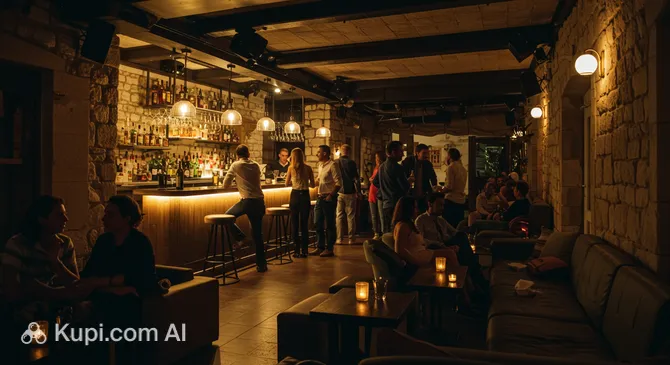
In the evening, the narrow streets of Rovinj's Old Town come alive. Here you can find many small bars, wine cellars, and cafes where it is pleasant to spend time over a glass of local wine or a cocktail. The atmosphere is usually very friendly, and the crowd is mixed — from tourists to locals. Many establishments offer live music — from jazz to acoustic guitar performances. The dress code in most places is casual, but smart casual might be appropriate for some of the more refined restaurants and bars. Establishments are usually open until midnight or 1:00 AM, especially during the summer season.

Mediterraneo Cocktail Bar. Illustration.
Source: Kupi.com AI

Traveler photos:

Among the popular places for evening relaxation is Mediterraneo Cocktail Bar, known for its creative cocktails and stunning location right by the water, making it an ideal spot for sunset watching. Another establishment worth visiting is the Circolo Aperitif Bar, which offers a pleasant atmosphere for an aperitif and evening social gatherings. Although Rovinj is not famous for large nightclubs, you can find several places with dance music that stay open later, especially during the peak season.

Circolo Aperitif Bar. Illustration.
Source: Kupi.com AI

Traveler photos:

Practical Tips: The best time to start your evening is during the sunset hours, when the city is particularly beautiful. Average prices for drinks in Rovinj's bars are quite moderate, especially compared to major European tourist centers. It is best to move around the Old Town at night on foot. If your accommodation is further away, you can use taxi services. There are no night markets in the traditional sense in Rovinj; the focus is on gastronomic pleasures in restaurants and bars.

Safety: Rovinj is a very safe city, and night walks along the well-lit central streets and the waterfront generally do not cause concerns. Nevertheless, it is always worth taking usual precautions. Taxis can be called by phone (numbers are often available in hotels or bars) or found at special ranks. Your hotel or restaurant staff can also help with calling a taxi.

As for daytime entertainment, Rovinj offers many options. You can visit local museums, such as the Batana Eco-Museum, dedicated to the traditional fishing boat, or explore the numerous art galleries for which the Old Town is famous. For nature lovers, a walk through Golden Cape Forest Park is an excellent choice. Although there are no large amusement parks in Rovinj, its charming streets, historical landmarks, and beautiful beaches provide a full program for the whole day.

Parks & Museums

Rovinj is not only about charming streets and a picturesque coast, but also beautiful green areas for relaxation and interesting museums that preserve the city's cultural heritage. Here, everyone will find something for the soul: from shady parks to unique exhibitions telling the story of Istria's history and traditions.

The main green gem of Rovinj is undoubtedly Golden Cape Forest Park (Punta Corrente). This extensive forest park, established in the late 19th century, offers visitors shaded alleys for walking and cycling, picturesque bays with pebble beaches and crystal-clear water, as well as cliffs popular among rock climbers. It is the perfect place to hide from the summer heat and enjoy nature.

Zlatni Rt Forest Park. Illustration.
Source: Kupi.com AI

Traveler photos:

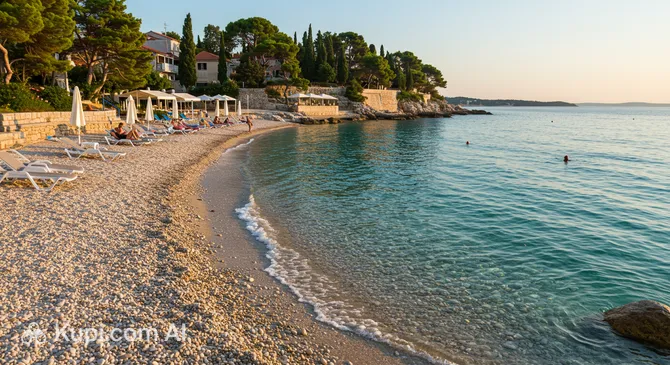
For beach lovers, Rovinj offers many options. One of the most popular is the well-equipped Mulini Beach, located near the city center. It attracts visitors with its modern infrastructure, clean sea, and beautiful views. Equally well-known is Cuvi Beach, which is especially valued by families with children for its gentle entrance into the water and the saving shade from the surrounding pines.

Mulini Beach. Illustration.
Source: Kupi.com AI

Traveler photos:

To dive deeper into the culture and history of Rovinj, it is worth visiting the Batana Eco-Museum (Ekomuzej Batana). This unique museum is dedicated to the traditional Rovinj fishing boat — the batana — and the city's maritime heritage. The exhibition is interactive and engaging, telling the story of local fishermen's lives, their customs, and crafts. The museum is included in the UNESCO Register of Good Safeguarding Practices for Intangible Cultural Heritage.

Another important cultural institution is the Rovinj Heritage Museum (Zavičajni muzej grada Rovinja). It is located in the Baroque palace of the Califfi family and houses a rich collection of archaeological finds, works by old masters, as well as works by contemporary artists. Visiting the museum allows you to trace the region's history from antiquity to the present day.

The Old Town of Rovinj itself is a true open-air museum. Walking through its narrow cobbled streets, you will constantly encounter historical buildings and architectural gems. Crowning the Old Town is the majestic Church of Saint Euphemia, the patron saint of Rovinj. From its bell tower, a breathtaking panoramic view of the city and the archipelago opens up. Do not miss the famous Balbi Arch — an ancient gate leading into the very heart of the Old Town.

Rovinj Old Town
Church of St. Euphemia. Illustration.
Source: Kupi.com AI

Traveler photos:

Balbi's Arch. Illustration.
Source: Kupi.com AI

Traveler photos:

For a more authentic experience, peek into the numerous small art galleries scattered throughout the streets of the Old Town — you can find unique works by local artisans there. And if you are looking for solitude, head out to explore the lesser-known trails and secluded coves in the far part of Golden Cape park, where you can enjoy the silence and untouched nature.

Getting Around

Getting around Rovinj is quite simple, especially considering its compact size. The historical center of the city is largely pedestrian, and the best way to get to know its charming streets is a leisurely walk. However, for longer trips or to reach some beaches and areas outside the old town, other options exist.

The main form of public transport in Rovinj and its surroundings is buses. Local bus lines connect the city center with more remote areas, some popular beaches, and campsites. For trips to other cities in Istria, such as Pula or Poreč, as well as to other regions of Croatia, you can use intercity buses that depart from Rovinj's main bus station. There is no metro, tram, or trolleybus in Rovinj.

The fare payment system on local buses is usually simple. Tickets can most often be purchased directly from the driver when entering the bus. Sometimes tickets are also sold at newsstands (tisak) or at the bus station, especially for intercity routes. The cost of travel on local lines is generally low. There are usually no specialized tourist travel cards for urban transport in Rovinj, as the city is small. It is recommended to have small change in cash to buy a ticket from the driver. Bus schedules can be checked at stops or at the bus station; keep in mind that the frequency of service may be lower in the evenings and outside the main tourist season.

A wonderful alternative to public transport, especially for exploring the picturesque coast and Golden Cape (Zlatni Rt) park, is a bicycle. There are several bicycle rental points in Rovinj where you can rent both standard and electric models. This is a great way to enjoy nature and reach secluded coves.

Taxis are available in Rovinj, with ranks usually located near the bus station and in other busy parts of the city. This is a convenient, though more expensive, way to get around, especially if you are traveling with luggage or in a small group. In the summer season, water taxis (taxi boats) are also popular, which can take you to nearby islands or remote parts of the coast, offering beautiful views from the sea.

If you plan to actively explore the Istrian peninsula, you might consider renting a car. However, note that parking in Rovinj's historic center can be difficult and paid. For moving directly around the city, a car is less convenient than walking or cycling.

In general, for most tourists, the main way to get around Rovinj will be walking. Buses are useful for trips to the outskirts or neighboring settlements, while bicycles and water taxis will add pleasant experiences to your holiday.

Accommodation

In Rovinj, travelers will find a wide range of accommodation options to suit every taste and budget. From cozy and affordable hostels and private apartments, perfect for independent travelers, to comfortable middle-class hotels and luxurious resort complexes with a full range of services. Renting villas and holiday homes is also popular, especially for families or large groups.

When choosing a place to stay in Rovinj, it is worth paying attention to several key areas. The Old Town (Stari Grad) attracts visitors with its unique atmosphere, narrow cobbled streets, and proximity to major attractions. However, it can be noisy here, and parking options are few. For those who prefer proximity to the sea and a quieter setting, areas located along the coast, for example, near popular beaches such as Mulini or Cuvi, are suitable. These areas offer a good choice of hotels and apartments with beautiful views and easy access to beach infrastructure.

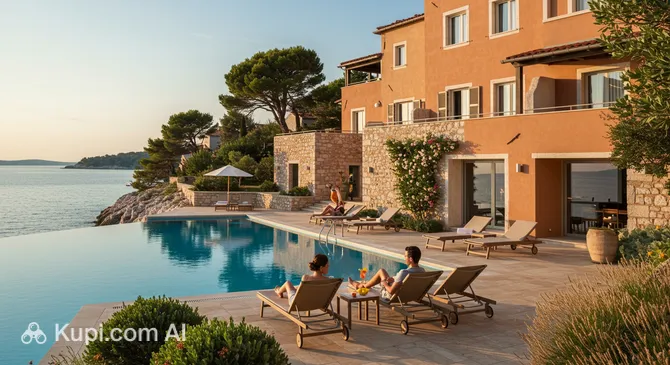
Among the well-known accommodation options in Rovinj are resort hotels offering a high level of comfort and diverse services. These include the Petalon Resort, which attracts guests with its location and infrastructure. Another notable option is Valdaliso Beach, which also offers quality seaside relaxation.

Petalon Resort. Illustration.
Source: Kupi.com AI

Traveler photos:

When planning a trip to Rovinj, especially during the peak tourist season (summer months), it is recommended to book accommodation in advance. This will allow you not only to choose the best option in terms of price and quality but also to avoid a situation where all suitable places are already occupied. Accommodation prices range from budget to luxury, depending on the type of accommodation, its location, and the season. Booking is convenient through popular online platforms or directly on the websites of hotels and apartments.

Nearby Cities

For those who want to explore the surrounding area, Rovinj serves as an excellent starting point for day trips to several interesting nearby places:

CityPopulationDistance
Pazin8 63829 km
Pula57 05329 km
Labin11 64238 km
Umag12 76741 km
Portorož2 80048 km

Very close by is Pula, famous for its magnificently preserved Roman amphitheater and other ancient monuments that will immerse you in the atmosphere of Ancient Rome. A little further is Rijeka — a major port city with a rich history, where you can stroll along the lively Korzo promenade and visit Trsat Castle, which offers impressive views.

These nearby destinations provide insight into the diverse culture and landscapes of the Croatia region and can be a great addition to your holiday in Rovinj.

Shopping & Souvenirs

Shopping in Rovinj is not about chasing global brands in huge shopping malls, but rather an exciting journey through unique shops, art galleries, and colorful markets. Here you will find unique souvenirs, local handicrafts, works of art, and, of course, the famous Istrian delicacies. The city offers a special shopping experience steeped in the atmosphere of an ancient Mediterranean port.

The main shopping arteries of Rovinj are concentrated in its heart — the Old Town. The main street for shopping is Carera, which is home to many clothing, shoe, jewelry, and souvenir shops. No less interesting is Grisia street, which turns into a real open-air gallery, especially in August when a famous art exhibition takes place here. On these and the surrounding narrow streets, you will discover small boutiques, shops with artisan works, and stores offering local products.

There are no large modern shopping centers typical of big cities in Rovinj. The charm of local shopping lies precisely in the intimacy and uniqueness of the small shops. However, for everyday needs and food shopping, you will find several supermarkets located both in the center and on the outskirts of the city.

A mandatory stop for lovers of authentic purchases should be the Town Market (Tržnica), located near Valdibora Square. Life bustles here from early morning: local farmers offer fresh fruits, vegetables, homemade cheeses, pršut, honey, and, of course, the famous Istrian olive oil and truffles. You can also find souvenirs, handmade items, and fresh seafood at the market.

From Rovinj, it is worth bringing back something special that will remind you of this sunny corner of Croatia. Popular souvenirs and local goods include:

  • Extra virgin olive oil and products with truffles (pastes, oils, canned mushrooms).
  • Local Istrian wines, such as Malvazija (white) or Teran (red).
  • The traditional strong drink rakija (for example, medovica or biska).
  • Lavender products: sachets, essential oils, soaps.
  • Handmade ceramics and jewelry from local artisans.
  • Paintings and other works of art, especially from Grisia street.
  • Miniature copies of the traditional "batana" fishing boat — the symbol of Rovinj.

Shops in the tourist areas of Rovinj are usually open from 9:00-10:00 AM to 8:00-9:00 PM, especially in the summer season. Some small shops may close for a siesta (lunch break) from 1:00 PM to 4:00 PM or 5:00 PM. Supermarkets generally work longer and without a break. Common payment methods include bank cards (Visa and Mastercard are widely accepted in most shops and restaurants) and cash euros. Cash may be needed at the market and in some small souvenir shops.

For tourists from non-European Union countries, there is the possibility of a Value Added Tax (Tax Free) refund on purchases over a certain amount in shops participating in this system. Look for the "Tax Free Shopping" sticker. To arrange a refund, you must obtain a special receipt at the store and present it along with the purchases at customs when leaving the EU.
Have you reached the end of the page?

So the route has been studied inside and out