Support

Puerto Villamil

Interesting places

About

Puerto Villamil is a true oasis of tranquility and a gateway to the wild nature of the Galapagos Archipelago. This charming town, nestled on the southeast coast of Isabela Island, offers tourists a unique atmosphere where the boundaries between civilization and pristine nature are virtually blurred. Here, time flows differently, governed not by the hands of a clock, but by the rhythm of ocean tides and sunsets.

Geographically, the town is located on the largest island of the archipelago, yet it remains intimate and cozy. With a population of only about 2,200 people, it feels like one big friendly family where every guest is welcome. When visiting Ecuador, many travelers head here specifically for the mild tropical climate and the sense of complete isolation from the hustle and bustle of the outside world. Despite its status as an administrative center, there are no noisy avenues here, and the streets are covered in sand, making it a pleasure to walk barefoot.
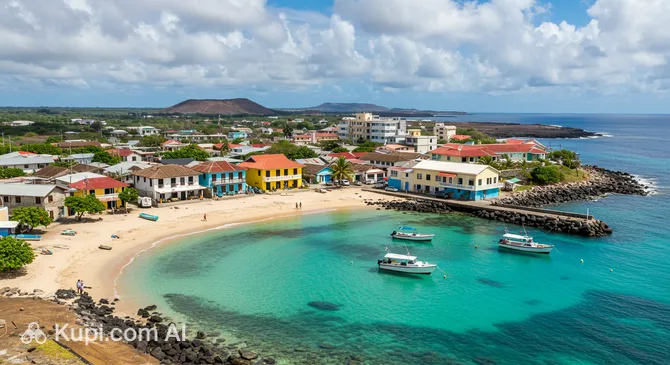
Puerto Villamil. Illustration.
Source: Kupi.com AI

The past of this place is as fascinating as its landscapes. From a modest settlement living exclusively on fishing, the town has transformed into an important center for ecotourism while managing not to lose its charm. To understand how the character of this unique corner was formed and what stages it went through in its development, the fascinating history of Puerto Villamil will be of help.

The main attraction for guests is the magnificent three-kilometer beach with snow-white sand that gently slopes into the turquoise waters of the Pacific Ocean. However, the true magic of the town lies in its inhabitants. Puerto Villamil is one of the few places on the planet where wild animals feel like full-fledged citizens. Walking along the waterfront, you might easily encounter marine iguanas basking in the sun right on the sidewalk or sea lions occupying the best benches for a midday nap.

This town is the perfect choice for those seeking harmony and inspiration. Come to Puerto Villamil to see the rugged volcanic landscapes with your own eyes, enjoy the freshest seafood in local cafes, and feel like part of the amazing world of the Galapagos, where humans are merely admiring observers.
Weather Overview

The climate in Puerto Villamil is mild and temperate, making it comfortable to visit almost year-round. The weather here is shaped by oceanic currents, so despite its equatorial location, there is usually no exhausting heat. The year is conventionally divided into two periods: a warm season when precipitation is possible, and a cooler dry season.

From January to May, the air warms up the most: the average temperature is 24–26°C, and in March the thermometer can rise to 27.7°C. However, this is also the wettest time — for example, up to 20 rainy days are recorded in April. From June, temperatures gradually decrease, reaching a minimum in September (about 19.6°C at night). During this period, especially from August to November, there is practically no precipitation (0 mm), and the number of wet days drops to 2–4 per month.

Expect warm months with occasional tropical rains in the first half of the year and fresher, drier weather from June to December. To plan your wardrobe and activities wisely, check the current weather in Puerto Villamil before your flight. Regardless of the season, Isabela Island's mild climate is perfect for long walks and exploring its unique nature.

Average monthly temperature

Average monthly precipitation

Interesting Facts

Puerto Villamil is not just a point on the map, but a place with a living history and a unique atmosphere. Beyond the picturesque landscapes, this town hides many interesting details that make a stay here unforgettable.

  • Heroic Heritage. The town is named after José de Villamil, a prominent hero in the struggle for the independence of Ecuador. This historical connection gives the settlement a special flavor: locals treat the past with great respect and take pride in their roots, which is felt in the overall mood of the town.

  • A Path Through the Wild. The road to the giant tortoise breeding center is an adventure in itself. A 20-minute walk from the town center passes by the Salinas Lagoon, home to graceful pink flamingos, and through dense mangroves where iguanas love to hide. In the center itself, you can witness a unique picture of generational change: from newly hatched babies to long-lived tortoises whose age exceeds a century.

  • Amazing Neighbors. Puerto Villamil is the starting point for boat trips to the Las Tintoreras islets. This place is striking for its diversity of fauna: here you can observe colonies of sea lions, rare Galapagos penguins, and even white-tip reef sharks resting in crevices. Local waters are recognized as some of the cleanest and most life-filled on the planet, making them a magnet for divers.

  • A Town of Explorers and Traditions. There is a unique atmosphere of openness here, thanks to the many volunteers, biologists, and researchers who come to work with the island's ecosystem. The scientific spirit harmoniously intertwines with local traditions: beach parties are often held where music plays to the sound of the surf, and people dance and enjoy the freshest seafood.

How to Get There

Planning a trip to Isabela Island requires special attention to logistics, as this corner of the Galapagos Archipelago is remote from the main mainland routes. To ensure your journey goes smoothly, we recommend studying all the nuances in advance and learning more about how to get to Puerto Villamil. The primary route involves a flight to neighboring islands followed by a transfer to water transport.

Since there is no large international airport in Puerto Villamil itself, most tourists arrive via the air harbors of neighboring islands. One of the main hubs is Baltra Airport (IATA: GPS), also known as Seymour. It is located near the town of Puerto Ayora, about 95 km from Puerto Villamil. It is the busiest airport in the archipelago with high passenger traffic, receiving flights from the mainland. The total travel time from here to your destination, including necessary transfers, will take about 3 hours.

An alternative option is San Cristóbal Airport (IATA: SCY), which is located in San Cristóbal, about 150 km from Puerto Villamil. This is a regional hub with moderate passenger traffic that also serves as a convenient entry point to the islands. The journey from here to Isabela Island is longer and can take about 4 hours, which should be considered when planning your itinerary.

For clarity, here is a summary of the main airports through which you can reach the town:

AirportPassenger trafficDistance
Baltra Airport520 79995 km
San Cristobal Airport179 361150 km

As for rail connections, they are completely absent in Puerto Villamil and throughout the Galapagos Archipelago. The specifics of the island landscape and strict environmental regulations make the construction of railways impractical. The main means of transport between islands remain high-speed motorboats and small "air taxi" planes, while within settlements, people get around on foot, by bicycle, or in pickup trucks.

Main Attractions

Puerto Villamil, located on Isabela Island, offers guests a unique blend of untouched nature and the authentic atmosphere of the Galapagos Islands. The main treasures of this place are not man-made monuments, but natural wonders accessible just a few steps from the town center. Here, everyone will find something to their liking, whether it's animal watching or discovering the local cuisine.

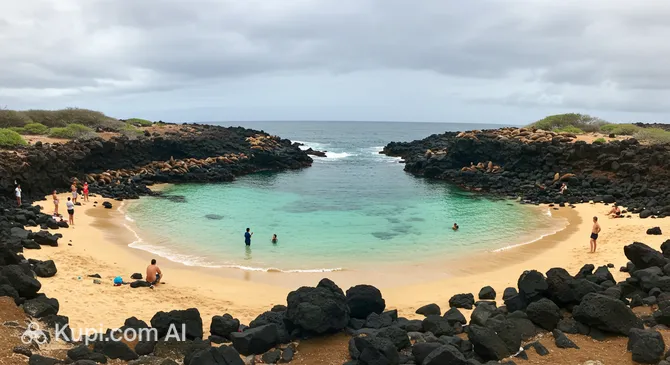
One of the most popular and must-visit spots is Concha de Perla, which translates to "Pearl Shell." This is a natural lagoon with crystal clear and calm water, protected from ocean waves by rocks. It is easily reached via a wooden boardwalk through the mangroves. It's an ideal place for snorkeling, where you can swim side-by-side with sea lions, iguanas, tropical fish, and even sea turtles. Visiting this natural pool is completely free and leaves an unforgettable impression.

Concha de Perla. Illustration.
Source: Kupi.com AI

Traveler photos:

After active recreation in nature, it's worth getting to know the gastronomic side of the island. To try the freshest gifts of the sea, stop by Restaurante Cesar, where they offer dishes from the daily catch. And if you want to taste the traditional cuisine of mainland Ecuador, you should visit Hornados Albita. Here they prepare "hornado" — a famous roasted meat with a crispy crust that is one of the country's culinary symbols. This is a great opportunity to diversify your gastronomic experiences.

Local Cuisine

The gastronomy of Puerto Villamil is a true symphony of freshness and maritime aromas, where the treasures of the Pacific Ocean are invariably the stars of the table. The cuisine here is simple but incredibly tasty, based on the "boat to plate" principle. Local chefs prepare fish, lobsters, shrimp, octopus, and mussels with great imagination: they are grilled to a golden crust, stewed with aromatic spices, or served in hearty soups. Sides usually consist of rice, fresh vegetables, and tangy sauces that highlight the seafood's flavor.

A special place in the town's culinary culture is held by ceviche. This is a dish of raw fish or seafood marinated in lime juice with onions, peppers, and cilantro. In Puerto Villamil, it is prepared in its own way, often adding tropical notes and local vegetables, making the taste particularly vibrant. Among other delicacies, it is worth trying fried green plantains (patacones), sweet potatoes, and various dishes made from the tropical fruits in which Isabela Island is rich.

As for drinks, the hot climate dictates its own rules. The most popular choice is freshly squeezed juices (jugos) and smoothies (batidos) made from exotic fruits: passion fruit, naranjilla, blackberry, or papaya. Alcohol lovers can appreciate local Ecuadorian beer, which is perfectly refreshing at noon, or cocktails based on cane spirit, often served in bars at sunset.

The food culture in the town is very casual. Street food is popular here and can be found in small kiosks and cafes: be sure to try the crispy fried fish or tortillas with various fillings. In the evenings, street markets come alive where local fishermen sell the fresh catch, including sea urchins. Eating here is not just about satisfying hunger, but a way to feel the rhythm of island life, so tourists and locals often eat at neighboring tables on open terraces, enjoying the sea breeze.

Travel Tips

Welcome to Puerto Villamil — a unique place where the streets are covered in sand and sea lions can sunbathe right on the benches in the town center. To ensure your immersion into this relaxed island life goes smoothly, we have prepared a list of the most important practical recommendations for travelers.

  1. Clothing and Sun Protection. The climate here is equatorial, so the sun is very strong. Be sure to bring a hat, sunglasses, and high-SPF sunscreen (preferably biodegradable to avoid harming the ecosystem). Since many streets in the town are sandy, the best footwear is comfortable sandals or flip-flops. However, for hikes to the Sierra Negra volcano or the Wall of Tears, closed trekking shoes will be required. Don't forget a light windbreaker: evenings can be cool, especially if you plan on boat trips.
  2. Transport Specifics. Within the town, everything is within walking distance. Renting a car is not necessary and practically impossible for tourists. The most popular and pleasant way to get around is by bicycle, which is easy to rent for the day. For trips to the port or remote parts of the island, use local taxis — white double-cab pickups.
  3. Finances and Cash. Ecuador uses the US dollar. It is critical to have cash with you, specifically in small denominations ($1, $5, $10, $20). Finding change for a $100 bill will be difficult. There are very few ATMs in town (often only one), and they may not work or may run out of cash. Cards are not accepted everywhere, and where they are, a 10–20% commission might be added.
  4. Health and First Aid Kit. Medical services on the island are basic, and there are no 24-hour pharmacies. Bring a necessary supply of medications, especially if you take something regularly. Important tip: if you are reaching the island by speedboat (ferry), be sure to take motion sickness medication in advance — the ocean between the islands can be very rough. Tap water is not drinkable; buy bottled water.
  5. Communication and Internet. Be prepared for a "digital detox." Wi-Fi in hotels and cafes is often very slow and unstable. Mobile internet works intermittently; the Claro network usually has the best reception. We recommend downloading offline maps of the town and a translator to your phone while you are on the mainland or on Santa Cruz Island.
  6. Rules for Interacting with Animals. This is the strictest rule of the archipelago. Maintain a distance of at least 2 meters from any animals, whether they are iguanas on the sidewalk or sea lions on the beach. Never feed them and do not use a flash when taking photos. Locals are very protective of nature, and violating these rules will cause disapproval and may lead to fines.
  7. What to Avoid. Do not try to take "souvenirs" from the beach: shells, coral, sand, or volcanic rocks. Baggage is strictly inspected at the airport, and taking natural materials is prohibited by law. Also, avoid night walks on unlit remote beaches — not because of crime (it's safe here), but to avoid accidentally stepping on resting animals.
  8. Water Taxi. A specific logistical nuance: speedboats between the islands do not dock directly at the pier due to shallow water. You will be dropped off in the water and need to reach the shore on a small boat (water taxi). This service is paid (usually around $1 per person), so always keep change handy immediately upon arrival.

Puerto Villamil is a place where you need to slow down and go with the flow of life. By following these simple tips, you can avoid minor troubles and fully devote yourself to contemplating the amazing nature of the Galapagos, which begins right outside your hotel doorstep here.

Entertainment & Nightlife

Nightlife in Puerto Villamil is fundamentally different from that of noisy metropolises or large resorts. Here, you won't find multi-story nightclubs with neon signs and loud electronic music until dawn. Evening leisure in this town is an extension of the relaxed island atmosphere: "happy hour" with cocktails at sunset, live music in reggae or salsa styles, and heartfelt conversations to the sound of the ocean. The main rule of local relaxation is no rush and no dress code; shorts and flip-flops are appropriate in any establishment.

The center of evening activity is the main street, Avenida Antonio Gil, and the waterfront running along the beach. This is where the main bars and restaurants are concentrated, coming to life after 6:00 PM. The atmosphere in these establishments is incredibly friendly and casual: local fishermen, environmental volunteers, and tourists from all over the world might be sitting at neighboring tables. Many bars are open terraces or huts with hammocks right on the sand, where you can admire the starry sky of the southern hemisphere, which seems especially bright here due to the lack of light pollution.

Concha de Perla. Illustration.
Source: Kupi.com AI

Traveler photos:

Although the choice of venues is small, each has its own unique character. A cult spot is Bar de Beto, located towards the end of the waterfront. It is famous for its eccentric design, excellent passion fruit cocktails, and relaxed atmosphere where local musicians often play. Another popular spot is Casa Rosada, a beach bar perfect for watching the sunset. Usually, a tourist's evening itinerary looks like this: after an active day and snorkeling in the Concha de Perla lagoon, travelers gather in coastal bars to discuss the day's sightings and enjoy refreshing drinks.

Practical tips for evening strolls:

  • Opening hours: Life in the town winds down early. Most bars close around 11:00 PM or midnight, as many tourists get up at dawn for excursions.
  • Prices: Take advantage of "happy hours" (usually from 5:00 PM to 7:00 PM), when two cocktails are offered for the price of one (average price $8–$10 USD).
  • Safety: Puerto Villamil is one of the safest places in South America. You can safely walk the streets at night. However, lighting can be dim, so a phone flashlight will be useful to avoid tripping on uneven roads.
  • Transport: Taxis are harder to find at night, but the town is so compact that any hotel can be reached on foot in 10–15 minutes.

As for classic daytime entertainment such as cinemas, theaters, bowling, or shopping malls, there are none in Puerto Villamil. The town consciously preserves its authenticity. The main "theater" here is nature, and instead of shopping in malls, tourists prefer playing beach volleyball with locals in the main square or watching fishermen sort the evening catch on the pier.

Parks & Museums

Puerto Villamil offers a completely unique approach to the concept of cultural and natural leisure. Here, you are unlikely to find classic museum halls with gold-framed paintings or strictly laid-out city parks with fountains. The entire town and its surroundings are, in essence, one large open-air museum where the main exhibits are rare animals, and the scenery is made of majestic volcanic landscapes and mangrove forests.

Natural Areas and Parks

The main natural gem within the town is the Concha de Perla lagoon park. This place is a natural aquarium hidden from the open ocean and surrounded by mangroves. The path to it lies across a picturesque wooden boardwalk passing through dense vegetation where sea lions often rest. For tourists, this is an ideal location for snorkeling: the water here is crystal clear and calm, allowing for safe swimming alongside sea turtles, rays, and many tropical fish.

Concha de Perla. Illustration.
Source: Kupi.com AI

Traveler photos:

Another significant natural area is Los Humedales (The Wetlands). This is an extensive network of trails, lagoons, and beaches located west of the town. A walk here is the best way to get acquainted with the biodiversity of Isabela Island. The paths meander through lava fields and mangroves, leading to observation decks overlooking salt lakes. It is here that you can see the famous pink flamingos in their natural habitat, as well as many other migratory birds.

Museums and Historical Heritage

The role of the main museum and scientific-educational center is fulfilled by the Arnaldo Tupiza Tortoise Breeding Center (Centro de Crianza Arnaldo Tupiza). This institution is dedicated to restoring the population of the endangered giant Galapagos tortoises. Visitors can walk along special bridges and see all stages of development of these amazing reptiles: from tiny hatchlings in incubators to massive adults. Information stands tell about species biology and conservation efforts, making the visit not only interesting but also educational.

A major historical monument reflecting the dark pages of the island's past is the Wall of Tears (El Muro de las Lágrimas). While it is not a museum in the traditional sense, the site serves as a powerful reminder of the history of the penal colony that existed here in the mid-20th century. The wall, about 5-6 meters high, was built by prisoners from sharp volcanic rocks under grueling conditions. Today, this place prompts reflection on human resilience and the history of the islands' settlement, and the road to the wall is a beautiful trekking route in itself.

Insider Tip: If you plan to visit the wetlands or the Wall of Tears, it's best to rent a bicycle in town and set off early in the morning. At this time, the sun is not yet so scorching, and animal and bird activity is at its peak, guaranteeing you the best photos and experiences.

Getting Around

The transport system in Puerto Villamil has its own unique specifics, due to the town's size and its location in a protected area. Here, you won't find the public transport typical of metropolises: no metro, no trams, and not even regular city bus routes. The town is so compact that the concept of "transport" here is reduced to taxis, bicycles, and walking.

The main motorized means of transport are taxis, which are white double-cab pickup trucks (camionetas). This is a versatile transport, ideal for local roads and carrying luggage. You can find a free vehicle in the central square or ask your hotel reception to call one. There are no meters in these taxis, but there are fixed rates for trips within the town and to main attractions, such as the port or the start of the trail to the Wall of Tears.

The payment system is extremely simple: only cash is accepted here. There are no transit cards, validators, or mobile apps for calling transport. The cost of a short trip around town is usually $1–$2, but it's better to agree on the price with the driver before getting in. Be sure to have small bills with you, as drivers often don't have change for large banknotes.

For trips to the highland part of the island, such as the Sierra Negra volcano, so-called "chivas" are used — trucks converted into open-air buses with benches. However, they do not run on a schedule like city transport; they are usually booked for specific tourist groups or excursions. A seat on such a bus is typically included in the price of an organized tour.

The most popular alternative to a taxi is the bicycle. Many rental points operate in Puerto Villamil, where you can rent a bike by the hour or for the whole day. It's an ideal way to reach remote beaches or explore the surroundings at your own pace. Given that many streets in town are sandy and asphalt is not everywhere, a bicycle often proves even more convenient than a car.

For pedestrians, the town is as friendly as can be. Distances here are short, and reaching the waterfront, restaurants, or pier from most hotels takes 10–15 minutes at a leisurely pace. The main thing is to have comfortable shoes, as sidewalks are not available everywhere, and you often have to walk right on the packed sand.

Accommodation

Accommodation in Puerto Villamil has its own unique specifics, dictated by the island's remoteness and strict environmental rules. Here, you won't find giant hotel complexes of international chains or high-rise buildings blocking the horizon. The town's hotel stock consists mainly of small, cozy establishments that strive to coexist harmoniously with the surrounding nature. The atmosphere in most places is intimate and almost homey, allowing guests to feel like part of island life.

Types of Accommodation and Price Range

Housing options range from budget choices to quite comfortable lodges; however, the concept of "luxury" here usually means an exclusive ocean view and privacy rather than gold fixtures.

  • Budget Segment (Hostales): The most common type of accommodation. These are small guesthouses, often run by local families. Rooms here are basic but clean, usually with a private bathroom and a fan. This is a great way to save money and interact with the residents.
  • Mid-range and Boutique Hotels: Offer a higher level of comfort: air conditioning (important in the hot season), consistent hot water, Wi-Fi (though slow), and often breakfast included.
  • Eco-lodges and High-end Hotels: Generally located on the beachfront. Here, you can expect spacious rooms with panoramic windows, swimming pools, and well-kept grounds with hammocks under palm trees.

Areas to Stay

Since Puerto Villamil is very compact, the concept of a "bad neighborhood" is virtually non-existent — you can walk to the center or the beach from anywhere in 10–15 minutes. However, there are location nuances:

  • Front Line (Beachfront): The most desirable area. Hotels here open directly onto the white sandy beach. You will fall asleep and wake up to the sound of the surf. This is an ideal choice for a romantic getaway, but prices here are the highest.
  • Town Center and Square Surroundings: Accommodation located on the streets heading inland from the waterfront is cheaper. This is a convenient option for those who want to be closer to shops, the market, and inexpensive cafes, while the beach still remains within walking distance.

Booking Tips

When planning a trip to Isabela Island, it is critical to take care of accommodation in advance. The number of rooms on the island is limited, and during high season (December–January, June–August), the best options are booked months ahead. Arriving "on a whim" to find a hotel on the spot is a risky strategy that could lead to extra costs or staying in conditions far from what you desired.

You can use popular international online platforms for booking, which guarantees a fixed price. However, many small hostels only accept bookings through direct messages in messengers or by email. Keep in mind that prices for accommodation here are higher than in mainland Ecuador due to the complex logistics of delivering resources to the island. Also, be prepared that when paying on-site, small hotels often prefer cash in US dollars.

Nearby Cities

For those who want to explore the surroundings, Puerto Villamil serves as an excellent starting point for travel, although the specifics of the Galapagos Archipelago adjust the concept of "nearby cities." Due to island isolation, most neighbors are other islands reachable by high-speed boats or small aircraft.

The most interesting destination for a visit is San Cristóbal. This is the administrative center of the province, located in the east of the archipelago. The island is famous for its laid-back atmosphere and a huge population of sea lions that roam freely along the waterfront and rest on benches. It is also home to the famous Kicker Rock (León Dormido) — a mecca for divers and snorkelers. A trip here will allow you to see another side of life in the Galapagos, more administrative but no less natural.

The other large populated areas, geographically closest to Isabela Island, are located on the mainland part of the country. Cities like Manta or the suburbs of Guayaquil are separated by a thousand kilometers of the Pacific Ocean, but they often serve as the gateways through which travelers enter this unique protected region.

CityPopulationDistance
Puerto Ayora11 26276 km
Puerto Baquerizo Moreno6 140151 km
Puerto Baquerizo Moreno17 512151 km
San Cristobal200 000170 km

These destinations, whether neighboring islands of the archipelago or mainland cities, provide a complete picture of the diverse culture and landscapes of the region, linking together the wild nature of the islands and the civilization of continental Ecuador.

Shopping & Souvenirs

Shopping:

General Overview

Shopping in Puerto Villamil is fundamentally different from typical shopping trips in major tourist centers. Here, you won't find glittering storefronts of global brands or multi-story department stores. Trade on Isabela Island has an intimate, almost homey character. Shops here are small family-run stores and boutiques selling everything you need, from beach gear to unique handmade items. The main feature of local shopping is the relaxed atmosphere and the lack of pushy sellers, allowing you to enjoy the process of choosing souvenirs without any rush.

Main Shopping Areas and Streets

All of the town's commercial life is concentrated around the main artery — Antonio Gil Street (Avenida Antonio Gil), as well as the adjacent central square. Strolling along this sandy street, you will find most of the souvenir shops, grocery mini-markets, and clothing stores. Since the town is very compact, you can go around all the interesting spots in literally an hour. Many shops are located on the ground floors of buildings that also house hotels and restaurants, making shopping a convenient part of an evening promenade.

Shopping Centers

There are no shopping centers in the traditional sense of the word in Puerto Villamil. The island administration and local residents carefully preserve the authentic appearance of the settlement, avoiding the construction of large commercial complexes. The absence of malls is compensated for by the coziness of small galleries, where you can often meet the artisans themselves creating the items for sale.

Markets

While there are no huge bazaars here, it's worth checking out the small municipal market (Mercado Municipal), where locals buy fresh produce. For a tourist, it's a great opportunity to purchase exotic fruits grown on the island's volcanic soils or brought from the mainland. There are virtually no open-air souvenir markets; the trade of handicrafts is conducted in a civilized manner within specialized shops.

Souvenirs: What to Bring Back

The choice of souvenirs on Isabela Island will delight lovers of eco-products and authenticity. Here is a list of what to look out for:

  • Tagua products: This is so-called "vegetable ivory" — a palm nut from which local masters carve stunning animal figures and jewelry. It is an eco-friendly and beautiful souvenir.
  • Ecuadorian chocolate and coffee: Ecuador is famous for its cocoa beans and coffee. In local shops, you can find chocolate bars infused with lemongrass, salt, or chili.
  • Themed clothing: T-shirts and caps featuring the famous blue-footed boobies (with funny "I love boobies" slogans) or giant tortoises are top sellers.
  • Equipment: If you plan to swim in the Concha de Perla lagoon but forgot your gear, local shops sell quality masks, snorkels, waterproof cases, and sunscreen (be sure it's biodegradable).

Opening Hours and Payment

When planning your purchases, remember an important local custom — the siesta. Many shops open around 8:00–9:00 AM but close for a lunch break from 12:30 to 3:00 PM or even 4:00 PM. Trade resumes in the evening and lasts until 8:00–9:00 PM. As for payment, cash in US dollars is an absolute necessity here. Card terminals are not available everywhere, connections often fail, and a surcharge of 10–20% may be applied for non-cash transactions.

Tax Free

The Tax Free refund system for tourists is practically not applied in Puerto Villamil. Due to the island's remoteness and the nature of local trade, processing such procedures in small shops is impossible. Expect that the price listed on the tag (or agreed upon with the seller) is final.

Have you reached the end of the page?

So the route has been studied inside and out