Support

Saint Catherine

About

Saint Catherine is an oasis of silence and majesty, tucked away in the heart of the Sinai Mountains. This city is strikingly different from the usual seaside resorts: there is no hustle and bustle here, but instead an atmosphere of deep peace and spirituality. Located at the foot of legendary peaks, it attracts pilgrims, mountain trekking enthusiasts, and those seeking solitude among harsh yet beautiful landscapes.

Its geographical position makes Saint Catherine a unique destination to visit in Egypt. The city is situated at an altitude of over 1,500 meters above sea level, which creates a special microclimate here. In summer, the heat is easier to bear thanks to the dry air, and in winter, there can even be snowfall—a rare and amazing phenomenon for this country. About 5,000 people live in the city, a significant portion of whom are representatives of Bedouin tribes who carefully preserve their centuries-old traditions and way of life.
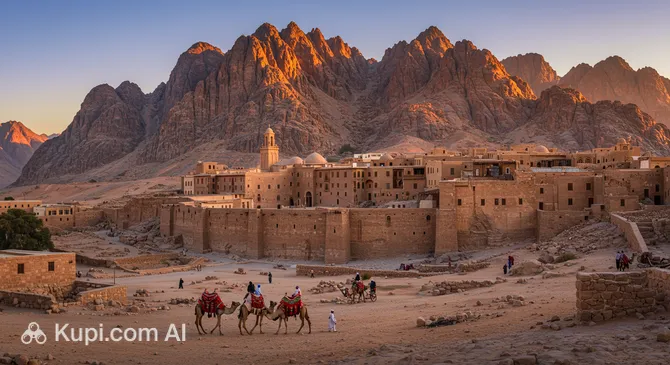
Saint Catherine. Illustration.
Source: Kupi.com AI

Every stone here breathes antiquity, and the history of Saint Catherine is inextricably linked with biblical events and the development of monasticism. The city is the administrative and religious center of the region, uniting the most important shrines around it. The main point of attraction is Saint Catherine's Monastery—one of the oldest functioning monasteries in the world—as well as the majestic Mount Sinai, climbing which to meet the sunrise has become a cult ritual for travelers from all over the world.

In addition to religious monuments, Saint Catherine enchants with its natural beauty: picturesque canyons and endless stony expanses. This place is worth a visit for anyone who wants to touch eternity, get acquainted with the hospitable Bedouin culture, and see a completely different, mountainous, and mysterious face of Egypt.
Weather Overview

The climate of Saint Catherine is unique for Egypt due to the city's high-altitude location. A special atmosphere reigns here: the air is dry and thin, and the temperature regime is noticeably different from the hot coast. Expect warm summers with clear days and quite cold winters, when night temperatures can drop to low values.

The summer months (June–August) are more comfortable here than in other regions of the country: the average temperature stays at 26–27°C, and the daily maximum rarely exceeds 33°C. At the same time, nights bring a welcome coolness (around 20–21°C), and rain is completely absent during this period. Winter (December–February) requires serious preparation: during the day, the air warms up only to 10–15°C, and at night the temperature drops to 4–5°C. In the winter months, rare precipitation (1–2 days) is possible, and snow sometimes even falls on the mountain peaks.

The best times to visit are considered spring and autumn. For example, in April and October, the average temperature is a comfortable 19–21°C. When planning your trip, especially if your plans include a night ascent of Mount Sinai, be sure to check the current weather in Saint Catherine to bring appropriate warm clothing.

Average monthly temperature

Average monthly precipitation

Interesting Facts

Beyond its world-famous shrines, Saint Catherine holds many amazing secrets that reveal Egypt from a completely unexpected side. This high-altitude city is capable of shattering common stereotypes about the land of pyramids and eternal summer.
  • Saint Catherine is a unique place in Egypt where you can see real snow in winter. This rare phenomenon for an African country turns into a local holiday: while children build snowmen, local Bedouins gather around fires to warm up with hot tea and perform traditional songs.

  • The ancient Saint Catherine's Monastery possesses a cultural heritage of incredible scale. Its library houses a collection of ancient manuscripts and codices, which in its historical significance and volume is second only to the famous Vatican Library.

  • Meeting the sunrise at the summit of Mount Sinai has become a true ritual for travelers from all over the world. It is believed that it was here that the Ten Commandments were given, and today the climb up the mountain symbolizes not only a physical challenge but also spiritual purification in the rays of the rising sun.

  • Major religious celebrations are held annually in the city, the main one being the feast in honor of Saint Catherine. At this time, the monastery and its surroundings are filled with a special atmosphere of unity, gathering pilgrims and tourists of different cultures and faiths.

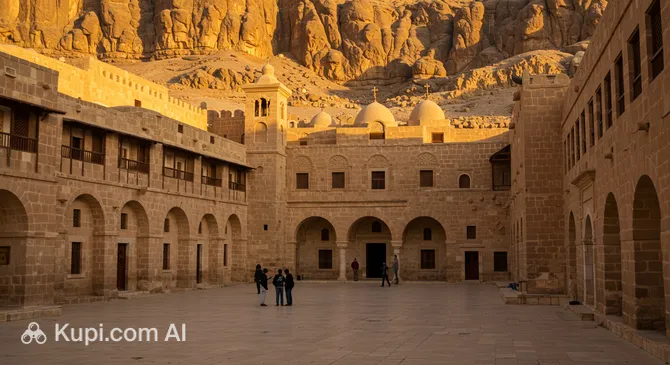
Saint Catherine's Monastery. Illustration.
Source: Kupi.com AI

Traveler photos:

How to Get There

When planning a trip to the foot of Mount Sinai, it is important to think through the logistics in advance, as the city is located in a remote mountainous area. You can find out more about how to get to Saint Catherine to choose the most convenient route and transport. Since there are no direct flights to the city itself, travelers usually use combined routes through neighboring resort centers.

There is no airport in the city of Saint Catherine itself, but you can fly to Sharm El Sheikh Airport (IATA: SSH) in the city of Sharm El Sheikh, which is located about 78 km from Saint Catherine. This is the most popular and convenient option for tourists. The airport accepts many international flights and is a major transport hub. The journey from here by taxi or tourist bus will take about 2 hours and 20 minutes, passing through picturesque desert landscapes.

An alternative option is Taba International Airport (IATA: TCP), located in the city of Taba, approximately 140 km from Saint Catherine. This small airport is convenient for those planning to enter from the border with Israel or Jordan. The car trip from here will take about 3 hours and 50 minutes. The road also features beautiful views of the Gulf of Aqaba and the Sinai Mountains.

For clarity, here is summary information on the main airports:

AirportPassenger trafficDistance
Sharm El Sheikh Airport5.9 mln78 km
Taba International49 000140 km
Neom Bay Airport250 000150 km
Hurghada International Airport8.7 mln154 km
King Hussein International Airport309 000156 km

There is no rail link to the city due to the difficult mountain terrain. There is no railway station in Saint Catherine itself. The nearest trains only go as far as Cairo or Alexandria, from where tourists have to transfer to East Delta intercity buses or book a private transfer. Bus services connect Saint Catherine with Cairo and Sharm El Sheikh, but trips can be infrequent, so the schedule should be checked in advance. Most travelers prefer organized excursion tours or taxis to comfortably cover the final leg of the journey.

Main Attractions

The city's main gem and a UNESCO World Heritage site is Saint Catherine's Monastery. It is one of the oldest continuously operating Christian monasteries in the world, founded in the 6th century at the foot of Mount Sinai. It is surrounded by powerful fortress walls, behind which unique shrines are hidden: the Burning Bush—the thorn bush in whose flames, according to the Bible, God appeared to Moses—and the ancient Well of Moses. Special attention should be paid to the monastery library, which houses the rarest manuscripts, and the collection of early Christian icons.

Saint Catherine's Monastery. Illustration.
Source: Kupi.com AI

Traveler photos:

No less significant is the majestic Mount Sinai (Jebel Musa), which towers over the city. It is here, according to tradition, that Moses received the Ten Commandments. Thousands of travelers make the ascent every night to meet the sunrise at the summit and see the sun illuminate the endless mountain ranges. There are two paths leading up: the gentler "Camel Path" and the steep "Steps of Penitence," consisting of thousands of steps carved into the rock by monks.

For those ready for a serious physical challenge for the sake of breathtaking views, Mount Catherine (Jebel Katherina)—the highest point in Egypt (2,629 meters)—is of interest. The ascent here takes longer than on Mount Sinai, but the reward will be stunning panoramas covering the entire peninsula and even the Gulf of Aqaba. At the top is a small chapel built on the spot where, according to legend, angels left the body of Saint Catherine.

Lovers of secluded walks and natural beauty should visit Wadi El Arbaein (The Valley of the Forty). This picturesque canyon, located near the city, is famous for its rocky landscapes, ancient olive groves, and natural pools that fill with water after winter rains. Also located here is the secluded Monastery of the Forty Martyrs with a beautiful garden, where you can relax in silence away from the main tourist groups.

Local Cuisine

The gastronomy of Saint Catherine reveals Egypt from an unexpected, "mountainous" side. It is a wonderful combination of Bedouin traditions, fresh products, and oriental spices. The main highlight of the local cuisine is cooking over an open fire, which fills the dishes with a special aroma and warmth. The basis of the diet consists of hearty meat treats: you should definitely try lamb stewed with local mountain herbs or chicken baked in clay. These dishes are usually served with hot homemade bread and thick yogurt.

Among drinks, non-alcoholic traditions reign supreme, due to the religious nature of the region. The city's hallmark is a special Bedouin tea. It is brewed strong and sweet, with the addition of sage and aromatic mountain herbs, and served in small glass cups. No less popular is Bedouin-style coffee, which is prepared on hot coals and traditionally offered to guests along with sweet dates.

To get acquainted with street food and desserts, it is best to head to the local markets. Here you can find fresh flatbreads, chickpea and lentil dishes, as well as sweets made from goat's milk. On holidays, the stalls are filled with the aromas of mandazi—fluffy donuts, halva, and date pies. Farmers from nearby oases bring the famous mountain honey, nuts, and medicinal herbs here. The food culture itself here invites a slow pace: tourists and locals often eat while sitting on carpets in Bedouin tents or by a fire under the open sky.

Travel Tips

Welcome to the high-altitude oasis of Sinai! A trip to Saint Catherine requires special preparation, as the climate and way of life here differ significantly from the usual resorts that Egypt offers. To ensure your journey to the ancient shrines is comfortable and safe, we have gathered the most important practical recommendations.

  1. Clothing and equipment: The weather here is deceptive. Even if you are traveling in summer, be sure to bring a warm fleece jacket, a windbreaker, a hat, and gloves—nights in the mountains can be very cold. For visiting the monastery, strictly follow the dress code: shoulders and knees must be covered (for both men and women). Comfortable, broken-in trekking shoes are also critically important for walking on stony trails.
  2. Transport: There is no public transport in the traditional sense (buses or metro) within the city. You can get around on foot, as the center is compact, or by local taxi pickups. Apps like Uber do not work here. Agree on the price with the driver before boarding the car, as there are no meters.
  3. Finances: The main currency is the Egyptian pound. Bank cards are accepted only in a few hotels, so cash is a must. There are very few ATMs in the city, and they are often empty or out of order. We strongly recommend withdrawing the necessary amount in advance in Sharm El Sheikh or Cairo and having plenty of small bills for change.
  4. Health and safety: The city is very quiet, but pharmacies are not open 24/7 and have a limited range. Pack a first-aid kit with band-aids (for blisters), painkillers, and remedies for an upset stomach. Due to the dry air and altitude, drink more water than usual to avoid dehydration and altitude sickness.
  5. Communication: Local Bedouins speak their own dialect of Arabic, but many in the tourism sector understand basic English. Wi-Fi in the city is unstable and is only available in some camps. The best solution is to buy a local SIM card (Vodafone or Etisalat) in advance, as mobile internet works better than hotel Wi-Fi.
  6. Local etiquette: Greet local residents politely; you can use the "hand to heart" gesture. Bedouins are a conservative people, so public displays of affection (kissing, hugging) are not accepted here. Always ask permission before photographing someone, especially women and children.
  7. What to avoid: It is categorically not recommended to consume alcohol in public places or on the streets—this is a "dry" city with strict traditions. Also, you should not set off into the mountains or desert canyons alone without a local guide: trails can be unobvious, and cell service often disappears in the gorges.
  8. Local tip: Be sure to try Bedouin tea with the addition of habak (Sinai mint). This drink not only warms you on cool evenings but is also considered an excellent remedy for settling the stomach and relieving fatigue after climbs.

Following these simple rules will help you avoid minor troubles and fully immerse yourself in the atmosphere of this unique place. Tune in to a contemplative mood, respect local traditions, and Saint Catherine will reveal its harsh but mesmerizing beauty to you!

Entertainment & Nightlife

Nightlife in Saint Catherine is fundamentally different from the usual resort holiday format in Egypt. If you are looking for noisy nightclubs, discos with loud music, or bars with alcoholic cocktails, then this city will surprise you—they simply do not exist here. This is a place of religious pilgrimage and strict Bedouin traditions, so evening leisure here is permeated with an atmosphere of tranquility, contemplation, and connection with nature.

Instead of red-light districts or bar streets, the centers of evening activity are Bedouin camps and guesthouses. "Nightlife" here means sitting by the fire under an incredibly bright starry sky. Tourists gather in tents lined with carpets to drink traditional sweet herbal tea (habak) or Bedouin coffee, listen to stories from local residents, and enjoy the silence of the mountains. Such evenings take place in a relaxed and friendly atmosphere, where the dress code is completely informal, though respectful of local customs (it is better to avoid overly revealing clothing).

Saint Catherine's Monastery. Illustration.
Source: Kupi.com AI

Traveler photos:

The most popular and exciting "nightclub" in Saint Catherine is nature itself. The main nocturnal adventure for thousands of travelers is the ascent of Mount Sinai. The movement begins deep in the night, usually around 2:00 AM, to catch the sunrise at the summit. The trail, lit only by flashlights and starlight, becomes the most lively "street" in the region. The starting point for the route is the area where Saint Catherine's Monastery is located. It is here that groups gather before starting the climb, creating a unique atmosphere of unity among people from all over the world.

Practical tips for the evening:

  • Alcohol: A dry law is in effect in the city. Alcohol is not sold in shops and is not served in cafes. Consuming alcohol on the street or in public places is considered a sign of disrespect to the sanctity of the location and the local residents.
  • Clothing: Even if it is hot during the day, nights in the mountains can be very cold; in winter, temperatures drop to zero and below. Be sure to bring warm jackets, hats, and gloves for evening walks.
  • Safety: Saint Catherine is a very safe place. You can safely walk through the lit streets of the village in the evening. However, for night walks into the mountains or the desert, be sure to hire a local Bedouin guide so as not to get lost.

When it comes to daytime entertainment, it is educational and active in nature. Tourists spend most of their time studying the architecture of the ancient monastery, visiting the museum of icons within it, or trekking through picturesque canyons. There are no amusement parks or cinemas here, but the majesty of the mountain landscapes more than compensates for the lack of urban hustle and bustle.

Parks & Museums

Saint Catherine is a city that is itself an open-air museum and a nature reserve. Here you will not find the usual city parks with amusement rides or contemporary art galleries. Instead, travelers can expect majestic mountain landscapes that are part of a protected natural area and treasures of antiquity hidden behind fortress walls.

Speaking of green zones, first of all, it is worth mentioning the Saint Catherine Protectorate. This is a vast protected area surrounding the city, which is famous for its unique biodiversity. Here, among the harsh granite rocks, hundreds of plant species grow, many of which are endemic and are not found anywhere else in the world. A walk through the reserve is an opportunity to see the wild nature of Sinai in its original form, breathe in the aroma of mountain herbs and, if you are lucky, meet wild mountain goats or foxes.

A true oasis of life in the middle of the stony desert is the Monastery Garden. Located at the foot of the ancient walls, it has been cultivated by monks for over fifteen hundred years. The garden impresses with its ancient olive groves, tall cypresses, apricot trees, and neat vegetable beds. A giant cypress tree, considered one of the oldest trees in Egypt, attracts special attention. This place gives a wonderful sense of peace and coolness, contrasting with the surrounding arid landscape.

Saint Catherine's Monastery. Illustration.
Source: Kupi.com AI

Traveler photos:

The cultural heart of the city beats inside the fortress walls. The region's main museum object is the Sacristy, located where Saint Catherine's Monastery is situated. The exposition of this museum is truly unique and rivals the best collections in the world in its value. Early Christian icons made in the encaustic technique (wax painting), which miraculously survived during the era of iconoclasm, are kept here. Also in the museum, you can see precious church vessels, gifts from kings and emperors of different eras, and, of course, part of the famous library of manuscripts.

In terms of architecture, the monastery complex itself is an outstanding monument of fortification art. The Walls of Justinian, built in the 6th century, have been preserved in almost perfect condition. Their height reaches 15 meters, and their thickness is several meters, which protected the monks from raids for centuries. Inside the walls is the Basilica of the Transfiguration—an architectural masterpiece with ancient mosaics and carved wooden doors that are over 1,400 years old.

Insider tip: While walking around the area or visiting the wadis (mountain valleys), pay attention to the local medicinal plants. The Bedouins of the Jabaleya tribe have used herbs such as habak (wild mint) and rosemary for centuries for healing and making tea. Ask a local guide to show you these plants—it will open up another facet of the living nature of Sinai for you.

Getting Around

The public transport system in the city of Saint Catherine has its own unique features dictated by the size of the settlement and its high-altitude location. Here you will not find the usual metro, trams, trolleybuses, or even regular city buses running on routes. The city is quite compact, and its infrastructure is oriented toward pedestrian accessibility and specific local conditions.

The main mechanized means of transportation are local taxis. Most often these are pickups or reliable old cars perfectly suited for rocky roads. Popular mobile apps for calling taxis or car sharing do not work here. A car can be found in the central square, at the bus stop, or you can ask the reception of your campsite to call a driver. This is the most reliable way to get from the bus station to your hotel with luggage.

The fare payment system here is as simple and conservative as possible: only cash in local currency is accepted. No travel tickets, transport cards, or validators exist. It is critically important to agree on the cost of the trip with the driver before you get into the car. There are no fixed rates, but prices are usually reasonable. Be sure to have small bills with you, as drivers often do not have change.

For tourists, the most popular and convenient way to move around the city itself remains walking. The center of the village is small, and you can walk from most guesthouses to shops or restaurants in 10–20 minutes. If you are staying far from the center, the owners of your accommodation can often organize a transfer in their own vehicle for a small fee.

A unique "transport feature" of Saint Catherine that is impossible not to mention is camels. In the context of mountain routes, this is not just entertainment but a full-fledged means of transportation. At the foot of Mount Sinai and at the beginning of trekking trails, there are special stations where you can rent a camel with a handler. This significantly eases the climb into the mountains and is part of the authentic experience of staying in the region. Prices for such services are usually fixed and indicated on information boards at the start of the route.

Accommodation

Accommodation in Saint Catherine is significantly different from the usual Egyptian "all-inclusive" on the coast. Here you will not find high-rise five-star hotels of international chains or luxury spa complexes. The city's housing stock is modest, ascetic, and fully consistent with the spirit of this place—it is oriented toward pilgrims, trekkers, and lovers of silence. The main choice of housing ranges from atmospheric Bedouin camps to small tourist-class hotels and guesthouses.

Geographically, accommodation options can be divided into several key zones. The most popular area for budget tourists is El Milga (the city center). All infrastructure is concentrated here: shops, cheap cafes, and the bus station. Staying here is convenient for those who travel independently and want to be in the thick of local life. Another category of housing is "tourist village" style hotels, located in the valleys at some distance from the center (for example, in the Wadi El Raha area). They offer more comfort, their own restaurants, and beautiful mountain views, but are further from the shops. A special option is accommodation in the immediate vicinity of the shrines, for example, in the guesthouse at Saint Catherine's Monastery, which is ideal for those who want to be the first to attend a service.

Types of accommodation:

  • Bedouin camps: The most popular and authentic type of housing. These are enclosed areas with simple stone rooms or reed huts. Facilities (shower and toilet) are often shared, but there is hot water. The main feature of the camps is the common relaxation areas with carpets and fires, where guests gather in the evenings. This is the most budget-friendly option.
  • Mid-range hotels (Lodges/Resorts): Usually consist of complexes of one-story stone bungalows. Rooms have private bathrooms, air conditioning (which works for heating in winter), and sometimes televisions. The level of service corresponds to European 2–3 stars.
  • Guesthouses: Rooms in the homes of local residents or at religious institutions. They are characterized by a homely atmosphere and strict rules of conduct.

Price range and booking:

Housing prices in Saint Catherine remain some of the most affordable in the country. A night in a camp will cost a symbolic amount, while a hotel room with breakfast will cost about as much as an average lunch at a resort. Booking methods here have their own specifics. While mid-level hotels are represented on major international online platforms, spots in Bedouin camps are often booked through direct contacts, messengers, or simply found upon arrival (though this is risky during the peak season).

Booking tip:

Despite the apparent simplicity, it can be difficult to find a free room on peak dates. It is strongly recommended to book accommodation in advance if your trip falls on Christian holidays (especially the feast of Saint Catherine), weekends, or the winter period when many Egyptians come here for the snow. Also, in winter, it is critically important to clarify the availability of a heater or warm blankets in the room—nights in buildings without central heating can be freezing.

Nearby Cities

For those who want to explore the surrounding area, Saint Catherine serves as an excellent starting point for day trips or continuing the journey to several interesting nearby places:

One of the most famous neighbors is Hurghada. This popular resort on the Red Sea coast is famous for its beaches, diving opportunities, and active nightlife. A trip here will allow you to trade harsh mountain landscapes for azure waters and a relaxed coastal atmosphere.

History and maritime enthusiasts will be interested in the city of Suez. Located at the southern entrance to the famous Suez Canal, it plays a key role in world trade. Here you can see huge ships passing through the canal and feel the rhythm of an important port hub.

Also worth noting is Ismailia, which is often called the "city of gardens." It is located on the shores of Lake Timsah and is distinguished by a large amount of greenery and preserved 19th-century colonial architecture, offering tourists a cozy and calm environment.

CityPopulationDistance
El Tor12 73348 km
Sharm El Sheikh74 00077 km
Abu Rudeis83 km
Ras Gharib100 00088 km
Haql25 649126 km

These nearby destinations provide an insight into the diverse culture and landscapes of the region.

Shopping & Souvenirs

General Overview: Shopping in the city of Saint Catherine is fundamentally different from what tourists are used to seeing in major resort centers like Egypt as a whole. Here you will not find glossy display windows, designer boutiques, or noisy bazaars with pushy sellers. Trade here is quiet, measured, and permeated with local flavor. The main assortment consists of goods produced or gathered by the hands of local Bedouin residents, as well as religious paraphernalia. Shopping here is a way to touch the culture of the Jabaleya tribe and take a piece of the harsh Sinai nature with you.

Main Shopping Areas and Streets: All commercial life in the city is concentrated in two main locations. The first is the central district of the settlement, known as El Milga. Here you will find grocery stalls, pharmacies, bakeries, and shops with basic necessities, as well as several souvenir points. The second important zone is located in the immediate vicinity of the main attraction—these are the shopping rows near the parking lot and the entrance to Saint Catherine's Monastery. This is where tourists usually purchase themed souvenirs before or after an excursion.

Shopping Centers: There are absolutely no shopping centers, malls, or large department stores in Saint Catherine. The city maintains its traditional way of life, and modern mass-market infrastructure has not yet reached here. Shopping is limited to small private shops and kiosks.

Markets: There are no classic oriental bazaars in their noisy sense here, but the role of markets is fulfilled by clusters of Bedouin stalls under the open sky or awnings. Most interesting are the improvised points of sale organized by local women and children along tourist paths and at the foot of mountains. Here you can find the most authentic handmade items and chat with local residents.

Souvenirs: Saint Catherine is famous for unique goods that are difficult to find in other parts of the country. Here is a list of what to look for:

  • Medicinal herbs and spices: The region is famous for its healing plants. Be sure to buy habak (Sinai mint) for tea, dried rosemary, thyme, or sage. The Bedouins gather them in the mountains and are well-versed in their properties.
  • Bedouin handicrafts: Women of local tribes create stunning embroidery decorated with beads. These can be bags, wallets, belts, or traditional clothing.
  • Minerals and stones: Beautiful quartz crystals and geodes are found in the local mountains. They are often sold raw or as simple jewelry.
  • Food products: Mountain honey, cold-pressed olive oil, and almonds grown in the monastery and local gardens are of high quality.
  • Religious souvenirs: In the shop at the monastery, you can purchase consecrated icons, silver rings with prayers (Saint Catherine rings), and crosses.

Opening hours and payment: Shops in El Milga usually open around 9:00 AM and work until late in the evening (9:00 PM–10:00 PM), although many may close during the daytime heat or for prayers. Souvenir shops near the monastery operate according to the monastery's visiting schedule (usually in the first half of the day). Important: almost exclusively cash (Egyptian pounds) is accepted for payment. Card terminals are only available in a couple of large hotels or the monastery's own souvenir shop, but the connection can be unstable, so always have a supply of banknotes with you, including small ones for change.

Tax Free: The tax refund system (Tax Free) does not operate in Saint Catherine. This is a small settlement with a simplified trade system oriented toward cash payments.

Have you reached the end of the page?

So the route has been studied inside and out