Support

Regina

About

Régina is a small but significant commune that serves as a unique gateway to the incredible wild world of French Guiana. This settlement attracts travelers eager to immerse themselves in the atmosphere of the real Amazonian jungle and experience unforgettable adventures.
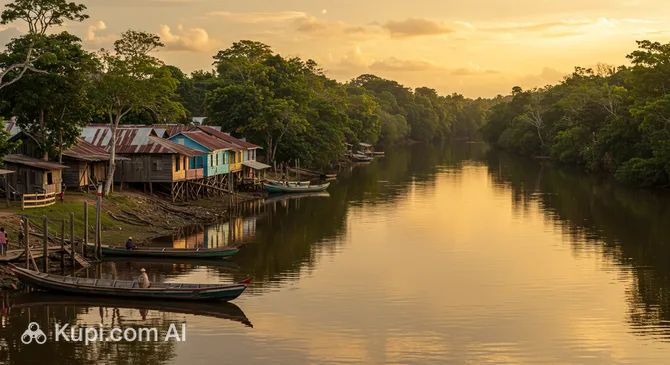
Régina. Illustration.
Source: Kupi.com AI

Located in the east of the country on the banks of the picturesque Approuague River, Régina is a key starting point for many expeditions deep into the tropical rainforests. The climate here is equatorial, with high humidity and temperatures year-round, creating ideal conditions for the lush growth of exotic flora and a diverse range of fauna. As a relatively small settlement, Régina retains the charm of a secluded place where you can feel the breath of untouched nature.

One of the main reasons to visit Régina is its proximity to the famous Nouragues Nature Reserve (Réserve naturelle des Nouragues). This is a vast area of pristine tropical forest offering unique opportunities for wildlife observation, including monkeys, caimans, and numerous bird species. River trips along the Approuague are also popular, offering breathtaking views and allowing for a closer look at the region's ecosystem. For outdoor enthusiasts, hiking trails of varying difficulty are available, leading through the dense jungle.

If you dream of a journey full of discovery and want to see one of the most biodiverse places on the planet, Régina is an excellent choice for exploring the riches of French Guiana.

You can find more interesting facts on the history of Régina page.

Weather Overview

In Régina, a typical equatorial climate awaits you—it is warm and very humid all year round. The average monthly air temperature fluctuates slightly, remaining in a comfortable range from 25.4°C (for example, in January) to 28.0°C (in October). Daytime maximums can reach 32.2°C, especially in September-October, while nighttime minimums rarely drop below 22.8°C.

Precipitation in Régina is frequent and abundant throughout most of the year. Expect a large number of rainy days in almost any season; the most intense rains occur from April to June (May—up to 16 mm of precipitation and 31 rainy days) and from November to January. September and October are considered relatively "dry" months, with the least amount of precipitation (about 2 mm) and a smaller number of rainy days (averaging 14-17 days), however, the probability of rain remains even during this time. To plan your trip according to weather conditions, we recommend reviewing the detailed information on the Climate of Régina page.

Average monthly temperature

Average monthly precipitation

Interesting Facts

In addition to its role as an important point on the route for explorers of the wild nature of French Guiana, Régina holds several fascinating and not always widely known facts in its history.

  • A Name with History: The town was named in honor of Régina Baduel, the wife of a gold prospector and one of the first non-indigenous women to settle in this remote corner in the late 19th century. It is a tribute to her courage and contribution to the development of the region.

  • Golden Roots: The founding of Régina is directly linked to the gold rush that swept the Approuague River basin at the turn of the 19th and 20th centuries. It was the prospect of finding precious metal that attracted the first settlers and adventurers here.

  • River Path to Civilization: For many decades, the mighty Approuague River was the main, and sometimes only, transport artery connecting Régina with the rest of the world. It was only later that the construction of the RN2 national road opened land access to the settlement.

  • Key to the Protected Jungle: Today, Régina often serves as a starting point for expeditions deep into the tropical forests and to unique natural sites, such as the Trésor Regional Nature Reserve, known for its biodiversity.

How to Get There

A journey to this colorful corner of French Guiana begins with route planning, as the town is located far from major international hubs. You can explore all the ways to get to Régina, but the main option for most tourists remains an air flight followed by a road transfer.

There is no airport in the town of Régina itself, so the transport hubs of neighboring cities will be your gateway. The most convenient and closest option is Félix Eboué Airport (IATA: CAY), located in the region's capital, Cayenne. This is the country's main international airport, handling regular flights. It is located approximately 62 km from Régina. Given the local road conditions, a trip by taxi or rental car from the airport to the center of Régina will take about 1 hour and 50 minutes.

As an alternative, you can consider Kourou Airport (IATA: QKR), which is located in the town of Sinnamary. However, keep in mind that it is located much further away—at a distance of about 114 km. A transfer from here will require more time and effort: the car trip will last approximately 3 hours and 10 minutes. Usually, this option is chosen if it connects more conveniently with other points of your Guiana journey.

For clarity, here is a summary of the main airports:

AirportPassenger trafficDistance
Felix Eboue Airport481 96162 km

Since there is no rail service in this region, the final stage of the journey from the airport to Régina follows the RN2 national road (Route de l'Est). This is a scenic route passing through tropical forests. It is recommended to arrange a car rental in advance or agree on a transfer, as public transport can be irregular.

Main Attractions

Régina, nestled comfortably on the banks of the mighty Approuague River, offers travelers not so much urban attractions in the traditional sense, but a unique opportunity to immerse themselves in pristine nature and get to know the authentic life of the region. The main treasures here are the river itself, the surrounding tropical forests, and a rich cultural heritage.

One of the main "arteries" and attractions is the Approuague River itself. This mighty river is not just a waterway, but the heart of Régina, defining its history and daily way of life. Its banks are framed by lush tropical forests, creating breathtaking landscapes. The river provides magnificent opportunities for boat excursions, during which you can observe diverse wildlife, including caimans, monkeys, and many bird species. The Approuague is also popular among fans of kayaking and sport fishing. A journey along the river is the best way to feel the majesty of the surrounding nature and see remote corners of this amazing region.

Located near Régina is the Trésor Regional Nature Reserve (Réserve Naturelle Régionale Trésor), a true paradise for wildlife enthusiasts. This reserve covers a vast area of primary tropical forest and unique wetland ecosystems. The Trésor Reserve is famous for its incredible biodiversity. For visitors, there are marked hiking trails of varying difficulty levels, allowing you to plunge into the mysterious world of the jungle, see rare exotic plants, amazing insects, and, with enough luck and quiet, hear the calls or even spot larger forest inhabitants. It is an excellent spot for eco-tourism and bird watching.

For those who prefer active recreation and want to get a closer look at Amazonian nature, the Mirande Trail (Sentier de la Mirande) is ideal. This scenic trail begins right on the outskirts of Régina and leads travelers deep into the thick tropical forest. The Mirande Trail is perfect for gaining direct experience with the jungle without needing to organize long and complex expeditions. A walk along it allows you to enjoy the enchanting birdsong, see majestic giant trees, various lianas, and perhaps encounter small forest animals along the way. It is a wonderful opportunity for leisurely hikes and capturing unique photographs.

The village of Régina itself, with its characteristic location on the riverbank and a rich history closely linked to the "gold rush" era, is also an interesting site for the observant tourist. Walking through the streets of Régina, you can feel the incomparable atmosphere of a remote settlement lost in the heart of the jungle. This is a unique opportunity to see how the daily life of local residents flows, learn more about the distinctive Creole culture and the history of exploring this amazing corner of French Guiana. Casual conversation with locals can reveal much that is new and interesting about traditions, lifestyle, and perspectives on living in harmony with nature.

Local Cuisine

The cuisine of Régina is an appetizing reflection of its location at the crossroads of cultures and in the heart of Amazonian nature. Here, a vibrant mix of Creole, French, Amerindian, and possibly Asian culinary traditions awaits you, based on the freshest local products. Dishes are often characterized by rich flavors, an abundance of spices, and exotic ingredients provided by the generous land of French Guiana.

Be sure to try fish blaff (blaff de poisson)—tender fish poached in an aromatic broth with herbs and lime, or a hearty colombo—a Caribbean curry with chicken, pork, or fish, seasoned with the spice blend of the same name. Don't miss accras—crispy fritters, most often made from cod or vegetables, which serve as an excellent snack. It is also worth paying attention to manioc (cassava) dishes, such as couac (cassava flour) or cassave flatbreads, which are often served with main courses. Freshly caught river fish, grilled, is also an integral part of the local table.

To refresh yourself in the tropical climate, choose from a variety of freshly squeezed juices from exotic fruits: passion fruit, guava, acerola, or corossol (soursop). Coconut water straight from a young nut is also popular. Among alcoholic beverages, rum reigns supreme, drunk neat or as part of the famous ti' punch cocktail—a simple but strong mixture of rum, lime, and cane sugar. Local beer is also available for those who prefer more familiar drinks.

The gastronomic scene in Régina is generally centered around small family restaurants and snack bars where you can taste authentic homemade dishes. There is no bustle of big cities here, but there is the opportunity to enjoy food in a calm, friendly atmosphere. Locals often cook at home, using products from small markets or imported goods. For tourists, this is a chance to try the real, unadapted cuisine of the region, full of bright tastes and aromas. Immersing yourself in the local culinary scene is another way to get to know the culture and daily life of Régina.

Travel Tips

Welcome to Régina—an amazing corner of French Guiana where nature and authentic culture create a unique atmosphere! To make your journey through this exotic region as comfortable and safe as possible, we have prepared some practical tips.

  1. Clothing and Essentials: Given the equatorial climate of Régina, choose lightweight, breathable clothing made from natural fabrics (cotton, linen). Be sure to bring a raincoat or poncho, as rain is a frequent occurrence here. For jungle treks and walks around the area, you will need comfortable closed shoes (such as trekking boots), and for relaxing, sandals. Don't forget powerful insect repellents (especially for mosquitoes), sunscreen with high SPF, a hat, sunglasses, and an adapter for electrical appliances (in French Guiana, type E is used, as in France). If you plan to visit local churches (if available), modest clothing covering the shoulders and knees will be appropriate.

  2. Transport Nuances: Régina itself is a small settlement that can be explored on foot. For trips to natural attractions such as the Approuague River or the Trésor Reserve, boats (pirogues), often with local guides, serve as the main transport. Car rental is possible in Cayenne, but navigating local roads may require experience. Public transport within Régina is virtually non-existent; intercity communication with Cayenne may be carried out by collective taxis or irregular buses, but it's better to check the schedule and availability on-site.

  3. Financial Matters: The official currency in French Guiana is the Euro (EUR). It is best to exchange currency in advance or in Cayenne, as this may be problematic in Régina. Credit cards are accepted very limitedly, so having enough cash is extremely important for paying for accommodation, meals in local cafes, excursions, and souvenirs. ATMs in Régina may not exist, or their operation may be unstable. Tipping is not mandatory but is welcomed for good service (usually 5-10%).

  4. Health and Safety in the Tropics: Before your trip, be sure to take out medical insurance that covers evacuation. Bring a first-aid kit with necessary medications, as the pharmacy point in Régina may have a limited range. Drink only bottled or boiled water. To protect against disease-carrying mosquitoes (e.g., dengue, chikungunya, malaria), use repellents and, if possible, mosquito nets. When walking in the jungle, hire an experienced guide and do not stray from known trails. It is recommended to consult a doctor in advance regarding necessary vaccinations (e.g., for yellow fever, which may be mandatory for entry).

  5. Language and Communication: The official language is French. The local population may also speak Creole dialects. English is not widely spoken, especially outside of the limited tourism infrastructure in Régina. Knowing a few basic phrases in French (e.g., "Bonjour"—hello, "Merci"—thank you, "S'il vous plaît"—please, "Combien ça coûte?"—how much does it cost?) will be very useful. It is better to purchase a SIM card with internet access in Cayenne; mobile coverage and Wi-Fi in Régina can be unstable and limited. Download offline maps and a translator in advance.

  6. Local Etiquette and Respect: Residents are generally friendly and hospitable. A simple "Bonjour" (Hello) when meeting or entering a small establishment will be appreciated. Show respect for local customs and traditions. Always ask permission before photographing people. French Guiana is a place with a slow pace of life; be patient and do not expect instantaneous service as in large cities. Treat nature with care: do not leave trash and do not disturb wild animals.

  7. What to Avoid: It is strictly not recommended to go into the jungle alone or without being accompanied by an experienced local guide—this can be dangerous due to wildlife and the possibility of getting lost. Also, avoid drinking water from the tap or open sources without prior treatment. You should not display expensive jewelry or large amounts of money to avoid attracting unnecessary attention, although Régina is generally considered a calm place. Do not neglect sun and insect protection, even in cloudy weather, as you are in the tropics.

We hope these tips help you better prepare for your trip and fully enjoy the unique experience that Régina offers. We wish you an unforgettable journey into the heart of Amazonian nature!

Entertainment & Nightlife

Régina is primarily a gateway to the incredible wild world of French Guiana, and its evening life reflects this secluded character. You won't find noisy nightclubs or sparkling entertainment districts here like in major metropolises. Instead, Régina offers a calmer and more authentic leisure experience, allowing you to relax after a busy day of exploration and feel the local flavor.

Evening entertainment in Régina is generally centered around small local bars and eateries where you can taste Creole dishes and have a glass or two of a refreshing drink. You are unlikely to find large concert venues or bustling night markets here, but the charm of the local establishments lies in their simplicity and authenticity. The atmosphere in such places is usually very relaxed and friendly. It is a wonderful opportunity to chat with locals, hear stories about life in the jungle, or simply enjoy a quiet evening to the sounds of nature, and sometimes to the accompaniment of local music. Some establishments may be located by the river, offering picturesque views.

In Régina, there are no designated nightlife districts as such. The main points of attraction in the evening are likely a few establishments along the main street or near the central part of the settlement. Since the choice is small, the best spots are often known to everyone and are easy to find by walking around or asking locals for advice. Please note that we do not have data on specific establishments in Régina, so we cannot provide their names or links. We recommend orienting yourself on-site and choosing the bars or restaurants that seem most cozy and welcoming to you—this is how you can experience the true atmosphere of this corner of French Guiana.

When planning an evening in Régina, keep in mind that establishments here may close earlier than in large cities. The best time to visit is early evening. Prices are generally quite moderate, catering to local residents. As for moving around at night, it is possible to get around the village on foot. If you need a taxi, it is better to book it in advance, as availability may be limited, especially late at night. Public transport is practically non-existent during the night hours.

Régina is generally considered a calm and safe place, especially given its small size and close-knit community. Nevertheless, it is always worth following standard precautions: do not leave valuables unattended and be mindful when returning to your accommodation late in the evening. Walking in well-lit areas is safe, but it is better to avoid unlit and deserted places after dark, just as you would anywhere else.

As for daytime entertainment, the main focus in Régina is undoubtedly on nature-related activities: excursions along the Approuague River, hiking through jungle trails, bird watching, and getting to know the region's unique flora and fauna. In the settlement itself, you can visit the local market (if it is operating during your stay) to see fresh produce and perhaps handicrafts, or simply take a stroll, observing the slow pace of life. You shouldn't expect major museums, theaters, or amusement parks here, as the main asset of Régina is its pristine nature and authenticity.

Parks & Museums

Régina invites its guests to immerse themselves not so much in the world of traditional city parks and large museum complexes, but in the embrace of pristine nature and authentic culture. The green zones here are endless tropical forests and mighty rivers, while the cultural heritage is revealed in the history of the exploration of these lands and the daily lives of its inhabitants.

Among the main natural "parks" of Régina, the Trésor Regional Nature Reserve (Réserve Naturelle Régionale Trésor) certainly stands out. This is not just a reserve, but a real living museum of Amazonian flora and fauna, spread out near the village. Tourists are attracted by its incredible biodiversity and the opportunity to walk along specially laid hiking trails, observing exotic plants, birds, and possibly other jungle inhabitants. For a more accessible but no less impressive introduction to the tropical forest, the Mirande Trail (Sentier de la Mirande) serves well. It begins on the outskirts of Régina and allows for a fascinating walk under the canopy of giant trees, enjoying the sounds of nature. The Approuague River itself, which is the lifeblood of the region, also represents a vast natural space for exploration, boat trips, and wildlife observation along its banks.

Although you won't find large art galleries or historical museums in the traditional sense in Régina, the village and its surroundings can be considered a kind of open-air museum. The history of the "gold rush," the exploration of the Approuague River, and the formation of the unique Creole culture come to life in the stories of local residents and in the very appearance of the settlement. A small information center or "Maison de la Réserve" at the Trésor Reserve may offer exhibitions dedicated to the local ecosystem and conservation efforts, which is also part of the cultural and educational experience. Immersing yourself in local life, communicating with craftsmen (if any), and observing the traditional way of life—these are the keys to understanding the cultural heritage of Régina.

As for historical and architectural sites, the legacy of the "gold rush" is reflected more in the general atmosphere and layout of Régina than in monumental buildings. You may notice elements of traditional Creole architecture in some of the older houses. However, the main historical value is the history of the development of these lands itself, which is best learned through stories from guides and long-time residents, as well as by visiting significant sites along the Approuague River, which played a key role in the region's development.

For truly authentic impressions, do not limit yourself to standard routes. Try to arrange an individual excursion with a local boatman along the lesser-known tributaries of the Approuague or ask about places where you can see traditional crafts. It is these informal meetings and discoveries that will allow you to feel the spirit of Régina and its unique connection with nature more deeply.

Getting Around

When planning your travel around Régina and its surroundings, it's important to understand that this is a small settlement, and the public transport system here has its own characteristics, differing significantly from large cities. The main emphasis is on more flexible and often informal ways of getting around, adapted to local conditions.

In Régina itself, there is no developed network of city buses or trams. Moving short distances within the village is most often done on foot. For trips over longer distances or to neighboring settlements, such as Cayenne, collective taxis (sometimes called "taxi-brousse" or "taxi collectif") may be used. Their schedule is often not fixed and depends on occupancy; payment is made in cash directly to the driver. It is best to clarify the fare in advance.

A more predictable but also more expensive option is a private taxi. There may be few of them, and it is recommended to arrange the trip in advance, perhaps through your accommodation or with the help of locals. Payment is also usually made in cash. Make sure you agree on the cost of the trip before it begins.

Given Régina's location on the Approuague River, motorized boats (pirogues) play an important role in the transport system. These are not just a means of transport, but a way to reach many natural attractions, remote settlements, and spots for fishing or eco-tourism. Pirogue trips are usually organized by local boatmen, and the cost depends on distance, duration, and route. This is a unique experience that allows you to see the region from the water.

As for the payment system, for most types of transport in Régina and the surrounding area, the main form is cash payment. Cards are very rarely accepted, so always carry a sufficient amount in the local currency (Euro). Specialized travel cards or transport apps for Régina do not exist.

Practical tips for tourists:

  1. Always clarify the cost of the trip before it begins, especially when using taxis or boats.

  2. Be prepared for transport not to run on a strict schedule.

  3. For long trips or boat excursions, make arrangements in advance.

  4. Carry cash with you to pay for your travel.

An alternative to local transport can be car rental, although the nearest rental points will likely be in Cayenne. Having your own car will provide greater freedom of movement around the region, but you should consider the state of local roads and the need for driving experience in such conditions. Bicycle rental or car sharing in Régina are generally not developed.

Accommodation

When planning a trip to Régina, you will find that the accommodation options match the unique character of this corner of French Guiana, which is focused on nature and authentic experiences. In Régina, the choice of housing typically includes cozy guesthouses (gîtes), small lodges offering immersion in the environment, and perhaps a few simpler hotels or private rooms for rent. Do not expect luxury resorts or large chain hotels here; the emphasis is on simplicity, proximity to nature, and local hospitality.

When choosing a place to stay in Régina, the main considerations will involve proximity to the Approuague River, which is the main transport and natural artery, or ease of access to starting points for jungle excursions, such as the Trésor Reserve. Since Régina is a relatively small settlement, most accommodation options will be within walking distance of the village's main amenities or have convenient access to boat docks. Some lodges may be located more secludedly, offering a full immersion in nature.

While we do not have an up-to-date list of specific hotels for Régina, when searching, you will likely come across small, family-run establishments. We recommend looking for reviews and booking options that offer services aligned with your plans, whether it's organizing excursions, meals, or simply providing a comfortable place to rest after a busy day of exploration.

Regarding booking, it is strongly recommended to search for and reserve accommodation in advance, especially if your trip coincides with the popular tourist season or local holidays. The number of accommodation options in Régina is limited, and the best spots can be taken quickly. For searching, you can use specialized online platforms focused on eco-tourism or small independent hotels, and also try to contact owners directly if their contact information is available.

The price range for housing in Régina can vary from budget options in simple guesthouses to moderate prices for stays in lodges with additional services. There is generally no luxury segment here. Booking is most often done via the internet or by phone/email. Clarify payment and cancellation terms, as they may differ from standard ones in large cities.

Nearby Cities

For those who want to explore the surrounding area, Régina serves as an excellent starting point for day trips to several interesting nearby locations:

Among the most interesting options for such trips is Cayenne, the vibrant capital of French Guiana, where you can discover colonial architecture and visit colorful markets. No less attractive is Kourou, world-famous for the Guiana Space Centre, from where Ariane rockets are launched, and as the departure point for the historic Salvation Islands. For those interested in history, a trip to Saint-Laurent-du-Maroni will reveal pages of the past related to the former penal colony and allow you to feel the atmosphere of a border town on the Maroni River.

CityPopulationDistance
Roura2 22951 km
Saint Georges2 74259 km
Oiapoque24 26362 km
Cayenne61 55073 km
Saint-Georges4 300114 km

These nearby destinations provide a broader understanding of the diverse culture, history, and natural beauty of French Guiana, complementing the experience of staying in Régina. Each of these trips can become a fascinating adventure, revealing new facets of this amazing region.

Shopping & Souvenirs

Shopping in Régina is more of a leisurely introduction to the local flavor and a search for authentic items than a pursuit of brands and a wide assortment. Here, you won't find large shopping centers or bustling shopping streets like in big cities. Instead, Régina offers the opportunity to purchase unique handmade souvenirs and goods that reflect the culture and nature of French Guiana.

Shopping opportunities in Régina are mainly concentrated in small local shops and perhaps with individual craftsmen. There are no specialized shopping districts here; shops, if they exist, are likely to be scattered around the central part of the village or located along the main road. These might be small general stores selling basic necessities, drinks, snacks, as well as some souvenirs or local handicrafts.

You won't find any large shopping malls in Régina. For more diverse shopping, including well-known brands and larger stores, it is worth heading to the capital, Cayenne.

As for markets, a small local market may exist in Régina, possibly operating on certain days of the week. At such a market, you can find fresh fruits, vegetables, local delicacies, and sometimes handmade products. It is a great place to feel the local atmosphere and purchase something truly authentic. However, its presence and schedule are best checked on-site.

As souvenirs from Régina, it's worth looking for the works of local craftsmen. These might be wooden items, woven baskets or mats, jewelry made from natural materials (such as plant seeds), ceramics, or textiles with traditional patterns. Local products such as spices, exotic fruit jams, local rum, or honey are also popular. Such purchases will not only be a pleasant reminder of the trip but also support local producers.

Shop opening hours in Régina are likely limited and may not coincide with the schedules typical of large cities. Shops may be closed on Sundays and during lunch breaks (siesta). The primary method of payment is cash (Euro). The ability to pay by bank card is extremely limited, so always carry a sufficient amount of cash with you. ATMs in Régina may be absent or unreliable, so it is better to take care of withdrawing cash in advance, for example, in Cayenne.

The possibility of a tax refund (Tax Free) for tourists when purchasing in small shops and stalls in Régina is unlikely. This system usually applies in larger retail outlets and for more significant purchase amounts, which are characteristic of major cities.

Nearby cities

Have you reached the end of the page?

So the route has been studied inside and out