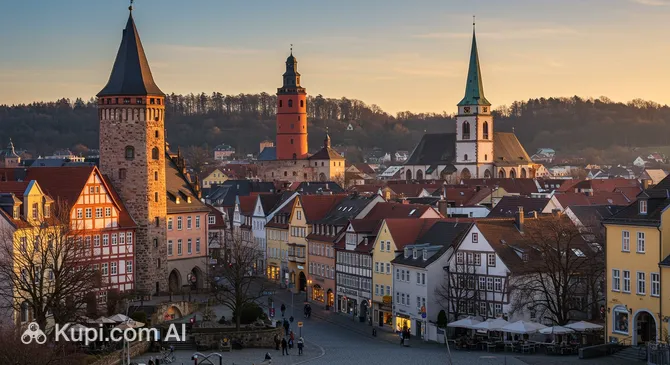
Zittau is a cozy and atmospheric town located in the far southeast of Saxony. Its uniqueness lies in its geographical location: it is situated in a picturesque valley at the foot of the Zittau Mountains, practically at the junction of three countries. This is where Germany meets Poland and the Czech Republic, creating a unique intersection of cultures and traditions that gives this place a special charm.
Zittau. Illustration.
Source: Kupi.com AI
Despite its modest size and population of about 25,000 people, the town is an important administrative center while maintaining the intimacy typical of old European towns. A quiet pace of life reigns here, perfect for those who want to take a break from the noise of large cities. The rich history of Zittau is captured in every cobblestone and building facade that has preserved the spirit of past eras.
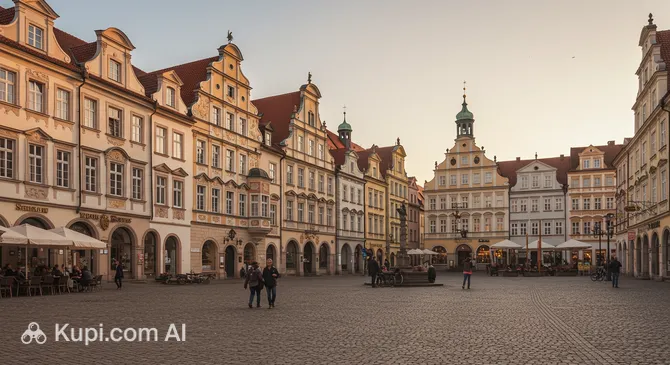
The heart of the town is rightfully considered the Market Square, where guests are greeted by the majestic Town Hall—a magnificent example of architecture reflecting the prosperity of this region. Narrow streets invite leisurely strolls, and the proximity to the mountains makes the town an excellent starting point for nature lovers and active tourists in Central Europe.
Zittau is a town with a soul, well worth a visit for travelers seeking an authentic atmosphere, comfort, and new experiences. It hospitably opens its doors to all who are ready to enjoy the beauty of ancient architecture and the mysterious charm of the borderland.
Weather Overview
The climate of Zittau can be described as moderate-continental, with a clearly defined change of seasons, making the town attractive to visit at any time of year. Summer here is usually mild and comfortable: in July and August, the average temperature is about +18...+19°C, and during the day, the air often warms up to a pleasant +23°C. This is an ideal time for sightseeing and walking along nature trails without exhausting heat.
Winters in the region are cool, but generally without extreme frosts. In January and December, average temperatures stay around +0.6...+1.6°C, although frosts are possible at night. Expect a warm summer favorable for outdoor activities and cool winters with humidity characteristic of the region. Precipitation is distributed fairly evenly throughout the year: rains are usually not too heavy, but overcast days occur regularly.
Spring and early autumn are wonderful times for those who like freshness and the absence of tourist crowds. As early as May, the air warms up to +17°C, and September often gives mild weather with average values around +14°C. When planning your trip, be sure to check the current weather in Zittau to choose the right wardrobe and entertainment program.
Average monthly temperature
Average monthly precipitation
Interesting Facts
Beyond the main attractions, Zittau holds many fascinating secrets and features that reveal themselves only to the attentive traveler. This town at the junction of three borders can surprise you with its unique heritage and atmosphere.
Zittau is one of the few German towns whose historical center was virtually unaffected by the turbulent events of the 20th century. Thanks to this, entire architectural ensembles have been preserved, and Zittau Market Square still looks as if time stopped centuries ago. On the facades of some houses, you can even find old signs and inscriptions—living witnesses of bygone eras.
For lovers of retro technology and the romance of travel, the famous narrow-gauge railway Zittauer Schmalspurbahn operates here. Old steam trains run along picturesque routes through the Zittau Mountains, turning an ordinary trip into a real adventure in the style of the last century.
The town is closely linked to the history of the automotive industry: it was here that the legendary Robur trucks and buses were produced. This name became a real local brand, and the memory of the industrial past is carefully preserved in cultural centers where themed exhibitions are held.
The town's ancient buildings take on a second life thanks to modern art. A vivid example is the Frei Raum Zittau space, where young people organize concerts and festivals, harmoniously combining historical walls with contemporary creative ideas.
Zittau Market Square. Illustration.
Source: Kupi.com AI
Traveler photos:
How to Get There
Zittau is located in a unique spot at the junction of three borders, so you can get here via transport hubs in Germany, the Czech Republic, or Poland. The choice of route depends on where you start your journey. You can find out more about how to get to Zittau by exploring all available options, and below we will look at the most popular methods.
The nearest airport to the town is Dresden International Airport (IATA: DRS). It is not in Zittau itself, but in the city of Dresden, about 77 km away. This is a convenient option for those who want to save time on ground transfers: a trip by taxi or rental car will take approximately 1 hour and 20 minutes. The airport accepts many regional flights and provides a comfortable connection to the town.
Another popular option is arriving via neighboring Czechia. Václav Havel Airport Prague (IATA: PRG) is located in Prague, about 97 km from Zittau. It is a major international hub with a huge number of flights from all over the world. The journey from here by car will take about 1.5–2 hours. Also, Berlin Brandenburg (IATA: BER)—the main airport of the German capital, located 186 km away—is excellent for long-haul flights. The journey from there to Zittau will take about 2.5 hours.
For clarity, here is a summary of the main airports:
Traveling by rail is also a great way to reach the region. There is no major main-line station for long-distance travel in the town of Zittau itself, but you can reach Dresden Central Station in the city of Dresden (about 77 km from Zittau). From there, regional trains run regularly, taking you directly to Zittau while you enjoy the views of Saxony. The transfer by car from the station will take just over an hour.
An alternative is Prague Main Station, located 94.5 km away. This is the largest railway hub in the Czech Republic, where trains arrive from many European capitals. From here, you can reach Zittau by connecting trains or bus; the journey time by car is about one and a half hours.
Below is information about the nearest major railway stations:
Station
Passenger traffic
Distance
Varnsdorf railway station
6
12 km
Jedlová railway station
6
18 km
Liberec railway station
6
23 km
Dolní Poustevna railway station
5
38 km
Děčín central station
7
45 km
Main Attractions
Zittau is a real open-air museum where every corner breathes history. Walking through the town, you will encounter unique architectural monuments and cozy green areas that make this place ideal for quiet and educational tourism. Here are several key locations that should definitely be included in your walking route.
The absolute center of attraction for all guests is Zittau Market Square. This is the heart of the town, framed by magnificent Baroque and Renaissance buildings. The main decoration of the square is the majestic Town Hall, built in the style of an Italian palazzo. It is pleasant to just sit in a cafe here, enjoying the view of the fountains and ancient facades, or take atmospheric photos that capture the spirit of old Saxony.
Zittau Market Square. Illustration.
Source: Kupi.com AI
Traveler photos:
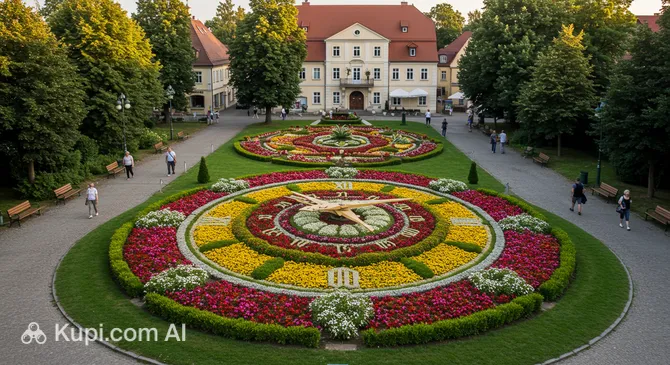
Another landmark of the town is the famous Flower Clock. This unusual mechanism, created in the early 20th century, does not just show the time but also pleases the eye with the skillful work of gardeners. The clock face is planted with thousands of live flowers, the pattern of which changes several times a year depending on the season. The clock is equipped with a carillon that periodically fills the air with a melodic chime, creating a magical atmosphere.
Flower Clock. Illustration.
Source: Kupi.com AI
Traveler photos:
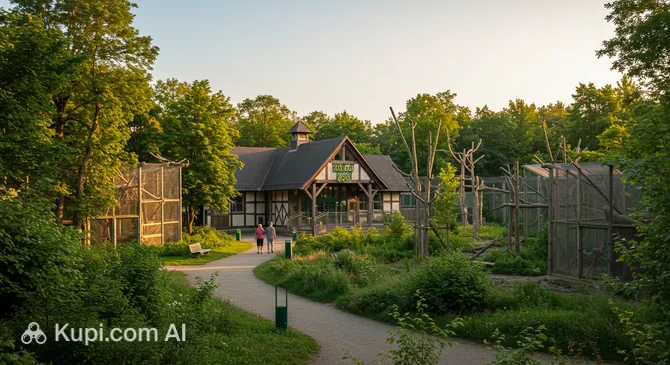
For family vacations and connecting with nature, Zittau Zoo is a perfect fit. This is one of the oldest zoos in Saxony, famous for its natural landscape and careful treatment of its inhabitants. A walk here resembles a journey through a forest where you can meet animals in conditions as close as possible to the wild. Special attention is paid to educational programs, making the visit interesting for both children and adults.
Zittau Zoo. Illustration.
Source: Kupi.com AI
Traveler photos:
If you feel like swapping urban landscapes for a beach holiday, head to Oase — the recreation center at Lake Olbersdorf. Located very close to the town, this resort arose on the site of a former coal mine and has transformed into a popular recreation area. Here you can swim in clean water, engage in water sports, or simply walk along picturesque paths with a view of the Zittau Mountains.
Local Cuisine
The gastronomic scene of Zittau is a unique combination of Saxon traditions and culinary influences from neighboring Czechia and Poland. Thanks to its location at the junction of three borders, the town offers tourists a hearty and varied menu. The basis of local cuisine is simple but incredibly tasty ingredients: potatoes, meat, and seasonal vegetables. If you want to understand the taste of this region, start with a classic roast pork with a crispy crust, which is usually served here with thick gravy, sauerkraut, and the famous potato dumplings.
Baked goods hold a special place in the hearts of locals. Saxons are known for their love of coffee and sweets, so in cozy cafes, you will certainly be offered the traditional Eierschecke cake. This is a delicate three-layered dessert: yeast dough, a quark filling, and a fluffy top layer with vanilla pudding. You should also try the aromatic strudels and pies with poppy seeds or apples, the recipes for which are passed down from generation to generation.
To experience the authentic atmosphere of an ancient town, the Alte Sack restaurant is an excellent choice. In such establishments, you can not only enjoy the taste of home-cooked dishes but also immerse yourself in the historical flavor of Zittau. Leisureliness and quality are valued here, so lunch or dinner turns into a real ritual of relaxation after walking around the town.
Street food and markets also play an important role in the town's gastronomic life. At fairs, especially in the warmer months, the air is filled with the aromas of grilled sausages, potato pancakes, and gingerbread. If you are looking for a quick and hearty snack, you can stop by Kervan Döner, which confirms the diversity of tastes in modern Zittau. As for drinks, you should definitely try the local beer brewed in the best Saxon traditions, or warm up with a cup of hot chocolate on a cool day.
Travel Tips
Welcome to Zittau! To ensure your trip to this picturesque corner at the junction of three borders is as comfortable and carefree as possible, we have prepared a list of useful recommendations. These tips will help you easily navigate the town, avoid awkward situations, and focus on gaining bright impressions.
Clothing and footwear. Since the historical center is paved with old cobblestones and the town itself is at the foot of the Zittau Mountains, the main item on your list should be comfortable shoes with flat soles. For city walks, choose a casual style, and if you plan excursions into nature, be sure to bring trekking boots and a windbreaker—the weather in the foothills can be changeable.
Transport. Zittau is a compact town, and its atmospheric streets are best enjoyed on foot. For travel around the region, there is a well-developed public transport network (ZVON buses and trains). Renting a car only makes sense if you plan long-distance journeys, as there may be difficulties with parking in the center. Don't forget the historical narrow-gauge railway—it's not only an attraction but also a convenient way to get to the Oybin resort.
Finances. The official currency is the euro. While supermarkets and large restaurants accept cards without issues, Germany remains a country where cash is loved. In small bakeries, souvenir shops, or when buying museum tickets, you will often need banknotes and coins. We recommend always carrying a small supply of cash.
Health and safety. The town is very quiet, and walking here is safe even in the evening. Pharmacies are easily recognized by the red Gothic letter "A" (Apotheke). If a pharmacy is closed, the address of the nearest 24-hour duty point is always posted on the door. The single emergency number is 112.
Communication. The primary language of communication is German. In tourist areas, staff often speak English, but it may not help when communicating with older locals. Learn a few basic phrases like "Guten Tag" (Good day) and "Danke" (Thank you)—this show of respect always opens the hearts of the locals. Free Wi-Fi is available in many cafes and on the main squares.
Local etiquette. Politeness and quietness are valued here. It is customary to greet staff when entering a shop and even fellow passengers in an elevator. On Sundays, most shops and supermarkets are closed (Ruhetag), so it's better to buy groceries and necessary items in advance on Saturday.
What to avoid. It is strongly recommended not to walk on bicycle paths—this is a high-risk zone, and cyclists ride fast here. Also, do not cross the street on a red light, even if the road is empty: locals strictly follow the rules, and such behavior will cause disapproval and possibly a fine.
Unique bonus. Make the most of the town's geography! Zittau is within walking distance of Poland and the Czech Republic. You can take a walk to the "Tri-border point" (Dreiländereck) and be in three countries in one hour. Don't forget to take your passport with you, even if the borders are open.
We hope these practical tips help you feel as confident and cozy in Zittau as you do at home. Enjoy the unique atmosphere of the Saxon province, try the local cuisine, and discover new horizons!
Entertainment & Nightlife
Zittau is a town with a steady pace of life, so do not expect noisy metropolitan parties or a huge number of nightclubs here. However, thanks to its status as a university town, the nightlife here has its own special charm. The main activity is concentrated in the historical center, where ancient buildings stand alongside cozy pubs and student bars. An evening in Zittau is primarily about socializing in good company, enjoying local beer, and walking through atmospherically lit streets.
The area around the Market Square remains the center of attraction in the evening. Here you will find establishments that operate as restaurants during the day and turn into places for long gatherings in the evening. For example, to immerse yourself in the historical atmosphere, the Alte Sack is perfect. This establishment, located in an ancient building, is famous for its interior and excellent selection of drinks, making it an ideal place to start the evening.
The town's nightlife is largely shaped by the student community. Zittau has several clubs and bars popular among young people, hosting themed parties, live music concerts, and DJ sets. The musical repertoire varies from rock and indie to modern electronic music. The dress code in most places is casual: a relaxed style will be appropriate everywhere. The crowd here is friendly and open, and conflicts are extremely rare.
During the warmer months, the epicenter of entertainment shifts closer to nature. An excellent option for evening relaxation is Oase — the recreation center at Lake Olbersdorf. Beach parties, open-air movie screenings, and festivals are often held here. Watching the sunset over the lake with a cocktail in hand is one of the best experiences that a summer in Zittau can offer.
Culture enthusiasts should look into the Gerhart Hauptmann Theater. This is an important cultural point on the town's map, where evening performances, operas, and classical music concerts are regularly held. During the day, the town offers a visit to the Municipal Museum, located in a former Franciscan monastery, to see the famous Lenten cloths, or a walk through the "Green Ring" park zones.
In terms of safety, Zittau is a very quiet town. You can walk around the center at night without fear, as the streets are well-lit. Public transport runs less frequently at night, so if you stay out late, it is most convenient to call a taxi. Prices for taxis and drinks in bars here are lower than in Germany's major cities, which will pleasantly surprise the budget-conscious traveler.
Parks & Museums
Zittau is rightfully called the "town in a green ring," and this is not just a beautiful metaphor. The cultural landscape here is harmoniously intertwined with natural areas, creating ideal conditions for those who want to combine intellectual relaxation with walks in the fresh air. The town's museums hold treasures of world importance, while the parks invite you to rest in the silence of centuries-old trees.
The main green artery of the town is the so-called Green Ring (Grüner Ring). This park belt arose on the site of former fortress ramparts and now surrounds the historical center with a picturesque alley. Walking here, you seem to travel through time, admiring views of ancient towers and churches. It is in this green zone that the famous Flower Clock is located, having become a symbol of the harmony between nature and mechanics. This is an ideal place for morning jogs or a leisurely evening promenade.
For more large-scale outdoor recreation, head to Weinaupark. This is the oldest landscape park in the town, which has preserved the charm of the English style with its spacious lawns and shaded paths. Weinau is a favorite family vacation spot for locals. On its territory is the Zittau Zoo, making the park a great location for visiting with children. Here you can enjoy the singing of birds and tranquility, while being only a few minutes' drive from the center.
The cultural life of Zittau is unthinkable without mentioning its unique museums. A real gem is the Museum Church of the Holy Cross (Museum Kirche zum Heiligen Kreuz). It is here that the Large Zittau Lenten Cloth (Großes Zittauer Fastentuch) of 1472 is exhibited—a unique textile monument, the only one of its kind in Germany. This huge cloth, measuring 8 by 6 meters with biblical scenes, leaves an indelible impression on visitors with its historical value and craftsmanship.
Another important cultural center is the Cultural History Museum in the Franciscan Monastery. Within the walls of the ancient monastery complex, you will find a rich collection telling the centuries-old history of the town, its crafts, and trade relations. The Small Zittau Lenten Cloth is also kept here. The atmosphere of the medieval cloister and Gothic architecture adds a special flavor to the exhibition, allowing you to immerse yourself more deeply in the spirit of the past.
If you are looking for something special, pay attention to the town's surroundings. Just a few kilometers away is Oase — the recreation center at Lake Olbersdorf, which serves as a huge natural park by the water in summer. This is a great example of how an industrial landscape was transformed into a thriving recreation zone where nature took its own, creating new picturesque landscapes for inspiration.
Getting Around
The transport system in Zittau is organized clearly and conveniently, as befits a German town, although the center itself is compact enough for walking. The town is part of the Upper Lusatia-Lower Silesia transport association (ZVON). This means there is a unified tariff grid: the same ticket (with the exception of special tourist routes) is often valid for both buses and regional trains within the paid zone.
The main form of urban transport is buses. The route network covers not only residential areas but also connects the station with the historical center and the recreation area by the lake. It is important to remember that in the evenings and on weekends, service intervals increase, so tourists are strongly advised to check the schedules at stops or in a mobile app (e.g., DB Navigator or ZVON-App) beforehand.
A unique feature of Zittau's transport system is the historical narrow-gauge railway (Zittauer Schmalspurbahn). This is not just an attraction, but a full-fledged mode of transport operating on steam power. Trains run regularly from Zittau station to the resort towns of Oybin and Jonsdorf in the mountains. Special tariffs apply for the retro train, and standard city passes may require a supplement (historical surcharge) here.
The fare payment system is varied. Tickets for regular city buses can be purchased from the driver when boarding (it's better to have change), at machines at railway stations, or through mobile apps. There are single tickets, day passes, and group cards. If you bought a paper ticket without a specified date and time, it must be stamped in a special validator (entwerten) immediately upon entering the vehicle or on the platform, otherwise it will be considered invalid.
For those planning to actively explore the surroundings, the Euro-Neisse-Ticket is a real find. It allows for unlimited transport use not only in the Zittau region but also in the border areas of neighboring countries, making trips to Poland and Czechia as simple and cost-effective as possible. It is an ideal option for tourists wishing to visit three countries in one day.
As an alternative to public transport, you can use a taxi, but keep in mind that "hailing" a car on the street is difficult. It is better to find a taxi stand (usually at the station or Market Square) or call a car by phone. Cycling is also popular in the town: the terrain in the center is flat, and convenient bike paths are laid out for trips to the lake or along the Neisse River. Bicycle rental points can often be found at hotels or at the railway station.
Accommodation
Где остановиться:
The hotel sector in Zittau is characterized by a cozy, almost homey atmosphere typical of small Saxon towns. You are unlikely to find huge luxury chain hotels here, but the town is rich in charming family guesthouses, boutique hotels in historical buildings, and comfortable apartments. The main range of accommodation varies from budget hostels for youth and backpackers to mid-range hotels offering a decent level of service and hearty breakfasts.
When choosing an area to stay, most tourists prefer the historical center (Altstadt). Staying here, you will be within walking distance of the main architectural monuments and the Market Square, which is especially convenient for evening strolls. Another popular option is the vicinity of the railway station—a practical choice for those planning active train trips to neighboring Czechia or Poland, as well as to the mountains.
If you prefer a holiday closer to nature and away from the city bustle, you should look at the resort areas by the water. A wonderful example of such accommodation is Oase — the recreation center at Lake Olbersdorf. This complex, located by a picturesque lake, is ideal for those who want to combine sightseeing with a beach holiday or water sports. Such places are especially popular in summer, when proximity to water becomes a major advantage.
Price ranges in Zittau are generally lower than in major German tourist centers like Dresden or Berlin. Accommodation can be described as affordable and medium in cost. It is recommended to book rooms in advance, especially if your trip coincides with the summer holiday season or the Christmas holidays, when lovers of the winter atmosphere flock to the region. To find options, it is convenient to use popular online aggregators, but many small guesthouses (Gasthaus) also accept direct bookings through their websites or by phone.
Nearby Cities
For those who want to explore the surroundings, Zittau serves as an excellent starting point for day trips to several interesting nearby places. Its convenient location allows you to quickly reach true gems of Saxony.
Just 30 kilometers away is Görlitz—a city often called "Görliwood" because of the large number of films shot here. Its historical center is considered one of the most beautiful and well-preserved in Germany, and a walk across the bridge over the Neisse River allows you to cross the border on foot and find yourself in Poland. Another interesting destination is Bautzen, known as the "city of towers." This is the ancient capital of the Lusatian Sorbs, where you can not only admire medieval fortifications but also try the famous local mustard. For those ready for a more extensive trip, the path is open to Dresden—the capital of the federal state with its world-famous museums and Baroque architecture.
City
Population
Distance
Bogatynia
16 647
11 km
Varnsdorf
15 117
13 km
Rumburk
10 903
18 km
Liberec
104 261
23 km
Löbau
14 363
24 km
These nearby destinations provide an insight into the region's diverse culture and landscapes, making your journey even more fulfilling.
Shopping & Souvenirs
Shopping in Zittau is a quiet and measured activity that perfectly complements walks through the historical center. You won't find huge shopping metropolises with endless galleries here, but that is exactly where the town's charm lies. Zittau offers the cozy atmosphere of small boutiques, family shops, and specialized stores where owners often greet customers personally. It is an ideal place for those who value an individual approach and seek authentic goods instead of mass-market products.
The heart of the town's commercial life is the pedestrian zone in the historical center (Altstadt). The main shopping arteries radiate from the central square. Take a stroll along Bautzner Straße and Innere Weberstraße. Most shops for clothing, shoes, books, and accessories are concentrated on these ancient streets. It is pleasant to browse the shop windows located in beautiful restored buildings, combining shopping with architectural sightseeing.
Zittau Market Square. Illustration.
Source: Kupi.com AI
Traveler photos:
Regarding large shopping centers, Zittau maintains its provincial character. There are no giant malls in the town that are common in big capitals. Instead, small shopping passages and department stores function to satisfy the daily needs of residents and guests. If you need groceries or essential goods, there are several supermarkets of well-known German chains located both in the center and on the outskirts.
The markets that liven up the town's atmosphere deserve special attention. A traditional weekly market (Wochenmarkt) regularly takes place in the very center, where the Zittau Market Square is located. Here, local farmers offer fresh vegetables, fruits, cheeses, honey, and meat delicacies from the Upper Lusatia region. In the pre-Christmas period, the square is transformed, becoming the site of a fairytale fair with mulled wine and handicrafts.
When choosing souvenirs, pay attention to the rich cultural heritage of the region. Zittau was historically a town of weavers, so textile products such as tablecloths or towels with traditional patterns make excellent gifts. Also popular are souvenirs related to the town's main attraction—the Large Zittau Lenten Cloth: these could be books, postcards, or miniature replicas. Don't forget Lusatian ceramics and the famous Herrnhut stars (Herrnhuter Sterne), which are produced nearby and decorate homes throughout Germany.
When planning your shopping, remember the typical German working schedule. Most shops in the center are open from 9:00 or 10:00 to 18:00 on weekdays. On Saturdays, many close as early as after lunch, around 13:00 or 14:00, although larger supermarkets stay open longer. Sunday is a day off, when practically everything is closed except for bakeries and shops at the railway station. Regarding payment, despite the widespread introduction of terminals, small shops, cafes, and markets still prefer cash in euros, so keep small bills with you.
Tourists from countries outside the European Union can use the Tax Free system. If a shop supports this service (look for a Global Blue sticker or similar in the window) and the purchase amount exceeds the set minimum (usually 50 euros), you can issue a special check to claim a VAT refund when leaving the EU.