Support

Tezu

About

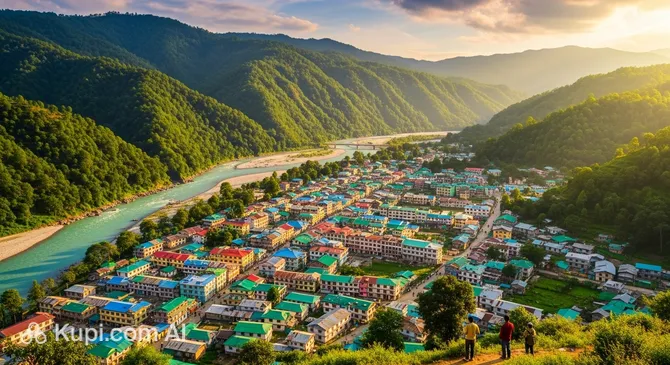
Tezu is a picturesque and atmospheric town located in the state of Arunachal Pradesh on the banks of the majestic Lohit River. This destination attracts travelers with its tranquility, stunning mountain landscapes, and the opportunity to experience the authentic life of local tribes. If your plans include the mysterious and multifaceted India, then this cozy corner in the northeast of the country will be a great discovery far from bustling metropolises.

Tezu. Illustration.
Source: Kupi.com AI

Geographically, the town is situated in a scenic valley surrounded by green hills, creating a pleasant and mild climate. Although the population of Tezu is only about 14,000 people, it is an important cultural and administrative center of the district. The history of Tezu is closely intertwined with the traditions of the Mishmi people, whose colorful festivals and unique customs give the town its distinctive character.

Tourists come here for unity with nature and to visit interesting locations. One of the main attractions is the Lohit River itself, whose turquoise waters against the backdrop of mountains create ideal conditions for picnics and photography. The town also features a Botanical Garden, which houses a rich collection of rare plants from the region, and a local museum. Furthermore, Tezu serves as a convenient starting point for a trip to the sacred Parshuram Kund lake located nearby.

A journey to Tezu is a chance to slow down the rhythm of life and enjoy the pristine beauty of nature. The hospitality of the locals and the peaceful atmosphere will make your visit unforgettable.

Weather Overview

The climatic conditions in this picturesque corner of Arunachal Pradesh feature a noticeable contrast between seasons, which is important to consider when planning your trip. The weather in Tezu largely determines the character of your vacation: from sunny winter walks to observing the lush greenery during the rainy season.

The summer period, lasting from June to September, is truly warm here. During the day, the air warms up to +28°C, while the average temperature stays around +25°C. However, this time of year is characterized by high humidity and heavy rainfall: in July and August, it can rain almost daily, up to 30 days a month, turning the valley into a vibrant green oasis.

Winter, on the other hand, is the driest season. In December and January, there is almost no precipitation, and the sky is clear. Days remain comfortable with temperatures around +19...+20°C, but nights become quite chilly, with the thermometer dropping to +7...+9°C. Expect a warm summer with frequent rains and a cool, dry winter, making the shoulder seasons and winter months the most favorable for excursions.

Average monthly temperature

Average monthly precipitation

Interesting Facts

Beyond its main attractions, Tezu holds many fascinating secrets and legends that make it a truly unique place for cultural explorers.
  • Tibetan Enclave. In the vicinity of the town, in a place called Lama Camp, a large community of Tibetan settlers has lived since the 1960s. Here, travelers can see traditional colorful prayer flags and get acquainted with the Tibetan way of life, which peacefully coexists with the traditions of local tribes.

  • Mythological Home of Rukmini. There is a strong local belief that Princess Rukmini, the consort of Lord Krishna, belonged to the Mishmi tribe inhabiting this region. This legend closely links this remote northeastern corner of India with the country's central epic.

  • The "Blood" River. The name of the Lohit River, on the banks of which Tezu stands, translates from Sanskrit as "blood." This somewhat daunting name is purely geological: during the rainy season, the turbulent waters erode the red laterite soils upstream, tinting the river a deep crimson color.

  • Secret Lake. High in the mountains, away from the trodden tourist paths, lies Glow Lake. It can only be reached on foot by completing a challenging trekking route, making it a true hidden treasure for nature enthusiasts.

How to Get There

A journey to this colorful corner of Arunachal Pradesh is an exciting adventure that starts with proper logistics planning. The region is located far from bustling metropolises, so the route often involves changing several modes of transport. To study all available options in detail and create the perfect trip plan, we recommend visiting the page on how to get to Tezu.

Tourists consider the nearest major transport hubs as the main gateways to the region, from where it is convenient to continue the journey by land. The most popular arrival option is Dibrugarh Airport (IATA: DIB). It is located approximately 122 km from the town and receives regular flights from many parts of the country. The trip from the terminal to your destination will take about 3–4 hours and offer a chance to enjoy views of tea plantations and a river crossing.

Other available flight options include Rowriah Airport (IATA: JRH) in Jorhat and Itanagar Airport (IATA: HGI), serving the state capital. Although they are located further away — at distances of more than 230 km and 260 km respectively — they can be a good alternative depending on your schedule and travel route through Northeast India.

Below is information about the nearest airports for route planning:

AirportPassenger trafficDistance
Dibrugarh Airport822 437122 km
Putao25 000142 km
Zero Airport299233 km
Rowriah Airport130 754236 km
Itanagar Airport300 000270 km

Train travel enthusiasts should look for Tinsukia Junction in the neighboring state of Assam. This is the region's key railway hub, with direct connections to Delhi, Kolkata, and other major cities. From Tinsukia station, Tezu can be reached by taxi or bus, with a travel time of about 3–4 hours.

Main Attractions

Although Tezu is a small town, it serves as a gateway to several amazing places that combine natural beauty and deep spiritual significance. A tour of the local sights will provide a better understanding of the culture of the northeastern part of the country, which India is so proud of. Here is a list of places that are definitely worth including in your travel itinerary.

Parshuram Kund. Undoubtedly the most famous and revered site in the area, located about 20 km from the town in the lower reaches of the Lohit River. This sacred pool, surrounded by picturesque hills, holds immense significance for pilgrims. According to ancient legends, it was here that the sage Parshurama washed away his sins in the pure waters of the river. It becomes especially crowded in January during the Makar Sankranti festival, but even on ordinary days, this place fascinates with its energy and the beauty of its mountain landscapes.

District Museum and Craft Centre. To truly immerse yourself in the spirit of the region, it is worth visiting the local museum. Its exposition carefully preserves the history and traditions of indigenous tribes, particularly the Mishmi people. Here, tourists can see unique collections of traditional costumes, silver jewelry, weapons, as well as household items and art. This is an excellent opportunity to get acquainted with the ethnographic wealth of Arunachal Pradesh without leaving the town.

Tezu Botanical Garden. This extensive green zone, covering an area of over 20 hectares, is a true oasis of tranquility. The garden is home to many rare and endangered plant species characteristic of the region's subtropical forests. Travelers come here for quiet walks along well-maintained paths and the chance to see unique flora that is hard to find in other parts of the country.

Glow Lake. For lovers of active recreation and adventure, this place will be a real discovery. A high-altitude lake located in the Kamlang Wildlife Sanctuary, it captures the imagination with its crystal-clear water and surrounding dense forests. Reaching it is an adventure in itself, requiring trekking on foot, but the views of untouched wilderness and absolute silence away from civilization are well worth the effort.

Local Cuisine

Tezu's gastronomic scene is a vivid reflection of the region's cultural diversity, where the ancient traditions of the Mishmi tribe and the culinary customs of Tibetan settlers intertwine. You won't find high-end gourmet restaurants here, but you can enjoy simple, hearty, and, importantly, organic products. The staple of the local diet is rice, grown here without chemicals, which gives dishes a particularly rich and natural flavor.

Travelers should definitely try dishes featuring bamboo shoots. Locals skillfully use this ingredient in fresh or fermented forms, giving food a characteristic tang and unique aroma. For meat lovers, smoked pork or mithun meat (a traditional Himalayan bovine) will be a real discovery, often prepared with plenty of local herbs and hot chili peppers. Also, thanks to Tibetan influence, hot momo (steamed dumplings) and thukpa (hearty noodle soup) are served everywhere in Tezu, perfect for warming up on cool evenings.

Among drinks, Apong, a traditional rice beer, holds a special place. This home-brewed, low-alcohol beverage is an integral part of hospitality and accompanies all significant holidays and festivals. It has a mild taste and is considered an important element of the tribes' social life. For those who prefer non-alcoholic drinks, excellent tea is offered; the proximity to the famous plantations of neighboring Assam guarantees high-quality leaves, often served with milk and spices.

The dining culture in the town is very democratic and encourages socializing. Locals and tourists prefer to eat in small, cozy eateries and roadside cafes, often called "dhabas." Local markets are also a hub of activity, where you can not only snack on street food but also buy the freshest seasonal fruits, such as the juicy oranges and pineapples for which this fertile valley is famous.

Travel Tips

A trip to Tezu is an immersion into the original world of the Northeast, requiring slightly more careful preparation than a visit to popular resorts. To ensure your journey to this remote corner, which India is proud of, goes smoothly and leaves only pleasant impressions, we have prepared a list of important recommendations.

  1. Clothing and Gear. Mountain weather is changeable, so the best principle is layering. Even in summer, evenings can be cool, so a light fleece jacket is a must. For a winter trip (December–January), bring warm clothes and a jacket. Be sure to bring comfortable trekking shoes with non-slip soles for walks on the hills and by the river. Don't forget a raincoat or umbrella, especially if traveling during the monsoon season.
  2. Transport Nuances. There is no metro or typical city buses in Tezu. The main way to get around town is by auto-rickshaws and shared taxis. Apps like Uber are not available here. For trips to remote attractions, like Parshuram Kund, it is best to rent a car with a local driver for the whole day — this is the most reliable and comfortable option.
  3. Financial Preparation. In this region, cash remains "king." Cards are not accepted everywhere, mostly only in large hotels. There are ATMs in the town (e.g., SBI), but they may not work due to connectivity issues or a lack of cash. We strongly recommend withdrawing a sufficient amount of Rupees in advance in larger cities (Dibrugarh or Guwahati).
  4. Health and Safety. Tezu is a peaceful and safe town, but basic precautions won't hurt: do not walk alone in unlit outskirts at night. The tourist's main enemy here is insects. Be sure to bring a high-quality repellent, as there are many mosquitoes and midges in the forested areas. Pharmacies are available in the center, but it is better to bring specific medications with you.
  5. Connectivity and Internet. Be prepared for a digital detox. Mobile internet here can be unstable. The best coverage in Arunachal Pradesh is usually provided by BSNL and Airtel. We recommend downloading offline maps of the region in advance, as GPS signals can disappear in the mountains.
  6. Etiquette and Communication. Local residents, especially members of the Mishmi tribe, are very hospitable but value respect. You can greet people with folded palms and the word "Namaste." When entering temples, monasteries, and even some private homes, be sure to remove your shoes. Dress modestly when visiting religious sites.
  7. What to Avoid. It is strongly recommended not to photograph locals, especially women in traditional attire, without their explicit permission — this may be perceived as rude. Also, avoid loud conversations and noise near sacred sites and in nature to avoid disturbing the local harmony.
  8. Important Document (ILP/PAP). Arunachal Pradesh is a protected territory. Every tourist must have a special permit to enter. For Indian citizens, this is the Inner Line Permit (ILP), and for foreigners, it is the Protected Area Permit (PAP). Arrange these documents in advance online or through a tour operator; otherwise, you simply won't be allowed through the checkpoint at the state entrance.

Following these simple rules will help you avoid domestic inconveniences and fully focus on the beauty of the Lohit River valley. Tezu opens up to those who come with an open heart and respect for local traditions!

Entertainment & Nightlife

Entertainment and nightlife in Tezu have their own unique character, dictated by the region's remoteness and traditional way of life. If you expect to see neon signs, noisy nightclubs, or 24-hour bars here, this town will surprise you — but with its silence and peace. "Nightlife" here ends quite early, and the main focus shifts to relaxed rest, gastronomic pleasures, and socializing in small circles.

Evening Atmosphere and Venues

With the onset of darkness, which happens quickly in the mountains, the town falls asleep. Most shops and cafes in the Main Market close by 7:00 PM – 8:00 PM. This time is best spent having dinner at one of the local restaurants. There are no specialized bars or European-style pubs in Tezu. Alcohol (including beer and local drinks) is usually served either in hotel restaurants or purchased at specialized Wine Shops before they close, to be enjoyed in your room or on a guesthouse terrace.

The centers of evening attraction, where you can meet other travelers and dine in a comfortable setting, are the restaurants at the town's best hotels. For example, the restaurant at the Oshin hotel or the dining area at Hotel Taboka. They serve Indian and Chinese dishes, and the atmosphere is conducive to leisurely conversations. The dress code everywhere is as casual as possible — comfortable trekking clothes are quite appropriate here even for dinner.

Practical Tips and Safety

When planning an evening in Tezu, consider several important nuances:

  • Operating Hours: Life in the town winds down early. Plan your dinner no later than 7:30 PM, as it will be nearly impossible to find an open kitchen after 9:00 PM.
  • Transport: Public transport and auto-rickshaws do not run at night. If you stay late visiting friends or at a restaurant far from your hotel, you will have to walk back or arrange with a driver in advance.
  • Safety and Lighting: Tezu is a safe town, and crime is low. However, the streets are poorly lit or not lit at all. Be sure to carry a charged flashlight to avoid tripping on uneven roads. Also, be wary of stray dogs that may gather in packs at night.

Daytime Activities

Since the nightlife is quiet, most leisure activities take place during daylight hours. During the day, tourists can visit local cultural centers, go for a picnic on the banks of the Lohit River, or take a stroll through the Botanical Garden. For those interested in history, the doors of the District Museum are open, where you can spend several fascinating hours studying the heritage of the Arunachal Pradesh tribes.

Parks & Museums

The town of Tezu, nestled in the foothills of the Himalayas, offers travelers a harmonious blend of natural beauty and cultural heritage. While this corner of Arunachal Pradesh may not boast massive entertainment complexes, its green zones and ethnographic collections allow for a deep immersion into the region's atmosphere. For those attracted by authentic India, local parks and museums will be a source of inspiration and tranquility.

Tezu Botanical Garden. This is the city's main "green jewel," occupying an impressive territory of 23 hectares. The garden is not just a place for walks, but a real sanctuary of flora, housing rare and valuable plant species characteristic of the subtropical forests of the Northeast. Tourists will enjoy the peaceful silence and the opportunity to see unique specimens of trees and shrubs that are hard to find in other parts of the country. It is an ideal location for morning jogs, meditation, or leisurely reading under the shade of sprawling canopies.

Lohit River Viewpoint. Although this area is not a park in the traditional sense with paved paths and benches, the coastal zone of the Lohit River serves as a favorite recreation spot for both locals and visitors. Spacious green lawns by the turquoise water create a natural recreational area. People come here for picnics, to watch sunsets that paint the Himalayan peaks in golden tones, and simply for the feeling of freedom. It is an excellent spot for landscape photography.

Tezu District Museum. This museum is a mandatory stop for anyone wishing to understand the soul of Arunachal Pradesh. The exposition is dedicated to the rich culture and daily life of the Mishmi tribe, the indigenous inhabitants of the valley. The museum's halls display rare manuscripts, traditional silver jewelry, colorful handmade costumes, and weapon samples. Of particular interest are the collections of bamboo and cane products, demonstrating the high craftsmanship of local artisans. Visiting the museum provides context for the entire journey, explaining the symbolism and traditions you will see on the town's streets.

Craft Centre. Located near the museum, this center functions as a living gallery of folk art. Here, you can not only see finished products but often observe the process of their creation. Weaving looms, producing the famous geometric patterns of shawls and wraps, operate here just as they did centuries ago. For tourists, it's an opportunity to touch a living heritage and perhaps purchase a unique souvenir that carries the warmth of a master's hands.

If you are looking for off-the-beaten-path experiences, take a look at the surroundings of the Tibetan Settlement in Tindolong. Although it is a residential area, its gardens and small squares around Buddhist stupas possess a special atmosphere of peace and spirituality that differs from the rest of the town.

Getting Around

Tezu's transport system perfectly matches the size and leisurely pace of life of this small town. You won't find a metro, trams, or a complex network of city buses with electronic displays here. Movement is organized simply, with a cozy village feel, but requires the tourist to understand local specifics.

The main and most popular means of transportation within the town limits are auto-rickshaws (often called tuk-tuks). These nimble three-wheeled vehicles can be found on almost any street. They operate in two formats: as an individual taxi, where you hire the vehicle entirely for a trip to a specific point, or in "sharing" mode, where the driver picks up fellow passengers along the way. The second option is significantly cheaper but may take more time.

For trips outside the center, for example, to remote attractions or neighboring settlements, shared jeeps (locals call them "Sumo" or "Shared Taxi") are used. These are spacious SUVs that depart from special stands once all seats are filled. This is a reliable and inexpensive way to reach your location, although comfort in a tightly packed car can be limited.

The payment system here is as conservative as it gets: cash only. No transport cards, passes, validators, or options to pay via smartphone exist in Tezu. Global ride-hailing apps like Uber also do not work here. It is strongly recommended to agree on the fare for an auto-rickshaw ride with the driver before boarding to avoid disputes at the end of the trip. In shared jeeps, fares are generally fixed.

Important practical tip for tourists: the town's transport life winds down early. After sunset (around 6:00 PM – 7:00 PM), finding a free rickshaw on the street becomes problematic, and there are no night services at all. Always carry a supply of small bills, as drivers often do not have change for large banknotes. It is better to buy tickets for intercity buses of the state corporation (APSTS) in advance at the bus station.

As a comfortable alternative to public transport, the best solution is to rent a car with a driver for the whole day. This can be arranged through your hotel's front desk. There are no car-sharing or self-drive rental services in the town. Given the compactness of the center, many distances are easily covered on foot, allowing you to better observe the colorful streets.

Accommodation

Tezu is a remote and authentic destination, so the hotel infrastructure is developed at a basic level. You won't find luxury five-star resorts or major international chains in the town. The main accommodation options consist of small private hotels, guest houses, and government tourist lodges. This is a great opportunity to immerse yourself in the simple life of the region, where India reveals its homely and hospitable side.

Best Places to Stay

Since the town is compact, the concept of a "tourist center" is quite relative. The most convenient area for staying is the vicinity of the Main Market and the central road. By staying here, you will be within walking distance of taxi stands, shops, and the few available cafes. This is a strategically sound decision, given the lack of developed public transport in the evening and the poor street lighting on the outskirts.

Booking Features and Prices

The price range for accommodation in Tezu varies from budget to mid-range. Most options offer clean rooms with basic amenities (bed, hot water, fan) at very reasonable prices. In some places, there may be power outages, so the presence of an on-site generator is a major advantage when choosing a hotel.

An important booking tip: the digital revolution has not yet fully reached this region. Many local hotels are not listed on popular international online aggregators. The most reliable way to book a room is by calling the hotel directly or with the help of a local tour operator organizing your trip. During peak seasons (for example, during winter festivals), looking for accommodation upon arrival is risky as space is limited, so take care of your lodging in advance.

Nearby Cities

For those who want to explore the surrounding areas, Tezu serves as an excellent starting point for day trips to several interesting nearby locations. The town's location near the border of Arunachal Pradesh and Assam provides access to completely different landscapes and cultural attractions.

Tinsukia. This is the nearest large city and an important commercial hub, located about 3–4 hours away. Tinsukia attracts travelers with its lively rhythm and the opportunity to visit the famous Dibru-Saikhowa National Park. This is a unique biosphere reserve where you can see wild horses and rare birds and enjoy river cruises. The city is also famous for its markets, where you can purchase high-quality Assamese textiles.

Dibrugarh. Known as the "Tea City of India," Dibrugarh offers tourists picturesque views of endless tea plantations that look like green carpets stretching to the horizon. Here you can visit old tea estates, learn about the tea production process, and walk along the promenade of the mighty Brahmaputra River. It is an ideal place for gastronomic tourism and getting to know the region's colonial architecture.

Sivasagar. Although the journey here takes more time, this city is worth a visit for its incredible history. Sivasagar was the capital of the powerful Ahom Kingdom, which ruled the region for six centuries. Unique architectural monuments have been preserved here: the Rang Ghar palace, considered one of the oldest amphitheaters in Asia, and the majestic Sivadol temple. It is a true journey through time for history buffs.

CityPopulationDistance
Dum Duma26 14371 km
Digboi27 12979 km
Pasighat24 65683 km
Margherita26 91486 km
Tinsukia99 50792 km

These nearby destinations offer a glimpse into the diverse culture and landscapes of the region, from the tea gardens of the plains to the historic monuments of ancient dynasties.

Shopping & Souvenirs

Shopping in Tezu is not a typical trip to boutiques or a search for global brands, but a fascinating ethnographic exploration. Purchases here are inextricably linked with the culture of local tribes and the natural riches of the region. In this small town, which India is proud of, you will find authentic handmade items, organic products, and unique souvenirs carrying the warmth of master's hands. It is an ideal place for those looking for items with history and soul, rather than mass-produced goods.

Main Shopping Areas and Streets

All the town's commercial life is centered around the Main Market. This is the heart of Tezu, where life bustles from early morning until sunset. There are no wide avenues here, but there are colorful narrow streets filled with small stalls and shops. At the Main Market, you can find everything from essentials and clothing to traditional crafts. A walk here allows you not only to shop but also to observe the daily life of the locals.

Shopping Centers

It is important for tourists to know that Tezu lacks large shopping centers (malls) in the conventional sense. You won't find glass shop windows, food courts, or cinemas inside stores here. Trade is conducted in a traditional format: individual shops, kiosks, and open stalls. This gives shopping a special charm and simplicity characteristic of the remote corners of the Himalayas.

Markets

Tezu's markets are the place to buy the freshest produce. The morning vegetable bazaar, where farmers from surrounding villages bring their harvests, deserves special attention. Look here for seasonal fruits, aromatic spices, and local delicacies. Also of interest is the area around the government Craft Centre, where the best examples of folk art, having passed quality control, are often put up for sale.

Souvenirs: What to Bring Back

The shopping list in Tezu is quite unique. Here is what you should pay attention to first:

  • Mishmi Textiles. This is the region's hallmark. Traditional jackets, shawls, and bags with characteristic geometric patterns are hand-woven on loin looms. They are not only beautiful but also very durable.
  • Bamboo and Cane Products. Local artisans create elegant baskets, hats, and even jewelry from these materials. Masterfully woven headgear is particularly popular.
  • Oranges. The Lohit River valley is famous for its citrus. If you find yourself here during the harvest season (winter), be sure to buy local oranges — they are considered some of the best in the region.
  • Tibetan Goods. Thanks to the proximity of the Tibetan settlement, you can find high-quality wool carpets and warm clothing in the town.

Opening Hours and Payment

When planning your shopping, keep in mind that shops in Tezu close quite early. Typically, retail outlets operate from 09:00–10:00 AM to 7:00 PM. Sunday is often a day off or has shortened hours. As for payment, cash is king. Credit cards are accepted very rarely, only in the largest shops (of which there are few). There are ATMs in the town, but they are not always stocked with cash, so it is highly recommended to have a sufficient supply of Indian Rupees, especially in small denominations.

Tax Free

The Tax Free system does not operate in Tezu. It is a small town oriented towards the domestic market, so all prices are final and include all taxes. Bargaining is appropriate at open markets and in private shops, but prices in government Emporiums are usually fixed.
Have you reached the end of the page?

So the route has been studied inside and out