Support

Thanesar

About

Thanesar is a true historical treasure of India, nestled on the fertile plains of Haryana in the heart of the country's northern region. The city is renowned for its ancient history, with roots reaching back millennia, and has always been a magnet for spiritual seekers and history enthusiasts due to its position at the crossroads of important trade and pilgrimage routes.
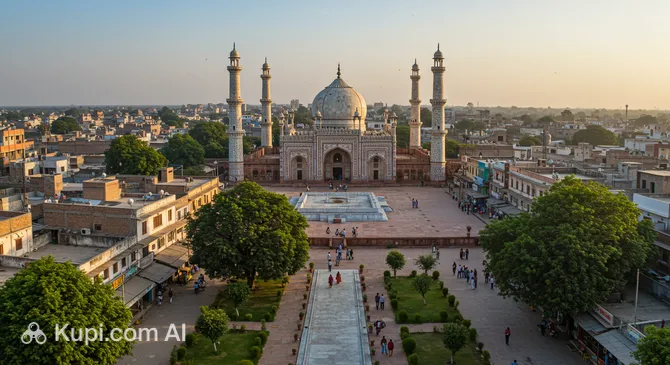
Thanesar. Illustration.
Source: Kupi.com AI

Thanesar, with a population of about 155,000 people, lies on the banks of the sacred Saraswati River. The city uniquely blends the atmosphere of a cozy provincial town with the significance of an important regional administrative center. Here, the tranquility of a small town harmoniously intertwines with a vibrant cultural life, where ancient traditions exist side-by-side with modernity. Narrow streets, colorful markets, and majestic temples create a unique character that charms visitors from their very first visit.

One of the primary reasons to visit Thanesar is its status as one of the most important holy sites in Hinduism. According to legend, it was here that events of the epic Mahabharata unfolded, giving the place a special spiritual aura. The city is famous for its rich architecture: you can spend hours walking here, admiring ancient temples and historic buildings, each holding echoes of the past.

If you are looking for the authentic India, its soul, and its history, Thanesar will be a true discovery for you. This city, where spirituality is felt in every breath and history literally comes to life before your eyes, will give you unforgettable impressions and peace of mind.

You can find more interesting facts on the history of Thanesar page.

Weather Overview

The weather in Thanesar is characterized by hot summers, with average temperatures in May and June exceeding 30°C, and maximums reaching 37-38°C. The monsoon season falls between July and September, bringing significant rainfall, especially in July (about 9 mm and 26 rainy days). Winters here are cool and mostly dry, with average temperatures around 13-15°C in December and January, and minimal rainfall, particularly in November and December. Find out more about the weather in Thanesar to better plan your trip.

Average monthly temperature

Average monthly precipitation

Interesting Facts

Beyond its well-known landmarks, Thanesar holds many fascinating secrets and little-known details that make it a truly unique place. A city with such a rich history is ready to surprise even the most seasoned traveler.

  • Thanesar is considered one of the oldest cities in India, with a history rooted in the Vedic era. In ancient times, it served as the capital of the powerful Harsha kingdom, whose rulers contributed significantly to the cultural and religious development of the region.

  • According to legend, the Kurukshetra battlefield, located near Thanesar, was the site of the legendary battle described in the Mahabharata. The city is mentioned in ancient Indian epics, and locals proudly share legends of heroes and deities associated with their land.

  • Thanesar is home to the famous Sri Krishna Temple, which attracts pilgrims not only for its spiritual significance but also for its impressive architecture. Every year, thousands of believers come here to touch the holy sites and participate in colorful religious festivals.

  • The city is famous not only for its religious shrines but also for important archaeological sites. The Tila historical complex is a kind of open-air museum where you can see traces of ancient civilizations and unique artifacts that tell the story of this amazing place's past.

How to Get There

When planning a trip to this historic region, it is important to think through your route in advance. Since the city itself does not have its own airport, travelers usually arrive at nearby major transport hubs and then continue by land. You can explore all the ways to get to the city in more detail on our dedicated page, and below we will look at the most popular options.

The most convenient option for air travelers is Chandigarh Airport (IATA: IXC). It is located in the city of Chandigarh, about 78 km from Thanesar. This is a large and modern airport that accepts many flights. The journey from there by taxi or bus takes approximately 2–2.5 hours, depending on traffic.

An alternative option is Dehradun Airport (IATA: DED), located in the city of Dehradun. It is significantly further away, about 133 km from Thanesar, so travel time will be over 3.5 hours. You can also consider flying into Ghaziabad (Hindon) (IATA: HDO), which is 150 km away, though this option is less popular due to the distance.

For your convenience, here is a summary of the main airports in the region:

AirportPassenger trafficDistance
Chandigarh Airport3.6 mln78 km
Simla25 493126 km
Dehradun Airport1.7 mln133 km
Ludhiana (Halwara)143 km
Bilaspur30 000149 km

Rail travel is one of the most common and budget-friendly ways to get around India. Thanesar effectively merges with the city of Kurukshetra, so the main railway hub for tourists is Kurukshetra Junction. It is located on the main railway line connecting Delhi and the northern regions of the country, providing excellent connections to most major cities. Trains run here frequently and regularly.

In addition, Thanesar has excellent road links. The city is located near the NH-44 national highway (Grand Trunk Road), connecting Delhi and Amritsar. It is easy to get here by state or private buses from Delhi, Chandigarh, and other neighboring cities in the states of Haryana and Punjab.

Main Attractions

Thanesar, an ancient city with a rich history and spiritual heritage, offers travelers many interesting sites. Closely linked to the epic events of the Mahabharata, the city attracts pilgrims and history buffs from all over the world.

One of the main gems of Thanesar is Brahma Sarovar – a vast sacred water tank considered one of the holiest places in Hinduism. According to legend, it was here that Lord Brahma performed his first sacrifice after creating the universe. Thousands of pilgrims come here to take a ritual dip in its waters, especially during solar eclipses when the ritual is considered particularly auspicious. Colorful ceremonies are often held here in the evening.

Nearby is the Sthaneshwar Mahadev Temple, dedicated to Lord Shiva. This ancient temple gave the city its original name – Sthaneshwar. It is believed that the Pandavas prayed to Shiva here for victory in the Battle of Kurukshetra. The temple is an important pilgrimage center and attracts visitors with its ancient architecture and spiritual atmosphere.

Another iconic site is Sheikh Chilli's Tomb. This magnificent mausoleum, built in the Mughal architectural style, is the final resting place of the Sufi saint Sheikh Chilli, who was the spiritual teacher of Prince Dara Shikoh, the son of Emperor Shah Jahan. The complex includes a mosque, well-maintained gardens, and the mausoleum itself, made of sandstone and marble and decorated with delicate carvings. This place attracts visitors with its beauty and tranquility.

For those who want to dive deeper into the events of the Mahabharata, a visit to Jyotisar is a must. According to tradition, this is the place where Lord Krishna delivered the sacred verses of the Bhagavad Gita to Arjuna before the start of the great battle. An ancient banyan tree grows here, under which this momentous dialogue is believed to have taken place. The site is filled with deep spiritual meaning and peace.

Local Cuisine

The gastronomic world of Thanesar is a true immersion into the heart of North Indian cuisine, where every aroma and flavor tells a story of ancient traditions. The air here is filled with the scent of fresh spices, fragrant herbs, and dishes prepared according to recipes carefully passed down through generations. If you dream of experiencing authentic Indian food, Thanesar will not disappoint you.

Be sure to try iconic dishes such as Chole – a flavorful and hearty chickpea stew seasoned with a variety of spices, and Dal Makhani – a creamy lentil soup prepared with butter that simply melts in your mouth. No meal is complete without freshly baked flatbreads – Roti or Naan, served hot straight from the oven. Fans of piquant flavors should look out for local chutneys and pickles, which add a special zing and zest to the dishes.

Street food in Thanesar is a separate chapter of your culinary journey. On the busy streets, appetizing samosas (fried pastries with filling) and pakoras (vegetables or cheese in batter) await, prepared right in front of you using the freshest ingredients. Don't pass by the sweet stalls: be sure to try the crispy jalebi spirals soaked in sugar syrup, or the delicate gulab jamun balls in sweet syrup. The street food here is not only incredibly tasty but also generally safe.

Among drinks, the refreshing Lassi is particularly popular – a traditional yogurt-based drink that can be either sweet or salty. Dairy products in general hold an important place in the local cuisine: be sure to try the homemade curd and various milk-based desserts. These natural and wholesome treats perfectly complement any meal.

The dining culture in Thanesar is very accessible. To truly feel the local color, stop by small family cafes or head to the busy markets – this is where you can try the most authentic dishes and observe the city's daily life. Local markets also abound with fresh vegetables, fruits, and, of course, spices. Sometimes the city hosts food festivals where you can get acquainted with the full diversity of Haryana state cuisine.

Travel Tips

Welcome to Thanesar, an ancient city with a rich history and spiritual heritage! To make your journey through this interesting corner of India as comfortable and enjoyable as possible, we have prepared some practical tips.

  1. Clothing and Essentials: The climate in Thanesar is subtropical. In summer (April-June), it is hot and humid, so choose light cotton clothing. During the monsoon season (July-September), don't forget an umbrella or raincoat. Winters (November-February) are mild, but light sweaters or jackets may be useful in the evenings. Be sure to bring comfortable walking shoes, sunscreen, a hat, and sunglasses. For visiting the many temples and holy sites, such as Brahma Sarovar, dress modestly: clothes should cover your shoulders and knees. Sometimes you may need to cover your head. Don't forget a universal power adapter for your electronics.
  2. Local Transport: The main mode of transport for tourists in Thanesar is the auto-rickshaw – an affordable way to travel short distances; always agree on the price before starting the trip. Cycle rickshaws are also common. Local buses connect different parts of the city and its surroundings but can be overcrowded. Taxis, including those ordered through apps (check availability upon arrival), are also possible. Renting a car might be an option if you have an international driving permit, but be aware that traffic in Indian cities can be chaotic.
  3. Finances: The local currency is the Indian Rupee (INR). You can exchange currency at banks or authorized exchange offices. Credit and debit cards (Visa, Mastercard) are accepted in most hotels, large restaurants, and shops, but it's better to have cash for small shops and markets. ATMs are quite common. An approximate daily budget (excluding accommodation) can be 2000-4000 rupees. Tipping is welcome but not always mandatory; in restaurants, it's 5-10% of the bill if a service charge is not included.
  4. Health and Safety: There are pharmacies in Thanesar, some of which may be open 24/7 or located at hospitals. It is recommended to have travel medical insurance. Thanesar is generally a safe city, but follow standard precautions: avoid poorly lit and deserted places after dark, and keep an eye on your belongings in crowded areas. Drink only bottled water and try to eat at trusted establishments.
  5. Communication: The main languages are Hindi and Haryanvi. In tourist areas, hotels, and large shops, staff often speak English. Learn a few simple phrases in Hindi: "Namaste" (Hello), "Dhanyavad" (Thank you), "Kitne ka hai?" (How much does it cost?). A local SIM card can be purchased by presenting your passport and visa. Wi-Fi is available in most hotels and some cafes.
  6. Local Etiquette: Greet people with "Namaste," joining your palms together at chest level. It is customary to remove your shoes when visiting temples and homes. Use your right hand for passing items, money, and when eating, as the left hand is traditionally considered unclean. Dress modestly, especially when visiting religious sites.
  7. What to Avoid: Try not to drink tap water and avoid ice in drinks unless you are sure of its origin. Do not point your feet at people or religious shrines, as feet are considered unclean in Indian culture.
  8. Thanesar Special Feature: The city is closely linked to the epic poem "Mahabharata" and is part of the sacred Kurukshetra region. Visiting during major religious festivals, such as Gita Jayanti (usually in November-December), can provide a unique experience, but be prepared for large crowds. Also, don't hesitate to politely bargain at local markets – it's part of the culture.

We hope these tips help you better prepare for your trip and get the most out of exploring Thanesar, its ancient shrines, and its hospitable residents!

Entertainment & Nightlife

Thanesar, known for its rich historical and religious heritage, offers visitors a calm and steady pace of life rather than a bustling night scene. The city is not famous for noisy nightclubs or bar districts typical of major metropolises; however, you can find pleasant ways to spend an evening and get to know the local culture more deeply.

Evening entertainment in Thanesar is mainly centered around restaurants and local eateries where you can enjoy authentic Indian cuisine. Unfortunately, specific information on recommended bars, restaurants, or night markets is limited. Therefore, while in the city, it is worth looking for establishments in central areas or near the main markets—this is where you are most likely to find places that stay open late and offer a cozy atmosphere for dinner and conversation. There are virtually no specialized nightclubs or large concert venues, and "nightlife" is more about leisurely walks along lit streets or sitting in cafes. Occasionally, the city hosts local cultural events or festivals that liven up the evening atmosphere.

The atmosphere in Thanesar's evening venues is generally quiet and conducive to conversation, often with a family-friendly vibe. The dress code is usually casual. The best time for evening outings is after sunset when the daytime heat subsides. Prices in local establishments are typically moderate, especially in those catering to city residents. If you are looking for more active entertainment, it is best to check on-site with hotel staff or locals, as options may be limited.

To get around at night, it is recommended to use taxis or auto-rickshaws. Be sure to agree on the fare in advance. While Thanesar is generally considered a safe city, it is always wise to follow standard precautions: avoid poorly lit and deserted areas, especially if traveling alone.

During the day, Thanesar offers significantly more options for a full itinerary. The city and its surroundings are rich in significant historical and religious landmarks. Notable among them are ancient temples, sacred water tanks, and sites associated with epic events. These include Brahma Sarovar, one of the most revered water tanks, and Sheikh Chilli's Tomb, an impressive mausoleum. You might also want to visit the Srikrishna Museum, which highlights the cultural and historical significance of the region. For quiet relaxation and walks, the city's parks and gardens are perfect.

Parks & Museums

Thanesar, a city with a rich spiritual heritage, offers guests not only an immersion into history but also the opportunity to enjoy the tranquility of green spaces and discover cultural treasures. Here, everyone will find something for the soul: from ancient shrines to interesting museum exhibits.

While Thanesar is not famous for extensive city parks in the traditional sense, its sacred water tanks, such as Brahma Sarovar and Sannihit Sarovar, are surrounded by areas where you can relax and observe local life. These huge reservoirs of water have colossal religious significance, especially during festivals, but even on ordinary days, their banks and surrounding grounds serve as places for peaceful walks and meditation. The atmosphere here is steeped in tranquility and antiquity.

To learn about the rich history and culture of the region, it is worth visiting the museums located in the immediate vicinity in Kurukshetra, of which Thanesar is a part. The Sri Krishna Museum offers an extensive collection of artifacts, paintings, and sculptures dedicated to the life and teachings of Lord Krishna, as well as the events of the Mahabharata. No less interesting is the Kurukshetra Panorama and Science Centre, where an impressive panorama of the Battle of Kurukshetra is combined with interactive science exhibits, making it attractive for visitors of all ages.

Among the outstanding historical and architectural monuments of Thanesar, Sheikh Chilli's Tomb stands out. This elegant Mughal-era complex with a beautiful garden and sophisticated architecture is an important cultural heritage site and attracts admirers of history and architecture. The calm atmosphere of this place is conducive to leisurely sightseeing and reflection.

To feel the atmosphere of Thanesar more deeply, visit the local markets where you can find authentic goods and watch the daily life of the townspeople. Also, try to attend the evening prayer service (Aarti) at one of the sacred sarovars – it is an unforgettable experience filled with spirituality and local flavor.

Getting Around

Getting around Thanesar is possible using several types of public transport, making it quite accessible for tourists. The transport system is primarily based on local buses and motor rickshaws (auto-rickshaws), which are the most common ways to move around the city and its surroundings.

Buses run on main routes, connecting various parts of the city. This is generally the most economical way to travel. It is best to check schedules and routes on the spot, as they may not always be clearly marked for visitors. Fares are usually paid in cash directly to the conductor or driver upon boarding. The cost of travel is low.

Auto-rickshaws (tuk-tuks) are a popular and flexible mode of transport in Thanesar. They can take you to almost any point in the city. It is important to agree on the price of the trip before it begins, as meters may be absent or not used. For short distances, you can also find cycle rickshaws, offering a slower but authentic way to get around.

The payment system in Thanesar's public transport is predominantly cash-based. Specialized tourist passes or transport cards for the city are likely unavailable. It is recommended to carry small denominations for convenience.

Practical tips for tourists: * Buses and rickshaws are usually available from early morning until late evening, but traffic intensity may decrease during the night. * Bus stops are not always obvious, so don't hesitate to ask locals for help. * When using an auto-rickshaw, state your destination clearly and agree on the fare before getting in.

As an alternative to public transport, you can use taxi services. In India, mobile apps for ordering taxis, such as Ola or Uber, are popular; it's worth checking their availability in Thanesar. Local taxi services may also be available. Renting a car with a driver can be an option for more comfortable or longer trips. Bicycle rentals, if they exist, are likely not part of an organized city system but available through private points.

There are no unique or historical modes of transport, such as antique subways or cable cars, in Thanesar. The city's transport system is focused on practicality and accessibility for the local population.

Accommodation

When planning a trip to Thanesar, you will find various accommodation options to suit the needs of most travelers. The city offers a choice from budget guesthouses and simple hotels to more comfortable mid-range options. Luxury resorts are less common here, as the main flow of tourists is related to pilgrimage and historical heritage.

For convenience, tourists are recommended to choose accommodation in areas located near the main temples and historical sites, such as Brahma Sarovar or Sheikh Chilli’s Tomb. Staying in the central part of the city will also provide easy access to transport hubs and local markets. While specific data on popular hotels is not provided, Thanesar has a sufficient number of hotels and guesthouses where you can find a suitable option in terms of price and quality.

Regarding the price range, budget and mid-priced options prevail in Thanesar. You can book accommodation through popular online platforms and travel aggregators, or directly by contacting the hotel. It is highly recommended to book your stay in advance, especially if your trip coincides with major religious festivals or the peak tourist season, as the demand for accommodation increases significantly during these times.

Nearby Cities

For those looking to explore the surrounding area, Thanesar serves as an excellent starting point for day trips to several interesting nearby locations:

Among them, Karnal stands out, located just 36 km away, attracting visitors with its rich history and the picturesque Karna Lake. Another interesting destination is Patiala (58 km away), known for its magnificent Qila Mubarak palace complex and unique architecture reflecting its royal past.

CityPopulationDistance
Ladwa28 88722 km
Pehowa38 85323 km
Karnal357 33436 km
Mustafabad8 66540 km
Kaithal144 91544 km

These nearby destinations provide insight into the diverse culture and landscapes of the region.

Shopping & Souvenirs

Shopping in Thanesar is more of an immersion into traditional Indian trade than a trip to modern malls. The city, being part of the sacred land of Kurukshetra, offers an authentic experience in bustling local markets and small family shops. Here you can find unique items reflecting the culture and history of the region, especially religious paraphernalia, handicrafts, and traditional fabrics.

The main shopping spots in Thanesar are concentrated around the city's main streets and near temple complexes. These are generally not wide avenues with boutiques, but rather lively bazaars and rows of small shops selling everything from spices and sweets to clothing and household items. A walk through these streets is an interesting experience in itself, allowing you to observe the daily life of the city.

You likely won't find large shopping centers in the European sense in Thanesar. The city maintains its traditional trading ways. However, in some areas, small modern commercial buildings or complexes might offer a more standardized range of goods, but they do not dominate the local shopping scene.

Markets are the heart of commerce in Thanesar. Be sure to visit the local bazaars where life is in full swing. Here you can find fresh fruits, vegetables, aromatic spices, as well as inexpensive clothing, shoes, and various household items. These markets are a great place to buy authentic local products and souvenirs at reasonable prices, and to feel the real flavor of India.

As souvenirs from Thanesar, it is worth bringing back items related to its rich history and religious significance. These could be small figurines of Hindu deities, images of Krishna and scenes from the Mahabharata, or ritual items. Also popular are local handicrafts: textiles with traditional embroidery, handmade jewelry, and items made of copper and brass. Don't forget Indian spices and tea, which always make excellent gifts.

Shops in Thanesar are usually open from 10:00-11:00 AM and work until 8:00-9:00 PM. Some small shops may close for a lunch break in the middle of the day. At markets and in most small shops, payment in cash (Indian Rupees) is preferred. Larger and more modern outlets may accept bank cards, as well as the UPI mobile payment system popular in India.

The possibility of a Tax-Free refund for tourists in Thanesar, as in most small towns in India, is unlikely and is not a common practice for goods purchased at markets or in small shops. This system is geared more toward major purchases in specialized stores in large metropolises.

Have you reached the end of the page?

So the route has been studied inside and out