Support

Nishapur

About

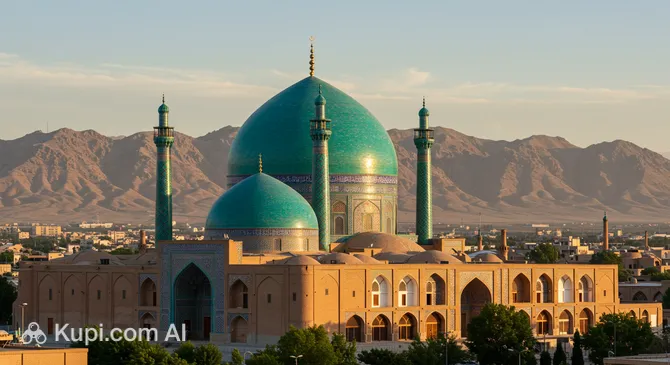
Nishapur is a true jewel of the East, nestled at the foot of the scenic Kopet Dag mountains in the Khorasan-Razavi province. Located just a hundred kilometers west of Mashhad, this city invites travelers to discover the many facets of hospitable Iran. Surrounded by contrasting landscapes of vast deserts and lush green gardens, Nishapur enchants visitors with its calm pace of life and unique atmosphere.

Nishapur. Illustration.
Source: Kupi.com AI

While the city is home to about 221,700 people today, it retains the grandeur of its past. The deep history of Nishapur stretches back centuries, recalling times when it served as a flourishing capital of Persia and a vital hub on ancient caravan routes. Today, it is something of an open-air museum where architectural monuments from various eras—from antiquity to modernism—are harmoniously integrated into the urban environment.

Unique experiences await tourists here: from visiting majestic ancient mausoleums to strolling through colorful, bustling bazaars and visiting modern art galleries. It is a city of poetry and inspiration, perfectly suited for those seeking the authentic beauty of the Orient. Be sure to walk along its shaded alleys, stop by a traditional teahouse, and let Nishapur become a highlight of your journey.

Weather Overview

Nishapur's climate is characterized by distinct seasonality, offering travelers completely different conditions depending on the time of year. Summer here is hot and arid: in July and August, there is almost no rain, and daytime temperatures often rise to 33°C. This is an ideal time for those who don't mind the heat and bright sun.

Winter brings a noticeable cooling. The coldest month is January, when the average temperature drops to 1.7°C, and nighttime frosts down to -3.5°C are possible. Spring in the region is mild and pleasant, though this period, especially March and April, sees the highest number of rainy days. Autumn pleases with comfortable coolness, especially in September and October, when the heat subsides but the cold has not yet set in.

When planning a trip, it's worth considering these contrasts. The current weather in Nishapur and the monthly forecast will help you choose the best dates for your visit. In general, expect a hot, sunny summer without precipitation and a fairly cool winter with occasional rain during the spring period.

Average monthly temperature

Average monthly precipitation

Interesting Facts

Beyond its main attractions, Nishapur holds many fascinating stories and cultural treasures that reveal themselves only to curious travelers. This ancient city, steeped in the spirit of poetry and craftsmanship, can surprise even the most seasoned tourists.

  • Birthplace of Omar Khayyam. Nishapur gave the world the great Persian poet and scientist. His mausoleum is not just a grave, but a masterpiece of 20th-century modernism. There is a touching legend that Khayyam predicted flowers would guard his peace in the spring. The prophecy came true: the mausoleum is surrounded by fruit orchards, and during the blooming season, the wind indeed showers the tombstone with white and pink petals.

  • World Capital of Turquoise. Since ancient times, the city has been famous for mining and processing this sky-blue stone. Nishapur turquoise is considered among the highest quality in the world, serving as a benchmark for color purity. Local masters possess unique cutting techniques, secrets of which are carefully passed down through generations.

  • Home of Mystics. The city is closely linked to another prominent Sufi poet—Fariduddin Attar. His shrine, located here, attracts thousands of pilgrims and lovers of Persian literature who wish to pay homage to the author of the famous "The Conference of the Birds."

  • Legacy of the Silk Road. Strolling through Nishapur, one can feel the atmosphere of ancient trade routes. Old caravanserais have been carefully restored and turned into cultural spaces, while life bustles in the local bazaars just as it did hundreds of years ago, with vendors trading aromatic spices, dried fruits, and distinctive ceramics.

How to Get There

When planning a trip to this ancient city, it is important to map out your route in advance, as there may not be direct flights to the city itself. You can find more about how to get to Nishapur, including various transport combinations, on a dedicated page; below, we will look at the main transport hubs nearby.

Nishapur does not have a civilian airport, so the main air gateway for tourists is the neighboring metropolis. The most convenient option is to fly into Mashhad International Airport (IATA: MHD), located in the city of Mashhad. This is a major aviation hub with high passenger traffic, situated just 76 km from your destination. The journey by taxi or intercity bus from the terminal to the center of Nishapur takes approximately 2 hours and 15 minutes.

Another option to consider is Ashgabat International Airport (IATA: ASB). It is located in the city of Ashgabat, about 200 km from Nishapur. However, keep in mind that the transfer from there will be significantly longer: the car trip will take approximately 5 hours and 20 minutes.

For convenience, here is a summary of the main airports:

AirportPassenger trafficDistance
Mashhad International Airport8.4 mln76 km
Ashgabat Airport1.3 mln201 km

If you prefer ground transport and plan to do part of the journey by rail, consider the location of the nearest stations. The list of available hubs includes the Sarakhs station, located in the town of the same name. This is not the closest option: the station is approximately 220 km from Nishapur. If you choose this route, be prepared for a long transfer by taxi or bus, which can take about 6 hours.

Below is information about the nearest railway station:

StationPassenger trafficDistance
Serkhas50 000220 km

Main Attractions

Nishapur is a city where poetry and history are intertwined in every stone. A great place to start exploring its cultural heritage is the Mausoleum of Omar Khayyam. This impressive memorial complex, set in a blooming garden, is the city's main symbol. Its unique architectural design, blending modern geometry with traditional Persian craftsmanship, symbolizes the multifaceted talent of the great poet and mathematician. Tourists come here to enjoy the peaceful atmosphere and read the famous rubaiyat inscribed on the monument's walls.

Another gem of the city is the Mausoleum of Attar, the resting place of the famous Sufi mystic and author of the poem "The Conference of the Birds." The building, with its elegant turquoise dome built during the Timurid era, fascinates with its modest yet majestic beauty. This site holds a special energy, drawing pilgrims and lovers of Eastern philosophy who wish to pay their respects to the spiritual mentor of many generations.

In the immediate vicinity of Attar's tomb lies the Tomb of Kamal-ol-Molk, a prominent Iranian painter. The monument is notable for its bold architectural solution: overlapping arches create a complex geometric structure that blends harmoniously into the historical landscape. This site will be particularly interesting to art lovers and those who want to see a talented reinterpretation of traditional forms in a modern style.

History enthusiasts should head to the Shadiyakh archaeological zone. The ruins of this ancient city, once a flourishing capital, tell a tragic story of destruction and rebirth. Here, you can see the remains of palace complexes, ancient pavements, and fragments of unique ceramics that hint at the scale and wealth of medieval Iran before the Mongol invasion.

Local Cuisine

Nishapur's cuisine is a gastronomic mirror of the Khorasan region, where ancient traditions intertwine with the scents of saffron, rose water, and Eastern spices. A trip here is unimaginable without experiencing local culinary masterpieces, known for being hearty and rich in flavor. The main dish that every guest must try is Abgoosht (also known as Dizi)—a thick and nourishing meat soup with chickpeas, potatoes, and vegetables. It is traditionally served in clay pots: the broth is eaten first by soaking pieces of bread in it, while the solid ingredients are often mashed into a paste and eaten with crispy lavash and fresh herbs.

For a quick snack while walking around the city, Sambuseh is ideal. These savory, deep-fried pastries with spicy fillings are sold on almost every corner and are a staple of local street food. For those with a sweet tooth, Nishapur will seem like paradise: they make excellent halva, baklava, and delicate Persian delight here. Pistachios and the region's famous rose water add a special zest to the desserts.

Drink culture in Nishapur, as in all of Iran, revolves around tea. Fragrant hot cardamom tea is more than just a drink; it is a symbol of hospitality that accompanies any conversation. On hot days, refreshing sherbets and drinks based on herbal distillates are popular. It is important to remember that alcohol is strictly prohibited in the country, so restaurants and cafes will offer a wide range of non-alcoholic cocktails, juices, and the traditional yogurt drink—Doogh.

The city's gastronomic life bustles in colorful bazaars and cozy teahouses. Local markets are the best place to buy the freshest dried fruits and nuts that the province is famous for. An interesting feature of Nishapur table setting is the use of turquoise: local craftsmen often decorate tables with raw pieces of this semi-precious stone to emphasize the beauty of the served dishes. If you are lucky, you might catch one of the food festivals where local chefs demonstrate ancient recipes and treat guests to the region's best dishes.

Travel Tips

A trip to Nishapur is an immersion into the deep and unique culture of ancient Persia, so it's worth preparing in advance, taking local traditions and rules into account. To ensure your acquaintance with the birthplace of Omar Khayyam goes smoothly and leaves only pleasant memories, we have compiled a list of important recommendations.

  1. Clothing and Dress Code. In Iran, there are strict dress code rules at the state level. Women need to wear a headscarf (roosari) and a long tunic or coat (manto) that hides the figure down to mid-thigh, as well as trousers or jeans that cover the ankles. Men are prohibited from wearing shorts in public places—only long trousers are acceptable. Given the climate, choose clothes made of natural breathable fabrics (cotton, linen) in summer, and in winter, be sure to bring a warm jacket, as the desert climate means evenings can be cold.

  2. Transport and Getting Around. Public transport in the city is moderately developed, so the most convenient way for a tourist to get around is by taxi. We strongly recommend installing the local Snapp! app (similar to Uber)—this will save you from having to haggle and explain the address in Farsi. Renting a car without a driver in this country is difficult and not always practical due to the specific local driving style.

  3. Finances and Currency. International Visa and Mastercard cards do not work in the country. Bring your entire budget in cash in dollars or euros and change them at official exchange offices (Sarafi). Be careful with prices: the official currency is the rial, but "toman" (1 toman = 10 rials) is often used in speech and on price tags. Always clarify which unit the price is quoted in so you don't overpay tenfold.

  4. Health and Safety. Nishapur is a safe and peaceful city. Pharmacies (Darukhane) are common and marked with signs; many pharmacists understand basic English. Tap water is considered clean, but due to its unfamiliar mineral composition, it's better for tourists to drink bottled water. In summer, be sure to use sunscreen and wear a hat.

  5. Communication and Internet. To access familiar social networks and messengers, you will definitely need a pre-installed VPN, as many sites are blocked. Upon arrival, buy a local SIM card (operators Irancell or MCI); this can be done at the airport or mobile phone shops with a passport. Not everyone knows English, so download an offline translator for Persian (Farsi).

  6. Local Etiquette. Iranians are incredibly hospitable, but there is the concept of "Taarof"—a system of etiquette. If you are offered something for free (a taxi ride, a treat), it is customary to refuse at first. If the offer is repeated insistently 2-3 times, then you can agree. When greeting, men exchange handshakes, but a man should not be the first to extend his hand to a woman—wait until she takes the initiative, or simply nod with your hand over your heart.

  7. What to Avoid. Strictly avoid public displays of affection (PDA) like kissing and hugging between a man and a woman on the street. Also, remember the total ban on the import and consumption of alcohol—this is a criminal offense. Do not photograph government buildings, military sites, or police.

  8. Shopping Advice. Nishapur is the world capital of turquoise. If you plan to buy jewelry with this stone, do it here, at the local bazaar near the mausoleums. There is the largest selection, prices are lower than in other cities, and there's less risk of running into a fake, but don't forget to haggle—it's part of the culture.

Following these simple rules will open doors to the real world of Eastern hospitality. Nishapur locals are very welcoming to tourists who respect their traditions, so a smile and a couple of phrases in Persian, like "Salam" (Hello) or "Mamnun" (Thank you), will make your trip unforgettable.

Entertainment & Nightlife

Nightlife in Nishapur is fundamentally different from the European format of loud discos and bars. Iran has a strict prohibition on alcohol, and nightclubs in the Western sense do not exist here. However, this does not mean the city goes to sleep after sunset. On the contrary, evening is when the daytime heat fades, and locals take to the streets for "shab-nishini"—traditional evening gatherings. The atmosphere is filled with the aroma of tea, the sounds of Persian music, and leisurely conversations under the starlit sky.

The center of evening activity is the area around the Mausoleum of Omar Khayyam and its adjacent park. After dark, the complex is beautifully illuminated, creating a mystical and romantic setting. It is a favorite spot for both tourists and local youth. You might encounter people reciting poetry or families enjoying a picnic on the grass. The dress code is relatively relaxed but within Islamic norms: modest clothing covering the body is required even late in the evening.

Instead of bars, traditional teahouses (Chaykhaneh) play the leading role in socializing. These are authentic establishments where time seems to slow down. It is customary to sit on wide wooden platforms (takhts) covered with carpets and cushions. You will be served fragrant black tea with a set of accompaniments (saffron sugar crystals called "nabat," dates, and sweets) and often a hookah. Be sure to visit one of the teahouses in the city center or near the Historical Bazaar. The bazaar stays open until late evening, and its stalls selling turquoise, spices, and handicrafts look particularly vibrant under artificial lighting.

Dining at night is centered around traditional restaurants (Sofreh Khaneh). One of the most interesting places nearby is the "Wooden Village" (Dehkadeh Chubi). This unique complex features a mosque, a library, and restaurants built entirely of wood. In the evening, a fairytale atmosphere reigns, making it an excellent spot for a national-style dinner. Establishments along Jomhouri Boulevard are also popular, where you can try kebabs and fresh bread straight from the oven.

Regarding daytime entertainment before the evening sets in, Nishapur offers a rich cultural program. It is worth visiting the Nishapur Museum to see archaeological finds from ancient Khorasan or the Planetarium named after Omar Khayyam, which is especially symbolic in the city of the great astronomer. For family leisure, city parks with rides come to life closer to sunset.

In terms of safety, Nishapur is a very peaceful city. You can walk through the central streets and parks without worry, even late at night. The crime rate is low, and locals are always ready to help. For late-night travel, it is best to use official taxis or the Snapp! app. Public transport is rare at night, but taxis are inexpensive and available 24/7.

Parks & Museums

Nishapur wonderfully combines the arid landscapes of the foothills with the lush greenery of well-kept city gardens, offering tourists relaxation for both the mind and the soul. The city's cultural landscape is inextricably linked with nature: here, museums sit alongside shaded alleys, and historical monuments are surrounded by flowers, creating a unique atmosphere for leisurely walks and exploring the region's rich heritage.

When speaking of green zones, one cannot overlook the Garden of the Omar Khayyam Mausoleum. This is not just a memorial complex but a magnificent example of Persian garden art. The vast territory is planted with tall pines and fruit trees, which in spring are covered in a white-and-pink foam of blossoms. It is the perfect place to hide from the midday heat, enjoy the geometry of the landscape design, and find silence broken only by birdsong.

Nature lovers should head a bit further from the center to the Bar Waterfall, located in the valley of the same name in the Binalud foothills. This picturesque gorge with a mountain river and walnut groves is a popular picnic spot among locals. The fresh mountain air and coolness make it an excellent location for eco-tourism and light trekking, allowing you to see a completely different, green Iran.

A cultural immersion should begin with the Archaeological Museum of Nishapur. It is located near Khayyam's tomb and houses priceless artifacts found during excavations of the ancient city. The exhibition covers different eras, but the famous Nishapur ceramics and glassware dating from the 9th to 13th centuries attract special attention. These exhibits clearly demonstrate why the city was considered one of the most important art centers of the Islamic world.

Another landmark is the Khayyam Planetarium and Science Center. Given that Omar Khayyam was not only a poet but also an outstanding astronomer, this modern museum feels very much at home here. Visitors can learn about the achievements of Persian scientists in studying the starry sky and see ancient astronomical instruments. The planetarium building itself is architecturally interesting, resembling a celestial sphere.

The historical context of the city is complemented by the Shah Abbasi Caravanserai. This majestic Safavid-era structure once served as a refuge for traders on the Silk Road. Today, the restored complex is often used as a cultural space and ethnographic museum, where you can see household items and crafts from past centuries and feel the spirit of ancient trade.

For those seeking unusual experiences, the "Wooden Village" (Dehkadeh Chubi) will be a real discovery. This unique architectural complex, where absolutely all buildings—from houses to the mosque—are made of wood, is a rarity in Iranian architecture. A walk through this cozy place, smelling of wood and foliage, will give you a fairytale feeling and allow you to take perhaps the most original photos of your trip.

Getting Around

The public transport system in Nishapur is quite simple and conservative, which is typical for medium-sized Iranian cities. You won't find a metro, trams, or trolleybuses here. The main burden of passenger transport falls on city buses and an extensive network of taxis. For a tourist, this means navigating the city is not difficult, but you should prepare for the specifics of local transit in advance.

Buses are the most budget-friendly way to get around. The route network covers the main streets, connecting the city center with the outskirts, the railway station, and main attractions such as the Mausoleum of Omar Khayyam. An important feature every traveler in Iran should remember: buses have gender-segregated seating. Men usually occupy the front section, and women the rear. Even if you are traveling as a couple, you will likely have to sit separately.

The most convenient and popular mode of transport for city guests remains the taxi. There are two main types: "darbast" (closed door)—a classic private taxi that takes only you, and "savari" (shared taxi). Savaris run along specific routes, picking up passengers along the way until the car is full. This is very cheap and allows you to immerse yourself in the local atmosphere, but it requires knowing the route or being able to explain yourself to the driver.

A real lifesaver for tourists is the Snapp! mobile app—the local equivalent of Uber. it works perfectly in Nishapur, eliminating the language barrier and the need to haggle, as the price is fixed in advance. The interface is available in English, and payment can be made in cash to the driver at the end of the trip, which is extremely convenient in the absence of a local bank card.

The fare payment system in public transport for foreigners has its nuances. Buses often use special transport cards, but buying and topping them up for just a couple of trips can be problematic. Drivers often accept cash, but it's better to have small bills on you. Fares are very low: a bus trip costs pennies in foreign currency, and a taxi around the city rarely costs more than a couple of dollars.

Alternative modes of transport, such as car-sharing or organized bike rentals, are not yet developed in Nishapur. However, the central part of the city is quite compact and rich in shaded alleys, so many distances are pleasant to cover on foot. This is the best way to see the architecture and peek into local shops without missing interesting details.

Transport usually starts early in the morning, around 6:00 AM, and finishes closer to 9:00 PM or 10:00 PM. Later than that, you shouldn't count on buses, and a taxi will be the only option. When planning trips, always have cash rials with you (and it's better to calculate in "tomans," as the locals do), because international Visa and Mastercard cards do not work here.

Accommodation

Accommodation in Nishapur is an opportunity to experience traditional Iranian hospitality without unnecessary fanfare. The city is not overflowing with five-star global chains; the bulk of the accommodation consists of cozy mid-range hotels, budget guesthouses (mehmanpazirs), and apart-hotels. Here, you are more likely to find home-like comfort and an authentic atmosphere than standardized high-level European service.

When choosing an area, you should focus on the purpose of your visit. Most tourists prefer to stay in the city center, around Imam Khomeini Street. This is convenient for those who want to be in the heart of the action, close to the main bazaar, shops, and banks. An alternative is to choose a hotel closer to the tourist zone in the southeast, near the mausoleums of Omar Khayyam and Attar. This area is quieter, greener, and conducive to a peaceful holiday away from the city bustle.

In recent years, the format of eco-lodges and traditional guesthouses has been gaining popularity in the region, as it has throughout Iran. These are often restored old buildings with courtyards, where rooms are decorated in a national style using carpets and handicrafts. Staying in such a place allows for a deeper immersion into the culture, and the hosts often offer guests homemade breakfasts with local products.

Booking Tip: Nishapur is a popular destination for domestic tourism, especially during the Iranian New Year (Nowruz, late March to early April) and the garden blooming season. During these times, demand for housing spikes, and the best options are booked weeks in advance. It is strongly recommended to book your room well in advance if your trip falls during the spring months.

The price range in the city can be described as budget and mid-range. Accommodation prices here are significantly lower than in the capital, Tehran, or touristy Isfahan. It is important to remember that familiar international booking aggregators practically do not work in the country or show outdated information. It is most reliable to find housing through specialized agencies working with Iran or by contacting hotels directly. Payment on-site is usually made only in cash in the local currency.

Nearby Cities

For those looking to explore the surroundings, Nishapur serves as an excellent jumping-off point for day trips to several interesting nearby locations. The city's location in the Khorasan-Razavi province makes it easy to reach significant cultural and historical centers in the region.

The undisputed leader for a short trip is Mashhad—the second-largest city in Iran and its spiritual heart. It is very close, and a trip there will allow you to see the famous architectural complex of the Imam Reza Shrine, which is one of the largest and most beautiful in the Islamic world. Additionally, Mashhad is famous for its massive bazaars where you can buy the best saffron and carpets. If you are interested in the history of the Silk Road, head west to Sabzevar. This city is known for its historical heritage, including the ancient Jameh Mosque and the solitary brick Khosrowgerd Minaret, which served as a beacon for caravans in the desert.

CityPopulationDistance
Kharv-e Sofla13 53521 km
Shandiz13 98749 km
Torqabeh20 99854 km
Chenaran53 87955 km
Nazerabad34 23767 km

These nearby destinations offer a deeper insight into the diverse culture, traditions, and landscapes of northeastern Iran, complementing the experience of visiting Nishapur itself.

Shopping & Souvenirs

Shopping in Nishapur is a fascinating journey into the world of Eastern traditions, where instead of the glossy windows of fashion boutiques, you will be met by the charm of old shops and the aroma of spices. This city doesn't claim to be a fashion capital, but it offers something more valuable—authenticity. The main feature of local trade is its specialization in crafts: it is here that you can find the best examples of what Iran is famous for, from jewelry to unique sweets. The buying process here is leisurely, often accompanied by a conversation with the seller and the essential ritual of haggling.

The main commercial life of the city is concentrated on the central streets. The main artery for shopping enthusiasts is Imam Khomeini Street. Here, in the shade of plane trees, are many shops selling clothes, shoes, fabrics, and household goods. This is where locals do their daily shopping and where tourists can find quality local products at very affordable prices. In the evening, the street comes alive, turning into a popular place for a promenade.

Although Nishapur is a city with an ancient history, it also has modern shopping spaces. You won't find large Western-style malls here, but it's worth checking out shopping passages like "Firouzeh" (Firouzeh Passage). These are covered galleries with shops selling modern clothing, cosmetics, and electronics. They offer more comfortable conditions for shopping on hot days thanks to air conditioning and modern infrastructure.

The heart of trade and the main attraction for tourists remains the Historical Bazaar of Nishapur (Bazar-e Sarpushideh). This is the oldest covered market in the Khorasan province, which has preserved the atmosphere of past centuries. A walk under its brick vaults is a true adventure. You can buy literally everything here: from handmade Persian carpets to rare medicinal herbs. Special attention should be paid to the spice rows, where the scent of saffron and cardamom is intoxicating.

The choice of souvenirs in Nishapur is dictated by its history and natural wealth. Here is a list of what is definitely worth bringing back:

  • Turquoise (Firouzeh). Nishapur is called the world capital of turquoise. The local stone is considered the standard of quality. At the bazaar and in specialized jewelry shops, you can buy both raw stones and elegant rings, pendants, or prayer beads.
  • Rhubarb Products. The city is famous for its rhubarb (rivas). Be sure to buy rhubarb syrup for making refreshing drinks or local jam.
  • Saffron. Khorasan province is the world's leading supplier of "red gold." Here, saffron is at its freshest and costs significantly less than in Europe.
  • Ceramics. Replicas of ancient Nishapur ceramics make for excellent home decor.

When planning a shopping trip, take the local working hours into account. Most shops and markets open around 9:00 AM but close from 1:00 PM to 4:00 PM for a long siesta. Evening trade continues until 9:00 PM or 10:00 PM. On Fridays (the day off in Iran), many shops, especially in the bazaar, may be closed or operate on a reduced schedule.

As for payment, be prepared for the fact that international Visa and Mastercard cards do not work here. All shops, from small stalls to shopping centers, accept only cash rials or local bank cards. Prices are often quoted in "tomans" (1 toman = 10 rials), so always clarify the currency before paying. Tax Free systems (VAT refund) in Nishapur, as in most of the country, do not effectively exist for tourists, so you shouldn't count on a tax refund upon departure.

Reached the end of the page?

That means the route is fully explored