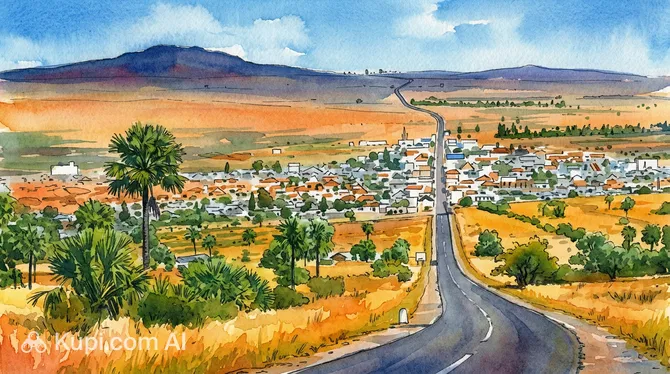
Ihosy is a colorful and strategically important city located in the heart of the Ihorombe region in Madagascar. As the administrative center of the province, it serves as a vital transport hub connecting the central highlands with the southern and western parts of the island. The city's atmosphere is steeped in the typical Madagascan provincial way of life: life is bustling in local markets and trading posts, and the city's population, exceeding 280,000 people, creates an energetic rhythm of daily existence.
Ihosy. Illustration.
Source: Kupi.com AI
The city is spread across a picturesque plateau, which provides a more moderate and pleasant climate compared to coastal regions. The history and heritage of Ihosy are closely linked to the development of the island's trade routes, transforming it from a small settlement into a key point on the country's map. Despite its functional role, the city possesses a special charm that allows travelers to catch a glimpse of the authentic, non-touristic life of the island.
For most tourists, Ihosy becomes the "gateway" to amazing natural treasures, primarily the famous Isalo National Park. The city offers travelers all the necessary basic infrastructure to prepare for further adventures. Visiting this place is a wonderful opportunity to experience the hospitality of the local people and see Madagascar as it truly is.
Weather Overview
The weather in Ihosy is determined by its location in the central part of Madagascar on an elevated plateau. A tropical climate prevails here, with a clear division into seasons. Expect a warm, and at times hot, summer with frequent tropical showers and a noticeably cooler, dry winter when nighttime temperatures can drop significantly.
The warmest period is December and January, when average daytime temperatures reach 29°C — 30°C, and humidity increases due to the rainy season. During this time, the city's climate is characterized by heavy, but often brief, precipitation. In contrast, July and August are the coolest months with an average minimum of around 11°C, which makes evenings and early morning hours quite invigorating.
The optimal time to visit is considered the dry season from April to October. During these months, rainfall is minimal and the sky often remains clear, creating ideal conditions for trekking in nearby national parks. Stable weather and comfortable daytime temperatures of around 22°C — 26°C allow you to fully enjoy the beauty of Madagascar's wildlife.
Average monthly temperature
Average monthly precipitation
Interesting Facts
Island Reserve: Madagascar, where Ihosy is located, separated from India about 88 million years ago. Due to this isolation, more than 90% of the island's flora and fauna are endemic and are not found anywhere else on the planet.
Sapphire Capital: The region around Ihosy is known for its rich deposits of precious stones. Not only sapphires and rubies are mined here, but also emeralds, tourmalines, and rare alexandrites.
Master of Lemurs: In this part of the island, you can find the fossa — Madagascar's largest predator, which looks like a cross between a cat and a dog and is the lemur's only natural enemy.
Land of the Bara People:Ihosy is considered the cultural center of the Bara ethnic group, known for their traditions of cattle breeding and reverence for zebu, which is reflected in the local way of life.
Logistics Hub: Despite its modest size, the city is a critical point on the RN7 highway — the island's main transport artery connecting the capital with the southern coast.
How to Get There
The transport accessibility of Ihosy makes it a convenient point on the route of any traveler exploring Madagascar. The city is a major intersection on the main national highway RN7, which stretches from the capital Antananarivo to the southern port of Toliara. Traveling along this road allows you to see the changing natural zones of the island, though it's worth noting that the road conditions can vary, especially during periods of heavy rainfall.
For those who prefer faster ways of travel, the city has its own Ihosy Airport (IATA: IHO). Small domestic flights connect it with the island's key cities, significantly reducing travel time compared to road transport. The distance to nearby settlements is short, allowing for easy movement around the region. Detailed information on routes and travel times can be found in the how to get to Ihosy section.
Railway service is not developed in this part of the island, so the main alternatives to aviation remain buses and private cars. Traveling by "taxi-brousse" (local minibuses) is the most budget-friendly but patience-requiring option. For more comfortable travel, tourists often choose to rent a 4x4 with a driver, which allows for stops at scenic spots on the way to the national parks.
Main Attractions
The main gem and the primary reason travelers head to the Ihosy region is the magnificent Isalo National Park. This natural reserve captures the imagination with its monumental sandstone canyons, deep gorges, and whimsical rock formations that rise sharply above the endless plains. Here, you can encounter unique lemurs, swim in natural pools with crystal-clear water, and see rare endemic plants.
The city of Ihosy itself acts as an important logistical center. Although there are no classic architectural monuments here, tourists should visit the local market. This is a lively and noisy place where you can feel the authentic flavor of the region, see folk crafts, and observe the daily exchange of goods between the local Bara people.
For those interested in administrative life and the typical layout of Madagascan cities, it is interesting to walk past the government buildings in the center. They reflect the functional status of Ihosy as a regional center. However, the true magic of these places is hidden in the surrounding landscapes and wildlife, for which the city serves as the perfect starting point.
Local Cuisine
The gastronomic identity of Ihosy is inextricably linked to the general traditions of Madagascar, where the basis of any meal is rice (vary). In local establishments, known here as "hotely," rice is served in large quantities with various additions of meat, fish, or vegetables. You should definitely try the national dish romazava — a hearty meat stew with local herbs and greens, which has a unique spicy flavor.
A special place in the diet of the region's inhabitants is held by zebu meat. In Ihosy, it is prepared in many different ways: from simple grilled steaks to fragrant stews. The region's cuisine has been influenced by French culinary traditions, so fresh baguettes can often be found in markets and small shops. Popular drinks include rano-vola — rice water, which quenches thirst perfectly, as well as local tea and coffee grown on the island.
The food culture in the city is quite simple: locals prefer to dine at markets or street eateries where the food is always fresh and affordable. Tourists will find it interesting to visit the market to see exotic fruits and spices. It is important to remember that it is not customary to leave tips in provincial Madagascan restaurants, and payment is usually made in cash in the local currency. The city's gastronomic scene is honest and hearty home-style cooking, devoid of frills but full of the island's authentic flavors.
Travel Tips
A trip to Ihosy promises to be a vibrant adventure, and to ensure it goes as smoothly as possible, we have prepared some practical tips from experienced travelers.
Clothing and Essentials: When packing your suitcase, keep in mind that the city is located on a plateau. It's hot during the day, but evenings can be cool, so be sure to bring a warm sweater or light jacket. Also, don't forget comfortable shoes for walking on uneven terrain.
Transport: Within the city, it's best to move around by taxi. For trips to national parks, we recommend renting a 4x4 with a driver — this is the most reliable way to travel on local roads.
Finances: The main currency is the Malagasy Ariary. Cards are accepted extremely rarely, so always carry a sufficient supply of cash with you. It is best to exchange currency in advance in major cities or at banks in Ihosy.
Health: There are pharmacies in the city with a basic set of medicines, but it's better to bring specific medications with you. Drink only bottled water and use insect repellents.
Communication: The official languages are Malagasy and French. English is not widely spoken, so learn a few basic phrases in French or the local dialect; it will be very helpful in communicating.
Local Etiquette: Malagasy people are very friendly. It's customary to say hello when entering an establishment. Remember the concept of "fady" (local taboos) — if a guide says something shouldn't be done, be sure to listen.
What to Avoid: You shouldn't display expensive jewelry or technology in crowded places and avoid walking along unlit streets after sunset.
Seasonality: Plan your visit for the dry season (from April to October). During this time, the roads are most passable, and the weather is ideal for mountain hiking.
May your journey to this amazing corner of Madagascar be filled only with positive emotions and incredible discoveries!
Entertainment & Nightlife
Entertainment in Ihosy is quiet and relaxed, typical of the Madagascan provinces. There are no large night clubs or noisy discos, and the main leisure activities for locals and tourists are centered in small, cozy bars and cafes. These establishments become centers of attraction in the evenings, where you can try local beer, chat with travelers from all over the world, and listen to Madagascan music in a casual atmosphere.
During the day, the main "entertainment" is found outside the city limits. Tourists use the daylight hours for active recreation in the national parks, engaging in trekking and lemur photo-hunting. In Ihosy itself, you can visit local markets, which are interesting in their own way for their bustle and unusual goods, while a walk through the central streets allows you to get acquainted with the daily life of the local population.
To ensure comfort and safety in the evening, it is recommended to use taxi services, which can be easily found in the city center. Although Ihosy is considered a fairly safe place, tourists are advised to avoid walking in unlit outskirts at night. The best way to spend an evening here is to enjoy a leisurely dinner at a hotel restaurant, discussing the impressions of the canyons and wildlife seen during the day.
Parks & Museums
In Ihosy itself, you won't find classic art galleries or large-scale city parks, but that doesn't mean there is nothing to see. The role of an open-air "museum" is played here by nature itself and the way of life of the local population. The city's greenery is mainly represented by private gardens and natural vegetation on the outskirts, where you can see trees and shrubs typical of the island, adapted to the climate of the high plateau.
The main natural attraction that makes it worth visiting this region remains Isalo National Park. Located in the immediate vicinity of the city, it is a colossal territory with unique geological formations. It is a true museum of natural history, where rocks and gorges keep traces of centuries-old erosion, and the park's flora and fauna are living exhibits that evolved in total isolation.
For those seeking cultural enlightenment, a visit to the local markets in Ihosy can be an alternative to an ethnographic museum. Here you can see traditional craft products, jewelry, and household items of the Bara people, which tell the history and traditions of the region better than any guide. Madagascar's natural wealth, where more than forty percent of the territory is covered by forests, is evident here in every landscape beyond the city limits.
Getting Around
Public transport in Ihosy is a vivid example of how travel is organized in provincial Madagascar. The main means of transport here are taxi-brousse (minibuses) that connect the city with other settlements on the island. This is the most affordable way to travel for locals and adventurous tourists, though you should be prepared for the fact that vehicles are often overcrowded and schedules are quite loose — transport departs as it fills up.
Within the city itself, the most convenient and fastest way to move around are local taxis. They are ideal for trips between the hotel, market, and transport terminals. Prices for trips are usually fixed or negotiable, so it's better to clarify the cost in advance. For more comfortable and reliable trips to distant attractions, such as Isalo National Park, many travelers prefer to hire a private driver with a 4x4.
The transport payment system in Ihosy is exclusively cash, in local currency (Ariary). Tickets for taxi-brousse are purchased directly at the stations ("gares") before departure. Although the infrastructure may seem unfamiliar, it is quite functional. The main tip for tourists: plan your trips for the first half of the day, as transport activity decreases significantly by evening, and road conditions require the driver's increased attention.
Accommodation
Accommodation options in Ihosy are primarily geared towards travelers in transit to Isalo National Park or the south of the island. The hotel stock consists of small private hotels and guesthouses that offer a basic level of comfort at affordable prices. You will rarely find luxury chain hotels here, but you can easily find cozy family-run pensions with an authentic atmosphere.
The most convenient option for tourists is staying in the central part of the city or along the main road, which provides quick access to transport hubs and local cafes. Many guesthouses are decorated in a traditional style using natural materials, and their owners are often ready to help with organizing excursions and transfers. For those looking for a higher level of service, it is worth looking at specialized lodges located closer to the borders of the national parks.
Given that Ihosy is a key transit point, during the peak tourist season (from April to October), rooms in the best guesthouses can fill up quickly. It is recommended to book accommodation in advance to ensure a comfortable rest after a long journey. Accommodation prices here remain quite democratic, making the city a great option for budget planning a trip around Madagascar.
Nearby Cities
Ihosy serves as an excellent starting point for exploring the picturesque surroundings and neighboring settlements, each with its own unique character. Very nearby is the small settlement of Ihorombe, which gives its name to the entire region and allows you to see the life of traditional Madagascan villages. Trips to such places help to better understand the culture of the Bara people and enjoy the endless views of the plateau.
For those planning short excursions, interesting destinations include Zazafotsy and Ambatolahi. These small towns are located along the main road arteries and offer travelers the opportunity to take a break, enjoy the local scenery, and visit authentic markets. Longer trips can lead you to Jangani or Antambohobe, opening up even more facets of central Madagascar.
City
Population
Distance
Ihorombe
13 000
24 km
Zazafotsy
14 062
31 km
Ambatolahy
17 482
32 km
Jangany
10 000
61 km
Antambohobe
9 000
67 km
Exploring the nearby territories allows you to see the real, non-touristic Madagascar. We recommend not limiting yourself to the city alone, but spending time on trips to natural monuments and neighboring towns to fully appreciate the scale and beauty of this amazing island.
Shopping & Souvenirs
Shopping in Ihosy is first and foremost an introduction to the vibrant local markets, which are the heart of city commerce. There are no huge, glittering shopping malls here, but there are authentic trading rows where life is in full swing. The main focus of tourists is drawn to folk craft products: woven baskets, raffia mats, and traditional Madagascan "lamba" fabrics, which will serve as a great reminder of the trip.
The region is especially famous for its precious and semi-precious stones. In local markets and small shops, you can find sapphires, tourmalines, and amethysts mined in nearby mines. However, when purchasing such souvenirs, you should be cautious: it is better to go to specialized stores that can provide export documents, and always check the authenticity of the goods to avoid disappointment.
For daily needs, small grocery shops and pharmacies operate in the city. Shops usually open early in the morning and close at dusk, with a possible siesta break in the middle of the day. Payment is accepted everywhere in cash Ariary, so tourists are recommended to always carry the necessary amount of money, as the possibility of paying by card in provincial Ihosy is a rare occurrence.