Support

Mulege

About

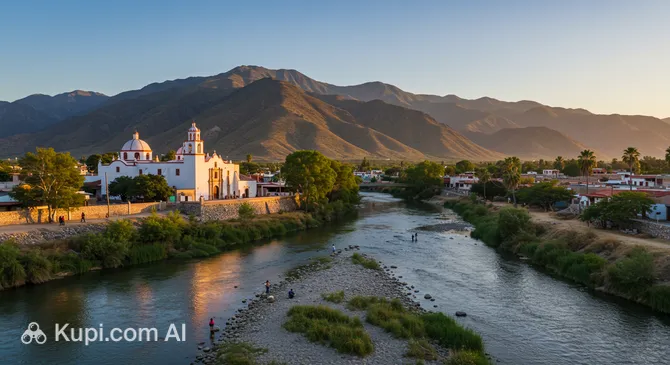
Mulegé is a picturesque oasis hidden among the rugged desert landscapes of the state of Baja California Sur. Unlike many other arid settlements in the region, this town welcomes travelers with dense groves of date palms and the tranquil flow of the river of the same name, which empties into the Sea of Cortez. If you are planning to visit Mexico in search of an authentic atmosphere and natural beauty, this place will be a true discovery for you.

The rich history of Mulegé has left a notable mark on the town's architectural appearance. The main symbol of the past is the Mission Santa Rosalía de Mulegé, founded by Jesuits in the early 18th century; this massive stone structure stands on a hill, offering a magnificent view of the valley. Another curious site is the building of the former prison, now converted into a museum. It was known as the "prison without doors," as prisoners were allowed to go out freely during the day to work, returning only at night.

Mulege. Illustration.
Source: Kupi.com AI

The town also serves as an excellent starting point for exploring the famous Bahía Concepción, located very nearby. This spot is famous for its idyllic beaches with white sand and incredibly clear turquoise water, perfect for snorkeling, kayaking, and observing marine life. The mild climate and the friendliness of the locals make Mulegé a wonderful destination for those wanting to escape the hustle and bustle of the city and enjoy a relaxed pace of life.

Weather Overview

The climate in this region is desert and arid, which guarantees an abundance of sunny days almost year-round. Expect sweltering summers with high temperatures and mild, comfortable winters with minimal precipitation. Due to its location in the state of Baja California Sur, extreme cold is non-existent here, making the town attractive for winter tourism.

From December to February, the weather is most favorable for long walks: daytime maximums are a comfortable +22...+23°C, though nights can be cool (around +12°C). Spring brings gradual warming, and by May the air heats up to +31°C. Precipitation during this period is practically absent: from March to May, statistics record 0 rainy days.

Summer in Mulegé is a time of true heat. In July and August, the average temperature stays around +31°C, while daytime peaks often exceed +36°C. This is the period when town life centers around the water. Formally, the rainy season occurs at the end of summer and beginning of autumn (August-September), when up to 6 wet days per month are recorded, though the volume of precipitation remains insignificant (1–2 mm). To choose the best time for your visit, we recommend checking the detailed weather in Mulegé by month.

Average monthly temperature

Average monthly precipitation

Interesting Facts

Behind the relaxed atmosphere of this oasis lie many fascinating details. The history of Mulegé is full of unexpected turns—from heroic battles to unique natural phenomena that set this town apart from its neighbors.

  • A descriptive name. The town's name originates from the language of the indigenous Cochimí people and is poetically translated as "Great Ravine of the White Mouth" (Cañada de la Boca Blanca). This is a precise description of the local landscape: the mouth of the river, where fresh water meets the sea, is surrounded by light limestone cliffs that resemble an open mouth.

  • Heroic title. Officially, the town is called Heroica Mulegé ("Heroic Mulegé"). This title was bestowed in honor of the events of the Mexican-American War. In October 1847, local residents and a small garrison led by Captain Manuel Pineda managed to repel an attack by superior U.S. Navy forces, defending the territory's sovereignty.

  • Life-giving river. The Mulegé River is one of the few in the state of Baja California Sur that does not dry up year-round. Unlike seasonal watercourses that fill only during rain, it constantly feeds the lush oasis. It is thanks to this fresh water that thousands of date palms can grow here, becoming the green trademark of the town in the middle of the desert.

  • Jesuit legacy. In addition to the famous mission, Jesuit monks left behind an outstanding example of engineering—an 18th-century stone dam. Remarkably, this hydraulic structure is still functioning today, protecting the palm groves from flooding and directing water into irrigation channels.

How to Get There

When planning a trip to this picturesque oasis in Baja California Sur, it's wise to think through your route in advance, as the town is far from bustling metropolises. You can find out more about how to get to Mulegé by exploring all possible options, but the most popular way remains flying into the nearest major transport hubs followed by a trip by car or bus.

Mulegé itself does not have its own airport, so the best solution is a flight to Loreto Airport (LTO). This is the most convenient option, as the airfield is located just 118 km south of your destination. The journey by taxi or rental car along the scenic highway will take approximately 1.5 to 2.5 hours. Despite its status as a small regional hub, it regularly handles both domestic and international flights.

Another option is to use a larger hub, such as General Pesqueira García Airport (HMO) in the city of Hermosillo. This is an international airport with high passenger traffic, located about 261 km from Mulegé in a straight line. However, the geography is important: Hermosillo is on the mainland of Mexico, across the Gulf of California. Choosing this route, be prepared for complex logistics involving a ferry crossing or an additional flight with local airlines, as there is no direct land road across the gulf.

For convenience, here is a summary of the main airports:

AirportPassenger trafficDistance
Loreto Airport169 228118 km
Ciudad Obregon Airport438 717220 km
Gen Pesqueira Garcia Airport2.2 mln261 km

Main Attractions

Mulegé is a real treasure trove for travelers who appreciate a combination of rich history and untouched nature. This small town and its surroundings contain unique sites that offer a glimpse into the region's past and allow you to enjoy the beauty of the Sea of Cortez coast. Here are the places that are definitely worth including in your trip itinerary.

The undisputed landmark of the town is the Mission Santa Rosalía de Mulegé. Founded by Jesuits in the early 18th century, this stone church is perfectly preserved to this day. Tourists are drawn here not only by the austere architecture of the colonial era but also by the mission's location: it stands on an elevation that offers perhaps the best panoramic view of the green date palm oasis and the riverbed flowing into the bay. It is an ideal spot for peaceful walks and sunset photography.

Another iconic attraction is the Mulegé History Museum, located in the building of the former territorial prison. This place is steeped in legend thanks to the unique detention regime that existed here in the past: prisoners were allowed to leave their cells freely during the day to work and spend time with their families, returning only to sleep. Today, within the walls of the "prison without doors," there is an interesting collection of artifacts telling the story of the local residents' lives, mining history, and indigenous cultures.

For lovers of beach vacations and water sports, Bahía Concepción (Conception Bay) is a major draw. Located just a few kilometers south of the town, this bay is famous for its incredibly beautiful coves, such as Playa Santispac or Playa El Requesón. Shallow waters, warm turquoise sea, and white sand make this place a paradise for snorkeling, kayaking, and camping. Here, you can see various marine inhabitants and enjoy the silence far from civilization.

If you are ready for a small adventure, it is worth taking an excursion to the La Trinidad cave paintings. These ancient images, hidden in the caves of the Sierra de Guadalupe mountain range, were created by indigenous people long before the arrival of the Spaniards. The journey to the caves usually requires a guide and some physical fitness, but the chance to touch thousand-year-old history and see mysterious petroglyphs with your own eyes is definitely worth it.

Local Cuisine

Mulegé's gastronomic scene is a bright reflection of the town's geography: here, the generous bounties of the Sea of Cortez meet the fertility of a desert oasis. The region's cuisine is characterized by the freshness of ingredients and simplicity of preparation, allowing you to enjoy the true taste of the products. For tourists, it's an opportunity to try authentic Baja California dishes in a relaxed, almost homey atmosphere.

The main delicacy that every guest must try is chocolate clams (Almejas Chocolatas). They got their name not from their taste, but from the rich brown color of their shells. They are served fresh with lime and hot sauce, baked with cheese and garlic, or prepared in the traditional "tatemado" way—buried in pebbles with a fire made from dry shrubs on top. Another trademark of local cuisine is the classic battered fish tacos, which are made here from the freshest catch of the day, complemented by cabbage salad and salsa.

Due to its oasis status, Mulegé is famous for its dates. Local residents use this sweet fruit in many variations: from fresh harvests to jams and baked goods. Be sure to find local date bread (pan de dátil) or try a date milkshake—it's a filling and incredibly delicious dessert, perfect for restoring energy after walks in the heat.

Regarding drinks, classic Mexican culture prevails here. On a hot day, there's nothing better than an ice-cold Margarita or a local beer (cerveza), often served as a "michelada"—with lime juice, sauces, and spices. If you prefer non-alcoholic options, look for aguas frescas—refreshing drinks based on hibiscus (jamaica), rice (horchata), or seasonal fruits, sold everywhere.

Dining culture in Mulegé is devoid of pretension. There are few expensive restaurants with dress codes; instead, life buzzes in small family-run establishments and under palapa canopies on the banks of the river or the sea. Locals and tourists often eat side-by-side in simple taquerias, where the main things are the taste of the food and the friendliness of the hosts. Dinner in such a place overlooking the sunset over the palm grove will become one of the warmest memories of your trip.

Travel Tips

Mulegé is a place where time flows in its own special, measured rhythm, and to make your trip as comfortable as possible, it's worth considering a few important nuances. We have prepared a list of practical recommendations to help you enjoy your holiday in this picturesque oasis without unnecessary organizational hassles.

  1. Clothing and Gear. Given the desert climate, prioritize light, breathable clothing made of natural fabrics in light colors. The sun here is very active, so a wide-brimmed hat and sunglasses are essential. For winter evenings (December-February), bring a fleece jacket or windbreaker, as temperature drops are noticeable. If you plan to visit the Santa Rosalía Mission, follow a modest dress code. Water shoes will also be useful for a comfortable entry into the water on wild beaches.
  2. Transport. Public transport within the town is poorly developed, and taxi apps (like Uber) practically don't work here. To fully experience the region and visit the famous beaches of Bahía Concepción, car rental is highly recommended. This will give you freedom of movement and the chance to explore hidden coves that buses don't reach.
  3. Finances. While some tourist spots may accept dollars, the exchange rate will be extremely unfavorable, so always carry Mexican pesos with you. There are few ATMs in Mulegé, and they are often empty or out of order, so a cash reserve is your main safety net. Cards are not accepted everywhere, especially in small family cafes. It is customary to leave a tip of 10–15% of the bill.
  4. Health and Safety. Mulegé is a quiet and safe town, but basic precautions are necessary: do not leave valuables in plain sight in the car. The main health rule is to drink only bottled water; even for brushing teeth, it's better to use it to avoid stomach upsets. There are pharmacies in town, but 24-hour ones are hard to find, so pack a basic travel first-aid kit in advance.
  5. Communication and Language. The main language of communication is Spanish. In hotels, staff may speak English, but in shops and at gas stations, knowing basic phrases ("Hola", "Gracias", "Cuánto cuesta") will be very useful and will endear you to the locals. Wi-Fi is available in most guesthouses, but the speed is often slow. For a reliable connection, it's better to purchase a local SIM card (Telcel has the best coverage).
  6. Local Etiquette. Residents of Baja California Sur are very friendly. When entering any establishment, it is customary to greet the staff and those present. A relaxed atmosphere prevails here, and no one is in a hurry, so show patience if restaurant service seems slow—this is part of the local flavor called "mañana time."
  7. What to Avoid. It is strongly recommended not to drive on highways at night. Country roads are often unlit, and livestock (cows, donkeys) may wander onto the road, posing a serious danger to drivers. Plan all travel between towns for daylight hours only.
  8. Oasis Feature. Unlike the dry desert around it, Mulegé sits on a river and is surrounded by greenery. Due to the presence of fresh water, there can be mosquitoes and midges, especially at dusk. Be sure to bring a quality repellent so that nothing distracts you from evening walks under the palms.

By following these simple tips, you can avoid minor troubles and fully immerse yourself in the charm of "Heroic Mulegé." May your journey be filled with bright colors, the taste of sweet dates, and the cool turquoise waters of the Sea of Cortez!

Entertainment & Nightlife

Nightlife in Mulegé is drastically different from the noisy parties of major resorts. Here, you won't find neon signs, deafening discos, or multi-story clubs. Instead, the town offers a cozy, relaxed setting where evening entertainment centers around socializing, delicious food, and stargazing. It is an ideal place for those who want to take a break from the hustle and bustle and enjoy the tranquility.

The center of evening activity is the area around the main square and the river embankment. Life here winds down quite early: most establishments close by 10:00 PM – 11:00 PM, although on weekends the fun can last until midnight. The crowd in bars and restaurants is very diverse: locals, American and Canadian expats, and road trippers heading to the south of the peninsula. The dress code everywhere is informal—shorts and sandals are appropriate almost everywhere.

Despite the town's modest size, there are several iconic spots to visit in the evening:

  • Hotel Serenidad. A legendary location known throughout Baja California. On Saturdays, they traditionally hold Pig Roast parties that attract many guests. The hotel bar has an authentic atmosphere of old Mexico, often featuring live mariachi music, and in the courtyard, you can get cozy by the fireplace with a cocktail.
  • Los Equipales. A popular second-floor restaurant and bar with a panoramic view. People come here for excellent drinks, especially the signature Margarita, and the chance to admire the town from above. It's a wonderful spot to watch the sunset and chat with other travelers in a laid-back setting.
  • Mulegé Brewing Company. A must-stop for craft beer enthusiasts. This small brewery offers a decent selection of local brews and delicious pizza. The atmosphere here is more youthful and modern compared to traditional Mexican cantinas.

In terms of safety, Mulegé is considered a quiet town, and evening strolls through the center are quite comfortable. However, keep in mind that the streets are dimly lit and sidewalks are uneven in places, so having a flashlight (at least on your phone) is a good idea. Taxi services at night are irregular, and apps like Uber are not available here. If you plan on dining at a remote restaurant, arrange a transfer with the staff in advance or ask them to call a car for your return to the hotel.

Prices in Mulegé establishments are pleasantly surprising with their affordability. The average bill for dinner with drinks is quite moderate. It is important to remember that many bars and restaurants only accept cash pesos, so make sure to withdraw money in advance, as ATMs may be unavailable.

Daytime leisure in the town is primarily cultural, historical, and nature-based. During daylight hours, visitors go to the museum in the former prison building, walk to the historic Mission on the hill, or head to the beaches of Bahía Concepción. Mulegé does not offer amusement parks or shopping malls, focusing instead on ecotourism and immersion in the authentic history of the region.

Parks & Museums

The cultural and natural landscape of this town is inextricably linked to its unique geographical location. Unlike metropolises with huge museum complexes, Mulegé offers an intimate acquaintance with history surrounded by living nature. Here, green zones are not man-made squares but natural oases, and museums tell stories that seem like the plot of an adventure novel.

The main natural attraction and "green heart" of the city is the Mulegé River Oasis (El Estero). This place resembles a tropical garden that miraculously appeared in the middle of the desert. The riverbanks are densely overgrown with thousands of date palms, providing life-saving shade even on the hottest days. A walk along the river mouth to the Sea of Cortez offers encounters with many birds: herons, pelicans, and cormorants nest here. It is an ideal area for peaceful relaxation, kayaking, and wildlife watching within the town limits.

While not formally a city park, the coast of Bahía Concepción serves as the main open-air recreational space. Located south of the town, this string of bays with mangroves and white sand is a protected natural area. Tourists come here not only for beach relaxation but also to enjoy untouched landscapes where desert cacti descend directly to the turquoise water.

Among cultural sites, the Mulegé History Museum (Museo de Mulegé) takes center stage, located in the building of the legendary "prison without doors." The museum's exhibition immerses visitors in the life of past centuries: here you can see archaeological finds of indigenous peoples, old miners' tools, and archival photographs. Of particular interest is the architecture of the building itself and the preserved cells, which allow you to feel the atmosphere of the unique penitentiary experiment conducted here in the 19th century.

The architectural gem is the Mission Santa Rosalía de Mulegé. This stone structure, erected by Jesuits in 1705, serves not only as an active church but also as a guardian of the region's colonial history. Inside, an austere but majestic atmosphere reigns, and from the observation deck at the mission's walls, you get the best panoramic view of the palm valley and the river. It is a place where architecture is harmoniously integrated into the complex terrain.

For those seeking off-the-beaten-path trails, we suggest finding the old Jesuit dam. This 18th-century engineering structure is hidden in the palm groves upstream. It can be reached on foot or by bicycle. The site is not an official museum, but a walk there will give you a sense of true discovery and allow you to see how the first settlers managed water resources in the harsh desert conditions.

Getting Around

The public transport system in Mulegé fully reflects the measured pace of life in this small town. You won't find a metro, trams, or an extensive network of city buses typical of metropolises here. The town is compact, and its historic center is easy to explore on foot while enjoying the views of the palm oasis. However, for trips outside the center or to the beaches, you will need other modes of transport.

The main form of public transport connecting the town to the outside world and neighboring settlements is intercity buses. The main operator in the region is Autobuses Águila (ABC). Their comfortable, air-conditioned buses regularly run along the peninsula's main highway, connecting Mulegé with Loreto, La Paz, and Santa Rosalía. The bus station (Terminal de Autobuses) is located near the town entrance, right on the Transpeninsular Highway. This is a reliable way to get to neighboring towns, but it's not suitable for moving within Mulegé itself.

For local trips, especially if you need to get to the famous beaches of Bahía Concepción, tourists often use taxi services. It's important to know that familiar ride-hailing apps like Uber do not work here. Taxis can be found at designated stands in the center or you can ask your hotel reception to call a car. Vehicles generally do not have meters, so the price of the trip must be agreed with the driver in advance before getting into the car.

The payment system in local transport is extremely simple and conservative: cash rules here. To pay for a taxi, you will need Mexican pesos, preferably in small denominations, as drivers often don't have change for large banknotes. Tickets for Águila buses can be purchased at the ticket office at the bus station (they sometimes accept cards here, but the connection can be unstable) or in advance through their official website.

Given the limited development of inner-city transport, the most popular alternative for travelers is car rental. This gives you full freedom of movement throughout the region and allows you to explore remote coves and missions at your own pace. Also, bicycle rentals are gaining popularity in town: the flat terrain of the oasis and the scenic paths along the river make a bike an excellent choice for leisurely rides during the cool morning hours.

Accommodation

Accommodation in Mulegé is fundamentally different from the usual standards of large tourist centers in Mexico. Here, you won't find huge all-inclusive chain resorts or high-rise hotels. The town's hotel industry is imbued with a spirit of antiquity and comfort: the room stock primarily consists of small family-run inns, historic haciendas, and bungalows harmoniously integrated into the palm oasis landscape.

In terms of location, accommodation options can be divided into two main zones. The first is the town center and the river embankment. By staying here, you'll be within walking distance of historical attractions, shops, and restaurants. This is the best choice for those seeking comfort, air-conditioned rooms, and the atmosphere of a colonial town. Many hotels here feature their own inner courtyards with gardens, creating the feeling of a secluded paradise.

The second popular zone is the coast of Bahía Concepción and its surroundings. This area is perfect for lovers of ecotourism and "wild" recreation. Campgrounds and RV parks located right at the water's edge on white-sand beaches are widespread here. For those traveling by car who want to fall asleep to the sound of the waves, this is perhaps the most scenic and budget-friendly option.

The price range in Mulegé varies from budget to mid-range. There are no luxury five-star hotels with global names, but the best local inns offer a high level of service and unique ambiance at quite reasonable prices. A night in a good hotel will cost significantly less than in popular Los Cabos. Beach campgrounds often charge only a symbolic fee for a spot.

When planning your trip, it's important to consider seasonality. In the winter months (December to March), a flow of travelers from the U.S. and Canada ("snowbirds") heads to Baja California Sur, so the best hotel rooms and popular trailer spots may be occupied. We recommend booking accommodation in advance, at least 1–2 months before your visit. Note that many small hotels may not be listed on major booking platforms; it's often better to contact them directly through social media or by phone. Also, be prepared for the fact that some places only accept cash.

Nearby Cities

For those wishing to explore the surrounding area, Mulegé serves as an excellent starting point for day trips to several interesting nearby places:

Just an hour's drive north is the unique town of Santa Rosalía. Unlike traditional Mexican architecture, a French style prevails here: wooden buildings with wide verandas and the famous Santa Barbara Church, designed by Gustave Eiffel. This industrial heritage of copper mining from the late 19th century gives the town a special, one-of-a-kind charm, and the local bakery is famous throughout the peninsula for its bread.

To the south of Mulegé lies the historic Loreto—the first capital of the Californias. This is the site of the very first mission in the region, from where Christianity began to spread across the peninsula. The town attracts tourists with its cozy embankment, colonial atmosphere, and National Marine Park, where you can take an excursion to the islands or go whale watching during the migration season.

Below is information about the region's major settlements (please note that some are located on the opposite shore of the Gulf of California and require a ferry crossing or a long detour):

CityPopulationDistance
Punta Chivato20 km
Santa Rosalia14 35757 km
San Ignacio50 000100 km
Loreto43 411116 km
Guaymas156 863155 km

These nearby destinations offer insight into the region's diverse culture and landscapes.

Shopping & Souvenirs

Shopping in Mulegé is a peaceful and authentic activity, perfectly matching the relaxed pace of life in this oasis. Do not expect to see shiny windows of fashion boutiques or huge malls here. Trade in the town is local in nature and focused on supporting local artisans and family businesses. For tourists, this is a wonderful opportunity to purchase unique handmade goods and gastronomic specialties that cannot be found in major resort areas.

The main shopping life is concentrated in the historic center of the town, in the area of the main square (Plaza) and its adjacent streets. Strolling through these blocks, you will find small souvenir shops, clothing stores, and "curios"—shops with various oddities. Several useful stores are also located along the main road leading from the Transpeninsular Highway into the town center. Here you can buy both essentials and beach supplies.

There are no large shopping centers in the traditional sense in Mulegé. The town is served by small supermarkets and general stores (for example, Supermercado Albañez), where you can buy food, drinks, household chemicals, and basic home goods. If you need serious shopping or specific electronics, it's better to plan your purchases in larger neighboring cities such as Santa Rosalía or La Paz.

Although there is no large centralized market in town, the role of trading floors is played by small fruit and vegetable stalls scattered along the streets. Here you can always find the freshest seasonal produce. Sometimes local artisans set up their tables with crafts right on the streets of the center or at the entrance to popular bay beaches, creating the atmosphere of an improvised mini-market.

The main souvenir definitely worth bringing back from Mulegé is dates and products made from them. Thanks to the thousands of palms growing in the oasis, locals produce incredibly delicious date bread, jams, candies, and simply sell fresh fruits from the harvest. Additionally, pay attention to items made from shells and marine materials created by local craftsmen, as well as traditional Mexican embroidery and ceramics brought from other regions of Mexico.

Shops in Mulegé usually open around 9:00 AM and work until 7:00 PM or 8:00 PM. However, it's important to remember the sacred tradition of siesta: many small shops close during the hottest part of the day, roughly from 2:00 PM to 4:00 PM. As for payment, cash is king here. Credit cards are accepted only in some hotels and large supermarkets, so always carry a sufficient supply of Mexican pesos for purchasing souvenirs and food.

The Tax Free system is practically inapplicable in Mulegé. Given the status of a small town and the absence of large chain stores participating in the international VAT refund system, tourists should not expect to get the relevant receipts. Shopping here is primarily about supporting the local economy and buying unique mementos, rather than chasing tax deductions.
Have you reached the end of the page?

So the route has been studied inside and out