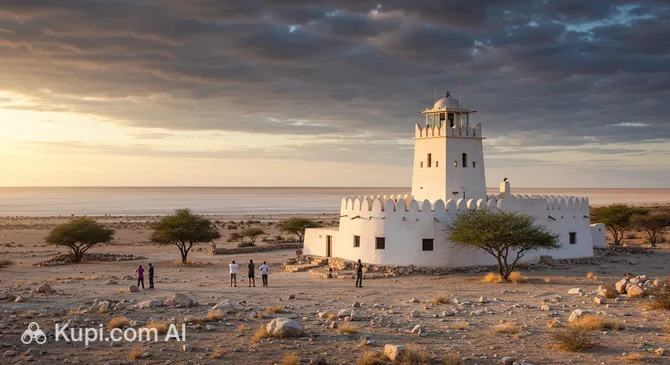
Namutoni is a unique place where the concept of urban parks and museums takes on a completely different meaning. There are no traditional parks with benches or modern art galleries here, as the camp itself is in the heart of nature, and its walls hold the living history of the colonial era. The cultural and natural heritage of this corner of Namibia is inextricably linked with the surrounding landscapes and the architecture of the famous fort.
Etosha National Park (Eastern Sector) is undoubtedly the main natural attraction surrounding Namutoni. Unlike the western part of the park, where open plains predominate, this zone is famous for its unique vegetation. Here you will see picturesque groves of slender Makalani palms and dense Tamboti forests that provide saving shade. This is an ideal place for "green tourism": traveling along winding roads, you can observe giraffes eating the tops of trees and rare antelopes hiding in the bushes.
Fisher's Pan, located northeast of the camp, is a separate natural ecosystem. In the dry season, it is a desolate, almost alien landscape covered with a shimmering salt crust. However, after good rains, the pan fills with water and transforms into a true bird paradise. This place becomes a magnet for birdwatchers and nature lovers: thousands of pink flamingos, storks, and cranes fly here, creating an incredible sight against the endless sky.
Speaking of cultural heritage, one cannot fail to mention the Namutoni Fort Museum. It is located directly inside the historic walls of the fortress and occupies several halls. The exhibition is small but informative: it tells about the region's turbulent past, starting with the construction of the first police post in 1897. It features old photographs, maps, and household items that shed light on the life of the garrison and interactions with the local Ovambo tribes. The museum allows for a deeper understanding of the strategic importance of this oasis in the history of the country's development.
The architecture of Fort Namutoni itself serves as a kind of open-air museum. A walk through its courtyard and battlements transports visitors to the atmosphere of early 20th-century adventure novels. The snow-white crenellated walls and high towers, inspired by the style of German colonial fortresses, are perfectly preserved. Having climbed the walls, tourists can not only touch the ancient masonry but also use the fort for its original purpose — as a high point for viewing the surroundings, but now with peaceful intentions.
For those looking for hidden gems, it is worth paying attention to the Botanical Trail inside the camp. Although it is not an official botanical garden, the area inside the Namutoni fence is rich in local flora. Many trees and shrubs here are marked with nameplates, allowing curious travelers to independently study the plant world of the region without leaving the safety zone. This is a great way to spend time between morning and evening safaris.