Support

Okaukuejo

About

Okaukuejo is a true gem of the north, located in the heart of the world-famous Etosha National Park. This settlement serves as the perfect starting point for safaris and attracts travelers eager to witness wildlife in all its glory. Situated on the edge of a vast salt pan amidst endless savannas, it is one of the most popular tourist hubs for which Namibia is renowned. A sense of tranquility and a special spirit of adventure permeate the air here.

In fact, it is not a traditional city but rather a cozy administrative and tourist hub with a well-developed infrastructure. The permanent population is small, consisting mostly of park employees and staff catering to guests. Although it is now a comfortable destination with lodges and camping facilities, the history of Okaukuejo is rooted in the early days of the region's conservation areas, evolving from a military outpost into an oasis of hospitality.
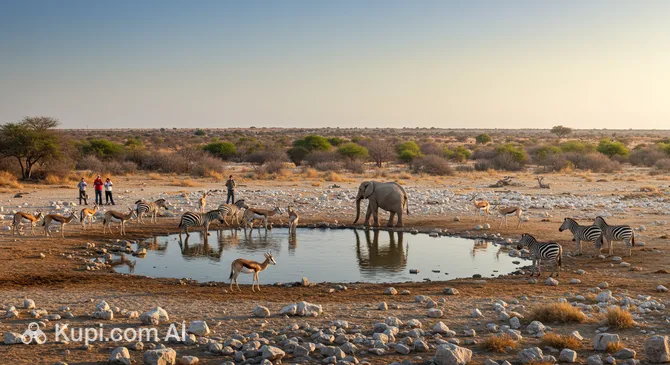
Okaukuejo. Illustration.
Source: Kupi.com AI

The main attraction and the "heart" of Okaukuejo is its famous floodlit waterhole. Dozens of animal species flock here daily, and thanks to powerful spotlights, they can be observed even in the middle of the night. This is a unique opportunity to see black rhinos, majestic elephants, and lions coming to drink under the cover of darkness. Such a sight leaves an unforgettable impression that lasts a lifetime.

Okaukuejo is a place where everyone can find their own corner of peace and inspiration. If you dream of authentic African exoticism and want to observe the life of the savanna in comfort, this unique settlement must be part of your itinerary.
Weather Overview

The weather in Okaukuejo is characterized by distinct seasonality typical of the Etosha Park region. The climate here is hot and semi-arid: expect scorching summers with occasional rainfall and a dry, cooler winter, which is considered the best time for safaris.

The hottest months occur toward the end of the year. In October and November, daytime highs reach +35°C, with average temperatures around +28°C. With the arrival of January, the rainy season begins and lasts until March. During this period, the air warms up to +32°C, and the number of rainy days varies from 10 to 13 per month, though showers are often brief.

The winter period, from May to August, brings relief from the heat. In June and July, the average temperature drops to +18°C, and nights become truly crisp with minimums around +11°C. During these months, rainfall stops completely. If you are planning a trip and need a detailed weather in Okaukuejo forecast, note that the dry season guarantees clear skies and excellent visibility across the savanna.

Average monthly temperature

Average monthly precipitation

Interesting Facts

Beyond its main attractions, Okaukuejo holds many fascinating secrets, blending history, science, and mystery. Here are a few facts that will allow you to see this place from a new perspective:

  • "Nature's Theater" and Black Rhinos. The local water source is often called "Africa’s theater of nature," and this is more than just a figure of speech. The famous Okaukuejo Waterhole is recognized as one of the best places in the world to observe the rare black rhino. These cautious giants, which are on the brink of extinction, feel so safe here that they come to the water almost every night, putting on a real performance for the camp's guests.

  • Military Past and the Stone Tower. The camp was not always a place for relaxation. Historically, Okaukuejo was founded as a military outpost in the early 20th century to monitor the northern territories. From those times, a characteristic stone tower and several colonial-era buildings remain, which were later used as the first research station for Etosha National Park, giving the location a unique historical charm.

  • Unique Lighting System. Night safaris are possible here without leaving the savanna thanks to special spotlights. They are designed to emit a soft light that does not disturb the animals and mimics natural moonlight. This is one of the few waterholes in Africa where technical progress allows for 24-hour observation of wildlife without harming it.

  • Legends of Guardian Spirits. Okaukuejo is linked to the legends of local indigenous peoples. There is a belief that the waterhole and the animals that visit it are protected by ancient spirits of the savanna. Local guides pass down stories from generation to generation about how these invisible guardians protect the peace of the park's inhabitants from those who come with ill intentions.

Okaukuejo Waterhole. Illustration.
Source: Kupi.com AI

Traveler photos:

How to Get There

A journey to Okaukuejo marks the beginning of a thrilling adventure in Etosha National Park. Since the camp is located within a protected natural area, the logistics have their own specifics. The majority of tourists arrive in rented cars or as part of organized safari tours, often using a combination of air travel and ground transfer. You can find all the ways to get to the city and the camp on our detailed page.

There is no airport in Okaukuejo itself; however, you can use regional aviation hubs. The closest and most convenient option is Ondangwa Airport (OND). It is located in the town of Ondangwa, approximately 144 km from the park gates. Regular flights operate here from the country's capital, Windhoek. The journey from the airport to Okaukuejo by taxi or rental car takes about 2–2.5 hours on a paved road. This is a great option for those who want to save travel time and avoid a long drive from the capital.

Also listed among the nearest transport hubs is Ondjiva Pereira Enes Airport (VPE). it is located in the town of Ondjiva, about 238 km away. However, it should be noted that this airport is in Angola, which involves crossing an international border, making it less practical as an entry point for most tourists traveling through Namibia.

For convenience, here is a summary of the main nearby airports:

AirportPassenger trafficDistance
Ondangwa Airport30 000144 km
Ondjiva26 000238 km

Railway communication in this region of Namibia is not developed for tourism purposes. There are no active passenger railway stations in Okaukuejo or its vicinity. Trains in the country are primarily used for freight or on specific luxury tourist routes that do not pass through Etosha National Park.

Since reaching Okaukuejo by train is impossible, road transport remains the primary method of travel. Most travelers fly into Hosea Kutako International Airport in Windhoek (the country's main gateway), rent a 4x4 vehicle, and head north. The drive from the capital to the Anderson Gate (the southern entrance to the park, near which Okaukuejo is located) takes about 4–5 hours via the well-maintained B1 and C38 highways.

Main Attractions

Okaukuejo is not just a place to spend the night, but a full-fledged tourist center featuring unique natural and historical sites. Although the camp itself covers a small area, its surroundings host locations for which travelers journey thousands of miles.

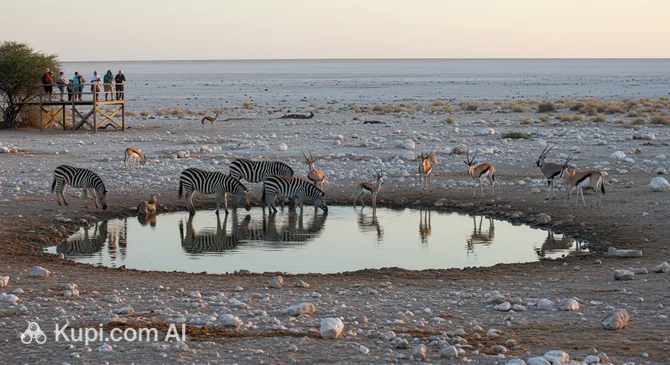
The undisputed dominant feature and the heart of this place is the famous Okaukuejo Waterhole. Located directly on the edge of the tourist camp, this natural water source does not dry up year-round. During the day, it is an excellent spot to watch herds of zebras, springbok, and oryx escaping the heat. However, the real magic happens after sunset: thanks to special lighting, tourists can watch rare black rhinos, elephants, and lions emerge from the darkness to drink. This is one of the best places in Africa to observe wildlife without having to go on a game drive.

Okaukuejo Waterhole. Illustration.
Source: Kupi.com AI

Traveler photos:

History buffs will find the Okaukuejo Stone Tower particularly interesting. This architectural structure serves as a reminder of Namibia's colonial past. The tower was built in the early 20th century when Okaukuejo served as a military outpost for the German army to control northern territories and manage livestock epidemics. Today, this structure is a recognizable symbol of the camp and an excellent landmark that adds historical context to the park's natural beauty.

Just a few kilometers from the camp begins the giant Etosha Pan. This vast white desert covers nearly a quarter of the national park's territory. Locally referred to as the "great white place," it leaves a lasting impression with its surreal landscapes, especially during the dry season when the ground cracks from the heat and the horizon vanishes into a shimmering haze. Here, you can take stunning panoramic photos highlighting the scale and raw beauty of the African wilderness.

If you have a vehicle, it is worth heading slightly west of Okaukuejo to see the Fairy Forest (Sprokieswoud). This is the only place in the park where Moringa trees (Moringa ovalifolia) grow in such large numbers on a plain. Usually, these trees, with their bizarre trunks that look like roots turned upside down, are found on rocky slopes. Local legends say the gods threw them down in a moment of anger. The forest looks especially mystical at sunset and is home to a variety of bird species.

Local Cuisine

Okaukuejo's cuisine is a true extension of your safari, now in a gastronomic format. Here, you can fully appreciate the culinary traditions of Namibia, where the diet is centered around hearty meat dishes and authentic African flavors. The main delicacy that every guest must try is game meat. The menus of local lodges often feature oryx steaks, flavorful springbok kebabs, or tender slow-cooked kudu meat. These dishes are typically served with "pap"—a traditional thick corn porridge that perfectly complements the rich taste of the meat—as well as spicy sauces.

A special place in the dining culture is held by the "braai"—the local version of a barbecue. Meat is grilled over open coals with the addition of herbs and roots gathered right from the savanna, giving it a unique smoky aroma. But the main pleasure is the unique setting. Dinner is often served on open terraces overlooking the famous Okaukuejo Waterhole. Imagine: you are enjoying a spiced steak while just a few meters away in the twilight, elephants or rhinos are quenching their thirst.

Okaukuejo Waterhole. Illustration.
Source: Kupi.com AI

Traveler photos:

If you are not ready for a heavy dinner, look out for popular local snacks. The most famous snack, convenient to take on a drive through the park, is biltong (spiced dried meat). It is also worth trying the street food: hearty "fat cakes" (fried dough) with meat fillings, fresh fruits, and homemade farm cheeses found at small markets. During the high season, workshops are sometimes held where chefs teach how to prepare traditional African desserts.

As for drinks, beer is the undisputed leader. The country is famous for its brewing traditions, so be sure to order a glass of chilled Namibian Lager—it is incredibly refreshing after a hot day. For those who want to warm up on a cool evening, local bars offer strong herbal liqueurs with an invigorating effect and a spicy taste.

Travel Tips

A trip to Okaukuejo is a true expedition into the world of wild nature, requiring special preparation different from a regular tourist trip. To ensure your safari goes perfectly and that small domestic issues don't distract you from animal watching, we have gathered the most important recommendations for guests of this unique camp in the heart of the national park.

  1. Clothing and Gear. Follow the layering principle: it is hot in the savanna during the day, but temperatures can drop sharply on morning and night safaris. Be sure to bring a fleece jacket, a windbreaker, and comfortable closed-toe shoes. Prefer clothing in neutral, natural shades (khaki, beige, olive) to avoid attracting predators and insects. Don't forget a hat, high-SPF sunscreen, a Type M or D adapter (three-pin round), and a good pair of binoculars.
  2. Transport. There is no public transport inside Etosha Park. The only way to get around is a rental car (a high-clearance crossover or SUV is best for better views) or an organized tour. Strictly follow the speed limit (60 km/h), as animals often run onto the road, and their coloring blends into the landscape.
  3. Finances. The official currency is the Namibian Dollar, which is pegged 1:1 to the South African Rand (ZAR), so both currencies are freely accepted. The camp shop and restaurant accept Visa and Mastercard, but terminals often depend on unstable connections. We strongly recommend carrying a cash reserve for fuel, small souvenirs, and staff tips, as the only ATM may be empty or out of order.
  4. Health and Safety. Okaukuejo is in a potential malaria risk zone, especially during the rainy season, so use repellents and consult a doctor before your trip. The nearest hospital and pharmacy are far outside the park (in Otjiwarongo or Outjo), so definitely bring a complete personal first-aid kit. Drink plenty of bottled water to stay hydrated in the dry climate.
  5. Communication. The primary language of communication is English, which is understood by all park staff. Wi-Fi at the camp is paid and slow, with coverage usually limited to the reception area. For reliable communication, it's better to buy a SIM card from the local operator MTC immediately upon arrival in Namibia. We recommend downloading offline maps of the region in advance.
  6. Local Etiquette. The most important rule of politeness in Okaukuejo concerns behavior at the night waterhole: it is customary to observe absolute silence. Loud conversations, laughter, and sharp sounds scare away cautious animals (especially rhinos) and draw disapproval from other observers. Also, turn off the flash on cameras and phones.
  7. What to Avoid. It is categorically prohibited to exit your vehicle outside the fenced camp territory—this is lethally dangerous due to lions and leopards. Never feed the animals, not even the harmless-looking squirrels in the camp, and do not use drones—they are strictly forbidden in all national parks in the country.
  8. Important Detail. Watch the camp gate operating hours ("from sunrise to sunset") closely. The schedule changes weekly and is posted at reception. Being late by even a few minutes is considered a serious violation: you may not be allowed inside or may be issued a large fine, and sleeping in your car in the open savanna is prohibited.

Following these simple but vital rules will make your stay in Okaukuejo comfortable and safe. Leave the city bustle behind the park gates, enjoy the magic of the African night, and may you be lucky enough to see the "Big Five" in all its glory!

Entertainment & Nightlife

Nightlife in Okaukuejo is fundamentally different from the noisy parties found in typical tourist metropolises. There are no neon signs, night clubs with DJs, or busy promenades here. In this unique corner of Namibia, "nightlife" follows the rhythms of the wild, and the main entertainment is observing animals under the fantastic starry African sky. Evening here is a time of silence, mystery, and complete union with the surrounding world.

The absolute center of evening leisure, a kind of open-air "theater," is the famous Okaukuejo Waterhole. This is a specially equipped area with comfortable benches facing the natural water source. As darkness falls, soft spotlights are turned on, and the real show begins. Tourists gather here to see black rhinos, elephants, and lions silently appear from the darkness. The atmosphere is electric with anticipation: instead of loud music, there are the sounds of cicadas and the splashing of water, and instead of dancing, there is the bated breath of hundreds of spectators.

Okaukuejo Waterhole. Illustration.
Source: Kupi.com AI

Traveler photos:

For those who wish to spend time in a more traditional setting, the Okaukuejo Restaurant & Bar operates within the camp. This is where you can order dinner, a glass of South African wine, or local beer. The bar is usually open until late evening. A relaxed atmosphere prevails here: travelers share their impressions of the day's safari, discuss the animals they spotted, and plan tomorrow's routes. There is no dress code—comfortable safari-style clothing is appropriate, though it can get chilly in the evenings, so it is worth bringing a fleece jacket.

Practical tips for nighttime:

  • Visiting Time: The most active time at the waterhole is immediately after sunset and late at night. Many tourists arrive after dinner, around 8:00 PM, to secure the best seats.
  • Safety: The camp territory is fenced, so walking inside is safe. However, leaving the camp gates at night is strictly prohibited—this is when predators hunt. Inside the camp, it is recommended to use a flashlight to avoid stepping on scorpions or snakes, which may occasionally be found on the paths.
  • Etiquette: Absolute silence is expected at the waterhole. Loud talking and the use of camera flashes are prohibited, as they scare the animals and disturb other observers.

Daytime entertainment in Okaukuejo is also inextricably linked to its location. During the hottest hours, when going on safari makes little sense, guests relax by the swimming pool to escape the heat. It is also worth climbing the historical stone tower, which offers a panoramic view of the park's vast expanses. But ultimately, the main reason people come here is for nature, so museums and theaters are replaced by live scenes from savanna life.

Parks & Museums

Okaukuejo is a unique place where the concept of city parks and museums transforms into something entirely different. Here, instead of man-made gardens and halls with exhibits, you are greeted by the vast expanses of wild nature and living history woven into the landscape of one of Africa's greatest reserves.

When speaking of natural zones, it is impossible not to mention that the camp itself sits in the heart of Etosha National Park. This is a giant reserve surrounding a massive salt pan visible even from space. For tourists, this means that the "park" begins literally outside your bungalow's door. The landscape here varies from dense scrubland to open plains, where herds of wild animals roam against the backdrop of the whitish horizon, creating scenes of incredible beauty and scale.

The central natural "arena" and the main green zone of the camp is the famous Okaukuejo Waterhole. This is not just a water source, but a true oasis of life. During the day, you can relax on benches in the shade of trees, watching the endless stream of animals coming to drink. This place replaces any city garden for tourists, offering a breathtaking spectacle of wild fauna interaction in their natural habitat instead of quiet alleys.

Okaukuejo Waterhole. Illustration.
Source: Kupi.com AI

Traveler photos:

Another amazing natural area in the vicinity is the Fairy Forest (Sprokieswoud). Located west of Okaukuejo, this area is famous for its unusual Moringa trees. They usually grow on rocks, but here, by a whim of nature, many of these twisted trunks dot the plain. The place is steeped in Bushmen legends and looks especially mystical at sunset, resembling a set from a sci-fi movie.

While there are no classical museums with display cases in Okaukuejo, the role of the main historical monument is played by the Okaukuejo Stone Tower. Built in 1963 on the site of an old early-20th-century German fort, it serves as a reminder of the colonial past and a time when a police post was stationed here to manage livestock epidemics. By climbing to the top of the tower, you get the best panoramic view of the surroundings, allowing you to appreciate the strategic significance of this location in the past.

The Etosha Ecological Institute can be considered the cultural and scientific center of the settlement. Although it is an active research facility and access for tourists is usually limited, its very presence is significant. The institute focuses on studying and preserving the park's ecosystem. Occasionally, lectures or educational events are held here regarding efforts to save black rhinos and other rare species, allowing for a deeper understanding of the surrounding environment's value.

For those seeking authentic impressions, we recommend checking out the small exhibits in the Tourist Center (Reception). You can often find old maps, photographs of the first rangers, and information about the geology of the Etosha Pan. It is a "mini-museum" that will help you better navigate the park's history before heading out on safari.

Getting Around

It is important to understand that Okaukuejo is not a typical city with a developed infrastructure, but a tourist camp located within a protected national park. For this reason, there is no public transport system whatsoever: you will not find a metro, regular buses, trams, or fixed-route taxis here. All transport logistics are governed by safari rules and safety in the wild.

The primary way for tourists to get around is by rental car. Most travelers arrive in 4x4 vehicles rented in the capital or at the airport. Having your own car provides freedom of movement within the park and the ability to plan your own animal-watching routes. Inside the fenced camp itself, you can and should move around on foot—distances are small, and a walk from your bungalow to the restaurant or waterhole takes only a few minutes.

A unique alternative to public transport is organized Game Drives. These are trips in specially equipped open-sided vehicles driven by professional rangers. These "routes" replace bus excursions for tourists. You can book a seat in a vehicle at the camp's Reception desk. Payment is made on-site in cash (Namibian dollars or SA Rand) or by bank card. It is recommended to sign up in advance, as seats are limited.

Taxi services, car-sharing, or apps like Uber do not operate in Okaukuejo. Hitchhiking within the national park is also impossible and prohibited by safety regulations. If you do not drive, the only way to get here is to book a private transfer through a tour operator or join a guided group tour where transportation is included in the service package.

For car owners, there is a fuel station within the camp. This is a critical piece of infrastructure, as distances in the park are vast. You can pay for fuel by card or cash, but experienced travelers advise always having a cash reserve in case of communication failures. There is also a small shop with auto supplies for minor repairs (oil, fuses), but no full-service garage.

The main advice regarding transport logistics concerns timing rather than tickets. The camp gates operate strictly on a schedule: they open at sunrise and close at sunset. Being late is unacceptable, as private vehicle movement within the park is prohibited after dark. Always check the current schedule at the gates or reception to avoid being stranded in the savanna for the night.

Accommodation

Accommodation in Okaukuejo is organized as a single tourist complex (rest camp), managed by the state-owned company Namibia Wildlife Resorts. While there isn't the variety of private hotels typical of a city, the range of housing covers the needs of all categories of travelers. Tourists can choose from budget camping spots where they can pitch their own tents to comfortable standard rooms and luxury double-story chalets with exclusive views.

The most prestigious and sought-after "neighborhood" for staying is the front row by the famous natural water source. This is where the so-called "Waterhole Chalets" are located. Their main advantage is having balconies or terraces that overlook the Okaukuejo Waterhole directly. This allows guests to observe elephants and rhinos without even leaving their room, making a stay here a unique experience unavailable in conventional hotels.

Okaukuejo Waterhole. Illustration.
Source: Kupi.com AI

Traveler photos:

For those seeking a more secluded atmosphere or traveling on a mid-range budget, "Bush Chalets" are located deeper within the camp, a short distance from the waterhole. These are detached units with basic amenities and a barbecue (braai) area. The most economical option is the camping zone. It is equipped with shared showers, toilets, and fire pits, attracting fans of true outdoor romance and road-trippers with rooftop tents.

Booking Tip: Okaukuejo is one of the most popular places in Namibia, and demand here often far exceeds supply. Waterhole-view rooms are frequently booked 10–12 months in advance. If you plan to visit during the high season (July to October), it is strongly recommended to secure your accommodation as early as possible. Attempting to find a vacancy upon arrival is almost certain to result in disappointment.

The price range varies from budget (camping fee) to high (premium chalets). Bookings are primarily made through the official management company website or authorized tour operators. It is worth noting that chalet stays usually include breakfast, while camping guests provide their own meals.

Nearby Cities

For those looking to explore the surrounding areas, Okaukuejo serves as an excellent starting point for day trips or short visits to several interesting nearby locations:

One of the most popular destinations is Otjiwarongo, located south of the park. This city is often called the "Cheetah Capital of the World," as it is home to the famous Cheetah Conservation Fund (CCF). Additionally, you can visit a crocodile ranch in the city itself, making it an exciting stop for animal lovers.

If you head north through the King Nehale Gate, you can reach Ondangwa. This is the historical and cultural center of the Owamboland region. A trip here is a great chance to get acquainted with the life and traditions of the Owambo people, visit bustling local markets, and see a different, more populated side of Namibia, distinct from the desert landscapes of the park.

Slightly further northwest lies Oshakati—a vibrant commercial hub in the north of the country. Here, travelers can find modern shopping centers and experience the dynamic rhythm of city life, which contrasts sharply with the silence and tranquility of the Etosha savanna.

CityPopulationDistance
Ongava20 km
Halali60 km
Outjo8 445106 km
Omuthiya3 794114 km
Namutoni115 km

These nearby destinations provide insight into the diverse culture and landscapes of the region, harmoniously complementing the safari experience.

Shopping & Souvenirs

General Overview: It is important to note immediately that Okaukuejo is a tourist camp within a national park rather than a full-fledged city; therefore, shopping opportunities here are quite limited and strictly practical. You will not find fashion boutiques or electronics stores. All trade is focused on providing basic needs for safari tourists and selling commemorative gifts. The local assortment mainly consists of food, drinks, firewood for barbecues, and essential items.

Main Shopping Points: There are no shopping streets or districts in the camp. All shopping is confined to one main store, often called the "Curio Shop" or simply the tourist shop. It is located in the central part of the complex, near the administrative building (Reception) and the famous stone tower. This is a one-stop shop where you can buy everything from toothpaste and batteries to fresh bread and meat for grilling over a fire.

Shopping Centers: There are no shopping centers in Okaukuejo or throughout Etosha National Park. The nearest major malls and supermarkets are in cities outside the reserve, such as Otjiwarongo or Oshakati, located several hours away. Tourists are strongly advised to purchase main food supplies, specific medications, and gear in the capital or major cities before entering the park.

Markets: Traditional markets do not exist within the camp. However, sometimes at the park entrance (Anderson Gate), through which tourists enter Okaukuejo, you may encounter local artisans selling their wares directly or from small stalls. This is a good opportunity to purchase authentic crafts without intermediaries, though the selection is usually small.

Souvenirs: Despite its modest size, the local shop offers an excellent selection of souvenirs to remember your trip to Namibia. Here is what's worth bringing home:

  • Books and Maps: Magnificent photo albums about wildlife, bird and animal guides, as well as detailed maps of Etosha Park to help you navigate during your safari.
  • Wooden Crafts: Animal figurines (elephants, giraffes, rhinos) carved by local master woodworkers.
  • Biltong: The famous dried meat, which is the region's main gastronomic hallmark.
  • Jewelry: Bracelets and necklaces made from ostrich eggshells—a traditional Bushmen adornment.

Opening Hours and Payment: The camp shop usually opens early in the morning (around 7:00–8:00 AM) so that tourists can buy water and snacks before the morning safari, and it stays open until sunset or slightly later (around 7:00–8:00 PM). Namibian dollars (NAD) and South African Rand (ZAR) are accepted. Bank cards (Visa, Mastercard) are usually accepted, but due to possible connection issues in this remote region, always carry a backup of cash.

Tax Free: You cannot get an instant tax refund at the Okaukuejo shop. However, if you make large souvenir purchases (usually over 250 NAD on one receipt), be sure to keep your tax invoices. When flying out of Hosea Kutako International Airport, you can present them at customs to apply for a VAT Refund if the goods are being exported from the country unused.

Have you reached the end of the page?

So the route has been studied inside and out