Support

Swakopmund

About

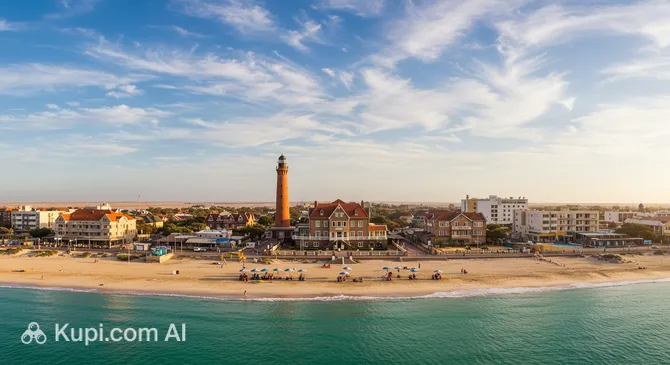
Swakopmund is an amazing corner where the mighty Atlantic Ocean meets the endless sands of the Namib Desert. The city is nestled right on the edge of the continent, where rugged dunes push right up to the waterfront, creating breathtaking landscapes.

Swakopmund. Illustration.
Source: Kupi.com AI

Located in the Erongo region, this city is one of the most popular tourist centers in Namibia. With a population of about 34,300, Swakopmund maintains a cozy and friendly atmosphere, allowing guests to escape the hustle and bustle of megacities and enjoy the slow pace of life by the ocean.

The city's old German-style architecture adds a special charm. Narrow streets, colorful markets, and historic buildings create a unique mood. The fascinating history of Swakopmund can be traced in every element of the city's architecture, harmoniously combining African flavor with modern comfort.

There are plenty of opportunities for travelers here: from relaxing walks along the coast to adrenaline-filled adventures. The city is famous as a center for outdoor activities, offering dune safaris, sea cruises, and extreme sports. Swakopmund is the perfect starting point for exploring the coast, offering unforgettable experiences and a desire to return again.

Weather Overview

Swakopmund's climate can be described as mild desert, heavily influenced by the cold ocean current. Because of this, it doesn't experience the grueling heat common in the interior of Namibia, and the temperature remains relatively stable and comfortable throughout the year.

The warmest months are January and February, when the average temperature stays around 21°C, and daytime air warms up to 26°C. From May to September, it becomes cooler: in August, the coldest month, average temperatures are around 16.4°C, and night temperatures can drop to 10°C. Expect moderately warm summers and cool, dry winters.

Precipitation in this region is exceptionally rare. According to statistics, rain is virtually absent year-round, and even during the "wet" season (January–March), no more than 1–2 days of precipitation are recorded. Before your trip, we recommend checking the detailed weather in Swakopmund, as despite the lack of rain, morning fogs from the ocean are common, requiring a windbreaker or a light jacket.

Average monthly temperature

Average monthly precipitation

Interesting Facts

Beyond its main attractions, Swakopmund holds many fascinating secrets and unique features. This city, where the harsh desert sands meet the waters of the Atlantic, surprises travelers with its unique flavor and history.
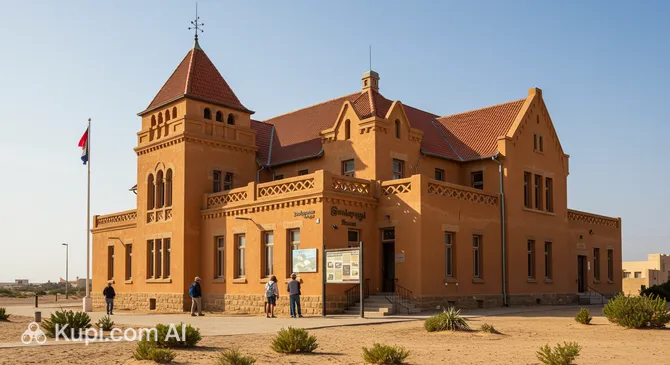
Swakopmund Museum. Illustration.
Source: Kupi.com AI

Traveler photos:

  • German Heritage in Africa. Swakopmund was founded in 1892 and still retains a distinct European charm. This is evident in the half-timbered architecture, street names, and local cuisine. The city is often called an "open-air museum," and you can dive deeper into its past by visiting the Swakopmund Museum, which houses unique exhibits.

  • Living Fossils. In the vicinity of the city, on the Welwitschia Plains, you can see a true wonder of nature — the Welwitschia. These ancient plants, endemic to the Namib Desert, can live up to 2,000 years. Meeting these "green centenarians" is considered a must for botany enthusiasts.

  • Adventure Capital. Swakopmund holds the unofficial title of Namibia's extreme tourism center. Sandboarding, skydiving, and quad biking through the dunes are popular here, offered for example by the Desert Explorers Adventure Centre.

  • Traditional Carnival. Every year, the city hosts the vibrant SWAKOPMUNDER KARNEVAL (KÜSKE) festival, rooted in German traditions. During these days, the streets are filled with music, costume parades, and festive treats, turning the resort into one big entertainment venue.

  • Marine Life. The coastal waters of Swakopmund are teeming with life: it is one of the best places for dolphin and whale watching. Additionally, very close to the city, you can find huge colonies of fur seals basking on the shore.

How to Get There

When planning a trip to the Atlantic coast, it is important to think through your route in advance. Swakopmund is a popular resort, and although it doesn't have its own major air hub, getting here is quite easy thanks to neighboring cities. You can find out all the ways to get to the city on a separate page, and below we will look at the most convenient flight options.

The most optimal way to reach the resort is to use the air gateway in the neighboring town of Walvis Bay. There is no airport in the city of Swakopmund itself, but you can fly into Rooikop Airport (IATA: WVB), located in Walvis Bay. It is only 35.9 km from the center of Swakopmund. This is the nearest arrival point, serving regular flights from the capital and some cities in South Africa. A taxi or transfer from the terminal to your hotel will take about 40–50 minutes along a scenic road bordering the ocean and dunes.

An alternative option is to fly through the country's capital. You can arrive at Eros Airport (IATA: ERS) in Windhoek, which is approximately 262.5 km from Swakopmund (in a straight line; the road distance will be greater). This airport is more commonly used for domestic and charter flights. The journey from Windhoek to the coast by car or bus takes about 4–5 hours. It's a great opportunity to see the changing landscapes from the highlands to the Namib Desert.

For convenience, here is a summary of the main airports:

AirportPassenger trafficDistance
Rooikop Airport79 76336 km
Eros Airport74 356263 km

Main Attractions

Swakopmund is a true open-air museum where every street and building tells a story. Walking through the city, you will certainly notice the unique blend of German colonial architecture and African landscapes. The main attractions are located quite compactly, making sightseeing convenient and pleasant.

One of the city's most iconic landmarks is the historic seawall known as the Swakopmund Mole. Built over a hundred years ago, it was intended to serve as a harbor, but over time it silted up and turned into the beautiful sandy "Palm Beach." Today, it is a favorite walking spot for locals and tourists alike, where you can enjoy the fresh ocean breeze and views of the Atlantic.

Nature lovers should definitely visit the unique mineral museum. The famous Kristall Gallerie houses an impressive collection of precious and semi-precious stones. The main pride of the exhibition is a giant quartz crystal, considered one of the largest in the world. This place allows you to appreciate Namibia's geological wealth in all its glory.

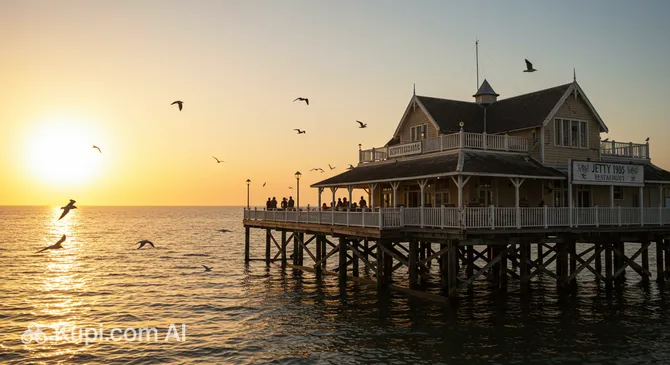
Jetty 1905 Restaurant. Illustration.
Source: Kupi.com AI

Traveler photos:

It is impossible to imagine the panorama of Swakopmund without its famous pier. The old jetty, at the end of which the Jetty 1905 Restaurant is located, goes far into the ocean and serves as an excellent observation deck. A walk along the wooden planks, especially at sunset, will provide you with unforgettable photos and a sense of complete unity with the elements, while dinner to the sound of the waves will be a romantic end to the day.

For those interested in the region's fauna, a visit to the Swakopmund Snake Park will be informative. It features an extensive collection of reptiles that inhabit the deserts and savannas of Africa. This is a great opportunity to safely see venomous snakes, chameleons, and other exotic creatures, as well as learn more about their habits and habitat.

Local Cuisine

Swakopmund's gastronomic scene is a unique combination of the Atlantic Ocean's bounty and hearty German traditions, seasoned with African hospitality. Thanks to the cold Benguela Current, local waters are rich in fish, so seafood here is always incredibly fresh. Tourists should definitely try the local oysters, which are famous for their delicate taste, as well as dishes made from kingklip, calamari, and mussels. Classic fish and chips are prepared everywhere and are a great option for lunch with a view of the waves.

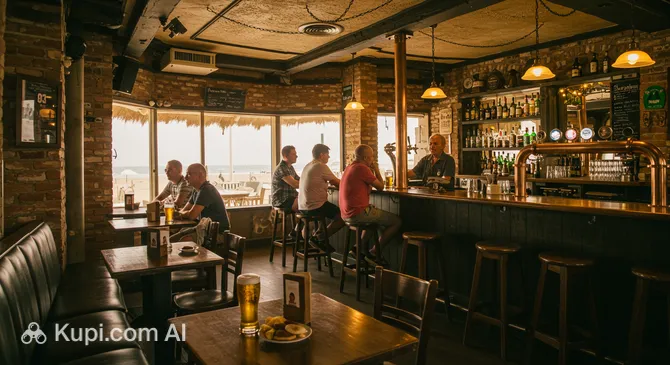
The influence of the colonial past is clearly felt in the menus of many restaurants. Swakopmund is the perfect place to enjoy an authentic schnitzel, pork knuckle (eisbein), or traditional German sausages with sauerkraut. An excellent example of this gastronomic synthesis is the Brewer & Butcher restaurant. This establishment combines a restaurant and a microbrewery, offering guests meat delicacies and a wide selection of craft beers brewed according to old recipes.

Brewer & Butcher. Illustration.
Source: Kupi.com AI

Traveler photos:

Those who love cozy gatherings and sweets will also find the city to their liking. Local coffee shops and bakeries offer magnificent apple strudels, Berliners, and crispy pretzels. The colorful Village Café, known for its bright interior and friendly atmosphere, is particularly popular. It's a wonderful place for breakfast or lunch, where you can feel the true rhythm of city life.

Swakopmund's street food and markets reveal another side of the local cuisine. Here you can buy the famous biltong (dried meat with spices), fresh fruit, or corn cakes. In the evening, the city comes alive thanks to its bars and pubs. If you want to relax with a glass of cocktail or wine in good company, stop by Zonder Naam Bar. The drinking culture here is highly developed, ranging from excellent Namibian coffee to beer whose quality is strictly controlled.

Travel Tips

Swakopmund is a city with a unique microclimate and atmosphere, so preparing for a trip here requires special attention. We have gathered some practical recommendations to help make your journey to this amazing corner, which Namibia is proud of, as comfortable and worry-free as possible.

  1. Clothing and Essentials. The climate here is deceptive: due to the cold Benguela Current, the city is often cool, windy, and foggy even in the height of summer. The main principle is layering: be sure to bring a windproof jacket, a warm fleece sweater, and jeans, even if it is hot in the interior of the continent. You will also need sunglasses (the sun is very strong here), comfortable closed shoes for walking on sand, and an adapter for Type M or D sockets (three-pin), as standard European plugs do not fit here.

  2. Transport. The city's historic center is very compact and is best explored on foot. Public transport in the traditional sense (buses) is virtually non-existent here. Local taxis can be used for city trips, but be prepared that the driver may pick up other passengers along the way — this is normal practice. If you plan to explore the surrounding dunes or go to neighboring Walvis Bay, we strongly recommend renting a car (preferably a 4x4), as ride-hailing apps are unreliable here.

  3. Finances. The official currency is the Namibian Dollar (NAD), which is pegged to the South African Rand (ZAR); rands are also accepted everywhere at a 1:1 rate. Visa and Mastercard credit cards work in most restaurants, hotels, and supermarkets, but it's better to have cash at souvenir markets and gas stations. In restaurants, it is customary to leave a tip of about 10% of the bill if you are satisfied with the service.

  4. Health and Safety. Swakopmund is considered one of the safest cities in the country, but basic precautions should still be taken: do not leave valuables in plain sight in your car and avoid walking alone in remote areas after dark. Pharmacies in the center are well-stocked, but few are open 24/7, so it's better to prepare a personal first-aid kit in advance. Tap water in the city is generally of good quality, but tourists are advised to buy bottled water to be safe.

  5. Communication. The official language is English, and practically everyone involved in tourism speaks it. A unique feature of Swakopmund is the wide use of the German language; many signs and menus are duplicated in it, and locals often use it in everyday life. For mobile communication and internet, we recommend buying a SIM card from a local operator (such as MTC) immediately upon arrival at the airport or in the city; Wi-Fi is available in almost all cafes, but the speed may be slower than what you're used to.

  6. Local Etiquette. Namibians are very polite and appreciate a respectful attitude. Any conversation, whether with a shop assistant or a passerby, usually begins with a greeting ("Hello, how are you?"). The pace of life in the city is measured and "resort-like," so service in restaurants may be slow — treat this with understanding and simply enjoy your vacation.

  7. What to Avoid. It is strictly forbidden to drive onto beaches and dunes in unmarked areas — this causes irreparable damage to the fragile desert ecosystem (tire tracks can remain for decades) and is punishable by large fines. Also, avoid photographing local people, especially Herero women in their traditional Victorian dresses, without their explicit permission.

  8. Useful Nuance. Keep in mind the "German" operating hours of many establishments: shops and even some restaurants may close on Saturday afternoon (around 1:00 PM) and not open at all on Sunday. Plan your shopping and restocking for weekdays.

By following these simple tips, you can avoid minor mishaps and focus entirely on the beauty of the dunes and the ocean. Swakopmund is an incredibly hospitable city that will surely reciprocate if you show respect for its nature and traditions.

Entertainment & Nightlife

Swakopmund's nightlife has its own unique character: you won't find the endless noise of megacities here, but you will discover a cozy, almost homey atmosphere steeped in German traditions and African hospitality. Evening entertainment in the city is concentrated mainly in the central part and along the waterfront, where you can enjoy the sound of the ocean over a glass of excellent local beer or wine.

The main format of evening leisure here is pubs and gastropubs. Locals and tourists love to gather in large groups, discuss the day's events, and listen to live music. However, if you are looking for dancing and a more energetic rhythm, you should check out the Infinity Lounge. This is a popular nightclub where modern DJ sets are played, a variety of cocktails are served, and a festive atmosphere reigns until morning. It attracts both local youth and travelers looking to have fun.

Platz Am Meer Waterfront. Illustration.
Source: Kupi.com AI

Traveler photos:

For those who prefer a more respectable and calm vacation, the Platz Am Meer Waterfront is the ideal location. This modern shopping and entertainment complex is located right by the water. It is especially beautiful in the evening: you can have dinner at one of the restaurants overlooking the sunset, stroll along the landscaped promenade, or simply enjoy the sea breeze in a safe and stylish setting.

Atmosphere and Dress Code. Most establishments in Swakopmund have a casual style. There are no strict clothing requirements, and you can even go to clubs in jeans. However, there is an important nuance: evenings by the ocean can be very cold and damp. Even if the sun was hot during the day, be sure to bring a warm jacket or sweater for a night walk. The crowd in the establishments is usually very friendly and relaxed.

Practical Tips and Safety. The city center is considered safe for walking in the early evening, but the streets empty out after dark. It is strongly recommended to use a taxi to move between bars and your hotel. "Hailing" a car on the street at night is not common and can be unsafe; it's better to ask a bartender or receptionist to call a trusted taxi for you or use a transfer service. Prices for drinks and club entry are quite reasonable by European standards.

As for daytime entertainment, the city's cultural life is not limited to the beach. There are small art galleries showcasing local masters and cozy cinemas. The casino located in the old station building is also popular — an excellent place to try your luck in a colonial-era setting.

Parks & Museums

Swakopmund surprisingly combines the rugged beauty of the desert with the coziness of a well-kept European town. Cultural life is in full swing here, and green zones reclaimed from the sands become true oases for relaxation. A walk through local museums and parks will allow you to deeper understand the history of this region and see how diverse and unique Namibia is.

If you are looking for a place for a quiet outdoor break, head to the coast. The city's main walking area is the Swakopmund Mole. Although technically a former harbor, today the area has been transformed into a picturesque promenade with "Palm Beach." Neat lawns have been laid out and palm trees planted to provide shade, making it an ideal spot for picnics and ocean watching. In fact, the entire city is surrounded by a giant natural "park" — Dorob National Park, so the boundary between city greenery and wild nature here is quite blurred.

To immerse yourself in the region's history, be sure to visit the Swakopmund Museum. It is located at the foot of the famous lighthouse and is considered one of the best in the country. The exhibition is incredibly diverse: from archaeological finds and everyday objects of indigenous peoples to displays of colonial history and local flora. This is not just an exhibition of antiquities, but a real educational center that will be interesting for both adults and children.

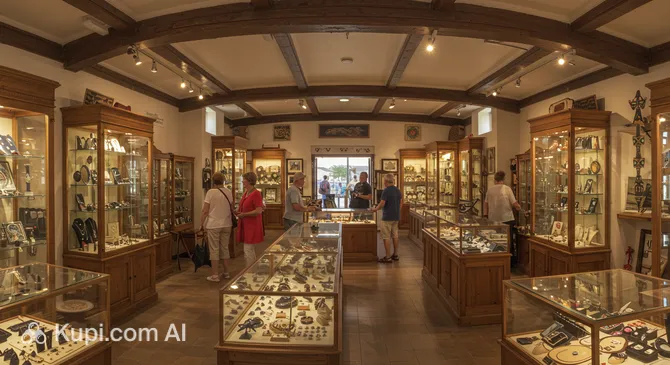
Kristall Galerie. Illustration.
Source: Kupi.com AI

Traveler photos:

Another gem of the city, reflecting the country's geological wealth, is the Kristall Gallerie. This place resembles a treasure cave: giant quartz and tourmaline crystals mined in the region's depths are on display here. Visitors can not only admire the raw minerals of impressive sizes but also visit a jewelry boutique or watch craftsmen at work in the "crystal cave."

Wildlife enthusiasts should stop by the specialized Swakopmund Snake Park. This is a compact but very informative facility that performs an important function in reptile conservation. Here you can see desert vipers, cobras, and chameleons up close (and safely!), which are difficult to spot in the wild, and learn about their role in the Namib Desert ecosystem.

Insider Tip: Don't miss the Woermannhaus building (Woermann Tower). Although it is not a museum in the classic sense, this historic tower houses a public library and a small art gallery. By climbing to the tower's observation deck, you will get the best panoramic view of the city, where green courtyards contrast with golden dunes.

Getting Around

Swakopmund's transport system differs significantly from the usual scheme of large metropolises. You won't find a metro, trams, or an extensive network of city buses with a fixed schedule here. The city is quite compact, and its historic center, where most hotels and restaurants are concentrated, is ideal for walking. This allows tourists to enjoy the architecture and ocean breeze without being dependent on transport schedules.

The primary means of transport for those who don't want to walk is the taxi. In Swakopmund, taxis do not operate by the meter, but by a zone system or fixed rates. Official cars are easily recognized by special stickers on the doors or license plates. It's important to remember that the practice of "shared taxis" is common here, where the driver may pick up other passengers along the way. If you want to travel alone, you should pre-order a "private hire" (individual trip), which will cost more.

Regarding payment, Swakopmund remains a city of cash. There are no validators, transport cards, or contactless payments in local taxis and minibuses. You need to pay with Namibian dollars or South African rands (accepted at a 1 to 1 rate). We strongly recommend having small bills with you, as drivers often don't have change for large banknotes. The cost of a trip around town is usually low, but it's best to clarify and agree on the price before getting in the car.

Global ride-hailing apps like Uber are practically non-existent or unreliable here. There is a local equivalent in Namibia called the LEFA app, however, there may be few cars in Swakopmund. The most reliable way to call for transport is to ask your hotel receptionist or a restaurant waiter to order a trusted taxi. This guarantees safety and a fixed price.

For independent exploration of the surrounding area and trips to the dunes, renting a car remains the best option. Both international and local rental companies have offices in the city. Keep in mind that traffic in the country is on the left. If you plan to drive off paved roads, for example, to the Moon Landscape, choose a four-wheel-drive vehicle (4x4).

A popular and eco-friendly alternative is the bicycle. Thanks to the flat terrain, moving on two wheels here is very comfortable. Rental points offer both standard city bikes and the famous "fatbikes" (bikes with wide tires) that allow you to ride even on the sand along the water's edge. This is not just transport, but a separate type of tourist activity that allows you to see the coast from a new perspective.

For trips to the neighboring town of Walvis Bay or to the airport, there are private shuttles and transfers. They are more comfortable than regular taxis and often require advance booking. Information about the schedule and cost of such shuttles is best obtained from tourist information centers or your hotel reception desk.

Accommodation

Swakopmund offers perhaps the most diverse selection of accommodation in the entire country. Since the city is considered the main resort that Namibia is proud of, the tourist infrastructure here is excellently developed. Travelers can choose between luxury hotels on the oceanfront, cozy German-style family guesthouses, and equipped campsites for road trip enthusiasts.

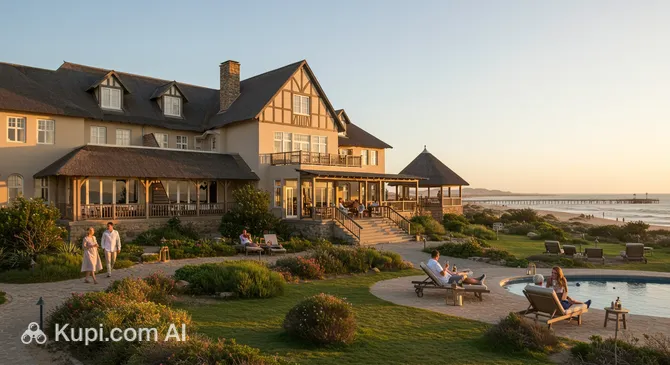
The local hotel stock is characterized by colorful architecture and a high level of service. Many accommodations occupy restored colonial-era buildings, creating a special atmosphere of old Europe amidst African landscapes. If you are looking for comfortable accommodation with a home-away-from-home feel, check out the Alte Brücke Resort. This complex is conveniently located near the beach and offers accommodation in separate chalets, providing privacy and easy access to the city center.

Alte Brücke Resort. Illustration.
Source: Kupi.com AI

Traveler photos:

When planning your stay in Swakopmund, there are several important nuances typical of this region to consider:

  • Heating and Comfort. Due to the proximity of the cold ocean, nights here can be cool and damp even in the height of summer. There is usually no central heating in the houses, so make sure your chosen hotel provides heaters or electric blankets — this is the local standard for a comfortable night's sleep.

  • Location. The city center is very compact. By choosing a hotel in the historical part, you will be able to walk to most restaurants and attractions. First-line accommodation (Sea View) is more expensive, but the view of the misty Atlantic Ocean in the morning creates an unforgettable mood.

  • Early Booking. December and January are the peak tourist season, when not only foreigners but also locals flock to the coast. During this period, as well as during the Easter holidays, finding a free room "on the day" is practically impossible, so it's worth booking accommodation several months in advance.

Prices range from budget hostels for backpackers to exclusive boutique hotels. Almost everywhere, the room rate includes breakfast, which in Swakopmund is traditionally characterized by German generosity, an abundance of cold meats, and fresh pastries.

Nearby Cities

For those who want to explore the surroundings, Swakopmund serves as an excellent starting point for day trips to several interesting nearby locations. The city's convenient location allows easy access to both natural wonders and other settlements in the region.

The clear leader for a short trip is Walvis Bay, located just a 30-minute drive along the coast. It is the country's main port, known for its picturesque lagoon where you can see huge flocks of pink flamingos and pelicans. Nearby is the famous Dune 7 — one of the highest sand dunes in the world, which you can climb for a breathtaking view.

The country's capital, Windhoek, is significantly further away, but the road to it passes through impressive landscapes that change from desert plains to mountain highlands. Although a round trip will take a whole day, it is a great opportunity to see the modern heart of Namibia and visit historical monuments such as the Christuskirche.

CityPopulationDistance
Walvis Bay85 00031 km
Arandis13 00054 km
Usakos9 147132 km
Karibib6 898159 km
Omaruru11 547202 km

These nearby destinations provide insight into the region's diverse culture and landscapes, complementing the experience of a coastal holiday.

Shopping & Souvenirs

Shopping in Swakopmund is an exciting activity that harmoniously combines European comfort with African exoticism. The city does not claim to be a capital of high fashion, but it is famous for its unique handicrafts, high-quality leather goods, and gemstones. Here you can find both modern boutiques and colorful shops selling handmade items crafted with soul and skill.

The heart of the city's commercial life beats on the central streets, particularly on Sam Nujoma Avenue and its surrounding side streets. This is an ideal place for a leisurely stroll: historical German-style buildings sit alongside shop windows featuring clothing, bookstores, and souvenir salons. The area is very compact and safe for pedestrians, allowing you to cover the main points of interest in a few hours.

If you prefer a familiar shopping format with a food court and brand-name stores, it's worth visiting the Platz Am Meer Waterfront. This is the city's newest and largest shopping center, located right on the ocean shore. It offers a wide selection of clothing, sporting goods, and accessories, and also features supermarkets for restocking supplies. The complex attracts tourists not only with its variety but also with its architecture, which allows you to combine shopping with a view of the Atlantic.

For those looking for authentic souvenirs, the street markets are a must-see. The most popular one is located near the lighthouse and the beach. Here, local craftsmen sell Makonde wood carvings, woven baskets, bright fabrics, and traditional jewelry made from ostrich eggshells. Bargaining at such markets is not only appropriate but also encouraged — it's part of the local communication culture.

Swakopmund is often called Namibia's "jewel box." Tourists bring home high-quality tourmalines, aquamarines, and topazes. An excellent place to buy certified jewelry is the shop at the Kristall Gallerie museum. In addition to jewelry, you can purchase collectible raw minerals here. The city is also famous for kudu leather shoes ("veldskoene") and karakul wool carpets woven by local artisans.

When planning a shopping trip, it's important to consider the local operating hours inherited from German traditions. Most shops in the center are open from 8:30 AM to 5:00 PM or 6:00 PM on weekdays. On Saturday, many places close as early as 1:00 PM, and Sunday is a day off almost everywhere, except for large shopping centers and supermarkets. Namibian dollars and South African rands are accepted for payment. Visa and Mastercard work in shops and restaurants, but you must have cash for the markets.

Namibia has a Tax Refund system for foreign tourists. When purchasing goods for a total amount exceeding the established minimum (usually 250 NAD), you can request a special Tax Invoice. A 15% VAT refund is processed at Hosea Kutako International Airport (in Windhoek) or at Walvis Bay Airport upon departure from the country, provided you present the purchased goods and receipts.
Have you reached the end of the page?

So the route has been studied inside and out