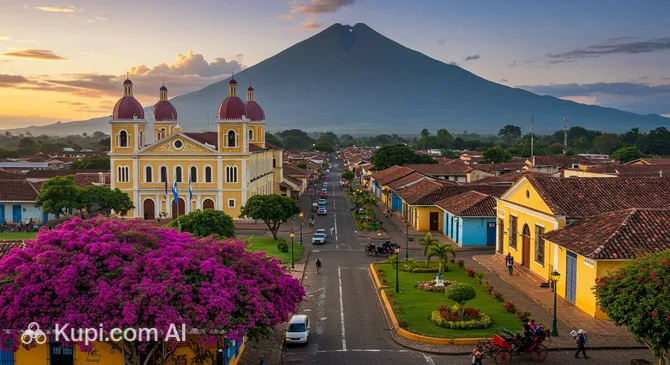
Granada is a true gem of Central America, nestled comfortably on the northwestern shore of the vast Lake Nicaragua. This picturesque city, with a population of about 105,000 people, is located just an hour's drive from the capital, making it a convenient starting point for travel. Travelers arriving in Nicaragua are greeted by Granada's lush greenery, tropical landscapes, and consistently warm climate.
The city is rightfully considered the cultural heart of the region. Founded back in 1524 by the conquistador Francisco Hernández de Córdoba, it is one of the oldest settlements on the continent. Granada's rich history is reflected in its magnificent colonial architecture: colorful building facades, tiled roofs, enfilades of columns, and hidden courtyards create an atmosphere of eternal celebration and southern comfort.
Granada. Illustration.
Source: Kupi.com AI
Here, everyone will find something to their liking: from leisurely strolls along narrow cobblestone streets to exploring ancient churches and cathedrals. The majestic Mombacho Volcano, towering over the city, and the famous Islets of Lake Nicaragua, where you can go on a boat excursion, particularly attract tourists. In the evening, the city center comes alive: street musicians play in the main square, and the aroma of fresh coffee wafts from cozy cafes.
Granada is a city that you want to explore without haste, as if you've found yourself on the set of a beautiful historical film. It is a place with a unique character and incredible sunsets that is definitely worth a visit to experience authentic colonial charm.
Weather Overview
Granada's climate is typically tropical, hot, and humid, making the city an attractive destination for warmth lovers at any time of the year. The temperature regime here is remarkably stable: average annual indicators fluctuate in the range of 26°C to 28°C, and sharp cold snaps almost never happen here.
Two seasons are clearly visible throughout the year. The dry period lasts from January to April, when there is practically no rain (0–1 mm of precipitation), and the number of rainy days is minimal. From May, the situation changes: the rainy season begins, which continues until November, reaching its peak in September and October (up to 27–28 rainy days per month). Expect sultry and dry weather in the first half of the year and a wet season with frequent tropical downpours in the second, while the air temperature remains consistently high. To choose the ideal time for your trip, we recommend checking the detailed weather in Granada by month in advance.
The hottest months are traditionally April and May, when daily maximums reach 31–32°C. Even in the relatively "cool" winter period, for example in December and January, the night temperature rarely drops below 23°C, which guarantees warm and comfortable evenings for walks through the colonial center.
Average monthly temperature
Average monthly precipitation
Interesting Facts
In addition to its impressive colonial architecture, Granada holds many amazing stories and natural phenomena that make this city truly unique. Here are a few facts that will allow you to look at the "Paris of Central America" from a new perspective.
The oldest city on the continent. Granada is considered the oldest city on the mainland of the Americas founded by Europeans and continuously inhabited since its creation. Despite the fact that the city was repeatedly subjected to devastating pirate attacks and fires, it rose from the ashes every time, carefully preserving its historical appearance.
Sharks in fresh water. Lake Nicaragua, on whose shores the city stands, has a unique feature: it is the only freshwater lake in the world where sharks live. This natural phenomenon, associated with the adaptation of marine predators to a freshwater environment, still attracts keen interest from biologists and travelers.
Architectural symbols. The main decoration of the city is the majestic Granada Cathedral, also known as the Cathedral of Our Lady of the Assumption. It is one of the most beautiful churches in the region. And if you want to see the city from above, it's worth climbing the bell tower of the La Merced Church, which offers a breathtaking panorama of tiled roofs and the Mombacho Volcano.
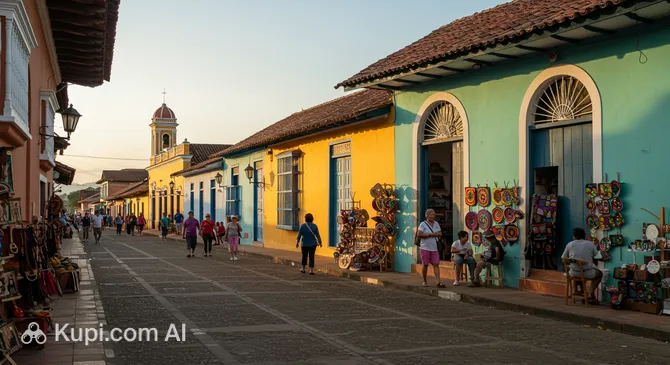
City of craftsmen. Granada is famous for its craft traditions. Local artisans create magnificent items from ceramics, wood, and textiles. To appreciate their skill and find unique souvenirs, be sure to check out the Granada Market, where every item is imbued with national flavor.
Legends of treasures. The city's history is closely intertwined with pirate raids, and local legends say that stolen riches are still hidden in the vicinity of Granada. Many romantics and adventure seekers are inspired by the stories of old-timers and dream of finding these mysterious treasures.
Granada Tourist Center. Illustration.
Source: Kupi.com AI
Traveler photos:
How to Get There
When planning a trip to this picturesque colonial city, it is important to think through the logistics in advance. You can find out more about how to get to Granada by exploring all available options, but for international tourists, the main method remains a flight followed by a land transfer.
The most convenient and popular option is arriving via Augusto C. Sandino International Airport (MGA). It is located in the capital of Nicaragua, Managua, just 32.5 km from Granada. This is the country's largest aviation hub, handling most international flights. From the airport to the center of Granada, you can get by taxi or a pre-booked transfer (shuttle) in about 45–60 minutes, which makes this route the fastest and least tiring.
An alternative route, often chosen by travelers wishing to visit two countries at once, lies through Daniel Oduber Quirós International Airport (LIR) in Liberia, Costa Rica, at a distance of about 155 km. Despite the fact that the airport is large and accepts many flights, the trip will require crossing the state border, which increases travel time to 3–4 hours by bus or taxi. There is also a small Costa Esmeralda Airport in the town of Tola (56.2 km), which primarily serves private aviation and small charters.
For clarity, here is a summary of the main airports:
There is no railway service in this region, so after arrival, road transport remains the main means of travel. Intercity buses and microbuses run regularly between Managua and Granada, providing a reliable and inexpensive connection to the capital.
Main Attractions
Granada is rightfully considered one of the most beautiful cities in the country, and its architectural heritage is impressive at first sight. A walk through the local sights is a journey through the centuries, where every stone breathes history. Here is a list of key places that should definitely be included in your itinerary when visiting this colonial city.
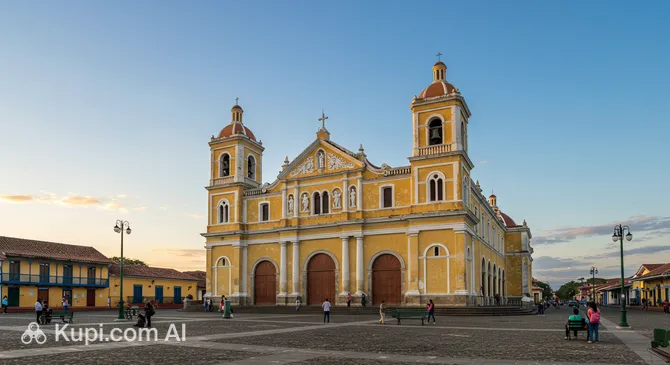
The undisputed symbol of the city is the majestic Granada Cathedral (Catedral de Granada), located on the main square. This bright yellow neoclassical building with red domes is impossible to miss — it dominates the cityscape and serves as the main landmark for tourists. The cathedral was rebuilt several times after being destroyed, and its current appearance embodies the resilience and beauty of the city. After climbing the bell tower, you can enjoy a breathtaking panorama of tiled roofs and a view of the lake.
Right at the foot of the cathedral lies Granada Central Park — the heart of social life. It's not just a green zone, but a real cultural hub where life is always buzzing. Here you can try the famous local dish "vigorón" at one of the stalls, buy souvenirs from artisans, or hire a horse-drawn carriage for a romantic ride around the city. The park's shaded alleys provide a welcome coolness on hot days.
Granada Cathedral. Illustration.
Source: Kupi.com AI
Traveler photos:
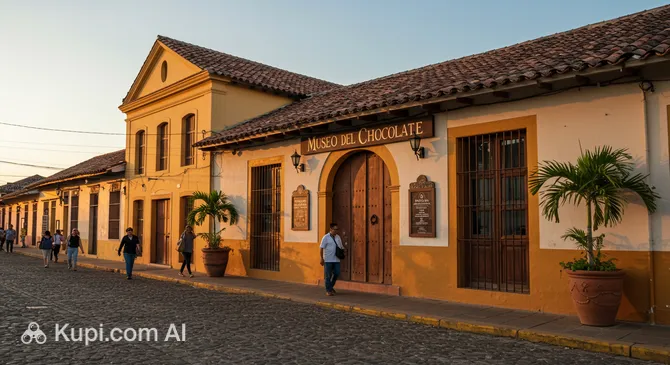
Sweet tooths and history buffs shouldn't miss the ChocoMuseo Granada. Located in a beautiful colonial mansion, it offers a fascinating immersion into the world of cacao, which plays an important role in the region's economy and culture. Here you will learn about the chocolate-making process from bean to bar, be able to participate in workshops, and, of course, taste the best varieties of local chocolate and cacao-based drinks.
For relaxing by the water, the Granada Tourist Center, located on the shores of Lake Nicaragua, is a great choice. This is a well-maintained area with restaurants, piers, and picnic spots. Boat tours to the famous Las Isletas often depart from here. It is an ideal place to watch the sunset while enjoying the fresh breeze from the lake.
Another important historical spot is Xalteva Park. This area is considered one of the oldest in the city and was inhabited by indigenous peoples even before the arrival of the Spanish. The park is decorated with ancient walls and an arch that create a special atmosphere of antiquity. It is usually quieter and more peaceful here than in the center, allowing you to leisurely enjoy the architecture of the nearby church of the same name.
Local Cuisine
The local cuisine of Granada is a vibrant kaleidoscope of flavors, where Spanish traditions are harmoniously intertwined with the culinary heritage of indigenous peoples. For tourists, this is a great opportunity to turn every meal into a small gastronomic adventure. They love hearty, spicy food and the freshest products grown on the region's volcanic soils here.
The gastronomic calling card of the city is rightfully considered "vigorón". It's impossible to miss this dish while walking through the center: boiled yucca, juicy pieces of pork (chicharrones), and a refreshing cabbage salad with tomatoes and vinegar are placed on a green banana leaf. The best place to taste this delicacy is Granada Central Park, where it is sold in numerous kiosks as a popular street food.
The proximity to a huge lake dictates its own rules on the menu: it's definitely worth trying the local fish, especially the famous "guapote". This fish, which lives in Lake Nicaragua, is usually served whole, fried to a golden crust, with a side of rice or tostones (fried plantains). It's best to enjoy fresh seafood in small restaurants on the embankment or by visiting the Granada Tourist Center, where the breeze from the lake complements the meal.
Chocolate Museum Granada. Illustration.
Source: Kupi.com AI
Traveler photos:
For those with a sweet tooth and connoisseurs of drinks, Granada has prepared special treats. The city is famous for its cacao, and the ChocoMuseo Granada is the ideal place to try chocolate rum, traditional cacao-based drinks, and desserts based on old recipes. Don't forget about the famous Nicaraguan coffee, which has a rich taste, as well as freshly squeezed tropical fruit juices, which are sold in abundance on the streets.
The food culture in the city is diverse: from democratic street food to cozy establishments with signature cuisine. If you are looking for a place for a pleasant dinner in a relaxed atmosphere, pay attention to Gaia Forest Cafe and Bistro, which offers healthy and delicious dishes. And for those who want a quick snack of something original, Tostometro is suitable — an establishment specializing in huge tostones with various fillings.
Travel Tips
Granada is a city with a unique flavor, and to make your trip as comfortable as possible, you should learn about some local nuances in advance. Here is a list of useful recommendations that will help you feel confident from the first minutes of your stay in the "Paris of Central America."
Clothing and footwear. The climate here is hot and humid, so take light clothes made of natural fabrics such as cotton or linen. Be sure to bring comfortable flat shoes: walking on the ancient cobblestones of the historic center in flip-flops or heels is extremely uncomfortable and risky. If you plan to visit active churches, observe a modest dress code (shoulders and knees should be covered).
Getting around the city. The historic center is compact and best explored on foot. There is no public transport like a metro here. For long-distance trips, use official taxis (usually white). Important: there are no meters in the cars, so always agree on the price before getting in. Apps like Uber are unstable; it's more reliable to hail a car on the street or ask hotel staff to call one.
Money and payment. The official currency is the córdoba, but US dollars are accepted almost everywhere (change may be given in local currency). Visa and Mastercard are accepted in major hotels, supermarkets, and restaurants, but you will need cash at the market, souvenir shops, and for taxis. Try to have small bills with you: it's often hard to find change for a 20-dollar bill. Tips (about 10%) are sometimes included in the bill, but more often they are left voluntarily.
Health and safety. It is strongly recommended not to drink tap water — buy only bottled water. Pharmacies (Farmacia) are common, but it's better to bring specific medications with you. The tourist center is safe and patrolled by police, however, avoid walking alone in dark, deserted alleys outside the bar and restaurant area after sunset.
Communication and language. The main language of communication is Spanish. In the tourism sector, they speak English, but for communicating with taxi drivers or fruit sellers, it's better to learn a few basic phrases or download an offline translator. A SIM card from local operators (Claro or Tigo) can be bought at any kiosk; you will need a passport for registration. Wi-Fi is available in most cafes and hotels, and the speed is usually acceptable.
Etiquette. Residents of Nicaragua are very friendly and value politeness. It is customary to say hello ("Buenas" or "Hola") when entering a shop, taxi, or restaurant. You should only photograph locals, especially children, with their verbal permission. A calm tone and a smile will help solve any problem faster than persistence.
What to avoid. Do not openly display expensive jewelry, the latest gadgets, or large amounts of money on the street to avoid attracting unnecessary attention. Also, do not expect strict punctuality: a relaxed rhythm of life reigns here, and a slight slowness in service is considered the norm.
Tip for early birds. The best time for photo shoots and walks is early morning, from 6:00 to 8:00 AM. In these hours, the city is still sleeping, the streets are deserted, the light is soft, and the air is fresh and cool. This is the ideal moment to see the true beauty of colonial facades without crowds of tourists and the exhausting heat.
By following these simple tips, you can avoid minor troubles and fully focus on the beauty and hospitality of Granada. We wish you vivid impressions and a safe, memorable trip!
Entertainment & Nightlife
Nightlife in Granada is a bright and colorful continuation of the day, when the tropical heat subsides and the city fills with music and lights. Unlike noisy metropolises with huge nightclubs, there is a more relaxed yet lively atmosphere here. The epicenter of evening entertainment is invariably the pedestrian street Calle La Calzada, which stretches from the central park to the lake. At dusk, restaurants move their tables onto the street, and street musicians, breakdancers, and fire show artists appear, creating a sense of a non-stop carnival.
The crowd here is very diverse: from backpackers from all over the world to local families out for an evening stroll. There is no dress code in most establishments — a "tropical casual" style (shorts, light shirts, sandals) will be appropriate almost everywhere. Parties usually start around 8:00–9:00 PM and continue until midnight or slightly longer, although on weekends the fun can last later.
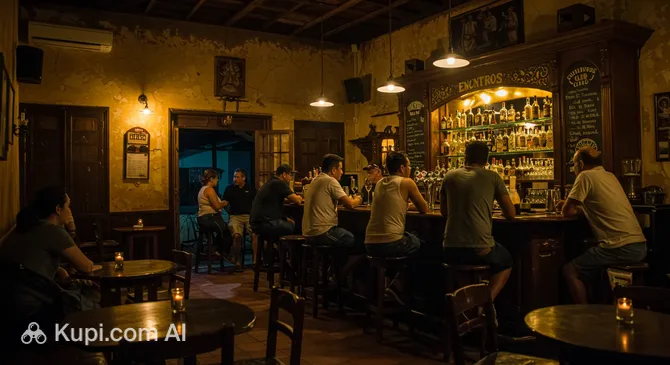
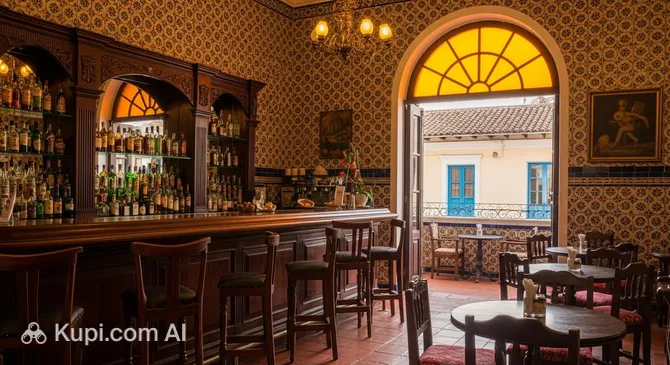
If you are looking for a place with a special atmosphere for a cocktail or dancing, check out Encuentros Club. This popular venue combines the spirit of old Granada with a modern rhythm, offering guests great drinks and music. For those who prefer a more peaceful and historical setting, the bar at Hotel El Almirante is an excellent choice. Here you can enjoy a glass of local Flor de Caña rum in a cozy courtyard, feeling like a character in a colonial novel.
Encuentros Club. Illustration.
Source: Kupi.com AI
Traveler photos:
Fans of unusual places should drop by Psych Lounge. This venue attracts with its unique aesthetic and relaxed vibe, perfect for socializing with friends. Prices in Granada's bars will pleasantly surprise you: local beer often costs around 1–2 dollars, and cocktails range from 3 to 5 dollars. Many establishments offer "happy hours" at sunset.
Safety and transport at night: Calle La Calzada and the Central Park area are well-lit and patrolled by tourist police, so it is safe to walk here until late at night. However, you should avoid dark and deserted alleys away from the main tourist area. If your hotel is several blocks from the center, it's better not to risk it and take a taxi. At night, the fare may be slightly higher than during the day, but a trip around the city will still remain budget-friendly (usually 2–3 dollars). Always agree on the price before getting in.
While Granada is primarily famous for its evening leisure, there is also plenty for culture lovers to do during the day. The city has small art galleries and cultural centers, often located in historical buildings, which host exhibitions and intimate concerts. However, the city's main "stages" remain its squares and parks, where life buzzes from morning until late at night.
Parks & Museums
Granada harmoniously combines the charm of colonial architecture with picturesque green zones and a rich museum heritage. A walk through the local parks and cultural institutions will allow you to deeper understand the soul of this Nicaraguan city, take a break from the tropical heat, and touch the ancient history of the region.
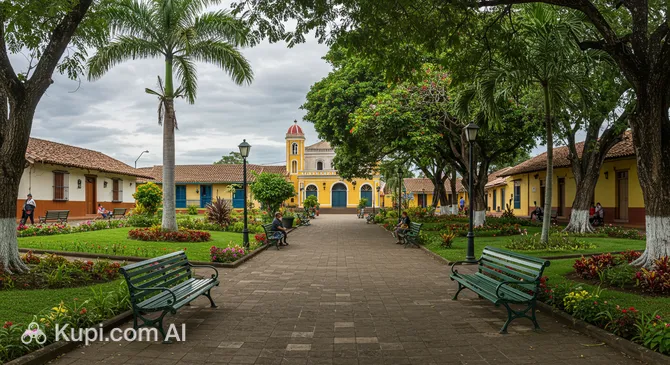
Among the city's green zones, a special place is occupied by Granada Central Park. It's not just a square, but a real open-air living room where locals and tourists meet under the shade of centuries-old trees. It is always lively here: fountains are working, local snacks are sold, and music often plays in the gazebos. For a more peaceful holiday, it's worth visiting Xalteva Park. This historical square is located in an area that was inhabited by indigenous peoples even before the arrival of the Spanish. Today it is a cozy place with well-kept alleys, ideal for leisurely walks and getting to know the city's colonial past.
Xalteva Park. Illustration.
Source: Kupi.com AI
Traveler photos:
If you want to feel the freshness of the water element, head to the Granada Tourist Center. This extensive recreational area stretches along the shores of Lake Nicaragua. There are picnic areas, playgrounds, and walking paths offering magnificent views of the lake and the Mombacho Volcano. This is the best place within the city to enjoy the lake breeze.
Granada's cultural life is represented by several interesting museums. One of the most popular is the ChocoMuseo Granada. The exhibition is located in a beautiful mansion and tells the history of cacao in the region. Tourists are attracted by the interactive format: here you can not only learn about the production process but also try yourself in the role of a chocolatier. Also noteworthy is the San Francisco Convent Museum (Museo del Convento de San Francisco). Within its walls is kept a unique collection of pre-Columbian statues from Zapatera Island and religious art, and the building itself is an important architectural monument.
Speaking of architectural landmarks, it is impossible not to mention the Granada Cathedral. This majestic bright yellow building serves as the city's main landmark and impresses with its neoclassical facade. Viewing the cathedral and the adjacent square is a mandatory part of any cultural program.
For those looking for hidden gems, we recommend visiting the La Pólvora Fortress (Fortaleza La Pólvora). This ancient building, erected for storing gunpowder, is open to visitors today. By climbing its towers, you can see the city from an unusual perspective and enjoy the silence away from the noisy tourist trails.
Getting Around
The public transport system in Granada differs significantly from the scheme familiar to many tourists in major metropolises, but is quite typical for Nicaragua. You will not find a metro, trams, or trolleybuses here. Since the historic city center is quite compact, most attractions are easy to get around on foot, enjoying the architecture and atmosphere of the ancient streets. However, if you need to get to remote areas or the lakefront, several types of land and water transport are at your service.
The most popular and convenient means of transport for tourists is the taxi. Unlike the capital, cars in Granada are usually white or silver. It is important to know that there are no meters in the cars. The cost of a trip is fixed, but it can vary depending on the distance and time of day. Be sure to agree on the price with the driver before you get into the car. A trip within the center is usually inexpensive (about 1–2 US dollars or the equivalent in local currency per person). Be prepared for taxis here often working in "colectivo" mode, meaning the driver can pick up other passengers along the way.
A unique feature of the city's transport system is the horse-drawn carriages (coches de caballos). This is not just a tourist attraction, but a full-fledged form of transport used by locals as well. The carriage stand is located near Central Park. This is an ideal way to leisurely see the colonial center. The cost of a one-hour ride is usually fixed, but it's worth clarifying in advance.
City buses are mainly represented by old American school buses, known as "chicken buses". They are brightly painted and look very colorful, but tourists rarely use them for moving within the city. The routes are often confusing, and the cabins are overcrowded. They mostly depart from the market and serve for trips to neighboring villages or cities. There is no schedule as such; buses depart as they fill up.
Since the city stands on the shore of a huge lake, water transport plays an important role. Motorboats (lanchas) for excursions to the famous islets (Isletas de Granada) depart from the tourist center and the port of Asese. Tickets for such trips can be bought directly at the pier or through travel agencies in the center.
The payment system is very simple everywhere: only cash is accepted. There are no transport cards, passes, or mobile applications for paying fares here. It is best to pay in local currency (córdobas). It is highly recommended to carry small bills and coins with you, as taxi and bus drivers often do not have change for large banknotes. US dollars may be accepted in a taxi or for a carriage ride, but the exchange rate will not be the most favorable.
As an alternative to public transport, bicycle rental is popular in the city. This is a great and budget-friendly way to explore the surroundings at your own pace. Rental points can be found in some hostels and tourist offices on Calle La Calzada. Taxi-hailing apps (like Uber) work unstable or are completely absent in the city, so it is better to rely on street taxis or the hotel's help in ordering a car.
Accommodation
The choice of accommodation in Granada can pleasantly surprise even the seasoned traveler. The city offers a wide range of accommodation options: from budget youth hostels with a creative atmosphere to luxury boutique hotels located in restored colonial mansions. A feature of the local housing stock is the cozy courtyards with fountains and gardens, hidden behind the massive doors of ancient buildings, allowing you to enjoy peace and coolness in the very center of the city.
The most popular and convenient area to stay is the Historic Center. By staying here, you will be within walking distance of the main architectural monuments. Living near such an iconic place as Granada Central Park means being at the epicenter of urban life, where trade buzzes and musicians play from morning to evening. If you want to wake up with a view of the domes, look for options near the Granada Cathedral. However, keep in mind that on the central streets, especially on Calle La Calzada, it can be quite noisy in the evenings due to bars and restaurants.
Hotel El Almirante. Illustration.
Source: Kupi.com AI
Traveler photos:
For those who prefer a more peaceful atmosphere and fresh air, it is worth considering accommodation options closer to the shores of Lake Nicaragua, in the area where the Granada Tourist Center is located. Here the rhythm of life is more measured, and the breeze from the lake saves you from the daytime heat. This area is great for families with children and those who plan to frequently take boat trips to the Las Isletas islets.
The price range in Granada is very democratic compared to European or North American resorts:
Budget segment: A bed in a hostel or a simple room in a guesthouse will cost 10–25 USD per night. This is a great option for backpackers and young people.
Middle class: For 40–80 dollars, you can rent a comfortable room in a small hotel with a pool, air conditioning, and breakfast.
Premium: Luxury boutique hotels and colonial residences offer rooms from 100–150 dollars and up, providing a high level of service and unique interiors.
Booking tip: Granada is a popular tourist destination, so in the "high season" (December to April) and especially during Holy Week (Semana Santa), the best options are taken very quickly. It is recommended to book accommodation at least a month before the trip. For searching, it is convenient to use popular international online platforms, but many small family-run hotels (posadas) also accept bookings through social networks or messengers.
Nearby Cities
For those who want to explore the surroundings, Granada serves as an excellent starting point for day trips to several interesting nearby places. The city's convenient location makes it easy to reach other cultural and natural centers of the region, each of which has its own unique character.
One of the most popular destinations is Masaya, located just 15 km away. This city is known as the "cradle of Nicaraguan folklore" and is famous for its huge craft market, where you can buy the best hammocks, ceramics, and wood products. In addition, the famous Masaya Volcano National Park is very close by, where tourists can look into the crater of an active volcano.
The country's capital, Managua, is located about 36 km from Granada. A trip there will allow you to visit the country's main museums, see historical monuments on Revolution Square, and walk along the modern tourist waterfront of Puerto Salvador Allende on the shores of the lake. Also of interest is Diriamba, a city with rich traditions, known for its vibrant festivals and colonial church.
City
Population
Distance
Diriomo
22 352
12 km
Masaya
139 582
15 km
Niquinohomo
14 847
16 km
Nandasmo
10 732
18 km
Tisma
10 681
18 km
These nearby destinations provide an insight into the region's diverse culture and landscapes, making your journey through Nicaragua even more fulfilling.
Shopping & Souvenirs
Shopping in Granada is not a chase for world brands in glass skyscrapers, but a fascinating immersion into the world of authentic crafts and colonial charm. The city is not famous for huge malls, but it is known for its talented artisans. Here you can find unique handmade products that keep the warmth of human hands and reflect the rich culture of the region. The main emphasis is on leather goods, ceramics, textiles, and gastronomic souvenirs.
The main tourist artery, where the trade in souvenirs and art objects is concentrated, is the pedestrian street Calle La Calzada. Strolling here, you will find many boutiques with clothing, jewelry, and paintings by local artists. Another important shopping area is Calle del Comercio, leading to the main market. Life is much more active here, and the shops are oriented towards both tourists and locals, offering everything from shoes to electronics.
If you are used to large-scale shopping centers, Granada may seem modest. There are no giant Western-style malls here; locals usually go to the capital for them. Small shopping arcades and supermarkets such as La Colonia operate in the city, where you can buy groceries and basic necessities, but shopping here is more intimate and cozy than mass-market.
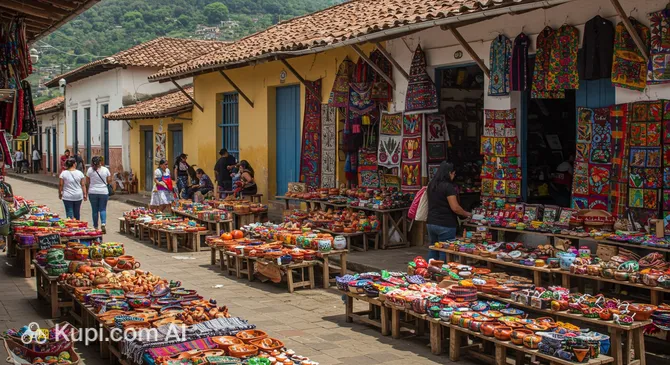
The true heart of the city's trade is the colorful Granada Market (Mercado Municipal). It is a noisy, bright, and slightly chaotic place located in a historical building with a neoclassical facade and occupying several adjacent blocks. Here you can buy the freshest exotic fruits, vegetables, spices, as well as clothing and household items at very affordable prices. Visiting the market is not just buying goods, but a real cultural experience.
Granada Market. Illustration.
Source: Kupi.com AI
Traveler photos:
When choosing gifts, pay attention to local specialties. Granada is famous for high-quality leather goods: handmade bags, belts, and shoes cost significantly less here than in Europe or the US. Those with a sweet tooth should look into the ChocoMuseo Granada, where you can buy organic chocolate, cacao beans, and cosmetics based on them. Don't forget about the famous Nicaraguan cigars and Flor de Caña rum. Also popular are the bright hammocks and ceramics, which are often sold by street vendors near places like Granada Central Park.
Most shops are open from 9:00 AM to 6:00 PM or 7:00 PM from Monday to Saturday. On Sunday, many shops may be closed or work on a reduced schedule. Keep in mind that in small private shops, a siesta may be observed during the hottest hours of the day (roughly from 12:00 PM to 2:00 PM). Major tourist spots and hotels accept credit cards, but in the market and in small shops you will need cash (córdobas or small US dollar bills). Bargaining is appropriate at the market and when buying souvenirs from vendors, but in shops, prices are usually fixed.
The Tax Free system (VAT refund) is not widely used for tourists in Nicaragua as it is in European countries. You will likely not find specialized tax refund desks at the airport or shops with a Tax Free sign. Therefore, assume that the indicated price is final, which is, however, compensated by the overall affordability of goods in the country.