Support

Amursk

About

Amursk is a cozy city spread across the vast expanses of the Far East of Russia, in the Khabarovsk Krai. This city, whose name is inextricably linked to the great Amur River, has its own unique atmosphere, combining industrial history with the charm of the taiga nature. Despite its relative youth, Amursk has managed to become an important settlement in the region.
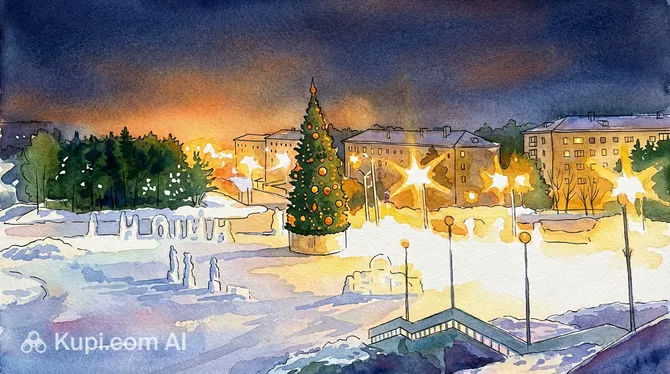
Amursk. Illustration.
Source: Kupi.com AI

The city is located on the left bank of the Amur River, which defines its picturesque surroundings and influences the climate. Here, the climate is moderately continental, with frosty, snowy winters and warm, sometimes rainy summers. The population of Amursk is about 40,000 people, which creates the feeling of a compact and friendly community. The city was founded as a center for the pulp and paper industry, and this heritage is still felt in its appearance and character.

For travelers interested in the history and culture of the region, Amursk can offer several interesting places. It is definitely worth taking a walk along the Amur River embankment, which offers impressive views of the river expanses, especially at sunset. In the City Local Lore Museum, you can learn more about the development of these lands, indigenous peoples, and the establishment of Amursk itself. There are also parks and squares in the city where it is pleasant to spend time enjoying the peace and fresh air.

Amursk is an opportunity to see another, non-metropolitan Russia, get acquainted with the life of a Far Eastern city, and enjoy the beauty of the harsh but attractive nature. If your path lies through the Khabarovsk Krai, take some time for this unique city on the banks of the mighty Amur.

You can find more interesting facts on the Amursk city history page

Weather Overview

The weather in Amursk is characterized by significant seasonal contrasts typical of a sharply continental climate. Winters here are long and very cold: the average January temperature is around -21.8°C, often dropping to -26°C and below. Summer, on the other hand, is quite warm but short, with an average July temperature of around +21.9°C, when maximum values can reach +25°C. Expect a warm summer with periodic rain, especially in August, which is the wettest month with about 15 rainy days, and frosty, mostly dry winters—for instance, in February there are usually only about 2 days with precipitation, and the amount of precipitation itself is minimal. For a more detailed look at climatic features and the current forecast, you can study the Amursk climate.

Average monthly temperature

Average monthly precipitation

Interesting Facts

Amursk, a city with a rich industrial history and picturesque banks along the Amur, holds not only obvious attractions but also several curious secrets and little-known facts. Here are some of them:

  • Many do not know that Amursk was originally conceived and built as a satellite city of Komsomolsk-on-Amur, and its construction became a true Komsomol project. Thousands of young people from all over the Soviet Union came here to participate in creating a new industrial center in the Far East.

  • Contrary to its industrial image, the surroundings of Amursk boast the popular "Padali" ski complex. This is a magnet for winter sports enthusiasts not only from the city itself but also from other parts of the Khabarovsk Krai, offering runs of various difficulty levels.

  • In addition to the pulp and paper mill that prompted the city's founding, Amursk is home to the Vympel Amur Ammunition Plant. This enterprise is an important part of the defense industry of Russia, and its history is also closely intertwined with the city's development.

  • The coat of arms of Amursk is not just a symbolic image but a whole story. it depicts a green spruce, symbolizing not only the region's rich forests but also the primary raw material for the city-forming enterprise. A gear wheel emphasizes industrial power, while waves represent the unbreakable link with the Amur River.

How to Get There

You can get to Amursk in various ways, combining flights and ground transport. Since the city is located deep within the Khabarovsk Krai, the journey often involves a transfer at major regional transport hubs. You can find all the ways to reach the city on our detailed page.

Amursk itself does not have an active passenger airport, but you can fly into Komsomolsk-on-Amur Airport (IATA: KXK), which is located in the city of Komsomolsk-on-Amur. This is the nearest air harbor, situated just 20.5 km from Amursk. A taxi or bus ride from there will take about 50 minutes. The airport accepts regional flights and is a convenient option for those who want to minimize the ground portion of their journey.

For travelers from distant regions or other countries, the main point of arrival is often Khabarovsk International Airport (IATA: KHV). It is located in the regional capital, Khabarovsk, approximately 226 km from Amursk. This is a major transport hub with significant passenger traffic. The journey from Khabarovsk Airport to Amursk by car or intercity bus takes about 6 hours; a train is also an option.

For clarity, here is summary information on the main airports:

AirportPassenger trafficDistance
Komsomolsk-on-Amur Airport120 00020 km
Khabarovsk2.4 mln226 km
Sovetskaya Gavan15 000269 km
Fuyuan Dongji Airport200 000292 km

Rail transport is one of the most reliable ways to get to the city, especially in winter. The city itself is served by the Mylki station, which is within the administrative district of Amursk, about 14.2 km from the center. From the station to the residential quarters, you can get by taxi or local bus in about 40 minutes.

An alternative option is arriving at the major Komsomolsk-on-Amur Passenger Station in the city of Komsomolsk-on-Amur. It is located 46.6 km from Amursk and accepts more long-distance trains. From there, buses and taxis run regularly to Amursk, with a travel time of about an hour and a half.

Below is information about the nearest railway stations:

StationPassenger trafficDistance
Mylki Station150 00014 km
Komsomolsk-on-Amur Passenger Station450 00047 km
Khabarovsk-1 Railway Station2.5 mln233 km
Khabarovsk-113234 km
Soloni Railway Station268 km
Vanino Railway Station150 000274 km

Main Attractions

Despite its industrial focus, Amursk offers guests several interesting places where they can get acquainted with the city's history and culture, as well as enjoy its unique atmosphere. Here are some of the key attractions worth visiting.

First and foremost, we recommend visiting the Amursk City Local Lore Museum. Here you can immerse yourself in the history of the development of the Amur region, learn about the indigenous peoples, the stages of the formation of Amursk itself, and its core enterprises. The museum's exhibitions store unique household items, photographs, and documents telling about the past and present of this Far Eastern city. It is a great place to better understand the character and soul of Amursk.

A mandatory point on the program for any tourist is a walk along the Amur River Embankment. This is one of the most picturesque places in the city, offering breathtaking views of the mighty river and its expanses. The embankment is a wonderful place for leisurely walks, especially in the evening when you can admire the sunset. Here you can breathe the fresh river air, take beautiful souvenir photos, and simply relax from the city bustle.

For those interested in the city's spiritual life, it is worth visiting the Church of St. Seraphim of Sarov. This Orthodox church is not only an important religious center for local residents but also an architectural decoration of Amursk. A visit to the church provides an opportunity to get acquainted with the traditions of Russian Orthodoxy and find a moment for peace and quiet reflection.

Another iconic place is the Monument to the First Builders of Amursk. This monument is dedicated to the courage and labor of those who, in difficult conditions, laid the city's foundations and built its first houses and enterprises. The monument recalls the Komsomol enthusiasm and selflessness of the people thanks to whom Amursk appeared on the map of Russia. This place makes you think about the history of the city and its creators.

Local Cuisine

The culinary scene in Amursk, like many cities in the Russian Far East Russia, is an interesting fusion of traditional Russian cuisine with vivid regional accents, shaped by proximity to the mighty Amur River and the riches of the taiga nature. Here you can taste both familiar Russian dishes and unique local specialties that will leave pleasant memories of your trip.

The basis of local cuisine is certainly dishes made from fresh river fish caught in the Amur. Be sure to try a hearty ukha (fish soup), fried or smoked Amur carp (sazan), lenok, or grayling (kharius). Pelmeni and vareniki are also popular, which can be prepared here not only with meat but also with fish or mushroom fillings. Don't overlook the satisfying pies—with fish, cabbage, wild berries (lingonberries, cranberries), or mushrooms. Among meat dishes, meals made from beef, pork, and chicken prepared according to classic Russian recipes are common.

Regarding non-alcoholic beverages, traditional Russian fruit mors made from forest berries, refreshing kvass (especially in the summer heat), and, of course, tea are popular in Amursk. Sometimes you can find tea with local taiga herbs added. Among alcoholic beverages, vodka prevails, as well as locally or regionally produced beer. In some families, you might be treated to homemade infusions made with berries or herbs.

The dining culture in Amursk is quite traditional. The main places to eat are cafes and small restaurants offering Russian and European cuisine. You may also find "stolovayas" (canteens) preserved from Soviet times, offering simple but filling lunches at affordable prices. Street food is not as widely represented as in big cities, but you can find spots selling pastries or shawarma. Locals often buy fresh fish, berries, and mushrooms at markets to cook at home.

The gastronomic scene of Amursk is characterized by its simplicity, heartiness, and use of fresh local products. Key specialties to highlight are the various Amur fish dishes—from ukha to smoked varieties—and the use of taiga gifts: wild berries, mushrooms, and perhaps game during the season. Overall, the cuisine here is homey and soulful, allowing you to experience the true flavors of the Far East.

Travel Tips

Planning a trip to Amursk? Wonderful! To ensure your journey through this interesting city in the Far East is as comfortable as possible and leaves only positive emotions, we have gathered some useful practical tips for you.

  1. Clothing for the season and essentials: The climate in Amursk is continental, with frosty, snowy winters and warm, sometimes rainy summers. In winter (November to March), you will need very warm clothing: a down jacket or fur coat, hat, mittens, scarf, thermal underwear, and insulated waterproof shoes. In summer (June-August), light clothing will do, but don't forget a sweater or jacket for cool evenings and a raincoat. At any time of year, comfortable walking shoes are useful. If you plan to visit the Church of St. Seraphim of Sarov, remember appropriate attire: women should preferably cover their heads and wear a skirt below the knees, while men should be in trousers and without headwear. Don't forget a universal adapter for electrical appliances if your plugs differ from Russian ones (types C and F).

  2. Getting around the city: Amursk is a relatively small city, so getting around it is quite easy. The main form of public transport is buses. Taxi services are also available; we recommend using official services or verified local apps if available (for example, Yandex Go, but it's better to check its operation on-site). Renting a car for travel within the city is usually not necessary but could be useful if you plan to explore the surroundings, such as visiting the "Padali" ski complex in winter.

  3. Financial matters: The official currency in Amursk, as in all of Russia, is the Russian ruble (RUB). You can exchange currency at bank branches. Bank cards of the "Mir" system are accepted almost everywhere. However, with cards from international payment systems (Visa, Mastercard, etc.) issued outside of Russia, serious difficulties may arise or they may not work at all—be sure to clarify this point before your trip and have a sufficient supply of cash. There are ATMs in the city. Tipping in restaurants and cafes is not mandatory but is welcomed (usually 5-10% of the bill for good service).

  4. Health and safety: There are pharmacies in Amursk (look for the "Аптека" sign), though not all of them may operate 24/7, so it's better to have a basic set of medications with you. In case of emergency medical needs, call the unified emergency number 112 or 103 (ambulance). Amursk is generally a peaceful city, but general precautions should be observed: watch your personal belongings, especially in crowded places, and avoid walking alone in poorly lit areas after dark.

  5. Communication and internet: The official language is Russian. English proficiency among the local population may be low, especially outside the limited tourist infrastructure. Learn a few basic phrases in Russian, for example: "Zdravstvuyte" (privét/zdrávstvuyte – hi/hello), "Spasibo" (spasíbo – thank you), "Pozhaluysta" (pozháluysta – please/you're welcome), "Skolko stoit?" (skól'ko stóit? – how much does it cost?). You can purchase a local SIM card at mobile phone shops (you will need a passport). Wi-Fi is available in some hotels and cafes. For navigation, the Yandex Maps or 2GIS apps can be very helpful.

  6. Local etiquette: When communicating with locals, be polite and friendly. It is customary to greet people (men often shake hands). When entering a private home or apartment, it is customary to take off your outdoor shoes. In public places, try not to be noisy or attract unnecessary attention. If you are invited to visit, a small token of appreciation (for example, flowers for the hostess, a cake, or chocolate) is appropriate.

  7. What to avoid: Try not to engage in discussions on sensitive political topics. Refrain from photographing industrial enterprises (for example, the Vympel Amur Ammunition Plant, if visible) and other objects that might be considered strategic without special permission. Also, avoid displaying excessive wealth or leaving valuables unattended.

  8. Special tip – gifts of the Amur: Don't miss the chance to try local fish caught in the Amur. It can be found at markets in fresh, smoked, or salted form, and also ordered in local cafes and restaurants. It could be carp, pike, lenok, or other Amur fish—the true taste of the Far East!

We hope these tips help you better prepare for your trip to Amursk and get the most out of getting to know this unique city on the banks of the great river. We wish you a pleasant and interesting journey!

Entertainment & Nightlife

Amursk, being a compact city, offers its guests and residents quite peaceful yet heartfelt leisure. Although you won't find bustling nightlife districts like in major metropolises, there are certainly opportunities for pleasant evening and daytime relaxation.

Evening and night entertainment in Amursk is generally concentrated along the main city arteries, which are often streets like Prospekt Mira or Komsomolsky Prospekt, as well as in the central square area. Instead of large night clubs typical of big cities, you are more likely to find cozy cafes and small local bars. For example, in addition to the City Palace of Culture, which is often the center of evening events (concerts, plays, themed evenings), places like the "Ogonek" cafe or the "Taezhny" bar can be points of attraction. Important note: the names and popularity of specific private establishments in small towns can change quickly. Therefore, it is always best to clarify the most up-to-date information about open and interesting places, their programs, and opening hours directly on the spot from locals, at your hotel, or by following city posters and online resources, if available. The atmosphere in such establishments is usually relaxed and friendly, gathering mostly a local crowd, and a special dress code is typically not required. Establishments usually come to life closer to Friday evening and on Saturday.

Prices for entertainment and in Amursk establishments are generally moderate. For moving around the city in the evening and at night, taxis are the most convenient option. It is recommended to use official local services, whose numbers can be obtained at the hotel or from locals. Public transport runs on a schedule, and its operation in the late hours may be limited. As for safety, Amursk is generally considered a peaceful city. Nevertheless, standard precautions won't hurt: try to stick to well-lit central streets, such as the mentioned Prospekt Mira or Komsomolsky Prospekt, and do not walk alone in deserted areas late at night.

During the day in Amursk, there is also plenty to do. You can visit the City Local Lore Museum to get a deeper look at the region's history or walk along the picturesque Amur embankment. The city has park areas for peaceful relaxation and fresh-air walks. For fans of active recreation in winter, the "Padali" ski complex located near the city may be of interest. Although there might not be large theaters or specialized amusement parks in Amursk, local cultural centers, including the aforementioned City Palace of Culture, sometimes offer interesting daytime programs and events for the whole family.

Parks & Museums

Amursk offers its guests not only an introduction to industrial history and the beauty of the great river but also opportunities for cultural enrichment and outdoor relaxation. The city has cozy green zones and places where you can touch its heritage.

Among the key green areas where you can enjoy fresh air and picturesque views, the Amur River Embankment stands out. It is not just a place for walks but a kind of extended park along the mighty river, ideal for leisurely rest, jogging, or simply contemplating the river's expanse. In addition to the embankment, Amursk has city squares and small park areas, often located along central streets such as Prospekt Mira or Komsomolsky Prospekt. These green corners serve as pleasant spots for a short break. For those seeking wilder nature, the city's surroundings, shrouded in taiga forests, offer opportunities for excursions and connecting with nature, especially during the warmer months.

The cultural life of Amursk centers around several key sites. The primary repository of history and traditions is the Amursk City Local Lore Museum. By visiting it, you can learn many interesting things about the development of these lands, the indigenous peoples of the Amur region, the founding and growth of the city, and its famous residents. The museum's exhibits include artifacts, photographs, and documents that vividly illustrate the past and present of Amursk. While the city may not have large art galleries, cultural events, exhibitions by local artists or photographers are sometimes held at the City Palace of Culture, which serves as a center for social and cultural life.

Speaking of historical and architectural heritage, one cannot fail to mention the Monument to the First Builders of Amursk. This monument is dedicated to those who established the city in the harsh conditions of the Far East and is a symbol of labor achievement. Another significant site is the Church of St. Seraphim of Sarov—not only a spiritual center but also a notable architectural structure in the city, attracting visitors with its peaceful atmosphere.

To get a more authentic experience, take a stroll through the non-central streets of Amursk and observe the daily life of the townspeople. Sometimes the most interesting discoveries wait where you least expect them—perhaps a small square with an interesting sculpture or a cozy courtyard preserving the spirit of old Amursk.

Getting Around

Getting around Amursk by public transport is quite simple, as the city is not very large and its transport system is oriented toward the convenience of residents and guests. You won't have to figure out complicated metro or tram line maps, as the main emphasis is on bus service.

The main form of public transport in Amursk is buses. They cover the main city routes, connecting residential quarters with the city center, the bus station, and other important points. Buses follow approved routes and schedules. In some cases, fixed-route taxis ("marshrutkas") may also be found, supplementing the bus network, but buses remain the foundation of the transport system.

The fare payment system in Amursk is usually straightforward. Most often, tickets are purchased directly from the driver or conductor upon entering the bus. The preferred form of payment is cash, so it is recommended to have small bills and coins on hand. The cost of a single trip is usually low and comparable to rates in other small cities in Russia. Specialized transport cards or complex mobile apps for fare payment are rarely used in cities of this scale.

Here are some practical tips for tourists: tickets are generally bought upon boarding. The bus schedule usually covers the period from early morning until evening. On weekends and holidays, intervals may increase, and the last trip may depart earlier. You can try to find schedule information at bus stops or ask local residents. Keep your ticket until the end of the trip, as inspections are possible.

If public transport doesn't suit you, the main alternative in Amursk is a taxi. This is a convenient way to quickly reach any point in the city, especially if you have a lot of luggage or are traveling late. It is recommended to use official local taxi services or well-known aggregator apps if they are available and working in the city (their current status is best checked upon arrival). Given the compactness of Amursk, it is quite possible to get around on foot to explore the central areas and attractions. Options like car-sharing or a developed bike rental system are typically not characteristic of cities of this size.

It is worth noting that there are no forms of transport such as the metro, trams, or trolleybuses in Amursk. The city's transport infrastructure fully corresponds to its size and needs, ensuring reliable and accessible movement for everyone.

Accommodation

When planning a trip to Amursk, it is important to think about accommodation in advance. The city offers several options for staying, oriented toward different needs and traveler budgets. Although Amursk is not a major tourist center, you can find a comfortable place to rest after an eventful day of exploring the city and its surroundings.

In Amursk, the primary choice of accommodation is hotels of various comfort levels—from more budget-friendly options to mid-range hotels. Short-term apartment rentals are also popular, which is especially convenient for family travelers or those who prefer a more home-like environment. Luxury resorts or a wide variety of hostels are unlikely to be found in the city, but the existing options are capable of meeting the basic needs of tourists.

When choosing a place to stay in Amursk, it is worth paying attention to the central areas of the city or hotels located along the main transport arteries, such as Prospekt Mira or Komsomolsky Prospekt. Staying in these parts of the city will provide easy access to key infrastructure, shops, cafes, and some attractions, such as the City Local Lore Museum or the Amur River Embankment. Proximity to transport hubs will also be a plus if you plan to travel around the surrounding area.

To guarantee the availability of suitable accommodation, especially if your trip coincides with any local events or a period of increased demand (though this is less typical for Amursk than for major tourist centers), it is recommended to book your stay in advance. The most common booking methods are popular online platforms where you can compare prices and conditions. Direct booking through official hotel websites (if available) or by phone is also an option. The price range varies from budget to mid-range, allowing most travelers to find an optimal choice.

Nearby Cities

For those who want to explore the surrounding area, Amursk serves as an excellent starting point for day trips to several interesting nearby locations:

CityPopulationDistance
Komsomolsk-on-Amur249 81038 km
Khabarovsk616 242235 km
Vanino18 618274 km
Fuyuan480 000280 km
Sovetskaya Gavan25 147281 km

Of the options presented in the table, the closest and most accessible for a short trip is Komsomolsk-on-Amur (just 38 km from Amursk), known for its industrial history and characteristic Soviet architecture. For a longer day trip, Khabarovsk (235 km), the regional capital, is suitable, offering a rich cultural program, interesting museums, and the picturesque Amur embankment. Also of interest is Birobidzhan (329 km), the center of the Jewish Autonomous Oblast, with its unique culture and history. The cities of Shakhtyorsk and Kholmsk, located on Sakhalin Island, are significantly further away, and a trip to them goes beyond a standard day visit, requiring more careful planning and transport logistics. Each of these destinations reveals the diversity of the Far East in its own way.

Shopping & Souvenirs

Shopping in Amursk is, above all, an opportunity to immerse yourself in the daily life of a small Far Eastern city and find goods that meet the needs of local residents. One shouldn't expect world-class shopping malls or an abundance of designer boutiques here; however, even in Amursk, you can make necessary purchases and even find something to remember your trip by.

Main retail outlets are generally concentrated along the city's central streets, such as Prospekt Mira or Komsomolsky Prospekt. Here you will find grocery stores, pharmacies, small clothing and shoe stores, household goods, and cleaning supplies. These can be standalone shops, small retail pavilions, or sections in local Soviet-style "univermags" (department stores) or more modern small shopping centers.

Large modern shopping and entertainment centers familiar to residents of big cities are likely not present in Amursk. However, there may be small shopping complexes or "trading houses" that unite several different stores and departments under one roof. They are mainly focused on meeting the daily needs of the townspeople.

An important part of the commercial life in Amursk, like many Russian cities, is the city market. Here you can find fresh products from local producers—vegetables, fruits, meat, dairy products, and possibly fish from the Amur. Besides food, the market often sells inexpensive clothing, footwear, household small items, and tools.

As souvenirs from Amursk, it is worth paying attention to products related to local specifics. These can be items with Amur River symbols, things reflecting the taiga nature (for example, wooden crafts, dried berries or mushrooms if they are correctly packaged). Sometimes, magnets, postcards, or small works by local craftsmen can be found in local lore museums or small souvenir shops (if available). Local food products, such as honey or wild berry jams, can also be popular.

Shops in Amursk usually operate on a standard schedule for Russia: approximately from 10:00 to 19:00 or 20:00 on weekdays, with possibly reduced hours on weekends. Grocery stores are often open longer. The main method of payment is cash in Russian rubles. Bank cards of the "Mir" system are accepted in many retail outlets. However, as throughout Russia, there may be serious problems using Visa and Mastercard cards issued abroad, so it is strongly recommended to have a sufficient supply of cash.

The possibility of Tax Free for tourists in Amursk is unlikely, as this system usually operates in major cities and specialized stores aimed at foreign tourists. It is better not to rely on this service when making purchases in small cities of the Far East.

Have you reached the end of the page?

So the route has been studied inside and out