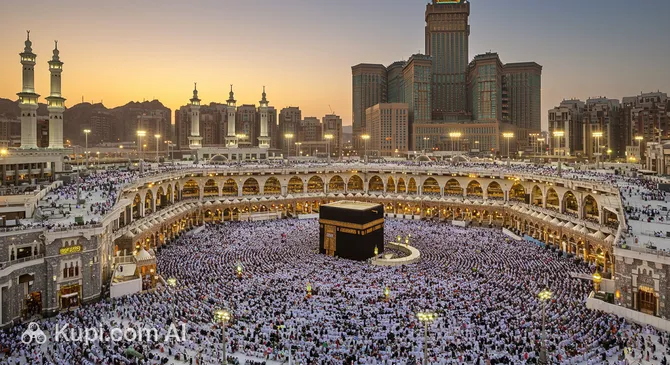
Mecca (officially Makkah al-Mukarramah) is the spiritual heart of the Islamic world and one of the most significant cities in Saudi Arabia. Located in the western part of the country, in the picturesque valley of the Sarawat Mountains, the city is situated about 70–80 kilometers from the Red Sea coast. With a population of over 2 million, Mecca is a unique metropolis where ancient traditions coexist with ultra-modern skyscraper architecture.
Mecca. Illustration.
Source: Kupi.com AI
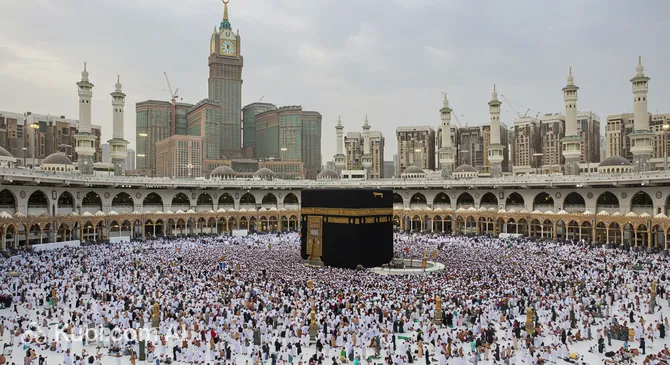
The city's status as a global religious center defines its entire life. It is home to the greatest shrine—the Great Mosque (Masjid al-Haram) with the Kaaba at its center. Every year, millions of believers make a pilgrimage here, creating a special atmosphere of incredible unity among people from all corners of the planet. It is important to remember that entry into the city is permitted exclusively to Muslims.
The rich historical heritage of Mecca is inextricably linked to the birth of the Prophet Muhammad and the dawn of Islam. Today, it is a dynamic city with developed infrastructure, massive hotel complexes, and shopping centers catering to pilgrims. Visiting this sacred place is a unique experience that allows one to touch the origins of a great culture and feel the scale of living history.
Weather Overview
Mecca is characterized by an extremely hot and dry desert climate. Summer here lasts from May to September, and during this period, daytime temperatures often exceed +40°C, sometimes reaching +45°C. Precipitation is extremely rare, usually occurring as brief downpours during the winter months.
Winter in the city is very mild and comfortable: daytime temperatures fluctuate around +25...+30°C, while nights bring a pleasant coolness (about +18°C). If you are planning a trip, the weather in Mecca is most favorable for long periods outdoors from November to March. This time is considered the best for performing rituals without the risk of heatstroke.
Due to the city's location in a valley surrounded by mountains, an "urban heat island" effect can be observed, especially in areas with dense high-rise buildings. Pilgrims are advised to always carry water and headwear, and to plan mosque visits for early morning or evening hours when solar activity is minimal.
Average monthly temperature
Average monthly precipitation
Interesting Facts
For Muslims Only: Entry to the city is strictly limited based on religion. This rule is enforced on all access roads and emphasizes Mecca's status as a sacred territory.
Birthplace of the Prophet: According to tradition, the Prophet Muhammad was born here, and it was here in the 7th century that the first revelations of the Quran were sent down to Muslims.
Millions of Pilgrims: Every year during the Hajj, the city hosts a record number of guests. In some years, the number of pilgrims has exceeded three million, making it one of the most visited places on the planet in a short period of time.
A City in the Mountains: Contrary to popular belief, Mecca is not located in the desert but in a mountain valley at an altitude of about 277 meters above sea level, surrounded by the rocky peaks of the Sarawat.
The Golden Caravan: In 1324, the ruler of Mali, Mansa Musa, performed one of the most luxurious Hajj pilgrimages in history, bringing tons of gold with him, which caused temporary inflation in the regions he passed through.
How to Get There
The transport accessibility of Mecca is organized with millions of arriving pilgrims in mind. Since the city itself does not have its own major civilian airport, the gates of neighboring Jeddah serve as the main "air entrance." You can find out all the ways to get to Mecca in advance, as logistics here require special attention, especially during major religious holidays.
The main flow of travelers arrives through Jeddah International Airport, located 80 km from the city. From there, you can reach the center of Mecca by high-speed train, bus, or taxi. Travel time by car is usually about an hour, but during the Hajj season, it can increase significantly due to road checks and heavy traffic.
Railway transport is represented by the ultra-modern Haramain High-Speed Railway line, which connects the city with Medina and Jeddah. High-speed trains are the most comfortable and fastest way to move between the holy cities, allowing you to avoid traffic congestion.
Station
Passenger traffic
Distance
Haramain High Speed Railway - King Abdulaziz International Airport
1
71 km
Main Attractions
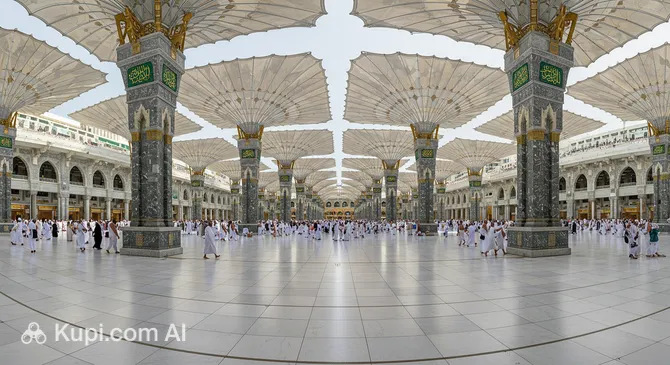
The main and indisputable landmark of the city is the Masjid al-Haram—the largest mosque in the world, capable of accommodating millions of worshippers. At its center stands the sacred Kaaba, towards which Muslims all over the world turn in prayer. The architectural ensemble of the mosque is constantly expanding, impressing with its scale, white marble finishes, and majestic minarets.
Masjid al-Haram. Illustration.
Source: Kupi.com AI
Traveler photos:
The ritual complex includes the hills of Safa and Marwa (Sa'i), which are now connected by a covered gallery. Pilgrims perform a sevenfold walk between them in memory of Hagar's search for water. This site is filled with deep symbolism and is an integral part of the pilgrimage.
Safa and Marwah (Sa'i). Illustration.
Source: Kupi.com AI
Traveler photos:
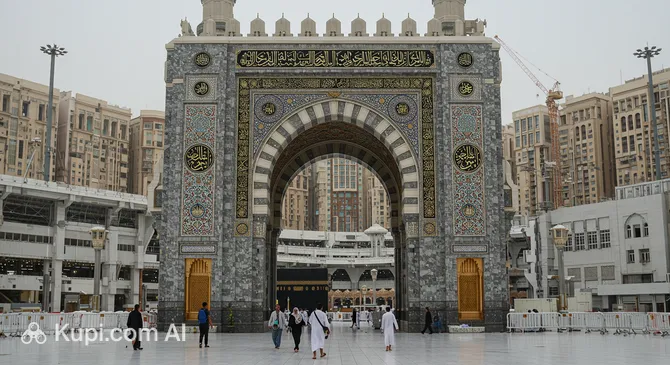
Among the many entrances to the Great Mosque, the As-Salam Gate holds special significance. This is one of the oldest and most famous gates of the complex, through which many pilgrims have traditionally entered for centuries. The modern look of the city center is also defined by the Abraj Al Bait towers with their giant clock, which has become a new symbol of the city and offers panoramic views of the holy sites.
Al Salam Gate. Illustration.
Source: Kupi.com AI
Traveler photos:
Local Cuisine
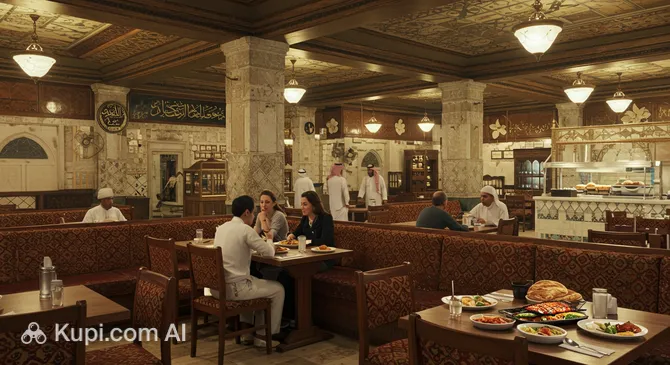
Meccan cuisine is a vibrant kaleidoscope of flavors, blending the traditions of the Arabian Peninsula with the culinary habits of pilgrims from all over the world. The local menu is based on hearty rice and meat dishes. You must try kabsa—fragrant rice with tender lamb or chicken, seasoned with cloves and cardamom, as well as mandi, where the meat is slow-cooked in a special underground oven.
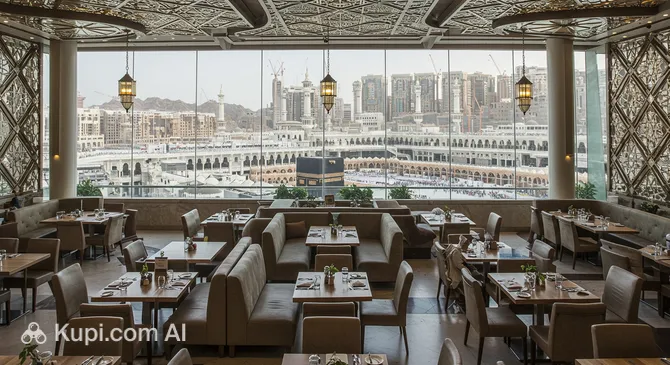
To explore the local gastronomy, you can head to Abu Osaid Restaurant, which serves traditional Arabic dishes. If you want to combine a meal with a stunning view of the city, visit the Clock Tower Restaurant. The city's gastro scene ranges from simple street stalls with falafel and hummus to exquisite international cuisine in five-star hotels.
Abu Osaid Restaurant. Illustration.
Source: Kupi.com AI
Traveler photos:
Dates and strong Arabic coffee (gahwa) with cardamom, symbolizing hospitality, hold a special place in the food culture. Freshly squeezed juices and mint tea are also popular. It is important to remember that alcohol is completely prohibited in the city. For dessert, try maamoul—shortbread cookies filled with date paste or nuts, which perfectly complement an evening tea.
Clock Tower Restaurant. Illustration.
Source: Kupi.com AI
Traveler photos:
Travel Tips
Planning a trip to the holy city of Mecca requires special attention to detail. These tips will help make your stay as comfortable as possible and allow you to focus on the spiritual side of your journey.
Preparing Documents: Remember that entry is permitted only to Muslims. Be sure to obtain the appropriate visa (Umrah visa or tourist e-visa) and carry documents confirming your status if required at checkpoints.
Clothing and Dress Code: Choose lightweight natural fabrics, as it can be very hot in the city. Women must wear an abaya and a headscarf, men should wear modest, covered clothing, and ihram during the performance of rituals. Don't forget comfortable shoes that are easy to remove before entering the mosque.
Logistics and Transport: During peak season, it is best to travel on foot or use organized hotel shuttles. For trips to Jeddah or Medina, use Haramain high-speed trains—it's faster and more reliable than a taxi in traffic.
Finances: The local currency is the Saudi Riyal (SAR). Cards are accepted almost everywhere, but it's better to have cash for markets and small purchases. ATMs are widely available in shopping centers around the Masjid al-Haram.
Connectivity: Buy a local SIM card (STC, Mobily, or Zain) right at the airport or in Mecca's malls. This will ensure you have stable internet for navigation and keeping in touch, as public Wi-Fi can be overloaded.
Health: Always carry a bottle of water to avoid dehydration. Pharmacies are found at every turn, but it is better to bring essential medications with you. In crowds, try to remain calm and follow the instructions of security services.
Etiquette: Be polite and patient—you will be surrounded by millions of people. Take photos inside the mosque very carefully, trying not to disturb worshippers.
What to Avoid: Do not attempt to enter the city if you are not a Muslim—this is a serious legal violation. Also, avoid political discussions and open displays of dissatisfaction in queues.
May your journey be easy and filled with peace. Respect for local rules and fellow pilgrims will reveal the true beauty of this sacred place for you.
Entertainment & Nightlife
Mecca is primarily a religious and spiritual center, so nightlife in the traditional Western sense does not exist here. The city has no nightclubs, bars, or concert venues serving alcohol. Main activities after dark are focused on prayers at the Great Mosque and walks through brightly lit shopping malls. Many shops and restaurants stay open late, adjusting to the schedule of the faithful and the hot climate.
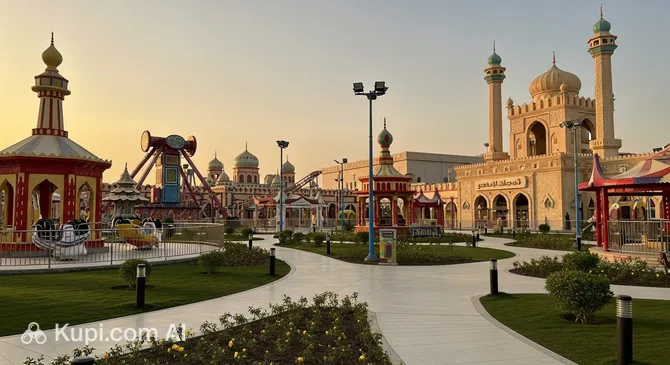
For family leisure and outings with children, modern spaces like the Children's Amusement Park are popular, offering a calm atmosphere. In the evening hours, when the heat subsides, cafes and restaurants in major shopping complexes come to life, serving as gathering places for pilgrims from various countries.
Children's Amusement Park. Illustration.
Source: Kupi.com AI
Traveler photos:
If visitors are looking for a more secular format of leisure or diverse dining venues, such as the restaurant Voi or Lastoria Alawali, they often visit newer districts of the city or head to neighboring Jeddah. Within Mecca itself, leisure is of a reserved and devout nature, focused on spiritual enrichment and family values.
Parks & Museums
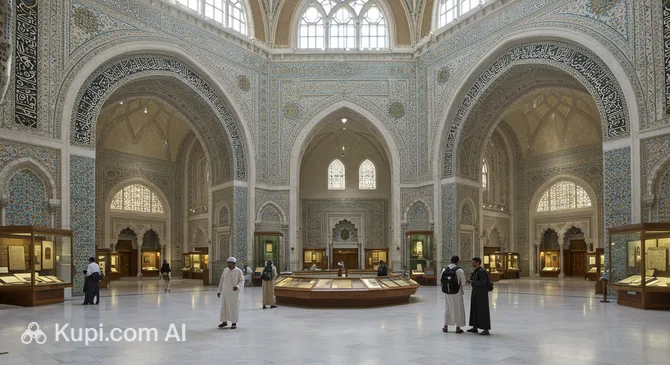
Despite the city being densely built up, there are places dedicated to the deep study of faith and history. One of the key cultural venues is the Holy Quran Exhibition. The museum's exhibits tell the story of how the sacred text was recorded and preserved, showcasing rare manuscripts and ancient scrolls, making it a must-visit for those interested in Islamic calligraphy and history.
Holy Quran Museum. Illustration.
Source: Kupi.com AI
Traveler photos:
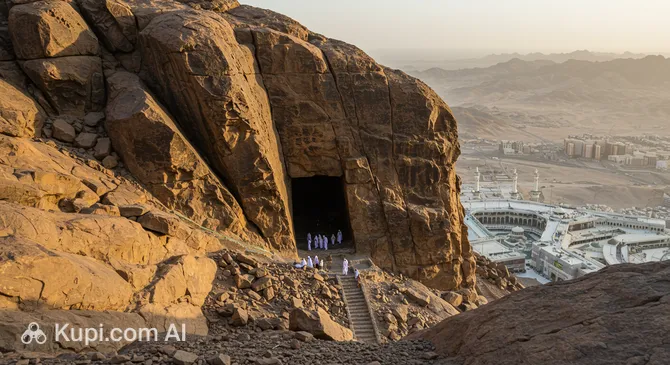
Among the most important historical sites is the Hira Cave on Jabal al-Nour. Although it is more of a natural and spiritual site, the path to it is a popular route. According to tradition, it was here that the Prophet Muhammad received his first revelation. From the top of the mountain, a breathtaking view of the entire city and the Masjid al-Haram complex opens up.
Cave of Hira, Jabal al-Nour. Illustration.
Source: Kupi.com AI
Traveler photos:
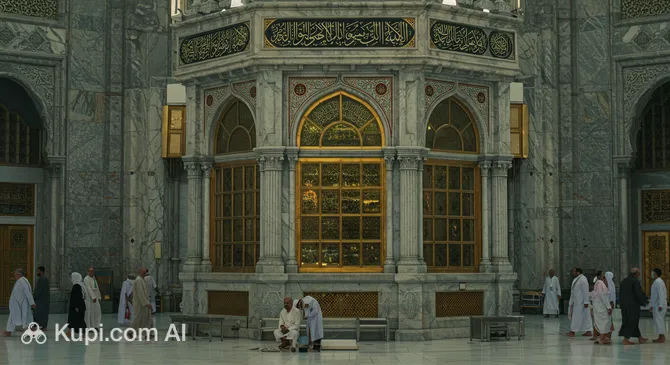
Another iconic site is the Zamzam Well. Although direct access to the spring is now limited for safety and hygiene reasons, its history as a sacred water source that saved Hagar and her son Ishmael is central to the history of Mecca's founding. Information about this miraculous spring is presented in many of the city's historical museums, highlighting its significance for millions of believers.
Zamzam Well. Illustration.
Source: Kupi.com AI
Traveler photos:
Getting Around
Public transport in Mecca is designed to handle enormous loads during pilgrimage seasons. The system is based on bus routes that connect remote districts and hotels with the central plaza around the Masjid al-Haram. Many hotels provide free shuttles for their guests, which significantly simplifies moving around the city.
The city takes special pride in its metro, which is launched specifically for the Hajj period to transport people between holy sites (Mina, Muzdalifah, Arafat). During the rest of the year, taxis and ride-hailing apps like Uber or Careem remain the main mode of transport. The cost of a trip within the city is relatively affordable, but keep in mind that traffic in the center may be completely blocked during prayer hours.
For those planning trips to other cities, the Haramain High-Speed Railway is ideal. Trains depart from a modern station and allow you to reach Jeddah in just 20-30 minutes. It is better to book tickets in advance through the official app, especially if your trip coincides with weekends or holidays. In the central area of the city, walking remains the most reliable and fastest way to get around.
Accommodation
Mecca's hotel infrastructure is unique: it features one of the largest hotel room stocks in the world, concentrated around the Great Mosque. The range of accommodation is vast—from modest apartments on the outskirts to incredibly luxurious hotels in skyscrapers offering a direct view of the Kaaba. During peak seasons (Hajj and Ramadan), prices can increase several times over, so it is recommended to book six months or more in advance.
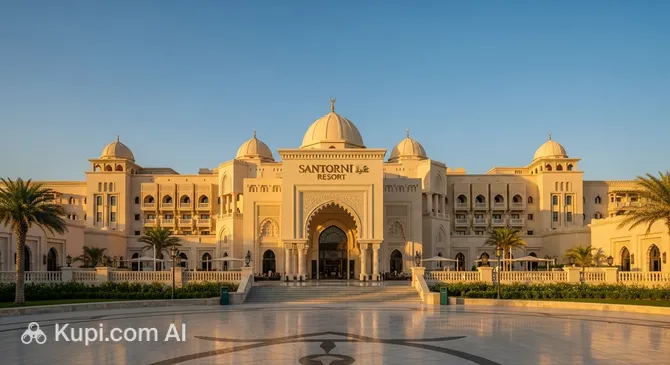
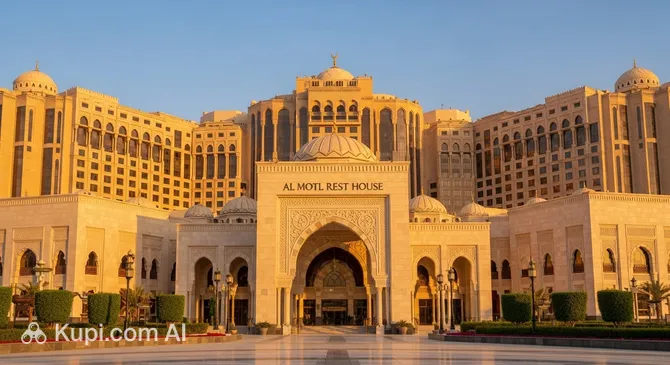
For those looking for a comfortable retreat, options like the Santorini Resort are available on the outskirts of the city. Such complexes offer a calmer atmosphere away from the bustling central districts. Guest houses, such as the Al Mutlaq Guest House, are also popular for large groups of pilgrims or families.
Santorini Resort. Illustration.
Source: Kupi.com AI
Traveler photos:
The main criterion for choosing a district is the distance to the Masjid al-Haram. Hotels on the "front line" (Abraj Al Bait complex) provide maximum convenience for prayers but require a significant budget. More affordable options are located in the Aziziyah or Misfalah districts, from which special shuttles or buses run to the mosque.
Al Motl Rest House. Illustration.
Source: Kupi.com AI
Traveler photos:
Nearby Cities
Mecca is an excellent starting point for exploring the western region of the Kingdom, offering contrasting routes from the coast to the highlands. The region around the city is rich in attractions that allow you to better understand the history and nature of these lands.
The most popular destination is Jeddah, located just an hour's drive away. It is a modern metropolis on the Red Sea coast, famous for its Corniche waterfront, the historic Al-Balad district, and excellent diving opportunities. Another interesting option is the city of Taif. Located high in the mountains, it is famous for its cool climate, rose plantations, and picturesque parks, making it an ideal place to escape the summer heat.
For those who want to see less touristy but authentic places, Al Hawiyah or the coastal Al Lith are great choices. Each of these destinations reveals its own facet of life in the Hejaz region.
Exploring the surroundings beyond the holy city will help you form a complete impression of the diverse landscapes and cultural richness of this part of the Arabian Peninsula.
Shopping & Souvenirs
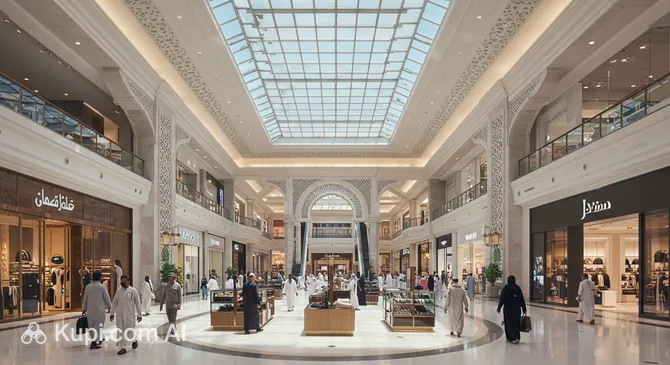
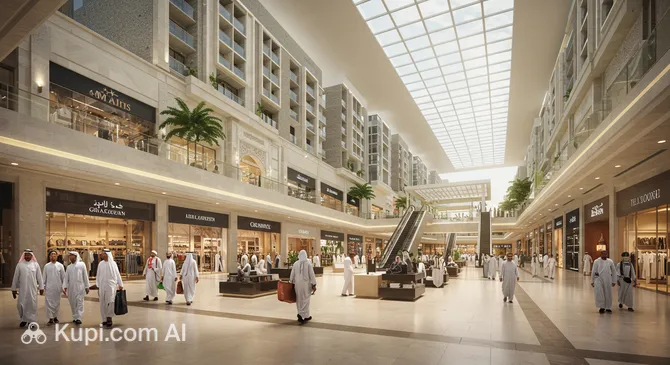
Shopping in Mecca is a unique blend of an Oriental bazaar and ultra-modern shopping centers. The main trading activity bustles right by the walls of the Great Mosque, where hundreds of shops are located on the ground floors of giant hotel complexes. Here, pilgrims can buy everything they need: from prayer beads and rugs to exclusive jewelry and watches from world brands.
For those who prefer a classic mall format, there is Cenomi Makkah Mall. This is a modern complex with a wide choice of international clothing, a food court, and relaxation areas. It is also worth visiting Al-Imlyak Al-Mumayyaz, where you can find locally produced goods and everyday items at affordable prices.
Cenomi Makkah Mall. Illustration.
Source: Kupi.com AI
Traveler photos:
Traditional souvenirs from Mecca include high-quality dates of various sorts, natural incense (oud and musk), oil-based Arabic perfumes, and, of course, Zamzam water in special canisters for air travel. Shops usually close during prayer times, but trading continues late into the night after the evening prayer. Most establishments accept international cards, but it is better to have cash Saudi Riyals for small markets.