Support

Santiago del Teide

About

Santiago del Teide is a charming town nestled among the impressive volcanic landscapes in the west of the island of Tenerife, part of Spain. It is situated in a picturesque valley at the foot of the mountains, where the air is filled with the scent of pine trees and laurel groves, and the breathtaking views of Mount Teide and the majestic cliffs of Los Gigantes leave a lasting impression even on seasoned travelers.
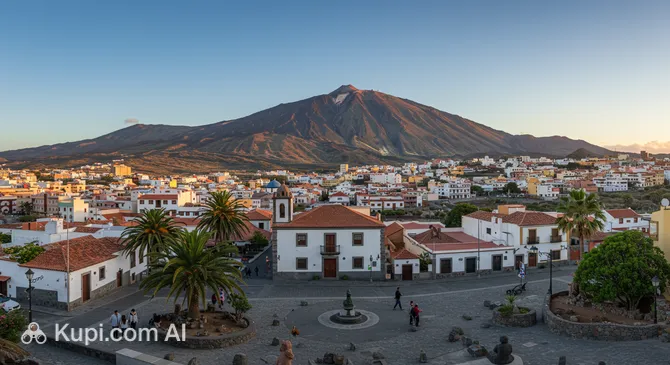
Santiago del Teide. Illustration.
Source: Kupi.com AI

Despite its relatively compact size and a population of about 11,000 people, Santiago del Teide is the administrative center of the municipality of the same name. The town is famous for its special atmosphere: a slow pace of life prevails here, locals are known for their hospitality, and there is a sense that time flows more slowly. This place is ideal for those seeking solitude, harmony with nature, and an introduction to authentic traditions.

Santiago del Teide attracts tourists not only with its historic architecture but also with its unique natural surroundings. Popular hiking trails start here, leading to the famous Masca Gorge as well as the Chinyero volcano, whose last eruption on Tenerife occurred in 1909. The town is often chosen as a starting point for hiking, ecological tours, and immersion into true Canarian flavor.

Thanks to its mild climate, Santiago del Teide welcomes guests year-round. Here you will find many cozy cafes, can visit authentic nearby villages, and enjoy the beauty of stunning natural reserves. This is a place where you can rest your soul, find inspiration in the island's incredible nature, and discover unexplored corners of Tenerife.

You can find more interesting facts on the history of Santiago del Teide page.
Weather Overview

In Santiago del Teide, a pleasant climate awaits you year-round. Summer, especially in July and August, is the warmest here, with average temperatures around 21-22°C (maximums can reach 24-25°C) and a near-total absence of precipitation. Winter months, such as January and February, are cooler, with an average temperature of about 15-16°C, and a small amount of rain (about 1 mm per month and 5-6 rainy days). Overall, expect a warm and very dry summer and a mild winter with a few rainy days. You can learn more about the climate of Santiago del Teide on the special page.

Average monthly temperature

Average monthly precipitation

Interesting Facts

In addition to its picturesque landscapes and proximity to Mount Teide, Santiago del Teide holds many surprising stories and little-known details that make it even more attractive to curious travelers. Here are just a few of them:

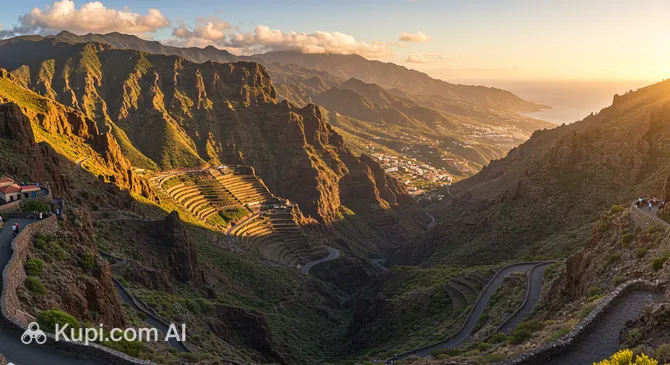
Masca Viewpoint. Illustration.
Source: Kupi.com AI

Traveler photos:

  • The town was founded back in the 16th century and still carefully preserves the atmosphere of bygone eras. In its very heart stands the Church of San Fernando Rey, dating back to the 17th century. It is notable for its bright orange domes and exquisite interior paintings, and the square around it often becomes the center of traditional festivals and fairs.

  • It is from Santiago del Teide that one of Tenerife's most thrilling driving routes begins – the famous winding road leading to the Masca Gorge. This road, considered one of the most scenic in the Canary Islands, attracts adventurers and seekers of stunning views from all over the world and leads to the popular Masca Viewpoint.

  • In the vicinity of the town, in the cozy village of Arguayo, ancient pottery traditions are preserved. Local masters still create ceramic items using technologies that are several hundred years old. There is also a museum of antique ceramics here, where you can not only admire unique works but also purchase authentic handmade souvenirs.

  • According to local legends, the Guanches – the indigenous inhabitants of the Canary Islands – lived in the territory of the modern municipality of Santiago del Teide in ancient times. The legends of these places are full of stories about mysterious rituals associated with volcanoes and mountains, and excursions are often accompanied by tales of spirits and ancient deities once worshipped here.

How to Get There

Travelers heading to Santiago del Teide most often arrive on the island of Tenerife by air. There is no airport in the town of Santiago del Teide itself, but two large international airports serving the island are located nearby.

The most convenient and popular option is Tenerife South Airport (TFS), also known as Reina Sofía Airport. This large international airport is located near Santa Cruz de Tenerife (though actually situated in the municipality of Granadilla de Abona), approximately 37 km southeast of Santiago del Teide. A taxi or rental car ride from here to Santiago del Teide usually takes about 35-45 minutes. Public buses also run from the airport, which can take you to areas near Santiago del Teide.

The second significant airport is Tenerife North Airport (TFN), formerly known as Los Rodeos. It is located near Santa Cruz de Tenerife (actually in the municipality of San Cristóbal de la Laguna), at a distance of about 51 km northeast of Santiago del Teide. This airport also serves international and many domestic flights, especially between the Canary Islands. The journey by car from Tenerife North to Santiago del Teide takes approximately 50-70 minutes. The choice between these two airports often depends on the airline and the departure point.

From both airports, Santiago del Teide can be reached by taxi, rental car, or public TITSA buses. Renting a car provides the most flexibility for exploring the island of Tenerife. Public buses are a more economical option but may require more time and potential transfers to reach Santiago del Teide itself.

For convenience, here is a summary of the airports that can be used for a trip to Santiago del Teide:

AirportPassenger trafficDistance
Tenerife South Airport12.3 mln37 km
La Gomera Airport113 00049 km
Tenerife North Airport6.1 mln51 km
La Palma Airport1.4 mln99 km
Hierro Airport322 110118 km

Main Attractions

Santiago del Teide and its surroundings offer travelers breathtaking views and interesting places to explore. Here are some of the main attractions worth visiting:

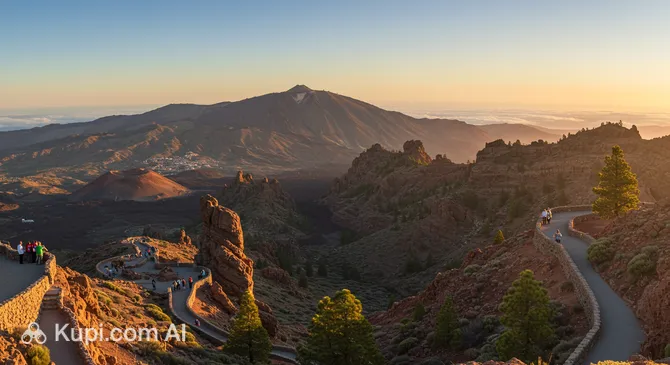
Masca Viewpoint – this is perhaps one of the most photographed spots in the area. It offers stunning panoramic views of the famous Masca Gorge and the picturesque village of the same name tucked away among the cliffs. It is an ideal place to appreciate the rugged beauty of Tenerife's nature and take unforgettable photos, especially at sunset.

Another magnificent viewpoint is Mirador de Cherfe. It offers breathtaking views of the valleys and mountains, including a view of Mount Teide on clear days. Located at an altitude of about 1,100 meters, it is a popular stop for those traveling the island's mountain roads and wishing to enjoy the perspective of Tenerife's west coast.

Cherfe Viewpoint. Illustration.
Source: Kupi.com AI

Traveler photos:

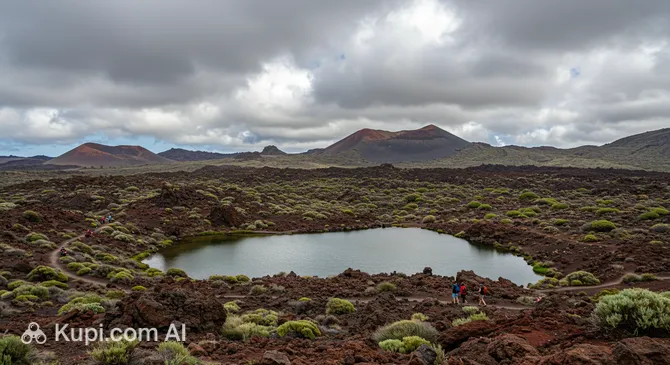
For fans of active recreation and nature, the Las Charcas de Erjos Trail is an excellent choice. This hiking route passes through unique wetlands formed in former quarries. Here you can observe birds and enjoy the peace and quiet of nature, away from the tourist crowds. The trail is particularly beautiful in spring when everything is in bloom.

Erjos Ponds Trail. Illustration.
Source: Kupi.com AI

Traveler photos:

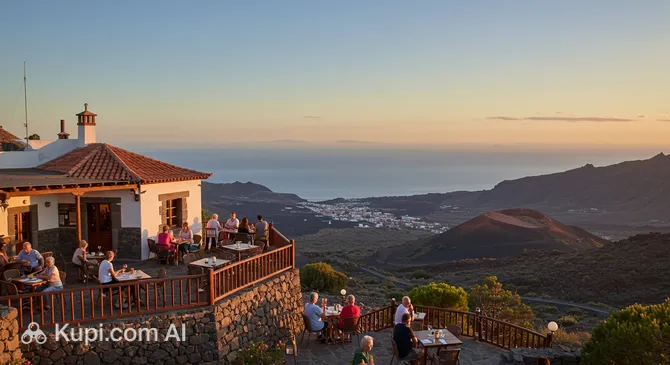
Combining a restaurant and a viewpoint, Mirador La Cruz de Hilda offers not only traditional Canarian dishes but also magnificent views of the Masca Gorge from a different perspective. It is a great place to have a snack while enjoying the scenery and rest during your exploration of the Santiago del Teide area.

La Cruz de Hilda Viewpoint. Illustration.
Source: Kupi.com AI

Traveler photos:

Local Cuisine

The cuisine of Santiago del Teide is a true symphony of flavors, born at the intersection of ocean bounty, volcanic soil, and ancient Canarian traditions. The town's gastronomic scene offers travelers authentic dishes made from the freshest local products and is capable of surprising even the most sophisticated gourmets.

Be sure to try the famous "papas arrugadas" – small potatoes boiled in their skins in sea water until a characteristic "wrinkled" crust appears. They are traditionally served with spicy "mojo" sauces – red (mojo rojo) made from peppers and garlic, and green (mojo verde) based on cilantro or parsley. This dish is a hallmark not only of Santiago del Teide but of all Tenerife. Also worth noting are the fresh fish and octopus, which are prepared here in many ways, the delicate local goat cheese, and fragrant rabbit stew with spicy herbs.

Among the drinks, local wines deserve special mention. Tenerife's volcanic soils give the grapes unique notes, producing excellent white, red, and rosé wines that perfectly complement any meal. Don't miss the opportunity to try other traditional Canarian drinks offered in local establishments.

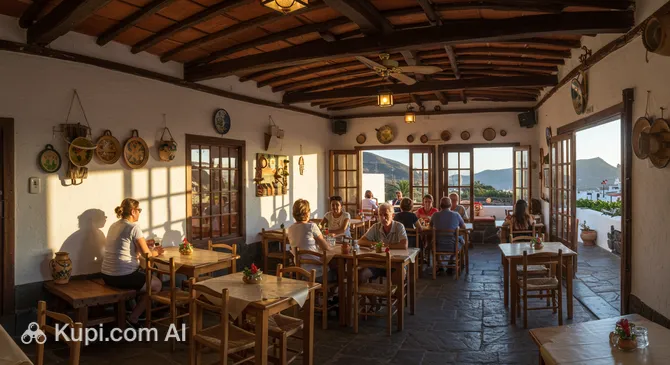
You can immerse yourself in the atmosphere of local cuisine in numerous restaurants and traditional taverns serving dishes according to old recipes. One such place where you can get acquainted with Canarian cuisine is Restaurant El Guanche Alte Schule. Also, visit the farmers' markets – here you will find fresh seasonal fruits, vegetables, aromatic honey, and homemade sweets. Street food in Santiago del Teide is simple but incredibly tasty: try various seafood tapas, mini-sandwiches with ham, or local pastries with fillings.

El Guanche Alte Schule Restaurant. Illustration.
Source: Kupi.com AI

Traveler photos:

Throughout the year, Santiago del Teide sometimes hosts gastronomic festivals where local chefs demonstrate their skills and offer both classic and innovative Canarian dishes. This is an excellent opportunity to get to know the culinary traditions of the region more deeply. The town's gastronomy wins you over with its freshness, authenticity, and love for high-quality local products, making every dish special.

Travel Tips

Welcome to charming Santiago del Teide! To make your journey through this picturesque corner of Spain as comfortable and memorable as possible, we have prepared some practical tips for you. They will help you navigate better and enjoy every moment of your stay.

  1. Clothing and Essentials:

    The climate in Santiago del Teide, as in all of Tenerife, is quite mild year-round. However, if you plan excursions to the mountains, for example, to Mount Teide, bring warm clothing (fleece, windbreaker), as it can be cool at high altitudes. For walks around town and the coast, light clothing is suitable. Be sure to bring comfortable walking shoes, sunscreen, a hat, and sunglasses. For electrical appliances, you will need an adapter for European sockets (type F). When visiting churches, it's worth covering your shoulders and knees.

  2. Transport: How to Get Around:

    Santiago del Teide is a small town, and its center is pleasant to explore on foot. For trips around Tenerife, it's convenient to use TITSA buses (locals call them "guaguas"). However, the best option for exploring numerous attractions, secluded beaches, and mountain serpentines is renting a car. Taxis are also available, but this will be a more expensive way to travel.

  3. Finances: Currency, Cards, and Tipping:

    The official currency in Spain is the Euro (EUR). You can exchange money at banks or exchange offices; the rate at the airport is usually less favorable. Credit and debit cards (Visa, Mastercard) are accepted almost everywhere in shops, restaurants, and hotels. ATMs are also easy to find. An approximate daily budget (excluding accommodation) can be 50-100 euros. Tipping in restaurants is not mandatory, but if you liked the service, it's customary to leave 5-10% of the bill.

  4. Health and Safety:

    Santiago del Teide is considered a safe place. Follow standard precautions: watch your belongings, especially in crowded places and on beaches. Pharmacies (Farmacia) are easily recognized by a green cross; there are always duty pharmacies open 24/7 (information about them can be found on the doors of other pharmacies). Before your trip, be sure to take out travel medical insurance. The emergency number is 112.

  5. Communication: Language and Internet:

    The official language is Spanish. In tourist areas, many people speak English, especially in hotels and restaurants. Learn a few basic phrases in Spanish: "Hola" (Hello), "Adiós" (Goodbye), "Por favor" (Please), "Gracias" (Thank you), "Sí/No" (Yes/No), "¿Cuánto cuesta?" (How much does it cost?). This is always appreciated by locals. A mobile SIM card with internet can be purchased at local operator stores. Wi-Fi is available in most hotels, cafes, and restaurants.

  6. Local Etiquette and Communication:

    Spaniards, and Canarians in particular, are very open and friendly. Greetings usually involve a handshake, and between well-acquainted people – two symbolic kisses on the cheeks. Don't be surprised by the expressiveness and loudness of conversations – it's part of the local culture. Leisurely pace is valued, especially during meals. Show respect for local traditions, and you will be met with hospitality.

  7. What to Avoid:

    Try not to appear in swimwear outside the beach or pool, for example, in shops or restaurants – this is considered bad manners. Also, don't criticize local customs or compare them with others, especially in a negative way. Be polite and open, and your vacation will be wonderful.

  8. Special Tip for Santiago del Teide:

    Be sure to take advantage of the town's location to explore the western part of Tenerife! Visit the famous Los Gigantes cliffs, go on a boat trip to watch whales and dolphins, and explore the picturesque Masca Gorge. And, of course, don't miss the chance to go up to Mount Teide. Remember that tickets for the Teide cable car and permits to climb to the crater itself (if planned) are better booked online in advance.

We hope these tips help you plan an unforgettable trip to Santiago del Teide. Enjoy the sun, the incredible landscapes, and the hospitality of the Canary Islands!

Entertainment & Nightlife

Santiago del Teide offers its guests a cozy and relaxed atmosphere for evening relaxation, more suited to quiet gatherings than to the noisy night adventures of large cities. Here you won't find huge nightclubs or quarters entirely dedicated to nightlife, but you can enjoy pleasant evenings in local bars and restaurants.

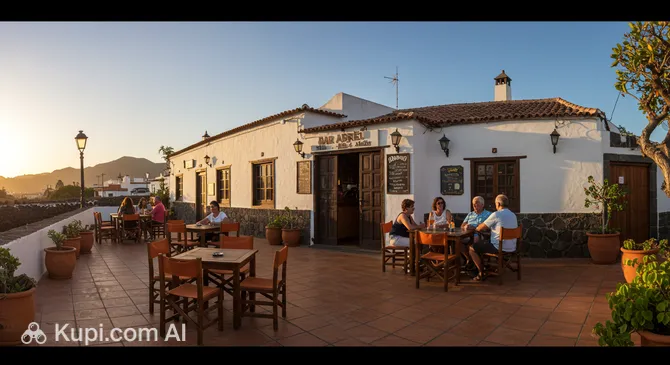
The main evening life in Santiago del Teide is centered around small but welcoming establishments. It's a great place to try local drinks and dishes in an authentic setting. Among popular spots, Bar Abreu is known for its friendly atmosphere, and Bar Arepera Kilometer 101, El Funchal is a place where you can have a snack and a good time. For dinner, you might also consider restaurants such as Restaurant El Guanche Alte Schule, which serves local cuisine.

Bar Abreu. Illustration.
Source: Kupi.com AI

Traveler photos:

The atmosphere in Santiago del Teide's establishments is usually very casual and family-oriented. The crowd here is a mix of locals and tourists seeking a peaceful break. There is usually no dress code; a comfortable casual style is welcome. Bars and restaurants are typically open until late evening, especially during the tourist season, but do not expect them to stay open until dawn as they might in major metropolises.

When planning your evening leisure, it's best to aim for the time after dinner when local establishments come alive. You can move around the town center on foot in the evening, as it is quite compact. For longer distances or returning to your hotel late at night, using a taxi is recommended. You can find the numbers for local taxi services at your hotel reception. In general, Santiago del Teide is considered a safe place, but standard precautions, as in any other tourist town, are always wise, especially after dark.

During the day, Santiago del Teide and its surroundings offer many options for active recreation and nature exploration. While there may not be large theaters or amusement parks here, you can enjoy stunning views and walks. Popular spots include the Masca Viewpoint, offering breathtaking panoramas, Mirador de Cherfe for photography enthusiasts, or the picturesque Las Charcas de Erjos Trail for hiking. These natural attractions will allow you to fully appreciate the beauty of the island of Tenerife.

Parks & Museums

Santiago del Teide and its picturesque surroundings offer travelers magnificent opportunities for enjoying nature and getting acquainted with authentic Canarian culture. Although the town is better known for its breathtaking landscapes than for an abundance of traditional museums, there is much to see and be inspired by.

The main asset of this region is undoubtedly its unique nature. Instead of formal city parks, the entire area around Santiago del Teide is a vast natural reserve. Active travelers are highly recommended to explore the Las Charcas de Erjos Trail, which leads you through scenic routes with stunning views. No less impressive panoramas open up from the famous Masca Viewpoint, from where you can see the majestic ravine of the same name, and from Mirador de Cherfe, offering panoramic views of the mountain landscapes. These places are ideal for fully appreciating the volcanic origin and beauty of Tenerife.

Erjos Ponds Trail. Illustration.
Source: Kupi.com AI

Traveler photos:

As for museums and galleries, Santiago del Teide is not famous for large museum complexes. Cultural heritage here is rather woven into the very atmosphere of the old streets, traditional Canarian architecture, and local customs. To touch the history and lifestyle of the region, it is worth visiting the small Church of San Fernando Rey in the town center. A special cultural experience is offered by a trip to the famous village of Masca, which is in itself a kind of open-air ethnographic museum that has preserved the spirit of past centuries.

Masca Viewpoint. Illustration.
Source: Kupi.com AI

Traveler photos:

The historical center of Santiago del Teide itself charms with its authenticity. Strolling through its quiet streets, you can see many examples of traditional Canarian architecture with wooden balconies and tiled roofs. These buildings are silent witnesses to the island's history. The surroundings of the town, including the aforementioned Masca Gorge, also hold traces of the past and are steeped in local legends.

Cherfe Viewpoint. Illustration.
Source: Kupi.com AI

Traveler photos:

For the most authentic experience, don't be afraid to step off the beaten tourist path. Explore lesser-known hiking routes that will reveal secluded corners of nature. If your trip coincides with one of the local festivals (fiestas), be sure to visit – it's a wonderful opportunity to immerse yourself in the living culture of the Canary Islands, see traditional costumes, hear folk music, and taste local delicacies.

Getting Around

Public transport in Santiago del Teide consists mainly of a bus network that connects it with other settlements on the island of Tenerife. Urban transport in the usual sense (such as subways or trams) is absent here due to the compact size of the town and its location. The main carrier on the island, including routes passing through Santiago del Teide, is the TITSA company.

TITSA buses (locals call them "guaguas") are a convenient and relatively inexpensive way to move between cities and resorts. Routes connect Santiago del Teide with popular tourist areas such as Los Gigantes, Puerto de la Cruz, and both southern and northern airports. Bus schedules can be found on the official TITSA website or at bus stops.

To pay for travel on TITSA buses, you can use cash (it is recommended to have small bills and coins) or the "Ten+" transport card. The "Ten+" card (pronounced "ten-mas") is rechargeable and allows you to save on the cost of trips compared to paying in cash. It can be purchased at airports, major bus stations, and at some tobacco and newsstands (estancos). The fare depends on the distance. When entering the bus, you must tap the card against the validator, and when exiting (if the fare depends on the zone), tap it again for correct deduction.

Tourists are recommended to plan their trips in advance, especially for less frequent routes. Tickets when paying in cash are purchased directly from the driver. Buses usually run on schedule, but during peak hours or due to road conditions, slight delays are possible. Most bus stops are marked, but they do not always have shelters or electronic displays.

As an alternative to public transport in Santiago del Teide and for trips around the island, taxis and car rentals are popular. Taxis can be found at special ranks or called by phone; this is a more expensive but comfortable way to travel. Car rental provides maximum freedom to explore Tenerife's numerous attractions at your own pace. In the town itself, due to its small size, many distances can be covered on foot. Bicycle rentals may also be available, offering a great opportunity for exploring the surroundings.

Accommodation

In Santiago del Teide and its surroundings, travelers will find a variety of accommodation options to suit different preferences and budgets. Choices range from cozy guesthouses and self-catering apartments to small hotels offering a comfortable stay. Options with picturesque views of the mountains or the ocean are particularly popular, which is not surprising given the natural beauty of the region.

When choosing a place to stay, it's worth paying attention to areas that provide convenient access to major attractions, such as the Masca Viewpoint or Mirador de Cherfe, as well as the start of hiking trails like the Las Charcas de Erjos Trail. Some tourists prefer to stay in the town of Santiago del Teide itself to soak up the local atmosphere, while others choose more secluded spots in the surrounding area or closer to the coast if they plan to combine mountain holidays with beach time.

The price range for accommodation in Santiago del Teide is quite wide: you can find budget options as well as mid-range and higher-class offers, especially when it comes to renting villas or apartments with special amenities. It is recommended to book accommodation in advance, especially if your trip coincides with the peak tourist season or if you are looking for something specific. The most common booking methods are popular online platforms and, in some cases, contacting the owners of apartments or small hotels directly.

Nearby Cities

For those who want to explore the surroundings, Santiago del Teide serves as an excellent starting point for day trips to several interesting nearby places. Particularly noteworthy are the following towns:

  • Adeje (about 21 km): This popular resort town is known for its magnificent Costa Adeje beaches, luxury hotels, and entertainment centers like Siam Park. An ideal place for sun and active recreation lovers.
  • Arona (about 26 km): Includes famous tourist zones such as Los Cristianos and Playa de las Américas. The town attracts with its lively atmosphere, wide selection of restaurants, shops, and, of course, beautiful beaches.
  • La Laguna (about 53 km): The former capital of Tenerife, whose historical center is a UNESCO World Heritage site. La Laguna charms visitors with its old cobbled streets, colonial architecture, and unique university town atmosphere.

For a more detailed overview of options, here is information on some of the nearest cities to Santiago del Teide:

CityPopulationDistance
Guía de Isora21 82710 km
Icod de los Vinos23 49613 km
Adeje49 27021 km
Arona82 98226 km
La Orotava42 43430 km

These nearby destinations allow for a deeper exploration of Tenerife's diverse culture, history, and natural landscapes, making your journey even richer.

Shopping & Souvenirs

Shopping in Santiago del Teide offers an introduction to local flavor rather than a pursuit of brands. The town is not a major commercial center; however, you can find authentic souvenirs and essential goods here. The main focus is on small shops offering items from local artisans and traditional products of the Canary Islands.

In Santiago del Teide, there are no distinct shopping streets or quarters like in large cities. Shops are generally scattered across the central part of the town and near tourist routes. These are small souvenir shops, grocery stores, and pharmacies. For more diverse shopping and visiting large shopping malls, it is worth heading to larger towns in Tenerife, such as Adeje or Santa Cruz de Tenerife.

There are no large shopping centers directly in Santiago del Teide. The town maintains its traditional way of life, and large-scale commercial complexes are not characteristic of this area. If you are looking for a wide range of famous brand stores, you will have to visit other resort areas of the island.

There are also no specialized large markets, whether food or flea markets, in Santiago del Teide on a permanent basis. Sometimes small fairs of local craftsmen or farmers may be organized, but these are rather sporadic events. For true market color, it is better to go to other towns in Tenerife where markets operate regularly.

As souvenirs from Santiago del Teide and its surroundings, it's worth looking for items made of volcanic stone, handmade ceramics, and local delicacies. Popular items include Canarian mojo sauces (mojo rojo and mojo verde), palm honey, local wine, and liqueurs. You can also find cosmetics based on aloe vera, which is grown on the islands. Don't forget traditional magnets, postcards, and other small items with views of Mount Teide and picturesque landscapes.

Shops in Santiago del Teide usually operate on a standard Spanish schedule: in the morning (roughly from 9:00-10:00 to 13:00-14:00) and after a lunch break (siesta) – from 16:00-17:00 to 20:00-21:00. During the tourist season, some souvenir shops may work without a long break. Most shops accept bank cards (Visa, Mastercard), but in small shops or for small purchases, they may prefer cash.

Tourists from non-European Union countries can use the Tax Free system when making purchases in Spain for an amount exceeding the established limit (check the current amount before your trip). To do this, you need to ask for a special Tax Free check in the store and present it along with your purchases at customs when leaving the EU to get a stamp. The tax refund can be obtained at special points in the airport or through intermediary companies. Given that Santiago del Teide is a small town, major purchases falling under Tax Free are less likely here, but the possibility exists.

Have you reached the end of the page?

So the route has been studied inside and out