Support

Palmyra

About

Palmyra is a true oasis of antiquity, a legendary city lost in the very heart of the Syrian Desert. It is a place where every stone seems to hold memories of the former greatness and power of ancient civilizations, offering travelers a unique opportunity to touch history. The city is located approximately 210 kilometers northeast of Damascus, amidst vast sandy expanses where majestic ruins contrast with rare palm groves.
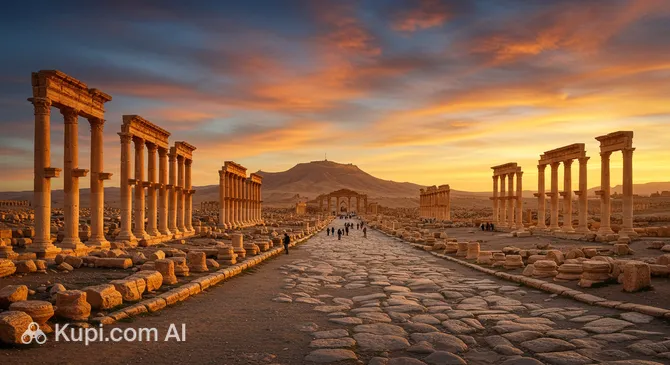
Palmyra. Illustration.
Source: Kupi.com AI

Modern Palmyra, also known as Tadmor, is a small town with a population of about 51,000 people, which is part of Syria. Despite its modest size, the city plays a colossal role in the cultural and historical life of the region. The atmosphere of Palmyra is truly mesmerizing: here you can wander for hours among ancient colonnades, explore temple ruins and the impressive amphitheater, feeling the breath of centuries.

The key feature of Palmyra is its impressive ancient monuments, which are listed as a UNESCO World Heritage Site. Notable among them are the Temple of Bel, the monumental Triumphal Arch, and the famous Valley of the Tombs with its unique funerary towers. These structures bear witness to the former prosperity of the city, which was once an important center on the caravan routes connecting East and West.

A visit to Palmyra is not just an excursion, but a real immersion into history. Here you can not only see some of the most impressive ancient ruins in the Middle East but also experience the unique atmosphere of an ancient city that, despite all challenges, continues to fascinate with its beauty and majesty. This place will undoubtedly leave an indelible impression on everyone who values history, architecture, and the spirit of adventure.

You can find more interesting facts on the Palmyra city history page.

Weather Overview

The weather in Palmyra is characterized by significant seasonal fluctuations. Summer here is very hot and dry: the average temperature in July is about 29.9°C, while maximum values can reach 37.1°C. Precipitation in the summer months (June-September) is practically non-existent. Winters in Palmyra are cool; the average January temperature stays around 7.7°C, and the minimum can drop to 3.3°C. During the winter period, a small amount of precipitation falls, mainly in January and February (about 1 mm per month), with 4-5 rainy days.

Spring and autumn are transitional seasons with gradual changes in temperature and minimal precipitation. For example, in April the average temperature is 18.1°C, and in October it is 21.0°C. Overall, Palmyra is characterized by very hot, dry summers and cool winters with little rainfall. For more detailed information on weather conditions, you can visit the Palmyra climate page.

Average monthly temperature

Average monthly precipitation

Interesting Facts

Palmyra, the legendary oasis city, holds not only majestic ruins but also many intriguing stories and lesser-known details. Here are a few facts that will allow you to look at this ancient center of civilization from a new perspective:

  • According to legend, Palmyra was founded by King Solomon himself. The city is also inextricably linked with the name of Queen Zenobia, who challenged the power of Rome, becoming a symbol of independence and female strength.

  • Thanks to its prosperity as a caravan trade hub where East and West met, the architecture of Palmyra absorbed Greek, Roman, and local traditions. This unique blend of styles gave the ruins the unofficial name "encyclopedia of ancient architecture."

  • The fame of ancient Palmyra was so great that many cities in the United States and Europe are named after it—a tribute to the legendary oasis in the Syrian Desert.

  • The cultural significance and beauty of Palmyra inspired poetic comparisons, such as "Northern Palmyra" for St. Petersburg and "Southern Palmyra" for Odesa, highlighting its global renown.

How to Get There

When planning a trip to Palmyra, it is important to think through the route in advance, as the city is located far from major transport hubs. The main ways to reach this unique historical site include flights to international airports in neighboring regions followed by ground transfer.

Although Palmyra itself does not have its own airport, one of the primary options for international travelers is Damascus International Airport (DAM). It is located in the capital of Syria, Damascus, approximately 209 km from Palmyra. This large airport serves international and domestic flights. A trip from Damascus airport to Palmyra by car or taxi usually takes about 5-6 hours, depending on road conditions and the current situation.

Another significant international hub to consider is Beirut-Rafic Hariri International Airport (BEY), located in Beirut, Lebanon. This is a very large airport situated about 272 km from Palmyra. Traveling from Beirut to Palmyra will require a border crossing and can take approximately 7-8 hours, including time for border formalities.

It is also possible to fly into Turkey, for example, to Gaziantep Airport (GZT). This large airport is about 274 km from Palmyra. As with Beirut, the trip from here to Palmyra will involve a border crossing and take about 7-8 hours by car.

For convenience, here is a summary of the main airports that can be used for a trip to Palmyra:

AirportPassenger trafficDistance
Damascus International Airport2.1 mln209 km
Hatay Airport1 mln270 km
Beirut-Rafic Hariri International Airport5.6 mln271 km
Gaziantep Airport3.0 mln274 km

Regarding rail travel, direct trains to Palmyra are not currently a common option for tourists. Available data mentions Bahsha station, located in the city of Haifa, about 208 km from Palmyra. It is important to note that Haifa is in a different country, and traveling via this route to Palmyra involves significant border crossing difficulties and may be practically impossible for most tourists. Therefore, this option is usually not considered a primary way to reach Palmyra.

Here is the information about the nearest railway station according to available data:

StationPassenger trafficDistance
Aleppo railway station5210 km
Qadam railway station2221 km
Beirut Railway Station5265 km
Gaziantep railway station5290 km

The main way to get to Palmyra for most travelers is a flight to one of the mentioned international airports followed by a ground transfer. You can also reach Palmyra by car or bus from other major cities in Syria. Before traveling, it is always recommended to check the latest information on transport connections, available routes, and the current security situation.

Main Attractions

Palmyra, often called the "Bride of the Desert," is a unique historical complex of ancient ruins in the heart of the Syrian Desert. Once a thriving center at the crossroads of trade routes, this city still captures the imagination today with its monumental landmarks, which are designated as a UNESCO World Heritage Site.

One of the main gems of Palmyra was the majestic Temple of Bel. Dedicated to the supreme Semitic deity, this temple, whose construction began in 32 AD, was one of the most important religious centers of the ancient world. Its architecture was an impressive fusion of Eastern and Greco-Roman traditions, and its vast sacred courtyard and monumental gates once attracted pilgrims and travelers alike.

The Great Colonnade served as the central artery of the ancient city. Stretching for over a kilometer, this street was framed by hundreds of tall Corinthian columns. It connected the Temple of Bel with other significant parts of the city, such as the Tetrapylon and the Agora (market square). A walk along the colonnade allowed one to feel the scale and grandeur of the ancient metropolis.

An equally significant structure is the Roman Theater of Palmyra, built in the 2nd century AD. Located in the center of the city, it was intended for theatrical performances and public gatherings. Despite the passing centuries, its semicircular arena and spectator rows have remained well-preserved, demonstrating the high level of engineering art of that time.

A unique site is the Valley of the Tombs—a vast necropolis located to the west of the ancient city. Here you can see various types of burial structures, including the famous multi-story tower tombs belonging to wealthy Palmyrene families, as well as underground hypogeum tombs decorated with exquisite frescoes and sculptural portraits of the deceased. These monuments are an invaluable source of information about the culture, art, and beliefs of the inhabitants of ancient Palmyra.

Local Cuisine

The cuisine of Palmyra is a true journey through time, as its culinary traditions are rooted in deep antiquity. Imagine the aromas that once greeted caravan drivers: here, even today, you can taste dishes that preserve history. One such iconic treat is lamb, tenderly simmered with a bouquet of oriental spices, often served with freshly baked flatbreads.

Be sure to try the local version of hummus, generously drizzled with olive oil and fresh herbs—its taste is noticeably different from what you might be used to. Palmyra's gastronomic palette is rich in various chickpea and eggplant appetizers. Street food here is an adventure of its own: fragrant kebabs and juicy shawarma, fresh vegetables and cheeses, as well as traditional soups and hot snacks will not leave any gourmet indifferent.

To quench your thirst after a walk through the ancient city, choose traditional drinks: sweet mint tea, rich Oriental coffee, or refreshing dried fruit compotes. For dessert, head to the local markets where piles of fragrant dates, nuts, pomegranates, and honey await. You should definitely try the Oriental sweets—baklava, sesame halva, and delicate date pastries.

The dining culture in Palmyra is closely linked to lively markets and street vendors, where you can not only eat well but also feel the atmosphere of the city. It is especially pleasant to have a snack outdoors, enjoying the views of the ancient ruins and the slow pace of local life. Occasionally, the city hosts gastronomic festivals, for example, in honor of the date and olive harvests, offering even more opportunities for tastings and learning local culinary secrets.

Palmyra is a true paradise for those looking for new taste sensations and wishing to touch authentic Oriental cuisine, full of aromas and centuries-old traditions.

Travel Tips

IMPORTANT SAFETY WARNING: Before planning any trip to Palmyra, Syria, it is absolutely necessary to consult the latest official travel recommendations from your government regarding this region. The security situation can be unstable and involves high risks. These tips are provided as general information and do not replace the need for careful verification of the current situation and existing travel restrictions.

If, after a thorough risk assessment and provided there is a safe opportunity, you are still considering a visit to legendary Palmyra, these practical tips will help you better prepare for your visit to this amazing piece of history. The goal of these recommendations is to make your trip as well-planned as possible under current conditions and help you focus on the unique heritage of this place.

  1. Clothing and Essentials: Palmyra has a desert climate, with hot, dry summers and mild winters. In summer, choose light, breathable clothing made from natural fabrics that cover the body from the sun. A hat, sunglasses, and high-SPF sunscreen are essential. In winter, warmer clothes and a jacket will be useful, as evenings and nights can be cool. Given the cultural specifics of Syria, women are recommended to choose modest clothing that covers shoulders and knees, especially when visiting any settlements or interacting with locals. Comfortable closed shoes are your main companion for long walks among ancient ruins. Don't forget a universal power adapter if you plan to use your electronic devices.

  2. Transport: Moving around the vast archaeological zone of Palmyra is most convenient on foot. For traveling longer distances or reaching Palmyra from other cities in Syria, car transport is generally used, often as part of organized tours or with a hired driver, provided such services are available, safe, and officially permitted. Public transport in its usual sense may be very limited or non-existent. Car rental by foreign tourists can involve significant difficulties and risks, so this option should be considered with extreme caution or avoided.

  3. Finance: The local currency is the Syrian Pound (SYP). It is recommended to exchange currency at official exchange offices or banks in major cities if this option is available and safe. The use of credit and debit cards, especially international ones, is extremely limited or impossible, so it is strongly recommended to carry a sufficient supply of cash (preferably in USD or EUR for exchange) for all planned expenses. The availability of ATMs accepting foreign cards is also very low or non-existent. Tipping culture is common, usually a small amount for good service in those few places where it might be relevant.

  4. Health and Safety: It is recommended to bring a first aid kit with all necessary medications, including prescriptions, for the entire trip. Pharmacies in small settlements may have a very limited range. Before traveling, ensure your travel insurance covers medical expenses in this region and includes an emergency medical evacuation option. Observe heightened precautions: drink only bottled or boiled water, wash fruits and vegetables thoroughly, and watch out for heatstroke. Be extremely attentive to your personal belongings. Stick only to officially permitted and guarded tourist routes within the archaeological zone, if such are clearly marked and their safety is confirmed by competent authorities.

  5. Communication: The official language is Arabic. English is limited, mostly among people potentially working in the tourism sector (if any are present at the time of your visit and available for communication). Learn a few basic phrases in Arabic, such as: "Marhaba" (Hello), "Shukran" (Thank you), "Na'am" (Yes), "La" (No)—this can help in simple situations. Purchasing a local SIM card for mobile data and calls, if possible and safe, is better done in major cities; however, connection reliability and service availability can vary significantly. Wi-Fi access may be extremely limited or non-existent.

  6. Local Etiquette: Syrians are traditionally known for their hospitality. When communicating, be polite and respectful of local traditions and customs. It is common to greet with a handshake (with men; with women only if they initiate). Always ask permission before photographing people. It is customary to eat or pass items with the right hand. In public places, especially outside the immediate archaeological zone, behave with restraint.

  7. What to Avoid: Categorically avoid publicly criticizing local customs, religion, political situations, or lifestyle. Avoid overly revealing or provocative clothing, especially for women. Do not photograph military installations, police, checkpoints, or other official buildings and personnel without special permission—this can lead to very serious consequences. Do not deviate from agreed and safe routes.

  8. Additional Tip: Palmyra is not just ruins; it is an entire ancient city of enormous scale. To truly soak up its atmosphere, if security conditions allow, allocate at least one full day for exploration. The most magical time for walks and photos (provided it is safe and permitted) is early morning or late evening, when the heat subsides and the slanting rays of the sun paint the ancient stones in golden tones.

We hope these tips help you make an informed decision and, if the trip takes place and is safe, make your stay in Palmyra more meaningful. This ancient city, despite all its trials, preserves a greatness of history, touching which can be a profound experience.

Entertainment & Nightlife

Evening in Palmyra offers a very special experience, far from the noisy nightclubs and bars typical of major tourist centers. Here, "nightlife" is more an opportunity to immerse yourself in the unique atmosphere of the ancient city under the desert starry sky, enjoying the silence and majesty of historical ruins in a different light. The main focus for tourists in the evening is on contemplation and quiet relaxation.

One of the most memorable evening experiences in Palmyra can be watching the sunset over the ancient colonnades and temples. The golden rays of the setting sun paint the ruins in incredible colors, creating a truly magical picture. After sunset, you can dine in one of the few local cafes or restaurants offering traditional Syrian cuisine. The atmosphere in such establishments is usually simple and hospitable, conducive to leisurely conversation. Far from city lights, the sky over Palmyra reveals itself in all its glory, making it a wonderful place for stargazing.

When planning an evening in Palmyra, it's worth remembering that the city lives at a calm pace. There are no specialized "nightlife districts" here. Evening walks are best taken accompanied or along well-lit and familiar routes. Public transport at night may be limited, so it's wise to arrange your return to the hotel in advance, perhaps by agreeing on a taxi or transfer. There is usually no dress code in local establishments, but it is always recommended to respect local traditions and customs in clothing and behavior.

Regarding daytime entertainment, Palmyra is primarily a world-famous archaeological complex. Exploring the majestic ruins, the ancient theater, temples, and colonnades is the main goal of most travelers' visits. Museums dedicated to the history and findings of this unique site also deserve attention. There are no active amusement parks or large shopping malls in the usual sense, as the city is oriented towards historical and cultural tourism.

Thus, evening entertainment in Palmyra is not about noisy parties, but about a unique opportunity to touch history in a calm and contemplative setting. It is an experience that leaves deep impressions thanks to its inimitable atmosphere.

Parks & Museums

Palmyra, the legendary city of antiquity, offers travelers a unique combination of majestic desert landscapes and a rich cultural heritage concentrated in its archaeological treasures. Although there are few traditional urban parks here, the atmosphere of the ancient ruins and the surrounding nature themselves create unique spaces for exploration and contemplation.

One of the key "green zones" that historically gave life to the city is the Palmyra Oasis. This belt of date palms and gardens in the middle of the desert not only provided ancient residents with water and food but today also represents a picturesque spot that allows you to feel the contrast between the lifeless desert and blooming life. A walk through the oasis gives an idea of how this amazing city arose and flourished.

While Palmyra is famous primarily for its man-made wonders, the surrounding area, including the famous Valley of the Tombs, offers impressive views and the chance to touch history under the open sky. This is not a park in the conventional sense, but rather a vast territory with unique burial towers and tombs, each telling its own story. Exploring these ancient necropolises can be a fascinating adventure for history and archaeology enthusiasts.

The main repository of knowledge about the city's great past has historically been the Palmyra Archaeological Museum. Its halls traditionally displayed thousands of artifacts found during excavations: sculptures, mosaics, household items, and funerary portraits famous throughout the world. Visiting the museum (when available) allows for a deeper understanding of the culture, religion, and daily life of the Palmyrenes.

In essence, the entire Palmyra archaeological complex can be considered a huge open-air museum. The majestic Great Colonnade, once the city's main street, the impressive Roman Theater, the ruins of temples such as the once-grand Temple of Bel, and the monumental Tetrapylon—all these are living pages of history. Every stone here breathes antiquity, and a walk through these ruins leaves an indelible impression.

For a complete experience, it is worth exploring not only the most famous monuments but also the quieter corners of the ancient city, where you can find unique details and feel a special atmosphere of solitude. And watching the sunrise or sunset over the ruins of Palmyra, when the sun's rays paint the ancient stones in golden tones, will be one of the most memorable moments of your journey.

Getting Around

Palmyra is primarily a world-famous archaeological complex, and the main way for tourists to move around its vast territory is on foot. This allows for a detailed inspection of the ancient ruins and an immersion into the atmosphere of this unique place. The scale of the ancient city is such that leisurely walks provide the best idea of its former grandeur.

Regarding public transport in the modern sense, a developed network including subways, trams, or trolleybuses should not be expected in Palmyra. For traveling longer distances, for example, between different parts of the oasis or for trips to and from the modern town itself, travelers can look for local buses, if available, or shuttle taxi services. These modes of transport, if functioning, usually operate without a strict schedule, and payment is made in cash directly to the driver.

Systems of transit passes, transport cards, or mobile apps for fare payment, typical for large metropolises, are generally absent here. Therefore, tourists are recommended to carry enough small cash for the convenience of paying for travel. It is best to ask local residents or your accommodation provider about routes and approximate costs.

Private taxis can serve as an alternative to public transport for more comfortable or individual travel. It is recommended to agree on the cost of the trip with the driver in advance, before it starts, to avoid misunderstandings. Car-sharing opportunities or official bike rental points in Palmyra are likely to be limited or absent, given the specifics of this historical site.

Accommodation

When planning a trip to Palmyra, one of the most important issues is choosing a place to stay. Given the uniqueness of this ancient city, accommodation options may have their own specifics. It is recommended to carefully research up-to-date information before your trip.

In a city known for its rich historical heritage, tourists can usually expect several types of housing. These might be small local hotels or guesthouses, which often offer a more authentic experience. In some cases, apartments or rooms for rent may be available, although their quantity and availability should be clarified in advance.

When choosing a place to stay in Palmyra, travelers often prefer areas located relatively close to the famous archaeological complex. This makes it easier to plan visits to the sights and saves travel time. However, it should be noted that infrastructure may vary in different parts of the city.

Regarding booking, it is recommended to handle this issue well in advance, especially if your trip falls during a popular tourist season. To find and book accommodation, you can use available online platforms or seek help from travel agencies with experience in this destination. Information about specific hotels and their current condition requires careful verification through the most recent sources. Price categories can vary, so it is worth determining your budget beforehand and searching for appropriate options.

Nearby Cities

For those who want to explore the surroundings, Palmyra serves as an excellent starting point for day trips to several interesting nearby locations.

Among them, Salamiyah stands out, a city with a rich history and medieval architecture located just 124 km away. A bit further is Tabqa, known for its impressive dam and the picturesque Lake Assad. Also worth considering is a trip to Homs, one of the oldest cities in the region, offering an introduction to historical monuments. These and other cities present wonderful opportunities for short trips.

CityPopulationDistance
As Sukhnah16 17364 km
Tall Aran17 76769 km
Al-Qaryatayn37 820104 km
Mahin11 064120 km
Salamiyah110 683124 km

These nearby destinations provide an insight into the diverse culture and landscapes of the Syria region.

Shopping & Souvenirs

Shopping in Palmyra is more an immersion into the local atmosphere than a hunt for brands. The city, famous for its ancient ruins, offers modest but authentic shopping opportunities. You won't find large shopping malls or global brand boutiques here, but you can purchase unique souvenirs and products by local artisans that will serve as a reminder of your trip to this historical corner of Syria.

In the modern town of Tadmor, located next to ancient Palmyra, the main shopping spots are small stalls and shops scattered along the central streets. There are no specialized shopping districts here, so searching for interesting goods can turn into a fascinating walk and exploration of the town. The main range includes daily necessities for locals and souvenir products for tourists.

You will not find large modern shopping centers in Palmyra. Shopping here retains a traditional Oriental character, where the main trade is concentrated in markets and small private shops. This gives the shopping process a special flavor and allows for a closer acquaintance with the local culture.

If a local market (souk) is functioning in Palmyra, it is undoubtedly the main place for shopping. Here you can find fresh fruits, vegetables, aromatic spices, traditional sweets, as well as household items and, of course, souvenirs. The market is not just a place for trade, but a center of social life where you can observe the daily life of the townspeople and feel the authentic atmosphere of the East.

As souvenirs from Palmyra, tourists often choose items reflecting its rich historical heritage. These can be small replicas of ancient artifacts, items made of alabaster or stone with local symbols, traditional textiles, and Oriental-style jewelry. Local dates, spices, and Oriental sweets are also popular. When buying replicas of antiques, it's worth clarifying the rules for taking them out of the country.

Shops and stalls in Palmyra usually work from morning until evening; however, in the middle of the day, especially during the hot season, many may close for a long lunch break. The main method of payment is cash in Syrian pounds (SYP). The use of bank cards is very limited, so it is recommended to have a sufficient amount of cash for making purchases.

Information regarding Tax Free options for tourists in Palmyra is generally unavailable, as such a system is not common here in the way it is in some other tourist countries. It is recommended to clarify this on-site, but do not rely on it heavily.

Nearby cities

Have you reached the end of the page?

So the route has been studied inside and out