Support

Ngorongoro

About

Ngorongoro is not just a city, but a true gem in northern Tanzania, perched on the very edge of the Great Rift Valley. This small town serves as a gateway to the legendary Ngorongoro Crater and the conservation area of the same name, recognized as a UNESCO World Heritage Site. Here, amidst majestic savannas and dense forests, travelers find the starting point for unforgettable adventures.

Located at an altitude of over 2,000 meters above sea level, Ngorongoro enjoys a mild and fresh climate all year round, offering its guests stunning panoramic views of the surrounding landscapes. With a population of about 10,800, the town maintains a cozy and intimate atmosphere. It is a place where you can feel the authentic spirit of Africa, enjoy the genuine hospitality of the local people, and experience a deep connection with nature, far from the hustle and bustle of megacities.
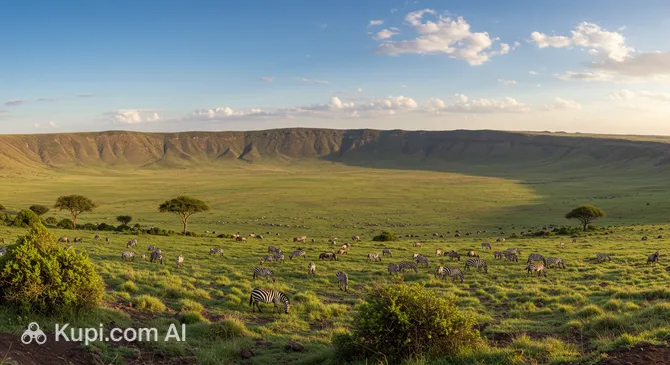
Ngorongoro. Illustration.
Source: Kupi.com AI

The main reason to visit Ngorongoro is its unique location on the rim of one of the world's largest volcanic calderas. The town literally breathes adventure: it is just a stone's throw from the savannas inhabited by thousands of animals, including the famous "Big Five," and the ancient Maasai settlements that still follow their centuries-old traditions. Ngorongoro performs an important administrative function, and it is from here that most safari tours begin, with the local infrastructure perfectly adapted to welcome travelers from all over the world.

If you dream of encountering Africa's wildlife, seeing unique landscapes, and experiencing an original culture, Ngorongoro is an ideal choice. This town promises not just a trip, but a true immersion into a world where every day is like a page from a wildlife documentary.

You can find more interesting facts on the Ngorongoro city history page.

Weather Overview

The weather in Ngorongoro is characterized by pleasant warmth throughout the year. Average monthly temperatures range from 19°C (July) to approximately 21.6°C (October). Maximum daytime temperatures are usually within the 25-27°C range, while minimum nighttime temperatures drop to 13-16°C.

Expect a warm climate in Ngorongoro with distinct wet and dry seasons. The highest amount of rainfall (up to 9 mm) and rainy days (up to 21 per month) occur between November and April. The driest months are June, July, and August, when rain is virtually absent. For a more detailed study of weather conditions, please visit the Ngorongoro Climate page.

Average monthly temperature

Average monthly precipitation

Interesting Facts

Beyond its world renown as a unique natural sanctuary, Ngorongoro holds many fascinating details and stories that make this place even more captivating. Here are just a few interesting facts to help you see it in a new light:

  • The Ngorongoro Crater is not just a volcanic depression, but the world's largest intact and unfilled volcanic caldera. Its diameter reaches about 20 kilometers, its depth is 610 meters, and the total area is an impressive 260 square kilometers. It is believed that this giant basin was formed approximately 2.5 million years ago as a result of a colossal volcanic eruption that could have rivaled the famous Kilimanjaro in size.

  • Ngorongoro is home to a staggering number of wild animals — over 25,000 individuals live here! It is one of the few places on the planet where you can encounter all of the "African Big Five": lions, leopards, buffaloes, elephants, and, most precious of all, the endangered black rhinoceros. Additionally, it is easy to see herds of zebras and wildebeests, hippos in the lakes, and even graceful pink flamingos.

  • An integral part of Ngorongoro's unique atmosphere is the Maasai — a famous semi-nomadic tribe that has lived in harmony with the surrounding nature for centuries. Their vibrant traditional clothing, distinctive dances, and ancient customs have become a true hallmark of the region. The Maasai hospitably share their way of life with travelers, tell ancient legends about the origin of the crater, and sometimes perform authentic rituals for guests.

  • Many local legends are associated with the origin of the Ngorongoro Crater. One of the most colorful states that the massive depression is nothing other than a footprint left by the giant hoof of a mythical bull. According to legend, this mighty bull came to these lands to protect them and their inhabitants from evil spirits.

How to Get There

The most convenient way to reach the famous Ngorongoro Crater and its namesake conservation area in Tanzania is via a combined route: an international flight to one of the country's major airports, such as Kilimanjaro International Airport (JRO) or Julius Nyerere International Airport in Dar es Salaam (DAR), followed by a domestic flight or a land transfer. Several small airports and airstrips serving tourist flows to this region are located in the immediate vicinity of Ngorongoro. After arrival, a 4x4 vehicle transfer usually follows, which in itself can become part of an exciting safari.

One of the closest options is Lake Manyara Airport (IATA: LKY). It is located in the Lake Manyara National Park area, approximately 69 km from Ngorongoro. This small airport mainly handles charter and local flights. A car trip from here to the Ngorongoro Conservation Area entrance takes about 2 hours.

Another option to consider is Seronera Airstrip (IATA: SEU). It is located in Seronera, in the heart of the Serengeti National Park. The distance to Ngorongoro is about 81 km. This airstrip is convenient if your trip includes a visit to the Serengeti. The drive from Seronera to Ngorongoro takes approximately 2-2.5 hours.

A larger regional transport hub is Arusha Airport (IATA: ARK). It is located in the city of Arusha, about 146 km from Ngorongoro. A larger number of flights arrive here, including those from other parts of Tanzania. A transfer from Arusha to Ngorongoro by car can take about 3.5-4 hours, offering picturesque views of the Tanzanian countryside along the way.

For convenience, here is a summary of the main airports from which you can reach Ngorongoro:

AirportPassenger trafficDistance
Lake Manyara Airport35 00069 km
Seronera Airstrip120 00081 km
Arusha Airport450 000146 km
Kelly Bar35 000148 km
Maasai Mara (Olkiombo)40 000170 km

Main Attractions

Ngorongoro serves as a gateway to exploring some of the most impressive landmarks in Tanzania and all of Africa. The region offers a unique blend of wildlife, ancient history, and vibrant culture that attracts travelers from across the globe.

The crown jewel is undoubtedly the Ngorongoro Crater – a massive volcanic caldera listed as a UNESCO World Heritage Site. Its floor has become home to an incredible variety of wildlife, including the "African Big Five" (lion, leopard, elephant, rhino, and buffalo). A safari through the crater offers a unique opportunity to observe them in their natural habitat against a backdrop of breathtaking scenery.

Equally significant is the Olduvai Gorge, known as the "Cradle of Mankind." It was here that revolutionary paleoanthropological discoveries were made, shedding light on the early stages of human evolution. A visit to the gorge and its museum allows you to touch ancient history and learn about findings that changed our understanding of human origins.

For a deep dive into local culture, the traditional Maasai villages are a must-visit. This is a unique opportunity to get acquainted with the lifestyle, customs, and beliefs of this famous nomadic people. The Maasai are known for their hospitality and are happy to share elements of their culture, including traditional dances, songs, and crafts.

Fans of active recreation and more secluded natural beauty will enjoy the Empakaai Crater. It is smaller than the famous Ngorongoro but no less picturesque. The crater walls are covered in dense forest, and its floor is occupied by a beautiful soda lake that often attracts flocks of pink flamingos. A hike down to the lake and walks in the surrounding area offer magnificent views and a sense of harmony with nature.

Local Cuisine

The gastronomy of Ngorongoro is a fascinating journey into a world of flavors, where the culinary traditions of the Maasai people and the influence of other ethnic groups in Tanzania are closely intertwined. A visit to this region would be incomplete without tasting local dishes that reflect the rich culture and the generosity of nature. Here, an authentic cuisine based on fresh products and time-tested recipes awaits you.

One of the main culinary symbols of Ngorongoro, and indeed all of Tanzania, is nyama choma – succulent meat, most often goat or beef, roasted over an open fire until it has an appetizing crust. It is traditionally served with ugali – a thick cornmeal porridge that serves as the perfect accompaniment to the meat, along with a spicy vegetable sauce or fresh vegetables. Another iconic dish, especially revered by the Maasai, is a hearty goat offal soup, prepared according to special recipes passed down from generation to generation. You should also try dishes made from fresh fish caught in nearby lakes and aromatic vegetable stews generously seasoned with local spices.

Street food and the local markets of Ngorongoro offer many delicacies. You can always find the freshest tropical fruits here: juicy mangoes, sweet papayas, bananas, and avocados. Be sure to try mandazi – appetizing sweet donuts that are great for breakfast or a snack, as well as fried bananas. Popular drinks include aira – a traditional Maasai fermented milk drink that is refreshing and energizing, as well as freshly squeezed juices.

The food culture in Ngorongoro is closely linked to hospitality. Locals often eat at home, but there are plenty of places for tourists to experience authentic cuisine – from small family eateries to lodges offering both local and European dishes. Sometimes, small food festivals are held in the region where you can taste homemade food and experience the true warmth of the residents. Tasting local dishes in Ngorongoro is not just a meal, but an immersion into the original culture and traditions of this amazing corner of Africa.

Travel Tips

Welcome to a unique corner of our planet – Ngorongoro! To make your journey to this natural wonder in Tanzania as comfortable and memorable as possible, we have prepared some practical tips.

  1. Clothing and Essentials:

    In the Ngorongoro Crater, it can be chilly in the mornings and evenings, so layering is your best friend. Bring light but warm items (fleece, windbreaker). During the day on safari, light-colored long-sleeved shirts and trousers made of natural fabrics are useful for protection against the sun and insects. Essentials include: comfortable closed shoes, a hat, sunglasses, high SPF sunscreen, repellent, binoculars for wildlife viewing, and, of course, a camera. Don't forget a universal adapter for charging your devices.

  2. Transport:

    The primary way to explore the crater and its inhabitants is via specialized safari jeeps (4x4 vehicles), usually with a pop-up roof. Such tours are organized in advance. Public transport in the traditional sense for moving around the conservation area itself is absent. Travel between lodges and nearby settlements is also most often carried out by pre-booked transport or as part of a tour package.

  3. Finances:

    The official currency is the Tanzanian Shilling (TZS). US dollars are also widely accepted, especially for safaris, lodge stays, and park fees (new bills issued after 2006 are preferred). It is recommended to carry some cash in shillings for small purchases and tips. It's best to exchange currency in major cities like Arusha or at the airport upon arrival. ATMs are hard to find in the immediate vicinity of Ngorongoro, and credit cards are mainly accepted at large lodges, but not everywhere. Tipping guides, drivers, and hotel staff is common practice and an expression of gratitude for good service.

  4. Health and Safety:

    Before traveling to Tanzania, consult a doctor regarding necessary vaccinations and malaria prophylaxis. Bring a first-aid kit with basic medications. Drink only bottled or boiled water. On safari, strictly follow the guide's instructions, do not leave the vehicle without permission, and do not attempt to feed the animals. Ngorongoro is quite safe in terms of crime, but basic precautions, as with any trip, are recommended. Medical insurance with evacuation coverage is mandatory.

  5. Communication:

    The official languages in Tanzania are Swahili and English. In the tourism sector, English is quite widely spoken. Learning a few phrases in Swahili, such as "Jambo!" (Hello!), "Asante sana" (Thank you very much), and "Karibu" (Welcome), is always appreciated by locals. A SIM card from a local operator can be purchased in cities. In the Ngorongoro area, mobile signal and internet may be unstable. Wi-Fi is usually available in lodges, but speeds may be low.

  6. Local Etiquette:

    Tanzanians are hospitable and friendly people. It is customary to greet and smile. Before taking photos of locals, be sure to ask for their permission. Show respect for local traditions and culture. When visiting Maasai villages or other local communities, dress modestly (shoulders and knees should be covered).

  7. What to Avoid:

    It is strictly forbidden to feed wild animals – this disrupts their natural behavior and can be dangerous. Also, avoid getting too close to animals without an experienced guide. Do not leave trash within the conservation area – protect the unique nature of Ngorongoro.

  8. Start Early for the Best Experience:

    Ngorongoro Crater is a popular spot. To enjoy the views and observe animal activity with fewer other tourists, try to head out on safari as early as possible in the morning, right after the park gates open. Morning light is also ideal for photography.

We hope these tips help you better prepare for an unforgettable adventure in Ngorongoro. We wish you vivid impressions and amazing discoveries in the heart of African nature!

Entertainment & Nightlife

Nightlife in Ngorongoro is fundamentally different from the usual rhythm of big cities with their noisy clubs and neon signs. Here, on the edge of the majestic crater, the concept of "nightlife" takes on a completely different, philosophical, and romantic meaning. Evenings in this unique conservation area are dedicated to relaxing after a busy day, enjoying the silence of the wilderness, and contemplating Africa's incredible starry sky.

The heart of evening leisure is the bars and lounge areas at the lodges and campsites. Since moving independently through the conservation area after dark is strictly prohibited due to wild animals, all social activity is concentrated within the hotels. The atmosphere here is intimate and cozy: crackling logs in the fireplace, soft lighting, and leisurely conversations with fellow travelers from around the world. The dress code in most places is "safari chic" or casual; evening dresses and heels would be out of place here, as temperatures can drop quite low in the evenings.

Instead of discos and karaoke, a popular form of entertainment in Ngorongoro is what local guides jokingly call "Bush TV." This involves sitting around a large campfire under the open sky. Guests gather by the fire with a glass of wine or local beer, listen to the sounds of the night savanna, and share their impressions of the day. Often, lodges invite Maasai groups who perform traditional shows for guests with rhythmic dances and songs, providing a deeper immersion into the local culture.

While there are no separate nightclubs, several places with excellent bars are worth noting for a pleasant evening (usually accessible to residents or via advance dinner reservation):

  • The Bar at Ngorongoro Serena Safari Lodge — a venue styled after a cave with rock paintings. It features an outdoor terrace with telescopes offering a fantastic view of the crater, and a huge fireplace to warm up by in the evening.
  • Ngorongoro Crater Lodge Lounge — the epitome of colonial luxury. The interiors are decorated with velvet and antiques, and dinner here feels like a royal reception. An ideal place for a romantic evening with exquisite cocktails.
  • Rhino Lodge Restaurant and Bar — a more casual but very atmospheric spot located right in the forest on the crater rim. Buffaloes can often be seen wandering just outside the windows while you enjoy dinner by the fireplace.

Safety and Transport: At night, the Ngorongoro territory belongs to the animals. Walking outside the fenced areas of lodges or campsites is strictly forbidden and deadly. Taxi services or Uber do not exist here. If you plan to have dinner at another lodge, you must arrange a transfer in advance with your hotel or driver-guide. Travel between facilities is only possible by car.

Daytime Entertainment: During daylight hours, nature itself remains the main "show." The primary activities include jeep safari tours across the crater floor, visiting colorful Maasai villages, and excursions to Olduvai Gorge. Hiking enthusiasts can go trekking along the rim of the Empakaai Crater accompanied by an armed ranger.

Parks & Museums

Ngorongoro and its surroundings offer travelers not so much traditional city parks and museums, but a unique immersion into the world of wildlife and the ancient history of humanity. It is a place where every corner breathes with primordial nature and culture.

The main natural gem is undoubtedly the Ngorongoro Conservation Area, the heart of which is the famous Ngorongoro Crater. This massive volcanic caldera has become home to an incredible variety of wild animals, including the "African Big Five." For tourists, it is an opportunity to see lions, elephants, rhinos, buffaloes, and leopards in their natural habitat, as well as to enjoy breathtaking landscapes. The conservation area is included in the UNESCO World Heritage List and represents a unique ecosystem.

Another iconic site within the conservation area is the Olduvai Gorge, often called the "Cradle of Mankind." It was here that revolutionary paleoanthropological findings were made, shedding light on the early stages of human evolution. A visit to the gorge is a true journey back in time, allowing you to touch millions of years of history.

Located right at the Olduvai Gorge is the small but very important Olduvai Gorge Museum. Its exhibits include casts of fossil remains of ancient hominids, stone tools, and materials detailing the research of the famous Leakey family. This museum is a must-visit for anyone interested in paleontology and human origins.

While there are no traditional art galleries or large historical museums in Ngorongoro in the urban sense, a unique cultural experience can be gained by visiting Maasai cultural villages (Maasai Bomas). These are not just tourist attractions, but an opportunity to see the authentic life, traditions, and customs of this colorful semi-nomadic people. Guests can learn about the structure of the dwellings, see traditional dances, and purchase products from local artisans.

Tip for travelers: To gain a deeper understanding of Ngorongoro's uniqueness, try to hire a local Maasai guide. Not only do they know the wildlife and crater trails perfectly, but they can also share unique knowledge of their culture and the history of these lands, showing you the region from a completely new perspective.

Getting Around

When planning a trip to Ngorongoro, it is important to understand that the public transport system here is significantly different from what is common in large cities. Ngorongoro is primarily a famous conservation area, and the main mode of transport for tourists is related to organized safaris and excursions. You will not find subways, trams, or an extensive network of city buses in the traditional sense here.

The primary mode of transport for moving within the Ngorongoro Conservation Area itself, including the famous crater, is specialized safari jeeps (usually 4x4 vehicles with a pop-up roof for better viewing). These vehicles are provided by tour operators as part of safari tours or can be rented with a driver-guide. This is due to both the terrain (dirt roads, rugged relief) and the conservation area's rules. The cost of such a trip is usually included in the overall safari package.

To reach the entrance of the Ngorongoro Conservation Area, tourists most often use transfers organized by hotels or safari companies, or they hire private transport with a driver from the nearest major settlements, such as Arusha or Karatu. Although local minibuses known as "dalla-dallas" run between cities in Tanzania, they are not a convenient or intended way for direct exploration of Ngorongoro itself and do not enter the conservation area for tourist purposes.

Regarding payment, there is no single system of transit passes or transport cards as in cities. Payment for transport is usually part of the safari tour cost or is negotiated individually when renting a car with a driver. A practical tip for tourists: plan and book all transport services in advance related to visiting Ngorongoro through accredited travel companies or your lodge. This will save you from extra hassle on-site. Vehicle movement inside the Ngorongoro Crater is strictly regulated by time (usually from early morning until evening, and entry into the crater is often limited by duration of stay).

An alternative to a jeep safari can be guided walks accompanied by rangers along some permitted routes on the crater rim or in the adjacent forests, but this is more of an excursion activity than a method for traveling long distances. Taxis can be found in service villages outside the main tourist area for short trips, but they are not intended for safaris inside the conservation area. Carsharing or developed bike rentals are absent in Ngorongoro due to the specific nature of the territory.

Accommodation

When planning a trip to Ngorongoro, you will find that the accommodation options here are primarily focused on the unique safari experience and proximity to the famous crater. The main choice consists of lodges and camps, ranging from luxury to more budget-friendly options.

Most of the most sought-after accommodation options are located either directly on the rim of the Ngorongoro Crater, offering spectacular views, or in the immediate vicinity of the conservation area entrance. Accommodation on the crater rim usually falls into a higher price category but offers an unforgettable experience. There are also options in nearby towns, such as Karatu, which can be more affordable and offer an insight into local life.

The price range for accommodation in the Ngorongoro area is quite wide: from exclusive lodges with full board and the highest level of service to simpler but comfortable campsites and guesthouses. It is recommended to book accommodation through well-known online platforms, travel agencies specializing in safaris, or directly through lodge websites. Given the popularity of the destination, especially during the peak tourist season (usually from June to September and from December to February), it is strongly recommended to book your stay in advance to ensure the best options and avoid disappointment.

Nearby Cities

For those looking to explore the surrounding area, Ngorongoro serves as an excellent starting point for day trips to several interesting nearby locations.

For instance, Arusha, located about 153 km away, is a major hub for safari organization and an important cultural center in northern Tanzania. Here you can explore local art, visit vibrant markets, and plan further adventures to national parks. Another interesting option is a trip to Moshi (about 223 km), a city at the foot of the majestic Kilimanjaro. While the climb itself requires time and preparation, Moshi offers breathtaking views of the mountain, and you can also visit coffee plantations and learn more about the culture of the Chaga people.

CityPopulationDistance
Oldeani8 00052 km
Seronera083 km
Lake Manyara National Park086 km
Mbulu36 408105 km
Mugumu16 851144 km

These nearby destinations provide an insight into the diverse culture and landscapes of the region, complementing the experience of visiting Ngorongoro itself and its famous crater. A trip to any of these cities can be an exciting addition to your Tanzanian adventure.

Shopping & Souvenirs

Shopping in Ngorongoro is, first and foremost, an immersion into the world of authentic handicrafts and souvenirs that reflect the rich culture of local tribes, especially the Maasai, and the amazing biodiversity of this unique region of Tanzania. You won't find the usual large shopping malls here, but you will be able to purchase unique items that will remind you of an unforgettable safari and your encounter with wild nature.

In Ngorongoro, there are no clearly defined shopping streets or quarters as in large cities. The main opportunities for buying souvenirs are concentrated at lodges and hotels, which often have small shops or stalls. Handicrafts can also be found at small guest centers within the conservation area itself or in nearby settlements. These are usually small stalls where local artisans offer their work.

Large modern shopping centers are not typical for Ngorongoro. Shopping here retains an intimate and authentic character, with an emphasis on handmade items and locally produced goods. This allows tourists to purchase truly unique items rather than mass-produced products.

In the vicinity of Ngorongoro, especially in villages inhabited by the Maasai people, you can find small local markets. At these markets, locals sell their crafts, jewelry, household items, and traditional clothing. Visiting such a market is not only a shopping opportunity but also a chance to get closer to the daily life and culture of the Maasai.

Among the souvenirs worth bringing back from Ngorongoro, Maasai bead jewelry – bright necklaces, bracelets, and earrings – is particularly popular. Hand-carved wooden animal figurines (elephants, lions, giraffes, rhinos), traditional masks, leather goods, and soapstone items are also highly valued. Look out for the colorful kanga and kitenge fabrics with national patterns. Sometimes you can find Tingatinga style paintings, although they are more characteristic of other regions of Tanzania. For a gastronomic souvenir, consider local coffee or tea.

Shops and souvenir stalls at lodges usually operate during daylight hours, following the schedule of tourists. Operating hours at local markets can be more flexible. The main currency for transactions is the Tanzanian Shilling (TZS). US dollars may be accepted in some tourist spots, but the exchange rate is not always favorable. Credit card payment options are limited and mainly available at large hotels and lodges. Therefore, it is recommended to carry enough cash, especially for purchases at markets and from small vendors.

The Tax Free system for souvenir products and goods purchased in small shops or markets in Ngorongoro is generally not widespread and does not apply to most tourist purchases.

Have you reached the end of the page?

So the route has been studied inside and out