Support

Surin

About

Surin is not just the administrative center of the province of the same name, but the true heart of the northeastern region, where ancient traditions intertwine with the steady rhythm of modern life. Located approximately 430 kilometers east of Bangkok and near the Cambodian border, the city often serves as a starting point for travelers wishing to discover authentic Thailand.

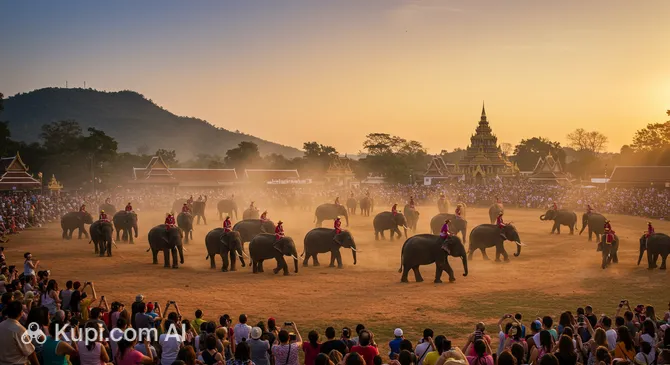
Surin. Illustration.
Source: Kupi.com AI

Despite its status, Surin maintains the atmosphere of a cozy and peaceful place with a population of about 39,728 people. You won't find noisy skyscraper districts here; instead, the city greets guests with well-kept streets, an abundance of greenery, and sincere hospitality. Its geographical location and Surin's history closely link it with Khmer culture, giving this place a special, unique character.

The city is rightfully considered the country's "elephant capital." This is where the famous annual elephant festival takes place, which is the region's signature event. Furthermore, Surin is famous for its production of unique silk and silver items, and local markets, filled with the scents of spices and fresh fruit, offer an excellent opportunity to get acquainted with traditional cuisine.

Visiting Surin is a chance to see the real life of the Thai heartland without the crowds of tourists. If you are looking for harmony, inspiration, and want to touch living traditions, this city should definitely be on your itinerary.

Weather Overview

The climate in this region is tropical, so it is warm throughout the year; however, the seasons have their own distinct features. When planning a trip, it should be noted that the weather in Surin is divided into hot, rainy, and cool periods, each of which affects the nature of your vacation in its own way.

The hottest month is traditionally April, when the average temperature reaches 30.6°C, and during the day, the air can warm up to 35.6°C. This is the time before the rainy season begins when the sun is most active. If you prefer more comfortable conditions, it is better to choose the winter months. In December and January, the most pleasant "coolness" sets in: the average temperature stays around 24°C, and at night it can drop to a fresh 18.5°C.

The rainy season lasts from May to October. The peak of humidity occurs in September, when up to 26 rainy days per month are recorded. During this time, nature comes alive and becomes vibrant green, but frequent downpours can adjust sightseeing plans. Conversely, winter here is very dry: in December and January, there is practically no precipitation (0–1 rainy day), making this period ideal for long walks and attending festivals.

Expect a hot spring, a wet summer with frequent rain, and a comfortable, dry winter with pleasant evenings.

Average monthly temperature

Average monthly precipitation

Interesting Facts

Beyond its main attractions, Surin holds many fascinating secrets and cultural features that only reveal themselves to inquisitive travelers. This city will surprise you with its deep traditions rooted in ancient history.

  • The Unofficial Elephant Capital. Surin is world-famous for its special relationship with these majestic animals. Here, elephants are not just helpers but full members of the community. The annual festival includes not only colorful parades but also amazing spectacles, such as football matches featuring elephants, demonstrating the giants' incredible intelligence and agility.

  • Unique "Surin Silk." The city is famous for its textile traditions, the secrets of which are passed down from generation to generation. Local fabrics are distinguished by complex patterns and rich colors, and the process of creating them is considered a true art. The products of Surin craftswomen are highly valued and considered some of the best souvenirs in Thailand.

  • Traces of an Ancient Empire. The architectural character of the surroundings preserves the memory of times when these lands were part of the great Khmer Empire. Ancient temples, such as Prasat Sikhoraphum and Prasat Ta Muen, allow you to touch a history spanning hundreds of years and feel the mystical atmosphere of bygone eras.

  • Cultural Crossroads. Surin is a unique ethnic "melting pot" where Thais, Khmers, and Lao coexist harmoniously. This proximity has given rise to an original culture that is clearly manifested in local music, dialects, and festivals that unite the traditions of several peoples at once.

How to Get There

Planning a trip to this colorful corner of the Northeast requires attention to logistics, as there are no direct flights specifically to the city. However, the regional transport network is well-developed, and you can choose the most convenient route by combining a flight with a bus or taxi trip. You can find all the details and alternative options by following the link: more about how to get to Surin.

Since there is no airport in the city of Surin itself, travelers have to use the air gateways of neighboring provinces. The closest option is Buriram Airport (IATA: BFV), located in the city of Buriram. This is a small regional airport situated about 52 km from Surin. The journey from here by taxi or transfer will take about 1 hour and 40 minutes, making it the fastest way to reach the destination by air.

Another popular option is Roi Et Airport (IATA: ROI) in the city of Roi Et. It is a bit further away, at a distance of about 105 km. The journey by car from this transport hub to the center of Surin will last approximately 3 hours. Despite the greater distance, this route might be convenient depending on the flight schedule.

For those looking for more flight options, Ubon Ratchathani International Airport (IATA: UBP) is suitable. It is located in the city of Ubon Ratchathani, about 123 km from Surin. This is a major transport hub with high passenger traffic, handling many flights. The travel time by ground transport from here will be about 3 hours and 25 minutes.

For clarity, here is a summary of the main airports through which you can reach Surin:

AirportPassenger trafficDistance
Buri Ram Airport251 45952 km
Roi Et Airport342 970105 km
Ubon Ratchathani International Airport1.3 mln123 km
Khon Kaen Airport2 mln176 km
Savannakhet50 000189 km

Railway communication is also an excellent way to get to Surin, especially for those who want to enjoy Thailand's landscapes. The city is located on the northeastern line of the state railway. Trains from Bangkok depart regularly and arrive at the station located right in the city center, which eliminates the need to look for an expensive transfer upon arrival. A train journey can take from 6 to 9 hours depending on the type of train (rapid or express), but it is a comfortable and budget-friendly option.

Additionally, Surin can be reached by intercity buses that depart from Bangkok's Northern Bus Terminal (Mo Chit). Buses offer different comfort classes, including VIP seats, and are a popular alternative to trains.

Main Attractions

Surin is a city with a rich heritage, and exploring it should begin with its spiritual and historical center. Although there are no grand skyscrapers here, the city's landmarks are steeped in deep respect for tradition, the history of the Khmer Empire, and the veneration of elephants.

The Phraya Surin Phakdi Si Narong Changwang Monument is perhaps the most revered site in the city. The statue is dedicated to the city's founder, who, according to legend, was an expert in catching and training elephants. Locals come here to pay their respects, lay flowers, and ask for blessings. For tourists, it is an excellent starting point for a route and an opportunity to see how closely the city's history is intertwined with the personality of its first ruler.

Another important shrine is Wat Burapharam, located in the very heart of Surin. This is the oldest royal monastery in the province, built at the end of the 18th century. Inside, the sacred Luang Pho Phra Chi statue is kept, attracting pilgrims from all over the region. The temple's architecture combines Thai style with elements characteristic of local culture, and the peaceful atmosphere allows for a break from the hustle and bustle to immerse oneself in reflection.

If you are interested in unique crafts, be sure to visit the Ban Tha Sawang Silk Weaving Village. Surin is world-renowned for its textiles, and it is here that you can witness the process of creating the famous "pha mai" brocade. Masters use ancient techniques and complex looms operated by several people simultaneously to create fabrics of incredible beauty, which are even supplied to the royal court. This is not just a shop, but a living museum of folk craftsmanship.

History buffs will find the Surin National Museum fascinating. It houses an extensive collection of artifacts telling the region's story: from prehistoric times and the Khmer Empire era to the present day. The exhibits include ancient ceramics, traditional musical instruments, and, of course, items related to the culture of elephant breeding, which helps to better understand the soul of this province.

Local Cuisine

The gastronomy of Surin is a true adventure for the gourmet, where ancient Thai traditions and the vibrant flavors of Isan cuisine intertwine. The food here is distinguished by its special spiciness and richness, so be prepared for a firework of sensations. The region's signature dish is "laab" — an aromatic salad of minced meat with mint, lime, and hot spices. No less popular is the legendary "som tam" — a spicy green papaya salad that perfectly refreshes in the hot climate.

For those seeking true exotica, local markets offer unusual snacks: fried grasshoppers, larvae, and other insects. In this region, this is a common snack often enjoyed with a cold beer. If you prefer more traditional flavors, look for dishes prepared in clay pots over an open fire — meat and vegetables cooked this way turn out especially tender. The province's special pride is the local "khao khao" rice and the famous elephant garlic, which gives the food a unique aroma.

The dining culture in the city revolves around street food and bustling night markets. It is here, among the stalls with the freshest fruit and steaming woks, that you can feel the true spirit of the country. For drinks, you must try the sweet cold milk tea, which perfectly dampens the spiciness of the dishes, or sample the traditional rice moonshine, popular among locals as part of a feast in Thailand.

Travel Tips

Preparing for a trip to Surin requires attention to detail, as it is not a typical beach resort but an authentic province with deep traditions. To make your acquaintance with the "city of elephants" smooth and comfortable, we have gathered the most important practical recommendations to help you feel confident.

  1. Clothing and Essentials. Given the hot tropical climate, choose lightweight clothing made of natural breathable fabrics (cotton, linen). Since Surin is rich in Buddhist shrines, be sure to bring items that cover your shoulders and knees — without observing the dress code, you will not be allowed into the temple grounds. Shoes should be comfortable and easy to take off, as you will often have to remove them when entering buildings.

  2. Transport. There isn't much public transport in the usual European sense. For moving around the center, it is most convenient to use tuk-tuks or colorful bicycle rickshaws ("samlors") — agree on the price in advance. Ride-hailing apps like Grab work, but the wait for a car can be long due to the limited number of drivers. For trips to the surrounding areas, experienced travelers often rent a motorbike, but this requires an international category A license.

  3. Finances. The official currency is the Thai Baht. In Thailand, and especially in provincial cities like Surin, cash is king. Bank cards are only accepted in large hotels and chain supermarkets. It is better to withdraw money from ATMs at bank branches. Always have small bills with you to pay for street food and transport. Tipping is not mandatory, but rounding up the bill in a cafe will be received with gratitude.

  4. Health and Safety. Pharmacies are common in the city, and basic medicines are available without a prescription, but it is better to bring specific medications with you. The main precaution is protection from the sun and insects: be sure to use repellents, as mosquitoes can carry dengue fever. Drink exclusively bottled water. Surin is a safe city, but standard vigilance regarding personal belongings in markets won't hurt.

  5. Communication. The level of English proficiency here is lower than in Bangkok or Phuket. We recommend installing a translator app with an offline Thai language pack on your smartphone — this will greatly facilitate communication. It is better to buy a SIM card with mobile internet (operators AIS, TrueMove, or DTAC) immediately upon arrival at 7-Eleven stores to always stay connected.

  6. Local Etiquette. Thais are very polite and value restraint. Greet locals with the traditional "wai" gesture (palms folded at the chest). Remember that the head is considered the most sacred part of the body — never touch a Thai person's head, even if it is a child. In public places, try to speak quietly and do not raise your voice if problems arise — a smile will resolve the issue faster than shouting.

  7. What to Avoid. Never point your feet at people, objects, or images of Buddha — in Thai culture, feet are considered the "dirty" part of the body, and such a gesture is a gross insult. Also, avoid any critical or joking remarks about the Royal Family; this is a strictly taboo topic.

  8. Additional Tip. Surin is famous for its high-quality silk and silver. If you decide to purchase souvenirs in local villages (for example, in Ban Tha Sawang), do not hesitate to haggle — it is part of the cultural interaction. And if you plan to visit the November Elephant Festival, book your accommodation at least 3–4 months in advance, as hotel rooms run out instantly.

Surin is an incredibly hospitable city where respect for local customs opens all doors and hearts of the residents. By following these simple tips, you will be able to avoid awkward situations and fully immerse yourself in the unique atmosphere of the Thai heartland.

Entertainment & Nightlife

Nightlife in Surin is fundamentally different from the noisy parties of Bangkok or Pattaya. You won't find neon red-light districts or massive rave venues for foreigners here. Instead, the city offers an immersion into the authentic atmosphere of Thai fun ("sanuk"), primarily aimed at locals. Evenings here are soulful, loud, and very musical, and the prices are pleasantly surprising in their affordability.

In the evening, the area around major hotels becomes a hub of activity, particularly the district around the Thong Tarin Hotel and Sirirat Road (including Soi Kola). Most karaoke bars, pubs with live music, and clubs are concentrated here. The crowd in these establishments is mixed: students, local office workers, and expats. The dress code is relaxed almost everywhere—shorts and a T-shirt are perfectly appropriate, though closed shoes are better for visiting nightclubs.

If you want to see how Thais relax, be sure to visit Tawan Daeng Mahason. This is a legendary chain venue with a format popular throughout Isan. It has a country club atmosphere: large musical groups perform modern hits and traditional songs in the "mo lam" and "luk thung" styles on stage. Guests sit at tables, ordering food and drinks, and dancing often starts right at the tables.

For those who prefer a more club-like atmosphere and electronic music, Speed 3 Music Hall is the place to go. It is the city's most famous spot for dancing late into the night, where young people flock after the bars close. It features loud sound, light shows, and an energetic atmosphere. Another popular spot for a more relaxed evening is The Beach bar, where you can listen to music, have a cocktail, and socialize in a cozy setting popular with both locals and expats.

An integral part of an evening in Surin is the night markets. The main Night Bazaar is located near the railway station. Life here begins to buzz after 5:00 PM. It is the ideal place to start your evening: try street food, buy souvenirs, and simply watch the city bustle before heading to a bar.

Practical Tips and Safety:

  • Transport: The biggest challenge is getting home late at night. Tuk-tuks and bicycle rickshaws often stop working around 10:00–11:00 PM. We recommend arranging a ride with a driver in advance, taking a local taxi driver's phone number, or asking the venue staff to call a car for you.
  • Safety: Surin is a quiet city, but standard precautions are necessary. Keep an eye on your personal belongings and do not leave your drinks unattended. Police patrol the entertainment areas, and tourists are treated kindly.
  • Prices: The cost of entertainment here is significantly lower than in tourist centers. Dinner with drinks or club entry will cost a very modest amount, allowing you to enjoy the evening without worrying about your budget.

During the day, entertainment in the city is more educational and tranquil. After a big night out, you can recharge by heading to the Huai Saneng recreation area (Huai Saneng Reservoir) or taking a walk in Suan Chaloem Phra Kiat (The King's 80th Birthday Park), where locals exercise and relax by the water. It is also worth checking out local cinemas in shopping malls or visiting small galleries if you are in the mood for some cultural leisure.

Parks & Museums

Although Surin is often perceived exclusively as the "city of elephants," it offers travelers a surprisingly harmonious combination of natural recreation areas and cultural institutions. Here, you can find both tranquility in shady parks and deep knowledge of the region's ancient history in local museums, which tell the story of the Khmer Empire's heritage and the province's ethnic diversity.

For those seeking union with nature, the main attraction is the Huai Saneng Reservoir. Locals call it their "sea," and it is an ideal location to escape the heat. The lake is situated just a few kilometers south of the city and is famous for its views of blooming lotuses and migratory birds. Tourists are drawn to this place by the opportunity to rent a boat, walk along the dam at sunset, or have a picnic in one of the bamboo huts on the water, enjoying the fresh breeze and local snacks.

Another important natural area, though located a bit further from the center, is the Phanom Sawai Forest Park. This is a sacred place for locals, combining the beauty of a tropical forest with spirituality. The park spans three hills, and the climb up is rewarded with a panoramic view of the surroundings. It is interesting here not only to walk along the forest trails but also to ring one of the 1,080 bells installed along the path, which, according to belief, brings good luck.

The best way to immerse yourself in the region's cultural context is at the Surin National Museum. The museum building itself is an attraction, as its architecture is styled after an ancient Khmer prasad temple. The exhibition is divided into several halls covering everything from geology and archaeology to ethnology. For tourists, this is a unique chance to learn about the lives of the Kui, Khmer, and Lao ethnic groups, as well as to understand the centuries-old history of the relationship between locals and elephants.

While not a museum in the classic sense, the Ban Tha Sawang Silk Weaving Center functions as a living gallery of folk art. Here, you can see with your own eyes the process of creating the famous brocade, which is used even in the royal court. Visitors are shown the work on unique two-story looms operated by four masters simultaneously. This place allows you to appreciate the incredible complexity and artistic value of Surin textiles.

Architecture lovers should pay attention to the Surin City Pillar Shrine. This is not just a religious site, but a magnificent example of modern design inspired by the Khmer style. Exquisite carvings and gold details make it one of the most photogenic buildings in the city, especially in the rays of the evening sun.

Insider Tip: If you find yourself in the National Museum, be sure to find the hall dedicated to the traditional process of catching wild elephants ("khlong chang"). It features rare ritual objects and mahouts' tools that you won't see anywhere else in Thailand. This will help you truly understand the spirit of Surin before visiting any elephant shows.

Getting Around

The public transport system in Surin differs significantly from the usual bustle of megacities: here you won't find a metro, trams, or complex express bus schemes. The city is compact, and moving around it is simple and homelike, allowing tourists to quickly adapt to the local pace of life.

The main type of "people's" transport is songthaews — pickup trucks converted for passenger transport with two benches in the back. In Surin, they are usually pink or blue and run on fixed routes connecting the city center, markets, the bus station, and the railway station. Stops are often not marked by signs: to get on, you just need to wave your hand at the driver, and to get off, press the bell located on the ceiling of the vehicle's body.

Bicycle rickshaws (samlors) add a special historical charm to the city. Unlike Bangkok, where they have almost disappeared, in Surin, this eco-friendly transport is still popular for short-distance trips. It is an ideal way to slowly see the center and support local drivers, many of whom are from the older generation. Classic motorized tuk-tuks are also available, which are suitable for traveling with luggage or a group.

For solo travelers, motorcycle taxis remain the fastest option. Drivers are easily recognized by their bright vests (usually orange), and they wait at intersections, near markets, and hotels. This is the most efficient way to get from point A to point B, but be sure to ask for a helmet before your ride for your safety.

The payment system in Surin's public transport is conservative: cash rules here. There are no validators, transport cards, or smartphone payments in songthaews and tuk-tuks. The fare in songthaews is fixed and very democratic (usually 10–20 Baht); money is handed to the driver upon exiting. With taxi drivers, tuk-tuk drivers, and bicycle rickshaw pullers, the price must be agreed upon in advance, before the journey begins, as meters are very rarely used. Always have small bills and coins with you, as there may not be change for large banknotes.

As an alternative to public transport, you can use ride-hailing apps like Grab, although in the province, the car waiting time may be longer than usual due to a small number of drivers. For those who prefer complete freedom, motorbike and car rental services are available in the city. To rent, you will need a passport and an international driving license of the appropriate category.

Accommodation

The choice of accommodation in Surin will pleasantly surprise travelers with its variety and affordability, although one should not look for luxury five-star complexes of world chains here. The city's hotel stock is geared towards practical tourists, so the core offerings consist of reliable mid-range hotels, cozy city hotels, and budget guesthouses. For those seeking privacy and a relaxing atmosphere, small resorts with individual bungalows and green gardens can be found on the outskirts of the city and along the roads leading to attractions.

From a logistics standpoint, the most convenient area to stay is the city center, especially the blocks near the railway station and the Night Bazaar. By staying here, you will be within walking distance of street food, shops, and main transport hubs, which is ideal for tourists without their own vehicle. If you are traveling by car or bike, it is worth considering options slightly further from the central bustle: there you will often find more modern hotels with spacious parking and swimming pools.

The city has several large hotels that are considered local landmarks. These are typically multi-story buildings offering a classic set of services: restaurants, conference rooms, and sometimes pools. They are popular with both business travelers and tourist groups. Also, in recent years, more and more modern mini-hotels and apartments with minimalist designs and fresh renovations have been appearing.

Important booking tip: For most of the year, Surin lives at a peaceful pace, and you can find a free room even a couple of days before arrival. However, the situation changes drastically in November during the famous Elephant Festival. During this period, the city fills to capacity with guests, and accommodation must be booked at least 3–4 months in advance. If you plan to visit on these dates, do not delay your hotel search until the last moment.

The price range in Surin province is very democratic. Staying here will cost significantly less than in Thailand's popular seaside resorts. Budget rooms are available for the price of a good lunch, and comfortable mid-level options are very reasonably priced. For booking, it is most convenient to use major international online platforms where most properties are listed, although many small guesthouses also accept guests without prior reservation during the low season.

Nearby Cities

For those who want to explore the surrounding area, Surin serves as an excellent starting point for day trips to several interesting nearby locations. The Isan region is rich in cultural discoveries, and a short trip to neighboring provinces will allow you to see a completely different side of Thailand.

One of the most popular destinations is Roi Et. This city, located just an hour and a half drive away, is famous for its relaxed atmosphere. The main attraction here is Wat Burapha Phiram, which features Thailand's tallest standing Buddha statue (about 60 meters). It is also worth taking a stroll around the picturesque Bueng Phalan Chai lake, located in the city center, where locals like to feed the fish and relax in the shade of trees.

History lovers will be interested in Sisaket. This province, bordering Cambodia, preserves many traces of the Khmer civilization. Here you can visit ancient ruins, such as Prasat Sa Kamphaeng Yai, which resemble a miniature Angkor Wat. Additionally, Sisaket is known for its fruit orchards: if you find yourself here during the season (May-June), be sure to try the local durian, which is considered one of the best in the country.

Slightly further away is Ubon Ratchathani — a major cultural and spiritual center of the region. A trip here will take more time, but the city is worth it to see its magnificent forest temples, such as Wat Nong Pah Pong. This destination is especially interesting for those who want to get acquainted with the traditions of forest monks and see the confluence of two rivers — the "Two-Colored River" (the Mekong and the Mun).

CityPopulationDistance
Sam Kho10 69620 km
Satuek11 44446 km
Suwannaphum9 18346 km
Kaset Wisai11 21755 km
Buriram28 61369 km

These nearby destinations provide an insight into the diverse culture and landscapes of the region, making your journey through northeastern Thailand even more rewarding and memorable.

Shopping & Souvenirs

Shopping in Surin is, first and foremost, an introduction to the unique cultural heritage of the region, rather than a chase after global brands. Unlike Bangkok, you won't find endless rows of luxury boutiques here; however, the city is famous for its high-quality authentic goods. This is the ideal place for those who want to bring home not just a magnet, but an item with a history: local handicrafts, especially textiles and jewelry, are considered some of the best in all of Thailand.

The commercial life of the city is concentrated in its central part. The main shops and stalls are located along the streets leading to the railway station, as well as in the area of the city clock tower. Strolling through these blocks, you can find many small family-run shops selling everything from clothing and shoes to gold jewelry and household utensils. This is an excellent opportunity to immerse yourself in the atmosphere of provincial trade, where sellers are always happy to see customers and ready to chat.

For lovers of comfortable shopping in air-conditioned premises, several shopping centers operate in Surin. The most popular and modern is Robinson Lifestyle Surin. This is a large mall featuring well-known Thai and international mass-market brands, a food court, a cinema, and a supermarket. Another well-known spot is Surin Plaza, the city's oldest shopping center. Although it looks more modest, you can find inexpensive clothing, mobile electronics, and cosmetics here at very democratic prices.

The true flavor of Surin is revealed at its markets. The Night Bazaar, located near the station, comes alive at sunset. Here you can not only have a delicious dinner but also buy affordable clothing, accessories, and souvenirs. To buy fresh fruit and local delicacies, it is worth checking out the Morning Market. And if you are ready for a trip out of town, the Chong Chom market on the Cambodian border offers a huge selection of goods at wholesale prices: from kitchenware to bicycles.

The main souvenir worth bringing from Surin is the famous silk. Local fabrics are distinguished by complex patterns and high quality; you can buy them in specialized shops in the city or directly in craftsmen's villages, such as Ban Tha Sawang. The second most popular item is silver jewelry, especially blackened silver necklaces ("pa kuam"). Also, look out for wickerwork made of rattan and local products: dried radish and jasmine rice, which is considered particularly aromatic here.

Shops in shopping centers are usually open from 10:00 AM to 9:00 PM, while small private shops may close earlier, around 6:00–7:00 PM. Night markets operate from approximately 5:00 PM to 10:00 PM. Cash (Thai Baht) remains the primary method of payment. Bank cards are accepted in supermarkets, large malls, and some souvenir shops, but in markets and street stalls, you won't get by without cash.

The VAT Refund for Tourists (Tax Free) system in Surin is limited. You can arrange a 7% tax refund for purchases in large chain stores like Robinson, provided the receipt amount exceeds 2,000 Baht and the total amount of purchases for departure is 5,000 Baht. Look for the "VAT Refund" sign at the checkout or customer service department and don't forget to bring your passport to complete the documents.
Have you reached the end of the page?

So the route has been studied inside and out