Support

Kew

About

Kew is a charming and picturesque district located in southwest London, in the United Kingdom. It is part of the London Borough of Richmond upon Thames and is nestled comfortably on the south bank of the River Thames. It is a place where urban infrastructure and natural idyll combine in a wonderful way, creating a unique atmosphere of peace and comfort.

With a population of about 15,000 people, Kew maintains a village-like feel despite its proximity to the bustling center of the capital. Thanks to excellent transport accessibility, the heart of London can be reached in just ten minutes, making Kew an ideal choice for those who value both urban comfort and suburban tranquility. Here, ancient English traditions harmoniously coexist with modern trends, and history is felt literally at every step.
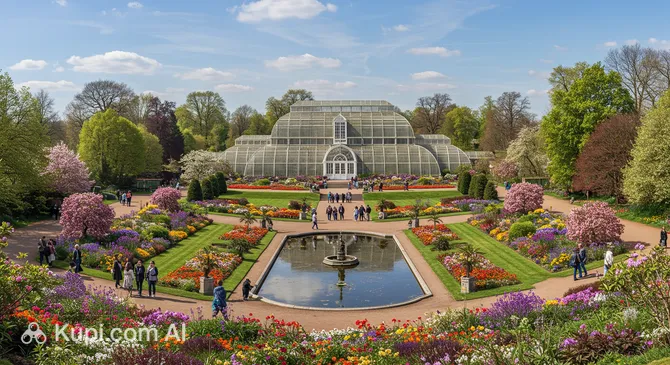
Kew. Illustration.
Source: Kupi.com AI

The main jewel of Kew is undoubtedly the world-famous Royal Botanic Gardens (Kew Gardens) — a UNESCO World Heritage site that is striking in its scale and diversity of flora. However, beyond the gardens, Kew charms with its elegant architecture, historic houses, cozy traditional pubs, and a slow, measured pace of life. Walks along the well-kept streets and the Thames embankment offer true pleasure.

Kew is a place where everyone will find something for themselves: from passionate botanists and history buffs to families with children looking for a quiet holiday. If you are planning a trip to London and want to discover its greener and more peaceful side, be sure to include Kew in your itinerary. This small but incredibly rich district will not leave you indifferent!

You can find more interesting facts on the Kew city history page.
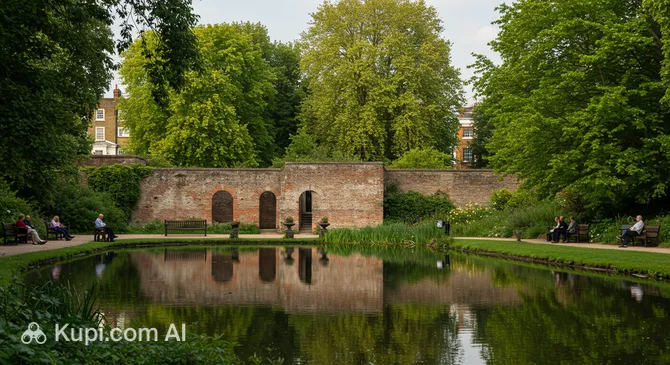
Weather Overview

The weather in Kew offers a moderate maritime climate. Summers are generally warm, with average temperatures in July and August around 18°C (with highs reaching 22°C), accompanied by occasional rain. Winters are cool and damp, with average temperatures in January around 5°C (with lows dropping to 2-3°C). Precipitation occurs year-round in small amounts (averaging 2 mm per month, except for October with 3 mm), but quite frequently — from 9 to 16 rainy days per month, which is typical for the region.

For more detailed information about the weather in Kew by month and an accurate forecast, please check our dedicated page: Kew Climate.

Average monthly temperature

Average monthly precipitation

Interesting Facts

In addition to its world-famous Royal Botanic Gardens, Kew holds many amazing stories and unique features. Here are just a few little-known facts that make this corner of London truly special:

  • The Royal Botanic Gardens, Kew, founded in 1759 by Princess Augusta, were originally intended as Britain's first "exotic garden." Over time, it evolved into one of the most famous botanical centers in the world.

  • Within Kew Gardens lies Kew Palace — the smallest of all British royal palaces. This cozy mansion once served as a residence for members of the royal family and is now open to visitors.

  • In 2003, Kew Gardens was awarded UNESCO World Heritage status. Its collection includes more than 30,000 species of plants from around the world, and the herbarium stores over 7 million specimens, making it one of the largest on the planet.

  • One of the unique modern attractions of the gardens is the "Treetop Walkway" — a 200-meter-long pedestrian bridge located at a height of 15 meters. A walk along it provides a breathtaking view of the tree canopies and opens up an unusual perspective on the park.

How to Get There

Getting to Kew, a charming district of London, is quite simple thanks to the extensive transport system of the United Kingdom's capital. The main gates for international travelers are London's major airports, from where you can reach Kew by public transport or taxi. It is also convenient to travel by train to one of London's central stations and then use local transport, such as the Tube or a bus.

The closest and most convenient airport for a trip to Kew is Heathrow Airport (IATA: LHR), one of the largest international airports in the world. It is located in London, just about 12 km west of Kew, and a taxi ride or a special express train (e.g., Heathrow Express to Paddington, then the Tube) will take about 30-45 minutes to the center of Kew. Another major international hub is London Gatwick (IATA: LGW), also located in London but further south, about 36 km from Kew. The journey from here can take 1-1.5 hours, depending on traffic and the chosen transport (e.g., Gatwick Express to Victoria Station, then the Tube). You might also consider London City Airport (IATA: LCY), located in London about 24 km east of Kew; it is smaller but convenient for some European destinations, and the journey to Kew will take about 50-60 minutes by public transport or taxi.

For clarity, here is a summary of the main airports serving London that are convenient for traveling to Kew:

AirportPassenger trafficDistance
Heathrow Airport83.9 mln12 km
London City Airport3.6 mln24 km
London Gatwick Airport43.2 mln36 km
London Luton Airport16.7 mln45 km
Stansted Airport29.8 mln58 km

If you are arriving in London by train, several major railway stations in the capital are within a reasonable distance of Kew. For example, Paddington station, located in London about 9 km northeast of Kew, is an important transport hub. From here, as well as from other central London stations like Victoria (also in London, about 10 km from Kew), you can easily reach Kew by Tube (District line to Kew Gardens station) or bus. A Tube ride from these stations usually takes 30-50 minutes.

Below is information on some of London's railway stations from which you can reach Kew:

StationPassenger trafficDistance
Paddington Station66.9 mln9 km
London Victoria Station50.8 mln10 km
Euston Station36.2 mln12 km
Waterloo Station62.5 mln12 km
St Pancras International36 mln13 km

Main Attractions

Kew, a charming district in southwest London, offers its guests several interesting places to visit and relax. In addition to the world-famous Royal Botanic Gardens, there are other notable spots here that can diversify your trip.

For lovers of outdoor walks and family vacations, Ravenscourt Park is a great choice. Although it is located a bit away from the very heart of Kew, this extensive park attracts visitors with its well-kept lawns, shady alleys, and various leisure opportunities, including playgrounds and sports facilities. It is an excellent place for a picnic or just a quiet pastime.

Ravenscourt Park. Illustration.
Source: Kupi.com AI

Traveler photos:

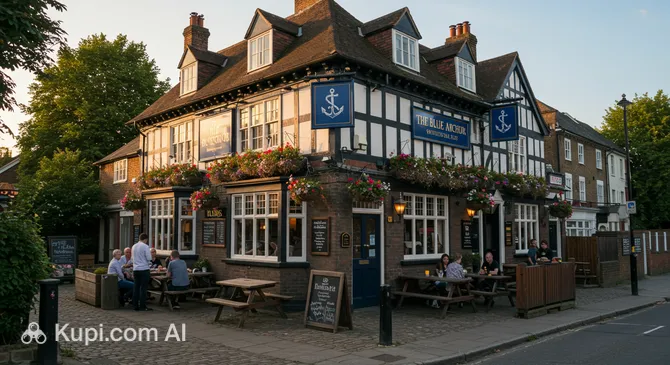
If you want to experience the atmosphere of a classic English pub, it is worth visiting The Blue Anchor. This establishment, categorized as a "bar," offers a cozy setting, a good selection of drinks, and the chance to enjoy watching local life. It is a perfect place to relax after a day of sightseeing.

The Blue Anchor. Illustration.
Source: Kupi.com AI

Traveler photos:

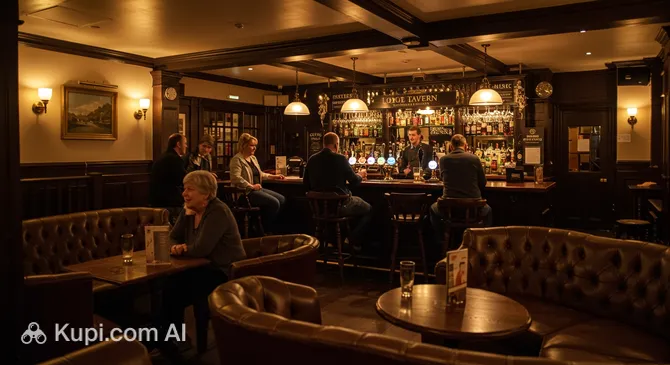
For those looking for evening entertainment, The Lodge Tavern can provide a suitable atmosphere. As a "nightclub" type establishment, it caters to visitors who want to dance and enjoy music in the company of friends. This is the place for those who want to extend their day with active recreation.

The Lodge Tavern. Illustration.
Source: Kupi.com AI

Traveler photos:

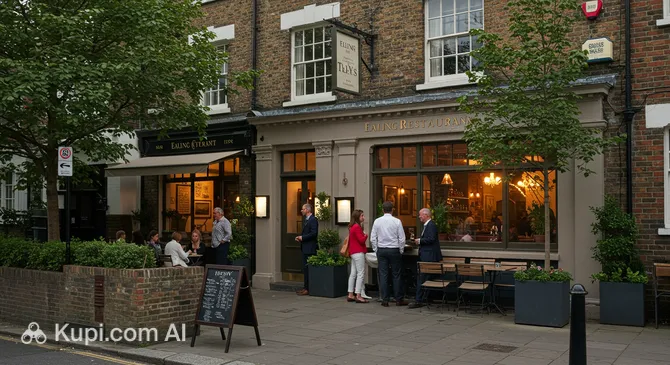
Gastronomic travelers might take note of the Restaurant in Ealing. Located in a neighboring district, this restaurant offers the opportunity to explore various culinary directions and enjoy a high-quality dinner in a pleasant atmosphere. It is a good option for ending the day or for a special occasion.

Ealing Restaurant. Illustration.
Source: Kupi.com AI

Traveler photos:

Local Cuisine

The gastronomic scene in Kew, like many London neighborhoods, is a pleasant surprise with its diversity. Here, in cozy pubs and cafes, you can enjoy classic British dishes. Be sure to try the famous Sunday roast — a traditional Sunday dish of roasted meat with vegetables and Yorkshire pudding. Equally popular are the hearty shepherd’s pie and, of course, fresh fish & chips, which are hallmarks of local culinary culture.

A special charm is added to Kew's cuisine by seasonal dishes inspired by the famous Royal Botanic Gardens. In spring and summer, the menus of local establishments abound with fresh salads, asparagus and rhubarb dishes, and berry desserts. Don't miss the chance to try homemade pies with fruit grown in the surrounding area. Local chefs take pride in the quality of ingredients, often using produce from farmers' markets, which makes the food particularly flavorful.

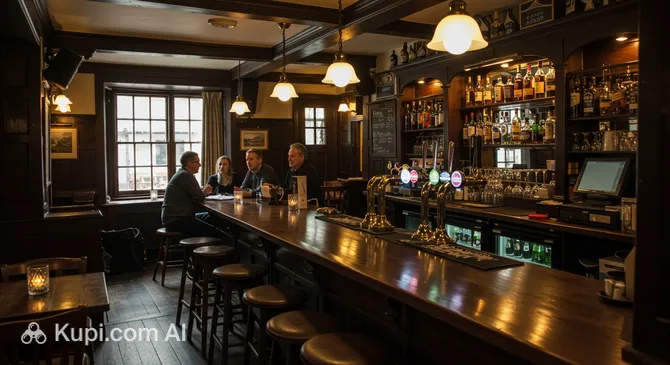
The Dove. Illustration.
Source: Kupi.com AI

Traveler photos:

Dining culture in Kew is closely tied to traditional English pubs, where you can not only eat well but also feel the true British atmosphere. Here, you'll find a wide selection of ales and beers. To fully experience the local flavor, drop into one of these pubs, such as The Dove. Of course, one cannot overlook the famous English tea, which is served everywhere. For those seeking more refined tastes, there are tasting sets of local cheeses and jams. Many locals and tourists also love buying fresh products at farmers' markets for a picnic in one of the picturesque parks.

Gastronomy in Kew is not just food, but an important part of the local lifestyle, where centuries-old traditions harmoniously blend with modern culinary trends. The area often hosts food festivals where you can discover artisanal cheeses, fresh pastries, and other local products. A visit to Kew will give you unforgettable taste impressions and allow you to dive deeper into the culture of this charming corner of the United Kingdom.

Travel Tips

Welcome to charming Kew! To make your journey to this green corner of the United Kingdom as comfortable and memorable as possible, we have prepared some practical tips.

  1. Clothing and Essentials: The weather in London, of which Kew is a part, is known for its variability. We recommend dressing in layers to easily adapt to temperature changes throughout the day. Be sure to bring comfortable shoes, as you will be doing a lot of walking, especially if you plan to visit the famous Royal Botanic Gardens, Kew. An umbrella or a light raincoat will also be very useful. Don't forget an adapter for British sockets (Type G).
  2. City Transport: Kew is excellently connected to central London. The most convenient way to get there is by the Tube (District line to Kew Gardens station). There are also buses running through the area. It is recommended to use an Oyster card or a contactless bank card for payment. In Kew itself, it is very pleasant to get around on foot. Taxis and popular ride-hailing apps (like Uber) are available, but renting a car for travel within Kew and London in general is usually not necessary due to the well-developed public transport and parking difficulties.
  3. Finances: The local currency is the British Pound Sterling (GBP). You can exchange currency at banks or exchange offices, but it is often more profitable to withdraw cash from ATMs or pay by card. Credit and debit cards (Visa, Mastercard) are accepted almost everywhere. Before your trip, check with your bank regarding the terms for using your card abroad. Tips in restaurants are often already included in the bill as a "service charge" (usually 10-12.5%). If not, it is customary to leave 10-15% of the bill at your discretion.
  4. Health and Safety: In Kew, as in all of London, it is easy to find pharmacies (e.g., Boots chain or local independent pharmacies). In case of a serious need for medical assistance, tourists should contact the NHS (National Health Service); for emergencies, dial 999. Kew is considered a very safe and quiet neighborhood. Nevertheless, always observe standard precautions: keep an eye on your belongings, especially in crowded places and on transport.
  5. Communication: The primary language is English. You will have no trouble communicating in English in shops, restaurants, and tourist sites. Free Wi-Fi is available in many cafes, pubs, and public spaces, including parts of the Royal Botanic Gardens. You can purchase a local SIM card for mobile internet at airports, supermarkets, or mobile phone shops.
  6. Local Etiquette: Britons value politeness and reserve. It is customary to say "please," "thank you," and "excuse me/sorry." Queuing is an unshakeable rule, whether at a bus stop or in a shop. In public places, try not to speak too loudly.
  7. What to Avoid: Do not try to skip the queue or push ahead — this is considered extremely impolite and can provoke a negative reaction. Also, try not to block pathways on sidewalks or in narrow spaces, especially if you have stopped to look at something or take a photo.
  8. Special Tip for Kew: If you plan to visit the Royal Botanic Gardens, Kew (Kew Gardens), the area's main attraction, we strongly recommend setting aside almost an entire day for it. The territory of the gardens is huge! To avoid queues, especially on weekends or public holidays, consider buying tickets online in advance.

We hope these tips help you plan an unforgettable trip to Kew and enjoy all its charms. Have a great journey!

Entertainment & Nightlife

Evening Kew offers its guests a predominantly quiet and cozy atmosphere, ideal for those who prefer relaxed leisure over noisy parties. Although there are no giant nightclubs here like in central London, Kew charms with its traditional pubs and elegant restaurants where you can spend a pleasant time after a busy day.

The foundation of Kew's evening life is classic English pubs. These are places where you can enjoy a pint of ale, a hearty dinner, and a soulful conversation. Among the popular establishments, The Blue Anchor is worth noting, known for its traditional setting and good selection of drinks, as well as The Dove, which attracts visitors with its historical charm and cozy atmosphere. Local crowds and tourists who appreciate authenticity usually gather here.

The Blue Anchor. Illustration.
Source: Kupi.com AI

Traveler photos:

If you are looking for something more lively, pay attention to The Lodge Tavern. This venue often offers music and may stay open longer than standard pubs, providing an opportunity for more active evening leisure. The atmosphere here is generally more dynamic, and the crowd is mixed. For dinner, you might consider the Restaurant in Ealing, which offers quality cuisine in a pleasant setting.

Most pubs in Kew are open until 11:00 PM or midnight, especially on weekends. The dress code is usually casual, although smart casual might be appropriate for some restaurants. Prices in pubs and restaurants are consistent with London standards but may be slightly lower than in the most central areas. To get to Kew or leave it at night, you can use the Underground (District Line, but check the last train time), night buses, or taxi and ride-sharing services. Kew is considered a safe neighborhood, though it is always recommended to take standard precautions, especially late at night.

During the day, Kew offers plenty of cultural and natural entertainment. The main gem is, of course, the world-famous Royal Botanic Gardens, Kew. In addition, for walks and outdoor recreation, you can visit Ravenscourt Park. While there are few large theaters or world-class museums within Kew itself (other than those associated with the gardens), its proximity to central London allows for easy access to any cultural sites in the capital of the United Kingdom.

Parks & Museums

Kew is a charming corner of the United Kingdom, famous not only for its peaceful atmosphere but also for its unique combination of magnificent green spaces and rich cultural heritage. Here, everyone will find something to their liking, whether it's a stroll through world-famous gardens or an immersion in history at local museums and archives.

The crown jewel of Kew is undoubtedly the Royal Botanic Gardens, Kew (Kew Gardens). This UNESCO World Heritage site is stunning in its scale and plant diversity. You can spend hours walking among exotic plants, visiting famous glasshouses such as the Palm House and the Temperate House, and climbing the Treetop Walkway for breathtaking views. The gardens are also an important scientific center dedicated to plant conservation and research.

For a more relaxed break and local walks, Ravenscourt Park is an excellent choice. This is a pleasant green space where you can escape the city bustle, have a picnic, or simply enjoy nature. It offers picturesque spots for relaxation and playgrounds, making it popular among locals.

Within the Royal Botanic Gardens is Kew Palace — the smallest of the British royal palaces. It is closely linked to the history of King George III and his family, offering a glimpse into their private lives. A visit to the palace, with its carefully restored interiors, perfectly complements a walk through the gardens and allows you to touch royal history.

Art lovers should visit the Marianne North Gallery and the Shirley Sherwood Gallery of Botanical Art, both located within Kew Gardens. The former presents a unique collection of over 800 paintings by the Victorian artist who captured flora from around the world during her travels. The latter gallery is dedicated to contemporary botanical art and regularly hosts exhibitions of works by leading artists in the genre.

Located near the gardens is The National Archives of the UK. This is a landmark site for anyone interested in British and world history, as it houses government and public records spanning over a thousand years — from the Domesday Book to modern government reports. While primarily a research institution, it also hosts fascinating exhibitions that can be of interest to the general public.

To feel the authentic atmosphere of Kew, take a walk along the River Thames on the Thames Path, which offers picturesque views of the river and the surrounding area. It's also worth exploring the charming Kew Green with its traditional pubs and cozy cafes, where you can relax after a busy day.

Getting Around

Getting around Kew and its surroundings is quite convenient thanks to a well-developed public transport system, which is part of the extensive London network. The main ways to reach your destination and explore the city are the London Underground (Tube) and London Overground trains — Kew Gardens station serves both, providing a direct link to central London and other areas. Additionally, numerous bus routes run through Kew, connecting it with neighboring towns and attractions.

There are several convenient options for paying for public transport in Kew and throughout London. The most popular is the Oyster Card, which can be topped up and used on a "pay as you go" basis. Contactless bank cards and payments via mobile apps are also widely accepted. For those planning to travel a lot, Travelcards — passes for a specific period (day, week, month) that grant unlimited travel within chosen zones — can be a cost-effective solution. The cost of a journey usually depends on the fare zones crossed and the time of day (peak or off-peak hours).

You can purchase an Oyster card or single tickets at machines at Tube and Overground stations, as well as at special Oyster Ticket Stops, often located in newsagents and small shops. You can top up your Oyster balance there or online. It is important to remember that when entering a Tube or Overground station, you must touch your card (Oyster or bank card) to the yellow reader, and be sure to repeat this action when exiting so the system can correctly calculate the fare. On buses, you only touch your card to the reader when entering. Public transport typically runs from early morning until late evening, with some Tube lines and night buses providing 24-hour service on weekends.

In addition to public transport, other ways of getting around are available in Kew. You can always use taxis — both traditional black cabs and cars ordered through popular ride-hailing mobile apps. For short trips or walks around the picturesque surroundings, you might consider bike rental; London has a public cycle hire scheme, and local rental points may also be available. Don't forget about walking, which is particularly pleasant in a green area like Kew.

A special and scenic way to reach parts of London from Kew or vice versa is the River Bus. Boats depart from Kew Pier, offering not only a transport function but also a chance to enjoy views of the Thames. This is an excellent alternative for those who want to combine their trip with a short water tour.

Accommodation

In Kew, travelers can find a variety of accommodation options to suit different budgets and preferences. Although Kew is more of a charming suburb than a major hotel hub, there is plenty to choose from for a comfortable stay.

Mostly, tourists have access to cozy guest houses (B&Bs), small boutique hotels, and rental apartments. There are few luxury resorts here; the emphasis is on a more home-like and quiet atmosphere. Those looking for budget options like hostels might need to consider neighboring areas of London with a wider selection of such accommodation.

The most popular and convenient areas for tourists to stay are those located in the immediate vicinity of the Royal Botanic Gardens, Kew. Places along the Thames embankment, offering picturesque views, are also attractive. Staying near Kew Gardens station will provide easy access to London's transport system, which is convenient for exploring not only Kew but the entire city. Although the current list of attractions does not include information on specific hotels in Kew, you can easily find suitable options on popular online booking platforms.

Regarding prices, you can find both relatively affordable options and more expensive offers in Kew, especially during the peak season. It is recommended to book accommodation in advance, especially if your trip is planned for the spring-summer period, when Kew and its famous gardens attract many visitors. The main booking methods are major international travel portals and aggregators, as well as direct inquiries to chosen hotels or guest houses.

Nearby Cities

For those who want to explore the surrounding area, Kew serves as an excellent starting point for day trips to several interesting nearby locations:

CityPopulationDistance
Richmond21 4692 km
Ealing85 0144 km
Hounslow103 3375 km
Twickenham62 1485 km
Hammersmith95 9965 km

For example, Hounslow and Hammersmith, both located just 5 km from Kew, offer easy access to urban life: Hounslow is known for its shopping opportunities and the vast Hounslow Heath park, while Hammersmith features popular theaters and a picturesque Thames embankment. Slightly further away, Fulham (6 km) attracts visitors with its pleasant atmosphere, beautiful parks, and proximity to the river.

These nearby destinations provide insight into the diverse culture and landscapes of the region, complementing the experience of visiting Kew.

Shopping & Souvenirs

Shopping in Kew offers a cozy and local experience rather than the large-scale shopping sprees typical of big cities. Here, you'll find charming independent shops, boutiques, and specialty stores that reflect the elegant character of this area of the United Kingdom. The town is not famous for any specific type of goods, but the emphasis is on quality and uniqueness.

Main shopping spots are concentrated in Kew Village, adjacent to Kew Gardens Station. Here you can find bookstores, small galleries, gift and deli shops, as well as cafes where it's pleasant to relax after shopping. Another street where you can find shops is Kew Road, which leads to the famous Royal Botanic Gardens.

There are no large shopping malls in Kew itself. For a wider selection of brands and big department stores, residents and visitors usually head to neighboring, larger districts of London or to the city center. Shopping in Kew is more about finding something special in small shops.

While there are no large permanent markets in Kew, seasonal fairs or farmers' markets are sometimes held here, offering local produce and handmade items. It's worth checking for information on such events closer to your travel dates, as they are usually temporary.

For souvenirs from Kew, you should primarily look for items related to the Royal Botanic Gardens. These can include books about plants, rare flower seeds, botanical prints, high-quality gardening tools, as well as cosmetics based on natural ingredients. Classic British souvenirs are also popular: tea, jams, biscuits, and small decor items.

Shops in Kew usually operate on standard British hours: from 9:00-10:00 AM to 5:00-6:00 PM, Monday through Saturday. Some small shops may have a shorter day on Wednesday or close earlier. Many shops are also open on Sundays, but their hours are usually shorter (e.g., from 11:00 AM to 5:00 PM). Bank cards (Visa, Mastercard, American Express) are widely accepted, and cash can also be used.

For tourists from countries outside the European Union (rules may change post-Brexit, so it's worth checking current information), the Tax Free system operates in the United Kingdom. This allows for a refund of part of the VAT on purchases made in participating stores. Look for "Tax Free Shopping" signs and don't forget to ask the store for a special tax refund form when making a purchase over a certain amount.

Reached the end of the page?

That means the route is fully explored