Support

Borrego Springs

About

Borrego Springs is a true oasis tucked away in the heart of Southern California, right on the edge of the majestic Anza-Borrego Desert. Surrounded by picturesque mountains and endless expanses, this town offers travelers a unique atmosphere of solitude and peace. When traveling across the USA, it is hard to find a more suitable place for those who want to escape the hustle and bustle of big cities and enjoy the pristine beauty of the wilderness.

Despite its modest size and population of about 3,400 people, Borrego Springs charms with its hospitality and intimacy. There are no noisy avenues or tall skyscrapers here—only open space, silence, and an incredibly clear starry sky that attracts astronomers from all over the world. This is a place where everyone feels like a welcome guest rather than just a tourist, and where time seems to slow down for the sake of contemplating beauty.

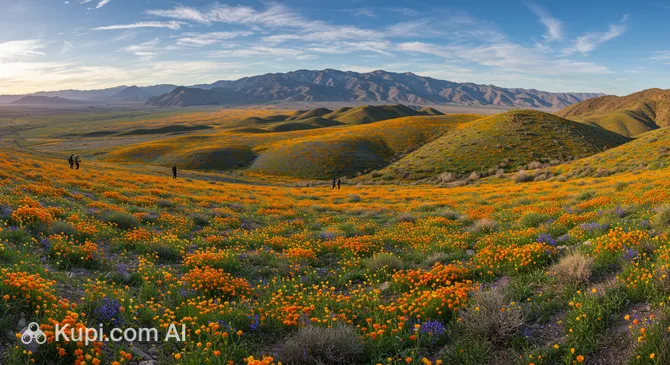
Borrego Springs. Illustration.
Source: Kupi.com AI

The town is filled with a spirit of creativity and freedom that draws in artists and photographers. The history of Borrego Springs is closely intertwined with living in harmony with the desert, which is reflected in the relaxed pace of life of the locals. Active travelers will find many leisure opportunities here: from long walks and cycling to observing the region's unique flora and fauna.

Borrego Springs is worth visiting for its incredible landscapes and the chance to experience one of the most authentic parts of California. This town seems to be created for those seeking inspiration, tranquility, and vivid impressions far from the beaten tourist paths.

Weather Overview

The climate in this region is typical for desert zones of California: sun and dry heat prevail for most of the year. If you are planning a trip, the weather in Borrego Springs will delight you with clear skies; however, significant seasonal temperature fluctuations should be taken into account.

The summer here is truly scorching. In July, the hottest month, the average temperature reaches 30.0°C, and daytime maximums often rise to 37.4°C. June and August are also characterized by high figures, exceeding 34°C during the day. There is practically no precipitation during the summer period, which makes the air very dry.

The winter months bring a long-awaited coolness. In January and December, the average temperature is about 11°C, and during the day the air warms up to a comfortable 16–17°C. However, nights can be brisk: minimum values in winter drop to 5–6°C, so a warm jacket will be useful for evening walks.

Expect a very hot summer without rain and a mild, dry winter with comfortable daytime temperatures. The shoulder seasons, especially April and October with their maximums around 25–27°C, are considered some of the best periods for visiting the park and its surroundings.

Average monthly temperature

Average monthly precipitation

Interesting Facts

Beyond its main attractions, Borrego Springs holds many fascinating secrets that are revealed only to the most curious travelers. This desert town can surprise even those who think they have seen everything in California.

  • Official "Dark Zone." Borrego Springs became the second place in the world to receive the status of an International Dark Sky Community. There is virtually no light pollution here, so the nights are so dark that the Milky Way can be seen in all its detail with the naked eye, making the town a mecca for amateur astronomers.

  • Open-Air Gallery. Giant metal sculptures are scattered throughout the valley, creating a surreal landscape. Here you can find a 100-meter sea serpent "emerging" from the sand, mammoths, dinosaurs, and fantastic creatures that have become the region's trademark and perfect subjects for unusual photographs.

  • Enclave Town. This unique settlement is entirely surrounded by the territory of Anza-Borrego Park—California's largest state park. This location creates an effect of complete isolation from the outside world, turning the town into a kind of island of civilization in the middle of over 2400 square kilometers of wilderness.

  • Floral Phenomenon. Despite the harsh climate, the town becomes the epicenter of an incredible natural phenomenon in the spring. After a wet winter, the desert is covered with a solid carpet of wildflowers—from purple sand verbena to yellow desert sunflowers—for which the famous flower festival is held annually.

How to Get There

When planning a trip to this secluded corner of California, it is important to think about logistics in advance, as the town is located away from major highways. You can explore all ways to get to the city in more detail to create an optimal route. The main way to get here for tourists from other regions and countries is to fly to one of the neighboring large cities followed by a car trip.

The nearest convenient hub is Palm Springs International Airport (PSP). It is important to note that there is no airport in the town of Borrego Springs itself that accepts regular flights. This air hub is located approximately 65 km from the resort. A trip from there by rental car or taxi will take about 2 hours, passing through picturesque desert landscapes.

For those looking for more flight options, San Diego International Airport (SAN) is an excellent choice. This is a major aviation hub located about 96 km from Borrego Springs. The road from this airport to the town center will take approximately 2.5–3 hours, depending on traffic and the chosen route. This is a popular option for international travelers thanks to its wide network of routes.

For clarity, here is a summary of the main airports in the region:

AirportPassenger trafficDistance
Palm Springs International Airport3.2 mln65 km
San Diego International Airport25.2 mln96 km
Tijuana Airport13.2 mln97 km
Mexicali Airport1.6 mln126 km
Ontario International Airport7.1 mln144 km

Since there is no direct rail connection to Borrego Springs and the nearest stations are a significant distance away, most travelers prefer to rent a car immediately upon arrival. This is not only the most convenient way to get to the hotel but also a necessity for comfortable travel through Anza-Borrego State Park and for sightseeing in the surrounding area.

Main Attractions

The main magnet for tourists in Borrego Springs is undoubtedly the sculptures at Galleta Meadows. This is a surreal open-air exhibition created by artist Ricardo Breceda. Here, amidst the desert landscape, more than 130 giant metal figures "reside": from prehistoric mammoths and dinosaurs to a fantastic 100-meter serpent that seems to emerge from the sands. This place is perfect for unusual photo shoots and allows you to experience art completely free of charge at any time of day.

It is impossible to visit this region and ignore the Anza-Borrego Desert State Park, which surrounds the town on all sides. Start your acquaintance with it at the Visitor Center, which is an attraction in itself: it is built underground to stay cool and not disturb the harmony of the desert landscape. Here, tourists can learn about the region's geology, get maps of hiking trails, and, with a bit of luck, catch the famous desert bloom in the spring, which turns the dry lands into a colorful carpet.

For those looking for breathtaking panoramas, Font’s Point is a must-see. This viewpoint is often compared to the Grand Canyon due to the similarity of the landscapes. From here, an incredible view opens up over the Badlands—erosion-carved hills and ravines that are painted in dramatic shades of gold, red, and purple at sunset and sunrise. This place gives a sense of complete unity with majestic and rugged nature.

Outdoor enthusiasts should head to Borrego Palm Canyon. This is one of the most popular hiking trails in the area, leading to a hidden oasis with wild California fan palms. The walk does not require special climbing skills, and at the end of the path, travelers are greeted by the refreshing coolness of shady trees and the sound of running water. Additionally, this is where you are most likely to encounter the park's symbols—timid bighorn sheep skillfully jumping along the rocks.

Local Cuisine

The local cuisine of Borrego Springs is a vivid gastronomic reflection of the town's geographical location: here, California's rich farming traditions meet the spicy notes of neighboring Mexico. Thanks to the developed agriculture in the region, the basis of many dishes is the freshest produce grown under the generous desert sun. Travelers should expect a menu filled with bright flavors and natural ingredients.

Among the main dishes that are definitely worth trying, Mexican classics with a Californian accent stand out. Local cafes and restaurants serve excellent tacos with various fillings, hearty burritos, and hot quesadillas. Despite being located deep within the continent, fresh fish and seafood dishes are very popular here, as they are regularly delivered from the Pacific coast. This creates an interesting contrast: a seafood lunch amidst desert landscapes.

Local citrus fruits hold a special place in the diet. The town's surroundings are famous for their grapefruits, oranges, and lemons. Therefore, among the drinks, freshly squeezed juices and lemonades are absolute favorites, perfectly quenching thirst on a hot afternoon. For lovers of stronger drinks, it is worth paying attention to the products of California wineries and local craft beer, which is often featured on the menus of local establishments.

The food culture in Borrego Springs is closely linked to farmers' markets. These are not just places to buy food, but true centers of social life with a friendly atmosphere. Here, tourists can buy homemade cheeses, fragrant fresh bread, organic vegetables, and the famous local honey. Vendors are happy to share their production secrets, turning grocery shopping into an engaging conversation.

If your trip falls in the spring or autumn, you have a chance to attend one of the gastronomic festivals. At this time, the town turns into a large culinary celebration where you can appreciate the skills of local chefs and immerse yourself in the authentic atmosphere of the region, enjoying food in the open air.

Travel Tips

Welcome to Borrego Springs! To ensure that your journey to this unique corner of the Californian desert is as comfortable and safe as possible, we have prepared a list of important recommendations, taking into account the specifics of the climate and the town's distance from major metropolises.

  1. Clothing and Essentials. The desert climate requires following the principle of layering. During the day, especially in summer, light clothing made of natural, breathable fabrics in light colors and a wide-brimmed hat are necessary. In winter and the shoulder seasons, nights can be cold (temperatures drop to +5°C), so be sure to bring a fleece sweater or jacket. For walks in the park, sturdy closed-toe shoes with thick soles are critically important to protect against cactus thorns and hot sand.

  2. Transport. Public transport is practically non-existent in the town, and the distances between attractions (for example, the sculptures in the desert) are significant. Renting a car is a necessity. A standard sedan is sufficient for seeing the sculptures and the town, but if you plan to venture deep into the wild canyons of Anza-Borrego Park, it is highly recommended to rent a four-wheel-drive (4WD) SUV. Taxi apps (Uber/Lyft) work very inconsistently here due to the small number of drivers.

  3. Finances. The official currency is the US dollar. Although cards are accepted in most hotels and restaurants, cash (bills of $10–$20) will come in handy for purchases at farmers' markets, payments in small souvenir shops, or tipping. There are ATMs in the town center, but they are few. It is customary to leave a tip of 15–20% of the check amount in cafes and restaurants.

  4. Health and Safety. The main danger is dehydration. Always carry a supply of water with you at a rate of at least 4 liters per person per day if you plan to go hiking. There is a medical center in town for first aid, but the nearest major hospitals are an hour's drive away. In the desert, watch your step carefully to avoid stepping on a rattlesnake or scorpion, especially during the warm season.

  5. Communication. The main language is English, but many service workers speak Spanish. Mobile signal and 4G work steadily in the town center (around Christmas Circle), but the signal often completely disappears just a few kilometers from the center, in canyons and lowlands. Be sure to download offline maps of the area in advance.

  6. Local Etiquette. Borrego Springs is a Dark Sky Community. Light pollution is taken very seriously here. In the evening and at night, try not to use bright exterior lighting, avoid using high beams unnecessarily, and do not leave porch lights on so as not to interfere with stargazing. The locals are very friendly; it is customary to greet people and behave in a calm and quiet manner.

  7. What to Avoid. It is strictly forbidden to pick wildflowers during the spring bloom—this is punishable by a fine. Also, avoid driving off established dirt roads onto virgin land: wheels can get stuck in soft sand in seconds, and towing from the desert is very expensive.

  8. Seasonality of Operations. Keep in mind that Borrego Springs lives a seasonal life. In the summer months (from June to September), when the heat becomes extreme, many restaurants, shops, and even hotels close for holidays or significantly reduce their hours. When planning a summer trip, check the operating hours of the establishments you need in advance.

Following these simple rules will help you avoid minor troubles and focus on the main thing—enjoying the incredible silence, Martian landscapes, and one of the most beautiful starry skies on the planet.

Entertainment & Nightlife

Nightlife in Borrego Springs is fundamentally different from what tourists are used to seeing in major cities in the USA. You won't find noisy night clubs with neon signs, discos until dawn, or crowded bar streets here. Evening leisure in this town follows the rhythm of the desert: it is quiet, measured, and incredibly atmospheric. Most activity is concentrated around the central square, Christmas Circle, and along Palm Canyon Drive.

The main center of attraction for those who want to spend an evening in company is Carlee's Place. This is a classic American bar and restaurant that can be called the heart of the local "scene." The atmosphere here is as casual and relaxed as possible: wood finishes, pool tables, and a jukebox. On weekends, local bands playing rock or country often perform here, drawing both locals and tourists. There is no dress code—you can come here straight in your hiking gear after a walk through the canyons.

For a quieter and more romantic evening, the Red Ocotillo restaurant is a great choice. Although this establishment is more about food than parties, its cozy outdoor terrace is the perfect place for a late dinner with a glass of California wine. "Desert chic" style prevails here, and the crowd prefers leisurely conversations to the sound of cicadas. Keep in mind that most establishments in town close quite early—the kitchen usually stops working by 9:00 PM–10:00 PM, so plan your dinner in advance.

However, the most exciting "nightclub" in Borrego Springs is the sky itself. Since the town has the status of a dark sky community, there are no bright streetlights. Tourists often host their own stargazing parties: they take blankets, thermoses with drinks or wine, and folding chairs, and drive a bit further from the center, for example, to the sculptures at Galleta Meadows, to enjoy the view of the Milky Way.

Practical Tips and Safety:

  • Transport: It is practically impossible to call a taxi or Uber in town at night. If you plan to consume alcohol, arrange in advance who will be the designated driver, or choose accommodation within walking distance of the center.
  • Darkness: Streets are minimally lit. Be sure to carry a flashlight if you are walking so that drivers can see you and to avoid stepping on nocturnal desert inhabitants (snakes or scorpions) that may crawl onto the warm asphalt.
  • Prices: The average bill in bars and restaurants is moderate; a dinner with drinks will cost around $30–$50 per person.

During the day, entertainment is more cultural and educational. Travelers can visit the Borrego Art Institute, which exhibits works by regional artists, or browse through small souvenir shops. Daytime Jeep tours and golfing at the Rams Hill resort courses, considered some of the best in the region, are also popular.

Parks & Museums

Borrego Springs will surprise those who expect to see traditional city alleys and classical exhibition halls. Here, the concept of a "green zone" expands to the horizons of the endless desert, and museums are dedicated not only to art but also to the ancient history of the land, rooted millions of years in the past. The cultural and natural heritage of the town is inextricably linked with the surrounding landscape, offering tourists a unique experience of environmental immersion.

The main natural treasure of the region is, of course, the Anza-Borrego Desert State Park. Although it surrounds the town on all sides, it should be considered as a separate massive ecosystem to explore. It is not just sand and stones: the park's territory contains palm oases, streams, and impressive geological formations. For tourists, this is an opportunity to see rare plant species, such as the desert lily or ocotillo, in their natural habitat. The park is interesting both for fans of light walks and serious nature researchers.

For those who want to get acquainted with the region's flora without going far into the desert, the Botanical Garden located next to the park's Visitor Center is a real find. This is a compact but rich area where the main plant species of the Colorado Desert are collected. The garden is designed so that visitors can learn to distinguish types of cacti and shrubs before heading out on major trails. In spring, this place turns into a bright palette of colors, attracting photographers and nature lovers.

Speaking of museums, it is impossible to overlook the Anza-Borrego Park Visitor Center. It is more than just an information desk—it is a full-fledged natural history museum hidden underground to stay cool. The exhibition tells the fascinating history of the region: from the times when an ancient sea splashed here to the era of mammoths and saber-toothed tigers. Real fossils found in the vicinity are presented here, as well as interactive stands telling about the life of the indigenous Kumeyaay people. This is the ideal place to start any journey through the region.

The heart of the town's modern cultural life is the Borrego Art Institute. This gallery and educational center are located in a modern building in the town center. Exhibitions of works by Californian artists, covering painting, photography, and sculpture, are held here regularly. Of particular interest is the ceramics department and the garden adjacent to the institute, where art is harmoniously integrated into the landscape design. For tourists, this is an excellent opportunity to see the desert through the eyes of creative people and perhaps purchase a unique souvenir.

If you are looking for something less formal, check out the Borrego Springs Library and the adjacent park. It is not just a book repository, but an important public space with interesting architecture reflecting the desert modernism style. Small local exhibitions are often held here, and the shady park around the building serves as a great place to rest on a hot afternoon, where you can feel the measured pace of life of the local residents.

Getting Around

The public transport system in Borrego Springs has its own unique features dictated by the town's secluded desert location and its small size. It is important for tourists to understand that there is no familiar city network with subways, trams, or frequent buses here. The town is designed with the use of personal motor vehicles in mind, so mobility without a car will be significantly limited.

The only connection to the "mainland" via public transport is the rural bus routes (Rural Bus) operated by the San Diego Metropolitan Transit System (MTS). Specifically, routes 891 and 892 connect Borrego Springs with the transit hub in the El Cajon Transit Center, from where you can reach San Diego by trolley or another bus. However, the key nuance lies in the schedule: these buses run extremely rarely, usually only once or twice a week (most often on Thursdays or Fridays), making one trip there and one back. This makes them practically unsuitable for daily tourist travel within the city.

As for paying the fare on these rare bus trips, the system is integrated into the general MTS network. You can use the PRONTO app (available for smartphones) or the transit card of the same name, which can be topped up in advance for payment. However, given the specifics of rural routes, it is strongly recommended to carry cash in small denominations. Drivers accept payment upon boarding but do not give change, so prepare the exact amount (one-way fare can vary but is usually a few dollars; senior fares are lower).

The main alternative for getting around the town and its surroundings is taxi and rideshare services such as Uber or Lyft. However, there is a catch here too: due to the low population density, there are very few drivers in the area. The waiting time for a car can range from 20 minutes to an hour, and in the early morning or late night hours, it can be impossible to call a taxi at all. Therefore, relying solely on aggregators for trips to remote attractions is risky.

The most popular and pleasant way of local transport for tourists who have not rented a car is the bicycle. Thanks to the relatively flat terrain of the valley, cycling here is very comfortable. There are rental points in the town center where you can rent both standard mountain bikes and e-bikes. The latter are particularly recommended for viewing the famous metal sculptures of Galleta Meadows, as they are scattered over a large area, and walking to see them all under the scorching sun would be difficult.

Only the compact town center around the Christmas Circle roundabout, where shops, cafes, and the library are concentrated, is suitable for walking. If you plan to explore the natural beauty of the park or remote corners of the desert, renting a car (preferably an SUV or crossover) remains the only reliable option that gives complete freedom of movement.

Accommodation

Accommodation in Borrego Springs is not just a place to sleep, but part of the immersion into the desert atmosphere. While traveling through the USA, you will notice that this town offers a unique range of housing, different from standard tourist centers. There are no high-rise chain hotels; instead, guests are greeted by atmospheric low-rise buildings that blend harmoniously into the landscape. The typical range of options varies from luxury resorts with their own golf courses and spa centers to cozy mid-century modern style motels and numerous sites for camping and RVs.

When choosing an area, you should focus on your plans. If walking distance to cafes, shops, and the Art Institute is important to you, it is best to stay in the area of the central square, Christmas Circle. This is the "heart" of the town, from where it is convenient to start your walks. For those seeking maximum privacy and silence for stargazing, hotels and guesthouses located on the outskirts, closer to the borders of Anza-Borrego Park, are ideal. There, light pollution is reduced to an absolute minimum, and the desert starts right outside your room's doorstep.

A characteristic feature of the local hotel stock is the "desert modern" style or traditional Spanish architecture. Many hotels offer rooms with patios or terraces overlooking the mountains or cactus gardens. Since Borrego Springs is a popular destination for "wintering" residents of colder states and Canada, the market for long-term apartment and villa rentals is also well-developed. This is a great option for those planning to stay in the region for a week or more.

Booking Tip: Seasonality plays a critical role. The peak of tourist demand falls between January and April, especially during the famous spring desert bloom ("Super Bloom"). During these months, the best housing options are booked six months in advance, and prices reach their peak. If you are planning a trip in the spring, do not put off searching for a hotel until the last moment.

The price range in Borrego Springs can be described as medium and above average in high season, and very affordable in the summer.

  • Budget: Campgrounds and simple motels (a great choice for unpretentious travelers).
  • Mid-range: Boutique hotels and quality guesthouses.
  • Luxury: Full-service resort complexes.
Booking is available through all major international online platforms; however, many small local motels and historic hotels offer better terms when booking directly through their websites or by phone.

Nearby Cities

For those who want to explore the surrounding area, Borrego Springs serves as an excellent starting point for day trips to several interesting nearby locations. Its convenient location allows you to change desert landscapes for an urban environment or green valleys in just an hour or an hour and a half.

One of the most popular destinations is Indio, known as the "City of Festivals." It attracts tourists not only with its famous musical events but also with its extensive date palm groves, where you can try local sweets. Another interesting option is Escondido, located in a picturesque valley. This city is famous for its Arts Center and proximity to the famous San Diego Zoo Safari Park, making it an ideal place for a family trip. Also worth noting is El Cajon, which offers a wide choice of shopping centers and cultural events surrounded by mountains.

CityPopulationDistance
Salton City4 10239 km
La Quinta37 84646 km
Thermal2 98248 km
San Diego Country Estates10 36648 km
Coachella42 12351 km

These nearby destinations provide insight into the diverse culture and landscapes of the region, giving travelers the opportunity to complement their desert holiday with new experiences.

Shopping & Souvenirs

Shopping

Shopping in Borrego Springs is fundamentally different from the typical shopping trips in large tourist centers. Here you won't find huge shopping complexes, chain boutiques, or luxury brands. Instead, the town offers a cozy, intimate atmosphere where the shopping process turns into a leisurely exploration of local culture. Shops here are usually small family-run stores, art galleries, and souvenir shops where you can find unique items saturated with the spirit of the desert and the creativity of local craftsmen.

The main shopping life is concentrated along the town's main street—Palm Canyon Drive—as well as around the Christmas Circle roundabout. Walking through this area, tourists can browse various shops located within walking distance of each other. This is an ideal place for a leisurely promenade, where you can combine buying gifts with a cup of coffee at one of the neighboring cafes.

Due to the small size of the town, there are no classic malls. However, it is worth mentioning the shopping complex with the telling name "The Mall." Don't let the grand name mislead you: it is a modest but charming open-air shopping row where several specialized stores, offices, and clothing boutiques are located. This is the center of the town's commercial activity, where you can find travel essentials and interesting accessories.

A real gem for lovers of authentic products is the Borrego Springs Certified Farmers Market. It traditionally takes place on Christmas Circle every Friday morning (during the winter season). A lively atmosphere prevails here: local farmers bring the freshest citrus fruits, vegetables, homemade baked goods, and flowers. Besides food, artisans often display their work at the market, offering handmade jewelry and textiles.

When choosing souvenirs, look for items that reflect the uniqueness of the region. From Borrego Springs, it is worth bringing back:

  • Local Art: Ceramics, paintings of desert landscapes, or photographs of the starry sky purchased at the Art Institute or galleries.
  • Nature's Bounty: A jar of local honey, dates, or citrus jams.
  • Park Merchandise: The shop at the Anza-Borrego Park Visitor Center has a great selection of nature books, maps, T-shirts, and toys in the form of desert animals (such as bighorn sheep).
  • Wood and Metal Crafts: Small sculptures reminiscent of the famous Galleta Meadows works.

When planning your shopping, take into account the relaxed operating hours of local establishments. Most shops open around 9:00 AM–10:00 AM and close as early as 5:00 PM or 6:00 PM. During the summer period (from June to September), when tourist flow decreases due to the heat, many shops may reduce their hours or close for holidays entirely. Credit cards and USA dollars are accepted almost everywhere, but for farmers' market purchases, it is better to have cash in small denominations.

Regarding the Tax Free system, tourists should know that in the United States, Sales Tax is added to the cost of the item at the register and is not included in the price tag. Unlike many European countries, the USA lacks a federal tax refund program for international tourists upon leaving the country, so you should not count on a VAT refund for regular purchases.
Have you reached the end of the page?

So the route has been studied inside and out