Support

Anatom

About

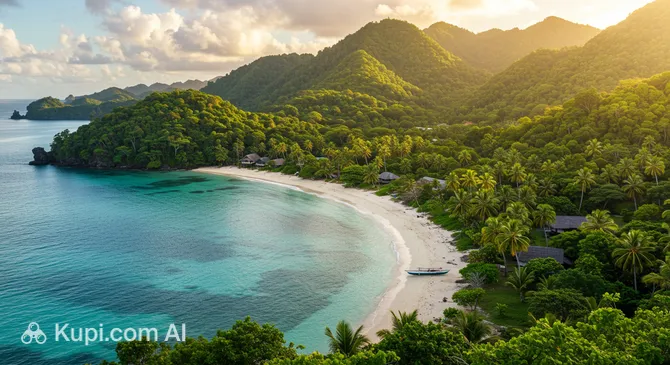
Aneityum is the southernmost and one of the most mysterious islands of the Vanuatu archipelago, tucked away in the vast Pacific Ocean far from the busy tourist trails. The oval-shaped island rests atop the peaks of two ancient underwater volcanoes, which gives the local landscapes a particularly dramatic and diverse character. You won't find the usual urban hustle and bustle here: administratively, Aneityum is a cluster of small villages along the coast where life flows at its own special pace.

Aneityum. Illustration.
Source: Kupi.com AI

The atmosphere of this place is truly intimate and authentic. The island is home to only about 500 people, who carefully preserve their traditions and welcome rare guests with sincere warmth. While modern infrastructure is minimal, Aneityum's history and cultural heritage make a journey here an unforgettable experience of immersion into the real life of the islanders.

The main reason to visit this remote corner of the planet is its incredible nature and the sense of complete harmony. Crystal clear water, a rich underwater world, and the proximity to the paradise-like uninhabited Mystery Island, whose beaches are regularly ranked among the best in Oceania, attract connoisseurs of pristine tropical beauty. Aneityum is the perfect discovery for those dreaming of escaping civilization.

Weather Overview

The island's climate is characterized by mildness and comfortable warmth throughout the year, typical for tropical latitudes. The temperature regime is very stable: even in the hottest month, February, the average temperature is about 26.6°C, while in the "coolest" month, August, it only drops to a pleasant 22.2°C. Thanks to this, it is never extremely hot or cold here.

When planning your trip, you should consider the distribution of rainfall. The first half of the year, from January to April, is considered the wet season: for example, in March, the number of rainy days can reach 23. The period from June to September is more favorable for those who prefer clear skies, as the number of days with precipitation drops to 9–10 per month. Detailed weather in Aneityum will help you more accurately choose dates for your trip to catch the maximum number of sunny days.

Expect warm weather year-round with higher humidity and frequent rain in the first months of the year, and drier, slightly cooler conditions from June to September.

Average monthly temperature

Average monthly precipitation

Interesting Facts

Aneityum is not just a picturesque island, but a place shrouded in an aura of mystery and natural uniqueness. Beyond the obvious tropical beauty, this remote corner of Vanuatu holds several amazing secrets that reveal themselves only to the most curious travelers.

  • The neighboring tiny islet of Inyeug is better known to the world as "Mystery Island." The uniqueness of this place lies in its contrasts: huge cruise ships regularly visit, but as soon as the tourists leave, the island becomes completely uninhabited. During these hours, you can feel like a real Robinson Crusoe, alone with the ocean and the white sand.

  • The island is the only home to a rare endemic species—the Aneityum green parrot. This bird is a living symbol of the island and a source of pride for local residents, so spotting it in the wild is considered a stroke of great luck for naturalists.

  • The local community adheres to strict principles of eco-tourism. A special Marine Protected Area has been created around "Mystery Island" to protect the coral reefs. Thanks to this, the underwater world here has been preserved in its pristine state, and human interaction with nature is as careful as possible.

How to Get There

Traveling to Vanuatu's southernmost island requires prior planning, as there are no direct international flights from distant countries. Logistics usually involve flights through the capital or neighboring major islands, as well as using sea transport. To plan your route in detail and choose the optimal type of transport, we recommend checking the information on the all ways to get to the city page.

Aneityum itself does not have its own international airport capable of receiving large airliners. The nearest and most significant transport hub within the country is Tanna Airport (IATA: TAH), located in Tanna. The distance to it is about 103 km. Since Aneityum and Tanna are different islands, it is impossible to get from the airport by taxi or bus; an internal flight by local airlines or a sea crossing will be required.

Additionally, in the Pacific region, but already in New Caledonia, there are other airports that can serve as transit points for travelers exploring Oceania. For example, Lifou Airport (IATA: LIF) in Lifou is approximately 275 km away, and Maré Airport (IATA: MEE) is 232 km from Aneityum. These hubs serve regional flights but do not have direct connections with Aneityum.

For clarity, here is a summary of the nearest airports in the region:

AirportPassenger trafficDistance
Tanna Airport60 000103 km
Mare Airport75 000232 km
Lifou Airport180 000275 km

Railway communication on the islands of Vanuatu, including Aneityum, is completely absent due to geographical features and the small size of the land. The main ways to move between the islands remain local airlines and boats, while on the island itself, tourists often get around on foot or by boat.

Main Attractions

Aneityum offers travelers a unique combination of natural beauty and touching traces of history. There are no noisy entertainment centers here, but there are places where you can feel the breath of time and enjoy the pristine landscapes of the South Pacific. A walk around the island will give you the feeling of a true discovery.

The undisputed jewel of the region is Mystery Island. Although technically a tiny uninhabited islet off the coast of Aneityum, it is considered the main point of attraction for all visitors. It features some of the best beaches in Vanuatu, with powdery white sand and incredibly clear water. The island is surrounded by a marine reserve, so the snorkeling here is simply fantastic: coral gardens are full of colorful fish and sea turtles. It is an ideal place for relaxed rest and postcard-perfect photo shoots.

History buffs should visit the village of Anelcauhat, where the majestic ruins of an old Presbyterian church remain. Built in the 19th century by missionaries, it was once the largest church building in the Southern Hemisphere, accommodating up to a thousand people. Unfortunately, tsunamis and earthquakes destroyed the temple, but the remaining stone walls and arches still leave a strong impression, serving as a reminder of the scale of missionary activity in the region.

For those who prefer active walks, a hike to the hot springs in the heart of the island will be an interesting adventure. The path to them lies through picturesque tropical forests and small streams. Although the springs are not equipped for bathing in the usual spa format, the journey itself allows you to see the island's rich flora, ancient kauri trees, and enjoy the silence of the jungle away from the coast.

Local Cuisine

Aneityum's gastronomic scene is a hymn to simplicity, naturalness, and freshness. You won't find fine dining restaurants or international fast-food chains here. Food on the island is based on the "garden to table" and "ocean to plate" principle. Local residents grow organic vegetables and fruits in fertile volcanic soils, and the ocean provides a rich daily catch, making every dish truly eco-friendly and full of flavor.

The main culinary symbol that you must try is the national dish of Vanuatulaplap. This hearty meal is prepared from grated root vegetables (cassava, yam, or taro) mixed with coconut cream and sometimes with added pieces of pork, chicken, or fish. The mixture is wrapped in banana leaves and baked in a traditional earth oven on hot stones. Another delicacy popular in this region is coconut crab. Its meat has a delicate, sweetish taste and is usually served simply boiled or with a coconut milk sauce.

Among drinks, kava holds a special place. It is not just a beverage but an important part of the islanders' cultural code. This non-alcoholic infusion made from pepper roots has a calming effect and is traditionally consumed in the evenings at special places called "nakamals." For quenching thirst on a hot day, fresh coconuts are perfect and sold everywhere, while beer lovers can enjoy the local lager Tusker, which is considered the pride of Vanuatuan brewing.

The food culture on Aneityum is very homey and welcoming. Tourists usually dine in small guesthouses or bungalows, where hosts prepare food using family recipes. On days when cruise ships arrive at the neighboring Mystery Island, a colorful market opens, where locals offer freshly caught grilled lobsters, tropical fruits, and homemade pastries right on the ocean shore. This is a great opportunity to try authentic street food in a tropical paradise atmosphere.

Travel Tips

A trip to Aneityum is an immersion into a world of pristine nature and silence, but the island's remoteness and modest infrastructure require special preparation. To ensure your holiday is carefree and comfortable, we have gathered several important recommendations to help you plan your trip to this secluded corner.

  1. Clothing and Equipment. The climate here is warm and humid, so prefer light clothing made from natural fabrics (cotton, linen). Be sure to bring coral shoes (aquashoes)—they will protect your feet from sharp coral and sea urchins when entering the water. Don't forget a hat and sunglasses.
  2. Transport. There is no public transport, taxis, or car rental services on Aneityum. The main way to get around is walking along trails. For trips to remote bays or the neighboring Mystery Island, use water taxis; you need to agree on the price with local owners in advance.
  3. Finance. This is a critical point: there are no ATMs on the island, and cards are almost never accepted. Bring enough cash in local currency (Vatu). It's better to have small bills for buying fruit or souvenirs from locals, as change can be hard to find.
  4. Health and Safety. Medical infrastructure on the island is limited to a basic health center. Be sure to pack an extensive first-aid kit with all necessary medications, stomach remedies, antiseptics, and band-aids. The crime rate is extremely low, but it's best not to leave valuables unattended on the beach.
  5. Communication. The official languages of Vanuatu are Bislama, English, and French. Locals involved in tourism speak English reasonably well. Mobile signal and internet are unstable and not available everywhere; for reliability, it's better to buy a SIM card (e.g., Digicel) at Port Vila airport before flying to the islands.
  6. Local Etiquette. Traditional life prevails in Aneityum's villages. It is customary to smile and say hello when meeting people. If you want to take photos of locals (especially children) or their homes, always ask for permission first—it's a sign of respect that is highly valued here.
  7. What to Avoid. Do not walk through villages in swimwear—this is considered disrespectful to local norms of modesty. Beachwear is only appropriate by the water. Also, try not to make noise or plan active entertainment on Sunday, as it is a day of rest and prayer for the religious islanders.
  8. Cruise Lifehack. Life on the island changes drastically depending on the cruise ship schedule. If you're seeking solitude, check the schedule and head to Mystery Island's beaches on days when there are no large ships—the island will be entirely yours.

By following these simple tips, you can avoid everyday hassles and fully devote yourself to enjoying the unique atmosphere of Aneityum. May your journey be a true escape to a tropical fairytale where time flows by its own laws!

Entertainment & Nightlife

Nightlife on Aneityum is fundamentally different from the usual rhythm of tourist resorts. You won't find noisy nightclubs, neon-lit discos, or bars open until dawn here. After sunset, the island plunges into silence and darkness, and entertainment takes on an intimate, almost meditative character. It is an ideal place for a "digital detox" and getting to know the traditional way of life in Vanuatu, where evening is a time for quiet conversation and connection with nature.

The centers of evening social activity are the nakamals. These are traditional meeting places, a kind of "social club" for local residents. People gather here to drink kava—a relaxing beverage made from pepper roots—and discuss the day's news. The atmosphere in nakamals is unique: it is customary to speak in low voices, and the light is often dimmed or absent entirely, replaced by the glow of fires or kerosene lamps. For a tourist, visiting a nakamal is an opportunity to touch authentic culture, but remember the rules of etiquette: behave modestly and respectfully. In the village of Anelcauhat, there are several such places that welcome guests, but it's best to check their locations with your accommodation hosts.

There are no classic restaurants or bars with cocktail menus on the island. The role of evening venues is played by the dining areas at guesthouses and bungalows. This is where travelers gather for dinner to try fresh seafood and chat with other guests. Since electricity on the island is often supplied by generators or solar panels and may be turned off early, "nightlife" usually ends by 9:00 PM–10:00 PM.

The main night show of Aneityum is the starry sky. Due to the almost complete absence of artificial lighting (light pollution), the stars shine incredibly bright here. The Milky Way is visible to the naked eye from one edge of the horizon to the other. A walk along the beach to the sound of the ocean and the light of southern constellations will provide impressions that are impossible to get in a big city. This is a time for romance and absolute peace.

Practical tips for the evening:

  • Safety and light: There is no street lighting. Be sure to carry a powerful flashlight if you plan to leave your bungalow after sunset. The island is safe and crime is practically non-existent, but the risk of tripping over tree roots in the dark is quite real.
  • Transport: Boats do not run at night, and there are very few cars on the island. Rely only on walking within your village.
  • Dress code: Forget about evening dresses and heels. A simple and comfortable style is most appropriate; long-sleeved clothing will help protect against mosquitoes.
  • Alcohol: Buying alcohol in a shop in the evening can be difficult or impossible. If you want wine or beer with dinner, it's best to arrange it in advance or bring drinks with you from the main island of Efate.

If Aneityum and the neighboring Mystery Island offer active recreation during the day—snorkeling on the reefs, walking to the church ruins, or relaxing on the beach—then the night here is designed for sleep and recovery. This place teaches you to slow down and enjoy the silence, which has become a true luxury in the modern world.

Parks & Museums

Aneityum is not the kind of place where you should look for classic museum halls with display cases or manicured city parks with geometrically straight alleys. This island of the Vanuatu archipelago is, in essence, a grand natural reserve and a living open-air ethnographic museum, where the main exhibits are ancient trees, untouched coral reefs, and majestic ruins being reclaimed by the jungle.

Among the natural areas deserving special attention is the Mystery Island Marine Reserve. Although technically the waters surrounding the neighboring islet, it functions as a protected national park. There is a strict ban on commercial fishing here, which has kept the coral gardens in pristine condition. It is an ideal place to observe marine life in its natural habitat, more than making up for the lack of any artificial aquarium.

Another important "green zone" is the wild mountain forests of Aneityum. Majestic kauri pines and giant tree ferns grow deep within the island. Walking along the forest trails here feels like a journey back to a prehistoric era. Local communities are actively involved in reforestation projects, turning the jungle into an eco-tourism zone where you can find rare orchid species and hear the songs of endemic birds.

The area of Anelcauhat village plays the role of the main historical site and a unique museum. Here you will find the large-scale ruins of the Presbyterian Church, built by missionaries in the 19th century. The remains of massive stone walls and arches, with tropical greenery growing through them, leave a powerful impression and tell the dramatic story of the South Pacific's development better than any information boards. This is the island's key architectural monument.

While there are no official art galleries here, Vanuatu's culture is vividly represented in traditional crafts. On cruise ship visit days, improvised open-air exhibitions appear on the coast, where local artisans demonstrate the art of mat weaving and wood carving. These items are not just souvenirs but part of the region's living cultural tradition.

Insider Tip: If you are interested in ancient history, ask a local guide to take you to the petroglyphs—mysterious rock carvings hidden on boulders in various parts of the island. These ancient images, carved into stone centuries ago, are some of the most mysterious artifacts that not all travelers know about.

Getting Around

Public transport as an urban dweller would understand it is completely absent on Aneityum. You won't find buses with fixed schedules, shared taxis, or certainly no subways or trams. The island is a secluded place with a small population where infrastructure is minimal, and the rhythm of life is dictated by nature, not transport schedules.

The primary way to get around on land is walking. Most distances between villages or guesthouses and beaches are easily covered on foot. Dirt roads and paths connect the main settlements like Anelcauhat, and walking them is not just a necessity but an opportunity to enjoy views of the jungle and the ocean. For longer journeys, locals and tourists sometimes use rare private pickups or small trucks that might offer a ride for a nominal fee, but you shouldn't rely on them as regular transport.

The role of "shuttles" and taxis here is played by motorboats (water taxis). Since roads don't go everywhere and the coastline is rugged, water transport often becomes the fastest and most convenient way to get from one bay to another or to reach the neighboring Mystery Island. Boats do not have fixed routes; they operate on a private hire basis.

The payment system on the island is exclusively cash and negotiable. No transport cards, passes, mobile apps, or validators exist here. You must agree on the price of a boat trip or a ride in a truck bed with the owner personally and in advance, before the journey begins. Payment is made in the local currency (Vatu). Be prepared for the driver or boatman not to have change, so always carry small bills.

Tourists should keep several important practical points in mind:

  • Plan all your movements for daylight hours. There is no street lighting, and moving along paths or water in the dark can be unsafe.
  • If you need to get to the airport or the pier by a certain time, arrange it with a boat or car owner at least a day in advance. The concept of time is flexible here, and a reminder won't hurt.
  • Prices for tourists may be higher than for locals. This is normal practice, but polite bargaining is appropriate.

There are no alternatives such as car sharing, official bike rentals, or taxi services (Uber or similar) on Aneityum. Sometimes a bicycle can be borrowed from guesthouse owners if one is available. Otherwise, be prepared for your main transport to be your own feet and local residents' boats, which only adds to the atmosphere of a true adventure far from civilization.

Accommodation

The choice of accommodation on Aneityum differs significantly from standard tourist expectations. You won't find large hotel complexes, high-rise buildings, or luxury resorts of international chains here. The hospitality infrastructure on the island is very modestly developed and focused on eco-tourism and total immersion in the local environment. The primary accommodation options are small guesthouses and traditional bungalows managed by local families.

Most accommodation options are concentrated in the main village of Anelcauhat and its surroundings. This is the most convenient location as it's easiest to get to the pier from here, where boats depart for the famous Mystery Island, and it's also where the few shops and a medical clinic are located. Staying here allows you to be at the heart of the community life while still enjoying the peace and ocean views.

Typical accommodation consists of simple wooden houses or huts with palm-leaf roofs. Facilities are often basic: mosquito nets over the bed, a fan (if there is electricity), and a shared bathroom. Hot water and 24-hour electricity are more of a rarity than the rule, as power often comes from solar panels or generators. This is compensated for by the incredible hospitality of the hosts, who surround guests with care and home-like comfort.

Booking Tip: Since the number of places to stay on the island is extremely limited, looking for accommodation upon arrival is a big risk. Local guesthouses are poorly represented or completely absent from popular online aggregators. The best way to book a stay is to contact the Vanuatu Tourism Office in Port Vila or find owner contacts through social networks and traveler forums in advance.

The price range varies from budget to mid-range. Payment for accommodation is almost always made in cash on-site, so it is crucial to have an adequate supply of local currency. Home-cooked meals are often included in the price, as there are no cafes on the island. This type of holiday will suit unassuming travelers who value authenticity over the comfort of five-star hotels.

Nearby Cities

For those looking to explore the surroundings, Aneityum serves as an excellent starting point for day trips to several interesting nearby locations:

The most accessible and exciting destination is Isangel, located on the neighboring island of Tanna. It is the administrative center of Tafea Province and the starting point for visiting the famous Mount Yasur—one of the most active and accessible volcanoes in the world. A short flight or sea crossing will allow you to see boiling lava and Martian-like landscapes, providing a striking contrast to the tranquility of Aneityum.

Although Port Vila is located at a considerable distance, it is the archipelago's main transport hub through which most routes pass. The capital offers a completely different experience: bustling markets, a national museum, excellent restaurants, and the Mele Cascades. This is the place to get acquainted with the country's modern life and buy souvenirs before returning to your secluded paradise.

CityPopulationDistance
Futuna Island60085 km
Tanna28 79989 km
Isangel1 20091 km
Aniwa107 km
Ipota158 km

These nearby destinations allow you to get a sense of the diverse culture and landscapes of the region, from the volcanic wastelands of Tanna to the lively streets of the capital.

Shopping & Souvenirs

Overview: Shopping on Aneityum is nothing like what city dwellers are used to. You won't find designer boutiques, outlets, or neon storefronts here. Trade on the island is spontaneous and authentic, closely linked to the traditional lifestyle of the locals. Shopping here is primarily an opportunity to purchase unique handmade items and support the local community, rather than updating your wardrobe with trendy clothes. The range of goods is limited, but each item carries a piece of Vanuatu culture.

Main Shopping Areas and Streets: There are no conventional shopping streets on the island. In the main village of Anelcauhat, there are a few small "general stores" selling essentials: canned food, rice, soap, matches, and some household items. These are the only places operating on a permanent basis. All other trade is concentrated at makeshift stalls that locals set up near their homes or on the beach, offering fresh fruit or simple souvenirs.

Shopping Centers: There are absolutely no shopping centers, malls, or department stores on Aneityum. The island's infrastructure is too small for such facilities. If you need specific goods, electronics, or branded clothing, you should purchase them in advance in the capital, Port Vila, or bring them with you.

Markets: The brightest event in the island's commercial life is the Mystery Island Market. It does not operate every day, but opens specifically for the arrival of cruise ships. On these days, the deserted islet transforms into a bustling fair: hundreds of locals sail over from "mainland" Aneityum to lay out their goods directly on the sand or under palm-leaf canopies. You can buy everything here: from fresh coconuts and grilled lobsters to bright fabrics and jewelry. If you are on the island when a cruise is not in port, the market may be closed or operating in a very limited capacity.

Souvenirs: Aneityum is famous for its artisans, so the best purchases are folk crafts. Here is what to look for:

  • Woven goods: Bags, baskets, and mats skillfully woven from pandanus leaves. This is a traditional craft of Vanuatu women, and the quality of weaving here is very high.
  • Wood carving: Statuettes, masks, or decorative bowls made from local wood, crafted with tribal symbolism.
  • Jewelry: Simple but elegant necklaces and bracelets made from shells, coral, or seeds.
  • Clothing: Brightly hand-painted pareos (sarongs) and colorful island-style shirts.
  • Coconut oil: Locally produced natural oil, often sold in small bottles—an excellent cosmetic souvenir.

Opening Hours and Payment: Village shops usually work on a flexible schedule based on daylight (roughly from 07:00 to 17:00) and may close for a siesta. The Mystery Island Market only operates while a cruise ship is in port (usually from 08:00 to 16:00). Important: Bank cards are practically not accepted anywhere on the island. The only way to pay is cash. The official currency is the Vatu, but at the Mystery Island tourist market, sellers readily accept Australian dollars, as most cruises arrive from Australia. Change, however, is often given in local currency.

Tax Free: The Tax-Free refund system does not operate on Aneityum. Purchases here are made on an "as-is" basis, without receipts for customs.
Have you reached the end of the page?

So the route has been studied inside and out