Iginniarfik Travel Guide (Greenland)

About

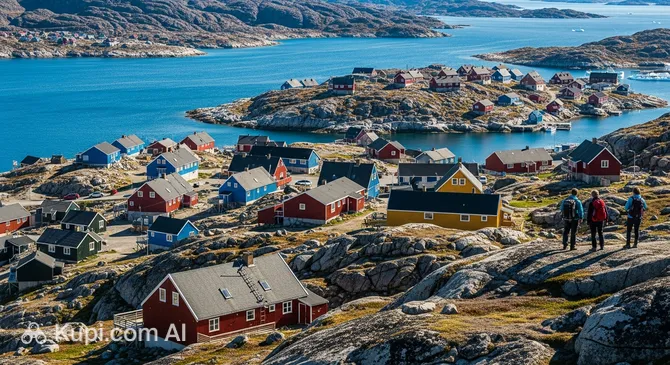
Iginniarfik is a tiny but incredibly picturesque settlement located in the Qeqertalik municipality. This place is ideal for those who want to experience the authentic life of Greenland away from noisy tourist routes. Here, time seems to slow down, allowing guests to enjoy the silence and the harsh but captivating beauty of the Arctic.

Iginniarfik. Illustration.
Source: Kupi.com AI

Geographically, the village is located south of the town of Kangaatsiaq, amidst a labyrinth of fjords and rocky shores. The population here is very small—only about 80 people, which creates a special, intimate atmosphere where everyone knows each other. Despite its modest size and remoteness from civilization, the history of Iginniarfik is rich in traditions inseparably linked to hunting and the Inuit way of life.

The main attractions of this region are created by nature itself. Breathtaking views of icy expanses and opportunities for hiking across the endless tundra await travelers. In summer, you can witness the amazing phenomenon of the midnight sun, when the sun does not set below the horizon, and in winter, the sky lights up with the magical ripples of the Northern Lights.

Iginniarfik will be a real discovery for lovers of ecotourism and solitude. If you dream of escaping the hustle and bustle of the city and touching the pristine nature of the North, be sure to include this settlement in your itinerary.

Weather Overview

The climate of this region can be characterized as harsh and Arctic, which is typical for the west coast of Greenland. When planning a trip, it is worth considering that the weather in Iginniarfik dictates its own rules at any time of the year, requiring careful preparation of equipment.

The coldest period is February, when the average temperature drops to -18.9°C, and nighttime frosts can reach -21.7°C. Summer here is short and cool: in July, the warmest month, the air warms up on average to +7.8°C, rarely exceeding the +10°C mark. Expect a harsh winter with extremely low temperatures and a cool summer, ideal for active leisure but not for beach relaxation.

The amount of precipitation in millimeters here is minimal (about 1–2 mm per month), however, humidity is often felt. This is especially noticeable in late summer and early autumn: for example, in August, up to 12 days with precipitation are recorded, which more often manifests as fog or light drizzle rather than heavy rain.

Average monthly temperature

Average monthly precipitation

Interesting Facts

In addition to the harsh beauty of nature, Iginniarfik holds several curious details that reveal the way of life in this remote corner.

  • A descriptive name. Translated from the Greenlandic language, the word "Iginniarfik" can be interpreted as "the place where one shoots" or "the place for hunting." This name is not accidental: it historically points to the region's rich hunting grounds, which have fed local residents for centuries and continue to play an important role in their lives today.

  • Helicopter as a taxi. Due to the difficult terrain and the lack of intercity roads common to the mainland, the main year-round transport here is aviation. The village is equipped with a helipad (heliport) connecting residents with civilization, making every arrival of mail or guests a real event.

  • Ice roads. In winter, when the bay waters freeze, the isolation of the settlement paradoxically decreases. The frozen fjord turns into a natural track for dog sleds and snowmobiles, allowing travel over the ice to the neighboring town of Kangaatsiaq, which is a unique experience for Greenland.

How to Get There

Planning a trip to this remote corner of Greenland requires special attention to logistics, as usual roads are replaced here by air and water routes. To create an optimal itinerary, we recommend learning more about how to get to Iginniarfik, taking into account seasonal transport characteristics and flight schedules.

In the settlement of Iginniarfik itself, there is no airport for airplanes, only a helipad. The nearest regional hub is Aasiaat Airport (JEG), located approximately 65.9 km away. It is through this town that the route is most often built: from here, travelers transfer to an Air Greenland helicopter or, during the summer period, use water transfers.

For international flights, the country's main hub is Kangerlussuaq Airport (SFJ). It is located 164.3 km from Iginniarfik and accepts large liners from Denmark and Iceland. Since there are no direct flights to the village from here, tourists need to transfer to a domestic flight to Aasiaat or another regional center.

Another popular option for connections is Ilulissat Airport (JAV), located 149 km away. Many tourists choose this path to combine a trip to Iginniarfik with a visit to the famous icebergs in the Ilulissat Icefjord. From here, the onward journey also lies through local aviation or sea links.

For clarity, here is a summary of the main airports through which you can build a route:

AirportPassenger trafficDistance
Aasiaat Airport17,32166 km
Sisimiut Airport23,000135 km
Ilulissat Airport95,000149 km
Kangerlussuaq Airport133,381164 km
Qaarsut Airport7,105289 km

There is no railway communication in Greenland at all, and intercity highways do not exist due to the complex terrain, fjords, and glaciers. It is impossible to get to Iginniarfik by car or bus. The only ways to communicate with the outside world remain small aviation (helicopters) year-round and sea transport (motorboats and small vessels) during the navigation period when the waters are ice-free.

Main Attractions

In such a secluded settlement as Iginniarfik, the concept of an "attraction" takes on a special meaning. Here, you will not find noisy entertainment centers or museums with queues. The main value of this place is the opportunity to touch the untouched Arctic and see a way of life that has changed little over the last decades.

The surrounding tundra expanses are the main point of attraction for guests of the village. Hilly landscapes stretch around the residential area, perfect for intuitive hiking. Since there are no strictly marked tourist trails, every walk turns into a real exploration. After climbing the nearest hills, travelers are rewarded with a breathtaking panorama of the archipelago and the endless surface of the fjord, where icebergs often drift.

The local church traditionally acts as the architectural dominant and the heart of social life. This small but well-maintained wooden building, characteristic of Greenlandic settlements, stands out against the harsh rocks with its bright facade. For tourists, it is not just a beautiful object for photography, but also a symbol of the resilience of the local residents, uniting the community during holidays and weekdays.

The harbor and the coastline are the living center of Iginniarfik, where you can observe the real life of a fishing village. This is where fishermen's boats are moored, fish is dried, and gear is prepared. A walk to the water allows you to see how the sea feeds this region: in summer, work is in full swing on motorboats, and in winter, the shore becomes the starting point for dog sleds heading out for hunting or to neighboring settlements across the ice.

Local Cuisine

The gastronomic scene of Iginniarfik fully reflects the lifestyle of a tiny Arctic settlement. Here, you will not find familiar restaurants, cafes, or street food stalls. The local cuisine is primarily the food of hunters and fishermen, prepared at home from the freshest products obtained from the surrounding waters and tundra.

The basis of the diet is the meat of marine mammals and fish. The main dish that every guest of Greenland should try is suaasat. This is a thick, rich soup traditionally made from seal meat, but sometimes whale, reindeer, or seabird meat is used. To make it more filling, rice, barley, or potatoes are added to the broth, along with a large amount of onions. This dish not only warms you up in the polar cold but is also an important part of the Inuit cultural identity.

For those ready for gastronomic experiments, a real challenge will be mattak. This is raw whale skin (usually narwhal or beluga) with a thin layer of subcutaneous fat. Locals value it for its nutty aftertaste and high vitamin C content, which historically helped them survive in the absence of fresh fruit. Mattak is usually eaten raw, cut into small cubes, and it is considered a true delicacy.

Dried fish (usually cod or halibut), which is preserved in the wind, is popular as a snack. Strips of dried fish replace chips here and serve as an excellent source of energy during long treks. From berries collected in the tundra during the short summer (blueberries, crowberries), desserts are made or added to meat dishes.

The drink culture in Iginniarfik revolves around coffee. Greenlanders are great lovers of this drink, and an invitation to a "kaffemik" (a traditional coffee gathering) is considered a sign of high hospitality. For alcohol, locals prefer Danish beer or strong spirits, which can be purchased at the village's only general store. The purest and most delicious drink here remains ordinary water, which is often taken directly from the melted ice of icebergs.

It is important for tourists to remember: due to the lack of catering establishments, the issue of food must be thought through in advance. Products can be bought at the local Pilersuisoq store, which sells both imported goods from Denmark and local meat. If you stay in a guesthouse or with locals, you will have a unique chance to try real homemade food prepared according to family recipes.

Travel Tips

A trip to Iginniarfik is a true expedition to the heart of the Arctic, which requires a serious approach to packing and an understanding of local specifics. To ensure your visit to this secluded settlement is comfortable and leaves only warm memories, we have compiled a list of important practical recommendations.

  1. Clothing and equipment. The weather here changes instantly, so the main principle is layering. Be sure to bring high-quality thermal underwear, a fleece sweater, and a windproof jacket with a hood. Even in summer, you will need a hat and gloves. Shoes should be trekking, waterproof, and broken-in, as there is no asphalt here. Don't forget sunglasses: the sun's reflection off the snow and water can be very bright.
  2. Transport accessibility. Inside the village, there is no public transport, taxis, or car rentals—Iginniarfik is too small, and all distances are covered on foot. In winter, locals use snowmobiles and dog sleds. To move between settlements (for example, to Kangaatsiaq), you must book places on a helicopter or a regular boat in advance, as the schedule depends on the weather.
  3. Money and payment. The currency of Greenland is the Danish Krone (DKK). There are no ATMs or currency exchange points in the settlement. The only store, Pilersuisoq, usually accepts cards (Visa, Mastercard), but terminals may not work due to communication failures. It is extremely important to bring a sufficient supply of cash in small bills for payments to local residents for souvenirs, boat trips, or accommodation.
  4. Medicine and safety. There is no hospital or 24-hour pharmacy in Iginniarfik; only a small first-aid post operates for basic medical assistance. Be sure to bring a complete personal first-aid kit, including specific medications, painkillers, and motion sickness remedies. The area is safe in terms of crime, but be careful in nature: rocks can be slippery, and the weather can be treacherous.
  5. Communication and internet. The main language of communication is Greenlandic (the Kalaallisut dialect), and many speak Danish. Not everyone knows English, especially among the older generation, but young people can often explain themselves. Wi-Fi is hard to find and can be slow and expensive. We recommend buying a SIM card from the local operator Tusass in a larger town (for example, in Aasiaat) before arriving in the village.
  6. Attitude toward animals. This is a critically important point: never approach sled dogs and do not try to pet them without the owner's permission. Greenlandic dogs are working animals with strong instincts; they can be aggressive toward strangers. Also, do not feed wild animals if you encounter them in the tundra.
  7. Local etiquette. The residents of Iginniarfik are friendly but value personal space. Always ask for permission before taking photos of people, their children, or the process of butchering a catch. The greeting "Aluu" (Hello) will help break the ice in communication. It is customary to take off your shoes when entering a private home.
  8. Planning purchases. Keep in mind that the only shop in the village operates on a reduced schedule, especially on weekends, and closes early. The assortment depends on deliveries (cargo ships), so fresh vegetables and fruits may be in short supply. If you have special dietary needs, bring products with you.

Iginniarfik is a place where civilization gives way to the grandeur of nature, and a harsh lifestyle teaches you to appreciate simple joys. By following these tips and showing respect for local traditions, you will be able to feel not just like a tourist, but like a welcome guest in this amazing land.

Entertainment & Nightlife

In the settlement of Iginniarfik, where fewer than a hundred people live, the concept of "nightlife" has a completely different meaning than in usual tourist centers. Here, you will not find night clubs, bars, pubs, or disco districts. This is a place for those looking for solitude, a digital detox, and deep contact with nature, rather than loud parties.

The main "show" here is staged by nature itself. In winter, the primary evening entertainment is hunting for the Northern Lights (Aurora Borealis). Due to the lack of city lighting and light noise, Iginniarfik is an ideal platform for observing the night sky. In clear weather, green and purple ribbons shimmer right above the rooftops, creating an atmosphere of a true Arctic fairy tale.

In summer, nightlife is transformed by the phenomenon of the midnight sun. The sun does not set below the horizon, and the boundaries between day and night are blurred. At this time, locals and tourists can walk, fish, or simply enjoy the views of the fjord and icebergs even at 2:00 AM or 3:00 AM under natural light. This is a unique experience where time seems to cease to exist.

The center of the village's social life is the local Community Hall and the school. This is where rare festive events, general meetings, birthday celebrations, or bingo games—which are very popular in Greenland—take place. Attending such an event is a great stroke of luck for a tourist, giving a chance to see the sincere emotions and traditions of the local residents.

Practical tips for evening leisure:

  • Where to buy food and drinks: Since there are no cafes or restaurants here, the only source of provisions is the Pilersuisoq general store. You can buy groceries and alcohol here, but it is important to remember the opening hours: the shop closes early (usually around 4:00 PM – 5:00 PM) and may not be open on weekends or holidays. Plan your purchases in advance.
  • Dress code and atmosphere: The style here is strictly utilitarian and hiking-oriented. Warm fleece clothing, thermal underwear, and comfortable shoes are the best choice for an evening walk. The atmosphere in the village is intimate and quiet; all residents know each other.
  • Safety: Iginniarfik is absolutely safe in terms of street crime. However, when walking in the dark (in winter), you should not go far from the residential area without a powerful flashlight and means of protection. In Greenland, there is always a risk of encountering wild animals, including polar bears, which may approach settlements.
  • Transport: There are no taxi services or night buses. The village is so small that any walk is done on foot.

Daytime entertainment in Iginniarfik is also not related to theaters, museums, or amusement parks, which simply do not exist here. Leisure is entirely dedicated to outdoor activities: these are hikes through the tundra, photo hunting for sea birds and seals, as well as boat trips with local fishermen. This place teaches you to slow down and find beauty in silence.

Parks & Museums

In Iginniarfik, you will not find the usual city parks with paved paths or museum complexes with audio guides. However, this does not mean there is a lack of cultural and natural riches. The entire village and its surrounding landscapes can easily be called a huge open-air museum, where the exhibits are the majestic Arctic nature and the authentic way of life of local hunters.

Natural areas and "wild" parks

Instead of fenced-off squares, the endless tundra stretches out here, starting literally beyond the threshold of the last house. This is an ideal space for walking, where mossy stones replace benches, and crystal-clear streams replace fountains. In summer, the hills are covered with a carpet of polar flowers and berries, creating incredibly picturesque landscapes for hiking. There are no prohibitive signs here, and you are free to choose any route, guided by the terrain.

The fjord coastline deserves special attention. This is the natural promenade area of the village. A walk along the shoreline allows you to enjoy the view of drifting icebergs and the rocky islands of the archipelago. In quiet weather, the water here acts as a mirror, reflecting the sky and glaciers, and the air is filled with a ringing silence, broken only by the cries of sea birds or the splash of water from a passing seal.

Cultural heritage and architecture

Since there are no official museums in a settlement with a population of less than a hundred people, the role of the main cultural and historical center is performed by the local church. This is a traditional wooden building, painted in a bright color, and it is the heart of the community's spiritual life. Although it is an active church, not a museum, its architecture and interior decoration speak eloquently about the history of the Christianization of Greenland and the blending of European traditions with Inuit culture.

The residential area of Iginniarfik itself is a living ethnographic exposition. Colorful wooden houses scattered across the rocky landscape are a classic example of Greenlandic architecture. Walking between them, you can see racks for drying fish, sleds for dog teams, and skins prepared for processing. These details of daily life say more about life in the Arctic than any stands behind glass.

Insider tip

While walking in the surroundings, pay attention to inussuks—hand-built stone pyramids that resemble a human silhouette. Since ancient times, they have served the Inuit as navigational signs, indicating the way or good places for hunting. Finding such an ancient landmark on top of a hill means touching the ancient history of survival in this harsh land.

Getting Around

The public transport system in the sense familiar to a city dweller is completely absent in Iginniarfik. Here, you will not find a metro, trams, trolleybuses, or minibuses. This is due to the tiny size of the settlement and the lack of a road network both within and outside of it. The entire village can be leisurely walked around in 15–20 minutes, so your own feet become the main and most reliable means of transport here.

The role of intercity public transport is performed by helicopters and sea vessels. Since there are no automobile roads connecting Iginniarfik with other settlements, regular passenger transportation is carried out by air or by water. Helicopter flights by the national airline connect the settlement with nearby towns year-round, performing the function of an "air bus." During the summer period, when the fjords are free of ice, small passenger motorboats operate according to a schedule.

The fare payment system here also differs from the urban one. In Iginniarfik, there are no concepts of a "travel ticket," "transport card," or "validator." Tickets for a helicopter or boat must be purchased in advance, preferably several weeks or even months before the trip, online on the carriers' websites. Payment is made by bank card online. The fare is fixed and quite high; there is no zone-based pricing.

The "validation" procedure is as simple as possible: when boarding a helicopter or a boat, you simply present a printed ticket or its electronic version on a smartphone to an employee (the pilot or captain). It is important to remember that transport schedules here are extremely dependent on weather conditions. Fogs or gale-force winds can cause a flight to be canceled, so tourists are recommended to always have a buffer of time.

Alternative types of transport in Iginniarfik are highly seasonal. Familiar taxi services, car-sharing, or bike rentals do not exist here. In summer, locals use all-terrain vehicles (ATVs) to transport goods, but rental services for tourists are not officially provided. If you need to transport heavy luggage from the helipad to the guesthouse, you can try to arrange this with one of the local ATV owners privately.

In winter, the transport picture changes: the main means of travel become snowmobiles and dog sleds. This is not just an attraction, but a real way to reach neighbors or go hunting. Tourists can arrange a transfer by dog sled to neighboring settlements across the sea ice, but this should be considered more of an individual tour rather than cheap public transport. The price and terms of the trip should be discussed personally with the musher (dog driver).

Accommodation

In such a secluded and sparsely populated place as Iginniarfik, tourists should not expect a wide choice of accommodation or the presence of usual hotel services. Large chain hotels, luxury resorts, or spa complexes are completely absent here. The main format of accommodation is authentic guesthouses or renting rooms from local residents, which allows for full immersion in the life and culture of Greenland.

The concept of the "best area" is very relative here, as the entire village can be walked across in a few minutes. Most houses are located compactly, and almost every window offers a view of the rocky tundra or the bay. Accommodations located closer to the helipad (heliport) or the harbor are considered the most convenient, as this simplifies baggage transportation upon arrival.

Accommodation options in Iginniarfik belong to the "basic comfort" category. Usually, these are small private houses with shared facilities (the kitchen and bathroom are shared with the owners or other guests). The interiors are simple but cozy and warm, which is critically important in the Arctic climate. This is not just a place to sleep, but an opportunity to chat with the Inuit, learn local news, and perhaps arrange to buy fresh fish or book an excursion.

Booking tip: It is necessary to plan your stay long before the trip. Due to the extremely small number of beds (often they can be counted on the fingers of one hand), arriving "by chance" is a risky strategy. It is recommended to contact the host or the local tourist office in the town of Kangaatsiaq in advance to guarantee yourself a roof over your head.

The price range usually varies from medium to high, which is explained by the region's remoteness and the complexity of resource logistics. Booking through popular international online aggregators practically does not work here. Most often, you have to negotiate directly by phone or email, and payment is often accepted only in cash Danish Krones (DKK), so take care of a supply of banknotes before your flight.

Nearby Cities

For those who want to explore the surrounding area, Iginniarfik serves as an excellent starting point for day trips to several interesting nearby places:

Aasiaat — the nearest large town, located on the southern end of Disko Bay. It is often called the "town of a thousand islands," and it is an ideal destination for fans of kayaking and whale watching, as whales often swim into local waters. Aasiaat is also known for its cultural life and street art: many buildings here are decorated with paintings and sculptures by local artists.

Ilulissat — the true tourist capital of the region, located further north. The main reason to visit this town is the famous Icefjord, included in the UNESCO World Heritage List. Here you can see the birth of giant icebergs and take an unforgettable boat trip among the icy giants.

Sisimiut — the second largest town in Greenland, located south of Iginniarfik. This is a place where two cultures meet: Inuit hunting traditions and modern industry. The town attracts fans of extreme sports and those who want to learn about the history of the island's first settlers in the local open-air museum.

CityPopulationDistance
Niaqornaarsuk26716 km
Kangaatsiaq60021 km
Attu20330 km
Aasiaat3,06964 km
Akunnaaq10175 km

These nearby destinations allow you to get an idea of the diverse culture and landscapes of the region.

Shopping & Souvenirs

Shopping in Iginniarfik is an experience far removed from the usual strolls through shopping centers or boutiques. In a settlement with a population of less than a hundred people, trade is purely utilitarian. There are no souvenir shops or specialized clothing stores. Everything necessary for life, from food products to household goods and fuel, is concentrated in a single point that serves as the supply center for the entire community.

Since there is no division into commercial districts or streets in Iginniarfik, tourists will not have to search for a place to shop. All commercial life revolves around the Pilersuisoq store building. This is Greenland's state-owned retail network, providing remote settlements with everything they need. Here you will find a basic set of products (canned food, cereals, frozen meat), household chemicals, simple clothing, and equipment. The assortment directly depends on deliveries from cargo ships, so shelves may empty before a new shipment arrives.

Of course, there are no classic shopping centers in the village. However, for tourists, the local equivalent of a market—Kalaalimineerniarfik (or simply "The Board")—may be of interest. In such small settlements, this is often not a separate building, but just a place by the harbor or a special counter where hunters and fishermen sell their fresh catch. If you are lucky, you can buy the freshest fish, seal meat, or reindeer meat here. This is the most authentic form of trade, working on the "catch it and sell it" principle.

As for souvenirs, searching for them turns into a real exploration. There are no souvenir shops in Iginniarfik, but many local residents engage in traditional crafts at home. You can ask your guesthouse hosts who in the village makes tupilaks (carved figures made of bone or horn), sews seal skin products, or creates beaded jewelry. Buying such products directly from the craftsman not only guarantees the uniqueness of the item but also supports the local economy.

Opening hours and payment have their own specifics. The Pilersuisoq store usually operates Monday to Friday from 10:00 AM to 5:00 PM, with reduced hours on Saturday and closed on Sunday. Bank cards (Visa, MasterCard) are accepted in the store, but due to unstable satellite communication, terminals may not work. To buy souvenirs from locals or products from fishermen, you will need exclusively cash Danish Krones (DKK), preferably in small bills.

The Tax Free system (VAT refund) in Greenland works differently than in Europe. There is no Value Added Tax (VAT) here, so the prices on the tags are final. However, it is worth remembering that the overall price level in Iginniarfik is significantly higher than on the mainland due to the complex and expensive logistics of delivering goods to the Arctic.
Reached the bottom of the page?

Looks like you know this route inside out

We use cookies and services to collect user information. This is essential for the functioning of the site and for marketing purposes. You can find out more in .