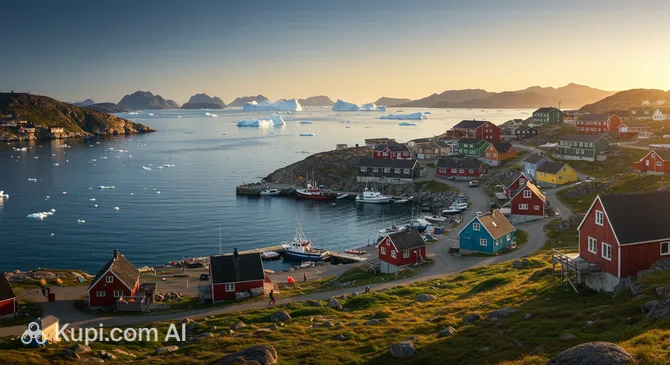
Shopping in Qaqortoq can hardly be compared to strolling through the boutiques of European capitals, but this is exactly where you will find authentic items that cannot be bought anywhere else in the world. The city's shops are not focused on mass-market products, but on unique items by local artisans reflecting the harsh beauty of the Arctic. This is a place where buying a souvenir often turns into an introduction to Inuit culture and the traditions of the island of Greenland.
The main shopping areas are compactly located in the city center, around the main square with the fountain and in the harbor area. There are no long shopping streets; instead, you will find small cozy shops and workshops scattered among residential buildings. A walk from the port up the hills will allow you to look into the most interesting places, where craftsmen often work right in front of visitors.
The city has no typical huge malls, but the role of shopping centers is performed by large supermarkets of the Pisiffik and Brugseni chains. These are general stores selling literally everything: from fresh pastries and groceries to clothing, electronics, and even hunting equipment. For tourists, they are interesting not only as a place to restock but also as an opportunity to see how locals live and what goods are in demand in the harsh climate.
The most colorful "market" place in Qaqortoq is "Brættet" (The Board)—a local fresh food market located by the harbor. It is worth coming here not so much for shopping (unless you have a kitchen) but for the experience. Hunters and fishermen bring their morning catch: fresh fish, reindeer meat, and sometimes seal meat. This is the heart of city life, where you can feel the true taste of the North.
As for souvenirs, Qaqortoq offers exclusive high-quality products. The city is known as the home of the Great Greenland brand, the country's only tannery. In their showroom, you can purchase designer fur coats, bags, and accessories made of seal fur, which are valued worldwide. Also pay attention to:
- Tupilaks—traditional spirit figures carved from bone or reindeer antler.
- Jewelry made of the rare tugtupite stone, which is mined in neighboring Narsaq.
- Beadwork, which is part of the national costume.
It is important to remember that a special CITES certificate may be required to export products made of whalebone, walrus tusk, or certain types of fur. Be sure to check this with the seller before purchasing.
Shop opening hours may seem unusual. Most shops are open Monday through Thursday from 10:00 to 17:30, and on Friday until 18:00. On Saturday, many close as early as 13:00 or 14:00, and Sunday is a nearly universal day off. Danish Krones (DKK) are accepted for payment everywhere. Bank cards (Visa, MasterCard) are accepted in supermarkets, the hotel, and the Great Greenland store, but for purchases at the "Brættet" market or in small craft workshops, it is better to have cash with you.
The Tax Free system as understood in Europe does not work here, as there is no value-added tax (VAT) in Greenland. However, prices for goods can be high due to complex logistics and import duties. When buying expensive fur products, you are paying for uniqueness and craftsmanship, not for refundable taxes.