Cemeteries as Museums: A Guide to the Most Beautiful Necropolises
 Polina
For many, a walk through a cemetery is a plot from a gothic novel or a forced necessity. But experienced travelers know: ancient burial grounds are the most honest open-air museums. There is no urban hustle and bustle here, monuments "speak" here, and the history of a country is read not from textbooks, but from names on marble. We have compiled a guide to the most atmospheric and architecturally significant memorial parks in the world, where fear gives way to admiration for art.
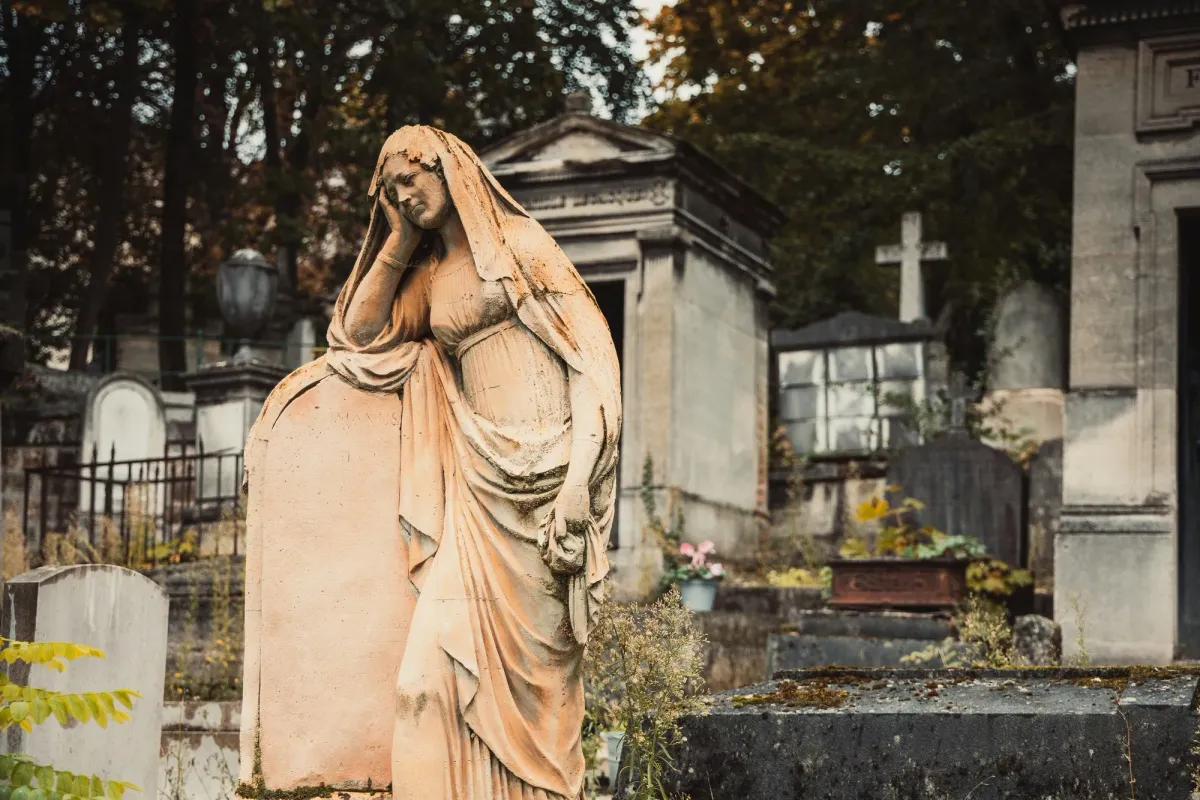
Père Lachaise, Paris
Père Lachaise is the benchmark for memorial parks and the most visited cemetery in the world. Parisians once refused to bury their loved ones here due to its distance from the city center, and the authorities had to resort to a marketing ploy: moving the remains of Molière and La Fontaine here. The advertising worked: today, over a million people are buried here.
This is a real city with cobblestone streets, avenues of ancient chestnut trees, signposts, and even its own "quarters." It's not sorrow that reigns here, but a bright melancholy. Parisians come here with volumes of poetry to read in silence on a wrought-iron bench, while tourists embark on quests to find celebrities.
Who to look for:
- Oscar Wilde. His tombstone, in the form of a modernist sphinx, long suffered from the affection of female admirers: the stone was literally eroded by the lipstick of thousands of kisses. Now the monument is enclosed by a glass barrier, but the tradition of leaving notes remains.
- Frédéric Chopin. The composer's body rests here, but his heart, according to his will, is immured in a church column in Warsaw. Fresh white and red flowers always lie at the monument with the weeping muse.
- Jim Morrison. The noisiest and most rebellious location. Despite strict security control, The Doors fans manage to leave cigarettes, friendship bracelets, and whiskey bottles here.
- Edith Piaf. A very modest, almost inconspicuous family grave that is easy to miss if you don't know the plot number.
If you've long dreamed of seeing the Eiffel Tower and strolling along these legendary avenues, it's worth planning your route in advance and buying tickets to Paris. Under current conditions, the flight will require a convenient layover (for example, in Istanbul or Yerevan), but the magic of the French capital is worth it.
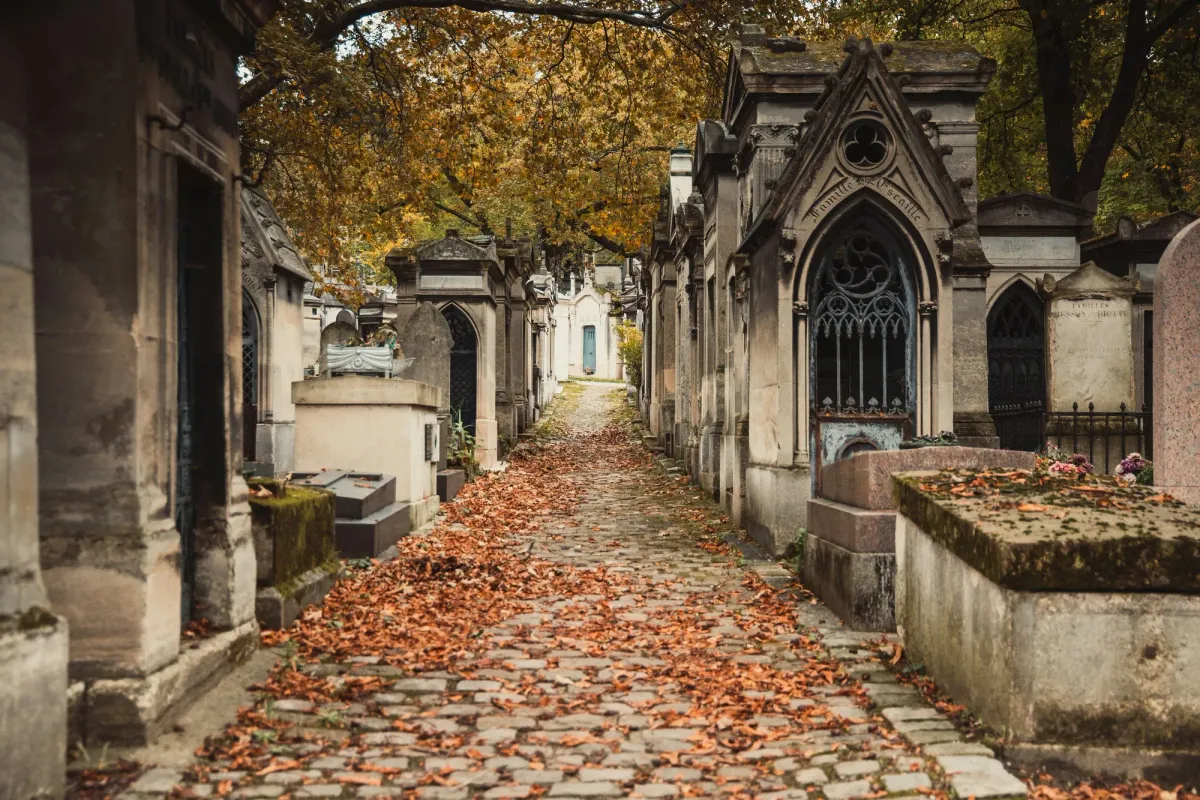
Monumental Cemetery, Milan
Cimitero Monumentale is not just a place of eternal rest; it's a vanity fair of the Italian bourgeoisie of the 19th-20th centuries. At that time, Milan was experiencing an industrial boom, and the wealthiest dynasties competed with each other: whose crypt would be more luxurious, whose statue more realistic.
There are practically no identical crosses here. Instead, there are full-scale replicas of Greek temples, Egyptian obelisks, bronze scenes from life, and incredibly detailed statues of angels, whose faces are frozen with very human emotions.
What to look for:
- Famedio (Temple of Fame). A huge building at the entrance, made of marble and brick, where the most honored citizens are buried, including the writer Alessandro Manzoni.
- Campari family crypt. A life-size sculptural group of "The Last Supper." It looks like a Renaissance artwork displayed outdoors.
- Non-Catholic sector. Here you can find avant-garde and abstract monuments that sharply contrast with classical Italian sculpture.
Novodevichy Cemetery, Moscow
Russia's most prestigious necropolis, included in the UNESCO World Heritage list. While burials at the Kremlin Wall were based on ideological grounds, Novodevichy is a cross-section of the country's cultural and scientific elite. The territory resembles a well-maintained park with wide avenues, where each tombstone is the work of outstanding sculptors.
Who to look for:
- Yuri Nikulin. One of the most touching monuments: the great artist, in his clown jacket, sat down to rest on the edge of the arena, and in front of him lies a bronze Giant Schnauzer. People often rub the dog's nose "for good luck."
- Anton Chekhov. An elegant Art Nouveau monument with a wrought-iron fence stylized as the curtain of the Moscow Art Theatre.
- Nikolai Gogol and Mikhail Bulgakov. A mystical story is associated with these burials. Originally, a stone resembling Golgotha lay on Gogol's grave. Later, it was replaced by a bust, and the stone was discarded in a stonemason's shed. Elena Bulgakova found it and bought it for her husband's grave. Thus, Bulgakov's phrase addressed to his teacher came true: "Cover me with your cast-iron overcoat."
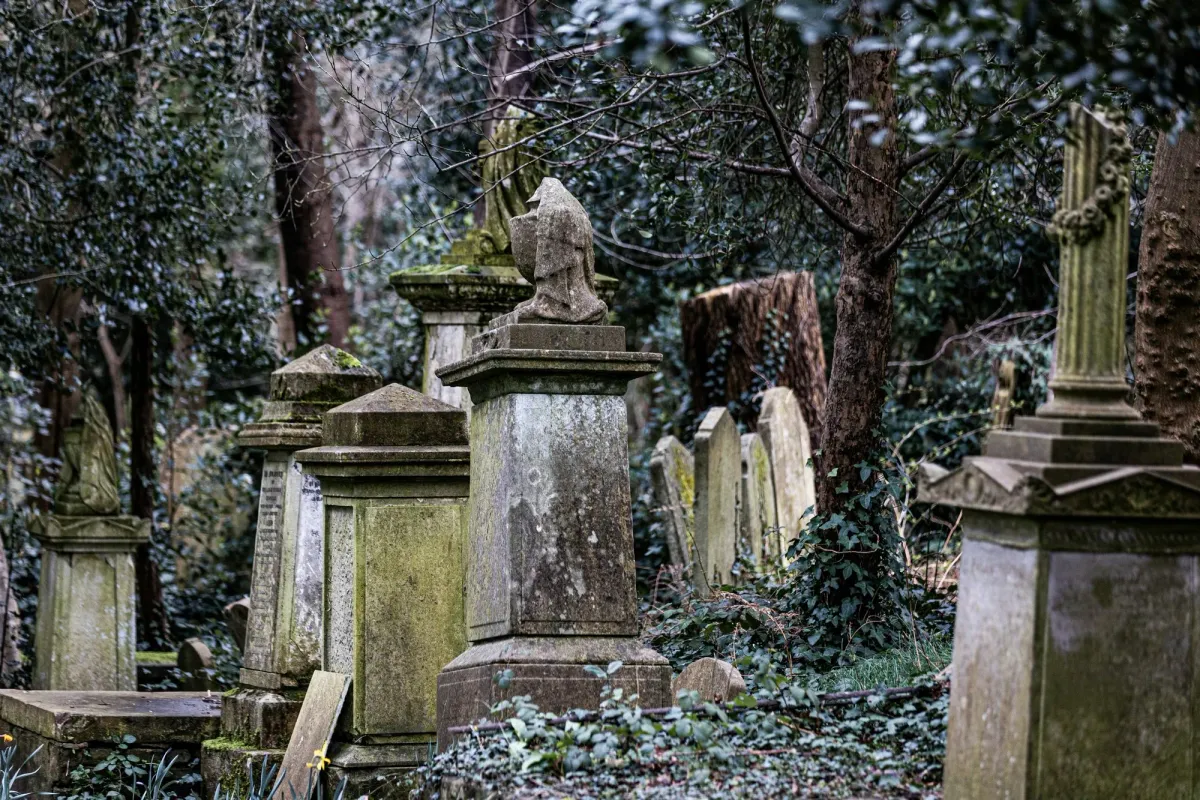
Highgate, London
If you love dark romance in the spirit of Bram Stoker, this is the place for you. Highgate is part of London's "Magnificent Seven" cemeteries, opened during the Victorian era. Today, it's a wildlife sanctuary: ancient crypts are overgrown with ivy, the roots of ancient trees entwine leaning crosses, and foxes and squirrels dart between the graves.
Visit features: the cemetery is divided into two parts.
- East Cemetery: open for free access. Here lies the most famous grave – Karl Marx with a giant bust of the thinker.
- West Cemetery: the most beautiful and mystical. Access is by guided tour only, with advance booking. You will see the famous Egyptian Avenue and the Circle of Lebanon – crypts built around a huge cedar tree. It was here in the 70s that the urban legend of the Highgate Vampire was born.
Recoleta, Buenos Aires
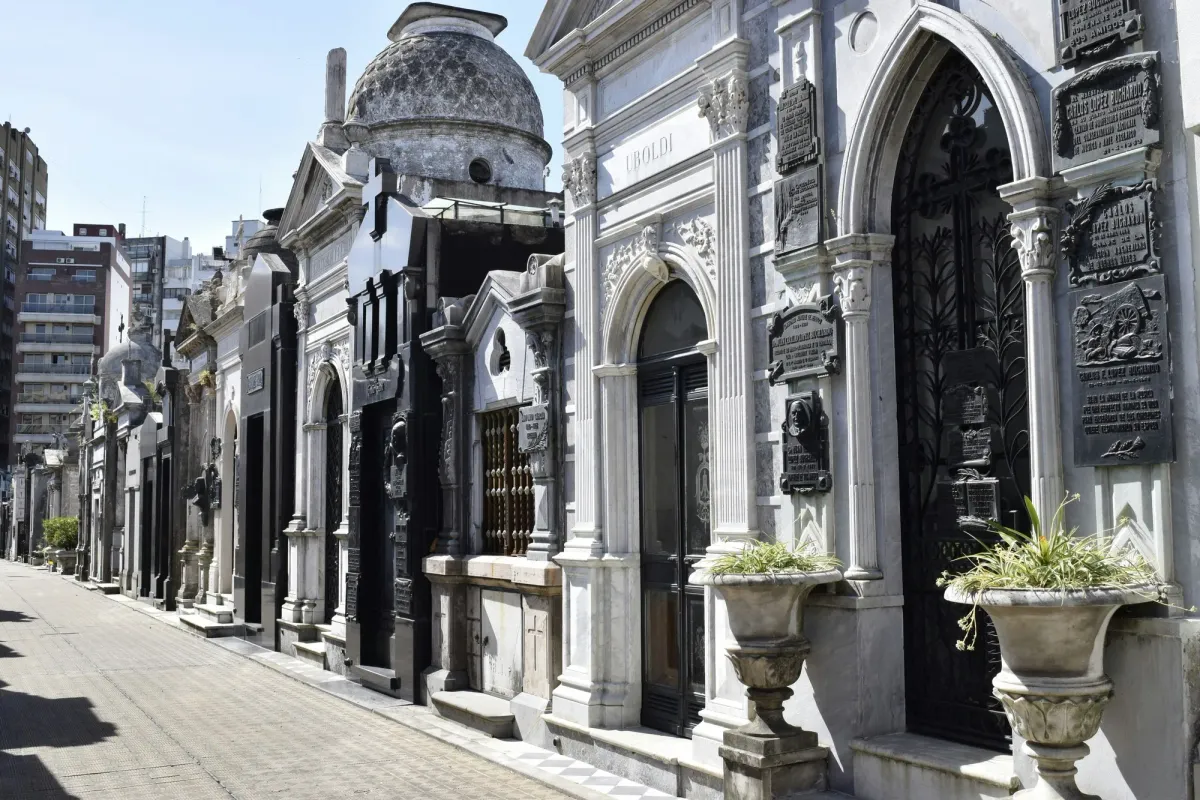
Recoleta looks like a separate prestigious district of the city, but only for the deceased. It has its own blocks and streets, but instead of houses, there are magnificent marble mausoleums. All structures are made in light tones, creating a striking contrast with the bright blue Argentine sky.
The cemetery is located in the heart of a fashionable district. Cats roam here, fed by caretakers, and music from cafes can be heard beyond the walls. Many crypts have glass doors, and inside you can see coffins covered with lace napkins, candelabras, and photographs.
Who to look for:
- Evita Perón. The Duarte family crypt, where the beloved of the Argentine people rests, is always strewn with fresh flowers. Finding it in the labyrinth of mausoleums is not easy; it's quite modest – just follow the main flow of tourists.
- Rufina Cambaceres. A girl who, according to legend, was buried alive after falling into a lethargic sleep (she is called "The Lady in White"). Her monument is one of the most beautiful and melancholic Art Nouveau pieces.
Okunoin, Koyasan
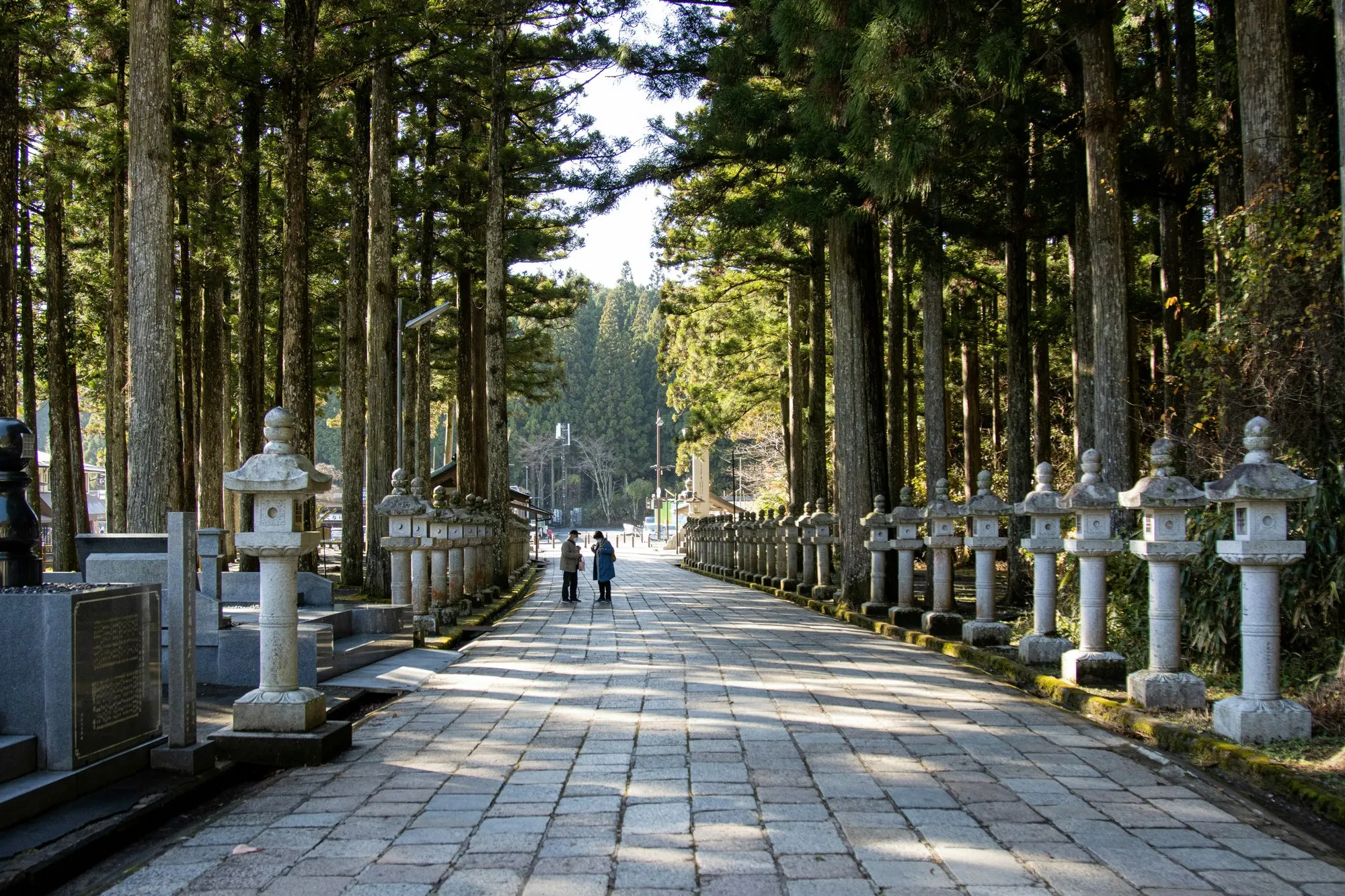
The most atmospheric and unusual place in our selection. The cemetery is located in the sacred forest on Mount Koya. A two-kilometer avenue leads to the mausoleum of the revered monk Kukai (Kobo Daishi). Believers hold that he did not die but is in a state of eternal meditation, awaiting the arrival of the future Buddha.
What is striking:
- Nature. Over 200,000 ancient tombstones and stupas are covered with thick, velvety moss. They stand beneath the canopy of giant cedars, 500–600 years old.
- Corporate graves. A unique Japanese phenomenon. Companies like Panasonic, Nissan, or Kirin purchase plots for their employees. Monuments often reflect the field of activity: here you can find a granite coffee cup, a rocket, and even a monument to termites, erected by a pesticide company (as a sign of respect for the insects killed).
- Lantern Hall. At the end of the path is the Torodo Hall, where thousands of eternal lanterns burn.
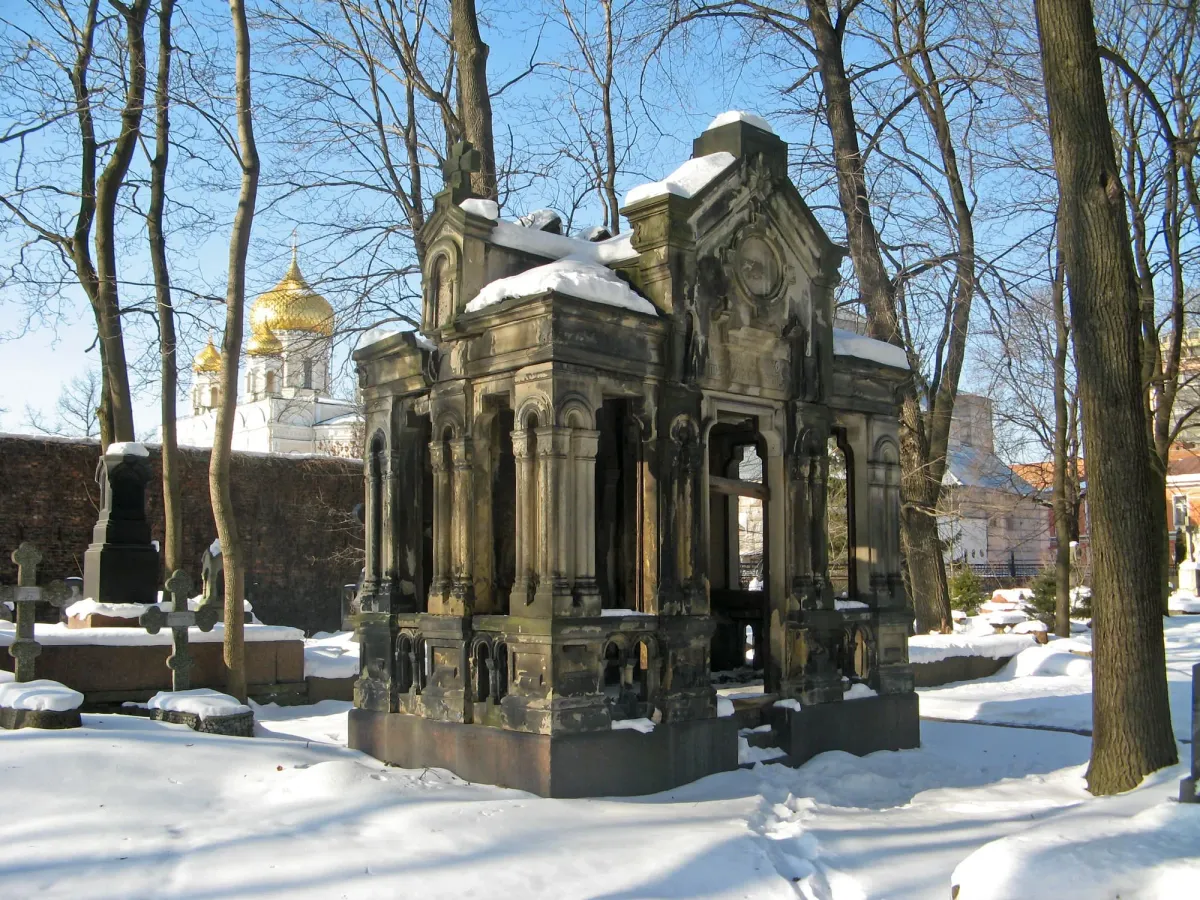
Necropolis of Artists, St. Petersburg
Part of the Alexander Nevsky Lavra, which is a state museum of urban sculpture. This is not an active cemetery, but rather an organized collection of masterpieces of memorial art. During Soviet times, the burials of famous people were moved here from other destroyed cemeteries in the city to preserve their memory.
Who to look for:
Here, there is an incredible concentration of geniuses per square meter.
- Fyodor Dostoevsky. A massive, somewhat somber monument reflecting the depth of his philosophy.
- Pyotr Tchaikovsky. A bust of the composer surrounded by angels symbolizing music.
- Arkhip Kuindzhi. An amazing monument in the form of a mosaic panel, resembling a portal to another world.
If you are planning a cultural weekend in the Northern Capital, it's time to find tickets for the Moscow – St. Petersburg route. A visit to the Lavra will be an ideal, quiet, and thoughtful addition to a stroll along the bustling Nevsky Prospekt.
Why go there?
A walk through such necropolises has an amazing therapeutic effect. It cures hustle and minor anxieties. Here, amidst silence and art, one acutely understands the value of allotted time. The ancient principle of Memento mori ("remember death") sounds here not as a threat, but as a wise reminder: live now, love now, create and travel while your heart beats.