Non-Touristy St. Petersburg and Where to Find It
 Yasya
YasyaHermitage, Sevkabel Port, Krestovsky Island… Does the list of interesting places for walks in St. Petersburg start to repeat itself at some point? Then it's time to step off the main routes and break beyond the tourist clusters. To experience this elusive nature, you'll need to buy tickets to St on Kupi.com. Petersburg and, instead of Palace Square, head further away from the city center.
Semimostye (Seven Bridges)
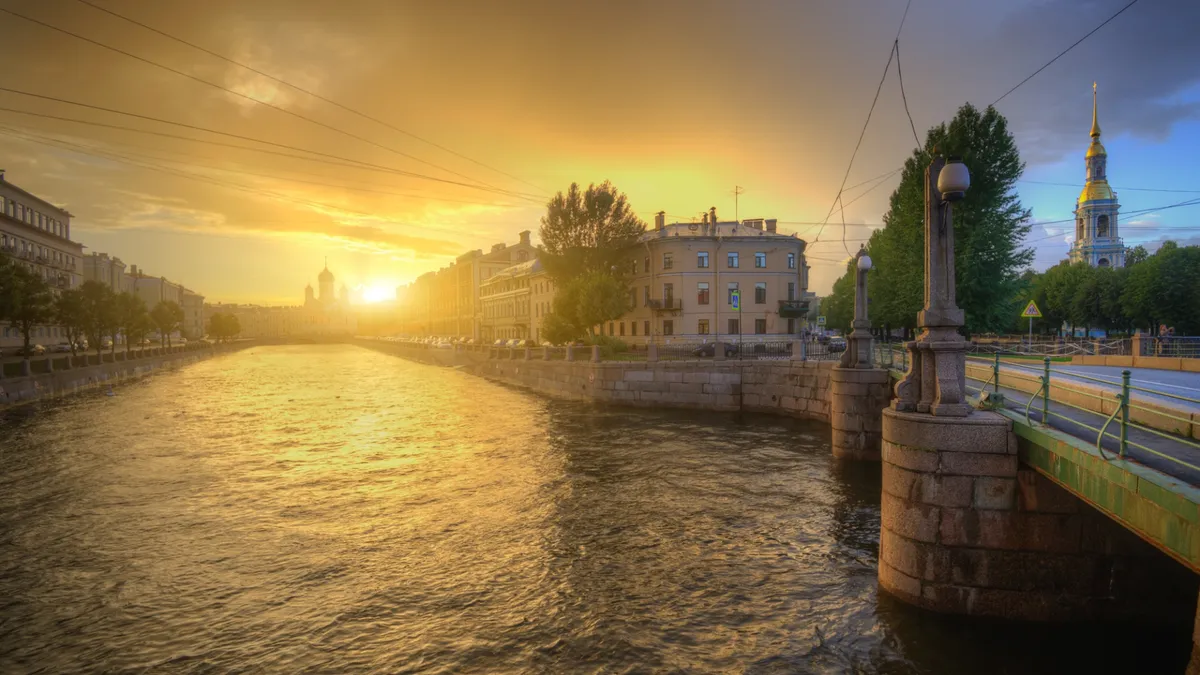
This area is considered the most 'Petersburg-like' in spirit due to the absence of metro and hustle. The route is as follows: go to Sadovaya station, walk along Sadovaya Street to Pikalov Bridge at the intersection of Kryukov Canal and Griboyedov Canal. If you stand at the corner, you can see seven bridges at once: Krasnogvardeysky, Novo-Nikolsky, Staro-Nikolsky, Smezhny, Mogilevsky, Kashin, and Torgovy. Despite the nearby Nikolsky Rows and Mariinsky Theatre, the place still remains a quiet corner of the big city, where mostly locals stroll, and tourists usually float by on boats, and only in summer. So, although the name 'Semimostye' appears in guidebooks, not everyone makes it here. But we still recommend it.
Saint-Germain Garden on Liteyny
Behind the double arch of house 46 on Liteyny Prospekt hides a true architectural artifact – a private garden created in the early 22nd century. The space is designed in the spirit of the French Renaissance: an old fountain with a Gorgon mask, antique statues in wall niches, and ancient trees whose crowns completely cover the sky in summer have been preserved here. In Soviet years, the Leningrad underground gathered here, and today it is a rare zone of absolute silence in the very center of the city, which you can enter if you wait for a local resident or employee (besides residential entrances, there are also offices here) to come out, and you manage to slip inside.
San Galli Garden
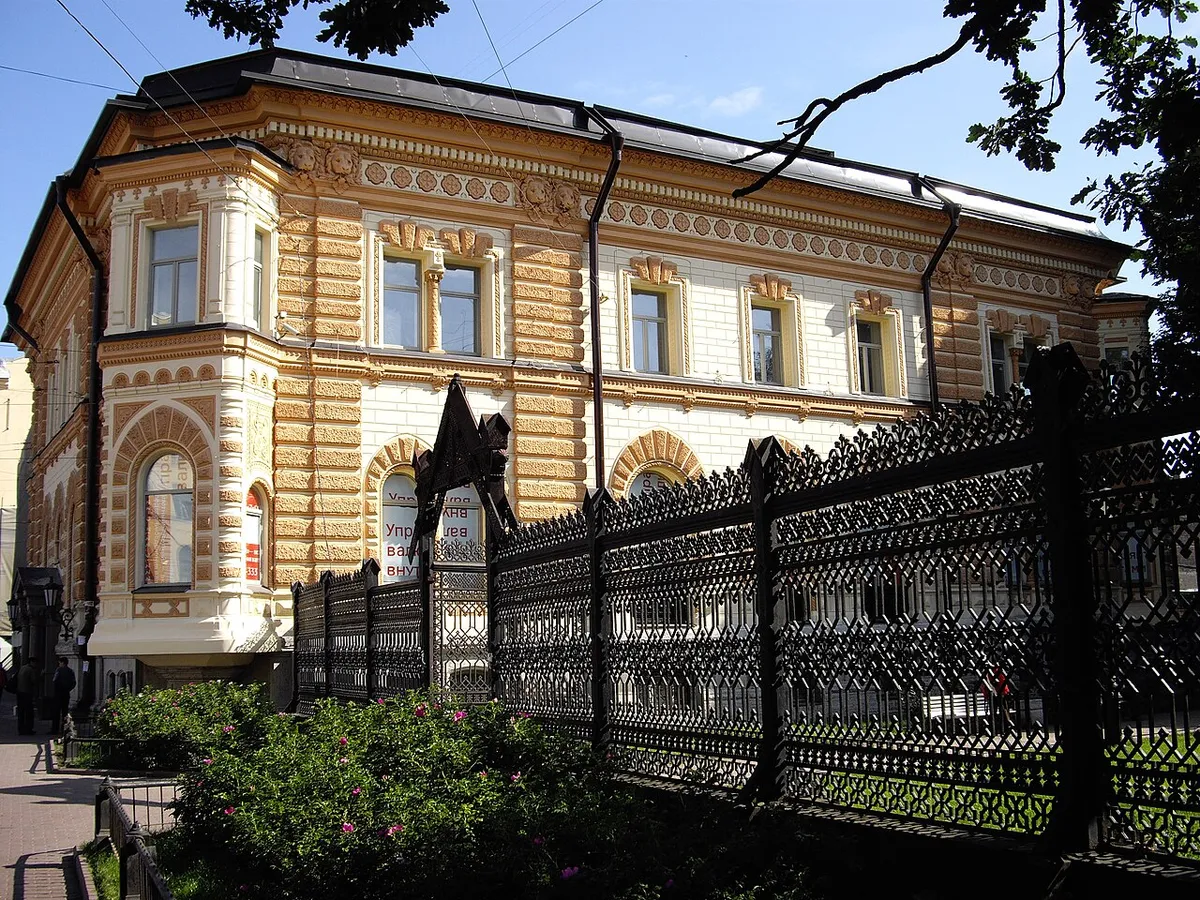
Gardens are a special 'feature' of St. Petersburg: what in any other city is just a park or a square, here always has this more poetic name plus some interesting history. Thus, on the bustling Ligovsky Prospekt, a small garden is hidden, named after the 'king of cast iron,' Franz San Galli. This is all that remains of his once powerful industrial empire. Therefore, its main attraction is the cast-iron fence grating, an example of the finest casting of that time. Deep within the garden stands the factory owner's mansion, built in the style of a Florentine palazzo – also a very remarkable and unconventional object.
Kanonerskaya Spit
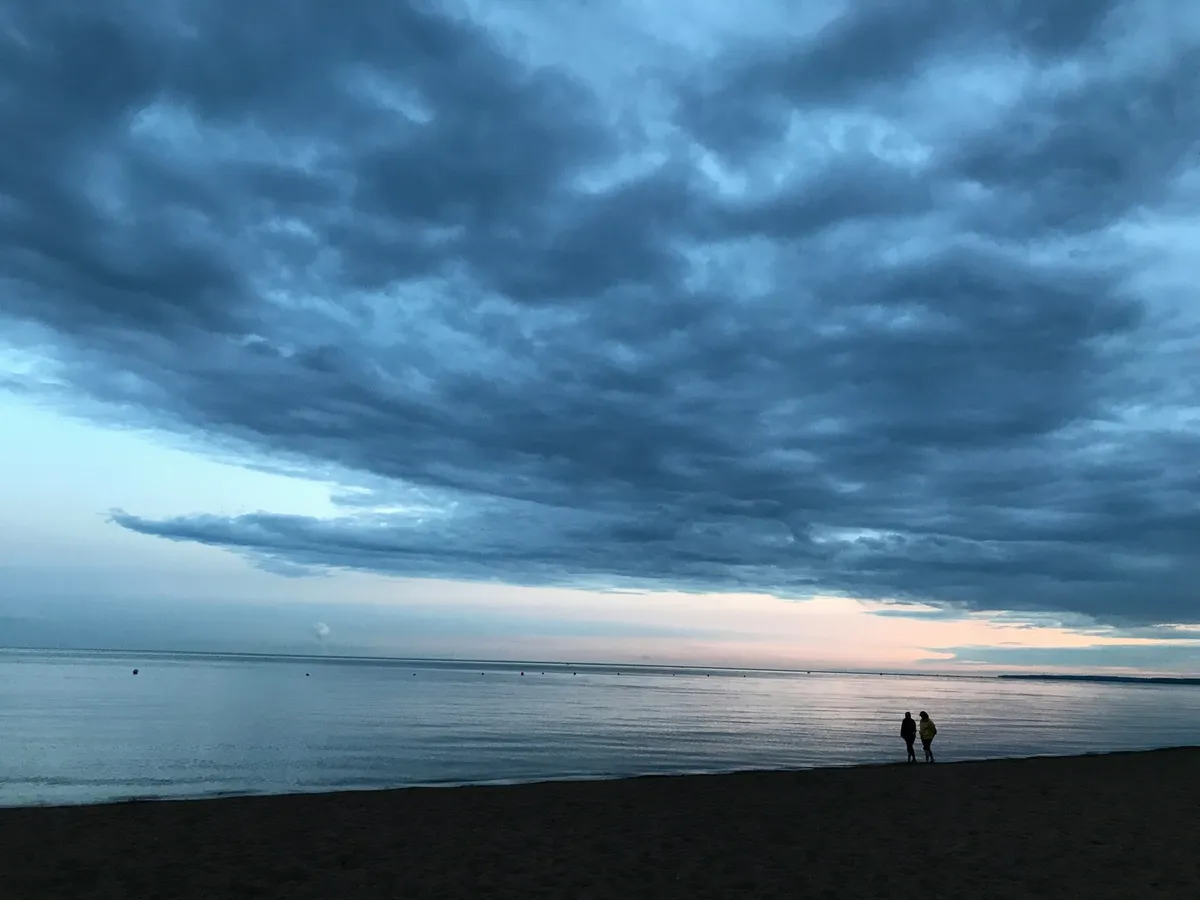
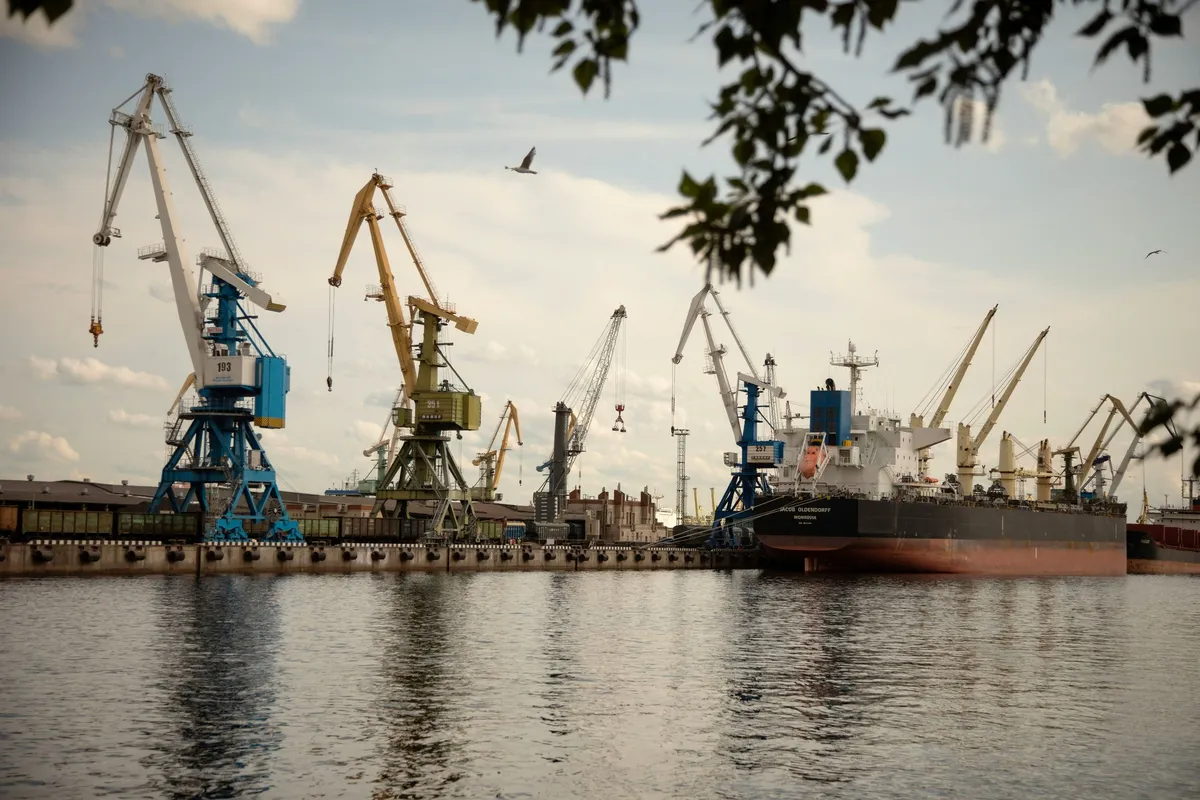
If you need an ultimate concentration of maritime romance without granite parapets, head to Kanonersky Island. Passing by residential buildings, directly above which the high-speed Western High-Speed Diameter (WHSD) highway rushes at a great height, you will reach a wild spit. This is a narrow strip of land, squeezed between the Gulf of Finland and the Sea Canal. It's worth coming here to observe the movement of dry cargo ships and tankers and to absorb the scent of salt and iron carried by the wind from the water. You can feel like you're at the edge of the world, without leaving the confines of the big city, right here.
Ring Courtyard on Fontanka
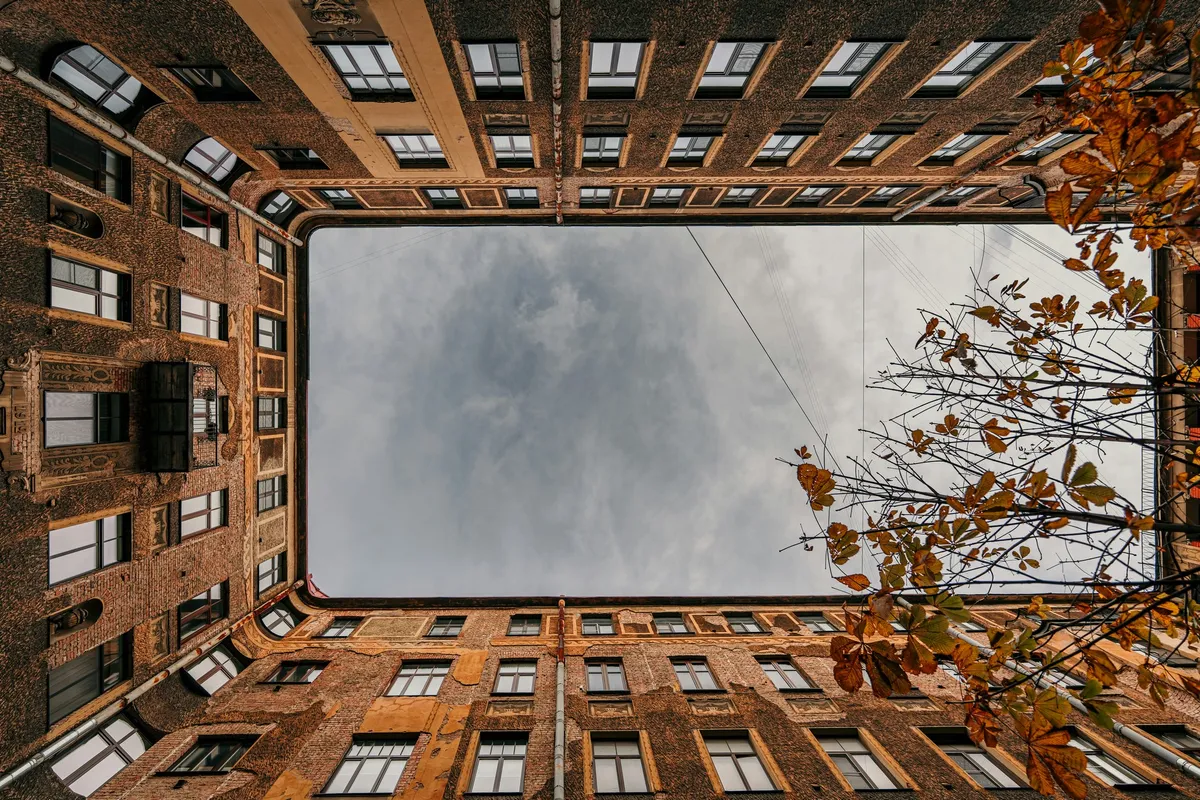
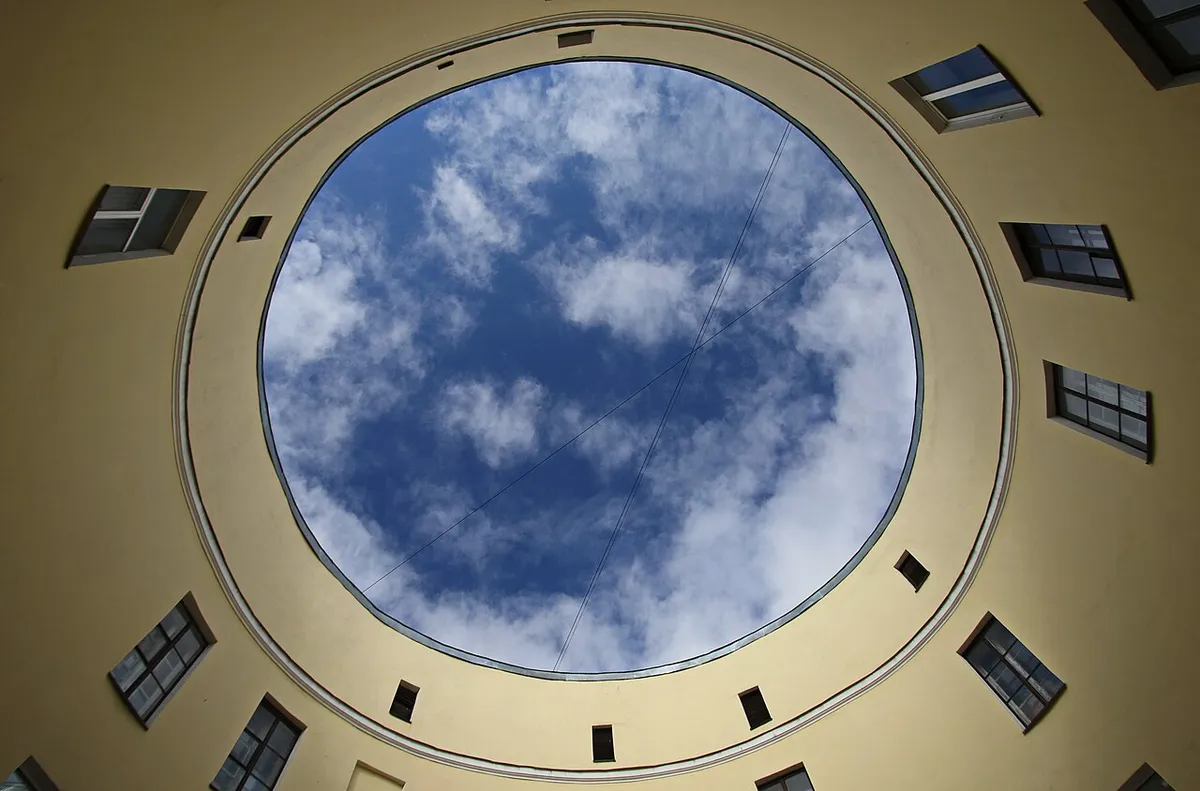
In the courtyard of house 92 on Fontanka Embankment, one of the city's strangest structures is hidden – a perfectly round residential building. It was built in the 1820s to maximize the use of a small plot of land without depriving residents of sunlight. If you go to the center of the circle and look up, you will see the sky enclosed in a perfect geometric circle. The acoustics here are incredible: even a quiet conversation in the center of the courtyard can be heard on the upper floors, so be polite and observe silence.
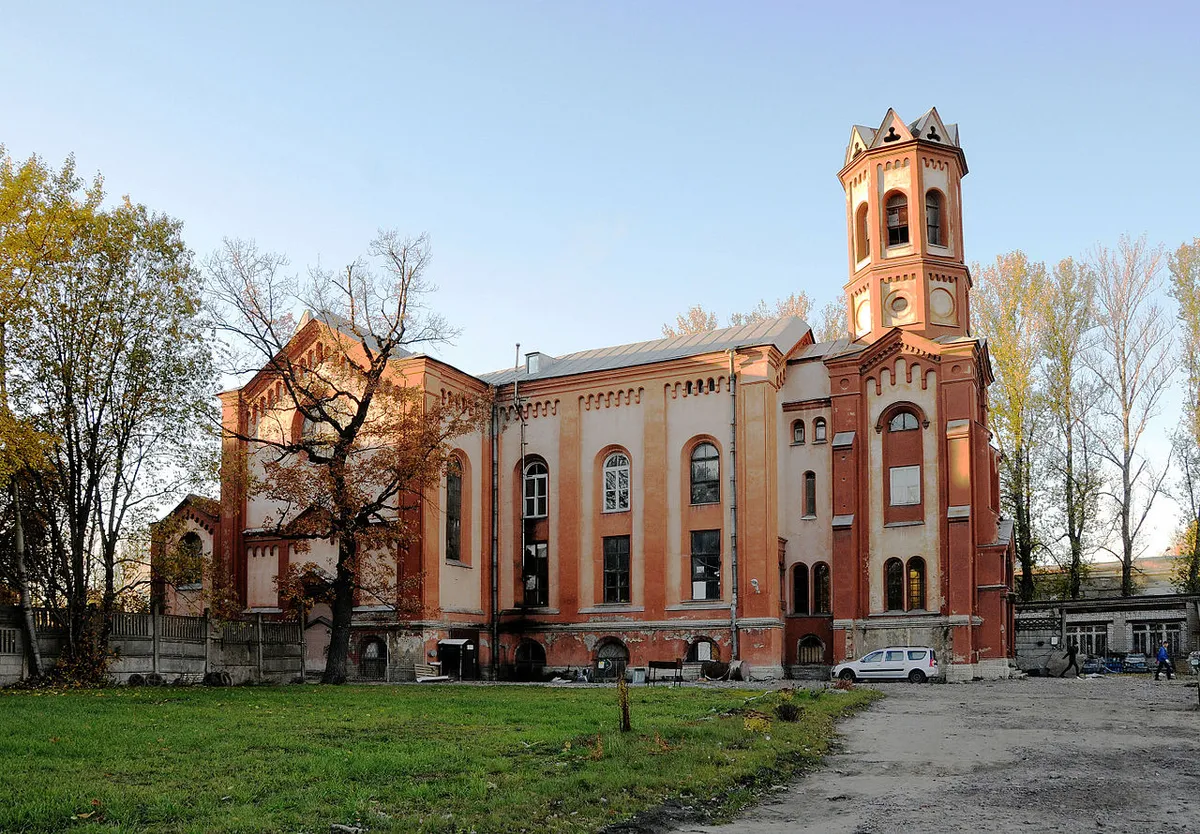
Church of the Visitation of the Blessed Virgin Mary to Elizabeth
Cross the Neva River via Liteyny Bridge and head to the Vyborg Side. Here, on Mineralnaya Street, stands an amazing building that you would least expect to find surrounded by factories and railways. This Neo-Gothic Catholic church with a tall bell tower looks like a set for a European film. It was built on the site of a former Catholic cemetery. Now almost nothing remains of the tombstones, but the building itself and the atmosphere of desolation around it create a powerful melancholic image, completely atypical for a tourist center.
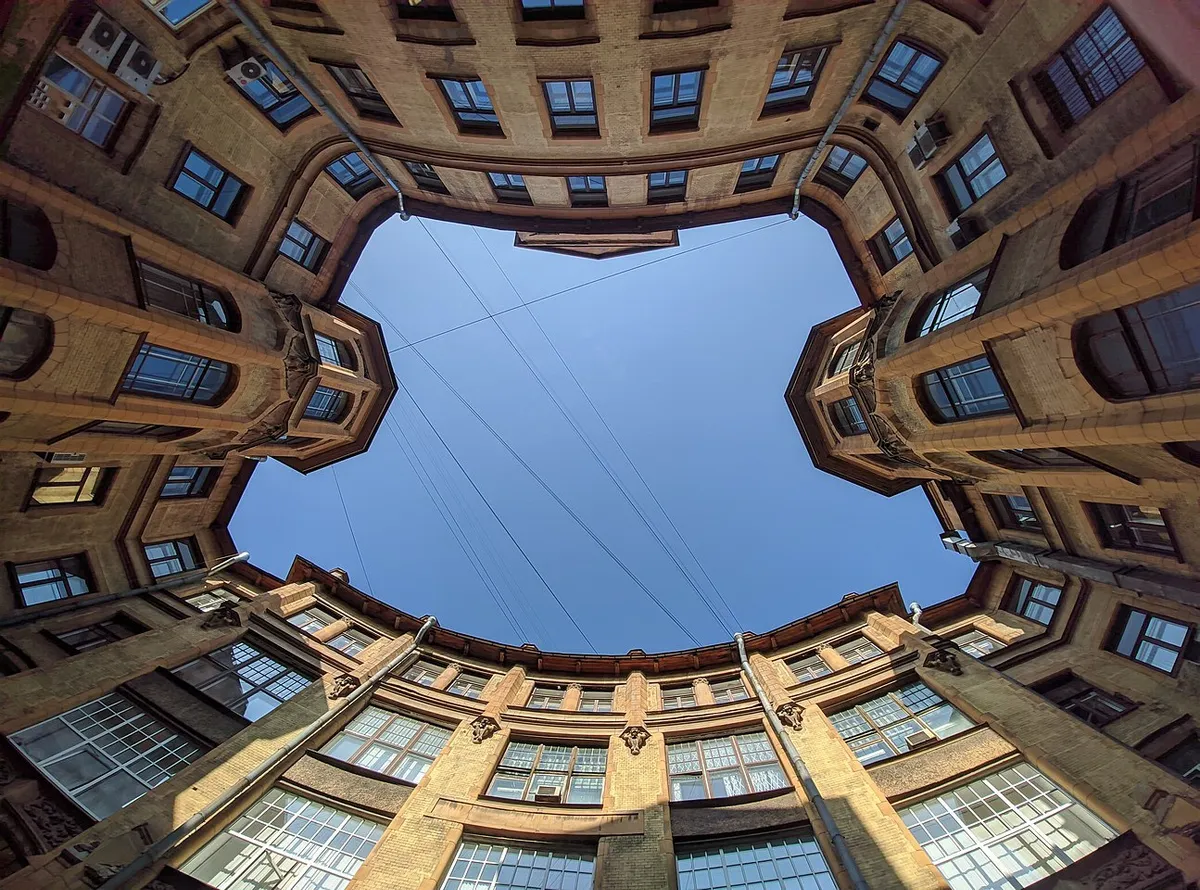
House of City Institutions
At the intersection of Sadovaya Street and Voznesensky Prospekt stands a monumental building whose facade can be studied for hours. This is a masterpiece of St. Petersburg Art Nouveau, adorned with figures of owls, gargoyles, and chimeras. The house was conceived as a multifunctional center of the early 20th century: it housed shops, an orphanage court, and a fire station. If you peek into the grand entrances (the method is still the same – wait), you can see forged staircases and huge stained-glass windows that still let in the soft, 'dusty' light characteristic of old St. Petersburg.
Kotlov's Mansion on Torez
Let's go to Ploshchad Muzhestva! Not far from this, decidedly non-touristy metro station, there is a small castle. With its crenellated tower and asymmetrical windows, it stands out brightly against the Soviet-era buildings of the Vyborg Side. Built in the Northern Art Nouveau style for the merchant Kotlov, it resembles a miniature medieval fortress. The building is shrouded in urban legends and remained derelict for a long time, which only added to its mystical charm. Its architectural forms seem strange and 'incorrect,' so fans of everything unusual – this is the place for you.
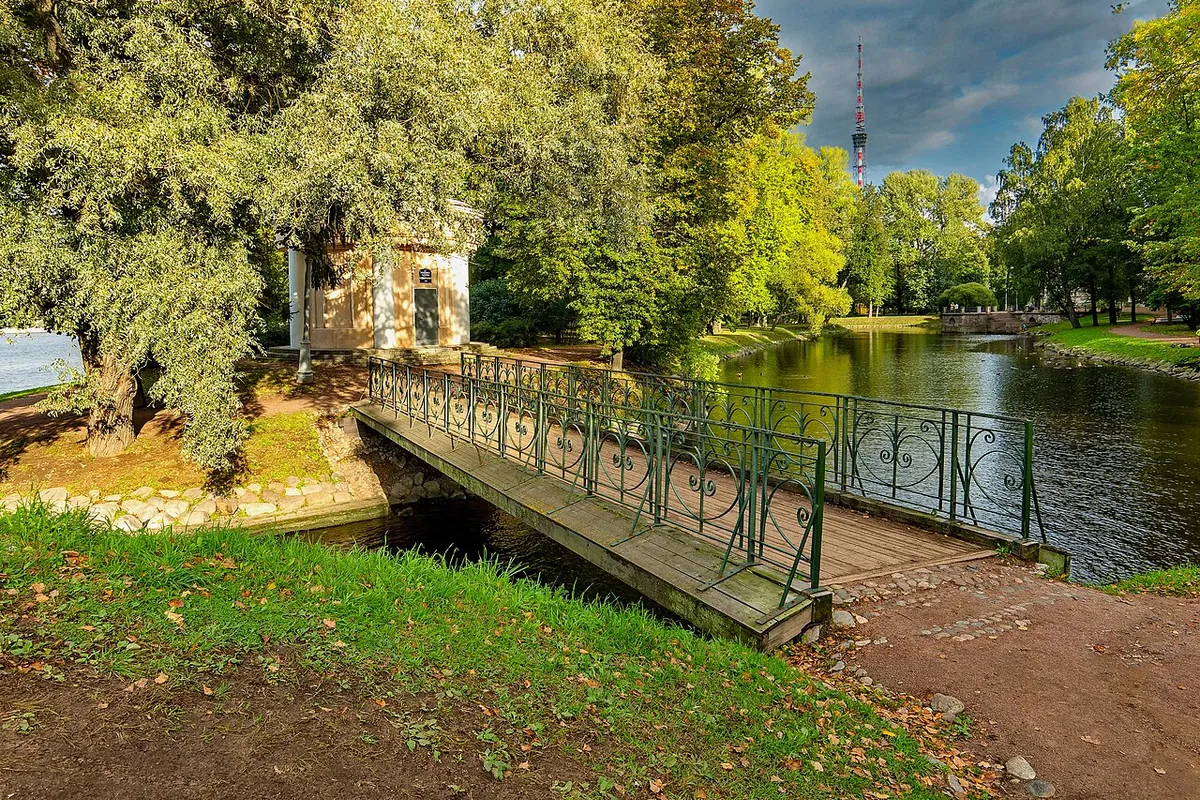
Lopukhinsky Garden and Gromov's Dacha
On the Petrograd Side, there is a place where stony St. Petersburg suddenly transforms into a cozy dacha suburb. In the Lopukhinsky Garden, a rare wooden estate has been preserved – the dacha of the patron Gromov. The building with carved platbands and elegant verandas miraculously survived fires and wars. Around it stretches a quiet park with humpbacked bridges and ponds, where you can feed ducks in absolute tranquility. An ideal location for those who want to see what the banks of St. Petersburg's rivers looked like before they were encased in granite.
Waiting Halls of Vitebsky Railway Station
Vitebsky Railway Station is a portal to the beginning of the last century, but the most interesting things are hidden not on the platforms, but in the waiting halls on the second floor. Authentic Art Nouveau interiors have been preserved here: carved wooden panels, huge mirrors, antique clocks, and wrought-iron lamps. This space looks like a set for a historical novel. You can simply sit on an oak bench, look at the stained-glass windows, and listen to the echoing footsteps under the high arches, imagining yourself as a traveler from the previous century in a bowler hat and with a cane. And you will easily feel like a time traveler anyway.