How to choose a suitcase
Choosing a travel suitcase is not an easy task, especially if you're traveling for the first time. It's a lot of hassle, and your head is already splitting with questions: how to choose a suitcase? what to pay attention to? which one is best? Stop worrying! Let's figure out together, which suitcase is best to buy for air travel.

Size
Yes, we're starting with the main points, as this criterion is indeed very important. Don't worry, it's quite simple here.
- Size S (50–55 cm in height). This will be a good fit if you prefer to travel light: you'll be able to take all the essentials. However, there will likely be no room left for souvenirs. One of the advantages is that such a suitcase usually complies with carry-on baggage regulations, allowing you to take it with you on the plane.
- Size M (55–68 cm in height). An excellent option for a one-to-two-week trip. You can pack enough clothes in it to stage an entire fashion show. And there will even be room for magnets. However, you can only go wild like this if you're vacationing alone (as sad as that may sound). Still, if you're traveling with someone, grab a small suitcase or bag. This will significantly simplify things.
- Size L (68–81 cm in height). Imagine a family vacation for a whole month… Did we guess your wish? Then congratulations: an L-sized suitcase is the ideal option. It will fit everything – from everyday items to bulky equipment. Perhaps only for tasks left for tomorrow, there won't be enough space.
However, be careful: each airline sets different baggage allowance rules (by the way, we previously discussed in the blog what baggage rules exist on a plane and if there is an extra charge for baggage at the airport), so double-check the official websites before purchasing. Just in case.
Material
Choose your travel companion from any material comfortable for you. What kind of suitcases aren't made these days: leather, fabric, plastic, perhaps only metal ones are missing. Oh, wait…
- Plastic. Excellent protection against external damage and moisture. And thanks to the rigid shell, which prevents the surface from bending, all fragile items will be safe and sound. Such a suitcase is easy to care for: just wipe it with a damp cloth.
- Fabric. Lightweight, durable, and most importantly, inexpensive. Quality varies, but we recommend looking at suitcases made of fabric with water-resistant impregnation and damage resistance. It will last longer. By the way, the side pockets of such a suitcase will significantly increase its capacity.
- Leather. Among the most expensive, and also demanding in terms of care. Scratches and other visible signs of damage quickly appear on them. A special cover is essential. However, such a suitcase looks incredibly presentable.
- Metal. Yes, they exist! However, they are less common and expensive. They are resistant to impacts, fire, damage, and rust. A kind of safe, you could say. Too bad it doesn't have a password.

Wheels
A suitcase with two wheels or four – that is the question. Or maybe it's better to have none at all for air travel? Let's figure it out.
A four-wheeled suitcase is easy to roll alongside you; it's more stable and durable. However, uneven surfaces and bad weather will be real challenges for such a suitcase. And your desire to tilt such a structure onto its side, turning it into a two-wheeled one, could even lead to breakage.
A two-wheeled suitcase cannot be rolled alongside you – only behind. A two-wheeled suitcase handles challenges like sand, cobblestones, and wet snow (wherever you walk) admirably, as the contact area is much smaller.
Plastic is not the most durable material. When choosing, we advise paying attention to polyurethane wheels, similar to rollerblade wheels. This material is considered quite durable and quiet. There are also wheels with bearings. They provide smoother movement of the suitcase and are mainly found on two-wheeled models.
And one more important detail: the clearance between the suitcase body and the ground — if it's small, the bottom will get scratched. For a plastic suitcase, this isn't too critical, but a fabric one might tear.
Zippers and Locks
Those very zippers and locks that guarantee the safety of your belongings in the suitcase.
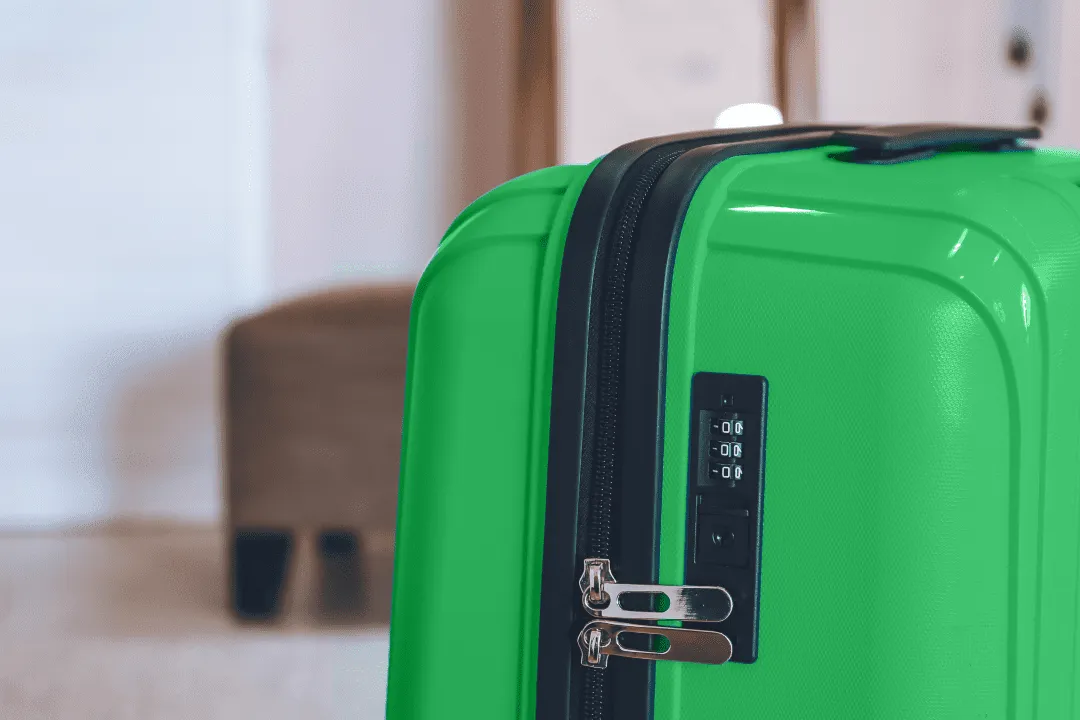
A plastic zipper is most common, but metal ones also exist. We recommend opting for the latter, again for reasons of greater durability. It's convenient if the suitcase can be zipped from both sides – this will significantly ease packing.
There are also 'anti-vandal' zippers. They prevent the suitcase from being opened with sharp objects due to a series of double teeth. In some cases, such zippers are even equipped with an additional lock. Visually, it's impossible to distinguish a regular zipper from an anti-vandal one, and only you will know this little secret.
So, what about the locks?
They may come included, but travelers usually buy them separately. There are combination locks with digital codes and padlocks with a cherished key. All locks suitable for air travel are marked with a special red diamond icon.
And again, we can't do without innovations. There are variations of the TSA combination lock with a customs inspection function, which can only be opened with a special key.
Handles
There are two types of handles: one built into the suitcase and a telescopic one that extends from the body. Note that the latter must fully retract into the body and be fixed in that position, otherwise it will easily break.
Accessories
You can customize your suitcase in various ways — from stickers and keychains to bright designer colors. It's all up to you! But now we'll talk about more practical and functional accessories that can help you in the future.
- Removable cover. Primarily protects against damage. If the cover is also colorful, it makes finding the suitcase at baggage claim easier.
- Stickers/keychains with owner's name. In case of lost luggage, small and distinctive keychains can help find ways to contact you.
- Compression strap. It will prevent the suitcase from accidentally opening during transport and eliminate the need to wrap luggage in film. This will significantly save time.
Price
Directly depends on the brand, size, material, wheels… In short, everything we listed above.
Fabric suitcases can be found starting from 2,000 rubles, while a good plastic one starts from 3,000–4,000 rubles. The price of metal suitcases is the same as plastic ones, and leather ones start from 5,000 rubles.
Tips
- Color. There are no restrictions – you can run to the store right now and choose any color you like best. But first, let us share a secret: among 50 shades of black, it will be much easier to spot a vibrant green or red suitcase. If you still want a total black case, consider a colorful cover. We're not kidding, it really helps make finding your luggage at baggage claim easier.
- Interior space. In short — it comes in two types: with fastening straps and with dividers. Which option is better is up to you. On the one hand, dividing pockets help sort things, but on the other hand, packing something larger will be difficult.
In general, which suitcase to choose for air travel is entirely up to you. Perhaps a carry-on bag will be enough for your needs? This question should be approached thoughtfully: make a choice towards quality, not a low price. By the way, in our blog, we talked about how to compactly pack things in a suitcase. This is just the next step towards your cherished vacation.
We wish you great travels and the lightest suitcases, even in size L!