How to move to Serbia?
We understand your concerns and are launching a new section 'Let's get out of ̶o̶n̶ ̶v̶a̶c̶a̶t̶i̶o̶n̶'!
In it, members of the Kupi.com team and their friends will share personal experiences of relocating to other countries. The first guide is about Serbia! Lots of letters, but all useful: residence permit, prices, housing, transport, and local schools.
Spoiler: in Serbia, everyone is kind, portions are huge, it's inexpensive, and they love children very much.
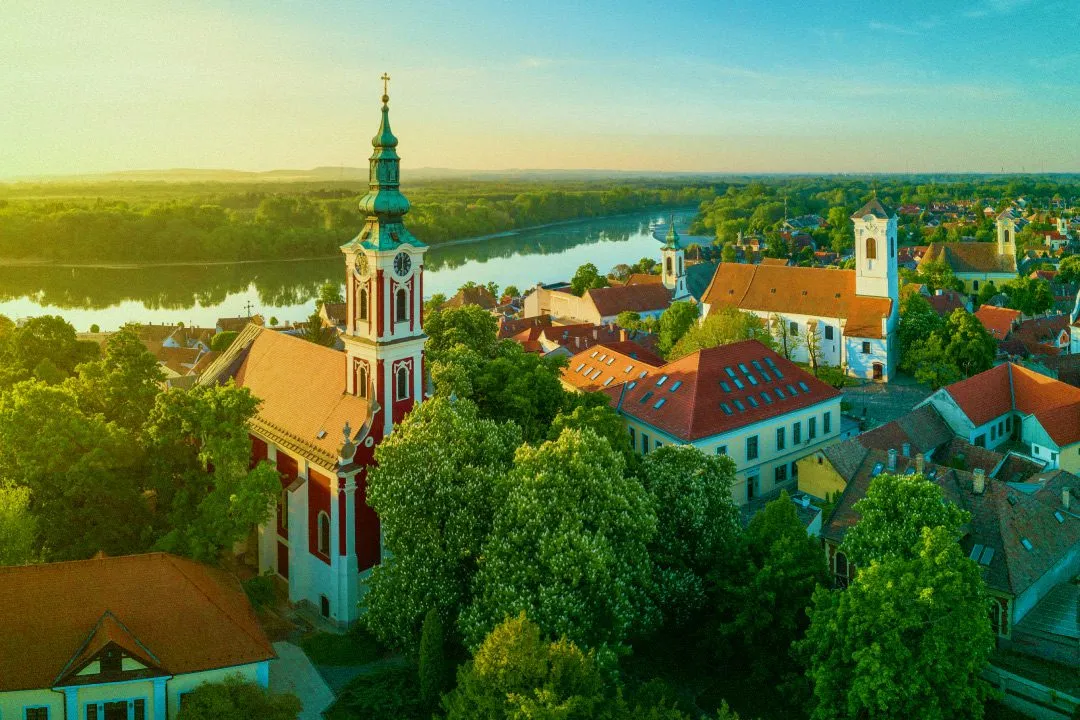
Hi! My name is Anton, and at Kupi.com, I'm a backend Ruby developer. I make sure that every time you buy a ticket, make a payment, choose a seat on a plane, write to support, or process a refund, everything works flawlessly.
Why Serbia?
My wife, daughter, and I moved to Serbia in June 2022. Before that, I had lived my entire life in St. Petersburg. Currently, it's one of the few countries where it's relatively easy to move and where people have a good attitude towards Russians. It's also much easier for a Russian person to learn Serbian than, for example, Turkish. My daughter attends school here, and the speed of language acquisition was one of the top factors.
Yes, another reason to move to Serbia is the exceptional attitude towards children and, in principle, a safe environment. The choice was also influenced by the fact that it's quite easy to obtain a residence permit here by opening a legal entity (more on that later). This means that after five years of residence, you can apply for permanent residency and a Serbian passport, which offers obvious advantages: unhindered entry to the EU and the opportunity for my daughter to receive a university education in any country. Plus, there's a great climate, beautiful nature, delicious food, and simply wonderful people.
No exaggeration: I haven't met so many responsive and welcoming people in a long time.
What about money?
The local currency is the Serbian Dinar. The exchange rate is ~2 dinars per ruble, 117 dinars per euro. The average salary here is 800 euros. Electronics cost about the same as in Russia before February 24.
But in many ways, it's actually cheaper here.
Price range (for convenience — in rubles):
- latte — from 70 to 110 rubles;
- bus fare — 32 rubles;
- one hour of parking in the city center — 22 rubles (Muscovites, how do you feel?:);
- a kilo of beef — ~ 500-600 rubles;
- in summer, a kilo of cherries/raspberries — 150 rubles;
- a very (!) hearty dinner for three at a restaurant — 2500 rubles.
Yes, portions here are 2-3 times larger than in St. Petersburg. There's no point in ordering too much: you won't manage it alone.
UnionPay cards work. You can't pay with them everywhere, but you can withdraw cash dinars from many ATMs.
Belgrade VS Novi Sad
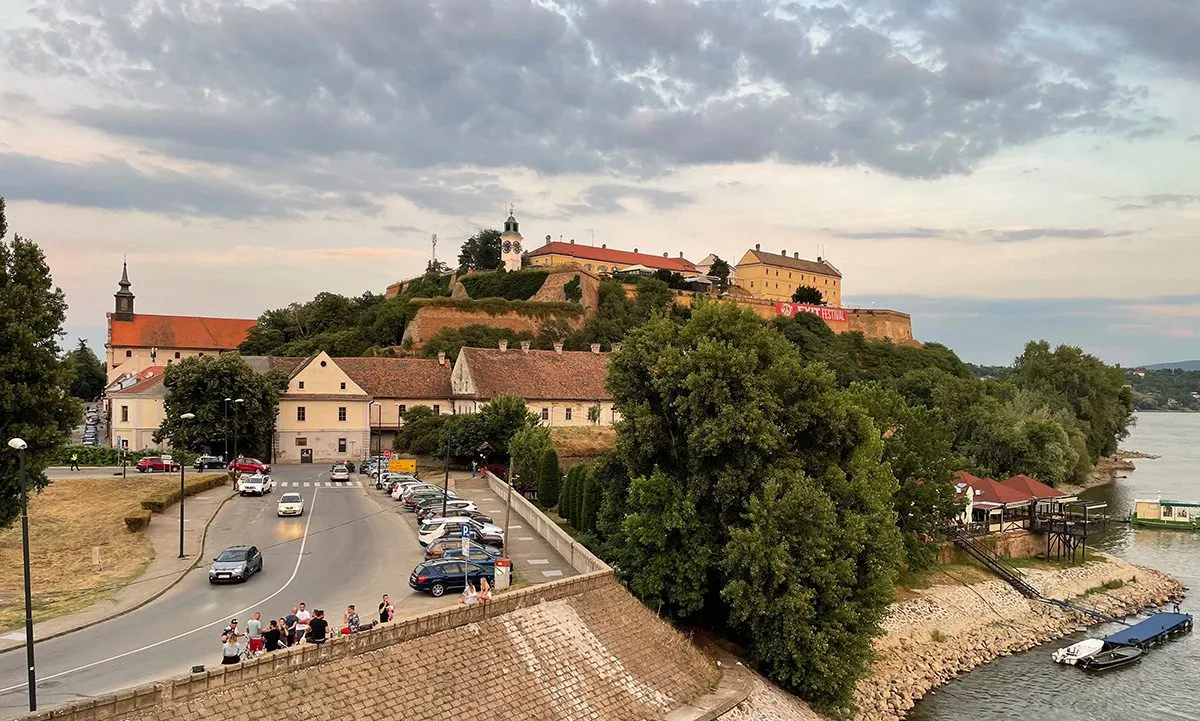
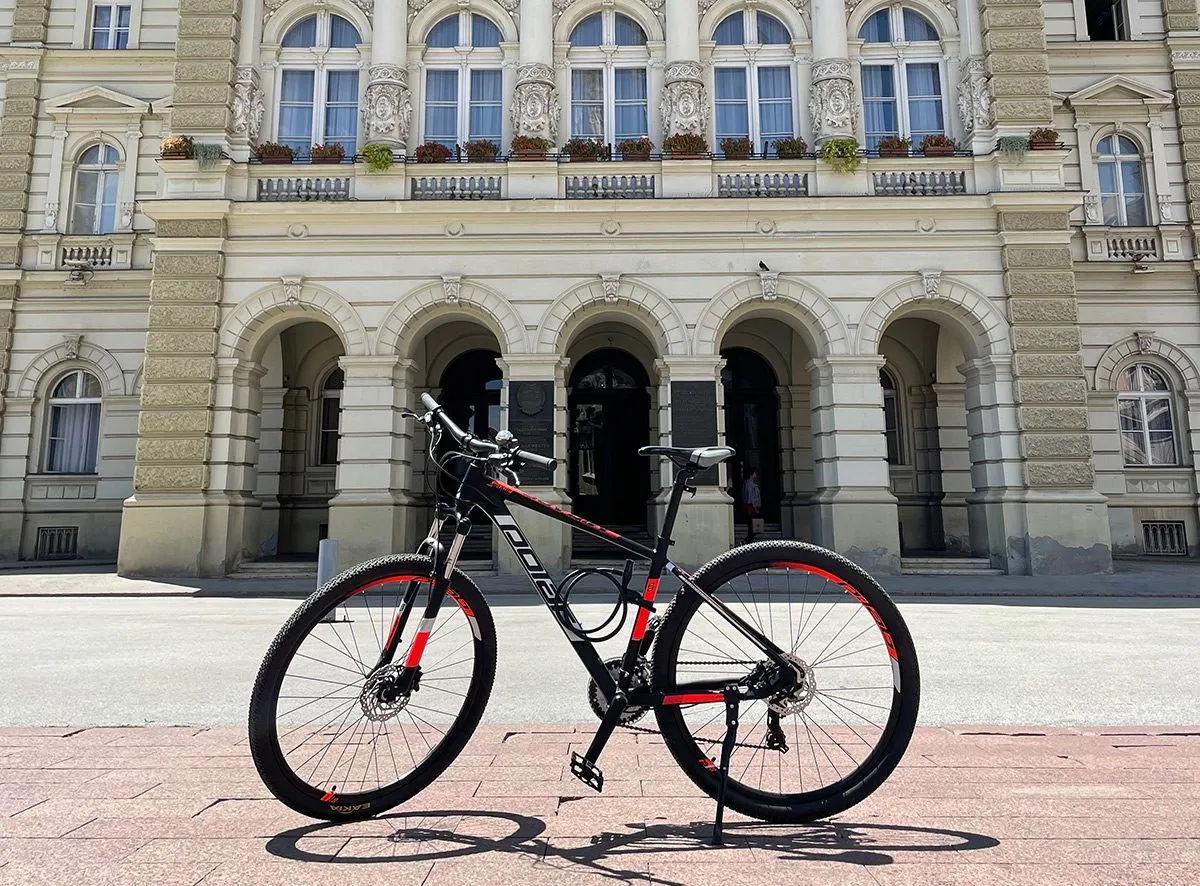
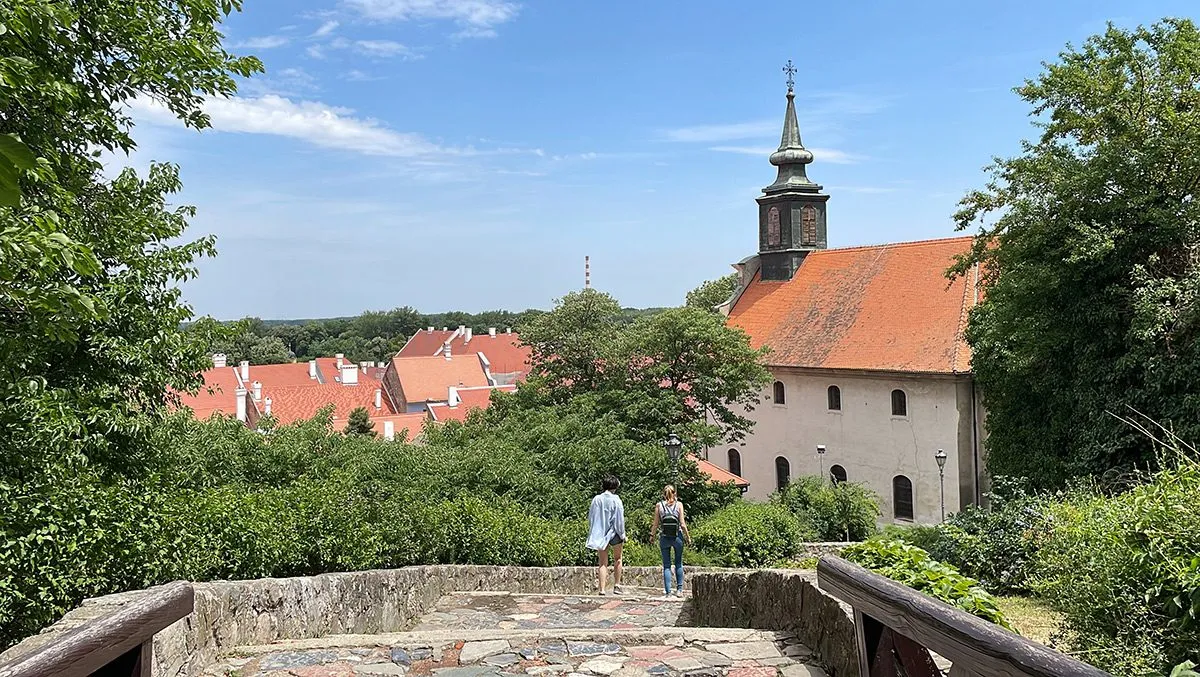
I live in Novi Sad. If we draw familiar analogies, Novi Sad (hereinafter — NS) is like St. Petersburg, and Belgrade (hereinafter — BG) is like Moscow. I prefer Novi Sad. It's the second-largest city in the country, a cultural capital, with many universities. Novi Sad also has the best cycling infrastructure in Serbia — dedicated bike lanes run parallel to almost all streets in the city. And Novi Sad itself differs from Serbia to the same extent that St. Petersburg differs from Russia. I would say it's the least Serbian city. For almost its entire history, it was under Austro-Hungarian protectorate, which influenced its architecture and the European mentality of its residents.
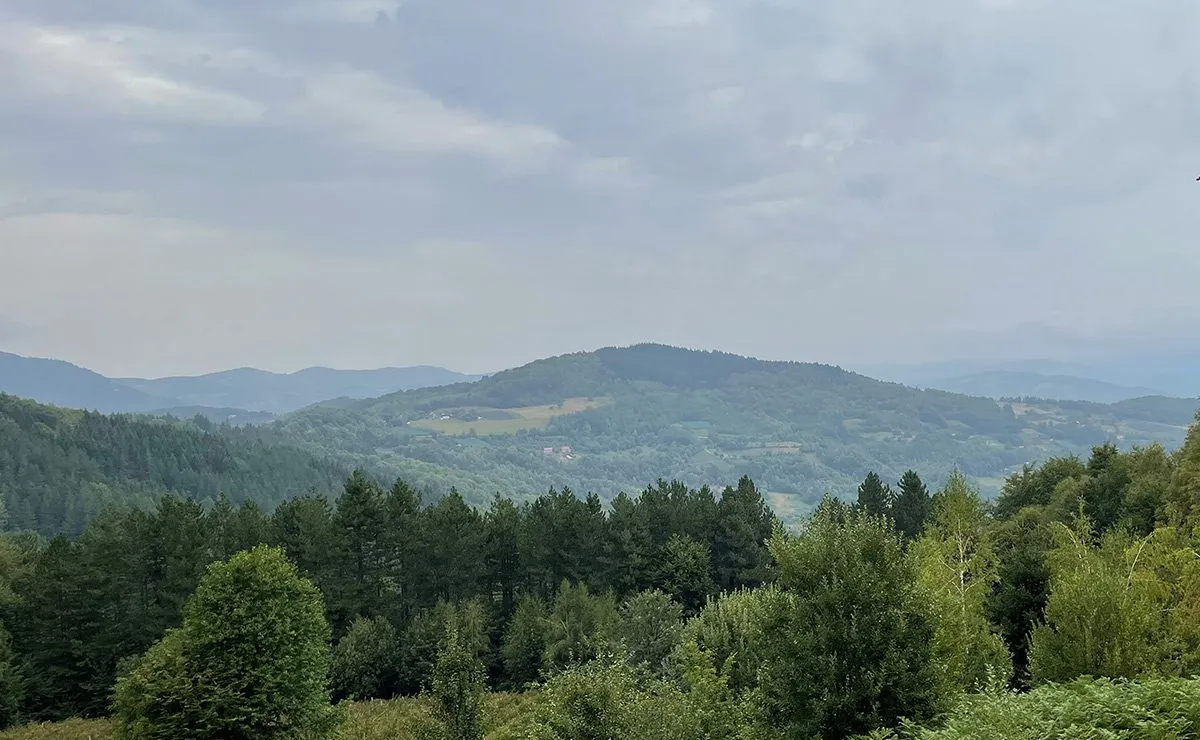
By the way, there's a high-speed train running between Novi Sad and Belgrade. The journey from city center to city center takes 30 minutes and costs around 200 rubles. In St. Petersburg, my commute to work took twice as long! :) Generally, Serbia has quite diverse nature. You can go to the mountains on the border with Montenegro or to vineyards not far from Novi Sad. There are also mountain resorts and spa hotels with natural hot springs.
About difficulties
The main difficulty is getting used to a different mentality. Serbs genuinely want to help; they are very sincere, welcoming, and open people, but they simply don't understand why you're always rushing or want to do something quickly. There's an important Serbian word — polako. It means 'relax, don't rush, enjoy life because we only live once, don't fuss.' You quickly get used to this and start planning your actions taking into account this Serbian specificity, and everything becomes good.
Transport
In Belgrade, in addition to buses, there is a developed tram network, and also two metro stations, which are completely useless. Buses run between cities, and a network of high-speed highways is actively being developed and built. Also, BG and NS are now connected by a high-speed train line. This line is planned to be extended to Budapest in the coming years, so a trip from BG or NS to Budapest will take 4-6 hours. In Novi Sad, public transport consists only of buses. Personally, I mostly get around the city either on foot or by bicycle. You can also rent or buy a car. From a recent example: I rented a new Opel Corsa for two days for 4,000 rubles. Gasoline costs about twice as much as in St. Petersburg, about 100 rubles per liter of 95-octane. Used cars themselves are cheaper. At the current euro exchange rate, you can buy an Audi A4 (automatic, 2011-2013, good trim) for 400-600 thousand rubles. An Alfa Romeo 159 of similar trim and year costs about 300-350.
And a little more about children
In Serbia, there's a cult of children. It's hard to explain, you have to see it. All children are accepted into school, always, regardless of whether you have a residence permit or not, or whether the child knows the language or not. To enroll children, take the child's personal file from their Russian school. The personal file will need to be submitted to the Agency for qualification, pay a fee of 3000 dinars, and receive a document stating that the child can receive an education. From my impressions: the teachers are wonderful, very kind and responsive. Children at school are friendly and support each other. This is almost independent of the school.
The Agency is something like a department of the Ministry of Education, where they decide which grade the child will study in. They review the personal file, grades, and decide which grade in Serbia the child can enter. Usually, they are placed in the same grade as they would have been in Russia, but you can ask for the child to repeat the last grade to improve their Serbian language skills and adapt to a familiar curriculum. School programs are generally similar.
Mobile communication
Any operator — MTS, A1, Yettel — has tariffs for non-residents. It's all simple here. Come to a salon, and depending on the operator, you'll get a SIM card either for free or for 100-200 dinars. Communication will cost approximately 1,000 rubles per month.
Internet for the apartment
You can sign a contract with only your foreign passport and rental agreement. The two largest operators are SBB and MTS. I would recommend SBB. They can connect you on the very same day. They are the most clear and fastest.
On average, internet will cost you from 1000 to 2000 rubles.
Useful applications
- Food delivery — Glovo and Wolt;
- Taxi — YandexGO and CarGo;
- Routes and public transport — Moovit;
- Train/electric train schedules and ticket purchase — Srbija voz.
About the community
In Serbia, there is a large and friendly Russian community that is always ready to help with advice or information. There are chats for all occasions: from a general chat about everything, including finding Russian-speaking doctors and even psychiatrists in Serbia, to parent chats, car enthusiast chats, football players, cyclists, and even, God forbid, table tennis enthusiasts. Many also gather on weekends: they hike along pedestrian tourist trails in the mountains near NS.
About leisure: night bazaars, fairs, concerts, discos, and completely different activities for every taste. There are Russian-language channels on Telegram with announcements of such events. In general, you won't be left without support or information here.
TG channels of the Russian-speaking community in Serbia
- General channel in Novi Sad;
- Channel with information about sole proprietorships and taxes;
- Channel with all information about Serbia;
- Learning Serbian;
- Russian-speaking doctors in Serbia.
Is my English enough?
English is known quite well here; the average proficiency level is higher than in Russia. There are many language courses for immigrants, and all are good.
Immediately, without training, you will understand something on signs, and perhaps one-fifth of what is said to you slowly. So, learning the language will be easier than, say, German or Hungarian. After a few months of living here, your language level will reach a minimal proficiency: you'll be able to communicate in markets, shops, hairdressers, and even sometimes on the phone when you need to order something or make a call. Serbs, like everyone, appreciate it when you try to speak their language. Even if it's not perfect. Their attitude towards you immediately becomes 200% better.
About medicine
I haven't personally encountered it, but in general, it exists. There are many private clinics and insurance companies for voluntary health insurance (worth getting). Ambulances only respond to life-threatening cases. If it's just a high fever, cough, etc., then we take antipyretics, call a taxi, and go to the doctor ourselves. But I saw a man fall ill on the street, and the ambulance arrived in literally 7-10 minutes. According to local reviews, everything is ambiguous, just like with us: some say that public healthcare is so-so and to go to private clinics, while others say everything is fine.
Now about documents
How to move to Serbia? Quite easily. You can leave without a visa with a Russian foreign passport and stay here peacefully for 30 days. Then there are two options:
- Visa run — a trip to the nearest border
You leave Serbia, cross into no-man's land, drink coffee, return, and you have another 30 days in Serbia. Some people live like this for years; it's a legal method. There are even transport services to the border and back: it costs about a thousand rubles per person.
- Residence Permit — residence permit
Actually, it's quite simple. We got everything done in three weeks: we didn't even have to do a visa run! At the same time, I was enrolling my daughter in school.
How to get a residence permit in Serbia?
To do this, you need to register as a sole proprietor, open a personal bank account, and rent an apartment long-term.
Stage I: Registering as a Sole Proprietor
For a sole proprietorship, you need:
— local registration (called 'white card'). This is arranged for you by the owner of the apartment / hotel you are renting. It's done for free in 30 minutes;
— foreign passport;
— paid fee (~1500 to 3000 dinars).
Opening a sole proprietorship takes 3 to 7 business days.
For a sole proprietorship, you apply to the local tax office (poreska uprava), but in Serbia, there are experienced Russian-speaking accountants who can handle all the documents turnkey for 100 euros.
Mostly everyone chooses the lump-sum (patent) tax system. This means you simply pay a fixed amount once a month. The tax amount depends on the type of activity. On average, the tax can range from 50 euros to 400. This is probably the highest tax, and it was specifically applied to programmers; for others, it's less.
Stage II: Opening a personal bank account
According to the latest data, the following banks are currently opening accounts:
Poštanska Banka, Expo Banka, and Alta Banka.
Here is the maximum package of documents that may be requested for an account (they may not ask for all of them):
— 'white card' (mandatory);
— foreign passport (mandatory);
— employment contract with the employer (a regular contract in Russian with our company was sufficient);
— bank statements from accounts in Russia and, possibly, transactions for the last few months (done in the banking app);
— 2-NDFL (income statement) in Russian: can be ordered on Gosuslugi or requested at work.
All these documents can be sent electronically to the bank manager's email. They will accept your documents and may send a decision on opening an account by email or call you by phone.
Timeline: from ten minutes to five days.
Yes, there is bureaucracy in Serbia too, but it differs from ours. Here, they genuinely try to help you, and even if you lack some documents, they will accept what you have and tell you to bring the missing ones within a few days.
Stage III: Renting an apartment
Long-term apartment rental in Serbia is required to obtain a residence permit.
In Novi Sad, where I live, one-bedroom apartments start from 200-250 euros per month. In Belgrade, it's more expensive.
Searching for an apartment before moving is completely useless.
Apartments are rented out quickly, and there's no point in relying on ads older than three days. However, I found an apartment myself in four days. New options appear constantly. You can browse real estate websites beforehand — just to get an idea of the situation.
For example:
https://www.oglasi.rs/nekretnine
Note that when signing the contract, you pay a deposit equal to one month's rent and 50% of one month's rent to the realtor.
That is, if an apartment costs 300 euros, you immediately need to pay 750 euros. Then you pay for the apartment every month, and that's it.
Stage IV: Getting registered
So, you have a sole proprietorship, a long-term rental agreement, and 2000 euros in your account (per person). You can submit documents for a residence permit!
The same accountant mentioned above can fill everything out for you. The cost of the service is around 50 euros per person.
Here is a list of documents required for a residence permit:
— completed application form for residence permit approval;
— passport-sized photo 3.5*4.5;
— personal biography in Serbian: briefly describe who you are, where and when you graduated from university, why you came to Serbia;
*I wrote general information: born on such and such a date and place, parents worked/work as such, have siblings, they work as such. Studied at such and such a school, was interested in such and such. Graduated, entered such and such an institute, graduated then. Worked there and as such, got married. Wife works there and as such. If there are children, then two or three words about the children. Moved because I like the country, wonderful people, delicious food, great climate, excellent opportunities for children's education. I would not recommend writing about political views. Biographies are read primarily by a person, and who knows what views they have.
— copy of the main page of the foreign passport (where the photo is);
— copy of the foreign passport page with the last entry stamp;
— 'white card' (copy);
— company registration decision from the registration chamber (copy);
— registration confirmation (PIB) (copy);
*PIB is something like our TIN.
— confirmation of opening an account in a Serbian bank and availability of funds;
— apartment rental agreement (copy) and copy of the owner's personal ID card;
— insurance (everyone usually goes to Dunav Osiguranje, as it's one of the cheapest insurances. The most basic one costs ~8000 dinars);
— administrative fees (about 19111 dinars).
After paying the fees and filling out the documents, you submit them for a residence permit.
And a small note: after obtaining a residence permit based on a sole proprietorship, you need to get a work permit (radnu dozvolu). The same accountant can arrange it. You only need to pay the fee (15,000 dinars for it). Documents required: school certificate or diploma translated into Serbian. After obtaining the work permit, you can apply for inclusion in the state health insurance program, and then state medicine will be free.
I haven't yet encountered cases of residence permit rejections if everything is processed according to the rules.
So — polako!
How to fly to Serbia right now?