How to organize a safari trip to Africa
If you've firmly decided to «Let's fly to Africa!», then a safari is a must. There are many options on the continent where you can go to see lions, rhinos, antelopes, and even pink flamingos.
All in all, this material is our guide to safari tours in Africa. Let's go!

Where to go on safari

Kenya
Let's start from the middle — the middle of the Earth. By purchasing tickets for the Moscow — Nairobi route, you will fulfill your secret (or not so secret) dream — to be on the equator.
However, this same factor influences an important travel factor — the weather. It's best to come to Kenya for a safari in late winter and early spring, during the dry season. At this time, many bird species migrate, which in itself is already a captivating sight. But not only in winter: tourists also come here in summer to gaze at the animals. The Indian Ocean acts as the country's «air conditioner», and for this reason, air temperatures rarely rise above +30 degrees Celsius here (though there are exceptions).

Where to go?
- Turkana, the saltiest lake on the continent. This location in northern Kenya is considered one of the hottest, so we don't recommend rushing there in an SUV during periods of excessively active sun (roughly from 10 AM to 4 PM). Most often, tourists are drawn by flamingos enjoying the local summer. But generally, this area is rich in endemic species of plants and animals found nowhere else. Zebras, crocodiles, hippopotamuses, a rare species of giraffe — reticulated, dragonflies of unseen beauty;
- Tsavo National Park. It is considered one of the oldest in Kenya. The national park is divided into East and West; the former is drier, and the latter is greener and more vibrant. We recommend visiting the East to see the red elephants happily wallowing in the mud and to briefly find yourself «on Mars» — the landscapes here are strikingly similar to locations from many beloved sci-fi films. In the West, acacia forests alternate with marshy terrain, and among them roam buffaloes, rhinos, lions, and African wild dogs;
- Maasai Mara National Reserve. Summer is a great reason to visit here to witness the Great Migration of wildebeest. During this time, wildebeest and zebras cross the Mara River from the Serengeti to be closer to the grassy savanna and a stable watering hole. Perhaps this spectacle is not for the faint of heart — at this time, only the strongest individuals survive, those who managed to avoid attacks from crocodiles and other predators.
Tanzania
Slightly to the south, on the other side of the Mara River, lies Tanzania. From the local Serengeti National Park, hoofed animals migrate to find sustenance. If you decide to come here after Maasai Mara, there are other spots definitely worth a separate 4x4 jeep trip. All that's left is to buy tickets to Zanzibar on Kupi.com, and we've already found some great locations!

Where to go?
- Ngorongoro Crater. The first site — and immediately from the UNESCO World Heritage list. Firstly, this volcanic crater is considered the largest and most intact from destruction. Secondly, in addition to the natural landscapes, tourists are amazed by the local nature that has «grown» on the fertile volcanic soil. Lions, caracals, herds of elephants graze here, and buffaloes cautiously rest at the watering hole. We highly recommend allocating at least a couple of days for this location: you'll need time for a walk around the crater and for studying the flora and fauna;
- Lake Manyara. Manyara gained its popularity, in particular, among «birdwatchers» eager to photograph Tanzanian birds. The lake, like Turkana in Kenya, is alkaline, which has become a magnet for long-legged pink flamingos, pelicans, herons, marabou storks, shovelers, and other beautiful birds. But despite the abundance of winged creatures, other wonderful neighbors have settled in the trees — tree-climbing lions, majestically dangling their paws from strong branches;
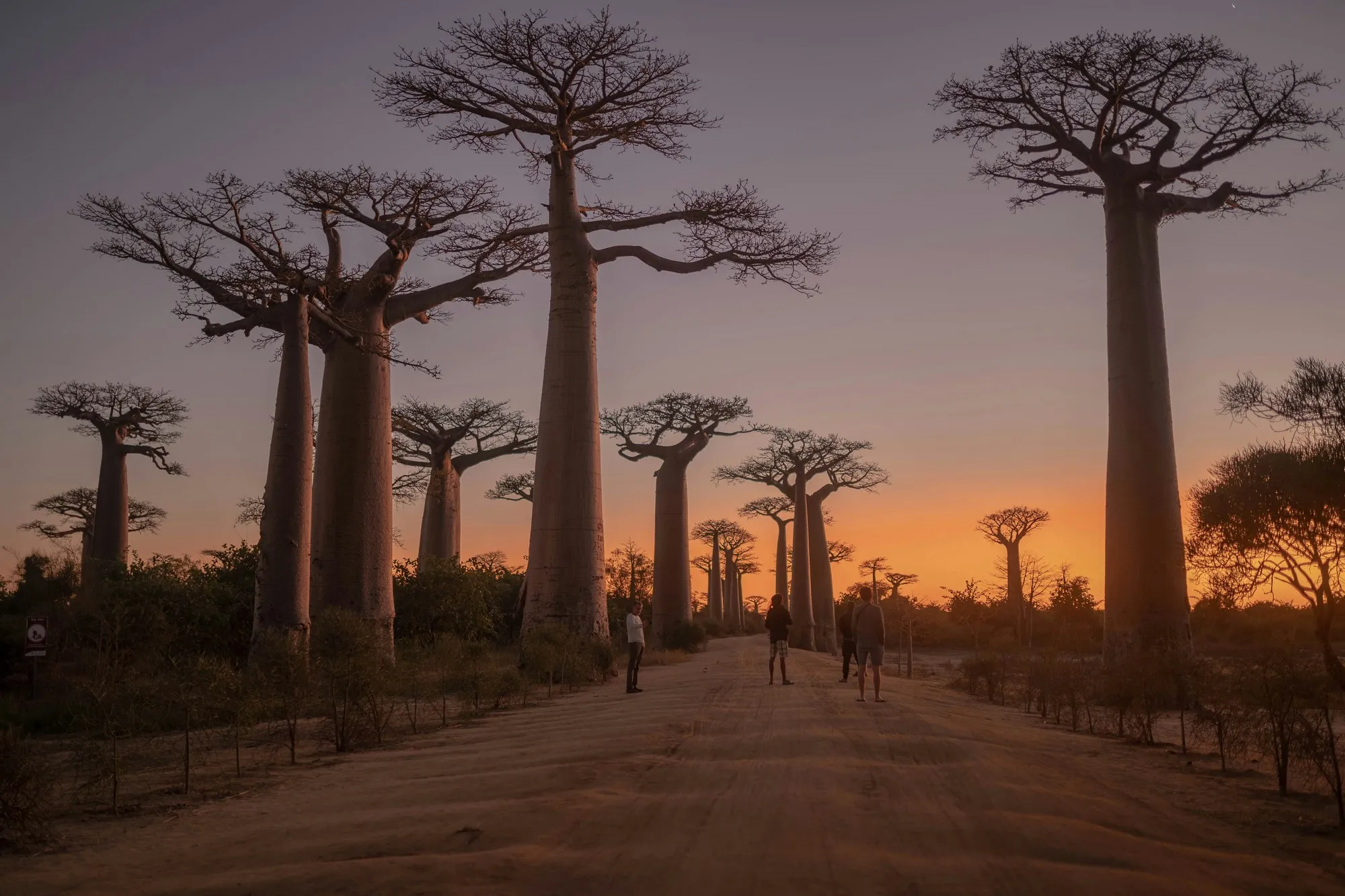
- Tarangire National Park, Lake Manyara's closest neighbor. People come here to see the majestic baobab trees and endless herds of elephants that come to the Tarangire River to drink, breaking a few baobab branches to taste the juicy contents of the wood. But don't worry about the trees — these local «long-livers» can live up to 600 years even with minor damage.
Zimbabwe
Despite being a landlocked country, Zimbabwe boasts an abundance of safari spots. By the way, most of Zimbabwe's national parks are home to Africa's «Big Five»: lion, buffalo, rhino, elephant, and cheetah. Now — to the locations!

Where to go?
- Victoria Falls. Let's start with something important: it's best to visit Victoria Falls during the winter, when the rainy season begins and the water flow increases. Of course, you can come here in the summer to see crocodiles, hippos, and warthogs, but the effect of the Zambezi River's waters rushing in all directions won't be the same;
- Hwange National Park. Hwange's distinctive feature is the elephants that come to visit from Botswana's Chobe National Park. Tourists note that it's best to come see them between August and November, when animals, tired from the heat, rush to the watering hole and play with each other in the water. It's worth noting that Hwange is one of the best spots for birdwatching. No wonder — there are about 400 species of birds living here;
- Matobo National Park. It is considered the oldest in Zimbabwe — founded in 1926. Black eagles, ostriches, hyraxes, rhinos — these are, of course, included in the trip. However, we advise paying attention not only to the flora and fauna but also to the park's landscapes and its history. Due to the weathering of granite rocks, the park's territory has acquired practically fantastic forms with hills, caves, and valleys. The Matobo Hills, by the way, are a UNESCO World Heritage site. Upon arrival, you can expect a guide to give you a tour about the Bushmen people who lived here about 2000 years ago. They left behind a huge archaeological monument in the form of rock paintings.
South Africa
The perfect plan: venture so far south that you buy tickets to Cape Town on Kupi.com and find yourself in the Republic of South Africa. Savannas, tropics, deserts — all in one country.

Where to go?
- Kruger National Park. The oldest, most famous, and most impressive in all of South Africa. It's best to go here in winter, otherwise you'll get tired of the heat — summer temperatures here sometimes reach +40 degrees Celsius. Several rivers flow through the park: Sabie, Limpopo, Olifants, which, of course, attracts white hippos, giraffes, lions, and over 100 other mammal species, and more than 500 bird species;
- Table Mountain National Park. Imagine a mountain with no peak. Just a flat mountain. You can ascend to its summit, a plateau, by cable car. And such an unusual location boasts similar natural diversity: hyraxes, caracals, baboons;
- Agulhas National Park. The main feature of Agulhas is Cape Agulhas, which is located at the confluence of the Indian and Atlantic Oceans. The park is quite small — only 210 sq. km, but it will give you impressions for a lifetime. Here live toothy hyraxes, southern right whales, African clawed frogs, and African black oystercatchers. Note: whales come here between August and November.
Namibia
Hop — and you're in southwest Africa, in Namibia. Yes, you probably know about the Namib Desert, but in reality, the country has several climatic zones. This means it's truly a great destination for a safari.

Where to go?
- Etosha National Park. Most often, travelers come to Namibia specifically to visit Etosha National Park. Translated from the Ndonga language, the name means «place where nothing grows». However, despite this name, there is still vegetation characteristic of saline soils: mopane, Etosha grass, Moringa trees. The animal world here remains quite rich — black rhinos, lions, elephants, zebras, shrikes, vultures, and parrots live here. All in all, the wildlife here is very diverse;
- Namib-Naukluft National Park. A cool spot for reptile enthusiasts! So we advise against sticking your head out of the jeep unnecessarily. Geckos and snakes scurry everywhere. But besides these guys, you'll find hyenas, jackals, oryx antelopes, and other endemics that you're unlikely to encounter anywhere else. The landscapes here are truly inspiring — it's no wonder the Namib Desert was included in the UNESCO World Heritage list.
- Erindi Reserve. And if there isn't much vegetation in Etosha, the name «Erindi» translates to «place where there is water». This factor became crucial for various animals to live here: aardvarks, hyenas, and big cats — lions, cheetahs, caracals, and servals. The reserve is private, so research is conducted here, and biodiversity is monitored.
Is a visa required?
- A visa is not required for Kenya, but an electronic travel authorization costing $30 must be obtained. It needs to be acquired 72 hours before arrival;
- A visa is required for entry into Tanzania. Its cost is $50, and it is issued for six months;
- Russians wishing to enter Zimbabwe must obtain a single-entry visa upon arrival. Its cost is $30;
- Russians do not need a visa to visit South Africa and Namibia, if the trip lasts up to 90 days.
How to get there
It will be difficult to get there without transfers. For convenient travel across the continent, it's best to use local airlines. Moving between settlements is easiest with a good old rented car.
Tips for preparing for the trip
- the simplest and most acceptable way is to book a tour. This way you will save time, your nervous system, and you will be next to a guide who will make the trip safer and more interesting;
- before departure, familiarize yourself with the entry rules for countries worldwide, so as not to forget important documents for a great trip;
- research the SUV rental market in advance to book a car and move comfortably around the parks;
- if you are going on safari for the first time, it's better to choose popular African national parks. They offer a more developed environment for «newcomers», safe routes are organized, and there's always an opportunity to join a group excursion;
- take neutral-colored clothing with you on the trip — brown, fawn, khaki. Attracting the attention of wild animals with a red T-shirt is probably unnecessary.
- familiarize yourself in advance with the rules of conduct within specific parks. National parks allow more than reserves, but it's better to understand beforehand which plants are allowed to be touched and which animals absolutely cannot be approached.
Lions for everyone!