Overweight Passengers
The issue of overweight passengers is quite often raised both in forums and among carriers, sparking many heated discussions.
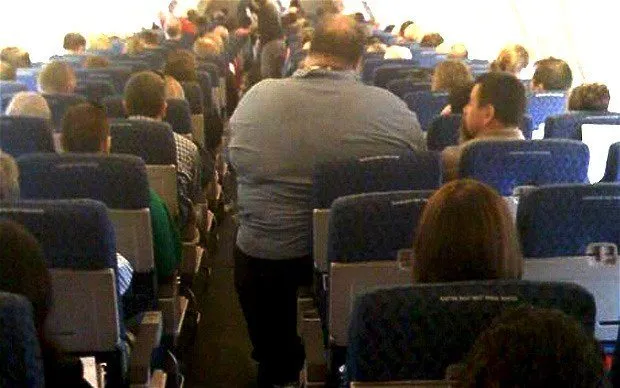
In economy class, the distance between armrests is only 41 cm. During takeoff and landing, they must be lowered – this is a safety requirement. Therefore, airlines advise overweight passengers to buy a business class ticket, as the seats there are much wider.
 Only Singapore Airlines and Qatar Airlines aircraft feature wider seats, but their width is no more than 49 cm.
Forcing an overweight passenger to buy more expensive airline tickets or book an additional seat (which costs as much as the main one) is considered discrimination. However, an increasing number of foreign airlines are including surcharges for overweight customers in their rules, justifying this by stating that they cause inconvenience to other passengers and can damage aircraft equipment.
According to the rules of some carriers, if a passenger does not fit in their seat with the armrests down and/or cannot fasten their seatbelt, they must purchase an additional seat.
Now let's look at the policies of specific airlines:
Southwest: requires an extra charge for an additional seat; if there are available seats on the flight, the surcharge is refunded. The surcharge applies only to passengers who do not fit in their seat with the armrests down.
American Airlines: tries to seat overweight passengers separately and without surcharge. If there are no available seats, they will be asked to pay extra for a business class ticket or purchase 2 tickets for the next flight.
Continental Airlines: requires an extra charge for an additional seat. If you have not arranged for an additional seat in advance, you may be asked to leave the plane and purchase 2 tickets for the next flight. If the next flight departs the following day, the airline will provide you with meals and accommodation.
Alaska Airlines: requires an extra charge for an additional seat; if there are available seats on the flight, the surcharge is refunded.
Midwest: requires an extra charge for an additional seat; if there are available seats on the flight, the surcharge is refunded.
Air France: requires an extra charge, but offers a 25% discount on the adjacent seat. If the passenger refuses to pay the surcharge, they may be denied boarding.
JetBlue: requires an extra charge, but if there are available seats, the money is not refunded.
Delta: tries to seat overweight passengers separately, but if there are no available seats on the flight, the passenger may be asked to leave the plane and purchase an additional seat on the next available flight.
If you know of other airlines that also require a surcharge, please share them in the comments.
Only Singapore Airlines and Qatar Airlines aircraft feature wider seats, but their width is no more than 49 cm.
Forcing an overweight passenger to buy more expensive airline tickets or book an additional seat (which costs as much as the main one) is considered discrimination. However, an increasing number of foreign airlines are including surcharges for overweight customers in their rules, justifying this by stating that they cause inconvenience to other passengers and can damage aircraft equipment.
According to the rules of some carriers, if a passenger does not fit in their seat with the armrests down and/or cannot fasten their seatbelt, they must purchase an additional seat.
Now let's look at the policies of specific airlines:
Southwest: requires an extra charge for an additional seat; if there are available seats on the flight, the surcharge is refunded. The surcharge applies only to passengers who do not fit in their seat with the armrests down.
American Airlines: tries to seat overweight passengers separately and without surcharge. If there are no available seats, they will be asked to pay extra for a business class ticket or purchase 2 tickets for the next flight.
Continental Airlines: requires an extra charge for an additional seat. If you have not arranged for an additional seat in advance, you may be asked to leave the plane and purchase 2 tickets for the next flight. If the next flight departs the following day, the airline will provide you with meals and accommodation.
Alaska Airlines: requires an extra charge for an additional seat; if there are available seats on the flight, the surcharge is refunded.
Midwest: requires an extra charge for an additional seat; if there are available seats on the flight, the surcharge is refunded.
Air France: requires an extra charge, but offers a 25% discount on the adjacent seat. If the passenger refuses to pay the surcharge, they may be denied boarding.
JetBlue: requires an extra charge, but if there are available seats, the money is not refunded.
Delta: tries to seat overweight passengers separately, but if there are no available seats on the flight, the passenger may be asked to leave the plane and purchase an additional seat on the next available flight.
If you know of other airlines that also require a surcharge, please share them in the comments.
Only Singapore Airlines and Qatar Airlines aircraft feature wider seats, but their width is no more than 49 cm.
Forcing an overweight passenger to buy more expensive airline tickets or book an additional seat (which costs as much as the main one) is considered discrimination. However, an increasing number of foreign airlines are including surcharges for overweight customers in their rules, justifying this by stating that they cause inconvenience to other passengers and can damage aircraft equipment.
According to the rules of some carriers, if a passenger does not fit in their seat with the armrests down and/or cannot fasten their seatbelt, they must purchase an additional seat.
Now let's look at the policies of specific airlines:
Southwest: requires an extra charge for an additional seat; if there are available seats on the flight, the surcharge is refunded. The surcharge applies only to passengers who do not fit in their seat with the armrests down.
American Airlines: tries to seat overweight passengers separately and without surcharge. If there are no available seats, they will be asked to pay extra for a business class ticket or purchase 2 tickets for the next flight.
Continental Airlines: requires an extra charge for an additional seat. If you have not arranged for an additional seat in advance, you may be asked to leave the plane and purchase 2 tickets for the next flight. If the next flight departs the following day, the airline will provide you with meals and accommodation.
Alaska Airlines: requires an extra charge for an additional seat; if there are available seats on the flight, the surcharge is refunded.
Midwest: requires an extra charge for an additional seat; if there are available seats on the flight, the surcharge is refunded.
Air France: requires an extra charge, but offers a 25% discount on the adjacent seat. If the passenger refuses to pay the surcharge, they may be denied boarding.
JetBlue: requires an extra charge, but if there are available seats, the money is not refunded.
Delta: tries to seat overweight passengers separately, but if there are no available seats on the flight, the passenger may be asked to leave the plane and purchase an additional seat on the next available flight.
If you know of other airlines that also require a surcharge, please share them in the comments.