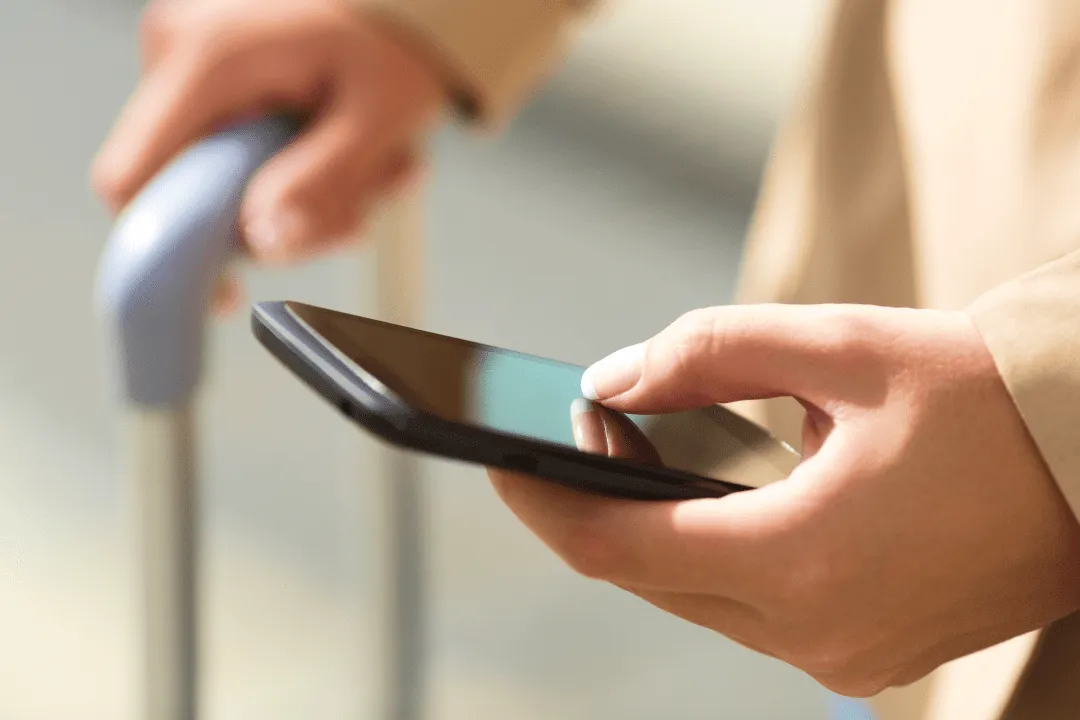
Stay Connected: eSIM or Physical SIM Card
 Polina
The modern world is unimaginable without constant connection. When traveling, this becomes especially relevant: to plan a route, order a taxi, share experiences with loved ones, find the nearest cafe, or translate a word in a translator – all of this requires internet and calls. But how not to go broke on roaming and choose the optimal way to stay connected? Today, travelers face a choice between the familiar physical SIM card and the increasingly popular eSIM technology. Let's delve into eSIM: what it is, what advantages it offers, how it works, and what it means for the modern tourist.

Traditional Physical SIM Card
A physical SIM card is a small chip that is inserted into your phone's slot. This solution is familiar to everyone, and it has its pros and cons for travel.
Pros of a physical SIM card
- Ease of use: most people are familiar with the installation process.
- Wide availability: a local SIM card can be purchased at airports, communication stores, and kiosks in almost any country.
- No model restrictions: supported by the vast majority of phones.
- Option to choose a local plan: local plans can often be very cost-effective for a long stay in one country.
Cons of a physical SIM card
- Need for replacement: you have to change the card every time, which is inconvenient if you have only one slot or frequently move from country to country.
- Risk of loss: a small card is easy to lose.
- Tied to physical presence: you need to find a point of sale, spend time on purchase and activation, which can be difficult if you arrive late at night or don't speak the local language.
- Phone unlock requirement: if your phone is locked to a carrier, a local SIM card may not work.
How to use a physical SIM card when traveling
- Roaming from your home operator: the simplest, but often the most expensive way. Before your trip, check roaming rates and activate the necessary options. Suitable for short trips or if you only need an emergency call.
- Purchasing a local SIM card: upon arrival in the country (for example, after you've flown and bought tickets to Bangkok or tickets for the Moscow – Dubai route) head straight to a mobile store. You'll need your passport for registration. This is usually the most cost-effective option if you plan to spend several days or weeks in one country.

eSIM: What is this technology?
Now let's understand eSIM: what it is and how it works. eSIM (embedded SIM) is not a physical card, but an electronic module built into your smartphone, tablet, smartwatch, or laptop. Essentially, it's a programmable chip that replaces a regular SIM card. You can “download” profiles from different operators onto it without physically changing the card.
What does eSIM mean for the user? Much greater flexibility and convenience, especially for frequent travelers. Your phone supports eSIM if it has this feature (most modern flagship models).
Pros of eSIM
- Convenience: no need to change physical cards. All plans are stored in the phone's memory.
- Fast activation: connection takes a few minutes, often can be done before the trip.
- Multi-profile: you can store several eSIM profiles (up to 5-10 depending on the phone model) and easily switch between them.
- Savings: a wide selection of plans for different countries, often more advantageous than roaming.
- Eco-friendliness: reduced plastic usage.
- Preservation of primary SIM card: you can leave your home SIM card in the slot and use eSIM for internet abroad. This means you will always be connected via your main number for calls and SMS.
- In some countries, it can be used when applying for a foreign bank card.
Cons of eSIM
- Limited compatibility: supported only by newer models of smartphones, tablets, and smartwatches. Before purchasing, ensure your gadget supports eSIM.
- Device dependency: if you lose or change your phone, transferring the eSIM may require re-activation or contacting the operator.
- Sometimes can be more expensive than local SIM cards: in some countries, local physical SIM cards still offer lower prices for large data volumes.
How to use eSIM when traveling?
So, you've decided to try eSIM. How to connect eSIM and how to activate eSIM? The process is quite simple.
- Compatibility check: ensure your phone supports eSIM technology. Most flagship models from Apple (starting with iPhone XS/XR), Samsung (starting with Galaxy S20), Google Pixel (starting with Pixel 3), and other manufacturers support eSIM.
- Choosing an operator/provider: there are many international eSIM providers (Airalo, Drimsim, Holafly, Nomad, and others), as well as local operators offering eSIM for tourists. Choose the one that offers the best rates for your destination country (for example, when you plan to buy tickets to Istanbul on Kupi.com or tickets for the Moscow – Tbilisi route).
- Purchasing a data plan: visit the website of your chosen provider or use their mobile app. Select the desired data package (e.g., 1 GB for 7 days) for a specific country or region. Pay for it.
- How to add eSIM: after payment, you will receive a QR code or data for manual setup.
- using a QR code. On iPhone: Settings > Cellular > Add Cellular Plan > Use QR Code. On Android: Settings > Network & internet > Mobile network > Add > Download a SIM card? > Next > Scan QR code.
- manual setup: if a QR code is not available, the provider will give you an SM-DP+ address and activation code, which are entered manually in the same settings menus.
- activation and setup: after adding the eSIM, in your phone settings, you can choose which plan to use for cellular data. You can name your eSIM profile to avoid confusing it with your primary SIM card. Make sure data roaming for eSIM is enabled if necessary.
What types of eSIMs are there? They can be for a single specific country, regional (e.g., for all of Europe), or even global (working in dozens of countries). Choose based on your needs.

When to choose eSIM, and when – a physical SIM card?
Short trips (up to 3-5 days) to one country
- eSIM: ideal option. Fast activation, no need to search for a store. Cost-effective if you don't need a lot of data (up to 5 GB).
- Home operator roaming: convenient if you don't need internet, only calls, or if your operator has advantageous roaming packages.
Long trips (more than a week) to one country
- Local physical SIM card: most likely the most cost-effective option for a large volume of data.
- eSIM: also a good option if prices are competitive and simplicity and speed are important to you.
Travel to several countries (e.g., a European tour, after you've bought tickets to Rome, and then plan to visit other cities)
- eSIM with a regional plan: the best choice. No need to change SIM cards at each border; one plan works in all countries of the region.
- Multiple physical SIM cards: inconvenient and easy to get confused, but may be justified if you stay in each country for a very long time and need the cheapest possible local calls.
Tips for saving on communication while traveling
Regardless of whether you choose eSIM or a physical SIM card, these tips will help you not go broke:
- Plan ahead: research local operator or eSIM provider rates before your trip.
- Use Wi-Fi: maximize the use of free Wi-Fi in hotels, cafes, and airports.
- Download maps offline: Google Maps, 2GIS, or Maps.me allow you to download maps for offline use.
- Disable automatic updates: turn off automatic app updates and media downloads in messengers to save data.
- Use messengers for calls: WhatsApp, Telegram, Viber allow free calls over the internet.
- Monitor data usage carefully: most eSIM providers and local operators have apps where you can track data consumption.
The Future of Connectivity: eSIM is a Trend
eSIM technology is actively developing. More and more manufacturers are integrating it into their devices, and mobile operators are offering increasingly advantageous and flexible plans. Already, eSIM opens up great opportunities for travelers, significantly simplifying and reducing the cost of communication abroad.
What does eSIM mean for the tourism industry? Reduced stress and increased comfort for everyone embarking on a journey. The ability to be connected from the first minutes after landing (for example, when you've arrived using tickets to China), without needing to search for Wi-Fi or spend time buying a SIM card, is invaluable.