What to see in Baku
 Yasya
YasyaTickets to Baku are like a secret cheat code for tourists from Russia. This large, modern metropolis with an Asian heart is much less publicized than the capitals of neighboring countries. However, it is located on the seashore, and the flight from Moscow takes only three hours. For the same reason, Baku can easily become a transit hub for further travel to Europe or Asia. We tell you what you can see in Baku if you spend a full vacation here or stay for just one day.

How to get to Baku
Currently, only by plane. Direct flights are available from Moscow, St. Petersburg, Yekaterinburg, Novosibirsk, Tyumen. All affordable Moscow — Baku flights can be purchased on Kupibilet. Land borders are still closed since March 2020 due to a special quarantine regime.
From Heydar Aliyev International Airport to the city center, you can take a bus or taxi. A pleasant option is the Airport Express H1 bus. The ticket price is from 1.30 to 1.50 AZN, and the journey takes 30 minutes. During the day, buses run from 06:00 to 23:15 with a 20-minute interval, and at night from 23:15 to 06:00 with a 45-minute interval. To get from Baku airport to the city, you need to buy a BakiKart. It is sold at terminals of the same name, located near bus stops at the exit of the terminals.
Cool: one card can be used by several people.
A big plus of such a trip is that there is a visa-free regime between Russia and Azerbaijan, which means only a foreign passport is needed for documents. According to the rules for entering Azerbaijan for Russians, you can stay in the country for up to 90 days within one calendar year. However, registration at the place of stay is mandatory within 15 calendar days from the date of entry.
When to go to Baku and what's the weather like
The high season lasts from June to October, when the swimming season begins in Azerbaijan. In early summer, the air temperature steadily stays around +26 degrees, increasing to +28 in July, and reaching +30 in August. If your goal is beaches, then welcome to Baku in summer, as Azerbaijan is one of the options where to go to the sea without a visa. If you plan to explore the city itself, its palaces and parks, it's better to postpone your trip until early autumn (September-October) or spring (April-May).
Winter is cool, though with positive temperatures – around +7°C. Central heating (or individual) is available in homes. So you can book accommodation here without fear of freezing in the middle of winter. But this is in the capital; in the mountains and foothills, winter temperatures drop to -10-15 degrees.
Baku Attractions
A first visit to any city involves seeing all the most important and main sights. In Moscow – Red Square and the Kremlin, in Paris – the Louvre and Notre Dame de Paris. Baku, of course, also has such must-visit spots.
Old City
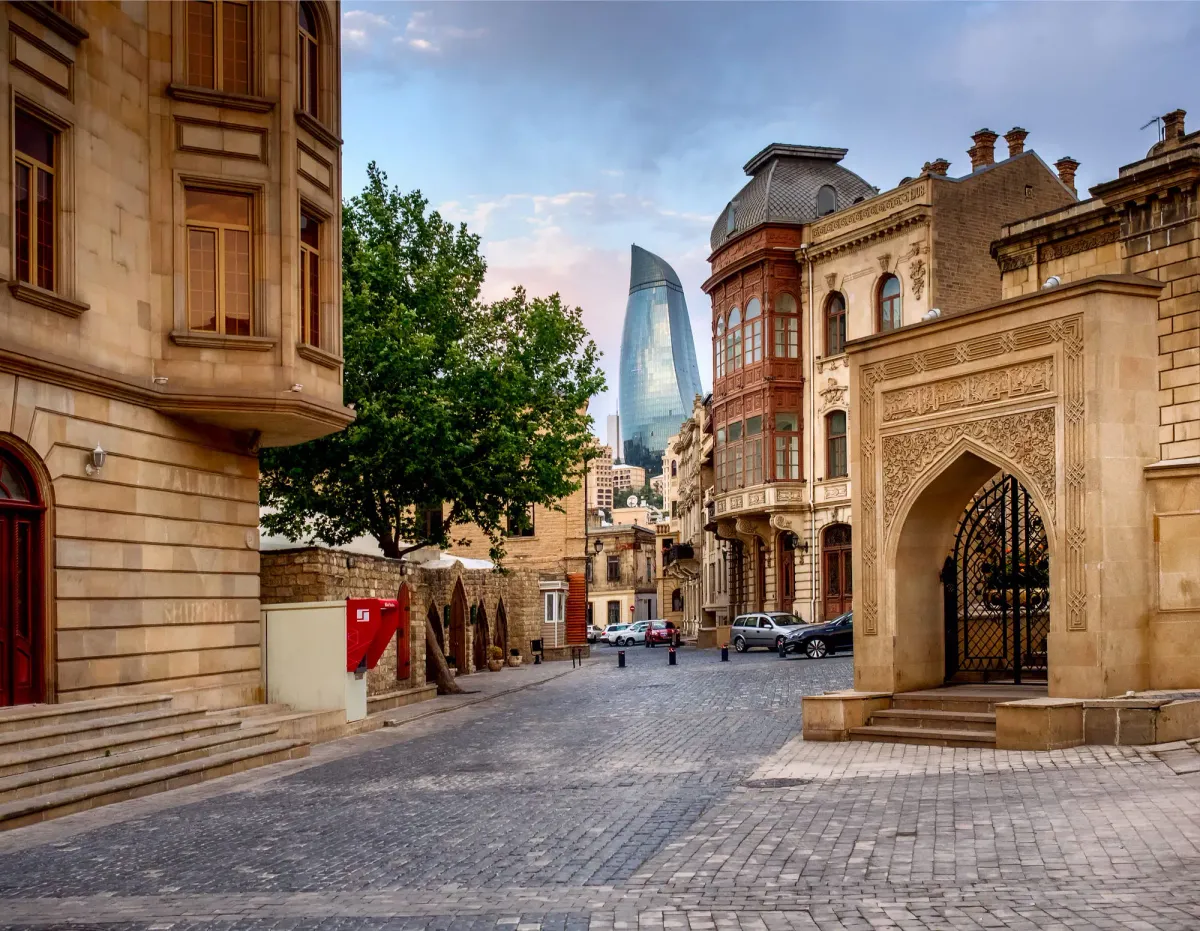
Also known as Icherisheher. Also known as Istanbul, if you watch "The Diamond Arm". However, here tour guides, who lead tourists to Kichik Gala Street, will diligently remind you of this film. But even without references to Soviet films (movies like "Amphibian Man", "Aibolit-66", "Tehran 43" were also filmed here), the Old City has many interesting and ancient sites: Shamakhi Gates, Haji Gaib Bathhouse, Juma Mosque, Market Square. To immerse yourself in the atmosphere of history and traditional architecture – that's what Icherisheher is about.
Maiden Tower
A fortress structure? Or a ritualistic one? Archaeologists have no definitive answer to the question "Why was this tower built?". However, historical mysteries have never prevented structures themselves from becoming city symbols and tourist attractions. An outstanding appearance and a beautiful legend are enough. And the Maiden Tower has both. We won't retell the latter, so you'll have something to be surprised by during your visit.
Palace of the Shirvanshahs
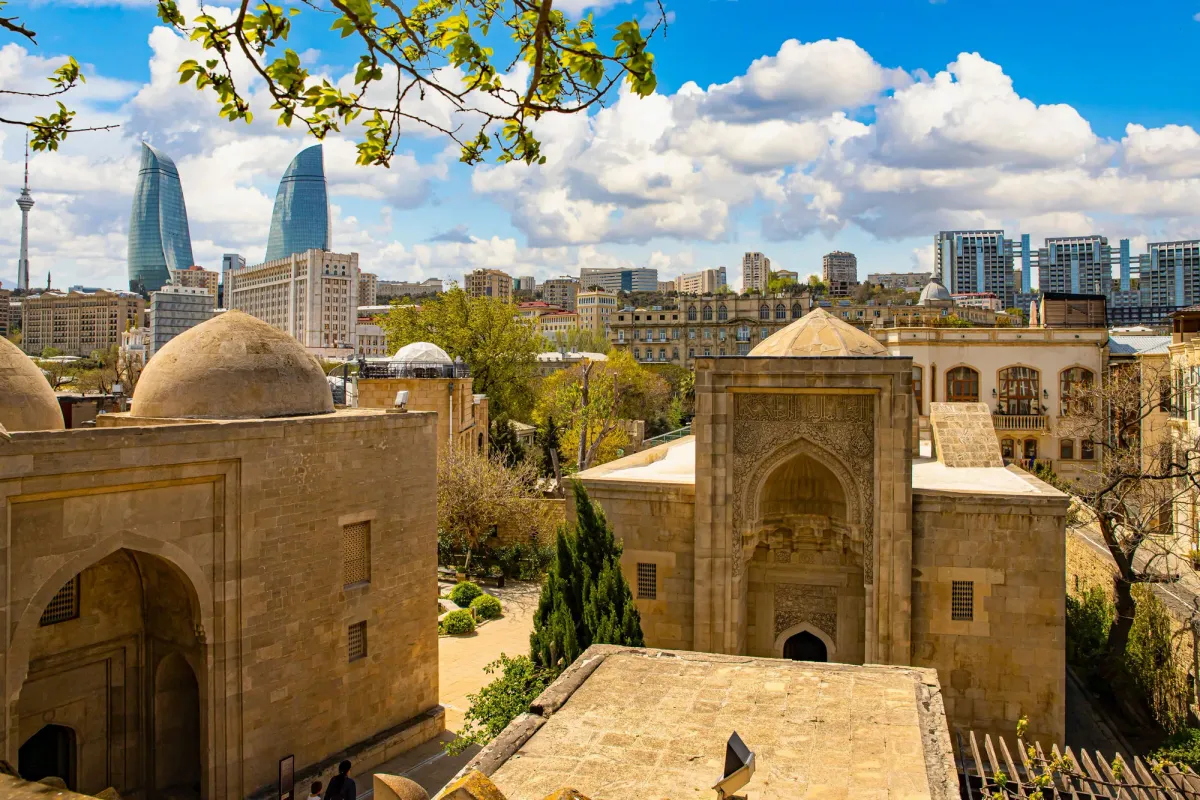
Even an entire palace complex, to be more precise. It includes the palace itself, a tomb, a mosque with a minaret, a bathhouse, a mausoleum, and other buildings. All of them were built at different times but look unified and complete, thanks to the traditions of the Shirvan-Absheron architectural school, on which each subsequent generation of builders relied. It is definitely worth visiting; UNESCO wouldn't lie.
Flame Towers
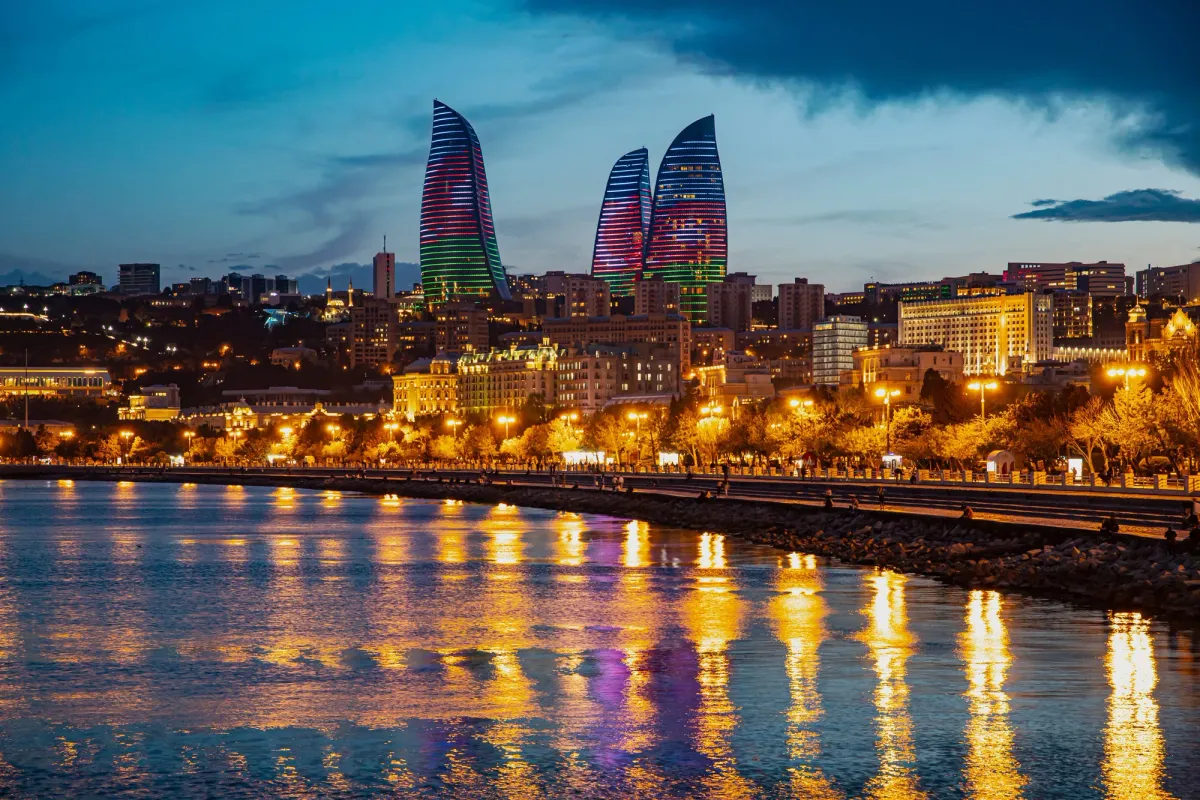
The question "Where does such a name come from?" will not arise. Even from afar, it is clear how the three buildings resemble tongues of flame in their shape, reflecting the emblem of Baku. The best view of the towers opens from the Seaside Boulevard, from Highland Park, or from the water. In the evening, the skyscrapers stand out against the urban landscape due to LED screens covering their facades. Various images are broadcast on them, for example, flashes of fire or the country's flag.
Little Venice
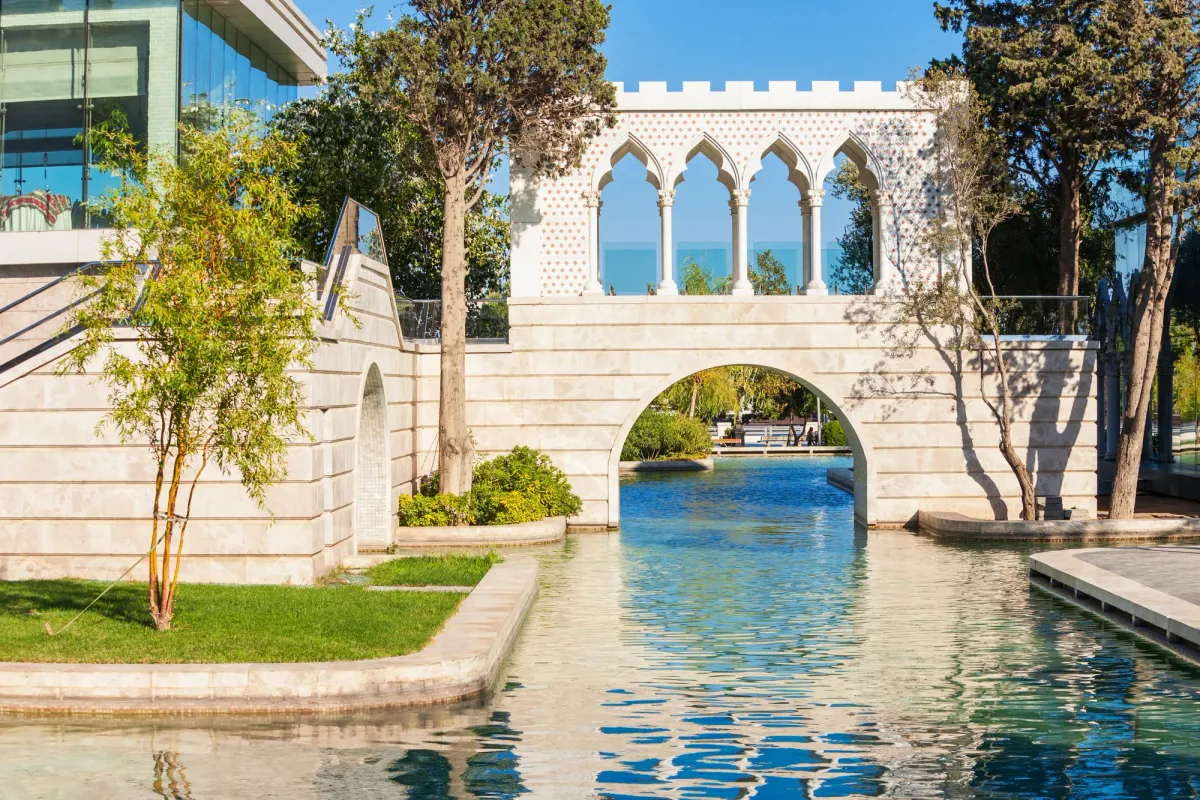
Canals, bridges, gondolas – you thought of Italy, didn't you? But all of this is right in the center of Baku. And it has been since the 1960s. Such an extraordinary embellishment of the embankment appeared after the then-head of the city, Alish Lembéranski, visited Venice. In 2012, the area was renovated and modernized. Now tourists ride boats here, stroll along pedestrian paths, and dine in romantic waterfront cafes. We recommend it to you too.
Heydar Aliyev Center
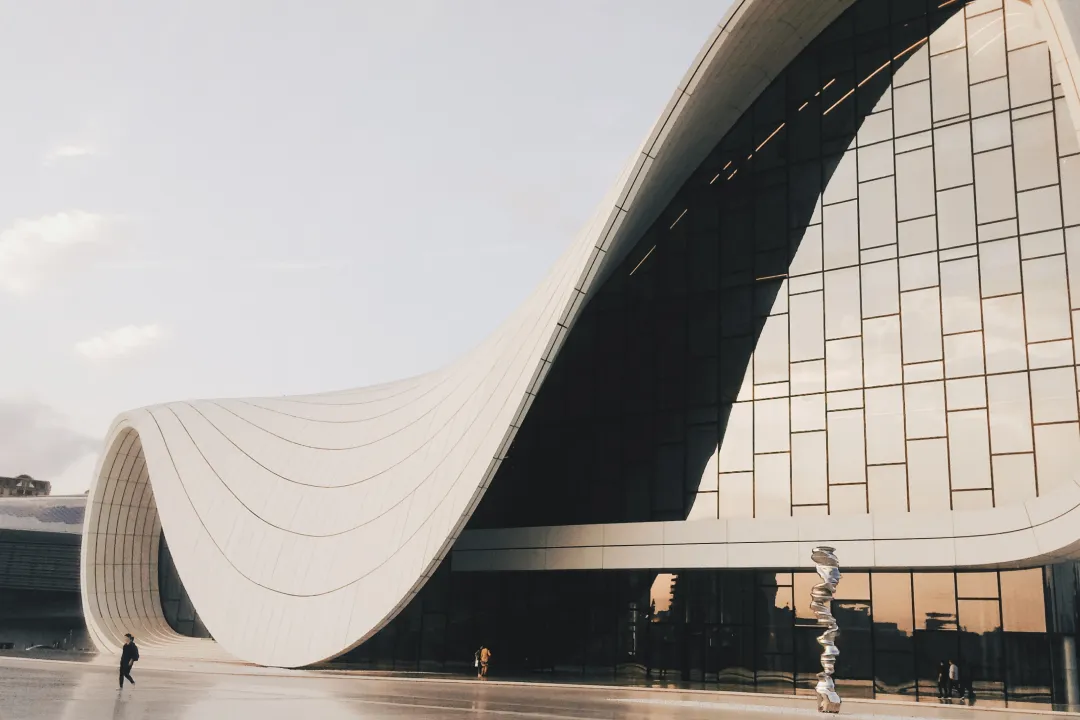
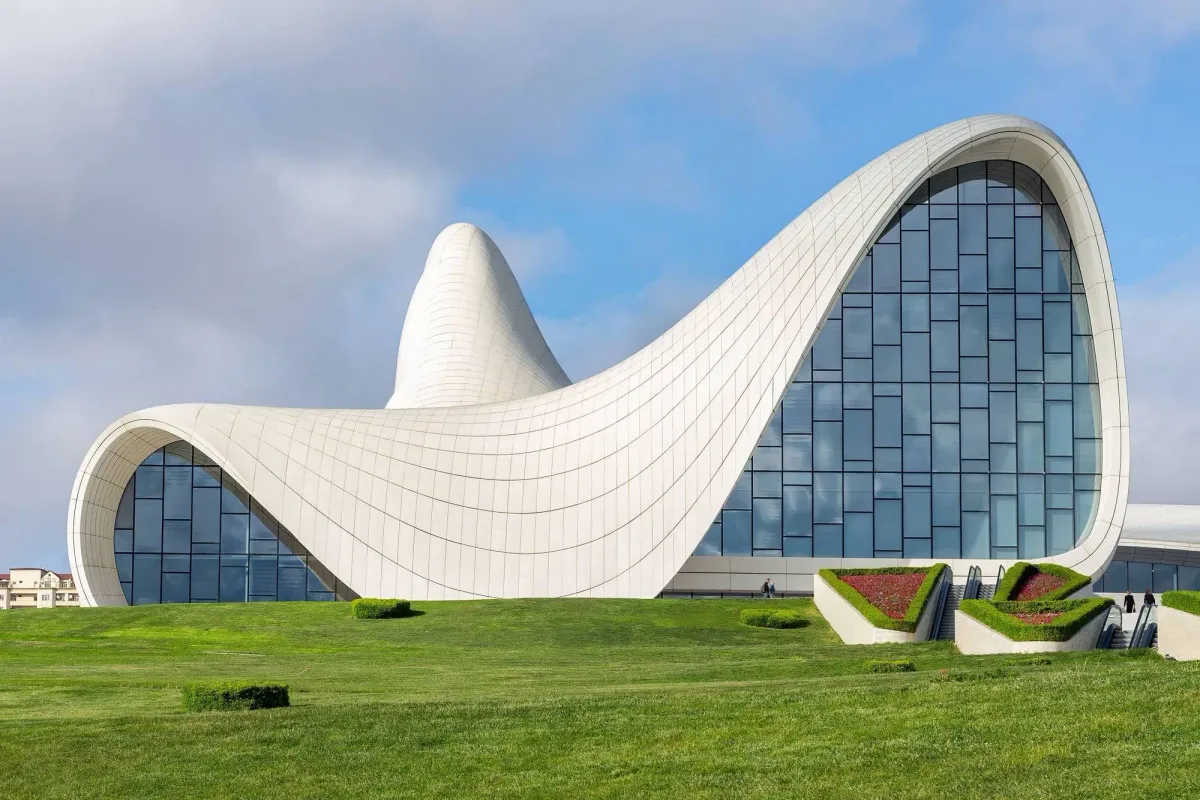
For fans of avant-garde, postmodernism, and deconstructivism in architecture, the center is simply a must-see. From the outside, Zaha Hadid's masterpiece is an asymmetrical wave of white stone, its peak soaring into the blue sky only to flow back down. The fluidity of the lines symbolizes infinity and simultaneously reflects the traditions of Islamic architecture, whose ornaments have historically formed seamless connections and merged into one. Even if all these artistic metaphors mean little to you, the cultural center is still worth a look.
What to see in Baku in one day
If you only have one day to explore Baku, start your route with the Heydar Aliyev Center. It is located a considerable distance from other attractions, so to avoid traveling to it in the hot midday, it's better to see this architectural marvel in the morning. Then, bus №5 will take you to the Baku Seaside Boulevard, from where you can walk to Little Venice and the Carpet Museum. Another option is to take the metro to Icherisheher station and dive into the labyrinthine streets of the Old City. In the first case, you'll spend the hot part of the day by the water; in the second, in the shade of ancient buildings. Next, walk to the Ismailiyya Palace, which now houses the presidium of the Academy of Sciences, the Mukhtarov Palace, a building in European Gothic style atypical for an Eastern city, and the Fountain Square. Towards evening, we suggest taking the funicular up to the observation deck or taking a boat ride to see the sparkling lights of Baku from the water.
What to see in the surroundings of Baku
The more days, the richer the program! A three-day itinerary in Baku will already include trips outside its limits.
Gobustan Reserve
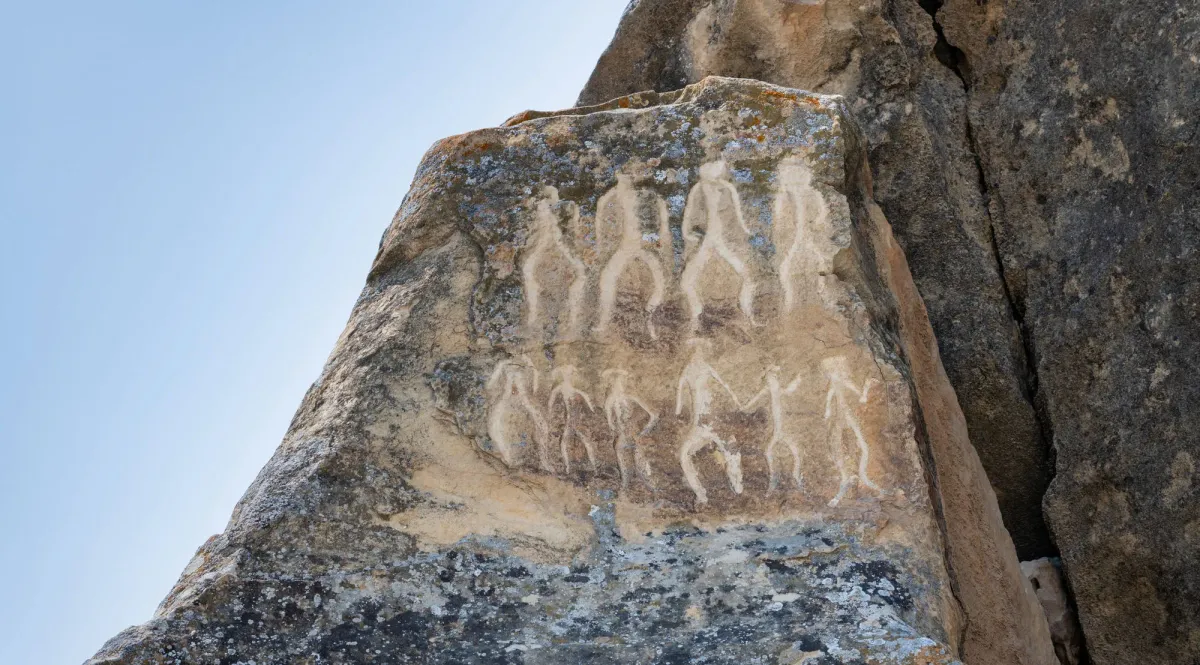
So, let's hop in the car and head southwest from the city, to the archaeological reserve where cave walls are adorned with rock paintings, and the museum displays stuffed animals and models of dwellings. Here you can also see mud volcanoes, the Mosque of Saint Fatima, and the Zoroastrian temple of Ateshgah. However, we also recommend simply walking around the territory: the area looks very impressive even without man-made objects.
Eternal Fire Yanardag
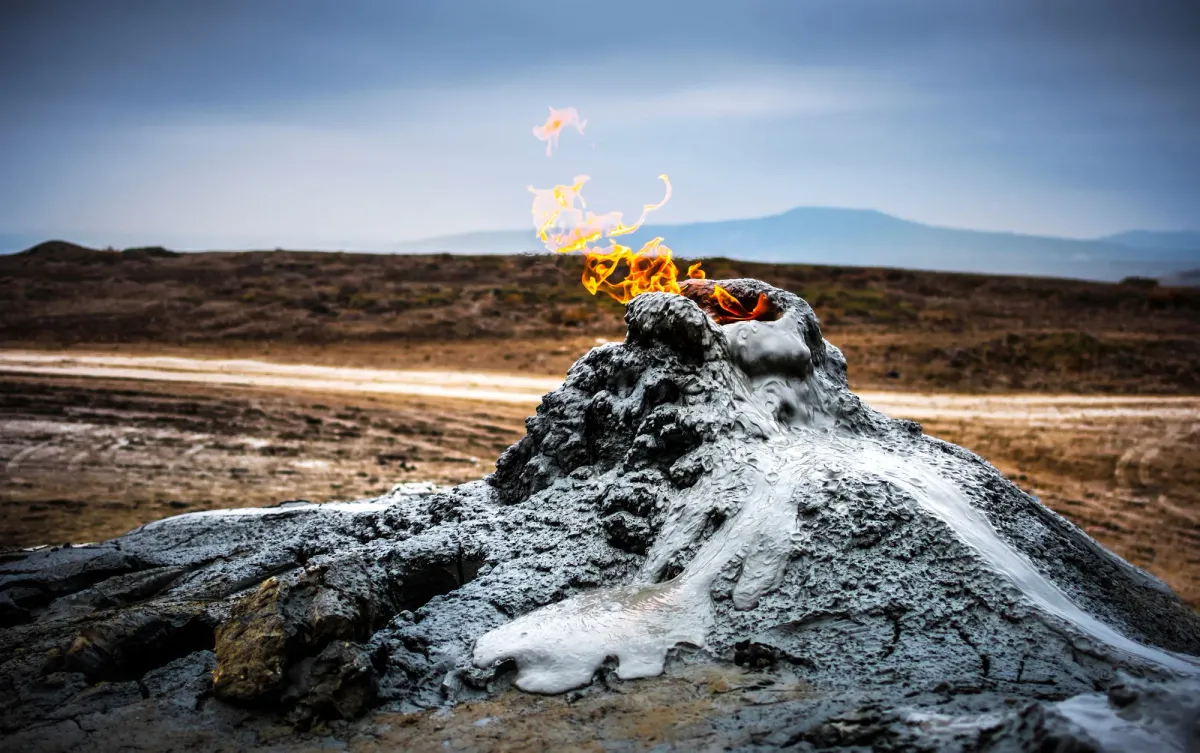
"Burning Mountain". Literally: a large gas field is located under the Absheron Peninsula, and the flame erupting from under the ground is due to this factor. The ignition occurred in ancient times and has not extinguished since. Naturally, for some religious currents, the fire acquired a sacred status, particularly for followers of Zoroastrianism. It looks especially spectacular in the evening hours, so we recommend staying in the reserve a little longer.
Gala Historical and Ethnographic Museum
This complex is convenient to visit before heading to the airport – they are not far from each other anyway. The open-air exhibition tells how Azerbaijanis lived from the 16th to the 19th centuries. But what's especially cool is the interactive tour, which allows you to bake bread yourself using an old recipe or weave a carpet (not entirely, but still). The museum's "From waste to art" collection deserves special mention. Art objects here are literally made from trash: light bulbs, extension cords, toys, car parts, plastic bottles were all used.
Transport in Baku
The capital of any country means a large area and significant distances between attractions. Therefore, public transport is indispensable, even if you are a race walking champion.
Baku has had a metro since 1967; it currently has three lines – red, green, and purple – and 27 stations. Operating hours are from 6:00 to 0:00. The fare is 0.5 AZN. It is most convenient to buy a reusable BakiKart and use it to pay for metro and bus rides. The card itself costs 2 manats, and you can top it up at terminals at metro stations and bus stops.
Buses in Baku are cheaper – 0.4 AZN with a travel card. Routes 4 and 10 pass through the city center: the latter goes near Port Baku Park, the Heydar Aliyev Center, the National Museum of History of Azerbaijan, and other tourist spots. The front door is used for boarding, where the validator for travel cards is located; all other doors are for exiting.
The most comfortable way to get around the city is, of course, by taxi. The cost of a trip starts from 1 AZN per kilometer, but there is a minimum fare, usually 2-3 AZN. However, it's worth taking a ride at least once. After all, taxis in Baku are particularly noteworthy – the famous British "cabs," only painted purple. Popular services include Bolt, Uber, 189 Taxi, Maxim, and YanGo.
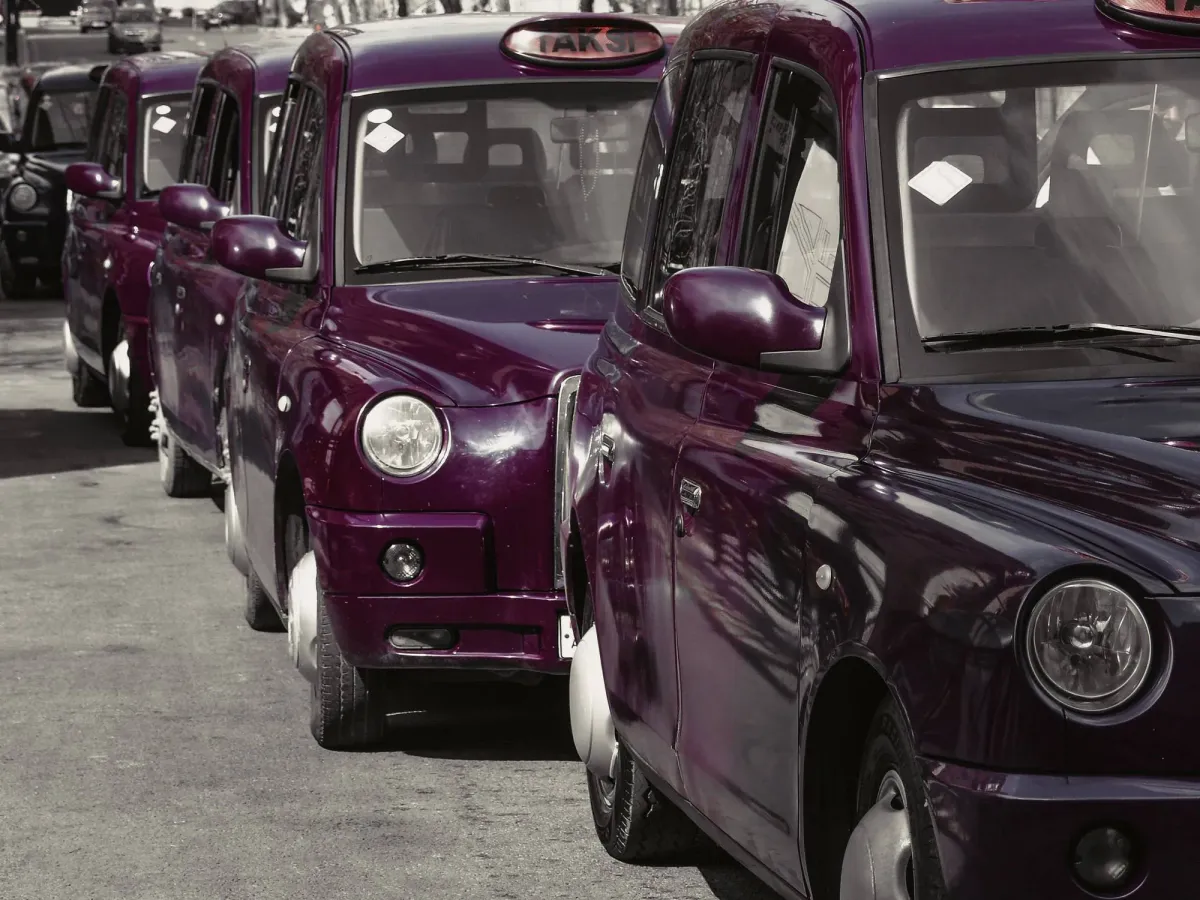
A special pleasure in Baku is water transport. Summer, heat, and you're cruising on a boat – beautiful! Moreover, the waterfront offers a charming view of the city. For this, you need to go to the Seaside Boulevard, to the pier next to Park Bulvar shopping center. Excursion boats "Mirvari" (for 450 people) and "Shafag" (60 people) depart every hour from 17:00 to 22:00. The ticket price is from 5 to 10 AZN.
Since there's water transport, there must be something mountainous too. Baku has a funicular. It has been operating since 1960, but by 2012, it was renovated and made silent. There are only two stations – "Bahram Gur" and "Shehidler Khiyabany". The journey takes only 4 minutes, but you'll be able to ascend to the Flame Towers and Highland Park. The funicular is open from Tuesday to Sunday, from 10 AM to 10 PM.
Where to eat
Shirvanshah Restaurant-Museum
Dinner in such a place is a mandatory item on any cultural program. Because it's a real, practical immersion into the history and traditions of Azerbaijan, but from a gastronomic perspective. The restaurant is located in the center of Baku and offers a lavish menu: several types of dolma, dishes cooked in a ghazan, dough dishes, classic cold appetizers, among which an assortment of cheeses is particularly interesting (and a must-order).
Address: Salatin Asgarova St., 86
Qaynana
A restaurant that has earned its place in every top list of Baku's best establishments. It is notable for several reasons. Firstly, it is located in the Old City, so right from here, after breakfast, you can go for a walk-excursion. Secondly, authentic Azerbaijani cuisine is at the forefront here: "dumplings" gyurza, lula kebab, tabaka chicken, kuku. Thirdly, the prices here are very democratic.
Address: Kichik Gala St., 126
Art Garden Restaurant
A restaurant of traditional Azerbaijani cuisine and an art center. Located in Icherisheher, in a 12th-century caravanserai building. It's best to book a table in the garden, under the dome of a huge tent. In addition to a wide selection of national dishes, the vibrant interior and live music in the evenings create a connection between eras.
Address: Asaf Zeynalli St., 22
Sumakh
The interior of this restaurant already dispenses with deliberate, tourist-oriented local flavor. The walls are adorned with black and white photographs, and countless beige lamps hang from the ceiling. White tablecloths, soft chairs, parquet flooring – a timeless classic! The menu features a similar local story: dushbara soup, kufta, several types of pilaf, lamb buglama.
Address: Khojaly Avenue, 20/22
Chinar
Once you've tried all the main dishes of Azerbaijani cuisine, you can switch to something more international and familiar. For this, there's Chinar – a Pan-Asian style lounge bar. The menu is a blend of Japan, Thailand, Singapore, Malaysia, and China: grilled tiger prawns, chicken karaage, tom yum, pad Thai, miso ramen, sushi, and gyoza.
Address: Shovket Alakbarova St., 1
Where to stay
The choice of district always depends on your goals. If you are in Baku in transit between Moscow and your final destination, it makes sense to choose a hotel closer to the airport. If you are flying specifically to the capital of Azerbaijan to explore the city, it is better to stay in the center.
Sabayil district covers the Old City, the Caspian Sea coastline, and the neighborhoods near Sahil metro station. It's convenient to settle here if you have planned a rich cultural program with museum visits. But be careful when searching for accommodation or choosing a hotel: Sabayil extends far beyond the center, stretching southwest past the Flame Towers.
Nasimi is Sabayil's direct "neighbor." That's what makes it good: all attractions are close, modern architecture prevails in the northern part, and traditional Baku architecture in the southern. There are many parks here, and most streets are strictly perpendicular to each other, so you won't get lost.
For those who prefer to live a little away from the main tourist trails and enjoy quietness, the Yasamal district is more suitable. This is a more classic residential part of the city, with several metro stations, without major and important tourist spots.
What to bring from Baku
Carpet
Souvenirs from Baku should reflect the country's vibrant Caucasian character. Therefore, carpets are, of course, the first thing that comes to mind. What? Do you still consider them a relic of the past? It's time to embrace retro aesthetics and return to our roots, or rather, to carpets. Yes, now everything labeled "authentic" and "native" is fashionable. Moreover, colorful, geometric carpets in rich shades look great against the backdrop of gray-white, ascetic Scandinavian interiors. If a huge carpet is too much for your luggage, opt for smaller bedside versions.
Armudu
For yourself or friends for a collection. An unusual tea glass, shaped like a tulip bud. It can be glass, ceramic, crystal, with painting or gilding.
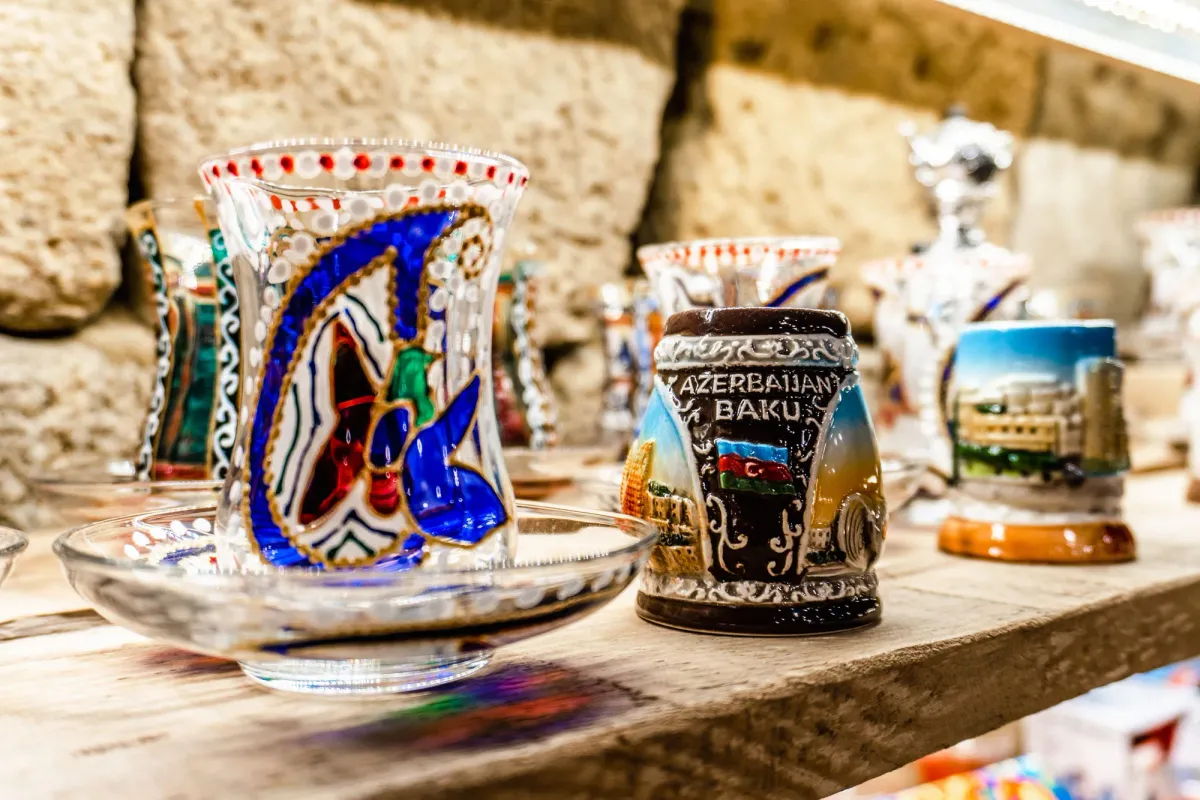
Ceramics
Painted plates, vases, cups, and other types of kitchenware. If traditional oriental patterns appeal to you, this type of souvenir is optimal. It will be useful in the household and will remind you of your trip to Baku. When buying, check the clay product for cracks by tapping it: good ceramics will produce a clear sound.
Sweets
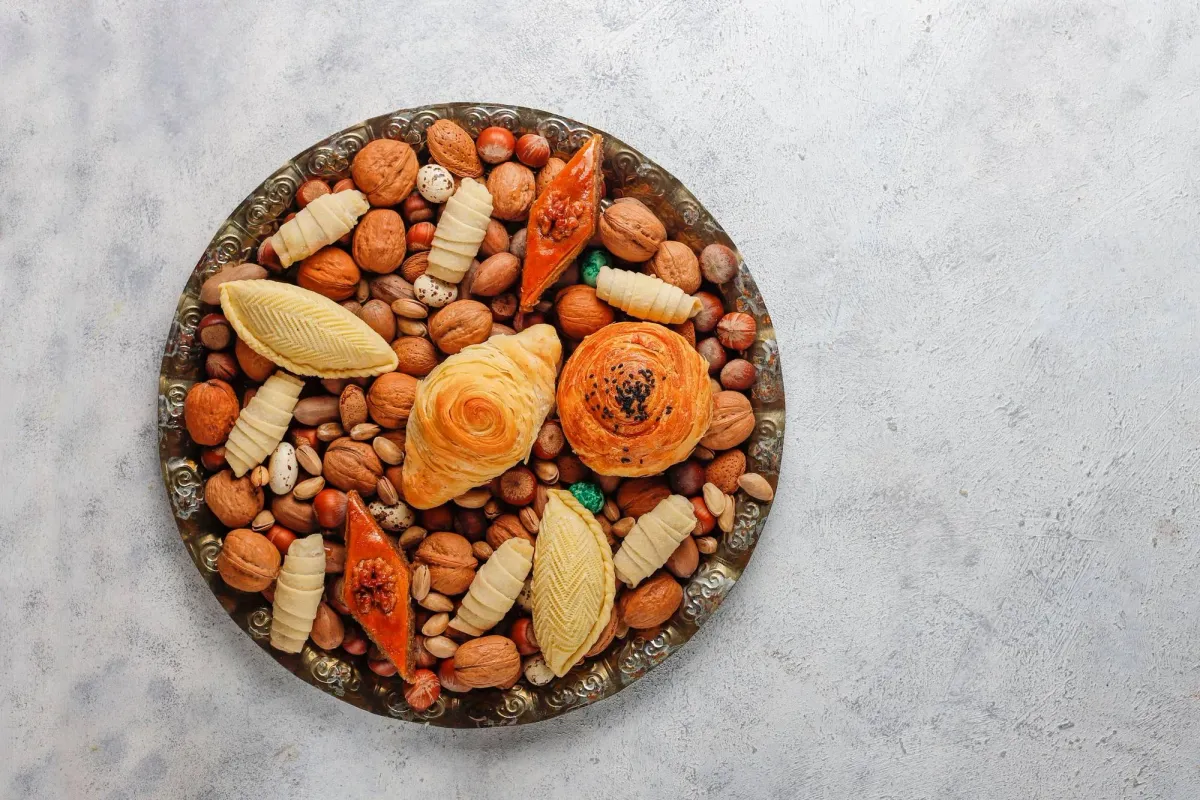
We are convinced that the best souvenirs are edible ones. This way, you can share a piece of your travel experiences with friends and colleagues, without cluttering their shelves with useless items. And jam made from quince, white cherry, nuts, pear, or mulberry won't stay in the fridge for long, but it will surprise with its unusual taste. Other options include Sheki halva, pakhlava, shekerbura.
Pomegranate Wine
Azerbaijan and pomegranates are an inseparable pair. So, wine made from this fruit is a logical development of their relationship. Sweet and tart, but without being cloying, it pairs well with beef dishes, cheeses, and desserts. As a souvenir, it's best to choose bottles from specialized stores to avoid fakes and low-quality products.
So, when heading to Baku, leave plenty of empty space in your suitcase to fit all your purchases.