What to See in India: Main Attractions
India… Colorful, ambiguous, contrasting. Palaces here coexist with slums, noisy markets with peaceful Hindu temples, and crowded cities with jungles.
India has literally divided travelers into two camps. Some dream of returning here, while others hope it never happens. We'll say this: if you plan everything clearly and correctly, it will be clean, beautiful, interesting, and colorful.
Sit back, we'll tell you how to get to the land of contrasts and have the best time there. By the way, if you're interested, we also know, where to best relax in Thailand. But that's for the future. Now, let's get back to India.
Visa and Border Crossing
Entry rules for India are clear and simple: Russian citizens will need a foreign passport and an electronic authorization (TVOA), which can be obtained online in advance. To get it, you need to fill out an application form on the Indian embassy website, pay the fee, and then wait for a response. Typically, it arrives within a week.
Then you need to print the authorization and remember to take it with you on your trip. Just keep in mind that the document will need to be presented upon arrival in India.
How to Get There
The good news: you can fly to India from Russia even without transfers. For example, there are direct flights from Moscow to Delhi and Goa.
The challenging part: flight duration. The journey from the capital of Russia to the capital of India will take approximately seven hours. So, we recommend getting a travel pillow and a couple of seasons of a TV series you've been putting off watching.
Tourist Regions
Central Region
This is truly a territory of contrasts. In the central region, you can find mountains, plains, forests, and even desert areas.
Cities worth visiting here include: Bombay, Jaipur, Abu, and, of course, the state of Goa. Moreover, many travelers fly to India specifically for a vacation in Goa . However, we believe you should see it all: both "Indian Hollywood" — Bombay with its entertainment and striking architecture, and pink Jaipur, impressive with its temples and palaces.
Southern Region
This place is definitely not for introverts, alas. The Southern region is considered the most densely populated in India. However, if a large number of people doesn't scare you (hello, Moscow Metro at rush hour), then it will be interesting to visit.
At least for the ancient Tamil temples, colonial forts, and sandy beaches stretching for kilometers. Many travelers choose the southern region for the former British outpost of Chennai and one of the most beautiful holiday destinations — the state of Kerala.
Eastern Region
Can't decide in the eternal dilemma: sea or mountains? Then choose the eastern region of India. Here you'll find a bay, magnificent mountainous terrain, and relatively large cities. For example, the largest city in eastern India, Kolkata, and the religious capital — the city of Varanasi.
So, in the eastern region, you can hike in the mountains and see the coast of the sacred Ganges River. However, be prepared in advance that sterile cleanliness will definitely not be found here.
"Golden Triangle"
Still don't know where to start your acquaintance with India, and your only ideas are Bollywood movies? Well, then here's India's "Golden Triangle" for you. It's like Russia's Golden Ring, but the Asian version. Although, it's still unclear who, why, and when invented the route and gave it such a name.
In short, the "Golden Triangle" is a tourist route consisting of the most popular points for travelers: Delhi — Agra — Jaipur. Its main advantage is the relatively short distance between cities and their transport accessibility. You can reach each location by train, bus, or even splurge by choosing a taxi.
Attractions
Taj Mahal
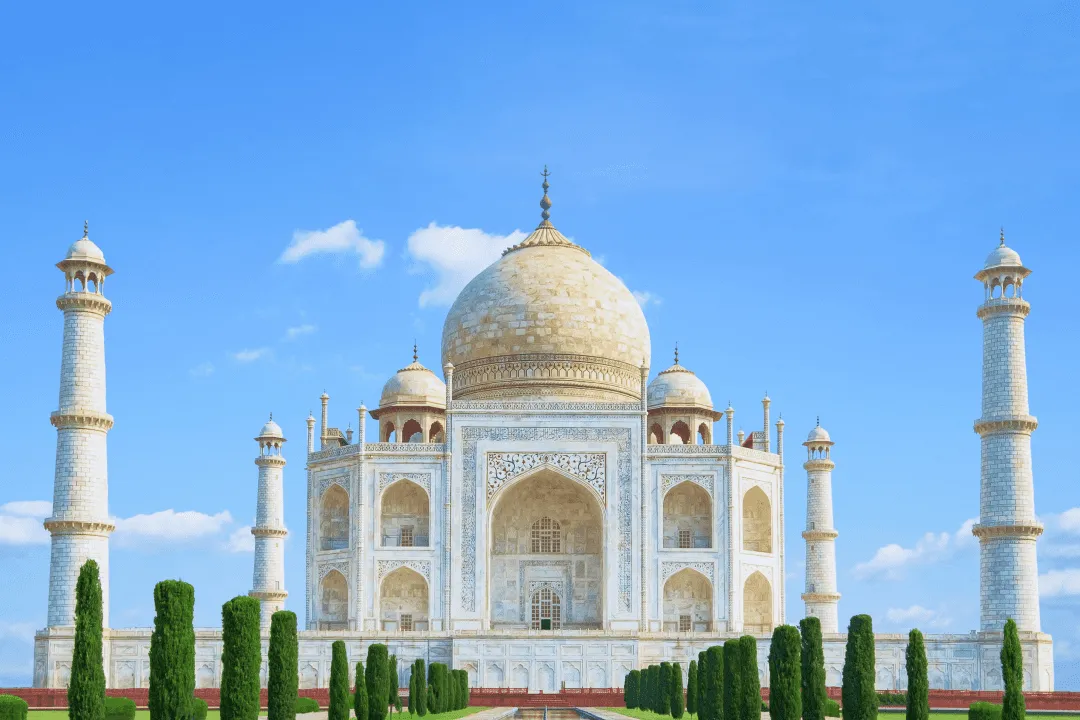
You can't go without it. It's one of India's main attractions. One could say, the most majestic. And why beat around the bush — the most famous. The opportunity to see it live — like this, from bottom to top — will be worth all the flights and difficulties. Of course, such a romantic story surrounds the Taj Mahal!
One could say it's a monument to love. Emperor Shah Jahan ordered the construction of the Taj Mahal in memory of his beloved wife. The ruler had conditions: the mausoleum had to be no less beautiful than his beloved wife, and as grand as the strength of their feelings. In short, a challenging task. Nevertheless, the builders coped with it 200%. True, they created all this splendor for almost 22 years. But the Taj Mahal became one of the wonders of the world and a UNESCO World Heritage site.
Advice from experienced travelers: it's worth seeing the mausoleum-mosque at least three times and at different times of the day. The thing is, it's white during the day, pink at sunset, and silvery in the evening.
Kerala
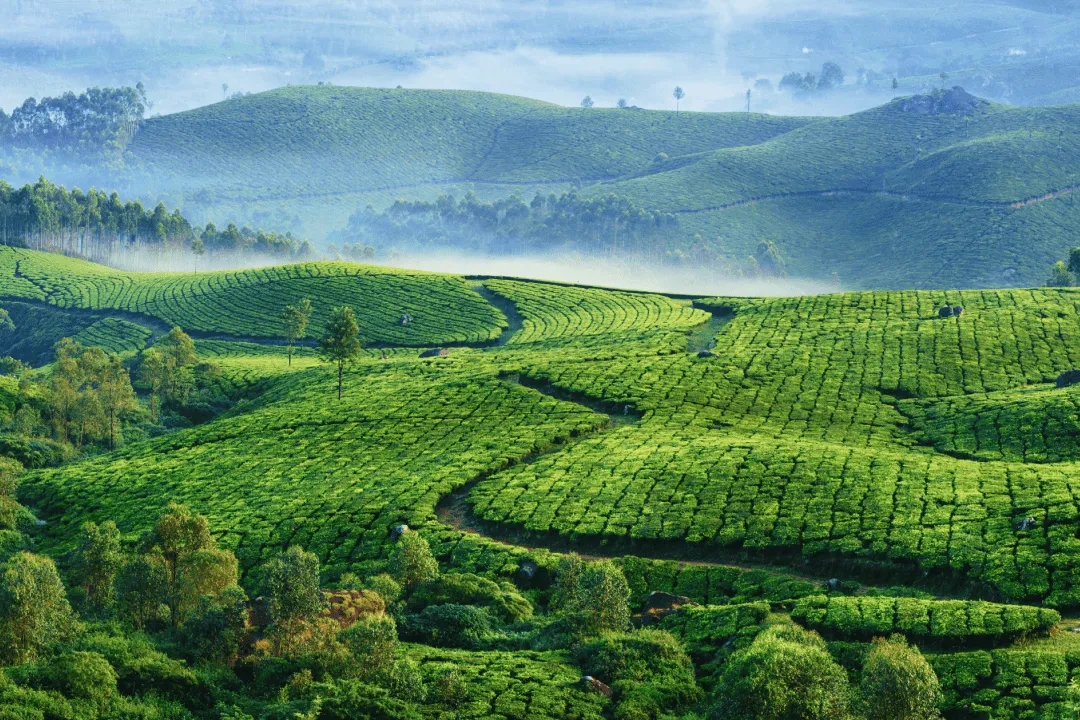
One of the most beautiful regions in the country. This interesting green state is located in the very south of India. Within its territory, almost in the mountains, the tea gardens of Munnar are hidden. They say the tea here is better than from the tea plantations of Sri Lanka. Besides this, travelers are drawn here by numerous nature reserves and pristine beaches. The latter, by the way, are no worse than in Goa, but with fewer tourists.
Interestingly: Ayurveda, the system of Vedic medicine, originated in Kerala.
Rajasthan
Fans of historical sites and interesting architecture definitely need to visit Jaipur. Here, in the "land of kings," there are many interesting locations and buildings. But one of the most famous is the unique Palace of Winds, or Hawa Mahal. This is a large five-story harem wing of the palace complex of Jaipur Maharaja Sawai Pratap Singh (who ruled this region of India from 1778 to 1803). According to historical data, nobles hid their wives there.
But the palace's uniqueness lies not in this, but in its special ventilation system, created by numerous windows (there are 953 of them). Even in hot weather, it's fresh and cool inside. The building can be admired from all sides for a long time. One side is ceremonial and unusual, the other consists entirely of small balconies and niches.
By the way, the palace's structure is also curious — there isn't a single staircase. To get from floor to floor, one had to move along ramps in the floor in special footwear.
Overall, Hawa Mahal looks very interesting: the building is constructed from pink sandstone in the shape of Krishna's crown.
Lotus Temple
The Indian twin of the Sydney Opera House. The Lotus Temple is very often compared to its Australian counterpart. However, their similarity is not accidental: the temple's architect was inspired precisely by the Sydney Opera House building.
Outside, the temple resembles a blooming lotus flower with huge marble petals. Inside are petal-shaped halls designed for prolonged meditation. The temple is open to people of all faiths.
Jal Mahal
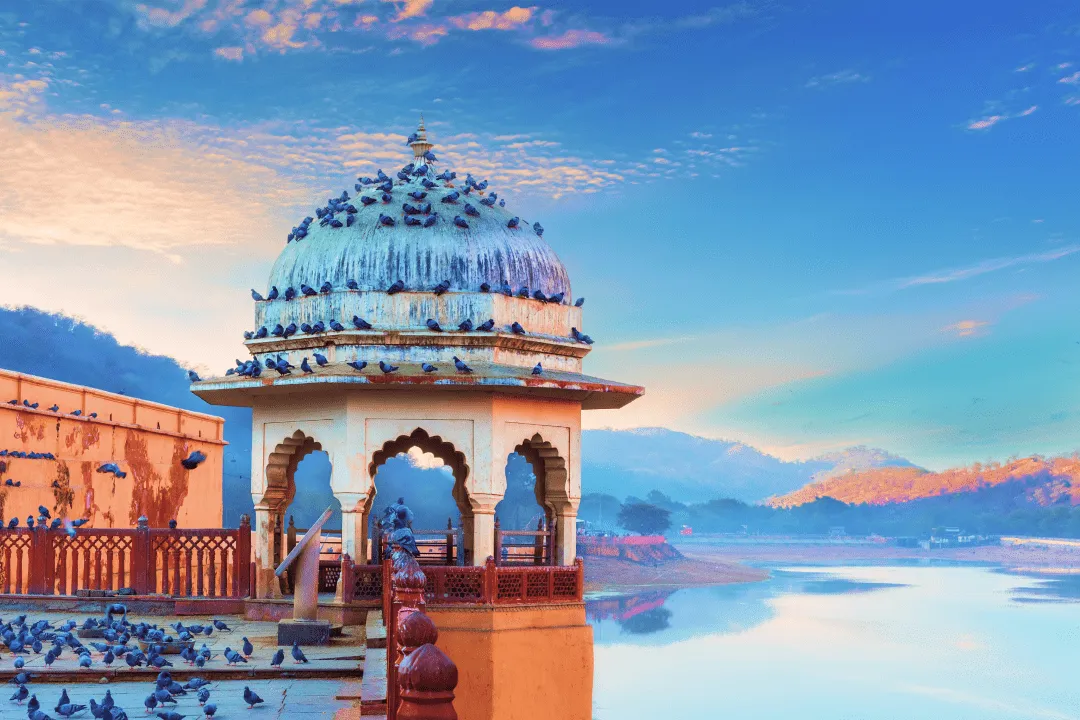
As the saying goes, not by Taj Mahal alone. India has another mahal (this word, by the way, means "palace") — Jal Mahal in the state of Rajasthan. Visually, it looks as if it floats above the water's surface.
The palace's history is also connected with love. How could it not be? However, it's not the love story you might be thinking of. The lake in the middle of which the palace stands is artificial: it was formed thanks to a dam built in the 16th century. At that time, Rajasthan suffered a drought, and the local ruler decided to sacrifice the palace for the sake of his subjects. He ordered the valley where Jal Mahal was built to be flooded so that people would not lack water. Such was the love between the ruler and his subjects.
Hampi and the Ruins of Vijayanagara
Hampi village is located right amidst the ruins of the former imperial capital — Vijayanagara. Many cultural and architectural monuments have been preserved here, so it's no surprise that this place is a UNESCO World Heritage site. In Hampi, you can see the Narasimha statue, the royal scales, or the Mahanavami Dibba tower. Besides the attractions, tourists are drawn here by festivals. They are great here: with music, dancing, and fireworks.
Virupaksha and Shiva Temple
Another gem of Hampi village is the active Virupaksha Temple. The structure itself is a true work of art. Imagine: the altar is surrounded by a complex of musical columns that produce various sounds when tapped. Inside are statues of gods and animals. There is another interesting temple in Hampi — the Shiva Temple. Its unique feature is that it is located underground.
Mehrangarh
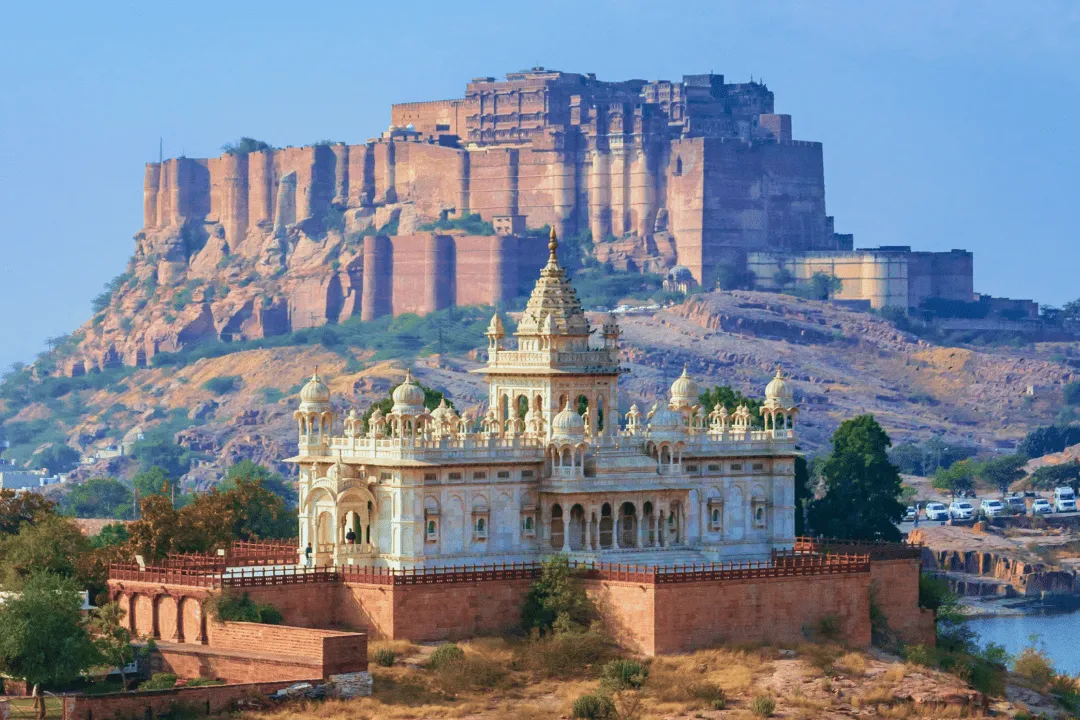
A huge fort that will surely impress travelers. It appeared long ago, in the 15th century. Over time, the city of Jodhpur formed at the foot of the fort. Mehrangarh rises almost 120 meters above it. The height of the fort's walls themselves reaches 36 meters. Getting inside is not easy: you'll have to pass through seven gates. But it's worth it: within the territory of Mehrangarh (its total area is 0.2 km²) are five palaces and an Indian museum where you can explore traditional national costumes, musical instruments, furniture, palanquins, and miniatures. Prefer martial arts? Then we recommend visiting the "Armory." There you will find a collection of knives, sabers, and armor.
Ellora Caves: Temples in the Rocks
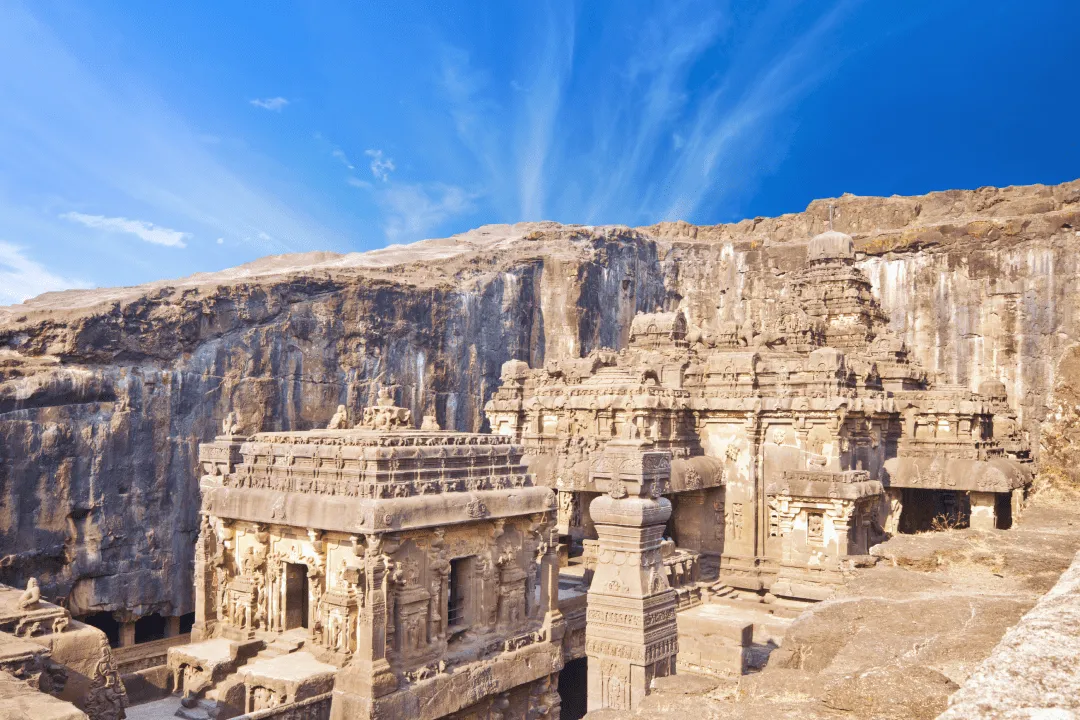
Temples in the rocks... That alone sounds interesting! So, let's tell you: there's a cool complex in India that includes 34 temples. Their uniqueness lies in the fact that, firstly, they were built before the 10th century AD, and secondly, they are dedicated to different religions: Hindu, Jain, Buddhist.
The Buddhist Ellora Caves are considered the earliest. The Hindu temples are less picturesque overall: their outer walls are covered with images of sacred episodes carved in several stages. The Jain temples in the rock are considered the youngest. Visually, they are quite ascetic.
The Ellora Caves are a UNESCO World Heritage site, so nothing can be taken or, especially, removed from the complex's territory. However, you can take plenty of photos; there are no restrictions on that.
Lake Pichola Palace
It looks like a scene from a movie: a smooth expanse of water and, in the center, like a mirage, a huge luxurious palace. Isn't it beautiful? Now imagine the sunsets there…
In short, the Lake Palace is the largest complex in Rajasthan and also the former residence of King Singh II. It was built in the 18th century, and today it houses a luxurious five-star hotel. Lovers of luxury will definitely enjoy it here: white marble walls, 83 luxury rooms in national style.
When to Go to India
When is the best time to go explore all these attractions? That's a good question. In India, the temperature remains roughly the same year-round: from +25 to +33 degrees Celsius. This is all thanks to the subequatorial climate.
However, there is a division into seasons: dry and wet. The dry season is more comfortable for travel. During the rainy season, which begins in July and lasts until early October, there is too much precipitation, and the sea is rough due to monsoon winds.
However, India is ideal for wintering: from November to April, you can soak up vitamin D and enjoy the warmth while it's cold, damp, and slushy in Russia. There is a caveat, though: a large number of tourists during the New Year holidays in resort regions. But, as you understand, many want to sunbathe on the beaches. To avoid crowds on the coast, it's better to plan your Indian beach holiday for March-April. For travel to New Delhi, Mumbai, Agra, or Varanasi, we recommend looking at the period from November to February. This time is ideal for city tourism.
How to Get Around India
For tourists, there are trains, buses, metros (in large cities like Delhi, Mumbai, Kolkata), taxis, and auto-rickshaws or tuk-tuks. However, traffic rules are often ignored here. So, we advise actively looking around and staying vigilant.
For intercity travel, trains are popular here. Pros: the railways cover the entire country (except Goa). Cons: don't expect overly comfortable carriages.
If needed, there's the option to fly: it's faster and not very expensive (thanks to low-cost carriers). Flights are regular but only fly to major cities like Delhi, Mumbai, and so on.
Indian Cuisine
The most important thing to know about Indian cuisine is that there will be a lot of spices. No, not just a lot. A LOT. Local chefs love to add cardamom, coriander, asafoetida, turmeric, cinnamon, and, of course, CURRY to their dishes. The latter, in turn, consists of turmeric, garlic, cumin, chili, and coriander. In short, if you have an allergy to anything on the list, it's best to stock up on antihistamines and be careful about what you eat.
Overall, Indian cuisine is very diverse and depends on the region: each has its own unique features and traditions in preparing dishes.
Connectivity and Internet
To stay connected, it's best to get a SIM card upon arrival. The main operators in India are Airtel, Idea, and Vodafone. Pros: mobile coverage in India is good. Local operators work in jungles and on islands. You can buy a SIM card almost anywhere in India, and the cost is roughly the same.
Thinking of saving money and looking for Wi-Fi? Not a great idea: free Wi-Fi is practically nonexistent in India. Perhaps only in good hotels (three stars and above) and a few cafes. And even then: some restaurants charge an extra fee for connecting to their Wi-Fi.
Safety
The first rule of staying in India: be attentive. Because, despite the relatively low crime rate, you need to take care of your safety here.
For example, it's best not to keep your pockets open. Unfortunately, thefts are common here. Therefore, you should carry bags in front of you, avoid flashing your phone unnecessarily, and not leave belongings unattended.
What else do we want to say? Don't be afraid to travel. Whatever people say about India, it's always best to see everything with your own eyes and draw your own conclusions.