Why Wrap a Suitcase in Film?
 Yasya
YasyaHave you noticed those people at the airport with funny suitcases, gleaming with the shine of film? Who are they? Why do they do it? Or maybe you yourself have bought a roll of polyethylene more than once shortly before a flight and carefully wrapped your luggage with a specific squeak? Is it mandatory to wrap your suitcase with film at the airport? And can you do it at home? Or is it completely useless? Let's figure it out!
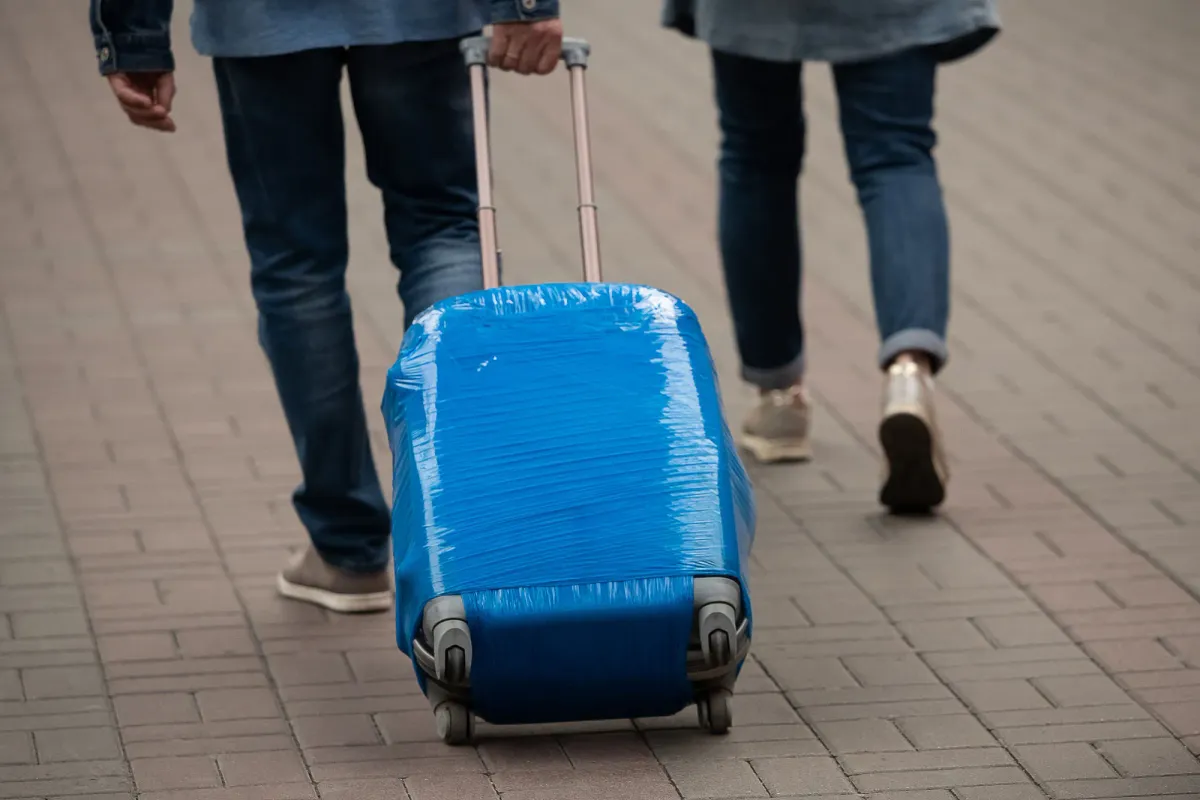
Usually, we pack items of no great value in checked luggage – clothes, shoes, cosmetics. The main points are outlined in baggage rules. Electronics, jewelry, and fragile items travel in carry-on, closer to their owner. So why go to extra lengths for packaging? There are several reasons for this.
Protection from Damage
Alas – airport staff do not always handle passenger luggage carefully. Moreover, suitcases pass through many places, fall onto the carousel, which causes chips, scratches, cracks, and other more serious damage to appear on the surface. A plastic case may not survive such treatment and break, while leather or fabric upholstery may tear. And film creates the necessary protective layer. However, covers are also designed for this purpose, which are simply stretched over suitcases and have openings for handles.
Protection from Zipper Bursting
Some passengers try to take as many items as possible on their trip, resulting in a tightly packed suitcase that barely closes. In this case, the zipper sometimes can't withstand the pressure, bursts open, and items spill out. Those who fear such an outcome wrap their bags in film.
Protection from Moisture
During a flight, a comfortable temperature is maintained in the cabin, which cannot be said about the baggage compartment. There, it's cold, characteristic of the high altitude at which the plane travels. On the ground, however, there might be a 40-degree Celsius heat. And with a sharp temperature drop, condensation occurs. As a result, humid air turns into water droplets. If items are traveling in a fabric bag without external protection, moisture stains may appear on its surface.
Another case in this category is weather conditions. If luggage is loaded onto the plane during rain or snowfall, it can also get wet, and along with it, all the items inside.
Protection from Theft
Do you think airport thieves won't be attracted to your sneakers and swimsuits? It all depends on the country you're flying to. In some, rather poor regions, even such a modest catch won't be disdained. Especially since people are now well aware of the cost of branded clothing and footwear. A layer of film over the case is an additional barrier against an unscrupulous employee. It will be easier for them to choose another passenger's bag than to spend time cutting through layers of polyethylene on yours.
In this same category, we'll include the unauthorized 'appearance' of other people's items in your suitcase. Some passengers fear that prohibited items might be 'planted' in their luggage at the airport. This could lead to problems in the destination country, and they might be asked to pay for their 'resolution'.
Why It's Inconvenient
Although wrapping a suitcase in film is undoubtedly a popular phenomenon, it also has its downsides.
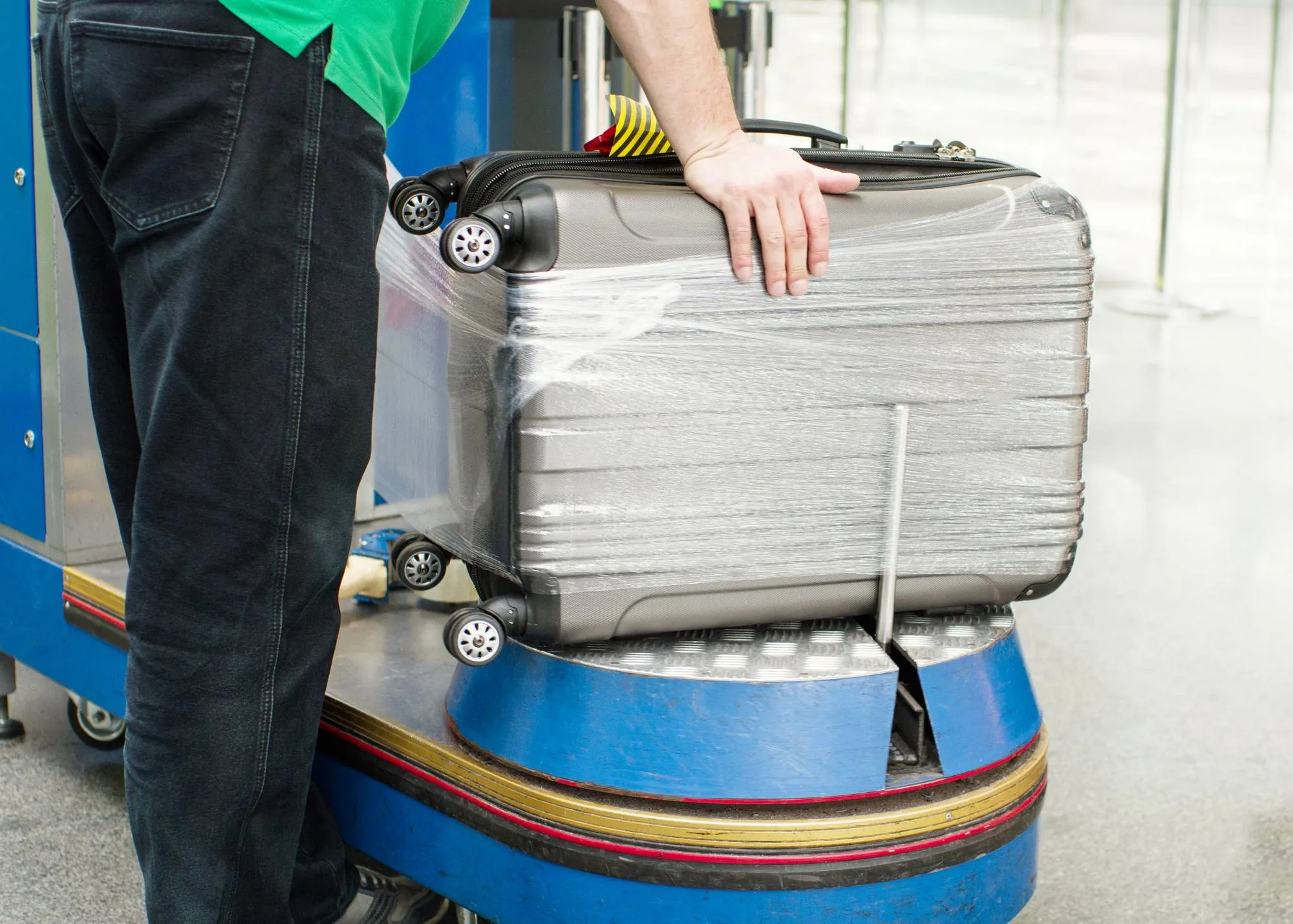
This method of packaging uses 20 meters of polyethylene, or even more. If there are one or two flights ahead, it's still tolerable. But what if there are more? How many times will you have to pack and repack items, spending new and new sums? Especially if you do it at the airport: there, the costs for wrapping become quite exorbitant.
Or imagine having to repack everything again, already at the airport, when it suddenly turns out that you forgot and put items inside that you'll need in the airplane cabin. For example, medications. Then all the hours already spent will be wasted, plus the cost of new layers of polyethylene will be added.
Another downside is that food-grade polyethylene is quite sticky and can cling to the surface of the baggage belt. This can cause jams in the baggage transportation system.
Zoomers and millennials are more concerned with environmental issues than previous generations. And meters of stretch film, which will be used for only a few hours and then discarded, sound anything but eco-friendly.
In the dark, all cats are gray, and in film, all suitcases look the same. Finding yours at baggage claim becomes much harder if any distinguishing marks are hidden, and instead of the usual color, there's a murky white blob with a handle. It's much simpler to buy a cover, which will absorb the impact of possible scratches and scuffs, and also stand out more brightly among others.
Frequent Questions
Is it mandatory to wrap your suitcase in film at the airport?
No, there is no single rule regarding this. Although sometimes airports may introduce bans on self-packaging luggage, as happened in 2024 at Pulkovo.
What to choose – film or a cover?
A cover can be quickly removed and put back on. It's bought once and serves until it becomes unusable, whereas film has to be wrapped anew each time. However, a cover is unlikely to protect against theft, especially if the suitcase doesn't have a good built-in or padlock.
Where is it better to pack – at home or at the airport?
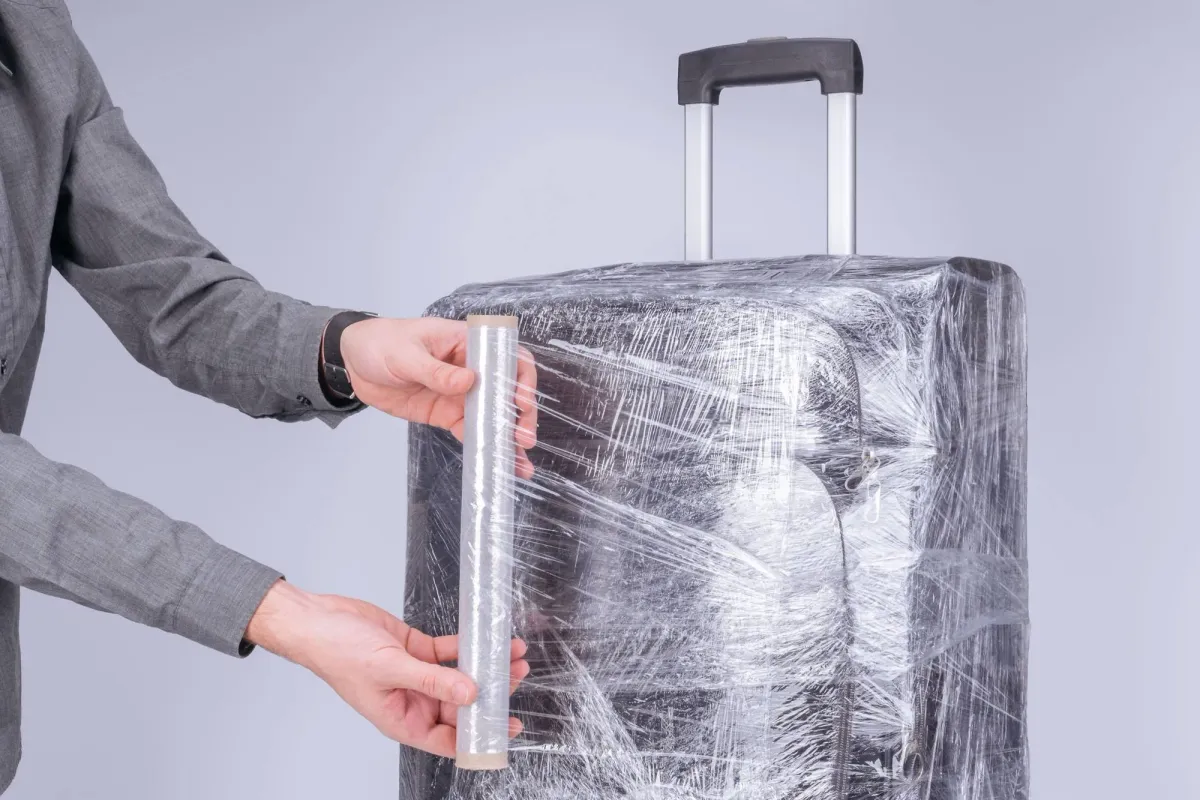
It will be cheaper at home, but neater and more secure with services inside the airport. Stretch film can be bought in advance; some travelers even take a roll with them to pack luggage on the return journey. It's worth using paid services if you notice damage to the suitcase's body at the last minute, for example, a zipper coming undone.
And don't forget to subscribe to our Telegram channel! There you'll find: selections of inexpensive tickets, private sales for subscribers, the latest news on entry rules for countries around the world, and simply interesting travel content — travel hacks, guides, and expert advice.