Support

Kuito (Silva Porto)

About the Airport

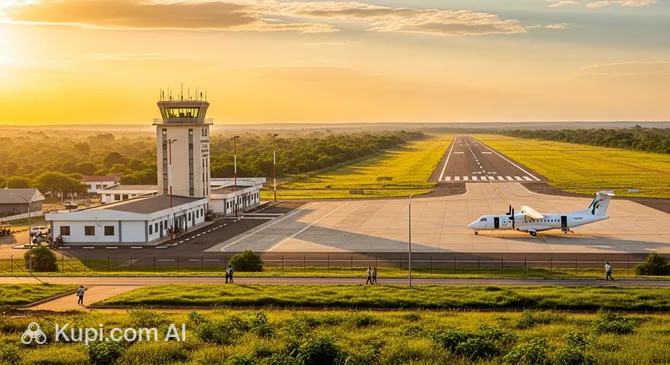
Kuito (Silva Porto). Source: Kupi.com Binoculars

Kuito Airport, also known by its historical name Silva Porto, serves as a key aerial gateway to the Bié Province in the very heart of Angola. This airport is not merely a transit hub, but a vital artery connecting the country's central region with its capital and the rest of the world. While it may not boast the scale of international giants, its role in ensuring transport accessibility for local residents, business travellers, and tourists is difficult to overestimate. It is from here that many journeys across the picturesque expanses of central Angola begin.

IATA Code SVP
ICAO Code FNKU
City Kuito
Distance to center 3 km.
Status Domestic.
Passengers per year No accurate current data
Popular Airlines TAAG Angola Airlines
Schedule online board "Kuito (Silva Porto)"

The main advantage of Kuito (Silva Porto) Airport is its strategic importance for the region. It ensures stable air connectivity with the country's capital, Luanda, operated by the national carrier TAAG Angola Airlines. This is the primary route used for both passenger and cargo transport. In addition to scheduled flights, the airport also services charter and helicopter operations, playing a significant role in the logistical and economic life of the Bié Province. The compact size of the airport makes it convenient for passengers: it is easy to navigate, and check-in and boarding procedures are completed quickly and without unnecessary hassle.

Contact Information

Finding accurate and up-to-date contact information for regional airports, such as Kuito Airport, can sometimes be challenging. Below is a summary of available data and recommendations for passengers.

  • Official Airport Website: At present, Kuito Airport (SVP) does not have a dedicated official website. To obtain information regarding flight schedules and carriage regulations, it is recommended to check the website of the airline operating your flight.
  • Information Desk Phone: There is no single public telephone number for the airport information desk. For all enquiries related to your flight, please contact your airline's support service directly.
  • Airport Address: Aeroporto de Cuito, city of Kuito, Bié Province, Angola.
  • Email: An official email address for general enquiries has not been published.
  • Airport Social Media: Kuito Airport does not maintain official pages on social networks.
  • Lost Luggage Information: In the event of loss, delay, or damage to baggage, it is necessary to contact the Lost & Found service of the airline on whose flight you arrived. Counters are usually located in the arrivals area.
  • Passenger Support Contacts: Passenger support regarding booking, check-in, special services, and other aspects of the flight is provided by the operating airline.

How to Get to the Airport

Getting to Kuito (Silva Porto) Airport, located in the immediate vicinity of the city of Kuito, is quite straightforward. Due to the short distance, the journey will not take much time; however, the choice of transport depends on your budget and preferences regarding comfort. generally, the trip from the city centre to the terminal takes about 10-15 minutes.

The most common and convenient method is a taxi or moto-taxi. Car taxis can be found in the city centre or ordered through a hotel. This is the most comfortable option, especially if you have a lot of luggage. For short trips, locals often use moto-taxis (known as "kupapata") — this is faster and cheaper, but suitable for travellers with only a light backpack. An important tip: always agree on the price of the trip in advance, as taximeters are rarely used.

Public transport options in Angola, particularly in provincial cities, are represented mainly by shared taxis known as "candongueiros". These are minibuses that ply specific routes. Although this is the most budget-friendly way to travel, they do not have a fixed schedule and may not drive right up to the airport entrance. Most likely, you will have to walk a short distance. There is no direct bus or rail connection to the airport.

If you value independence, you might consider renting a car. Several rental agencies may operate in Kuito, but it is recommended to book a vehicle in advance, especially during the tourist season. Car rental offers the freedom to explore the surroundings, however, the condition of local roads should be taken into account. The airport has a simple car park where you can leave a car for both short and long terms. Parking costs are generally low.

To summarise, for most tourists, a taxi will be the optimal choice, offering the best balance between price, speed, and convenience. To save money, you can use a moto-taxi or local minibuses, but be prepared for a lack of comfort. Regardless of the chosen method, plan your trip with a little extra time in reserve.

Terminals and Map

Kuito Airport (SVP), also known as Silva Porto, is a small regional airport, so its structure is extremely simple and clear for passengers. There is one passenger terminal in operation here, which handles both departing and arriving flights.

The terminal building is a compact single-story structure that combines all necessary zones. The airport layout is intuitive: upon entering, you find yourself in the general hall where the check-in counters are located. After receiving a boarding pass and checking in luggage, passengers proceed to a small security screening area, followed by the departure lounge. The arrivals area is located here as well and consists of a simple room for baggage claim.

Since there is only one terminal, the issue of transfers between terminals is not relevant. Navigation will cause no difficulties — all zones are within walking distance of each other, and the few signs available will help you orient yourself. The entire structure of the airport is aimed at quick and functional passenger service, without complex corridors or multiple levels.

Completing all formalities, including flight check-in and security screening, usually takes very little time thanks to the low passenger traffic. Nevertheless, it is recommended to arrive at the airport approximately 1-1.5 hours before the departure of a domestic flight to go through all procedures without rushing. The main advice for travellers is not to expect the variety of services found in a large hub at Kuito Airport, but rest assured that its simple and logical organisation will make your stay here as comfortable as possible.

Airport History

The history of Kuito Airport (SVP), also known as Silva Porto, is closely intertwined with the history of Angola itself. The airport was founded during the colonial period when the city bore the name of the Portuguese explorer António da Silva Porto. Initially, it served as an important transport hub for the development and administration of the vast Bié Plateau region, ensuring communication with the coast and the capital.

The most dramatic and significant stage in the airport's history occurred during the years of the Angolan Civil War. The city of Kuito became the arena for fierce and prolonged battles. During this difficult period, the airport turned into a veritable "road of life" for the besieged city. It played a key role in the delivery of humanitarian aid, food, and medicines, as well as in the evacuation of the wounded, becoming a symbol of hope and survival for thousands of people.

After the end of the war in 2002, a new chapter began in the airport's history. As part of the national infrastructure recovery programme of Angola, Kuito Airport underwent massive reconstruction and modernisation. Works were carried out to restore and extend the runway, a new modern passenger terminal was built, and new navigation and lighting equipment was installed. These changes allowed the airport to receive larger aircraft and meet international flight safety standards.

Today, Kuito Airport is an important element of the transport system of central Angola. It not only ensures passenger and cargo transportation but also contributes to the economic development of the Bié Province, supporting trade, agriculture, and tourism. Its history — from a colonial airfield and military base to a modern civil airport — reflects the path travelled by the entire region from conflict to peace and development.

Services and Amenities

Kuito Airport (SVP), also known as Silva Porto, is a regional airport serving the city of Kuito and its surroundings. Passengers should note that, as in most small airports, the range of services here is basic and designed to meet the essential needs of travellers before departure.

The airport infrastructure includes a limited selection of dining outlets. Typically, one can find a small cafe or buffet offering light snacks, sandwiches, and beverages. The selection of shops is also small — usually a small kiosk with necessities, press, and souvenirs. For more substantial shopping or dining variety, it is better to rely on the facilities within the city itself.

The terminal building has waiting areas with standard seating. Specialised VIP lounges or business lounges are likely absent. Access to free Wi-Fi may be limited or unavailable, so it is recommended to use mobile data. The number of power outlets for charging electronic devices may also be small — it is safer to carry a portable charger (power bank) with you.

Financial services at Kuito Airport are minimal. There may be an ATM, but one should not count on the presence of full-service bank branches or currency exchange bureaux. It is recommended to exchange money in advance in major cities of Angola. In case of necessity, the airport typically has a first aid point for emergency situations.

Passengers with reduced mobility are advised to contact their airline in advance, at least 48 hours before departure, to request assistance and clarify available services at the airport. Special mother and child rooms or play areas for children are generally not available, but standard restrooms are accessible. There are no hotels within the airport territory. The nearest accommodation options are located in the city of Kuito, which can be reached by taxi.

The airport does not provide services for business travellers, such as conference rooms or business centres. For holding meetings or working, it is necessary to use the infrastructure of hotels and business centres in the city itself.

Where to Eat

Kuito Airport (SVP), being a small regional air terminal, offers passengers a limited selection of food, sufficient for a short wait. The options here are oriented primarily towards a quick snack rather than a full lunch or dinner in a restaurant.

In the main terminal building, typically before security control (in the landside zone), there is a small cafe or buffet. Here travellers can purchase soft drinks, water, coffee, tea, as well as light snacks: sandwiches, pastries, and packaged snacks. Sometimes the assortment includes simple local dishes, providing an opportunity to experience Angolan flavours even while waiting for a flight.

Full-service restaurants with a menu are absent at the airport. The selection of dishes for passengers with special dietary needs (vegetarian, gluten-free, or Halal) is extremely limited or non-existent. Therefore, if you observe a strict diet, it is strongly recommended to bring food with you.

The operating hours of the local cafe are usually tied to the schedule of departures and arrivals. The price range is generally moderate but may be slightly higher than in the city. If you have time and wish to have a substantial meal, it is better to do so at one of the establishments in the city of Kuito itself before travelling to the airport.

Travel Tips

To ensure your journey through Kuito (Silva Porto) Airport goes smoothly, make use of our tips. Planning is the key to a calm start or conclusion of your trip around Angola.

Arrival and Check-in: We recommend arriving at the airport at least 2 hours before departure. Although Silva Porto is a small airport, it is better to have a buffer of time in case of unforeseen circumstances. Keep your passport and boarding pass ready to speed up the check-in and security control processes.

Seat Selection and Hand Luggage: When choosing a seat on the plane, be guided by your preferences: by the window for scenic views, or by the aisle for more space and convenience. Be sure to pack documents, money, gadgets, and other valuables in your hand luggage. Remember the standard rules: liquids in containers no larger than 100 ml and no sharp objects. Always check your airline's baggage allowance in advance.

Transfers: Passengers with connecting flights should clarify with airline staff whether their luggage will be automatically transferred to the next flight, or if it needs to be collected and checked in again. This is particularly important in small airports to avoid misunderstandings and unnecessary rushing.

Saving Time and Money: The simplest way to save time is to complete online check-in for your flight if the airline provides such a service. To avoid unnecessary expenses, you can have a snack before leaving for the airport or bring light snacks with you, as the choice of cafes on the premises may be limited, and prices higher than average.

In Case of Flight Delay: If your flight is delayed, first contact an airline representative for the latest information. Enquire about your rights to receive beverages, meals, or hotel accommodation in the event of a long delay. To ensure the wait is not tiresome, download films or books to your devices in advance, and do not forget a portable charger.

Airports in nearby cities

Reached the end of the page?

That means the route is fully explored