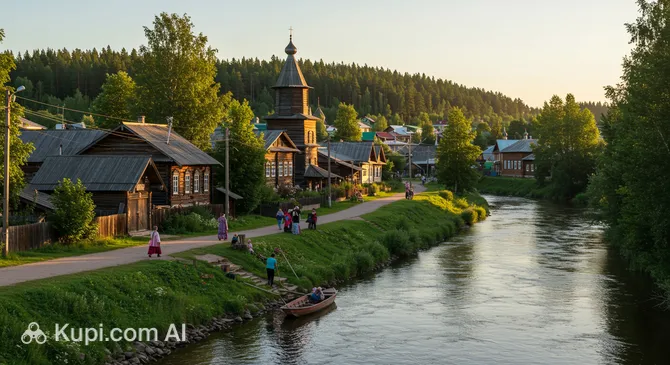
Leshukonskoye is an authentic corner of the Russian North, tucked away among the endless forests of the Arkhangelsk region in Russia. Located in a picturesque spot at the confluence of the Vashka and Mezen rivers, the village charms visitors with its tranquility and genuine Pomor character. It is an ideal destination for those seeking solitude with nature and wishing to witness the life of a true northern province that has preserved its way of life for centuries.
Leshukonskoye. Illustration.
Source: Kupi.com AI
The village's geographical position defines its unique landscape: the calm waters of the rivers and the dense taiga surround the settlement on all sides. The history of Leshukonskoye dates back to 1614, when it became the administrative center of the Ust-Vashskaya volost. Today, about 5,300 people live here, creating a cozy and tight-knit community where every guest feels part of the slow-paced rhythm of Pomor life.
The main riches of these places are the natural attractions and traditional wooden architecture. Walks along the banks of the Mezen, watching the Northern Lights in winter, and experiencing the White Nights in summer leave an indelible impression. A visit to this land is an invitation to a world where humans live in harmony with the harsh but beautiful nature of the North, drawing strength from centuries-old traditions of fishing and logging.
Weather Overview
The climate in Leshukonskoye has a pronounced continental character with subarctic features, which results in harsh winters and short but fresh summers. Due to the proximity of large rivers and forests, high humidity is often observed here. The weather in the village is characterized by variability, so tourists should always be prepared for sudden changes in temperature.
The winter period in this region is long and severe: snow cover can last up to seven months a year, and the average January temperature is about -12°C, although frosts often drop to -30°C and below. Summer arrives late and does not last long, with average temperatures around +15...+20°C in July. Expect a moderate amount of precipitation throughout the year, with July and August traditionally considered the wettest months.
Average monthly temperature
Average monthly precipitation
Interesting Facts
Leshukonskoye is a place where history intertwines with the harsh beauty of nature, holding many surprising details.
Ancient Roots: The first mention of the settlement as the center of the Ust-Vashskaya volost dates back to 1614.
Geographical Junction: The village is located at a unique point—exactly at the confluence of two major northern rivers: the Mezen and its tributary, the Vashka.
Heavenly Gates: Despite its remoteness, the village has its own airport with the IATA code LDG, providing a connection to the "mainland."
Cultural Reserve: The region is considered one of the centers for preserving authentic Pomor culture, including traditions of wooden shipbuilding and fishing.
Northern Outpost: Leshukonskoye is located at the 64th parallel north, making it an excellent spot for observing the aurora borealis during the winter months.
How to Get There
Given the remoteness of Leshukonskoye, planning your trip requires special attention to transportation. The most reliable and fastest way to reach this northern land is by air. Regular flights connect the local airport with Arkhangelsk, which is especially relevant during the off-season when land routes can be difficult due to the whims of the weather. Detailed route information will help you better plan your journey.
The main air hub is Leshukonskoye Airport (IATA: LDG), located just a few kilometers from the village center. It is a small but vital harbor, primarily serving regional aircraft. There are also landing strips in the vicinity, such as Tsenogora and Olema, which are used for local needs and communication with remote settlements in the district.
Land travel to the village is a real adventure. The route from Arkhangelsk by car is about 700 km and follows highways with sections of unpaved road. In winter, "zimniks" (ice/winter roads) are in operation, while during the spring and autumn floods, land access may be temporarily restricted. SUVs are highly recommended for such trips, and it is essential to check road conditions in advance.
Station
Passenger traffic
Distance
Lodma Station
—
220 km
Yuras Station
—
237 km
Arkhangelsk Gorod Station
—
250 km
Isakogorka Station
—
252 km
Brusenitsa Station
—
254 km
In the summer season, it is possible to reach the village by water along the Mezen and Vashka rivers. This is the most picturesque way to travel, allowing you to enjoy the beauty of the northern banks. River transport depends on the water level, so it is worth checking the schedule of boats and cutters directly before the trip.
Main Attractions
The main attractions of Leshukonskoye are natural in character. The confluence of the majestic Vashka and Mezen rivers is a centerpiece for all visitors to the village. Here, you can spend hours watching the water flow, go on a boat trip, or enjoy fishing, which is considered some of the best in the North. The picturesque banks are perfect for ecotourism and observing the flora and fauna of the Arctic region.
The architectural appearance of the village is shaped by ancient wooden buildings typical of Pomor architecture. Strolling through the quiet streets, you can see traditional izbas (log houses) with carved window frames that transport tourists back to the 17th–19th centuries. Of particular interest are the small local churches and chapels scattered throughout the surrounding area, which showcase the skill of northern carpenters and their ability to integrate structures into the surrounding landscape.
For outdoor enthusiasts, Leshukonskoye offers the vast expanses of the surrounding forests. In summer and autumn, these places turn into a true paradise for foragers: northern berries like cloudberries and blueberries, as well as numerous mushrooms, attract lovers of natural products. The absence of mass tourism allows you to fully enjoy the primordial silence and authenticity of the Russian hinterland.
Local Cuisine
The culinary traditions of Leshukonskoye are an ode to northern nature and the bounty of the rivers. Freshly caught fish forms the basis of the local diet. Be sure to try the famous Mezen herring and whitefish (sig). Here, they are prepared in many different ways: aromatic ukha (fish soup) cooked over a campfire, baked on coals, or used as a filling for traditional northern open-topped pies known as rasstegai. The quality and freshness of the products in village cafes and the homes of locals are astounding.
Forest gifts play an equally important role in the gastronomic culture. Pies and desserts with cloudberries, blueberries, and lingonberries are the region's signature. These berries are not only used in baking but are also made into healing fruit drinks (mors) and jams, which warm you up perfectly in cold weather. A traditional tea session here is incomplete without herbal infusions and local honey gathered from forest apiaries.
The food culture in the village is characterized by simplicity and hospitality. Since there are no large restaurants here, most gastronomic life is concentrated in cafes at guest houses or in home kitchens. This gives tourists a unique chance to try real Pomor food prepared according to ancient recipes. The general character of the gastro-scene can be described as natural and hearty, focused on using local products without unnecessary frills.
Travel Tips
A trip to Leshukonskoye is an immersion into the world of primordial northern nature. To ensure your trip is comfortable and leaves only pleasant memories, use our practical tips.
Clothing and gear: Even in summer, bring warm clothes and waterproof shoes. The humidity from the rivers and the variability of the northern weather may require several wardrobe changes a day. In winter, professional warm clothing designed for temperatures down to -30°C is essential.
Transport planning: Book your flight tickets in advance, especially during the summer season. Remember that land travel is highly dependent on road conditions and ice crossings, so always allow extra time for the journey.
Finances: There are practically no ATMs in the village, and international cards may not be accepted. Be sure to carry a sufficient supply of cash to pay for accommodation, meals, and the services of private transporters.
Communication and navigation: Mobile internet can be unstable. We recommend downloading offline maps of the region in advance and saving all important contacts in paper form.
Health: There is a pharmacy in the village with a basic set of medicines, but it is better to bring specific medications with you. During the summer, be sure to take insect repellent (for mosquitoes and midges), which can be very numerous in the taiga.
Local etiquette: Residents of the North are hospitable but value restraint and respect for their work. Greet people when entering shops or houses, and don't hesitate to ask for advice—they will always help you.
What to avoid: You should not head into the forest or onto the river alone without knowledge of the area. It is also not recommended to disturb the peace of local residents with noisy behavior in the evening—tranquility is valued here.
Extra tip: Try to get invited to a traditional tea session in one of the local houses. It is the best way to learn the history of the region firsthand.
Leshukonskoye will give you unforgettable impressions if you are open to new experiences and treat the traditions of this harsh but beautiful land with respect. Have a great trip!
Entertainment & Nightlife
Entertainment in Leshukonskoye is inextricably linked with outdoor activities and traditional northern crafts. Instead of the usual city clubs, visitors are offered the chance to go on an exciting fishing trip on the Mezen River or forage in the vast taiga. In summer, river trips and hiking are popular, while in winter, snowmobile excursions across the snowy expanses take center stage, allowing you to see the wild nature in all its glory.
Nightlife in the village is virtually non-existent, giving way to cozy evenings by the fireplace in guest houses or leisurely walks under the starry sky. This place is designed for those who value peace and want to escape the hustle and bustle of megacities. The main form of leisure during the dark hours is soulful conversation and getting to know the local folklore, which is carefully preserved by the inhabitants of the Pomor region.
The cultural program may include visiting local folk festivals, where traditional celebrations are held, ancient songs are sung, and crafts are demonstrated. For those interested in history, a walk through the historical center of the village with its wooden houses will be a real immersion into the past. Safety in the village is high, and night walks are perfectly peaceful, though it is worth remembering to call a taxi through local providers if you need to reach remote parts of the settlement.
Parks & Museums
In the traditional sense of parks with alleys and benches, there are none in Leshukonskoye; however, the village itself and its surroundings represent a single natural recreation zone. The endless forests surrounding the settlement and the banks of the Vashka and Mezen rivers serve as natural sites for walks and picnics. The picturesque landscapes allow you to enjoy the primordial beauty of the taiga, which is especially beautiful during the golden autumn or under fluffy winter snow.
Although the village lacks large state museums, the streets and ancient wooden houses themselves serve as a historical exhibition. A walk through the historical part of the village turns into an open-air tour where you can study the features of northern architecture and the life of the Pomors. In the local community center or library, you can sometimes find local history corners where tools and household items of ancestors are collected, telling the story of the difficult lot of the pioneers of these places.
The main "museum" for a tourist in Leshukonskoye is the life and traditions of the local population itself. The region's natural wealth—its fish-rich rivers and forests full of game and berries—is an integral part of the cultural heritage. The absence of formal museum walls is more than compensated for by live communication with hospitable residents who will gladly share the stories of their land and show you the most beautiful corners of their small homeland.
Getting Around
The public transport system in Leshukonskoye is quite limited, which is typical for small northern settlements. The main way to travel between the village and the nearest settlements in the district is by bus. They run on a schedule; however, trips may be infrequent, so tourists are advised to check the timetable at the local bus station in advance. Fares are usually paid in cash to the driver or conductor.
Within the village itself, it is most convenient to move around on foot or by bicycle, as distances are small and a walk through the quiet streets will be a pleasure for lovers of northern nature. For faster trips or luggage delivery from the airport, you can use the services of private taxi drivers. There are no official taxi apps here, so it is better to get the phone numbers of local drivers in advance from the guest house administration or at the LDG airport.
In winter, the transport specifics of the region change: snowmobiles come to the fore, becoming an indispensable means of travel along snowy roads and rivers. Alternative forms of transport, such as car-sharing or bike rentals, are not available in the village. When planning a visit to this remote land, you should rely on your own strength or arrange private transportation with local residents, which is common practice here.
Accommodation
The hotel infrastructure in Leshukonskoye is modestly developed, which is quite consistent with its status as a remote northern village. The main accommodation options for tourists are small departmental hotels or guest houses offering a basic level of comfort. These are often cozy wooden buildings with a homely atmosphere and picturesque views of the river or forest from the windows.
Many travelers seeking maximum authenticity prefer to stay with local residents. The private sector offers the opportunity to live with a real Pomor family, get acquainted with their way of life, and taste home-cooked meals. Such accommodation requires prior arrangement, as there are virtually no specialized online booking services for private homes in this region.
When planning a trip to Leshukonskoye, it is extremely important to book accommodation in advance, especially during local holidays or the peak fishing and hunting seasons. The price range here is quite affordable, but keep in mind that service may be limited to the essentials. In return, you will get the unique opportunity to wake up to the silence of the northern wilderness and enjoy the hospitality of the locals.
Nearby Cities
Leshukonskoye can be an excellent starting point for exploring the harsh and majestic nature of the Arkhangelsk region. Despite the region's remoteness, there are several interesting settlements nearby, each with its own unique character and history typical of the Russian North.
The closest and most interesting destination for a trip is the town of Mezen. Located about 127 kilometers downstream, it is famous for its historic merchant houses and unique Mezen wood painting. In summer, you can get there by boat while enjoying the river landscapes, or by road if weather conditions permit. For a longer journey, you could consider a trip to Arkhangelsk—the cultural and historical capital of the region, which is much further away and will require at least one overnight stay.
Exploring the surroundings of Leshukonskoye allows for a deeper understanding of Pomor culture and how people live in Far North conditions. In addition to larger centers like Novodvinsk or Severodvinsk, small villages along the banks of the Mezen, where ancient traditions and a unique northern dialect have been preserved, are also of interest. Every such trip will provide you with plenty of impressions and unique photographs.
Shopping & Souvenirs
Shopping in Leshukonskoye is primarily an opportunity to purchase eco-friendly products and unique handmade items. You won't find large shopping centers here, but local shops and small stalls offer things you won't encounter in megacities. The main focus is on the goods the northern land is famous for: dried and smoked fish, berries gathered in the taiga, and natural forest honey.
As memorable souvenirs of your trip, it's worth bringing back items made of wood and birch bark, crafted by local artisans. Traditional Pomor crafts, such as carved spoons or boxes, make excellent gifts. Also, fairs are sometimes held in the village where you can buy knitted items made of natural wool that will keep you warm in any frost. Payment in most outlets is made in cash, so it is worth taking care of smaller bills in advance.
Shops in the village follow a standard schedule, usually closing in the evening. The shopping atmosphere here is very calm and friendly: sellers are often ready to tell you about the origin of the goods or give advice on how to prepare local fish. Visiting markets or small fairs will not only allow you to make purchases but also better feel the rhythm of life in this secluded northern village.