Support

Grytviken

About

Grytviken is not just a city in the conventional sense, but rather a historical settlement shrouded in an atmosphere of rugged beauty and significant events of the past. Located on the island of South Georgia, it is one of the southernmost and most remote corners of the planet, attracting travelers with its unique history and untouched nature.
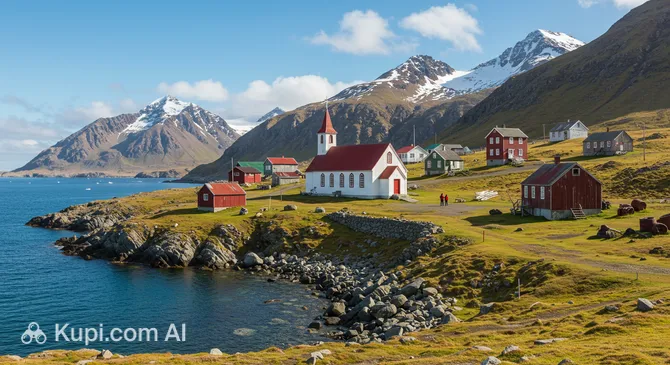
Grytviken. Illustration.
Source: Kupi.com AI

This iconic place is located within the territory of South Georgia and the South Sandwich Islands, in the sheltered King Edward Cove. The climate here is subantarctic, characterized by cool summers and cold, windy winters, which creates unique conditions for the local ecosystem. The permanent population of Grytviken is extremely small, consisting of only about 99 people, mostly research scientists, museum staff, and seasonal workers.

The main draw of Grytviken is its rich and sometimes dramatic heritage. Here you can see the impressive remains of the old whaling station, which serve as a silent reminder of the days of active hunting in the Southern Ocean. A special place is held by the picturesque Norwegian Lutheran Church, also known as the Whalers' Church, which has become a true symbol of the settlement and its history. Nearby, in the local cemetery, lies the grave of the famous Antarctic explorer Sir Ernest Shackleton, attracting admirers of his incredible courage and leadership. It is also worth visiting the South Georgia Museum, whose exhibits tell in detail about the history of the island's discovery, whaling, maritime expeditions, and the amazing wildlife of the region.

Visiting Grytviken is a unique opportunity to touch the history of polar exploration, see the traces of a bygone era, and enjoy the incredible landscapes of one of the wildest and most beautiful places on Earth. This journey will undoubtedly leave a deep mark on the soul of everyone who dares to discover this amazing and remote corner of our planet.

You can find more interesting facts on the history of Grytviken page

Weather Overview

The weather in Grytviken is characterized by a harsh subantarctic climate. Even in the warmest months, which are considered to be January and February, the average air temperature fluctuates around +1.2°C to +1.6°C, while maximum daytime temperatures can reach +2.7°C in January and +3.2°C in February. The coldest months are June, July, and August, when the average temperature drops to -4.2°C to -5.2°C, and minimum night temperatures can reach -6.9°C in July.

Expect cool and damp summers with frequent, though not heavy, precipitation, and very cold, snowy winters. Precipitation in Grytviken falls fairly evenly throughout the year, averaging 4-6 mm per month. The number of days with precipitation is also high—from 21 to 25 days monthly, which indicates high humidity and frequent weather changes. For more detailed information on weather conditions, we recommend visiting the Grytviken Climate page.

Average monthly temperature

Average monthly precipitation

Interesting Facts

Grytviken is not just the impressive remains of a whaling station and the final resting place of Sir Ernest Shackleton. This remote corner holds many amazing stories and little-known facts that make it even more attractive to researchers and travelers. Here are some of them:

  • The name Grytviken means "Pot Cove" or "Cauldron Cove" in Swedish and Norwegian. This name was given by the Swedish geologist and explorer Johan Gunnar Andersson in 1902 when he discovered old English cauldrons on the shore, which had been used for rendering seal oil as far back as the 19th century.

  • The famous white wooden church in Grytviken, known as the Whalers' Church, was not built on-site but was prefabricated in Norway. It was delivered to South Georgia Island in sections and assembled here in 1913 by the whalers themselves.

  • In the early 20th century, Norwegian whalers introduced reindeer to South Georgia Island. Initially, this was done to provide the settlers with fresh meat. The reindeer adapted well, and their population grew significantly, but in the 21st century, a large-scale campaign was carried out to completely remove them from the island as they were damaging the unique local vegetation.

  • Despite the harsh conditions and remoteness, Grytviken had its own cultural life. A cinema was built for the whalers, where films were regularly shown. This was one of the few entertainments available to the station workers in their free time from heavy labor.

How to Get There

Getting to Grytviken is a true adventure, as the settlement is located in one of the most remote corners of our planet, on South Georgia Island. There are no airports in Grytviken that accept regular international or domestic flights, nor is there a rail link. Traveling here requires careful planning and is usually part of a larger expedition.

The main and practically the only way for tourists to get to Grytviken is by sea on board an expedition cruise ship. Such cruises, often including visits to the Antarctic Peninsula and other islands in the South Atlantic, usually depart from ports in South America. The most popular starting points are Ushuaia in Argentina and Punta Arenas in Chile. Thus, the first stage of your journey will be a flight to one of these port cities, from where the sea part of your adventure will begin.

Sailing to South Georgia from mainland South America or the Falkland (Malvinas) Islands takes several days. This travel time is not just a transfer, but a unique opportunity to enjoy impressive seascapes, watch whales, albatrosses, and other rich marine fauna of the Southern Ocean. We recommend researching offers from specialized cruise operators well in advance, as expeditions to this region are planned many months or even years ahead, and the number of places on ships is very limited.

Main Attractions

Grytviken, despite its remoteness and harsh climate, offers visitors several unique and historically significant attractions. These sites tell the story of the whaling past, heroic expeditions, and the amazing nature of South Georgia.

The central feature of Grytviken is the impressive remains of the old whaling station. These rusting structures, massive whale oil tanks, and abandoned equipment create an almost surreal scene against the backdrop of majestic mountains and glaciers. Walking among them is a true immersion into an industrial past when South Georgia was one of the world's centers for whaling. These ruins serve as a powerful and somewhat melancholy reminder of that era and its environmental impact.

One of the most recognizable and photographed symbols of Grytviken is the Norwegian Lutheran Church, also known as the Whalers' Church. This graceful white wooden building was manufactured in Norway, transported to the island in sections, and assembled on-site in 1913 by the whalers themselves. The church is still used periodically for services and is a quiet, peaceful place that contrasts in its refinement with the rugged surrounding landscape. Its simple yet elegant appearance against the snow-capped peaks is the hallmark of Grytviken.

For many travelers, the key point of attraction is the grave of Sir Ernest Shackleton, the legendary Anglo-Irish polar explorer. Shackleton died aboard his ship "Quest" off the coast of South Georgia in 1922 during his final Antarctic expedition and, according to his widow's wishes, was buried right here, in the land he loved so much. His grave in Grytviken's small, windswept cemetery has become a place of pilgrimage for those who admire his unyielding courage, leadership qualities, and the incredible survival story of the "Endurance" expedition. Visitors often follow tradition by leaving a little whiskey at the headstone as a mark of respect.

A visit to the South Georgia Museum is a must. It is located in the former manager's house of the whaling station, known as "The Villa." The museum's exhibits provide a detailed and fascinating overview of various aspects of the island's history: from its discovery and mapping to the booming era of whaling, the daily life of the whalers, the history of Antarctic exploration (including many materials related to Shackleton and other explorers), and, of course, the region's unique wildlife. It is a wonderful place to gain a deeper understanding of the historical and natural significance of Grytviken and the entire island of South Georgia.

Local Cuisine

When talking about the local cuisine of Grytviken, it is important to understand that this is not the place where one goes for gastronomic discoveries in the traditional sense. In this remote corner of the planet, there are no restaurants, cafes, or lively markets offering local specialties. The food system here is entirely oriented towards supporting the lives of a small number of staff and visitors of expedition cruises, and products are delivered from the mainland.

Tourists arriving in Grytviken should not expect signature local dishes. As a rule, all meals are organized on board the expedition ships, where a diverse menu is offered, adapted to travel conditions—hearty and high-calorie food that provides energy for activities in the cool climate. There are no public catering establishments on the shore itself. Historically, the diet of whalers and explorers consisted of canned food, dried meat, and whatever could be sourced locally; however, hunting the unique local fauna is strictly prohibited today.

The range of drinks is also formed from imported supplies. Tea, coffee, juices, water, and various alcoholic beverages are usually available on expedition ships. While there are no specific local drinks in Grytviken, there is a tradition among travelers to raise a symbolic toast, often with whiskey, at the grave of Sir Ernest Shackleton—a tribute to the great polar explorer.

Thus, the main "gastronomic highlight" of Grytviken is not so much specific dishes but the unique experience of eating surrounded by rugged Antarctic nature and against the backdrop of impressive historical scenery. Lunch or dinner on board a ship with views of snow-capped peaks, the remains of the old whaling station, and silent glaciers—this is what truly makes up the gastronomic impression of visiting this amazing place. It is more about the atmosphere and the awareness of the moment than about culinary delights.

Travel Tips

Planning a trip to Grytviken, this amazing and remote corner of our planet? To make your trip as comfortable and memorable as possible, we have prepared some practical tips to help you prepare for your encounter with the history and rugged beauty of South Georgia.

  1. Clothing and items for a harsh climate: The subantarctic climate of Grytviken requires a serious approach to choosing a wardrobe. The basis is layering: thermal underwear, fleece sweaters, and warm windproof and waterproof jackets and trousers. Don't forget a hat, scarf, and warm gloves (preferably two pairs). For shore landings, high waterproof boots with good grip are necessary; expedition companies often provide or recommend rubber boots. Sunglasses and sunscreen are essential (the sun is active even in cool weather, reflecting off water and snow), as well as binoculars for observing the amazing wildlife and a camera with moisture protection and spare batteries (they drain faster in the cold).

  2. Moving around Grytviken: Within Grytviken itself, all movement is done exclusively on foot. The settlement is compact, and the main attractions are within walking distance of each other. Landing on the shore from an expedition ship usually happens via motorized "Zodiac" boats. There is no public transport or car rental option here, of course.

  3. Financial matters: There are almost no places to spend money in Grytviken, except for a small souvenir shop at the South Georgia Museum and the post office. The official currency of South Georgia and the South Sandwich Islands is the British Pound (GBP), but US Dollars (USD) or Euros (EUR) may be accepted for souvenirs. It is recommended to have a small amount of cash in one of these currencies. Bank cards might be accepted at the museum, but it is better to check this with your expedition operator in advance and not rely on it as the only method of payment. There are no ATMs in Grytviken. All major expenses (accommodation, meals) are usually included in the cruise cost.

  4. Health and safety: Your health and safety are priorities. There are no pharmacies in Grytviken, so you must bring your entire necessary supply of medications with you. On board the expedition ship, there is always a qualified doctor and a small medical station. Be sure to get travel insurance that covers evacuation from remote areas. Be careful on shore: do not get too close to wild animals (especially fur seals), do not enter the dilapidated buildings of the old whaling station without permission from a guide as they may be unsafe, and always follow the instructions of the expedition team.

  5. Communication with the outside world: Be prepared for the fact that in Grytviken, you will be practically cut off from usual means of communication. Mobile service and public Wi-Fi are absent on the island. Some expedition ships may provide paid satellite internet, but it is usually expensive and with very limited speed. The primary language for communicating with museum staff and expedition guides will be English.

  6. Local etiquette and respect for nature: Since the permanent population of Grytviken is extremely small and consists mainly of scientific and museum staff, there will be no special difficulties with etiquette. The main thing is to show deep respect for the unique nature and rich history of this place. Do not leave trash (the "leave no trace" principle is critical here), do not disturb wild animals, do not take anything from the territory (except for purchased souvenirs and photos), and treat historical objects with care.

  7. What to avoid: To ensure your visit to Grytviken is safe and does not harm the unique environment, categorically avoid feeding wild animals or getting too close to them, especially penguin colonies and seal haul-outs—this can cause them stress. Do not enter the semi-ruined buildings of the whaling station without accompaniment or special permission. And, of course, leave no trace behind, including organic waste.

  8. A special souvenir and tribute: Do not miss the unique opportunity to send a postcard to friends and family from the Grytviken post office—one of the southernmost in the world! The South Georgia postmark will make your message a true collector's item. Also, many travelers feel it is important to visit Sir Ernest Shackleton's grave and, following tradition, leave a little whiskey there as a mark of respect for the great explorer. If you plan to do this, check your expedition company's rules regarding alcohol on shore.

We hope these tips help you better prepare for an unforgettable journey to Grytviken. This is a place where history comes alive amidst majestic nature, and your trip will undoubtedly become one of your most vivid adventures!

Entertainment & Nightlife

When planning your evening leisure in Grytviken, it is important to understand that this unique place offers a very special experience, far from the usual urban nightlife with its noisy bars and clubs. South Georgia and the South Sandwich Islands, and Grytviken in particular, are a realm of rugged nature and rich history, where evenings are spent in a completely different atmosphere.

Instead of neon signs and crowded streets, evenings in Grytviken are a time for contemplation and immersion in the unique environment. Imagine an incredible starry sky far from any light pollution, a deafening silence occasionally broken only by the sounds of wildlife, or fascinating lectures on the history of Antarctic exploration and its amazing wildlife, which are often organized on board the expedition ships that bring visitors here. In Grytviken, you will not find specialized nightlife districts, bars, nightclubs, concert venues, or night markets in their traditional sense. Evening entertainment is usually concentrated on board your ship or consists of quiet relaxation and enjoying the unique atmosphere of this remote corner of the planet.

Since Grytviken lacks infrastructure for night entertainment, questions about specific streets with bars, opening hours, dress codes, or average drink prices are irrelevant here. Moving around the settlement itself at night is usually not expected and is strictly regulated by expedition safety rules. As for safety, Grytviken is an exceptionally peaceful place due to its isolation and very small, specific population (mostly scientific and museum staff). It is impossible to call a taxi at night here, as such a service simply does not exist.

If we talk about daytime activities, Grytviken offers a rich program for curious travelers, focused on its history and nature. The main "entertainment" here is exploration. You can visit the famous South Georgia Museum, inspect the impressive and photogenic remains of the old whaling station, and, of course, pay tribute to Sir Ernest Shackleton at his grave. Instead of theaters or amusement parks, you will find majestic and rugged landscapes and unique wildlife—watching colonies of penguins, elephant seals, and fur seals is a captivating activity in itself. These are entertainments of a different kind that provide deep and meaningful impressions rather than fleeting fun.

Thus, while Grytviken cannot offer traditional nightlife, it gives something much rarer and more valuable—the opportunity to take a break from the hustle and bustle of the city, touch the living history of polar exploration, and enjoy the pristine, almost untouched beauty of one of the most remote and amazing places on Earth. Evenings here are a time for reflection, educational conversations with fellow travelers and guides, and admiration for the majestic and calm power of nature.

Parks & Museums

Grytviken offers its guests a unique immersion into a world where rugged nature and a rich historical heritage replace traditional city parks and museum complexes. Here, the "green zones" are the majestic landscapes of South Georgia, and the "museums" are the evidence of bygone eras.

Instead of the usual parks, Grytviken is surrounded by wild, untouched nature, which is itself the main "green zone." Walking along permitted routes in the surrounding area allows you to enjoy views of fjords and glaciers. The coastline becomes a living stage for observing colonies of penguins, elephant seals, and fur seals, offering an unforgettable "park" experience in their natural habitat.

The key cultural center acting as a traditional museum is the South Georgia Museum. It offers a concentrated immersion into the history of the island—from whaling to polar expeditions, particularly highlighting the legacy of Sir Ernest Shackleton. The Norwegian Lutheran Church, known as the Whalers' Church, functions as a historical monument that preserves the atmosphere of the early 20th century and offers a moment for reflection on the past.

The ruins of the old whaling station themselves can be considered a unique "open-air museum." These impressive remains of industrial structures silently tell the story of the whaling era, allowing visitors to feel the breath of history. The small cemetery where Sir Ernest Shackleton is buried is also a kind of memorial "museum," a place to reflect on great geographical discoveries and human resilience.

The authentic impression of the "parks and museums" of Grytviken lies not so much in visiting individual objects as in a comprehensive immersion into its unique environment, where every element of the landscape and history contributes to the overall perception of this amazing place.

Getting Around

When planning your movement around Grytviken, it is important to consider the unique nature of this historical settlement. In Grytviken, there is no public transport system in the usual sense of the word, such as subways, buses, trams, or trolleybuses. This is due to its remoteness, the extremely small permanent population, the small size of the settlement itself, and its specific role as a historical, tourist, and scientific site.

The primary and essentially the only way to move directly through the territory of Grytviken is walking. The settlement is very compact, and all its key attractions, including the famous remains of the old whaling station, the South Georgia Museum, and the historic church, are in close proximity to each other and easily accessible on foot. To land on the shore from expedition cruise ships, which are the main way to reach Grytviken, special motorized boats called "Zodiacs" are used. They ferry visitors from the ship to the pier.

Due to the absence of any public transport system, you will also not find such common urban services in Grytviken as taxis, car-sharing services, or bicycle rental points. Accordingly, questions about fare payment systems, types of travel tickets, transport cards, mobile apps for tracking transport, or its movement schedule are irrelevant here. All movements on land are carried out independently and do not require the use of any transport.

Thus, when preparing for a visit to Grytviken, the most important part of planning your movement will be choosing comfortable, warm, and waterproof footwear suitable for walking over rugged terrain and in changeable subantarctic weather. This will allow you to fully and comfortably enjoy exploring this amazing place, its rich history, and the surrounding wildlife. The absence of transport here is not a disadvantage but rather emphasizes the seclusion, authenticity, and special atmosphere of this remote corner of the planet.

Accommodation

When planning a trip to Grytviken, it is important to understand that traditional accommodation options, such as hotels, hostels, or apartments for rent, are unavailable here. This is due to Grytviken's unique status as a remote historical settlement and research base on South Georgia Island, where the permanent population is extremely small and consists mainly of scientific and museum staff.

The overwhelming majority of visitors arrive in Grytviken on board expedition cruise ships. These ships serve as the primary, and effectively the only, place of residence for tourists during their visit. Cabins on such ships can vary in comfort levels, from standard to more spacious, but all provide the necessary coziness and safety in the harsh subantarctic climate. Meals are also usually organized on board the ship.

Since accommodation is on expedition ships, the question of choosing a specific area to stay in Grytviken itself is irrelevant. All shore landings to see attractions, such as the South Georgia Museum or the remains of the old whaling station, are organized from the ship and are part of the overall expedition program. There is no tourist infrastructure on the island itself in the form of hotels or guest houses available for booking.

If you dream of visiting Grytviken, the key is to book a spot on an expedition cruise well in advance. Such tours are often planned many months, and sometimes a year or two, ahead, as the number of places is limited. The cost of such expeditions usually falls into the high-price segment, as it includes not only accommodation and meals on board but also the complex logistics of reaching such a remote region of South Georgia and the South Sandwich Islands, as well as the accompaniment of experienced guides and lecturers. Booking is done through specialized tour operators offering expeditions to the Antarctic and subantarctic regions, or through their official websites and online travel platforms specializing in this type of travel.

Nearby Cities

For those who want to explore the surroundings, Grytviken serves as a starting point for getting to know the immediate environment, completing the picture of this unique region.

In the immediate vicinity, just 1 kilometer from Grytviken, is King Edward Point. This is not so much a tourist city for a day trip in the usual sense, but rather the administrative and scientific center of South Georgia and the South Sandwich Islands, where an active research station of the British Antarctic Survey is located. Although access to the station itself is usually limited for tourists, its close proximity to Grytviken provides insight into the modern significance of the island, the scientific research being conducted here, and daily life in this remote corner of the planet. This creates an interesting contrast with the historical heritage of the whaling station in Grytviken.

CityPopulationDistance
King Edward Point221 km

Even a brief acquaintance with nearby points like King Edward Point allows for a deeper understanding of the versatility and uniqueness of the Grytviken region, combining rugged nature, a rich historical past, and modern scientific activity.

Shopping & Souvenirs

Shopping in Grytviken is a very specific experience, drastically different from shopping in most tourist destinations. It is important to understand that Grytviken is not a commercial center; it is a historical settlement and a scientific base where shopping opportunities are extremely limited and focused mainly on acquiring unique souvenirs that serve as reminders of this amazing place at the edge of the Earth.

In Grytviken, there are no traditional shopping streets, districts, or large shopping centers. The only place where you can make purchases is a small shop at the South Georgia Museum. This is where the entire available range of goods for tourists is concentrated. You will find no other specialized shops or markets in the settlement.

The main things to bring back from Grytviken are, of course, souvenirs related to its rich history and unique nature. In the museum shop, you can find books about the Antarctic, South Georgia, and Sir Ernest Shackleton's expeditions, postcards with stunning local views, pins, magnets, small commemorative items, and perhaps clothing with the island's symbols (for example, T-shirts or hats). Also popular are the postage stamps of South Georgia and the South Sandwich Islands, which can be purchased at the local post office; sending a postcard from there makes for a truly unique souvenir.

The opening hours of the museum gift shop usually coincide with the times when expedition cruise ships visit Grytviken and can be quite limited. Regarding payment, the official currency is the British Pound (GBP). US Dollars (USD) and Euros (EUR) in cash are often accepted for payment. The possibility of paying by bank card may be available at the museum shop, but this should not be fully relied upon; it is recommended to have a sufficient amount of cash with you. There are no ATMs in Grytviken.

A tax refund (Tax Free) option for tourists in Grytviken is generally not provided, given the specific nature of this territory and the limited scale of commercial operations. Shopping here is more an opportunity to buy something to remember a unique journey rather than a way to save on purchases.

Nearby cities

Reached the end of the page?

That means the route is fully explored