Support

Columbia Regional Airport

About the Airport

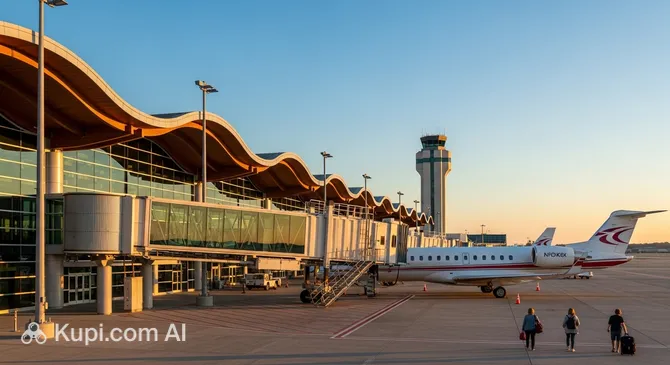
Columbia Regional Airport. Source: Kupi.com Binoculars

Columbia Regional Airport (COU) is not just a point on the map, but a modern and convenient aerial gateway to the heart of Missouri. Located near the city of Columbia and the state capital, Jefferson City, it serves as a key transport hub for the entire central region. Opened in 1968, the airport underwent a massive renovation and, in 2022, presented passengers with a new spacious terminal, offering high-level comfort and service. This airport plays an important role in the life of the region, serving not only tourists but also charter flights for the sports teams of the famous University of Missouri.

IATA Code COU
ICAO Code KCOU
City Columbia, Missouri
Distance to Centre About 19 km
Status Domestic
Annual Passengers Over 160,000 (as of late 2022)
Popular Airlines American Airlines, United Airlines
Schedule Columbia Regional Airport online flight board

Despite its relatively small size, Columbia Regional Airport offers travellers first-class service. Its main advantage is the recently updated infrastructure. The new terminal, opened in late 2022, is equipped with three jet bridges and has significantly improved passenger comfort. Thanks to flights from leading American airlines such as American Airlines and United Airlines, you can easily travel from COU to major hub airports in the USA — Chicago, Dallas, and Denver — and from there to practically anywhere in the world.

Contact Information

Below is the contact information for Columbia Regional Airport (COU). We recommend always checking the accuracy of the data on the airport's official website before your trip.

  • Official Website: www.flycou.com
  • Information Desk Phone: +1 573-874-7508
  • Airport Address: 11300 S Airport Dr, Columbia, MO 65201, USA
  • Email: Usually, the contact form on the official website or the general email info@flycou.com is used for communication.
  • Social Media: Follow news and updates on the airport's official pages on Facebook and other social networks.
  • Lost Luggage Information: For questions regarding lost or damaged luggage, please contact your airline directly. If an item was lost within the terminal, contact the airport administration via the main phone number.
  • Passenger Support Contacts: For general inquiries and passenger assistance, use the information desk phone: +1 573-874-7508.

How to Get to the Airport

Getting to Columbia Regional Airport (COU) from the city of Fulton, located in the state of Missouri, USA, is quite simple, although the choice of options is mainly limited to road transport. The distance between the centre of Fulton and the airport is about 25-30 kilometres, and the journey usually takes 25-35 minutes depending on traffic conditions.

Taxi, Transfers, and Ridesharing

The most convenient and direct way to get to the airport is to order a taxi or use ridesharing apps such as Uber or Lyft. This is especially convenient if you are travelling with luggage. The trip will cost approximately $40-60. You can also book a private transfer in advance, which guarantees a car at your desired time, although the cost may be slightly higher.

Car Rental

Renting a car is an excellent choice for those who value independence and plan to explore the region. You can rent a car in Fulton and easily drive to the airport, where you can return the vehicle at one of the rental company offices. Having your own transport gives maximum flexibility and allows you not to depend on taxi schedules and availability.

Airport Parking

If you are driving to the airport in a personal or rented car, several parking options are available to you. Columbia Regional Airport has both short-term parking, ideal for quick drop-offs or picking up passengers, and long-term parking, designed for those leaving their car for the duration of their trip. The cost of long-term parking is usually quite affordable for a regional airport. It is recommended to check current rates and availability on the airport's official website before travelling.

Public Transport

It is important to note that direct public transport connections (buses, trains) between Fulton and Columbia Regional Airport are unavailable. Attempting to travel this way would require multiple transfers and would be extremely inconvenient and time-consuming, so this option is not recommended for tourists.

Terminals and Layout

Columbia Regional Airport (COU) is distinguished by a simple and passenger-friendly structure. Following the recent major renovation, one modern passenger terminal operates here, handling all flights. This makes navigation intuitive and eliminates the need to move between different buildings, as all processes — from check-in to baggage claim — are concentrated under one roof.

The terminal layout is extremely simple. Upon entering the building, you immediately find yourself in the general area where airline check-in counters and baggage drop-off points are located. After check-in, passengers proceed to the security screening area, which leads directly to the boarding gates. Departure and arrival zones are in the same building but functionally separated. The waiting hall for departing passengers is equipped with everything necessary, and the arrival zone with the baggage claim belt is located so that finding it after landing is effortless.

One of the main advantages of Columbia Regional Airport is the speed of completing all formalities. Thanks to its compact size and effective organisation, flight check-in and security screening usually take significantly less time than in large airports. As a rule, all procedures take no more than 20-30 minutes. Nevertheless, it is recommended to arrive at the airport approximately 90 minutes before departure to pass through all stages without rushing.

To navigate the terminal, simply follow the clear and easy-to-understand signs. Since all key zones — check-in, security, boarding gates, and baggage claim — are within walking distance of each other, getting lost here is practically impossible. This makes COU airport particularly convenient for families with children, elderly travellers, and anyone who values comfort and time savings.

Airport History

The history of Columbia Regional Airport (COU), the main aerial gateway of central Missouri, serving the city of Fulton among others, begins in the mid-20th century. The airport was officially opened and dedicated in 1968 to replace the old municipal airfield and provide the region with modern air service capable of accommodating jet aircraft. One of the first carriers to start operating regular flights was the well-known regional airline Ozark Air Lines.

Since its opening, the airport has constantly developed to meet the growing needs of the region. In the 90s, a significant modernisation was carried out — the extension of the main runway, which allowed for larger aircraft and expanded the flight geography. This was a key step in increasing passenger traffic and attracting new airlines.

The most significant event in the recent history of COU was the construction and opening of a completely new passenger terminal. The old building, which had served for decades, could no longer cope with the load. The new, spacious, and modern terminal, which opened its doors to passengers in 2022, radically changed the airport's appearance. It is equipped with telescopic jet bridges, more comfortable waiting areas, and expanded services, taking the quality of service to a completely different level.

Throughout its history, Columbia Regional Airport has repeatedly witnessed important events and hosted flights with high-ranking guests, including Presidents of the USA. It plays a critically important role in the region's transport infrastructure, including for the huge community of the University of Missouri. Today, COU is not just an airfield, but a modern and growing transport hub, symbolising the development and openness of central Missouri to travellers from all over the world.

Services and Amenities

Columbia Regional Airport (COU) is a compact and modern terminal focused on ensuring comfort and convenience for all passengers. Despite its small size, it offers a set of key services to make your wait for the flight as pleasant as possible.

There is a café on the airport premises where you can have a snack, drink coffee, or purchase light refreshments before departure. There is also a small shop selling souvenirs, press, and travel goods. The selection is limited, so it is better to set aside time in the city for full shopping.

For all travellers, free Wi-Fi is available in the terminal building, allowing you to stay connected. In the waiting areas near the boarding gates, counters and outlets for charging electronic devices are provided. There are no specialised VIP lounges at the airport, but the general waiting areas are sufficiently comfortable.

ATMs are installed in the airport for cash withdrawals. Please note that currency exchange points are absent, so international tourists are recommended to take care of money exchange in advance. Medical assistance is limited to first aid provided by airport staff; in emergencies, city services are called. Special nursing rooms are equipped for passengers with children.

The airport is fully adapted for passengers with reduced mobility: there are ramps, accessible toilets, and special parking spaces. To receive assistance with boarding, disembarking, or moving around the terminal, including the provision of wheelchairs, you must contact a representative of your airline in advance.

There are no hotels directly on the airport grounds, but you will find many accommodation options within a few minutes' drive by taxi or shuttle. Separate conference rooms or business centres are not provided in the terminal, however, comfortable waiting areas with Wi-Fi access allow for resolving urgent work matters.

Where to Eat

Columbia Regional Airport (COU) is a compact and convenient air hub, and the dining options here correspond to its size. Although the selection is not as large as in major international airports, passengers can find everything necessary for a comfortable wait for their flight.

The main place where you can eat and have a drink is the café and bar, located in the departure zone after passing security control (airside). This is the only establishment in the secure area, so plan your snack with this in mind. Its opening hours are usually tied to the flight schedule: the café opens before the first morning departure and closes after the last evening plane leaves.

The establishment's menu features various options for a quick snack and a more substantial lunch. Here you will find:

  • Hot and cold drinks: freshly brewed coffee, tea, juices, and carbonated beverages.
  • Light snacks: pastries, sandwiches, salads, and packaged snacks.
  • Beverage menu: for those wishing to relax before the flight, a selection of beverages is available.

For passengers with special dietary needs (vegetarians, vegans, gluten-free diets), the choice may be limited. Most often, you can find ready-made salads or packaged snacks with ingredients listed, which is helpful for checking for Halal compliance. If you have strict restrictions, it is recommended to bring food with you. Prices in the café are standard for airports — moderately high.

Thus, for a quick snack, coffee with pastries is ideal, and for a full lunch, you can choose a sandwich or salad. Despite the modest selection, the available options allow you to comfortably refresh yourself immediately before boarding the flight.

Travel Tips

Travelling through Columbia Regional Airport can be simple and convenient if you know a few useful tips. Here are some suggestions to make your trip from Fulton as comfortable as possible.

Arrival Time and Check-in. Columbia Regional Airport is a small regional hub, so there are rarely large queues here. Nevertheless, it is recommended to arrive 90 minutes before departure for a domestic flight. This time is enough to calmly check in luggage, pass security control, and reach the boarding gate. To save time, complete online check-in on your airline's website and save the boarding pass on your phone.

Passing Control. The screening procedure is standard for all airports in the USA. Have your ID and boarding pass ready. In hand luggage, all liquids must be in containers up to 100 ml and packed in a single transparent bag. Laptops and other large electronics must be placed in a separate tray. Since the airport is small, passing control usually takes no more than 15-20 minutes.

Seat Selection and Hand Luggage. If you want to admire the views, choose a window seat. An aisle seat will give more freedom to move around the cabin. For those in a hurry, seats in the front of the aircraft are ideal for quick disembarkation. Be sure to put all valuables in your hand luggage: documents, money, medication, portable chargers, and fragile electronics. It is forbidden to carry sharp objects, weapons, and flammable liquids.

Transfers and Customs. Most flights from Columbia Regional Airport are domestic with transfers in major hubs such as Dallas or Chicago. If you have a connecting flight, study the layout of the connecting airport in advance and ensure you have enough time between flights (at least 1-1.5 hours). Customs control is only passed by passengers on international flights at the first airport of arrival in the country, so this procedure is absent on domestic flights.

Saving Time and Money. To save money, book tickets in advance and, if possible, travel on weekdays. Take an empty water bottle with you to fill it after passing security, and light snacks — this will help avoid extra expenses at the airport. Pre-booking parking or ordering a taxi via an app can also be more cost-effective.

If the Flight is Delayed. In case of a flight delay, first contact your airline representative for information about the new departure time and possible options (for example, rebooking on another flight). Find out about your rights: depending on the length of the delay, you may be provided with vouchers for food or even hotel accommodation. The airport has Wi-Fi and waiting areas where you can spend time comfortably.

Reached the end of the page?

That means the route is fully explored