Support

Laredo International Airport

About the Airport

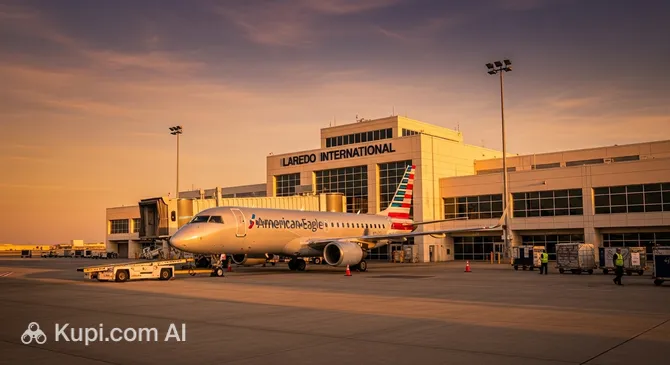
Laredo International Airport. Source: Kupi.com Binoculars

Laredo International Airport is not merely a transit point on the Texas map, but a true aerial gateway connecting the culture of the American South with Mexican flair. This aviation hub uniquely combines the capacity of a major North American cargo hub with the comfort and tranquility of a regional passenger terminal. Here, travellers can forget about endless queues and the stress of megacities, enjoying an atmosphere of hospitality and efficient service from the very first minute of their stay.

IATA Code LRD
ICAO Code KLRD
City Laredo
Distance to Centre 6 km
Status International
Passengers per Year ~215,000
Schedule Available on the official website

Features and Advantages of the Airport

The main pride and distinguishing feature of Laredo Airport is its unique status in the world of logistics. As one of the key cargo hubs on the border, it possesses world-class infrastructure, including long runways capable of accommodating the heaviest liners. For the regular traveller, this means the highest level of flight safety and reliability, ensured by professional services accustomed to intensive traffic.

Travellers particularly appreciate LRD for its compactness and speed of service. Unlike massive hubs, the journey here from the terminal entrance to the boarding gate takes mere minutes. Queues for security screening (TSA) are minimal, and the staff is known for their friendliness, making the start of the trip as relaxed as possible. This is the ideal choice for those who value their time and dislike bustle.

Another undeniable advantage is its convenient location. The airport is located practically within the city limits, just a few kilometres from the business centre and major hotels. This allows tourists and business people to save time and money on transfers, reaching their destination by taxi or rental car in literally 15–20 minutes.

Contact Information

For your convenience, we have compiled the main contact information for Laredo International Airport (LRD).

  • Official Website: www.flylaredotx.com — here you will find flight schedules, information about services, and the latest news.
  • Information Desk Phone: +1 (956) 795-2000.
  • Address: 5210 Bob Bullock Loop, Laredo, TX 78041, USA.
  • Email: To contact the administration, it is recommended to use the contact form available on the airport's official website.
  • Social Media: You can follow updates on the official airport page on Facebook.
  • Lost Luggage Information:
    • If you have lost items within the airport terminal (in public areas), please contact the airport administration via the main phone number.
    • In case of lost items on board the aircraft or issues with checked baggage, you should contact your airline's support service directly.
  • Passenger Support Contacts: For general questions regarding airport operations, you may contact the information desk. Questions related to booking, flight changes, and special assistance should be addressed to your airline representatives.

How to Get to the Airport

Getting to Laredo International Airport (LRD) from the city centre of Laredo is quite simple, as it is located just a few kilometres away. The journey usually takes no more than 15-20 minutes by car. Travellers have access to several transport options suitable for different budgets and preferences, including taxis, public buses, and rental cars.

Taxis and Ridesharing Services, such as Uber and Lyft, are the fastest and most convenient way to reach the airport. Taxi stands are located at the terminal exits, and you can order a car via an app from anywhere in the city. This is a more expensive option compared to public transport, but it ensures maximum comfort, especially if you have a lot of luggage. A trip from the centre will cost approximately 20-30 USD.

For budget-conscious travellers, the best choice would be public transport. The local bus system, El Metro, operates a route that stops at the airport. This is the most economical method, with the fare costing just a few dollars. However, it is worth checking the bus schedule in advance, as they run at specific intervals and may not be the fastest option, particularly during peak hours.

Car Rental is an excellent option for those planning to explore the Texas region or requiring flexibility in movement. Offices of major rental companies are represented at Laredo Airport. You can pick up a car upon arrival or return it before departure. The airport grounds feature convenient parking, offering options for both short-term and long-term stays.

If your plans include travelling to neighbouring regions or you are looking for more flight options, it is worth considering other airports. The nearest one, Quetzalcoatl International Airport (NLD), is located approximately 15 km away, but it is within Mexican territory. Also, within a radius of 200 km, you can find McAllen International Airport (MFE) and Corpus Christi International Airport (CRP) within the USA, offering a wider selection of flights.

Terminals and Map

Laredo International Airport (LRD) is a compact and convenient aviation hub distinguished by a simple and clear structure. The airport consists of one passenger terminal that serves all flights — both departures and arrivals. Such an organization significantly simplifies navigation for travellers.

The terminal layout is very logical. On the ground floor, you will find airline check-in counters, the baggage claim area for arriving passengers, and car rental desks. After check-in, passengers proceed to the upper level, where the single security checkpoint (TSA) leading to the departure zone is located. Thanks to the airport's small size, you won't have to walk long to reach your boarding gate — they are all located in one hall.

Since there is only one terminal in the airport, there are no transfers between terminals. All procedures, from check-in to boarding the aircraft, take place within a single building. The departure zone includes several gates, a small waiting lounge, and basic amenities. The arrival zone is on the ground floor and consists of baggage carousels and the exit to the city, where taxis and shuttles meet passengers.

Passing through all formalities at Laredo Airport usually takes little time. Due to the low passenger traffic, queues for check-in and security are generally minimal. Nevertheless, it is recommended to arrive at the airport 1.5–2 hours before a domestic flight to check in luggage and pass security control without rushing.

To navigate the terminal, simply follow the signs, which are clearly visible and easy to understand. Key zones — Ticketing/Check-in, Security Checkpoint, Gates, and Baggage Claim — are located sequentially and are easy to find. It is practically impossible to get lost here, making travel through Laredo International Airport as comfortable as possible.

Airport History

The history of Laredo International Airport (LRD) is unique and closely tied to USA military aviation. Its story began in 1942, when the Laredo Army Airfield was established here during World War II. The base's primary task was training fighter pilots and aerial gunners, making it an important training centre during wartime. After the war ended, the facility was deactivated and transferred to the city for civil use.

With the onset of the Cold War, the airfield received a second life. In 1952, it was reopened as Laredo Air Force Base and became one of the main centres for primary flight training for pilots. Thousands of cadets from all over the world trained here on jet aircraft such as the T-33, T-37, and T-38. This period lasted more than twenty years until the base was finally closed in 1973 as part of military spending reductions.

It was the closure of the military base that spurred the creation of the modern civilian airport. City authorities took over the management of the facility and transformed it into Laredo International Airport. The military legacy proved invaluable: long and durable runways designed for heavy military aircraft were ideally suited for receiving large cargo and passenger liners.

Today, LRD is known primarily as one of the busiest cargo airports in the United States, which is its main achievement. Thanks to its strategic location on the border with Mexico, it has become a key logistics hub for international trade. The airport has gone through several stages of modernization, including the expansion of cargo terminals and infrastructure updates, to cope with the constantly growing volume of air transport and maintain its status as a vital aerial gateway for commerce between the two countries.

Services and Facilities

Laredo International Airport (LRD) offers passengers a basic set of services and amenities to make waiting for a flight comfortable. In the terminal, you will find cafes and snack bars where you can have a bite to eat or drink coffee. There is also a small shop selling newspapers, magazines, souvenirs, and travel essentials.

For those who need to stay connected or work, free Wi-Fi is provided throughout the airport. Charging stations for mobile phones and other gadgets are equipped in the waiting lounges. There are no specialized business centres or conference rooms at the airport, but quiet waiting areas are quite suitable for handling work matters. There are also no separate VIP lounges, but the general waiting areas are sufficiently comfortable.

The airport is fully adapted to serve passengers with reduced mobility in accordance with accessibility standards. Ramps, specially equipped restrooms, and parking spaces are available. Passengers requiring a wheelchair or other assistance are advised to contact their airline in advance. For the convenience of travellers with small children, baby changing tables are available in the restrooms.

ATMs are installed in the terminal building where you can withdraw cash. Please note that currency exchange points may be absent, so it is worth arranging money exchange in advance. In case first aid is needed, please contact any airport staff member. There are no hotels directly on the airport grounds, but there are many hotels nearby that can be easily reached by taxi.

Where to Eat

Laredo International Airport (LRD), being a compact regional airport, offers a limited but authentic selection of dining establishments. Passengers should not expect the great variety typical of major hubs; however, one can have a snack here before departure while experiencing local flavour.

All main dining points are located airside, after passing security control. The main establishment here is Leo & G's Grill & Bar. Here, travellers can get acquainted with Tex-Mex cuisine, which is the region's calling card. The menu typically features tacos, burritos, and quesadillas with various fillings. This is an excellent option for both a quick snack and a more substantial lunch.

In addition to hot dishes, you can order refreshing beverages at Leo & G's Grill & Bar while waiting for your flight. The opening hours of the establishments are usually tied to the flight schedule — they open shortly before the first flight and close after the last departure. Prices correspond to the average level for airports in the USA.

Regarding special dietary needs, the choice may be extremely limited. Vegetarians will likely find options such as bean tacos or cheese quesadillas. However, for passengers with stricter requirements (vegan, gluten-free, or Halal dishes), finding suitable food will be difficult. In such cases, it is recommended to bring food with you.

Tips for Travellers

To ensure your journey through Laredo International Airport (LRD) goes smoothly and without unnecessary worry, make use of our tips. These recommendations will help you save time, money, and stress, making the start of your trip as comfortable as possible.

Arrival Time and Check-in
For domestic flights within the USA, it is recommended to arrive at the airport 1.5-2 hours before departure, and for international flights — at least 3 hours prior. This time will be sufficient to check in luggage, pass security control, and reach the boarding gate without rushing. To save time, use online check-in on your airline's website and save the boarding pass on your phone.

Security Checks and Hand Luggage
At the security checkpoint, be prepared to remove laptops and other large electronics from your hand luggage. Remember the rule for carrying liquids: containers with a volume of no more than 100 ml are allowed, packed in a single transparent resealable bag. Before travelling, always check the current list of prohibited items on the US Transportation Security Administration (TSA) website.

Seat Selection and Transfers
When choosing a seat on the plane, consider your preferences: by the window for beautiful views, or by the aisle for more legroom and the ability to leave the cabin quickly. If you have a connecting flight, locate your next departure gate number on the information screen immediately upon arrival at the transit airport to calculate the transfer time.

Customs Control
When departing or arriving on an international flight, you will have to pass customs control. Keep your passport, visa, and other necessary documents ready. Be prepared to clearly and calmly answer the border officer's questions about the purpose and duration of your trip.

Savings and Unforeseen Situations
To save money, book tickets in advance and bring an empty water bottle with you, which can be filled after the security zone. In case of a flight delay, first contact your airline representative. They will provide up-to-date information and explain possible options, such as rebooking on another flight or providing meal vouchers.

Reached the end of the page?

That means the route is fully explored