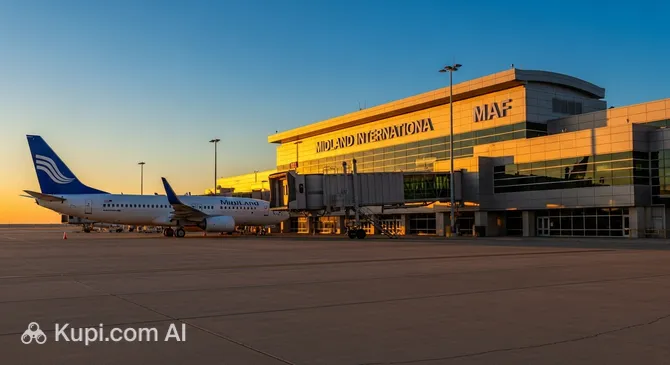
Midland International Airport (Midland International Air & Space Port) is not just a standard transport hub, but a true aerial gateway to the heart of the Permian Basin oil region and the endless plains of West Texas. The uniqueness of this location lies in its dual status: it is the first major commercial airport in the US to receive an FAA license to support space launches, making it an intersection point for civil aviation and future space technologies. For travellers, this means a modern yet compact terminal where Texan hospitality meets high service efficiency without the hustle and bustle of giant hubs.
| Characteristic | Value |
|---|---|
| IATA code | MAF |
| ICAO code | KMAF |
| City | Midland |
| Country | United States |
| Time zone | America/Chicago |
| Popular airlines | Iberia, American Airlines, Alaska Airlines, United Airlines, Air Canada |
| Schedule | Online timetable |
Unique Spaceport Status. Midland is one of the few airports in the world that officially combines the functions of a civil air harbour and a licensed spaceport. Although you will most likely arrive here on a regular airliner, the realization that you are on the grounds of a space infrastructure facility adds a special flair to the trip.
Comfort and Speed. The terminal is designed to minimize passenger stress. Security queues usually move quickly, and the building layout is intuitively clear. Travellers appreciate the availability of free Wi-Fi throughout the area and convenient stations for charging gadgets, allowing you to stay connected right up until boarding.
Strategic Location. The airport is located exactly halfway between the two key cities of the region — Midland and Odessa. This makes it an ideal starting point for business trips to the oil capital of Texas or for beginning a road trip through the colourful locations of the state. Car parks are located within walking distance of the terminal, which is a major advantage compared to metropolitan airports.