Support

Millington Regional Jetport

About the Airport

The Millington Regional Jetport (NQA) is not merely a runway, but an air gateway with a rich history closely tied to United States Naval aviation. Today, it serves as a vital hub for private, corporate, and military aviation in the state of Tennessee. Although you will not see crowds of tourists waiting for commercial flights here, the airport plays a key role in the regional transport infrastructure, offering modern services for pilots and aircraft owners.

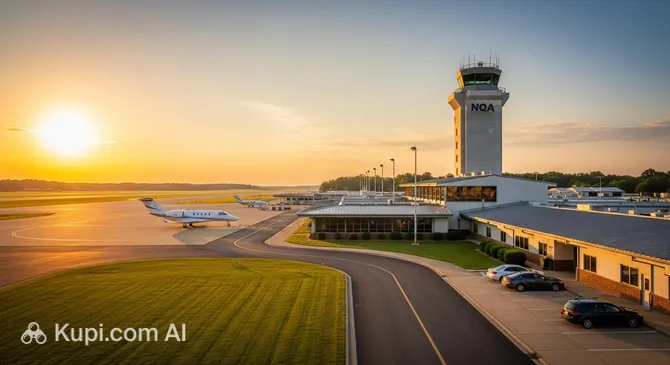
Millington Regional Jetport. Source: Kupi.com Binoculars
IATA Code NQA
ICAO Code KNQA
City Millington
Distance to Centre About 3 km
Status General Aviation, Military
Annual Passengers The airport does not serve scheduled commercial passenger flights and specialises in general aviation.
Popular Airlines Private operators, flight schools, corporate and military aviation.

The main feature of Millington Airport is its impressive infrastructure, inherited from the former Naval Air Station. The airfield boasts one of the longest runways in the region — over 2,400 metres, allowing it to accommodate almost any type of aircraft, including large cargo and military planes. This makes it an important alternate airfield for Memphis International Airport.

For travellers arriving on private or corporate jets, the airport offers a full range of services, including refuelling, maintenance, and comfortable terminals for crew and passengers (FBO). Its proximity to the city and major highways ensures fast and convenient access to the region's business and tourist sites.

Contact Information

For your convenience, we have compiled the current contact information for Millington Regional Jetport (NQA), which primarily serves general aviation.

  • Official Website: You can find the most complete information about services, rules, and tenant companies on the official website: www.millingtonairport.com.
  • Phone: For general enquiries and to contact the airport administration, please use the number: +1 (901) 873-4333.
  • Address: The airport is located at: 8182 Hornet Ave, Millington, TN 38053, USA.
  • Email: For written enquiries and requests, the available e-mail is: info@millingtonairport.com.
  • Social Media: You can follow airport news and events on its official page on Facebook.
  • Lost and Found: For items left in buildings or on airport grounds, it is recommended to contact the administration via the phone number listed above.

How to Get to the Airport

There are several ways to get to Millington Regional Jetport (NQA), located in the city of Millington, USA. It is important to note that this is a small airport serving mainly private and military aviation, so transport options differ from those available at major international hubs.

Public Transport

There is no direct public transport connection to Millington Airport. City bus routes do not reach the terminals, and rail or metro connections are not developed in this area. Therefore, travellers relying on buses or trains should consider alternative options.

Taxi and Transfer

The most convenient and reliable way to get to the airport is to use taxis or ridesharing services, such as Uber and Lyft. A trip from the centre of Millington will take just 5–10 minutes. If you are travelling from downtown Memphis, be prepared to spend 30 to 45 minutes on the road depending on traffic. It is recommended to book a car in advance, especially if you need a transfer at a specific time, as the number of available cars directly at the airport may be limited.

Car Rental

Car rental is the best choice for those who value independence and plan to travel around the region. Although the selection of rental agencies directly in the small Millington terminal may be limited, you can easily find offices of major companies in the city itself or in neighbouring Memphis. Many tourists flying into the region on commercial flights arrive at Memphis International (MEM) and rent a car there, which is the most practical solution.

Airport Parking

For those arriving in their own or rented vehicle, parking is provided on the airport grounds. Typically, parking costs at regional airfields are lower, and finding a free space is easier than at major international airports. Options for both short-term and long-term parking are available.

Key Recommendations

To summarise, a personal or rented car is the optimal way to get to Millington Regional Jetport. If you do not plan to drive, your choice is a taxi or a pre-booked transfer. Given the specific nature of the airport, always plan your trip and transport in advance to avoid unnecessary hassle.

Terminals and Map

Millington Regional Jetport (NQA) differs significantly from major passenger hubs. It is a General Aviation airport that primarily serves private jets, corporate charters, as well as military and cargo aviation. Due to the nature of its operations, there is no complex system of multiple terminals typical of international airports.

The airport structure includes one main terminal (General Aviation Terminal), which functions as an administrative building and a service area for passengers and crews. This is a compact facility where all necessary services are within walking distance of each other. The absence of a complex layout makes navigation here extremely simple and intuitive.

Departure and Arrival Zones at Millington are not separated by security barriers as strictly as in commercial airports. Passengers on private and corporate flights usually board the aircraft almost immediately after leaving the terminal or may even drive up to the aircraft in a vehicle if permitted by service regulations. The waiting area is a comfortable lobby rather than a classic "gate".

Among the terminal features, it is worth highlighting the presence of an FBO (Fixed Base Operator) — a ground handling provider. Services are provided here for both aircraft (refuelling, hangar storage) and people. The building typically offers a pilots' lounge, a conference room for quick business meetings, and a flight planning zone. The atmosphere here is much calmer and more private than in public airports.

Processing time at NQA is minimal. Since there are no regular commercial flights with thousands of passengers, check-in and security screening processes (if required for a specific charter) take mere minutes. It is generally recommended to arrive 15–20 minutes before departure, which saves significant time compared to major aviation hubs.

As a navigation tip: if you are arriving at or departing from Millington, look for the main airport building marked "Millington-Memphis Airport". Car parking is located in the immediate vicinity of the terminal entrance, so you will not require shuttles or long walks with luggage.

Airport History

The history of Millington Regional Jetport (NQA) is closely linked to military aviation in the United States and represents a prime example of the successful conversion of a military facility into a civilian one. The airport was founded not as a civilian hub, but as Naval Air Station Memphis, which was commissioned in 1942, at the height of World War II. Its primary mission was to train thousands of pilots, aviation mechanics, and other technical personnel for the Navy.

For decades, including the Cold War period, the air base in Millington remained one of the largest and most important US Navy training centres located inland. Specialists in various fields were trained here, earning the city the nickname "Navy Town". The complex included massive infrastructure with numerous runways, hangars, and training buildings.

A key turning point in the airport's history occurred in the 1990s. In 1993, under the federal Base Realignment and Closure (BRAC) programme, the decision was made to close the air base. The process of transferring the facility to civilian control was completed, and in 1999, the Millington Regional Jetport was officially opened on its grounds. The former military runways, some of the longest in the region, were modernised to accommodate civilian aircraft, including large cargo and corporate planes.

Today, NQA is an important centre for general aviation, serving private and corporate flights, and plays a significant role in the region's logistics and economy. An interesting fact: thanks to its military past, the airport inherited impressive infrastructure and runways capable of accepting almost any type of aircraft, making it unique among regional airports of similar size.

Services and Facilities

Millington Regional Jetport (NQA) is primarily a centre for private, corporate, and military aviation, so the range of services here differs from major international hubs. Nevertheless, all necessary basic infrastructure is provided for the comfort of passengers and pilots.

You will not find a wide variety of restaurants or shops on the airport grounds. Available options are typically limited to vending machines with beverages and snacks. There are no specialised bank branches or currency exchange points at the airport, so it is recommended to handle all financial matters in the city of Millington beforehand.

Passengers have access to free Wi-Fi in the terminal building, as well as the ability to charge electronic devices. For business travellers, ground handling operators (FBOs) can provide conference rooms and business services upon prior request. They also offer comfortable waiting areas for their clients, serving as an equivalent to VIP lounges.

The airport building fully complies with accessibility requirements for passengers with reduced mobility. Special services, such as children's play areas, are absent, but staff are always ready to assist families with little ones. It is important to note that there is no dedicated medical centre at the airport. In case of illness or the need for emergency assistance, you should immediately contact any airport staff member or call 911.

Although there are no hotels directly on the airport premises, several hotels offering comfortable accommodation are located in the immediate vicinity, in the city of Millington. They can be reached by taxi or rental car in just 5-10 minutes.

Dining Options

When planning a trip through Millington Regional Jetport (NQA), it is important to consider its specifics. This is a small airport serving predominantly general aviation rather than large commercial airlines. Therefore, the choice of dining establishments directly in the terminal building is extremely limited and not comparable to the assortment at large international airports.

A small cafe may operate on the airport grounds, oriented primarily towards staff and pilots. Typically, such establishments offer a simple and hearty menu with classic American dishes for breakfast or lunch, such as sandwiches, burgers, or eggs. This can be a convenient option for a quick snack, but not for a full dinner or gourmet dining.

Due to the modest size of the airport, there is no separation into zones with different restaurants (airside/landside), and finding specialised options for vegetarians, vegans, or people with specific dietary requirements may be difficult. The price range in such a cafe is usually affordable, but opening hours may be limited to daytime.

For a wider selection of restaurants and cafes, including those suitable for various dietary needs, it is recommended to eat in the city of Millington before arriving at the airport or after departure. There you will be able to find establishments for every taste and budget, from fast food to full-service restaurants.

Travel Tips

Since Millington Regional Jetport (NQA) specialises in general aviation (private flights, charters), the rules and procedures here differ radically from familiar commercial airports. Here are a few tips to make your journey as comfortable as possible.

Arrival Time Recommendations. Unlike large hubs, there is no need to arrive 2–3 hours in advance. If you are flying on a private jet or charter, arriving 20–30 minutes before the scheduled departure time is sufficient. This is enough time to meet the crew, load luggage, and settle into the cabin.

Check-in and Security Features. The screening procedure here is simplified as much as possible. You will not have to stand in long queues, remove shoes, or take electronics out of bags as in commercial terminals. However, identification documents must be with you at all times — they will be checked by FBO staff or pilots before boarding. Security checks, if required, are conducted quickly and confidentially.

What You Can and Cannot Bring. Luggage rules on private flights are much more lenient. The famous "100 ml rule" for liquids usually does not apply here, so you may bring your favourite beverages or cosmetics into the cabin. However, explosives, flammable items, and weapons without special permits are strictly prohibited. Always check the allowable weight and dimensions of luggage with your operator in advance, as they depend on the specific aircraft model.

Seat Selection Tips. In business jets and small aircraft, the concept of "seat selection" is nominal. Seating is usually open, or seats are assigned in advance considering the aircraft's balance. If sitting by a window or facing the direction of travel is a matter of principle for you, simply discuss this with the crew upon boarding — on private flights, passenger wishes are treated with great attention.

Recommendations for Transit Passengers. If Millington is just an intermediate point and you plan to fly out on a commercial flight from Memphis International Airport (MEM), allow time for the transfer. A car journey between the airports will take about 30–40 minutes. Pre-book a taxi or rent a car through NQA terminal staff.

Customs Control. If you are arriving from abroad, remember that clearing customs at small airports requires prior notification. Ensure that your operator has coordinated the arrival with US border services to avoid delays on board upon arrival.

In Case of Flight Delay. Small aviation is more sensitive to weather conditions than large liners. If departure is postponed, make use of the comfortable waiting area in the terminal. Wi-Fi and rest areas are available here. Keep in direct contact with the pilots — they will provide the most accurate information about departure times, unlike general information boards.
Reached the end of the page?

That means the route is fully explored