Baggage Allowance Rules 1PC and 2PC
In recent years, an increasing number of airlines are switching from the familiar weight-based baggage system to the piece concept.
How to find out which baggage system an airline uses?
It’s very simple. If you are flying to North America, regardless of the airline, the piece concept system will apply, most often 2PC. For other destinations, you will need to check your itinerary or clarify on the airline’s website.
- 1PC (1 Piece Plan) — one piece of luggage
- 2PC (2 Piece Plan) — two pieces of luggage
- 20 kg (or any other weight designation) — weight-based baggage allowance system.
In the piece concept system (1PC and 2PC), there is a limit not only on the number of pieces of luggage but also on the weight. In this case, it’s not the total baggage weight that is considered, but the weight of a single piece. Let’s look at baggage allowances for flights to the USA, where 2PC is more commonly used:
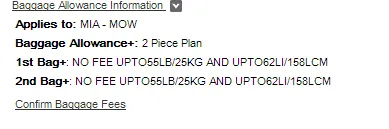
A passenger can check in 2 suitcases, weighing up to 25 kg each.
The total is 50 kg, but it cannot be split into 30 kg in one suitcase and 20 kg in another; strictly no more than 25 kg in each. If one suitcase weighs 20 kg and the second weighs 27 kg, then this is already a 2 kg excess baggage, for which you will have to pay or transfer some items to the one weighing 20 kg. Next, let’s look at the most common 1PC baggage allowance:
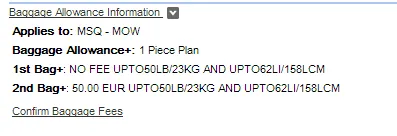
Here you can check in 1 suitcase weighing up to 23 kg.